
If your growing season feels like it lasts about eleven and a half minutes, you know the frustration. You finally get your tomatoes in the ground, and two weeks later there’s frost on the windshield again. I’ve gardened in a zone where the “last frost date” is more of a polite suggestion than an actual promise, and I’ve killed enough basil to fertilize a small farm.
Here’s the good news: some vegetables don’t just tolerate cold, they practically ask for it. A few of these actually taste better after a frost hits them. So instead of fighting your climate, let’s work with it.
Below are 11 vegetables that shrug off cold snaps, short summers, and unpredictable frost dates. I’ve grown every one of these myself, usually after learning the hard way what NOT to do first.
Why Cold-Hardy Vegetables Matter for Northern Gardens
Short-season gardening isn’t about giving up on variety. It’s about picking plants that finish their business before the weather turns, or that can handle a cold snap without throwing a tantrum.
Cold-hardy vegetables generally fall into two camps. Some are fast growers that sneak in a harvest before frost shows up. Others are frost-tolerant, meaning a light freeze won’t bother them one bit, and a few practically improve with it.
I learned this distinction the hard way my second year gardening. I planted a full bed of green beans in early September, convinced I still had time. I did not have time. What I had was a sad, mushy mess by October. Meanwhile my kale, planted the same week, was thriving under a light dusting of snow like nothing happened.
Knowing which category a vegetable falls into changes everything about how you plan your garden calendar.
1. Kale: The Vegetable That Gets Sweeter After Frost
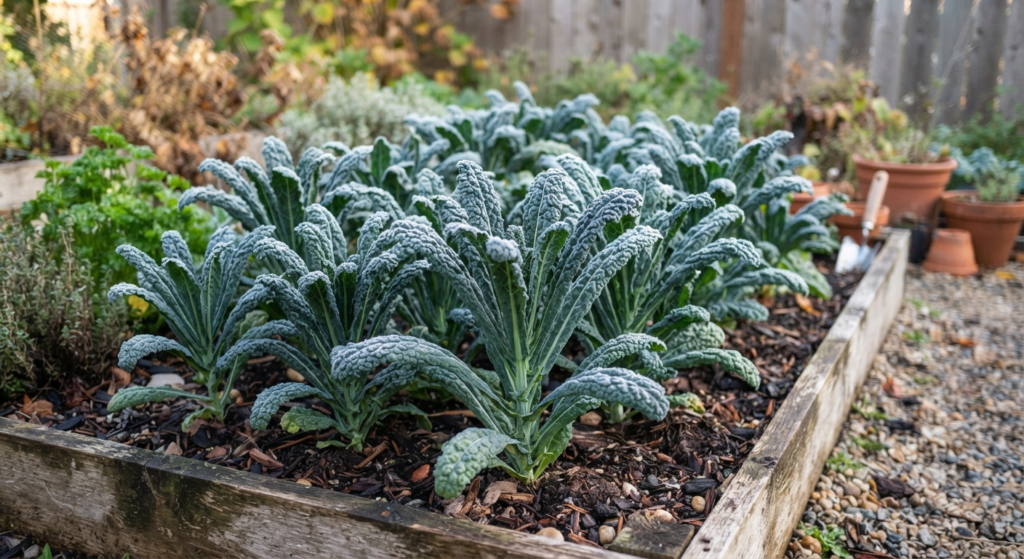
Kale is the poster child of cold-hardy gardening, and honestly, it deserves the hype. This isn’t a plant that merely survives frost. It uses frost to its advantage.
Here’s the science in plain terms: when temperatures drop, kale converts some of its starches into sugars as a kind of natural antifreeze. That means the kale you harvest after a hard frost tastes noticeably sweeter and less bitter than the kale you picked in August.
I plant kale in late summer for a fall and early winter harvest, and I leave it in the ground under a simple row cover well past the first few freezes. Varieties like Winterbor and Red Russian have handled temperatures down into the low twenties for me without blinking.
Quick growing tips:
- Direct sow kale seeds 6-8 weeks before your first expected frost.
- Space plants 12-18 inches apart since they get bushier than beginners expect.
- Harvest outer leaves first and let the center keep producing.
- Add a row cover once nighttime temps dip below 25°F for extra protection.
2. Spinach: A Cold-Season Workhorse That Hates Summer Heat
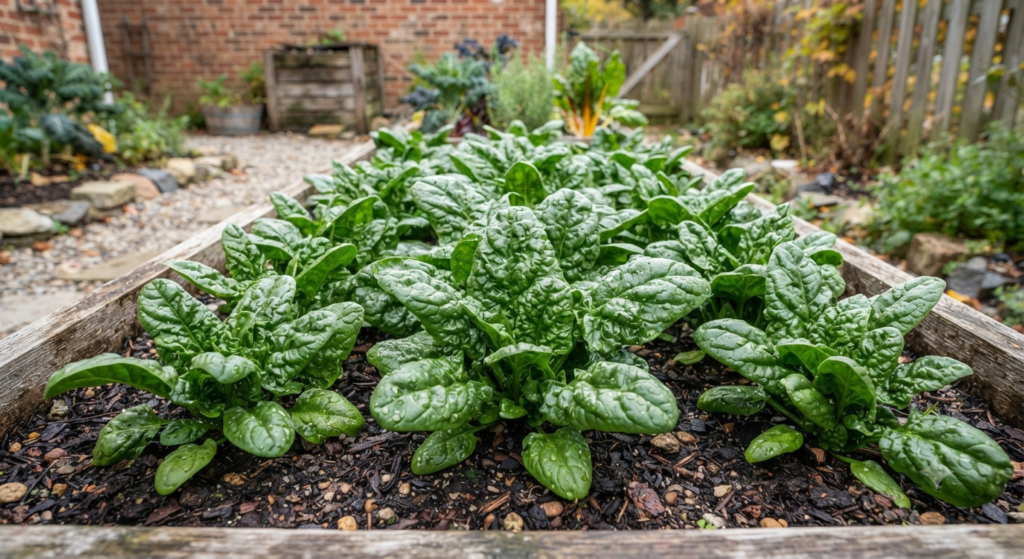
Spinach is the exact opposite of most garden vegetables. It despises heat and practically thrives on cold. If you’ve ever tried growing spinach in July and watched it bolt to seed within a week, you already know what I mean.
Fall-planted spinach is a completely different experience. The cooler temperatures keep the leaves tender, and spinach can handle temperatures down to about 20°F without any protection at all. With a cold frame or simple hoop tunnel, some gardeners overwinter spinach and get an early spring harvest before anything else has even sprouted.
I’ve had spinach survive under a foot of snow and come back looking perfectly fine once it melted. That first time it happened, I honestly thought the plants were goners. I was wrong, and I’ve been humbled by spinach’s toughness ever since.
For short-season gardens, spinach is one of the easiest wins you’ll find. It germinates in cool soil that would leave other seeds sulking, and it’s ready to harvest in as little as 30-40 days for baby leaves.
A few varieties worth trying: Bloomsdale Long Standing is a classic for a reason, while Space and Tyee are more bolt-resistant if your “cold season” tends to warm up unpredictably.
3. Carrots: Sweeter, Crunchier, and Frost-Tolerant
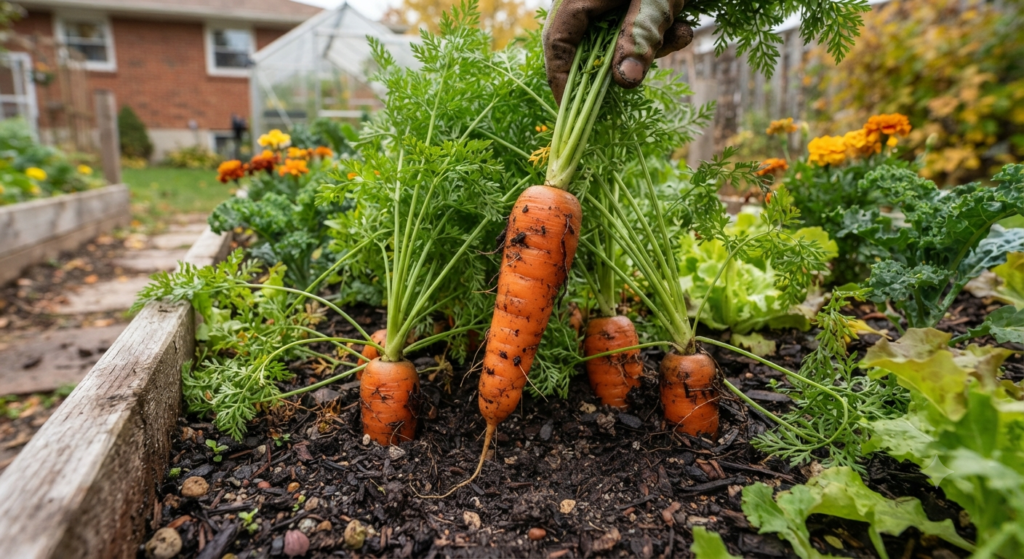
Carrots are another vegetable that actually improve with a bit of cold exposure. Like kale, they convert starches to sugar when temperatures drop, which is why carrots harvested after frost taste sweeter than summer carrots.
Carrots can be sown in mid-to-late summer for a fall harvest, and mature roots can handle soil temperatures down to around 15°F if they’re mulched well. I mulch mine with a thick layer of straw once the weather turns, and I’ve pulled fresh carrots out of half-frozen ground in December.
The trick with carrots in short-season climates is picking the right variety. Longer carrots like Danvers or Imperator need more time to mature, so if your season is genuinely tight, go with a shorter variety like Nantes or Paris Market instead.
One mistake I made early on: I planted carrots in heavy clay soil and wondered why every single one came out twisted and stubby. Carrots need loose, rock-free soil to grow straight, so if your ground is dense, either amend it deeply or grow a round variety that doesn’t need much depth.
4. Brussels Sprouts: The Slow-and-Steady Frost Lover
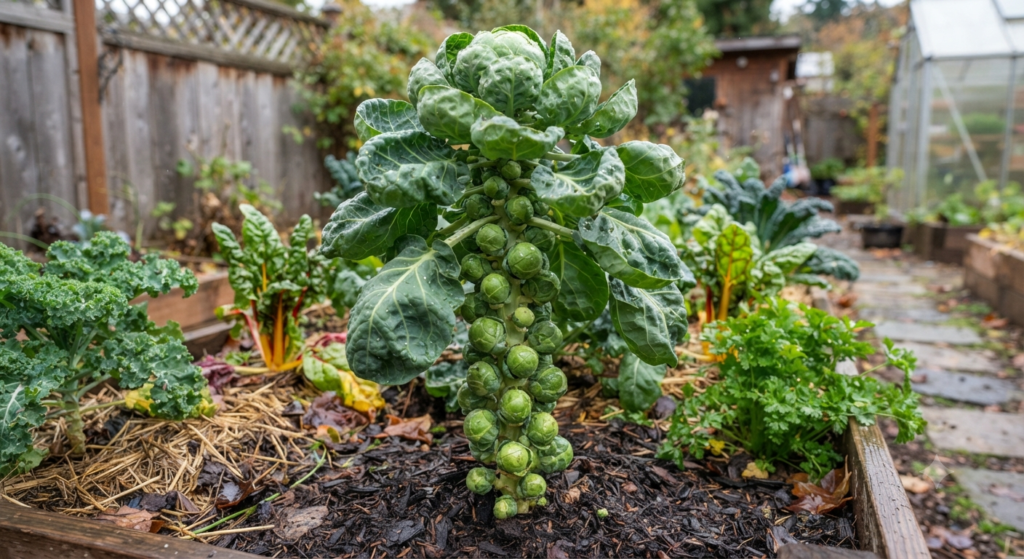
Brussels sprouts take their sweet time, which sounds like bad news for short-season growers, but stick with me here. These plants are built to handle a long, cool growing period, and a hard frost is actually what makes the sprouts taste their best.
The bitterness that puts a lot of people off Brussels sprouts largely disappears after a few frosty nights, thanks to that same sugar-conversion trick we saw with kale and carrots. I didn’t believe this until I tried it myself. Pre-frost Brussels sprouts from my garden were fine. Post-frost, they tasted like an entirely different vegetable.
Because they need 80-100 days to mature, you’ll want to start Brussels sprouts indoors or get them into the ground as early as your soil allows. In short-season zones, starting seeds indoors 4-6 weeks before your last spring frost is usually the move.
Real talk on Brussels sprouts: they take up a lot of vertical space and a full season of your garden real estate. If you’re tight on space, this might not be your best pick. But if you’ve got the room, the payoff after that first frost is worth the wait.
5. Swiss Chard: The Vegetable That Refuses to Quit
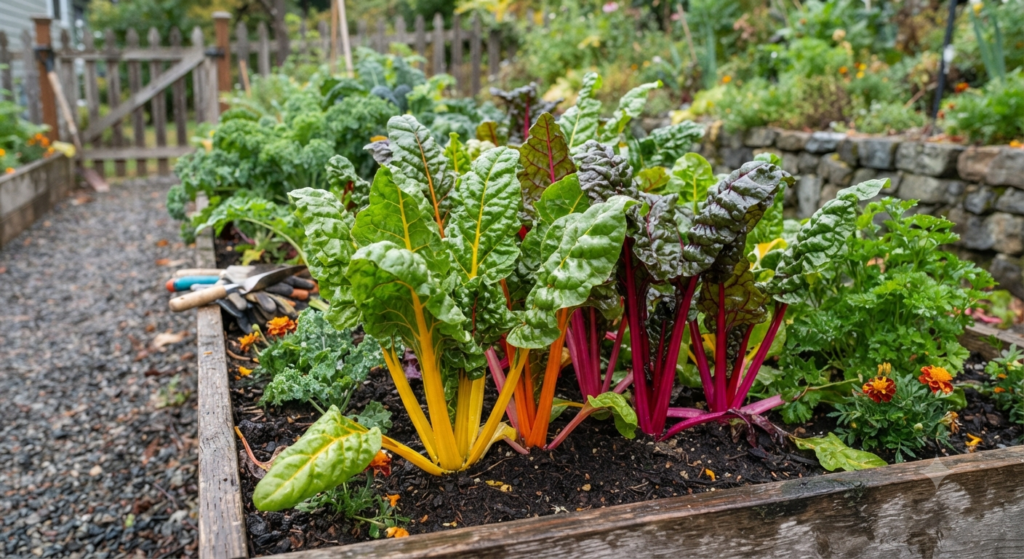
Swiss chard might be the toughest plant in my entire garden. I’ve had chard survive frosts that killed everything else nearby, bounce back after being buried in snow, and keep producing leaves well into November.
Chard is technically a biennial, which means it’s genetically wired to survive a cold winter and come back the following year to flower and seed. That built-in cold tolerance is exactly why it performs so well in short-season gardens.
Unlike some cold-hardy crops that need a frost to taste good, chard doesn’t really change flavor much either way. It’s just consistently reliable, which honestly might be more valuable in a short growing season than any dramatic flavor transformation.
The colorful varieties, like Bright Lights or Rainbow chard, also add visual interest to a fall garden that’s otherwise going brown and dormant. I keep a row of rainbow chard near my kitchen window specifically because it’s the last thing still looking cheerful in November.
6. Garlic: Plant in Fall, Forget About It, Harvest Next Summer
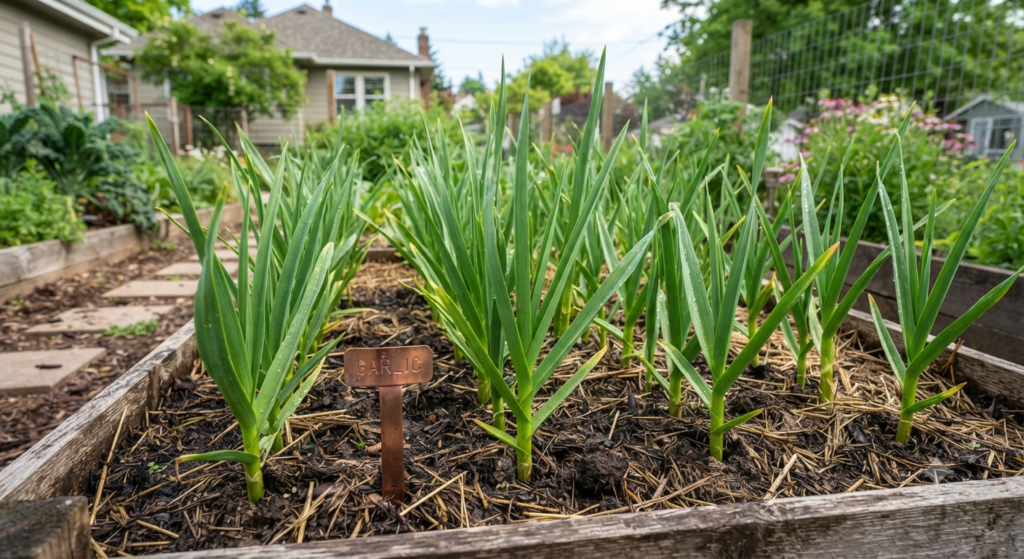
Garlic doesn’t fit the typical “cold-hardy vegetable” mold because you’re not eating it during the cold season. You’re planting it in the cold season for a summer harvest, which makes it a perfect fit for gardeners with short, unpredictable growing windows.
Here’s how it works: you plant individual garlic cloves in the fall, usually a few weeks before the ground freezes solid. The cloves develop roots before winter hits, then sit dormant under the snow until spring, when they take off growing again.
I plant my garlic in late October, right around when everything else in the garden is finishing up. It genuinely feels like cheating, since I’m harvesting something new the following July while barely lifting a finger over winter.
Hardneck garlic varieties, like Music or German Extra Hardy, are specifically bred for cold climates and tend to outperform softneck types in short-season regions. Mulch heavily after planting, about 4-6 inches of straw, and you’ll protect the cloves through even brutal winters.
7. Leeks: The Underrated Cold-Season Champion
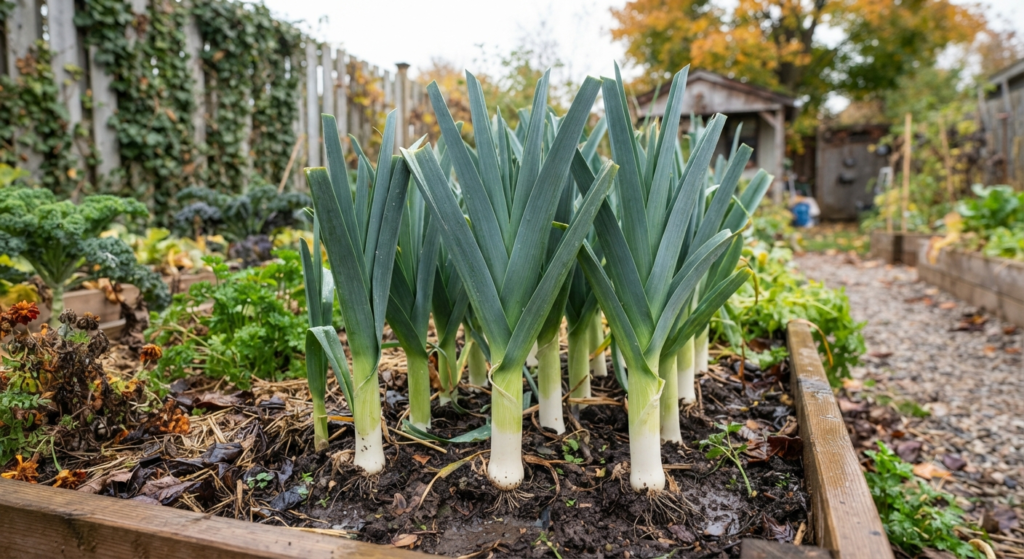
Leeks don’t get nearly enough credit in the cold-hardy vegetable conversation, and I genuinely think that’s a mistake. A mature leek can survive temperatures well below freezing, sometimes into the single digits, especially if it’s mulched.
I overwinter leeks every year at this point. I just leave them in the ground, mulch heavily in late fall, and harvest them as needed all winter long, even when I have to dig through snow to get to them.
Leeks do need a longer growing season to mature fully, generally 100-120 days, so in a genuinely short growing zone you’ll want to start seeds indoors early or look for a faster-maturing variety like King Richard.
The flavor payoff is real. Leeks that have been through a few frosts develop a milder, sweeter taste than leeks harvested in warm weather. I use mine in soups all winter and honestly prefer them to onions at this point, which is not a sentence I expected to write when I first started gardening.
8. Turnips: Fast, Cheap, and Practically Frost-Proof
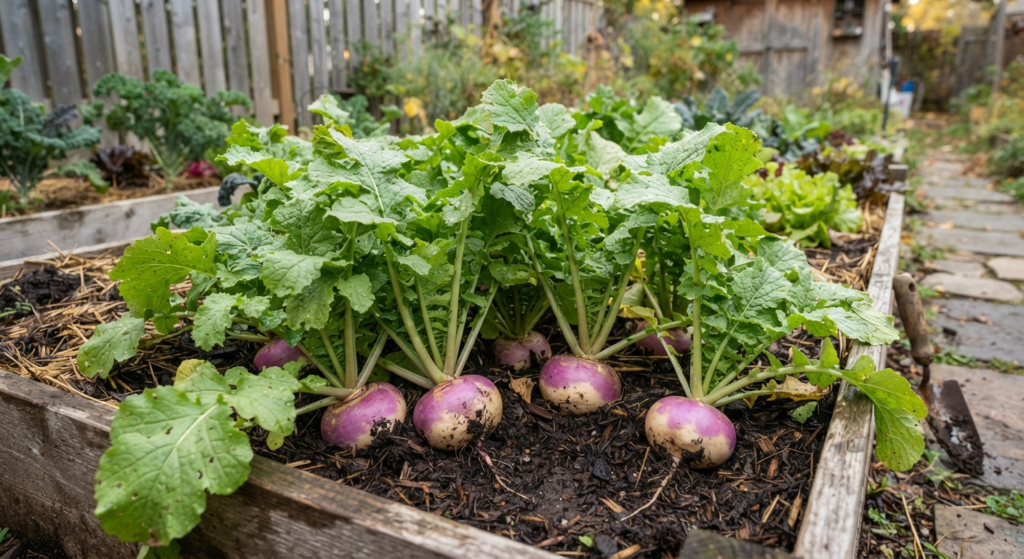
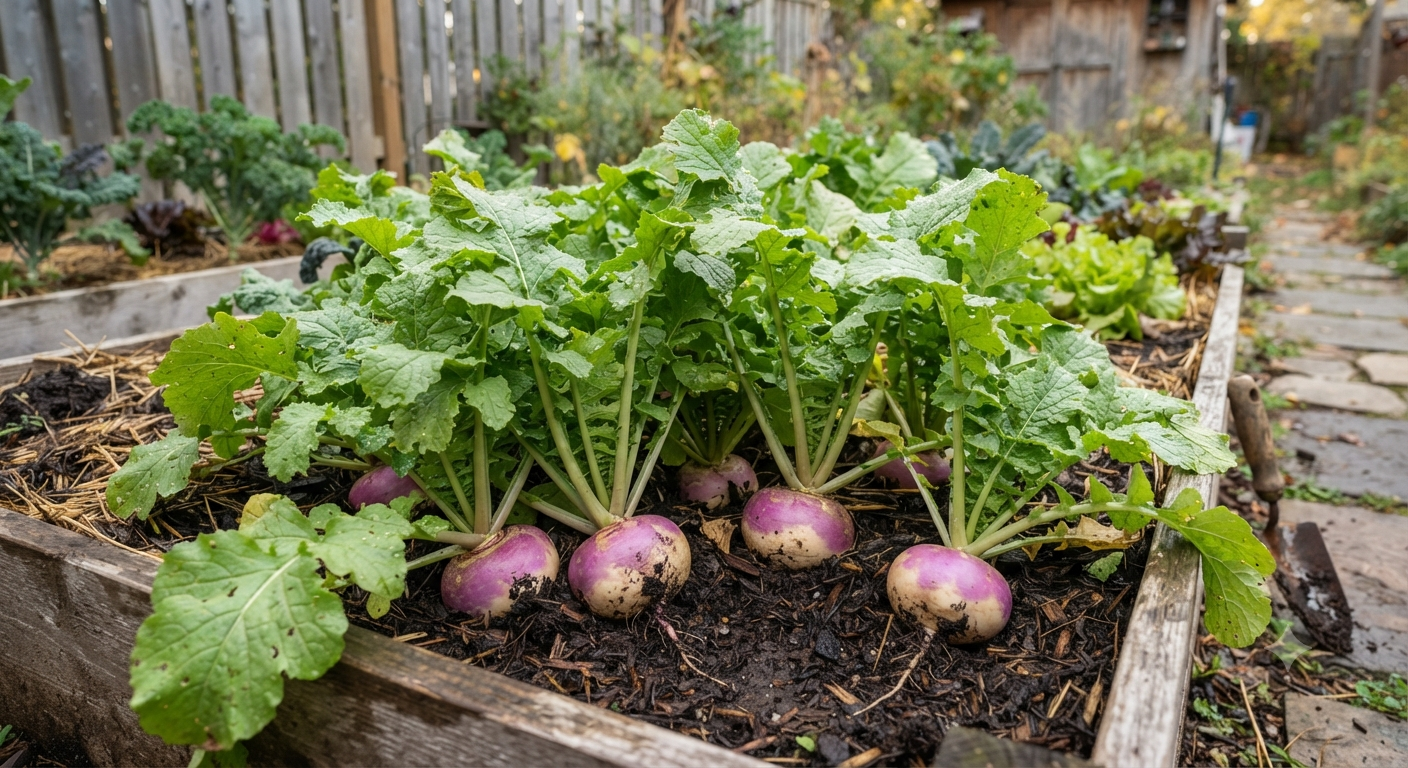
Turnips are one of the fastest vegetables you can grow, which makes them a fantastic option when your growing season is measured in weeks instead of months. Many varieties mature in just 30-50 days, and the greens are edible too, so you’re getting two vegetables out of one planting.
Turnips can handle a hard frost without any protection at all, and like several other root vegetables on this list, the cold actually sweetens the flavor. I’ve harvested turnips from frozen soil in late November and had them taste noticeably milder than the ones I pulled in September.
I’ll be honest, turnips were not on my radar for years because I associated them with bland, mushy cafeteria food. Homegrown turnips, harvested young and roasted with a little olive oil, are a completely different vegetable. Purple Top White Globe is the classic variety, but Hakurei turnips are smaller, sweeter, and honestly my personal favorite for eating raw.
Because they grow so fast, turnips are also a great “insurance crop.” If something else fails in your garden late in the season, you can usually still squeeze in a turnip crop before frost shuts everything down for good.
9. Collard Greens: The Southern Staple That Handles Northern Winters
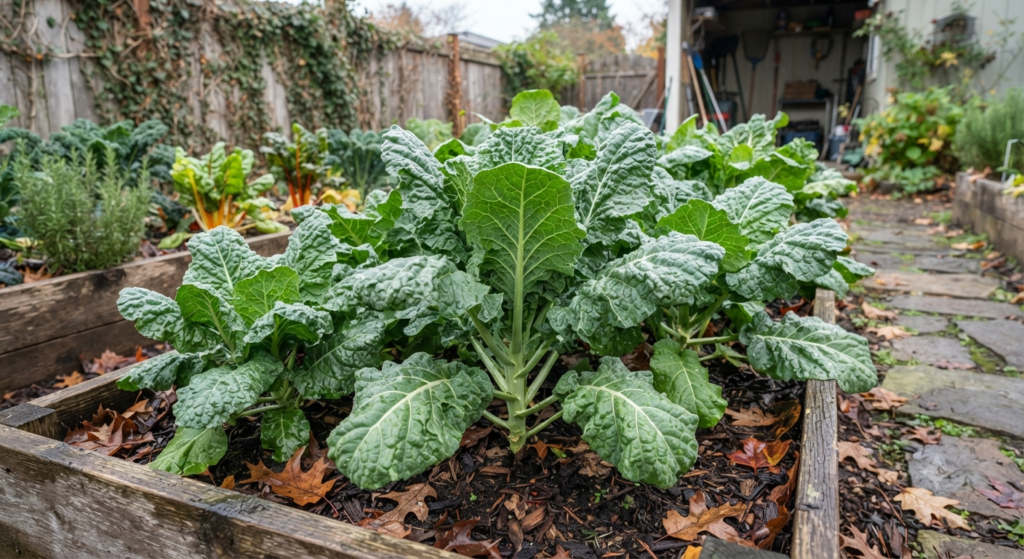
Collard greens have a reputation as a Southern crop, but don’t let that fool you. They’re remarkably cold-hardy and, like kale, actually taste better after a frost or two hits them.
Collards can tolerate temperatures down into the low twenties without protection, and with a simple row cover, they’ll keep producing even colder than that. I’ve picked collard leaves off plants that were half-buried in snow, and they were completely fine underneath.
What I appreciate most about collards in a short-season garden is how forgiving they are. They’re not fussy about soil, they don’t bolt easily, and they keep producing new leaves for months if you harvest properly, meaning you take the outer leaves and leave the center growing point intact.
Georgia Southern and Champion are two reliable varieties for cold climates. I’d also add that collards freeze beautifully, so if a hard freeze is coming and you’ve got more leaves than you can eat, harvest the whole plant and blanch-and-freeze the rest.
10. Cabbage: Slow to Grow, Built to Withstand the Cold
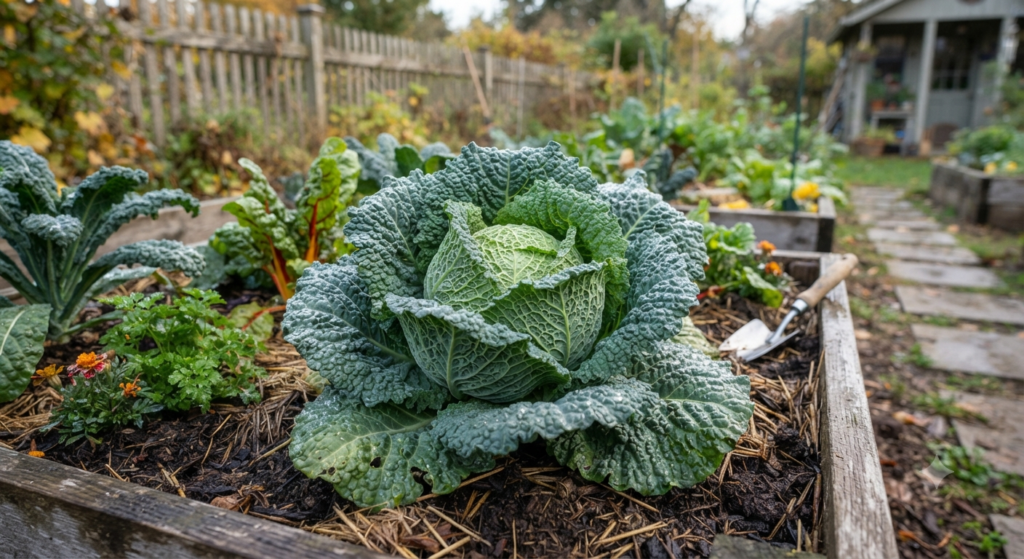
Cabbage takes patience, no doubt about it. Depending on the variety, you’re looking at 70-100 days to maturity. But once it’s established, cabbage handles cold shockingly well, tolerating light frosts without damage and surviving temperatures into the mid-twenties.
I start cabbage indoors in early spring and transplant it out as soon as the soil is workable, since cabbage actually prefers cool weather over hot. In fact, cabbage heads that mature during a heat wave tend to split or turn bitter, so a short, cool growing season can actually work in your favor here.
For genuinely short seasons, look for fast-maturing varieties like Early Jersey Wakefield, which can be ready in as little as 60 days from transplant. That’s a huge difference compared to storage varieties like Late Flat Dutch, which need the better part of a full season.
One thing I wish someone had told me earlier: cabbage heads will split if they mature and then sit in the garden too long, especially after a heavy rain. Once a head feels firm and solid, harvest it. Don’t wait around hoping it’ll get bigger, because you’re more likely to end up with a cracked, wasted head instead.
11. Radishes: The Fastest Vegetable in Your Entire Garden
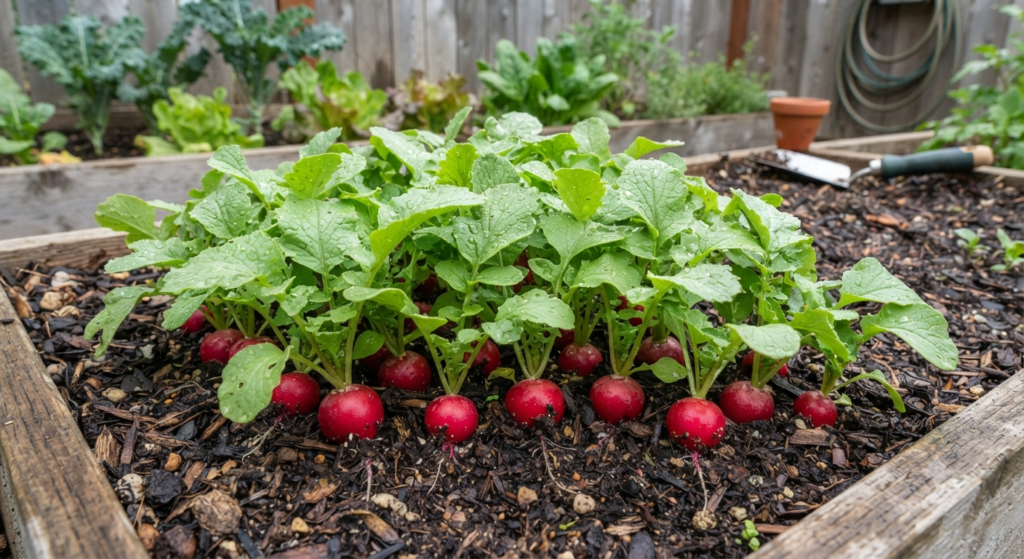
If you need proof that a garden in a short-season climate can still be productive, radishes are it. Many varieties mature in as little as 21-30 days, which means you can squeeze in multiple plantings even in a genuinely brief growing window.
Radishes handle cold exceptionally well, tolerating light frosts without any damage, and some varieties actually develop a milder, less peppery flavor after a cool snap. I plant radishes in early spring as soon as the soil can be worked, then again in early fall for a second harvest before the ground freezes solid.
They’re also a fantastic crop for impatient gardeners, myself included. There’s something genuinely satisfying about planting a seed and pulling a finished vegetable out of the ground less than a month later, especially when everything else in the garden is still weeks away from producing anything.
Cherry Belle and French Breakfast are reliable, fast-maturing varieties. If you want something a little more unusual, Watermelon radishes take longer, closer to 60 days, but they store well and add a striking pop of color to fall harvests.
Bonus: Mache (Corn Salad) for the Truly Brutal Winters
I’m throwing this one in as a bonus because it’s not as well known, but it might be the single toughest salad green you can grow. Mache, also called corn salad, can survive temperatures well below zero with minimal protection, and it actually grows best in cold, low-light conditions that would stall out most other greens.
I discovered mache almost by accident after a gardening friend insisted I try it, and I was skeptical. A green that grows in the dead of winter? It sounded like a stretch. But under a simple cold frame, mine kept producing tender little rosettes of greens through some genuinely miserable weeks, temperatures well into the teens included.
It’s slow to get started and the leaves are small, so don’t expect the volume you’d get from spinach or chard. But if you’re looking for something to fill the gap in the coldest stretch of your season, mache is worth a shot.
Real Talk: What Actually Goes Wrong With Cold-Hardy Gardening
Not everything about cold-season gardening is smooth sailing, and I’d be doing you a disservice if I pretended otherwise.
Timing is everything, and it’s easy to get wrong. I’ve planted things too late more times than I’d like to admit, thinking I had another two or three weeks when I really didn’t. Frost dates are estimates, not guarantees, and a surprise early freeze can wipe out a bed of seedlings that hadn’t hardened off yet. Track your local frost dates closely and plant a bit earlier than you think you need to.
Row covers and cold frames aren’t optional extras, they’re often the difference between success and failure. I resisted buying row cover fabric for years because it felt like an unnecessary expense. I was wrong. A $15 roll of row cover has saved entire beds of greens for me more times than I can count.
Not every “cold-hardy” vegetable is equally cold-hardy. There’s a real difference between a plant that survives a light frost and one that shrugs off a hard freeze. Brussels sprouts and leeks can take a serious beating. Lettuce and some brassicas can handle light frost but will turn to mush in a harder freeze. Know the difference before you count on a harvest.
Soggy soil kills more cold-season crops than cold ever does. Wet, poorly drained soil combined with freezing temperatures is a recipe for root rot, even in vegetables that would otherwise handle the cold just fine. If your garden bed doesn’t drain well, raised beds or heavy mulching become non-negotiable.
Some crops just aren’t worth the fuss in a short season. I’ll say it plainly: full-size storage cabbage and long-season carrots are often more trouble than they’re worth if your window is genuinely tight. You’ll get a better return on your effort from fast growers like radishes, turnips, and spinach. Save the slower crops for years when your season cooperates a little more.
Final Thoughts on Growing Through the Cold
A short growing season doesn’t mean a short vegetable list. Once I stopped fighting my climate and started picking plants that actually wanted the cold, my fall and winter garden became one of the most productive stretches of my whole year, not just an afterthought tacked onto summer.
Start small if this is new to you. Pick two or three vegetables from this list, pay attention to your frost dates, and don’t be afraid to throw a row cover over things when a cold snap is coming. You’ll be surprised how much you can still harvest once everyone else has already put their garden tools away for the season.
What’s the coldest temperature you’ve ever grown a vegetable through, and did it survive? Drop your story, questions, or your own cold-hardy favorites in the comment box below. I read every one, and I’m always looking for new plants to torture-test in my own backyard.

About Syprose Kiche
Syprose Kiche is the creator and writer behind My Besuited Home, a practical home and garden website covering DIY projects, gardening, lawn care, landscaping, home improvement, and outdoor living. She focuses on turning everyday homeowner questions into clear, practical guides backed by careful research and useful real-world considerations.