
Crows picking apart your tomato seedlings the morning after you plant them. Pigeons treating your blueberry bushes like an all-you-can-eat buffet. If you’ve ever walked outside to find your lettuce bed stripped down to nubs, you already know the frustration I’m talking about.
My neighbor Carla used to joke that her garden had a “birds welcome” sign nobody could see but every crow in the county somehow read. She tried the plastic owl from the hardware store. The birds perched on its head within a week. That’s when she called me, and that’s when I remembered why I stopped relying on a single scarecrow and started rotating a whole cast of characters through my garden every season.
Here’s the truth nobody tells you at the garden center: birds are smart, and they get used to things fast. A scarecrow that stays in one pose in one spot for a whole summer stops working after about ten days. The trick isn’t just building one scarecrow. It’s building a rotation of unique, unexpected ones that keep birds guessing. Below are more than ten ideas I’ve either built myself, stolen from fellow gardeners, or fixed after watching them fail spectacularly.
1. Classic Cross-Frame Scarecrow With a Twist

Start with the basics done right. A classic scarecrow is two pieces of lumber or PVC lashed into a cross, dressed in old clothes, and topped with a stuffed head. Simple. But the twist that makes this version actually work is movement.
I use a cross frame made from a 6-foot wooden stake and a 4-foot crossbar, screwed together instead of tied, because zip ties and twine loosen in wind and rain within a month. Stuff an old flannel shirt and jeans with straw or plastic grocery bags for the body. Skip the sad basketball-head look and use a burlap sack stuffed tight, with painted-on features that actually look a little unsettling. Birds respond more to asymmetry and sharp features than to a friendly round smiley face.
The twist: attach the arms loosely at the shoulder joint with a bolt instead of screwing them rigid. That way, even a light breeze makes the arms swing and flap instead of standing frozen. A frozen scarecrow is a piece of furniture to a crow. A moving one is a threat.
Quick side note: paint the “hands” bright white or silver. Birds are wary of unnatural bright spots that flash in the sun, and it adds almost nothing to your build time.
2. Reflective CD and Foil Scarecrow
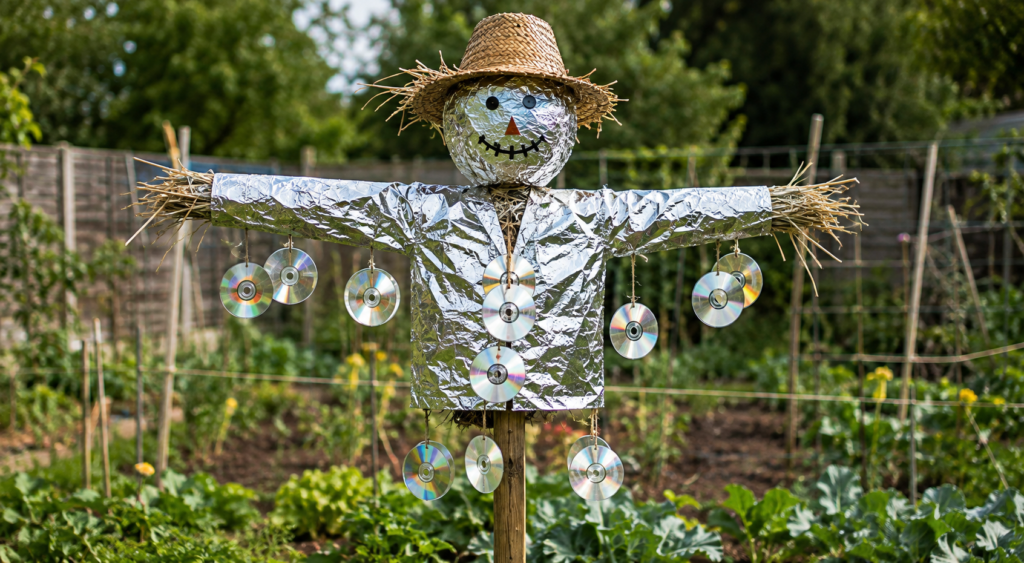
This is the scarecrow idea I recommend most to beginners, mostly because it costs almost nothing if you’ve got a junk drawer full of old CDs and DVDs nobody uses anymore.
String CDs onto fishing line, leaving gaps of six to eight inches between each disc, then hang several lines from the arms and frame of your scarecrow or even directly from nearby tree branches. When the wind moves them, the discs spin and throw erratic flashes of light in every direction. Birds hate erratic, unpredictable light. It reads as danger to them in a way that a steady porch light never will.
I’ve also swapped CDs for strips of aluminum foil cut about two inches wide and a foot long. Foil is noisier in wind, which is actually a bonus here. The combination of flash and crinkle sound does double duty. I once hung foil strips off my pepper plants during a particularly bad grackle invasion, and within three days, the flock had moved two yards over to bother somebody else’s garden instead.
The one thing I’ll warn you about: don’t overdo the density. If you cover every square foot in shiny material, birds eventually habituate to a garden that always looks and sounds like a disco. Space things out, and move them every couple of weeks.
3. Predator Silhouette Scarecrow
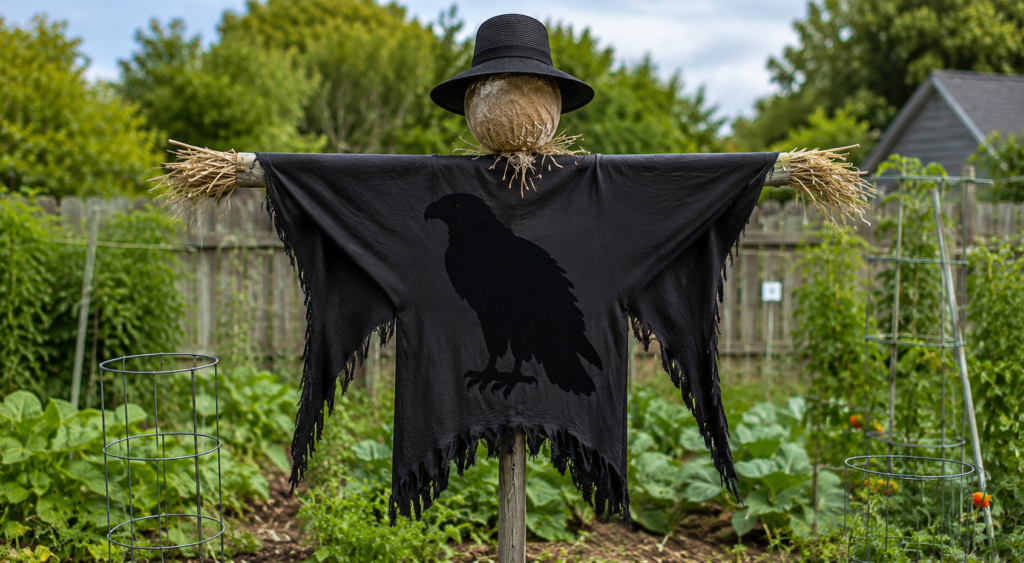
Forget the human shape entirely for this one. Predator silhouettes work because birds are hardwired to recognize the outline of a hawk or owl, even a flat, two-dimensional one, and that recognition triggers a flight response faster than any human-shaped figure ever will.
Cut a hawk silhouette out of thin plywood or heavy-duty plastic sheeting. You want a wingspan of at least two feet for it to read as convincing from a distance. Paint it matte black or dark brown, since a glossy finish looks fake even to a bird brain. Mount it on a pole that lets it pivot slightly in the wind, because a silhouette that never moves gets ignored just as fast as a plastic owl.
Height matters here more than people think. Mount your predator silhouette above the height of your tallest crop, ideally six to eight feet up, so it’s visible against the sky the way a real hawk would be while circling. A silhouette hidden at ground level among your tomato cages isn’t doing you any favors.
I rotate two of these on opposite corners of my garden and switch their positions every week or so. Consistency in exact placement is actually the enemy here. Birds map your garden the same way you’d map a neighborhood, and if the “hawk” is always in the exact same spot, they eventually clock it as harmless.
4. Wind-Powered Pinwheel Scarecrow

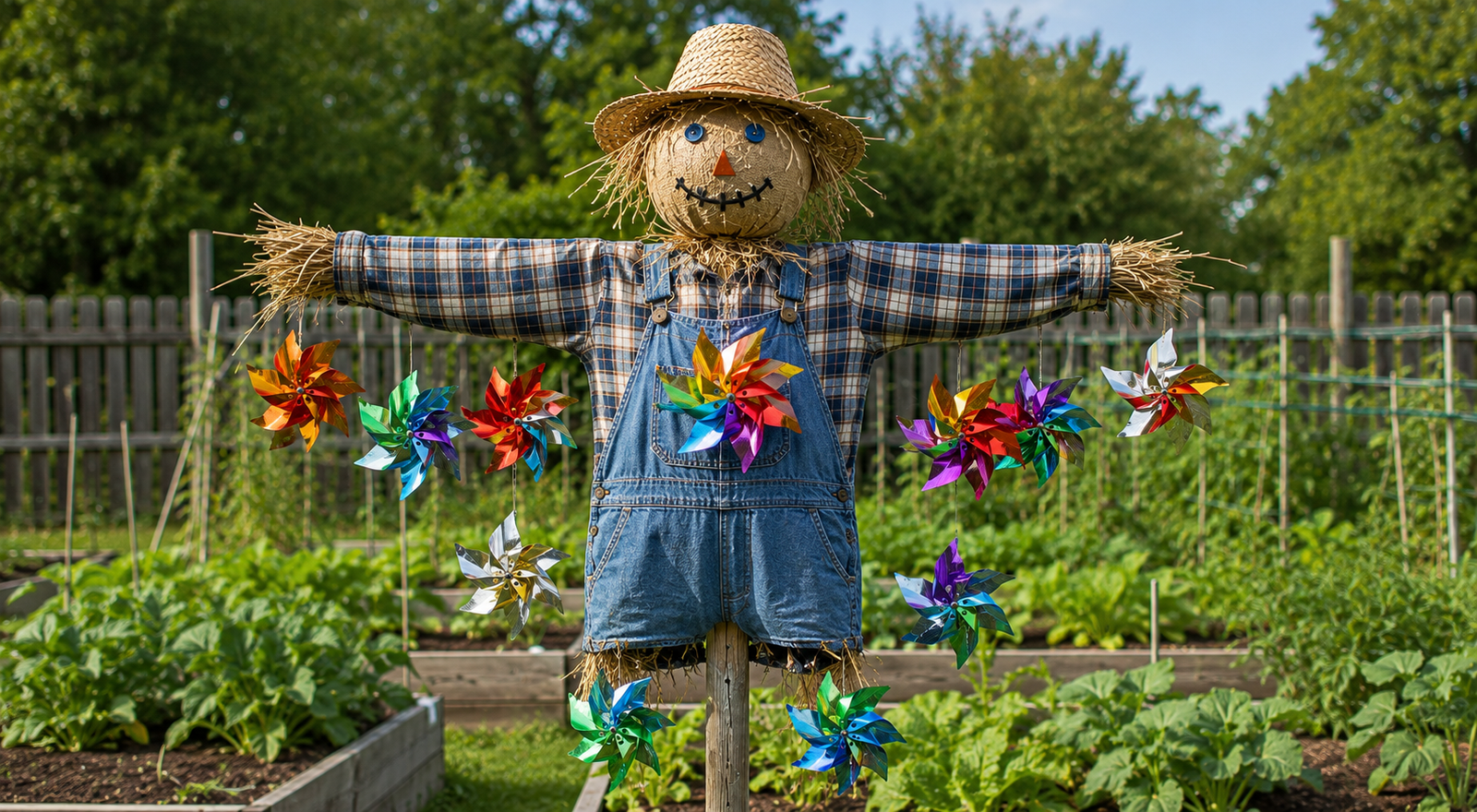
If you’ve got grandkids or just like a garden that looks a little whimsical, a pinwheel scarecrow earns its keep on both fronts. Build a standard scarecrow frame, then instead of stuffed hands, attach large metal or heavy plastic pinwheels at the ends of each arm.
The spinning motion combined with the flash of metallic pinwheel blades catches light constantly, not just when the wind happens to catch a flat surface right. I like the metallic dollar-store pinwheels over the cheap plastic craft store ones because they hold up to weather and actually spin in a light breeze instead of needing a stiff gust.
Add two or three extra pinwheels staked directly into the ground around the base of your raised beds for extra coverage. This works especially well in vegetable patches where birds tend to land and walk the rows rather than swoop in from above, like with corn and strawberry patches.
One thing to keep in mind: pinwheels need real wind to work. If your garden sits in a sheltered spot with a fence or hedge blocking most airflow, this idea underperforms compared to something like the CD-and-foil version, which reacts to even minimal breeze.
5. Snake Decoy Scarecrow Combo
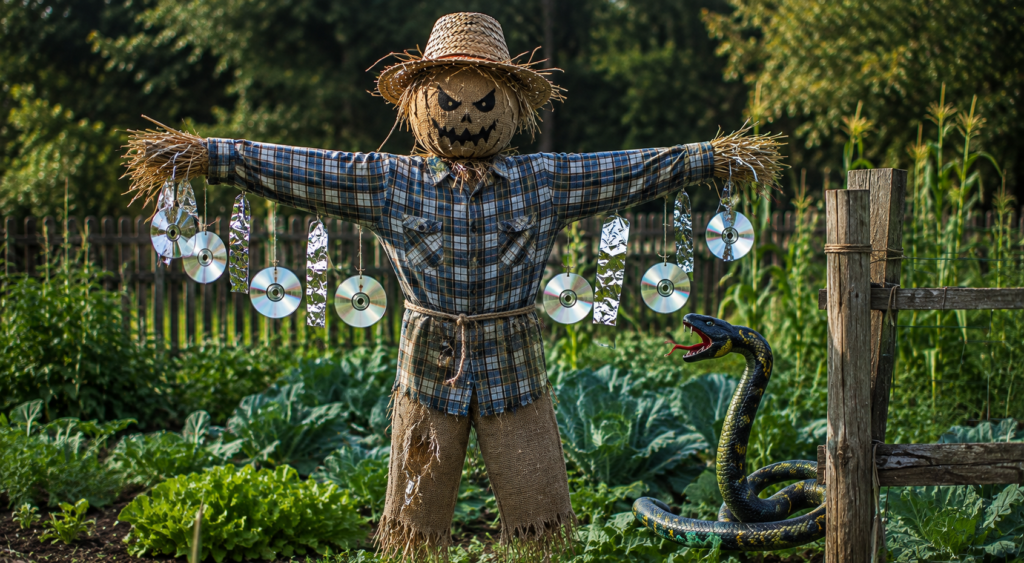
This one surprises people, but pairing a rubber snake decoy with your scarecrow setup adds a second layer of deterrent that covers ground-feeding birds your upright scarecrow can’t scare off alone.
Drape a realistic rubber snake across the base of your scarecrow’s pole, or coil it directly in the mulch near your strawberry beds and lettuce rows. Ground-feeding birds like robins and starlings are far more wary of a snake shape at soil level than anything hanging above their heads, since a snake is a real, immediate predator threat to them in a way an upright scarecrow never quite triggers.
Move the snake decoy every few days. Leave it in one exact spot for a month and even birds will eventually walk right past it once they realize it never actually moves. I keep two decoys and swap their positions on trash day, which is an easy habit to build into a routine you’re already doing.
Buy a decoy with some texture and a matte finish rather than the shiny toy-store version. The glossy plastic snakes read as toys even to birds, but a duller, more textured rubber snake with some paint variation looks convincing enough to do the job.
6. Scarecrow Family or “Garden Gang” Display

Instead of one lone scarecrow standing guard, build a small group of two or three figures positioned at different points around your garden. This works on a psychological level that a single scarecrow can’t match, since birds see multiple “people” watching the garden from different angles, which reads as a higher level of activity and risk.
Give each figure in your garden gang a different pose and outfit so they don’t all look like clones of one another. One with arms raised straight up, one with arms out to the sides, one seated on an overturned bucket like it’s taking a break. Variety in posture matters because birds pattern-match on shape and silhouette, and three identical shapes get sorted into “same non-threat” faster than three different ones.
I built my garden gang out of old work clothes my husband was ready to toss, and honestly, it’s become a bit of a neighborhood attraction. People walking their dogs stop to look at “the family” guarding my tomatoes. That’s not the main goal, but I won’t pretend the compliments don’t feel nice.
Quick side note: dress at least one figure in a hat with a wide brim. Broad-brimmed hats create a bigger, more unpredictable silhouette from above, which matters more than you’d think for birds circling before they decide to land.
7. Motion-Activated Scarecrow With Sound

For gardeners who want something a step beyond the classic straw-stuffed figure, a motion-activated device paired with a scarecrow shape is worth the investment, especially if you’re dealing with a persistent, smart bird population like crows that have already figured out your other tricks.
These typically combine a motion sensor with a sudden burst of sound, a spray of water, or a flash of light. I’ve had the best results pairing a motion-sensor sprinkler with a simple scarecrow figure standing right behind it. Birds that get startled by an unexpected blast of water while approaching the “guard” figure quickly associate the whole area with danger, not just the sprinkler itself.
Battery life is the main downside here. Cheaper units burn through batteries fast, especially if squirrels or rabbits keep triggering false alarms. I’d recommend a rechargeable, solar-powered version if your garden gets decent sun, since it saves you the hassle of swapping batteries every couple of weeks during peak growing season.
This option costs more upfront than a straw-and-flannel scarecrow, but if you’re protecting a significant harvest, like an orchard or a large berry patch, the investment pays for itself the first season you don’t lose half your crop.
8. Recycled Materials Scarecrow
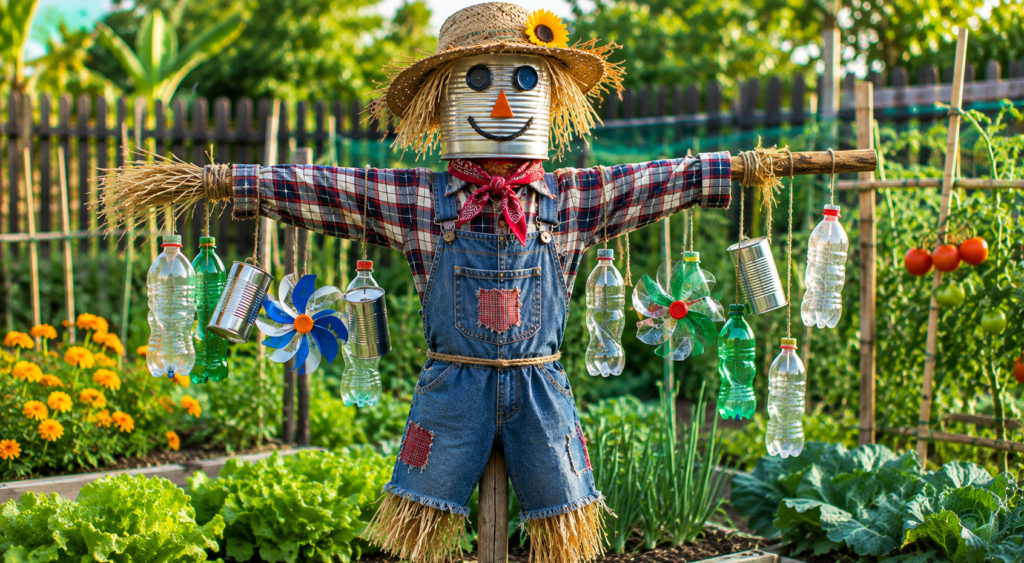
You don’t need to buy anything new to build an effective scarecrow, and honestly, some of my favorite builds have come entirely from stuff that was headed for the trash. Old broom handles become the frame. Mismatched gloves become hands. A cracked colander makes a surprisingly good head once you paint a face on it.
Milk jugs cut into strips and hung from the arms create both movement and noise in the wind, similar to the foil trick but with zero cost since you’re already buying milk anyway. Old CDs, bottle caps strung on wire, strips of old bedsheets torn into ragged streamers, all of it adds texture and unpredictable motion that keeps birds unsettled.
This approach also lets you go bigger without worrying about cost. I’ve seen gardeners build entire scarecrow families out of nothing but recycled clothing donations and yard sale finds, spending less than ten dollars total on paint and hardware.
The only downside is durability. Recycled materials, especially cardboard or thin plastic, break down faster in weather than purpose-bought materials. Expect to do more frequent touch-ups and replacements throughout the season, but for the price, that’s a trade I’ll make every time.
9. Scarecrow With Wind Chimes

Sound deters birds just as effectively as sight, sometimes more so, and wind chimes hung from your scarecrow’s arms or frame add a layer of unpredictable noise that visual-only scarecrows can’t offer.
Metal chimes work better than wood or bamboo here, since the sharper, more clanging tone reads as more alarming to birds than the softer, more soothing tones wood chimes produce, the very quality that makes wood chimes pleasant for humans sitting on a porch. Hang two or three sets at different heights on your scarecrow frame so the sound layers rather than playing in unison.
I’ll admit this one is as much for me as it is for the birds. There’s something satisfying about sitting on my back porch with a glass of iced tea, listening to the chimes clang away while knowing they’re doing double duty protecting my raspberry canes.
If you’ve got close neighbors, be mindful of chime placement and volume. A gentle set near a vegetable bed is one thing. A dozen loud metal chimes going off in a stiff wind at 6 a.m. is a good way to end up on the receiving end of a strongly worded note taped to your fence.
10. Seasonal or Holiday-Themed Scarecrow
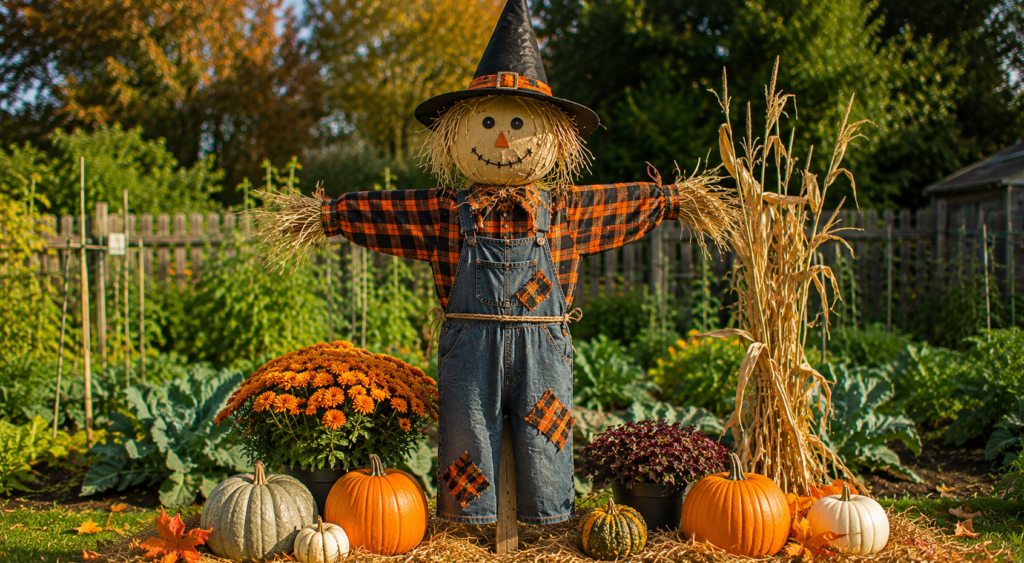
Building a scarecrow that changes with the season keeps your garden looking intentional and gives you a natural excuse to refresh the design, which, as I mentioned earlier, is one of the best tricks for keeping birds from getting too comfortable.
A fall version dressed in flannel with a pumpkin head works during harvest season. Swap that out for a summer version in a straw hat and sunglasses once the calendar flips. Even small seasonal tweaks, a new scarf, a different hat, a repainted face, are enough to reset a bird’s familiarity with the figure.
This idea works especially well if your garden doubles as a space you show off to visitors or use for photos. A scarecrow that matches the season adds a decorative element on top of the practical bird deterrent, which is a win on both fronts if you’re the type who likes your garden to look good in every photo, not just functional.
I switch my main scarecrow’s outfit four times a year, once per season, and repaint the face each time. It’s maybe twenty minutes of work, and it keeps the bird deterrent effect fresh in a way that a static figure never manages on its own.
11. Tall Balloon or Eye-Spot Scarecrow
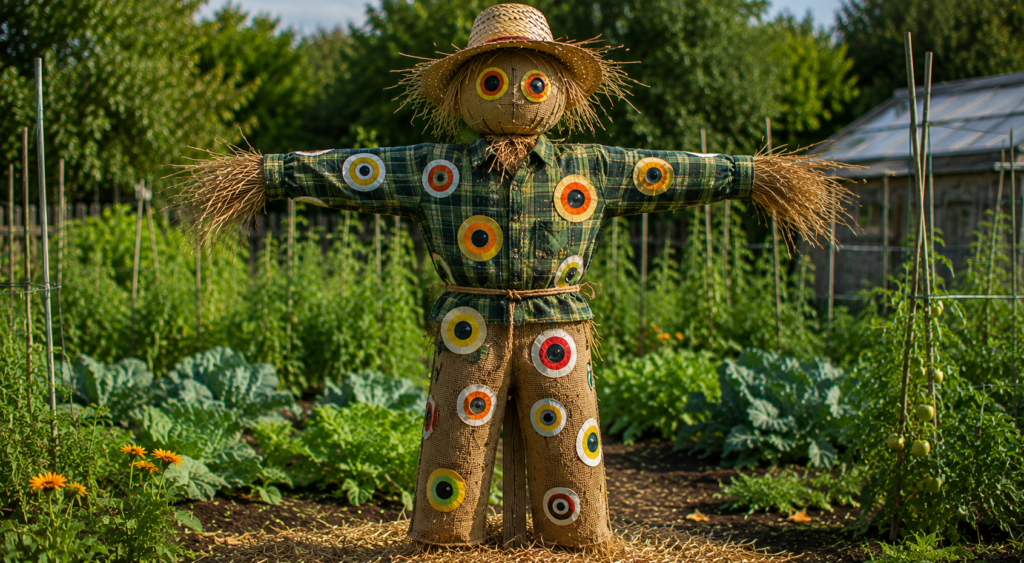
Large beach balls or balloons painted with big, exaggerated eyes, sometimes called predator-eye balloons, work on a simple but effective principle. Birds are deeply wired to avoid direct eye contact from what looks like a predator, and a big pair of painted eyes staring back triggers that instinct even without a full body attached.
Paint or buy balloons with large, high-contrast eye patterns and hang them at multiple heights throughout your garden, especially near fruit trees and berry bushes where birds tend to land directly on branches rather than approach from the ground. Let them bob and sway freely rather than anchoring them rigid, since the unpredictable movement adds to the effect.
I hung three eye-spot balloons in my cherry tree last spring after losing nearly a third of my crop to robins the year before, and the difference was noticeable within the first week. I’m not going to claim it was purely the balloons and not a combination of everything else I had going on in the garden that year, but I will say I haven’t gone back to a cherry-less summer since.
Balloons degrade in UV light faster than most other materials on this list, so budget for replacing them every month or two if you live somewhere with intense summer sun.
12. Bonus: The Rotating Scarecrow Schedule
Here’s the part almost nobody talks about, and it matters more than any single scarecrow design on this list. Birds adapt. Fast. Whatever scarecrow idea you pick from above, the real secret to long-term success is rotating between at least three different types throughout the growing season instead of committing to one and leaving it up all summer.
I keep a simple rotation going: predator silhouette for two weeks, then swap to the CD-and-foil version, then the snake decoy combo, then back around. It takes maybe fifteen minutes every couple weeks to swap things out, and it’s the single biggest factor in why my garden still gets protected in August the same way it did in May.
Real Talk: What Doesn’t Work (and What’s a Waste of Your Time)
I’ve built more bad scarecrows than good ones over the years, so let me save you some trial and error.
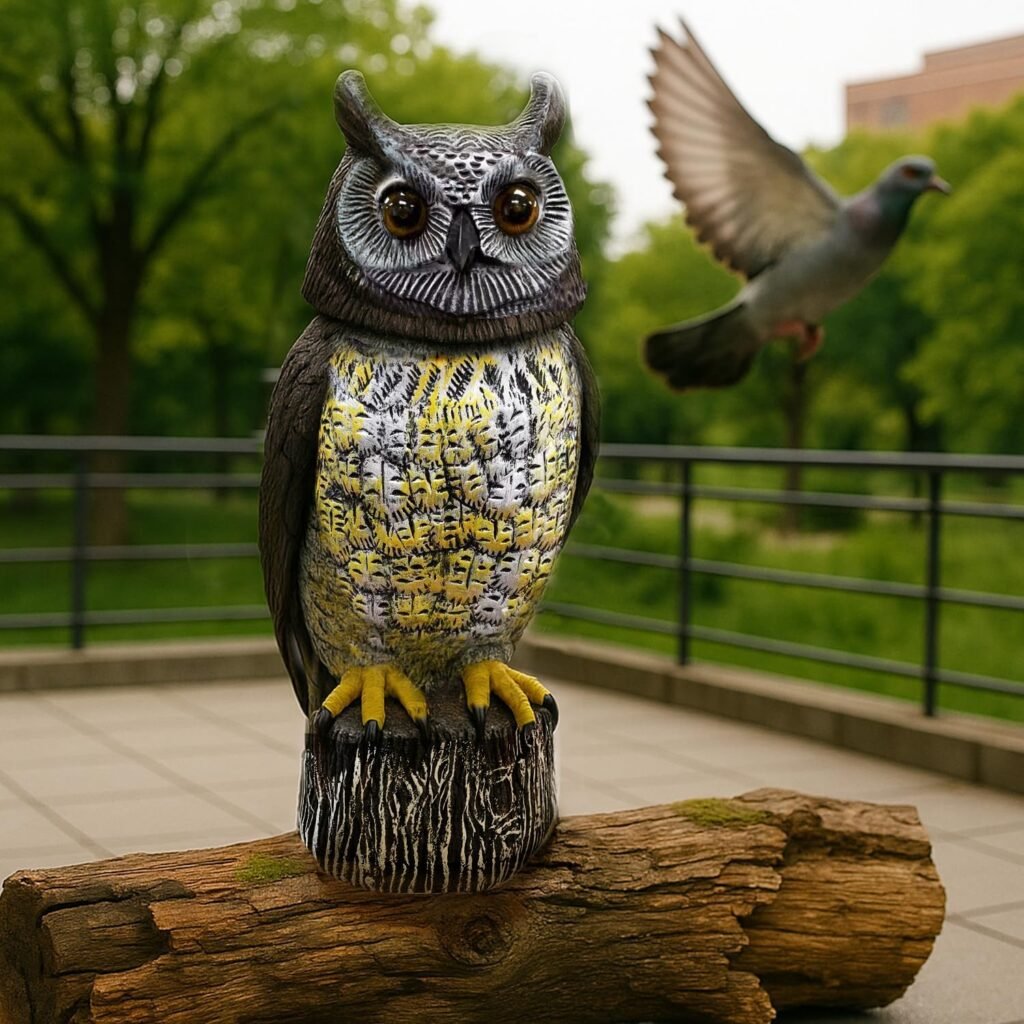
Plastic owls sitting on a fence post, alone and unmoving, are close to useless after the first week. Birds figure out fast that a plastic owl never blinks, never turns its head, and never actually does anything. I’ve found that spending twenty dollars on one of these at the garden center is a total waste of money, even if it looks convincing sitting in the display at the store.
Scarecrows placed too close to the ground don’t do much for birds circling overhead looking for a place to land. If your scarecrow’s head sits at three feet, it’s basically invisible to a hawk-wary crow scanning from thirty feet up. Get height into your build whenever the crop allows for it.
Leaving any scarecrow in the exact same pose, in the exact same spot, for the entire season is probably the single biggest mistake I see in other people’s gardens. It doesn’t matter how scary or well-built the figure is if it never changes. Birds are smarter than we give them credit for, and a static scarecrow becomes part of the scenery within two to three weeks, tops.
And one more thing worth admitting: scarecrows alone won’t fully solve a serious bird problem in a large orchard or commercial-scale planting. For small to mid-sized home gardens, a well-rotated scarecrow strategy works great. For bigger operations, you’ll likely need to pair scarecrows with netting or other physical barriers to get real results.
Parting Wisdom
The best scarecrow isn’t the fanciest or the most expensive one you can build. It’s the one you’re willing to move, swap, and rebuild every couple of weeks, because that unpredictability is what actually keeps birds guessing. Pick two or three ideas from this list, build them with whatever’s sitting in your garage or junk drawer, and rotate them through your garden all season long.
Have you tried any of these scarecrow ideas in your own garden, or have a trick that’s worked better than anything on this list? Drop it in the comments below. I’m always looking to steal a good idea for next season.

About Syprose Kiche
Syprose Kiche is the creator and writer behind My Besuited Home, a practical home and garden website covering DIY projects, gardening, lawn care, landscaping, home improvement, and outdoor living. She focuses on turning everyday homeowner questions into clear, practical guides backed by careful research and useful real-world considerations.