
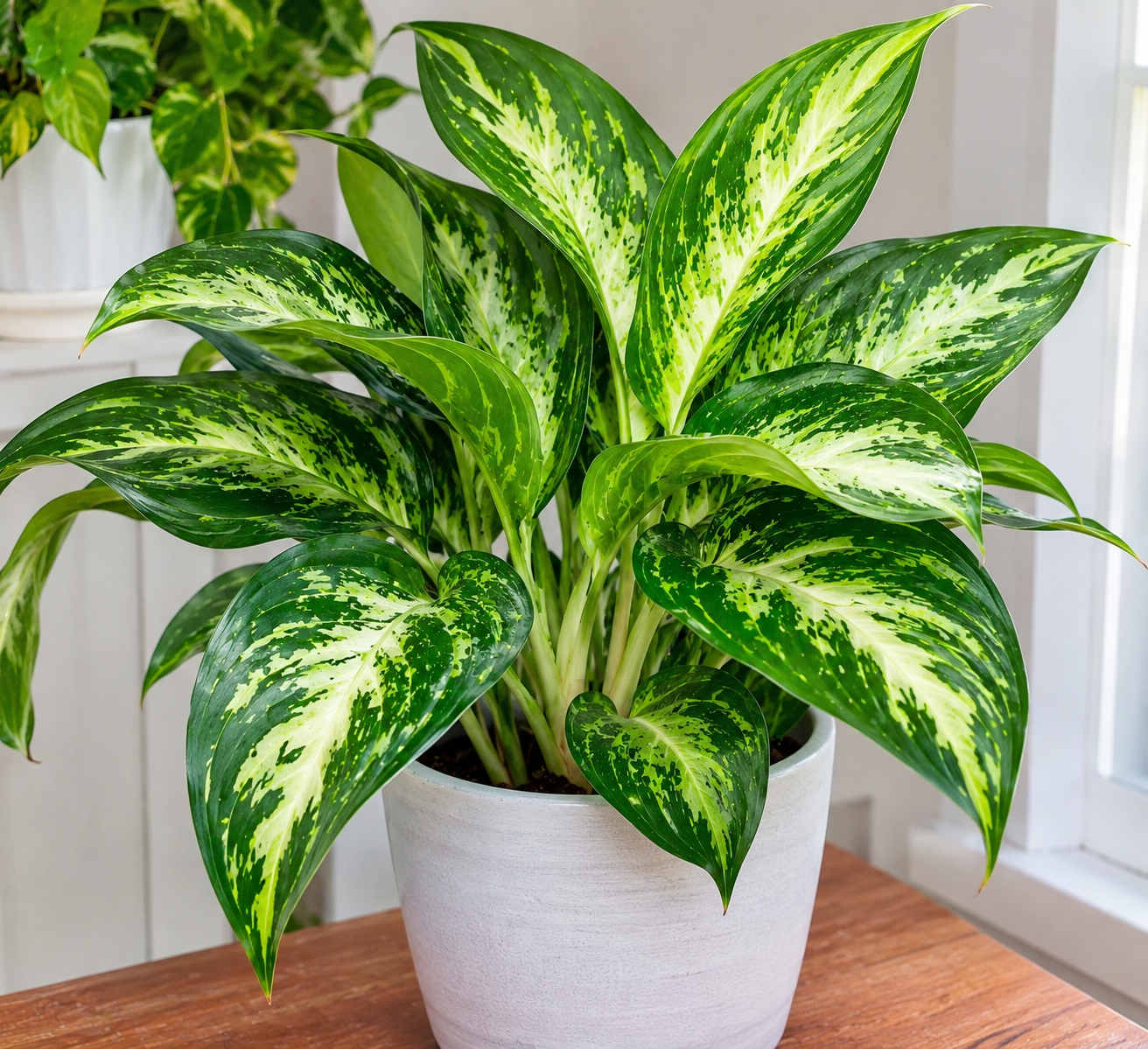
The aglaonema in a nursery photo and the aglaonema on your shelf six months later are not always the same plant. The deep pink and hot red that sell these plants are at their strongest in the bright, warm conditions of a commercial greenhouse, and they are widely reported to drift toward green when the plant moves into a dim hallway. The silver-and-green types barely change at all. That gap between the tag photo and the living room is the single most useful thing to understand before choosing one.
Aglaonema, usually sold as Chinese evergreen, covers a huge range, from nearly indestructible green and silver foliage plants to pink and red hybrids that want more light and warmth. The thirteen below are grouped by what they ask of you, so you can match the plant to the room instead of hoping the room adapts.
Why Pink Aglaonema Fade While Silver Ones Hold Their Look
In most aglaonema, the green is chlorophyll, and the silver, cream, pink, and red areas are patches where that green is reduced or replaced by other pigments. The usual explanation for fading is that a plant in weak light makes more green tissue to catch what light there is. Pink and red leaves are a trade-off the plant can afford only when light is plentiful. Pale and white leaves carry the same logic one step further: with less green to work with, they grow more slowly and scorch more easily.
Silver varieties sit in a safer middle. Their silvery sheen comes from the pattern of the leaf rather than from pigment that needs bright light to stay vivid, which is why a silver aglaonema in a so-so room generally still looks like itself.
This gives you a simple rule for the rest of the article. The more color a variety shows beyond green and silver, the brighter its spot needs to be, and the less forgiving it will be of a dark corner.
Two cautions before the list:
- Names are slippery. Many aglaonema sold today are hybrids bred and trademarked by growers, and the same plant can be sold under different names, or different plants under the same one. ‘Siam Aurora’ and ‘Red Siam’ are a common example. If a leaf pattern in a photo is what you want, buy the plant you can see, not the label.
- Sizes are ranges, not promises. Growth depends on light, pot size, and temperature. The sizes below describe what a healthy indoor plant commonly reaches, and they are approximate.
The Dependable Green and Silver Group
These four are the ones to choose for an average room, a shaded office, or anyone who has already lost a few houseplants. Clemson Cooperative Extension describes Chinese evergreen as one of the most durable houseplants, tolerant of poor light, dry air, air-conditioning, and drought, and this group is where that reputation comes from.
1. Silver Bay
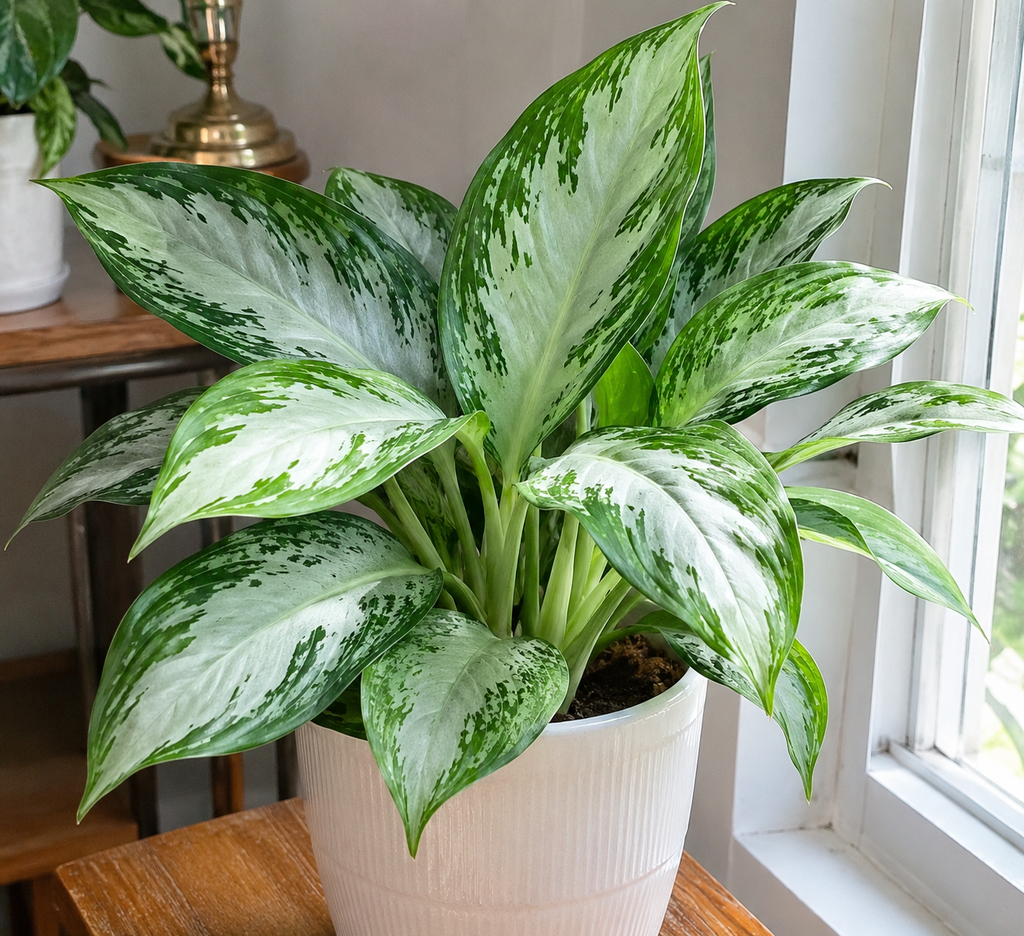
If one aglaonema had to represent the whole genus, it would probably be this one. The large leaves are silvery gray-green through the middle with darker green edges, and the plant grows into a full, rounded clump rather than a thin stalk. Indoors it commonly reaches somewhere around two to three feet.
Silver Bay earns its popularity by being forgiving without being dull. It handles medium light well, puts up with low light better than most, and the silver pattern looks deliberate in almost any pot. Because the leaves are big, they collect dust that dulls the pattern, so wiping them with a damp cloth every few weeks makes a visible difference.
2. Maria
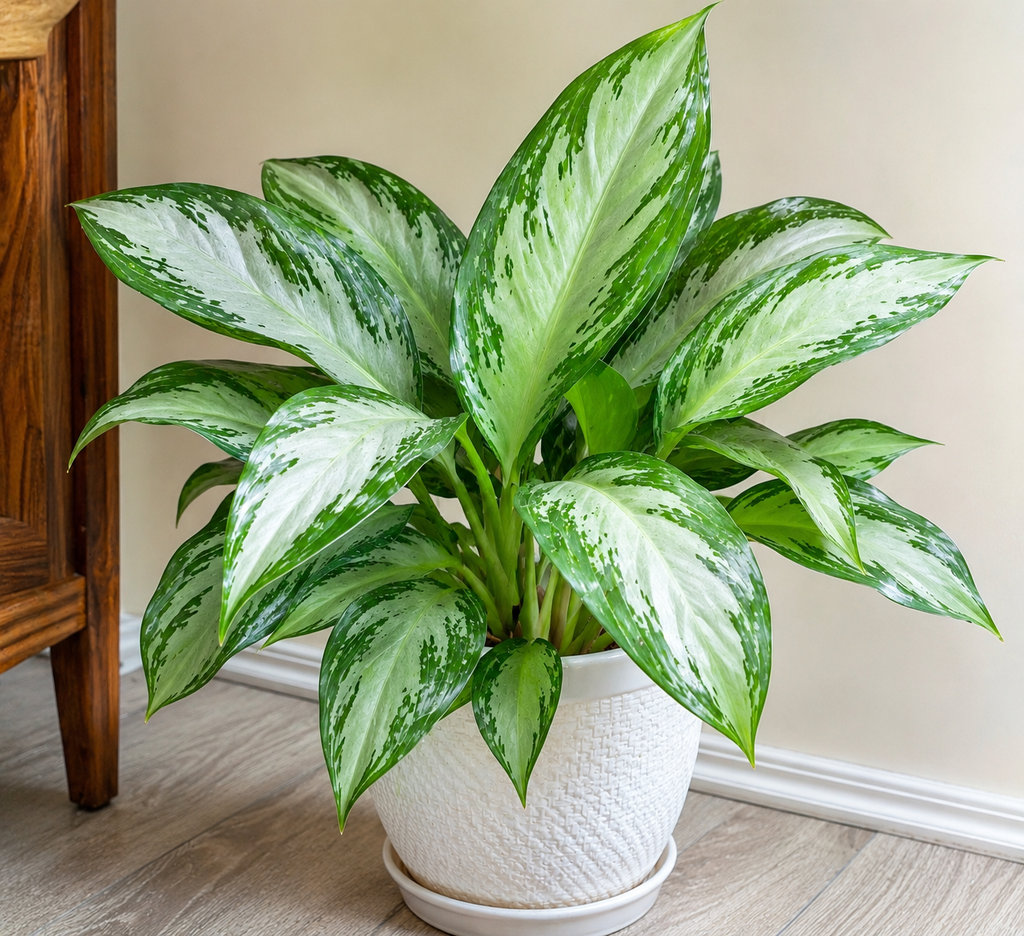
Maria is a classic Aglaonema commutatum selection with dark green leaves feathered with gray-green. It looks darker and more serious than Silver Bay, and it is the one often recommended for dim spots because it keeps its color in lower light than the showier types.
The trade-off is drama. If you want something that makes a visitor stop and ask what it is, Maria will not do that. If you want something that still looks healthy in a north-facing room in February, it will.
3. Emerald Beauty
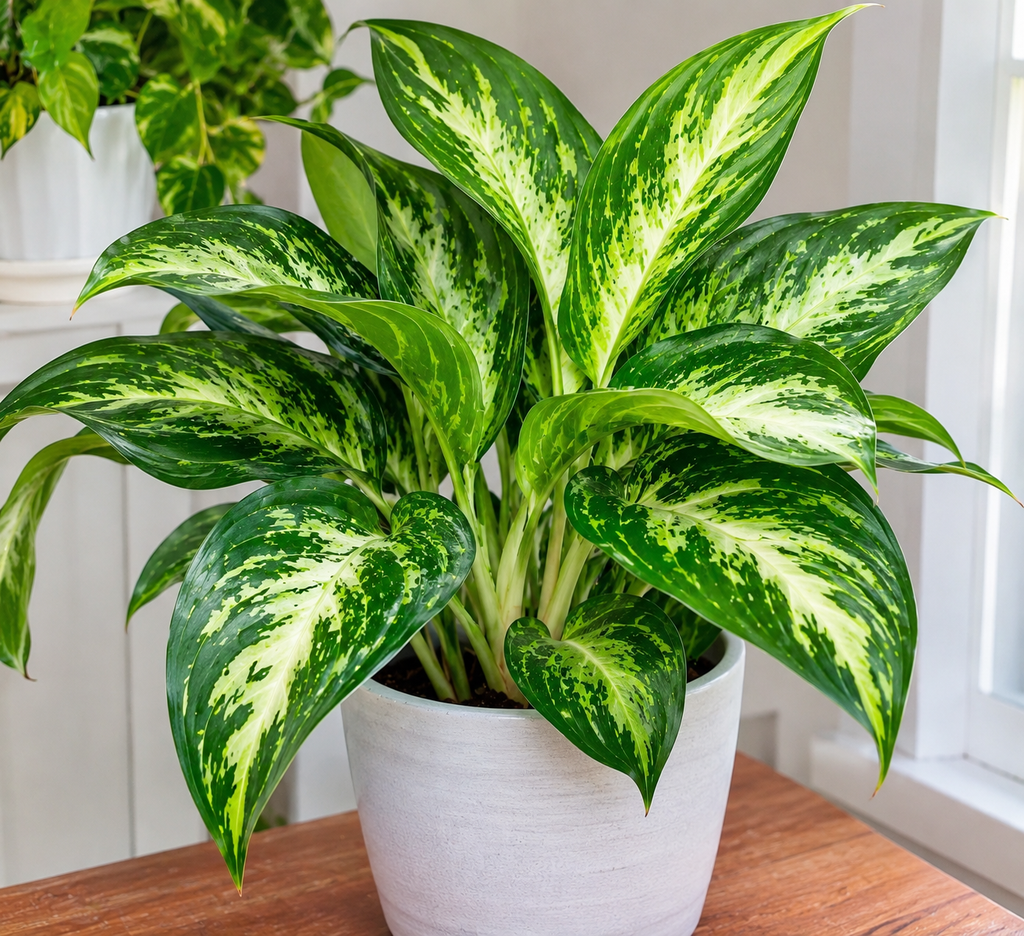
Dark green leaves with a pale gray-green or cream marking running along the center of each leaf make Emerald Beauty look a little like a painted leaf. It is a tidy plant, and it grows more slowly than the larger silver cultivars, which suits a shelf or desk where a plant that doubles in size would become a problem.
Slow growth cuts both ways. A mistake, such as overwatering, takes longer to show and longer to recover from, so water by checking the soil rather than by schedule.
4. Silver Queen
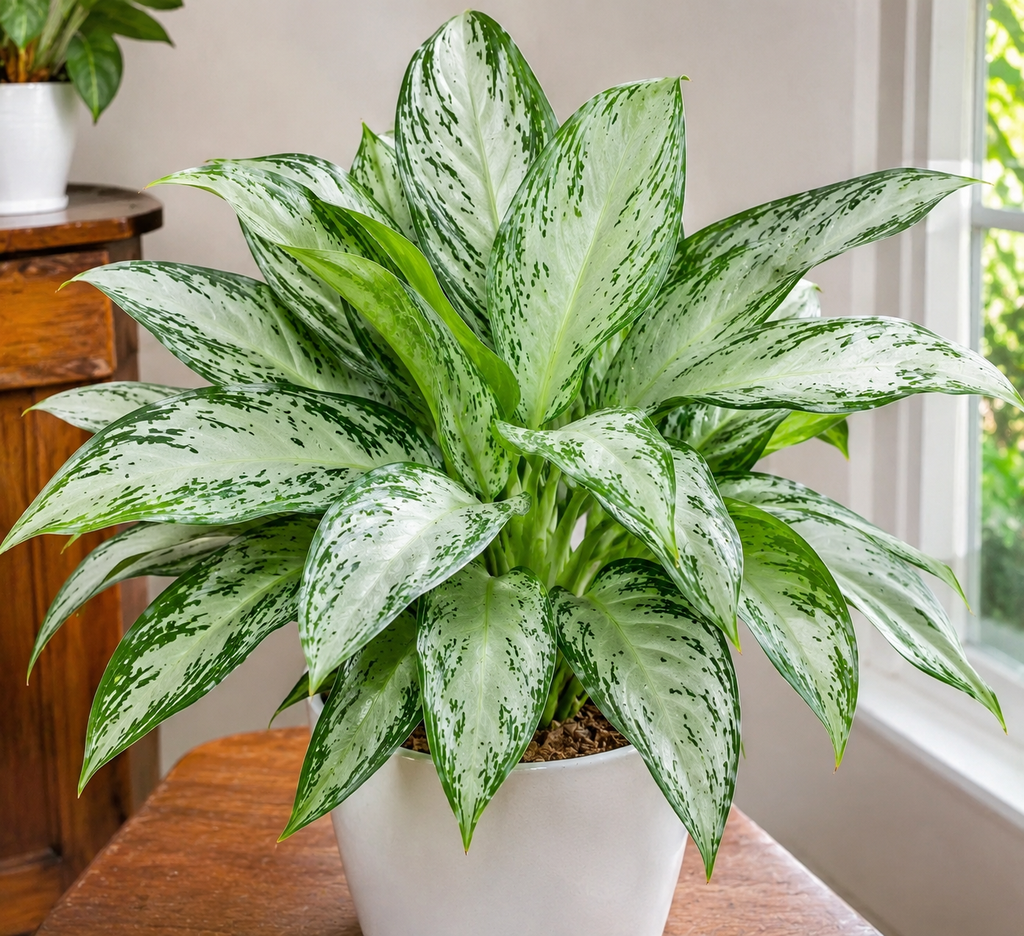
Silver Queen is one of the older silver cultivars, with leaves heavily washed in silver and thin dark green borders. It is similar enough to Silver Bay that nursery tags are sometimes interchanged, so compare the plants themselves rather than trusting the label. Both handle ordinary indoor conditions without much fuss.
It is a sensible pick for a mixed grouping of plants where you want a pale, cool tone beside darker foliage like a snake plant or a ZZ plant, without adding a plant that needs special treatment.
The Pale and Patterned Group
These four lean on pattern and texture rather than pink or red. They tend to be a little more particular, mostly because less green means less capacity to cope with stress.
5. Snow White
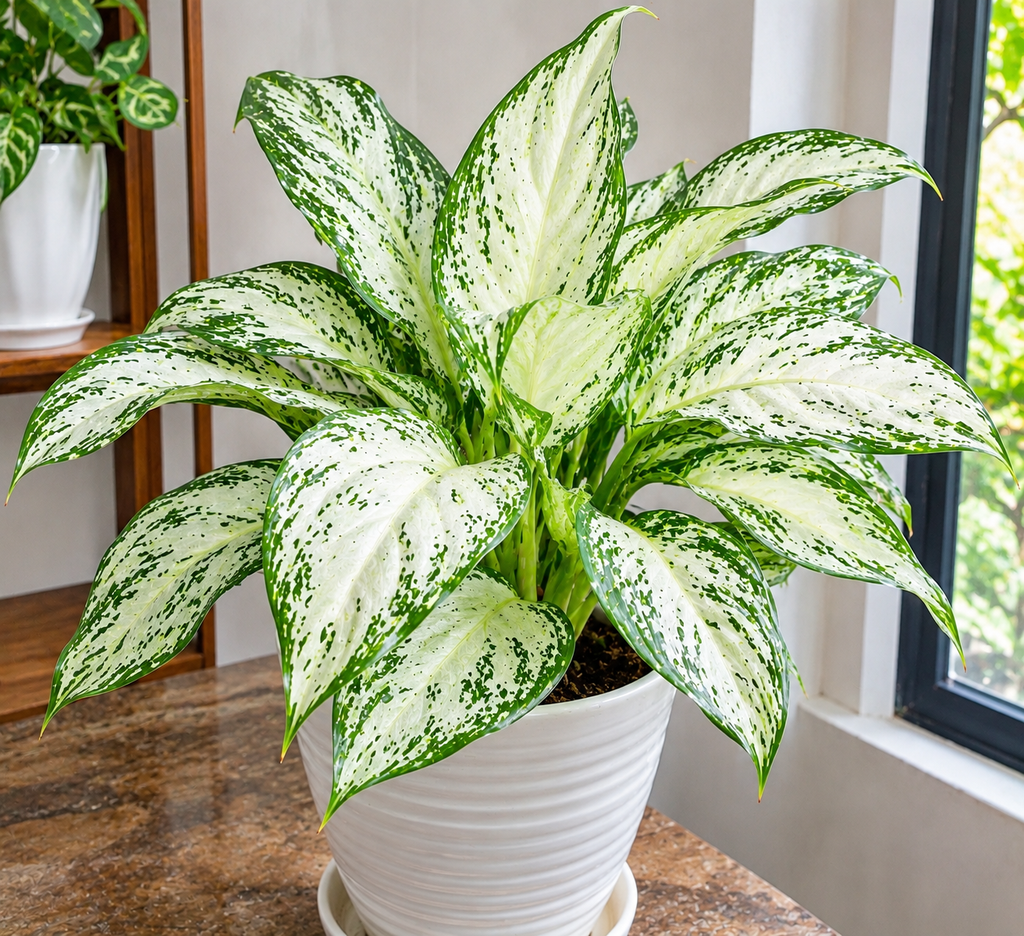
Snow White is the aglaonema for people who want a pale plant. The leaves carry so much cream and white that the green seems to be the accent. Against a dark wall or a charcoal planter it can look almost luminous.
Because there is less chlorophyll doing the work, expect slower growth and leaves that scorch more readily in direct sun. Give it bright indirect light, such as a few feet back from an east window, and never a spot where afternoon sun lands on the leaves. Brown, papery patches on the pale areas are the usual sign it is getting too much.
6. Green Papaya
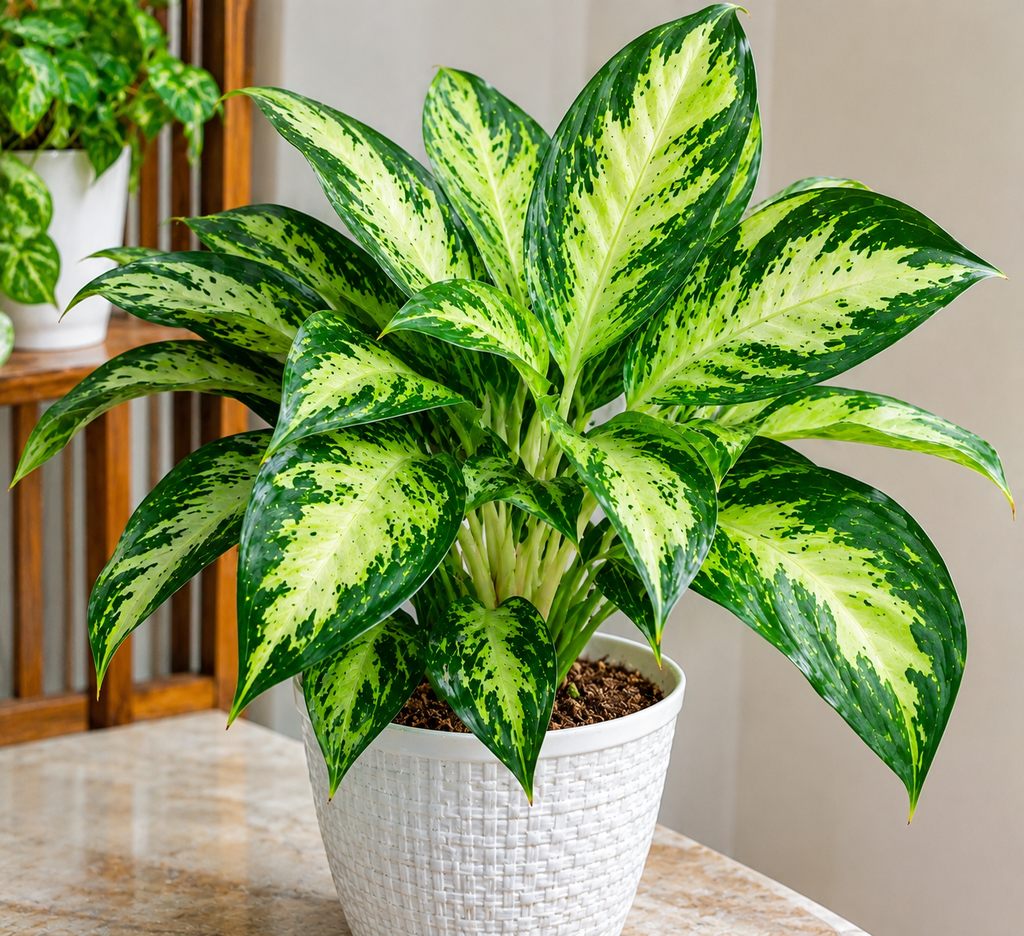
Green Papaya takes the opposite approach to Snow White. The leaves are bright, fresh green with darker green mottling, and the whole plant reads as lush rather than colorful. It is a good fit for someone who wants a plant that looks tropical without pink and red tones competing with a room’s color scheme.
Since this is a newer, grower-named hybrid, sizes and exact leaf pattern vary between suppliers, so treat the details as a general description and check the plant in front of you.
7. Costatum
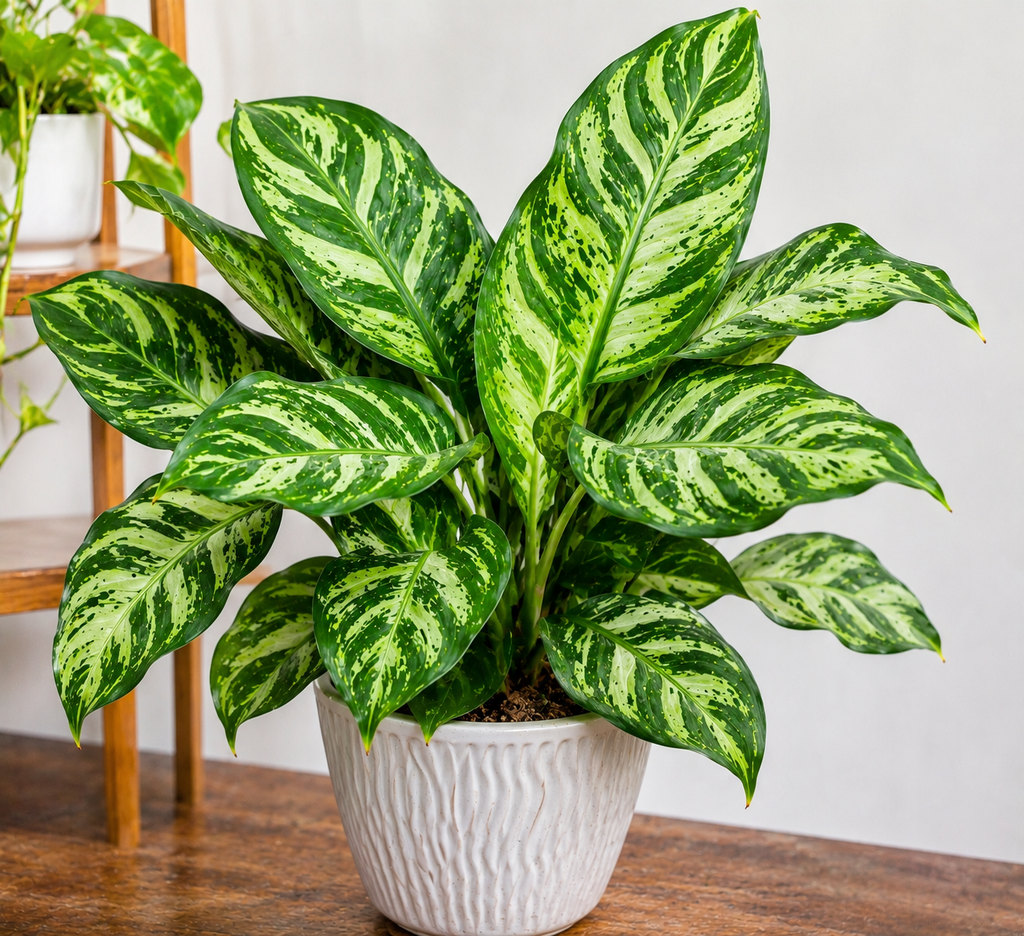
Also known as spotted evergreen, Aglaonema costatum is a true species rather than a hybrid. It stays low and compact, often well under two feet, with dark green leaves, a bold white midrib, and white flecks. It is the one to choose for a tabletop, a bookshelf, or a terrarium-style display on a large container.
It likes a steadier, slightly more humid environment than the big silver hybrids and is slower to put out new growth. In a dry, drafty room, leaf tips are the first place trouble appears.
8. Pictum Tricolor
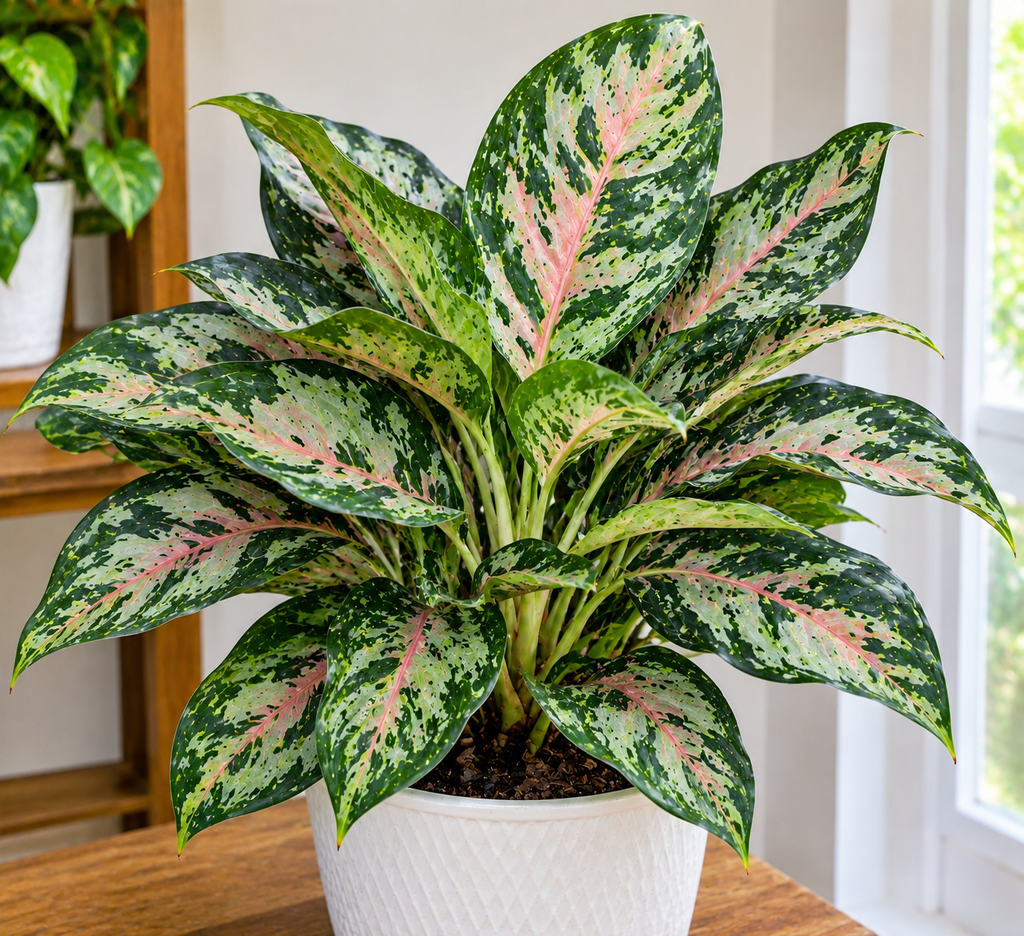
The leaves of Aglaonema pictum ‘Tricolor’ look like camouflage, with patches of gray-green, light green, and dark green. Nothing else in the genus looks quite like it, which is exactly why collectors want it.
It is also the least relaxed plant on this list. It grows slowly and generally does best with consistent warmth, steady moisture without sogginess, and more humidity than the rest. If your home is chilly in winter or the air gets very dry from heating, this is the variety most likely to complain. For a first aglaonema, pick one of the first four instead and come back to this later.
The Pink and Red Group
This is where the photos come from, and where the lighting rule matters most. All five need bright indirect light to hold their color, and they all dislike cold.
9. Siam Aurora
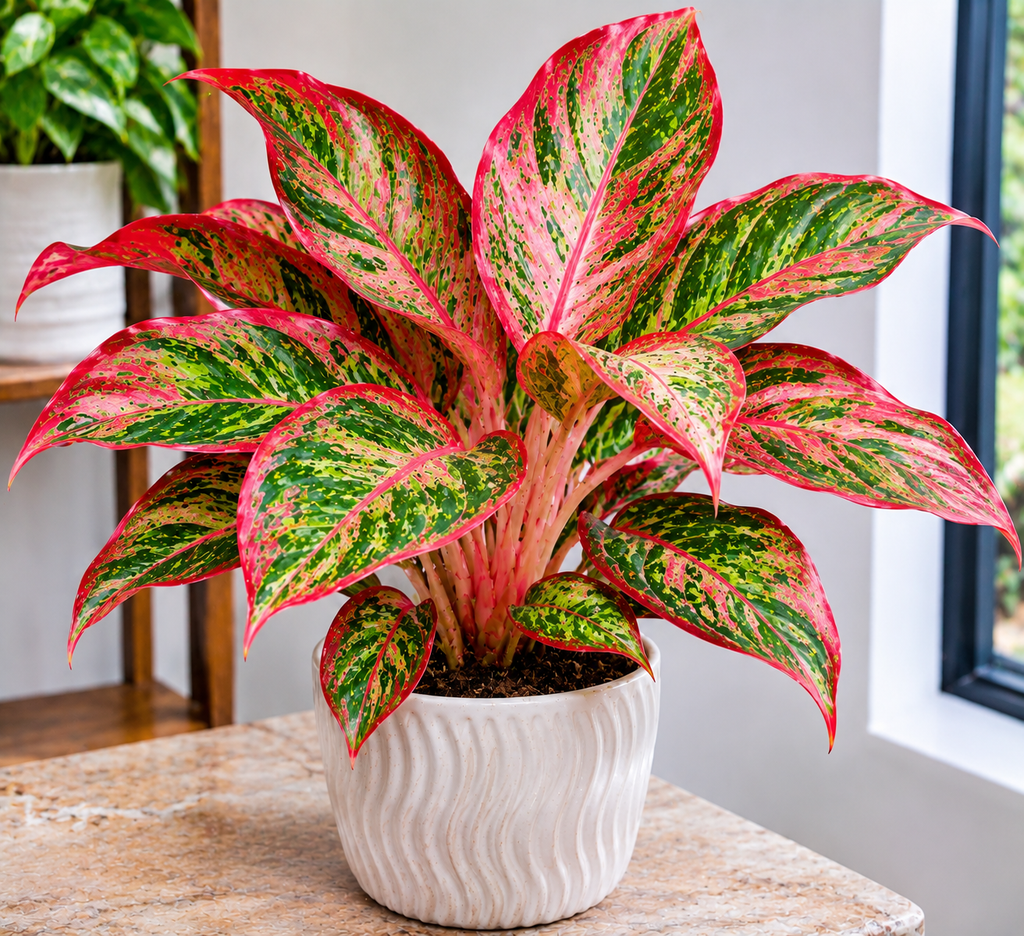
Siam Aurora has dark green leaves edged and veined with red or pink, so it looks like a green plant that has been outlined in color. It is one of the more widely sold red types and generally grows faster than slow, dark cultivars.
Put it where it gets bright light for much of the day without direct sun on the leaves. A window with a sheer curtain works. As it matures in a dim room, the red usually thins out toward green, which is a signal to move it closer to the window rather than a sign of disease.
10. Valentine
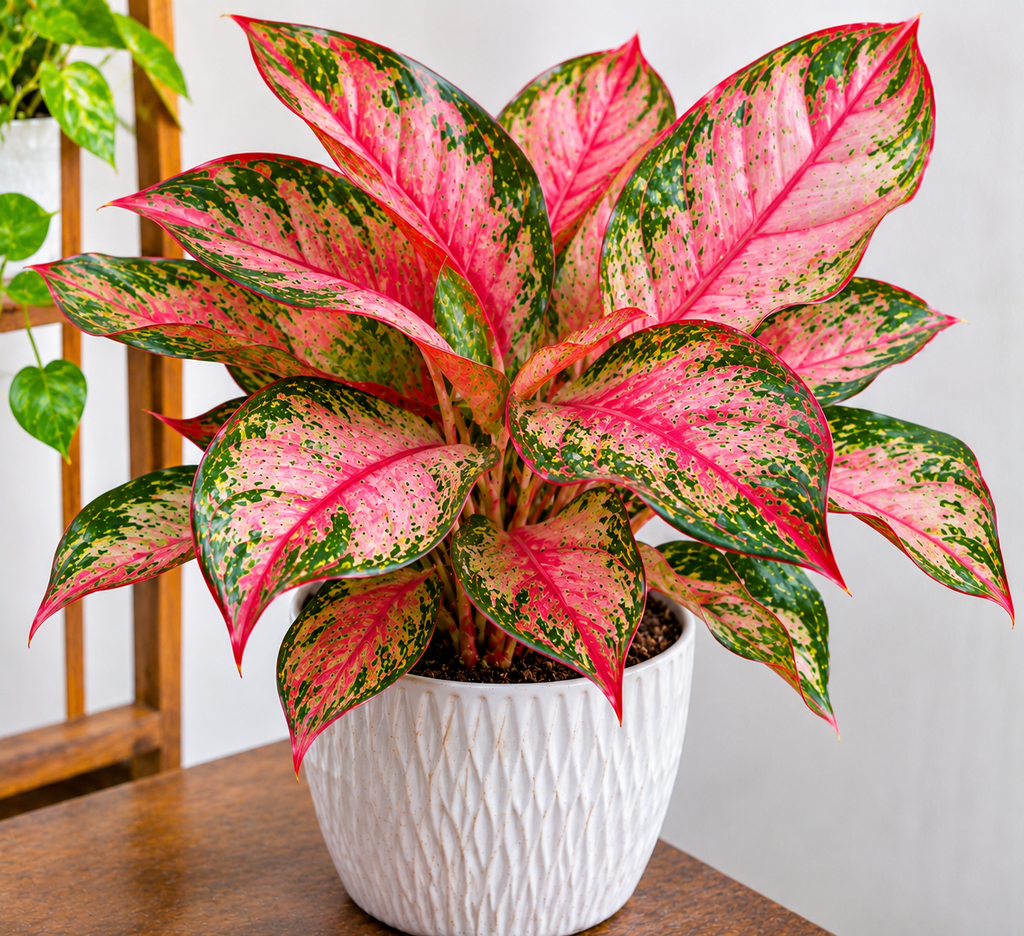
Valentine is red and green in a softer, more mixed way, with the color showing up as blushes and borders rather than crisp outlines. It is a good bridge for someone who likes the idea of a red aglaonema but finds the boldest types a bit much.
Color intensity varies with light and plant age, and growers differ in how they describe it, so photos online may not match what arrives in the mail.
11. Cherry
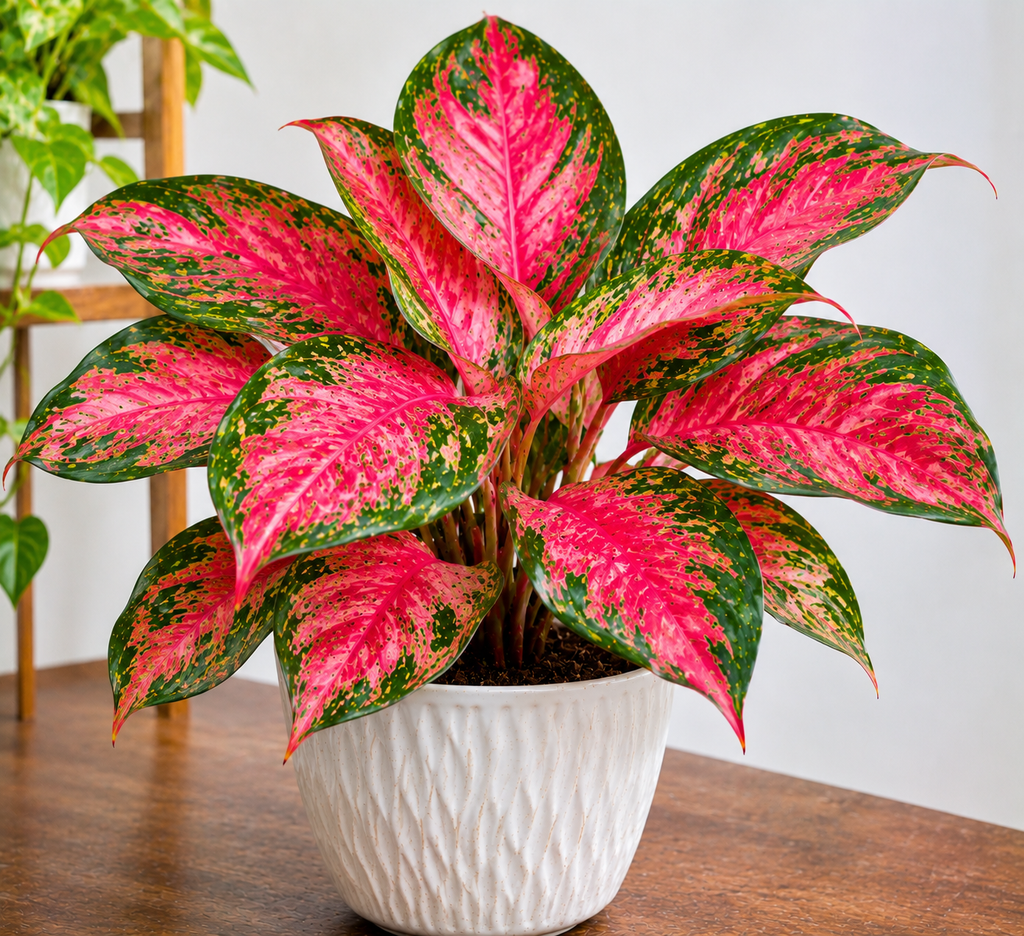
Clemson Extension notes ‘Cherry’ for its pink mature leaves, which makes it unusual in a group where color is often strongest on new growth. That can make it easier to live with, because the plant doesn’t seem to lose its color as soon as a new leaf unfurls and the old one ages.
It is a medium-size plant that suits a bright corner of a living room. Cold is the main hazard. Anything that chills the plant, such as a spot beside a drafty window in winter, shows up quickly as dull, limp leaves.
12. Pink Dalmatian
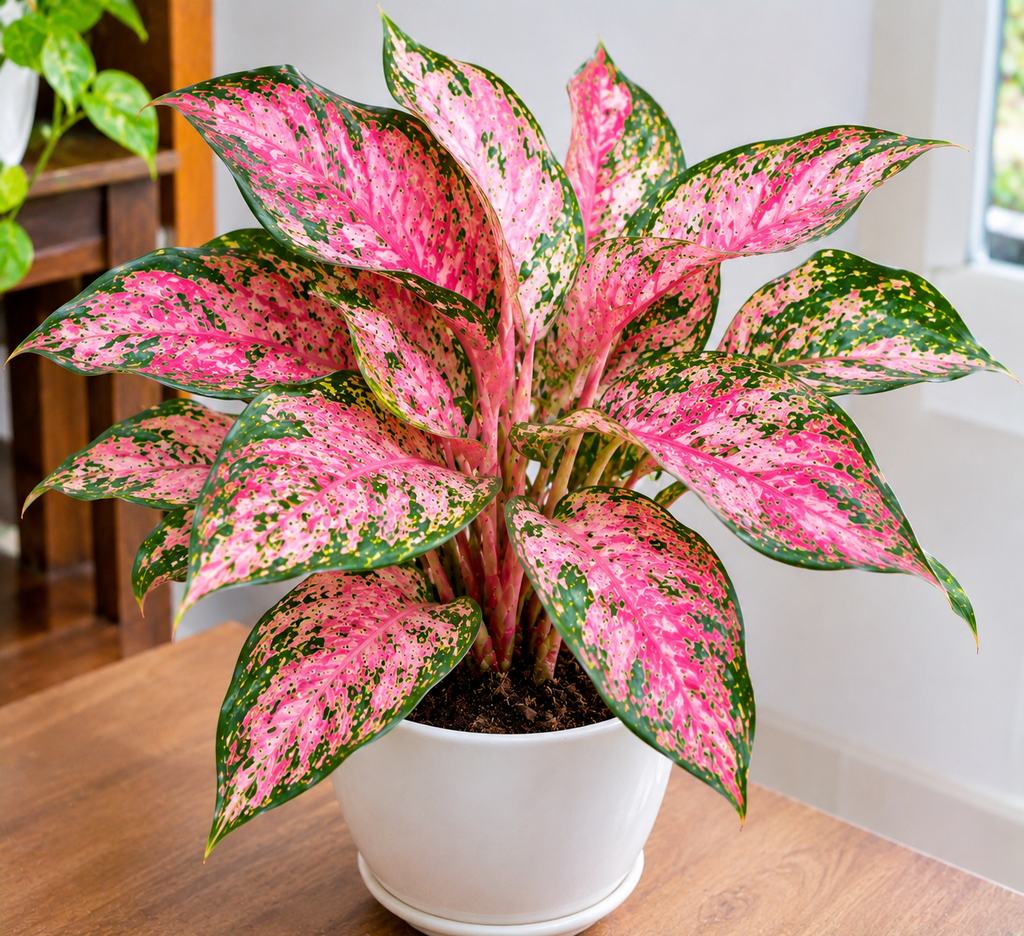
This one is a green plant splashed with pink speckles and splotches, closer to a paint-spattered look than the edged styles. The speckles are the appeal, and they are also the reason it needs good light: dim conditions let the green take over and the pattern fades.
It works well as a feature plant on a console or sideboard where it gets bright light and people look at it close up. From across a large room the pattern can be hard to read, so it rewards a closer position.
13. Creta
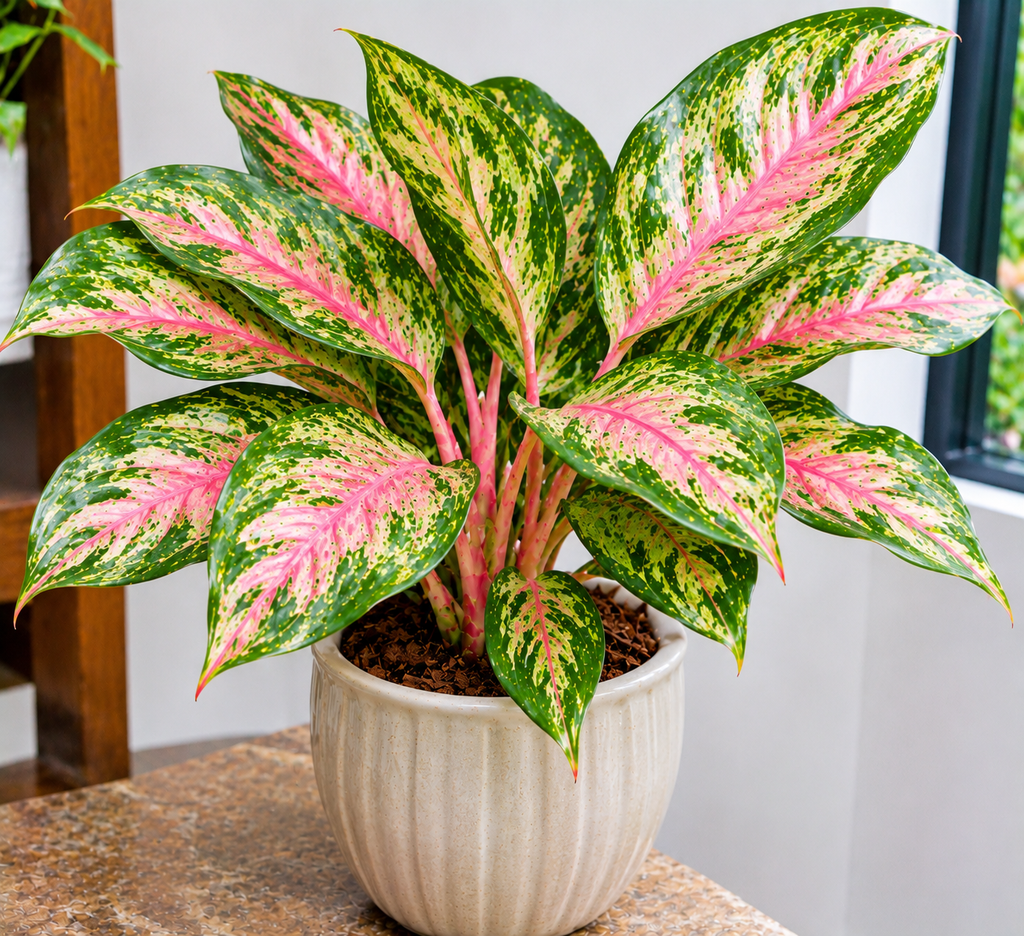
Creta has narrower dark green leaves that show warm tones of pink, orange, and red, usually most vivid on newer growth. It is lively and a bit unusual, and it tends to look best in a bright spot where the color can really come through.
As with the other hybrids in this group, leaf color varies by grower and light, so treat any specific shade you see in a photo as a best case.
Light Is the Lever: Matching Each Group to a Spot
All aglaonema originate as understory plants in tropical forest, which is why direct sun is the thing they handle worst and why they cope with shade better than most houseplants. The practical difference between varieties is how much light they need to look their best, not how much they need to survive.
A useful way to judge a spot is the shadow test. Hold your hand about a foot above where the plant will sit at midday. A crisp, clearly defined shadow means strong light, and a soft, blurry one means medium light. Almost no shadow means low light.
- Crisp shadow, no direct sun on the leaves: the right place for pink and red varieties, Snow White, and Costatum.
- Soft shadow: fine for Silver Bay, Silver Queen, Green Papaya, and Emerald Beauty, and acceptable for most others if you accept less color.
- Almost no shadow: this is Maria’s territory. Silver Bay can survive here too, but growth will be slow and the plant may stretch.
Direct sun is the exception to all of this. Strong, unfiltered sun, especially through glass in the afternoon, can scorch the leaves of every variety on this list. Pale-leaved types such as Snow White burn first.
Watering Without Rotting the Roots
The most common way to kill an aglaonema is to love it too much. Extension guidance generally says to let the soil dry slightly between waterings, and a typical rule is to water when the top inch of soil feels dry. In low light and in winter, the plant uses less water, so the same pot can stay wet for much longer.
A few specifics that help:
- Check the soil, not the calendar. Push a finger in to the first knuckle. If it feels damp, wait.
- Water until it drains, then empty the saucer. Roots left standing in water are what rot, not roots that were thoroughly watered.
- Use room-temperature water. Very cold or very hot water can shock the roots.
- Always use a drainage hole. A decorative pot without one is fine if the plant stays in a plastic nursery pot inside it and you pull it out to water.
If the plant develops yellowing lower leaves, a soft or mushy stem base, and soil that stays wet for more than a week, root rot is the likely cause. Unpot it, trim away any brown, soft, or smelly roots, and repot in fresh, free-draining mix. If most of the root system is gone, take stem cuttings from the healthy top growth instead.
Temperature, Humidity, and the Cold-Window Problem
Aglaonema are tropical. A comfortable range for most is roughly 65 to 80 degrees Fahrenheit, and sustained temperatures below about 60 degrees tend to cause trouble, with damage becoming more likely as it gets colder. The usual sign is leaves that go limp or develop dark, water-soaked patches.
The cold risk in a house is rarely the room’s air temperature. It is the windowsill. A plant pressed against a single-pane window on a winter night can be significantly colder than the thermostat suggests. Pull plants back from the glass during cold snaps, and keep them away from drafty doors and the path of an air conditioner or heating vent.
Most of the hardy hybrids cope with ordinary household humidity. Costatum and Pictum Tricolor are the exceptions that appreciate extra. A pebble tray or grouping plants together can help, but it will not fix a plant that is too cold or too dry at the roots.
Soil, Feeding, and Repotting
Aglaonema prefer a light, well-draining mix. A standard indoor potting mix with some perlite or fine bark added usually works. Heavy, water-retentive soil in a big pot is the setup that leads to rot, so choose a pot only an inch or two wider than the root ball.
Feed lightly during spring and summer with a balanced houseplant fertilizer, diluted according to the label. These plants are not heavy feeders, and too much fertilizer leaves salts in the soil that can brown the leaf tips. In fall and winter, when growth slows, most plants need little or none.
Repotting is generally needed every two to three years, or when roots are circling the pot or pushing out of the drainage hole. Do it in spring, keep the plant at the same depth, and water it well afterward.
Pets, Sap, and Berries: Safety Notes
Aglaonema are toxic to cats and dogs. Clemson Extension lists them as such, and they contain calcium oxalate crystals, the same type of irritant found in other aroids. Chewing on the leaves can cause irritation of the mouth, drooling, and vomiting. If a pet chews on one, call your veterinarian or a pet poison hotline for guidance, and do not wait for severe symptoms.
The sap can irritate skin for some people, so wear gloves when cutting or dividing the plant and wash your hands afterward. Mature plants occasionally produce small red berries after flowering, and these should be treated as toxic too. If you have curious pets or small children, place the plant out of reach or choose a different plant.
Fixing the Usual Problems
Brown leaf tips. Most often caused by dry air, mineral build-up from tap water or fertilizer, or inconsistent watering. Flush the pot with plain water every so often, avoid overfeeding, and trim brown tips with clean scissors if they bother you.
Yellowing leaves. One old leaf yellowing now and then is normal. Several yellow leaves at once usually points to overwatering, and a pale, washed-out look across the whole plant often means too little light.
A long bare stem and leaves only at the top. As aglaonema age, they lose lower leaves, and the stem becomes visible. Cutting off the leafy top and rooting it in water or damp potting mix can give you a fresh, compact plant, and the old stump may sprout new shoots.
Faded color. For pink and red varieties, this usually means the plant needs more light. Move it gradually closer to a window rather than straight into stronger sun.
Pests. Mealybugs, spider mites, and scale are the usual suspects. Check the leaf undersides and where leaves meet the stem. Light infestations can be wiped off with a damp cloth or a cotton swab dipped in rubbing alcohol, tested first on one leaf. Insecticidal soap is another option, but follow the product label and keep the plant away from pets until it has dried.
Picking One: A Quick Decision Guide
| If your situation is… | Consider |
| Dim room, low expectations | Maria, Silver Bay |
| Shelf or desk, limited space | Emerald Beauty, Costatum |
| Want strong color and have a bright window | Siam Aurora, Cherry, Creta |
| Want something pale and striking | Snow White (bright indirect light only) |
| Cold house in winter | Maria, Silver Bay, and keep them off the glass |
| Have cats or dogs that chew plants | None of these without placing out of reach |
| First aglaonema | Silver Bay, Maria, or Silver Queen |
| Experienced and want a challenge | Pictum Tricolor |
Questions Readers Actually Ask
Can an aglaonema live in a room with no windows?
Not on its own. “Low light tolerant” means it can survive in dim conditions, not in darkness. A windowless bathroom or hallway needs a full-spectrum grow light running for several hours a day. Without it, a plant will slowly lose leaves.
Can I move it outdoors for the summer?
Yes, in the right conditions, but only in full shade, and only once nights stay reliably above about 60 degrees. Bring it in before temperatures drop in fall. Moving a plant from indoor light to outdoor shade works best gradually over a week or so, and direct sun will scorch the leaves quickly.
Should I remove the flowers?
The flowers are small and not showy, and removing them does no harm. They can be followed by red berries, which are toxic, so removing the flowers is also a sensible choice in a home with pets or children.
Wrapping It Up
For most homes, the safe starting point is Silver Bay or Maria: both tolerate ordinary rooms, forgive missed waterings, and look good without special care. If you have a bright window and want color, Siam Aurora, Cherry, or Creta will deliver it, as long as you give them light and keep them warm. Save Snow White, Costatum, and Pictum Tricolor for when you know what your conditions are and are ready to adjust to them.
Whatever you choose, check the soil before watering, keep the plant away from cold glass, and keep any aglaonema out of reach of pets.

About Syprose Kiche
Syprose Kiche is the creator and writer behind My Besuited Home, a practical home and garden website covering DIY projects, gardening, lawn care, landscaping, home improvement, and outdoor living. She focuses on turning everyday homeowner questions into clear, practical guides backed by careful research and useful real-world considerations.