
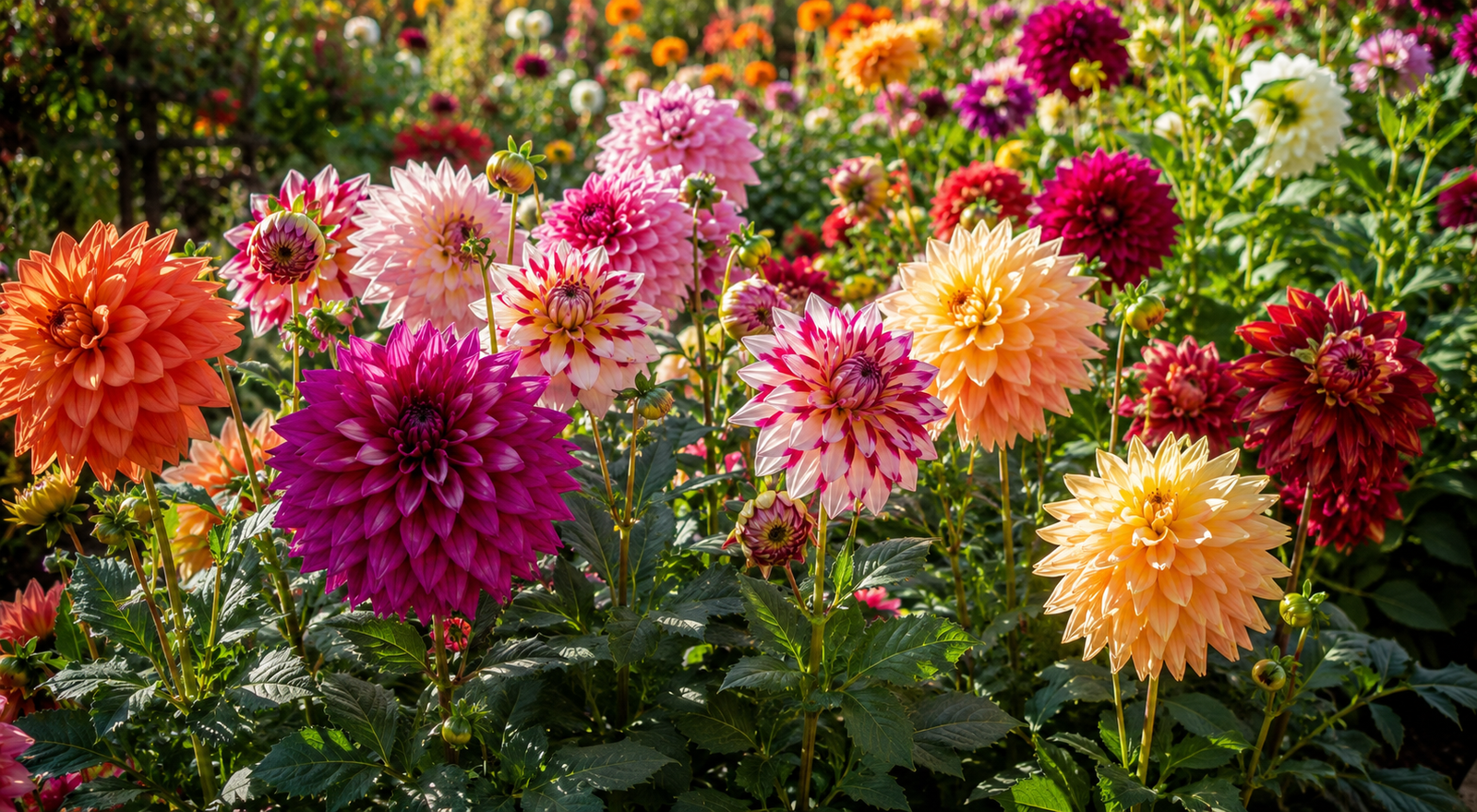
My neighbor Carla once looked at my front bed in July, squinted at the wall of orange, pink, and magenta, and asked, “What did you do, rob a piñata factory?” That’s Mexican flowers for you. They don’t do subtle. They do loud, they do bold, and they keep doing it long after your delphiniums have thrown in the towel from the heat.
If you’re tired of a garden that looks tired by mid-July, this is the fix. Mexican flowers evolved in a rough neighborhood of blazing sun, thin soil, and unpredictable rain, so they show up to your yard already tougher than half the “hardy” perennials at the big box store. I’ve grown almost every flower on this list, killed a few of them through sheer neglect, and watched the survivors thrive anyway. That’s the kind of plant worth your money.
This guide walks through the best Mexican flowers for color, the ones that pull double duty for pollinators, and a few that get way more hype than they deserve. Grab your gloves.
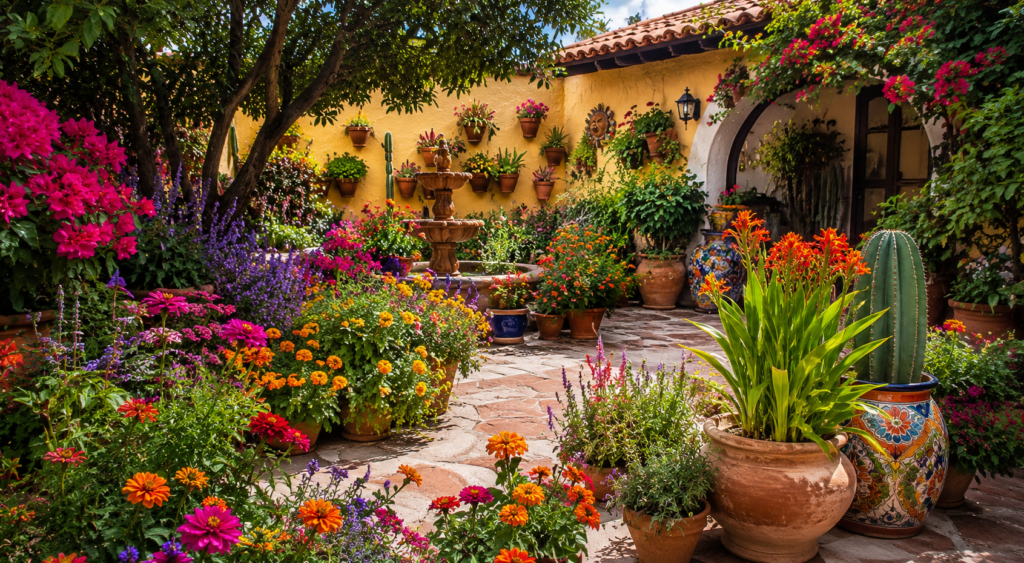
Why Mexican Flowers Belong in Your Garden
Mexico sits in one of the most botanically diverse regions on the planet, and a huge share of the flowers you already recognize trace back there. Dahlias, marigolds, zinnias, cosmos, and the Mexican sunflower all originated in Mexican soil before plant breeders got their hands on them and shipped them worldwide.
That origin story matters for practical reasons. These plants are used to heat, poor soil, and long dry spells punctuated by sudden downpours. Translation: they forgive you when you forget to water for a week. My rain gauge and I are not on speaking terms most summers, and my marigolds don’t seem to care.
Another reason to plant Mexican flowers is bloom time. Most of them hit their stride exactly when other plants quit, from midsummer through the first hard frost. If your garden has a “dead zone” in August, these are your fix.
Dahlias: The Showstopper You Need to Grow
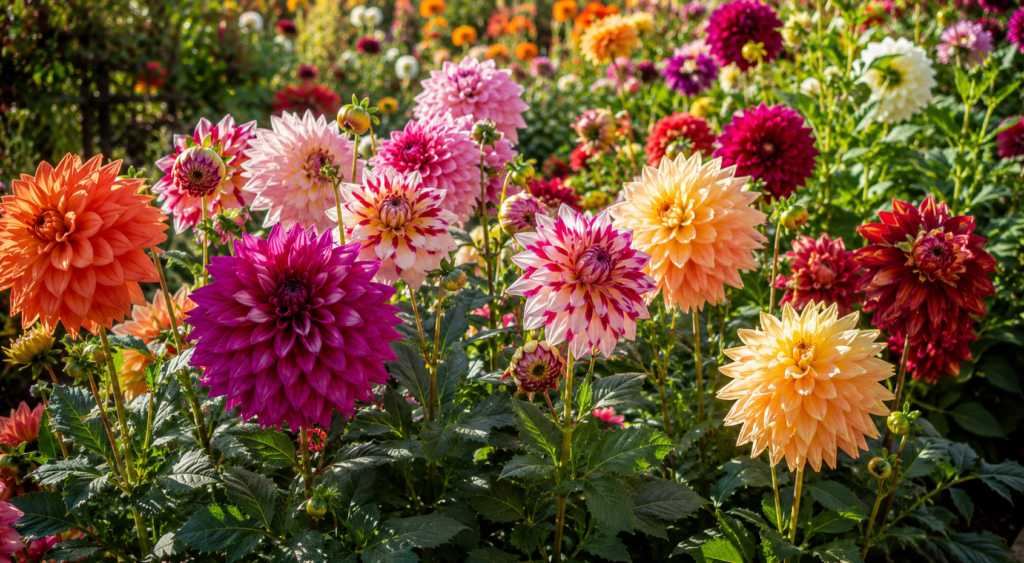
Dahlias are basically Mexico’s gift to anyone who wants dinner-plate-sized flowers without needing a greenhouse. They grow from tubers, come in nearly every color except true blue, and bloom nonstop from midsummer until frost knocks them down.
I planted my first dahlia tubers in a raised bed thinking they’d be finicky divas. Wrong. They wanted sun, decent drainage, and a stake so they didn’t flop over in a windstorm. That’s it. The blooms got bigger every week until my neighbors started asking where I bought them, and I got to say “grew them” like I’d invented fire.
Planting tips for dahlias:
- Wait until soil temps hit 60°F before planting tubers, since cold, wet soil rots them fast.
- Space large varieties at least 2 feet apart; they get bushier than people expect.
- Pinch the center shoot when the plant hits 12 inches tall to force bushier growth and more blooms.
- Stake tall varieties early. Trying to stake a flopped-over dahlia after the fact is a losing battle.
Dinner-plate dahlias are the showoffs, but pompon and decorative dahlias give you more blooms per plant if you want volume for cutting. I keep a row just for bouquets because store-bought flowers are a scam once you’ve had free dahlias all summer.
Marigolds: The Workhorse Nobody Gives Enough Credit To
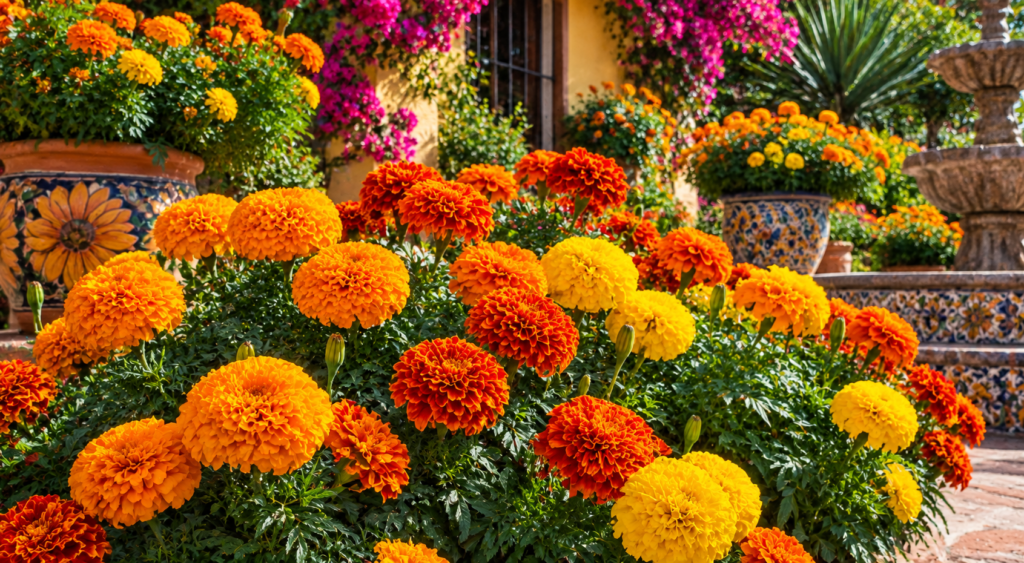
Marigolds get treated like the plain oatmeal of the flower world, and that’s a shame. They’re cheap, they bloom for months, and they genuinely help repel certain garden pests. I plant a marigold border around my tomatoes every year, and while I won’t claim they’re a magic pest shield, my tomato plants have had noticeably fewer issues since I started.
Marigolds also come in more varieties than people realize. French marigolds stay compact and bushy, perfect for edging. African marigolds (also originally from Mexico, despite the confusing name) grow tall with huge pom-pom blooms. Signet marigolds have delicate, edible petals if you’re into that sort of thing.
Why marigolds keep earning their spot in my garden:
- They bloom from seed in about eight weeks, so you get color fast.
- Deadheading spent blooms keeps them flowering nonstop through fall.
- They tolerate poor soil better than almost anything else on this list.
- Quick side note: the smell isn’t for everyone. Some people find the scent sharp or skunky. I happen to like it, but don’t plant a border under your bedroom window if you’re sensitive to strong smells.
If you want a flower that basically guarantees success for a beginner, start with marigolds. They’re the plant equivalent of training wheels, except the training wheels look gorgeous doing it.
Mexican Sunflower (Tithonia): Big, Bold, and Built for Pollinators
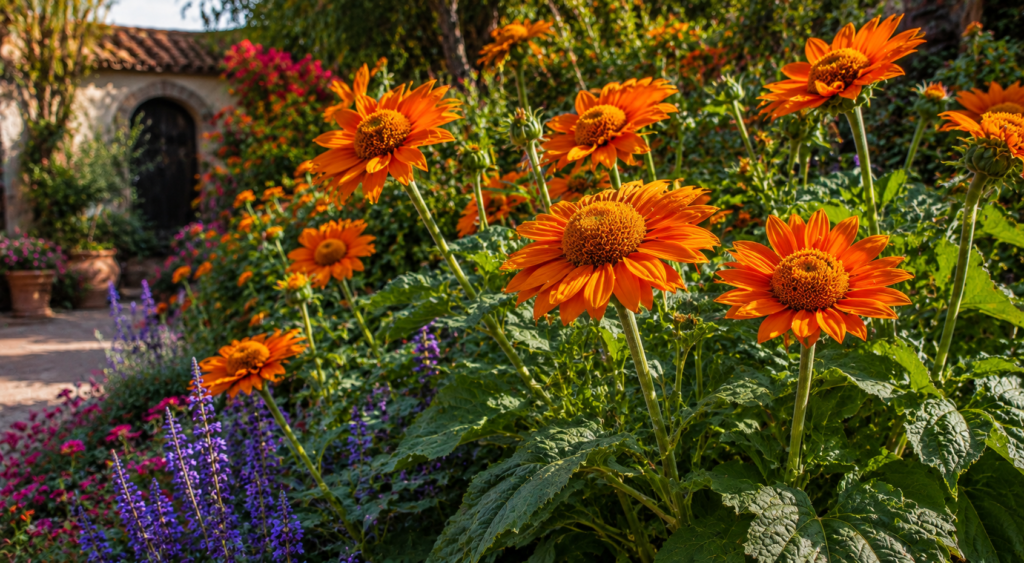
Tithonia rotundifolia, better known as Mexican sunflower, is the plant I recommend to anyone who says their yard doesn’t attract enough butterflies. This thing grows five to six feet tall, throws out bright orange-red blooms, and monarchs treat it like an all-you-can-eat buffet.
The summer my zucchini took over the entire ZIP code, my Mexican sunflowers were quietly doing something way more impressive in the back corner of the yard. I’d planted them almost as an afterthought, expecting a modest little bush. Instead I got a small tree covered in blooms, buzzing with bees and butterflies from sunrise to sunset.
Growing Mexican sunflower successfully:
- Give it full sun and room to spread; this isn’t a plant for tight spaces.
- Skip the fertilizer. Rich soil makes it leggy and floppy instead of sturdy.
- Stake young plants in windy spots since the stems can snap under their own height.
- Deadhead regularly if you want continuous blooms instead of one big early flush.
If you’ve got a fence line, a back corner, or anywhere you want a natural privacy screen with color built in, tithonia is worth the space it demands.
Zinnias and Cosmos: The Easy Cutting Garden Duo
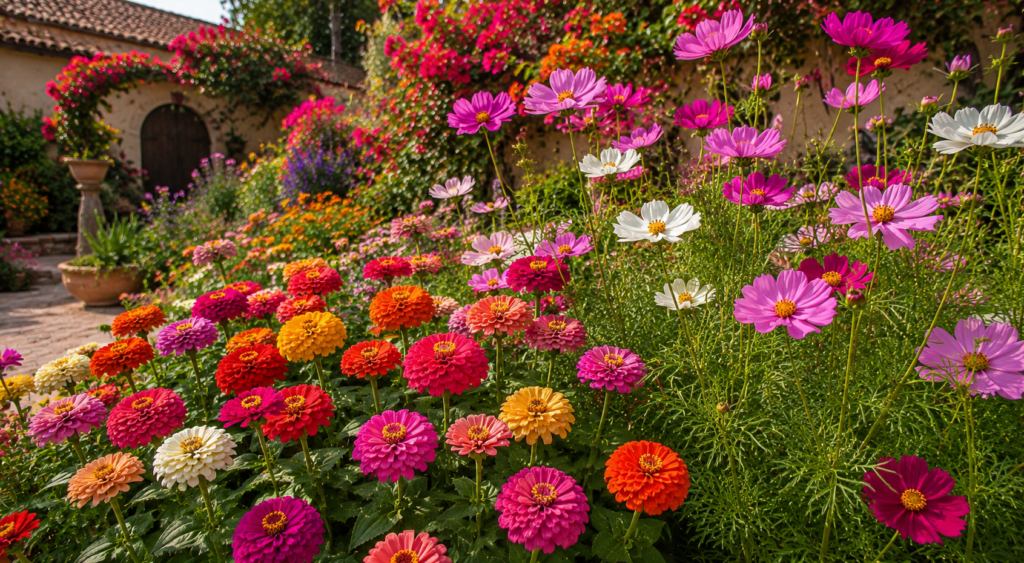
Zinnias and cosmos both trace their roots to Mexico, and both are about as low-maintenance as flowers get. I lump them together because they solve the same problem: you want a cutting garden without the fuss of roses or dahlias.
Zinnias come in every color of the rainbow, bloom fast from seed, and practically beg to be cut. The more you cut, the more they produce, which makes them one of the few plants where neglect and attention both lead to the same happy outcome. Cosmos, meanwhile, bring airy, delicate blooms on tall wispy stems that sway in the breeze and somehow never look messy, even when the plant itself is a bit of a sprawler.
A few reasons I keep both in rotation every year:
- Zinnias attract hummingbirds almost as reliably as they attract butterflies.
- Cosmos self-seed readily, so one good year often means a free crop the next season.
- Both germinate directly from seed in the ground, no fussy indoor starting required.
- Neither one demands rich soil, so they’re perfect for that one problem patch in your yard where nothing else wants to grow.
I direct-sow both of these every May along a fence line, and by July I’ve got more cut flowers than vases to put them in. That’s a good problem to have.
Bougainvillea: The Vine That Looks Like It’s Always in Bloom
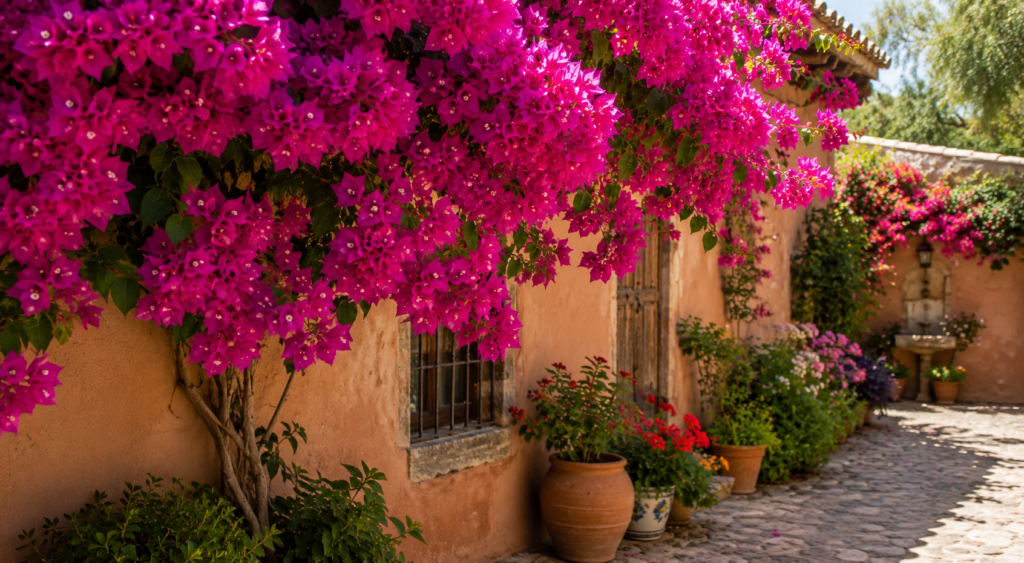
Bougainvillea isn’t technically native to Mexico originally (it hails from South America), but it’s been embraced so thoroughly across Mexican gardens and coastal architecture that it’s become part of the visual identity people associate with Mexican-style landscaping. I’m including it here because if you’re chasing that specific aesthetic, this vine delivers it better than almost anything else.
Those famous magenta, orange, or white “petals” you see aren’t petals at all. They’re bracts, modified leaves that surround a small, unassuming true flower. The bracts stick around far longer than typical petals would, which is why bougainvillea looks like it’s perpetually in bloom for months on end.
What bougainvillea actually needs to thrive:
- As much sun as you can give it. Shade means fewer blooms, full stop.
- Poor to average soil. Rich soil pushes leafy growth over flowers.
- Infrequent, deep watering. This plant genuinely prefers a bit of drought stress.
- A sturdy trellis or wall, since mature vines get heavy and woody fast.
If you live somewhere with mild winters, bougainvillea can become a permanent fixture. If you’re in a colder zone, treat it like a container plant you bring indoors before frost, the same way you’d handle a tropical houseplant on summer vacation.
Mexican Hat Flower and Blanket Flower: Prairie Cousins Worth Knowing
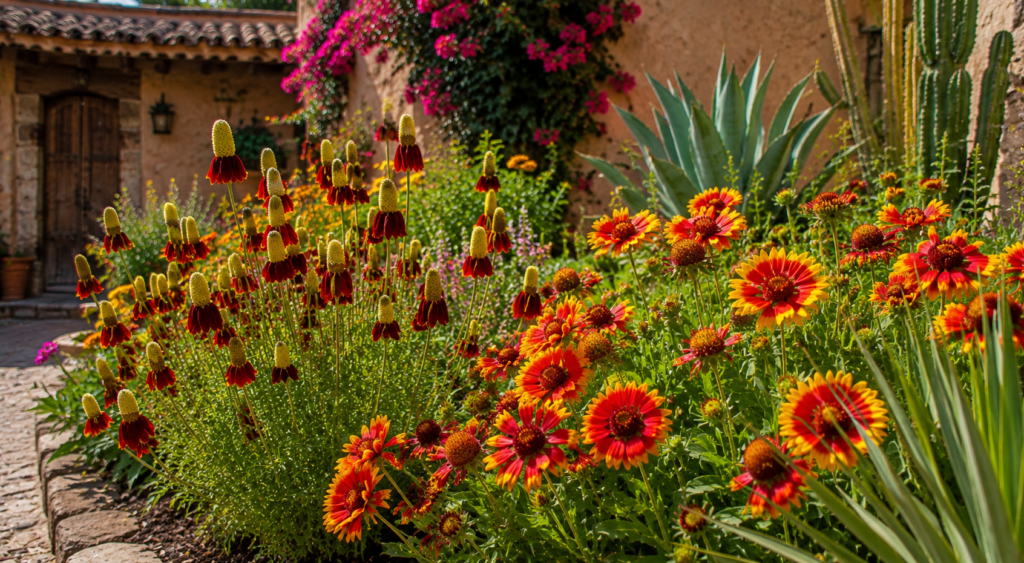
Mexican hat flower (Ratibida columnifera) gets its name from the tall, cone-shaped center that genuinely looks like a little sombrero once the drooping petals unfurl beneath it. It’s a prairie native that stretches from Mexico up through the central United States, and it’s one of the toughest, most drought-resistant flowers I’ve ever grown.
Blanket flower (Gaillardia) is a close cousin in spirit if not in exact origin, with fiery red-and-yellow blooms that look like they’re glowing from the inside. Both plants share a similar toughness that makes them ideal for xeriscaping or anywhere you’re tired of babying finicky perennials.
Where these two shine in a garden:
- Rock gardens and gravel beds where drainage is excellent but water is scarce.
- Pollinator strips, since bees and native wasps both work these blooms hard.
- Anywhere with reflected heat, like against a south-facing wall, that fries less resilient plants.
- Meadow-style plantings where a slightly wild, untamed look is the goal.
I planted a patch of Mexican hat flower along my driveway three years ago and haven’t watered it once since establishment. It just keeps coming back, blooming through the worst heat waves my summers throw at it.
Poinsettia and Dahlia’s Lesser-Known Cousins for Container Gardens
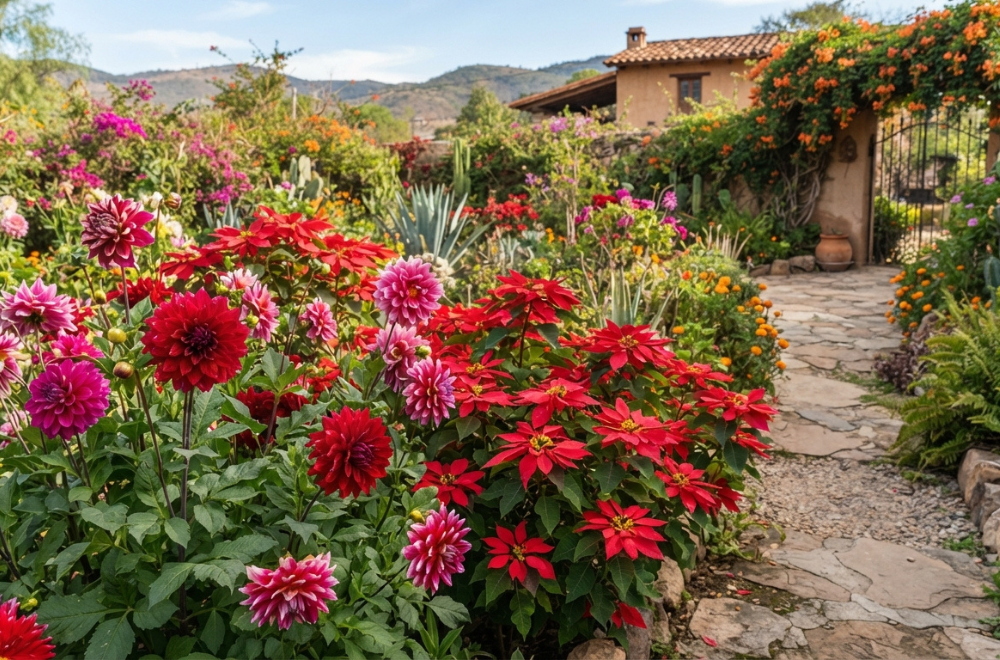
If you want Mexican flowers that thrive in pots on a patio or balcony, don’t overlook poinsettias in their native, non-holiday form. In their natural Mexican habitat, poinsettias grow as sprawling shrubs, not the tidy potted plants sold at Christmas. Outdoors in warm climates, they can reach several feet tall with looser, more natural growth.
Smaller dahlia varieties, sometimes labeled as “border dahlias” or “dwarf dahlias,” also do beautifully in containers. They stay compact enough not to need heavy staking while still delivering the same vivid color punch as their bigger cousins.
Container growing basics that actually matter:
- Use a pot with real drainage holes. Decorative pots without drainage are a death sentence for these roots.
- Choose a well-draining potting mix, not garden soil, which compacts and suffocates roots in containers.
- Water more often than you think you need to. Containers dry out faster than ground soil, especially in summer heat.
Container growing is a great option if you’re renting, working with a small patio, or just want to move color around your space as the season shifts.
Mexican Sage (Salvia leucantha) and Hibiscus: Late-Season Color Champions
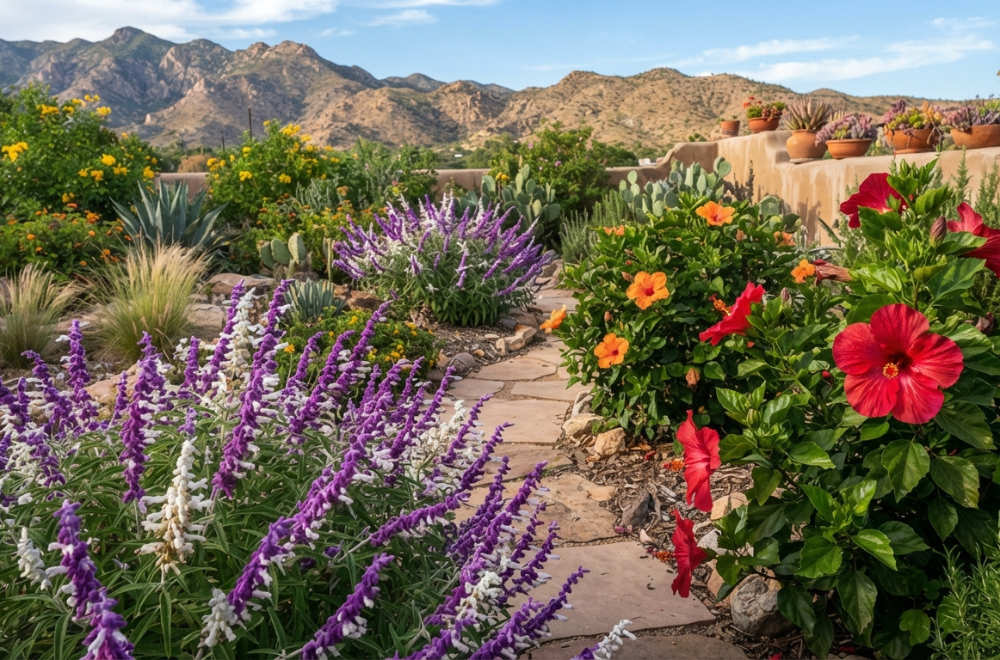
By late September, a lot of gardens start looking tired. Mine used to as well, until I added Mexican sage to the mix. This perennial salvia grows into a soft, velvety mound of gray-green foliage topped with spikes of purple and white blooms that show up right when everything else is winding down for the year.
Mexican sage is a magnet for hummingbirds preparing for migration, and I’ve genuinely lost track of time standing at my kitchen window watching them work the flower spikes at dusk. It’s drought-tolerant once established, shrugs off poor soil, and only asks for a hard pruning back in late winter to reset for the next season.
Hibiscus, meanwhile, brings a completely different energy. Tropical hibiscus varieties produce enormous trumpet-shaped blooms in colors so saturated they almost look fake in photos. Each individual flower only lasts a day or two, but a healthy plant produces so many buds that you’d never notice the turnover.
Getting the most out of both plants:
- Plant Mexican sage where it has room to spread; it easily reaches 3 to 4 feet wide by season’s end.
- Cut Mexican sage back hard, almost to the ground, once frost kills the top growth.
- Give hibiscus consistent moisture and regular feeding, since heavy bloomers are hungry plants.
- Bring tropical hibiscus indoors before frost if you’re outside a warm coastal zone, and expect it to sulk a bit indoors until it readjusts.
- Bonus tip: pair Mexican sage with ornamental grasses for a fall combination that photographs beautifully and needs almost no extra care.
I plant Mexican sage along the back border of my yard specifically because it peaks right as everything else fades, giving the whole bed a second act I didn’t have to work hard for.
Real Talk: What Nobody Tells You About Growing Mexican Flowers
Here’s where I get honest about the parts the plant tags don’t mention.
Dahlias are gorgeous, but the tuber storage situation is genuinely annoying if you’re in a cold-winter zone. You either dig them up every fall and store them in a box of peat moss in a cool basement, or you buy new tubers every spring. I’ve forgotten to check on stored tubers before and opened the box to a moldy, rotten mess in February. It happens to everyone eventually.
Bougainvillea has thorns, and they’re not the gentle rose-bush kind. They’re long, sharp, and hidden under the foliage exactly where your hand goes when you’re pruning. I’ve drawn blood more than once reaching in without thick gloves.
Mexican sunflower reseeds aggressively in warm climates, to the point where it can become a minor nuisance if you’re not deadheading or pulling volunteers each spring. It’s not invasive in the scary, ecosystem-wrecking sense in most regions, but it will absolutely take over a bed if you let it.
Marigolds as a “pest deterrent” get oversold constantly online. I’ve found that treating marigolds as a guaranteed pest-repelling force field is a total waste of expectation management, even if it looks great on a Pinterest infographic. They help a little, they smell nice to some people and terrible to others, and they’re a wonderful low-cost border plant. That’s plenty of reasons to grow them without pretending they’re a pesticide replacement.
Poinsettias outdoors are only an option in frost-free zones. Everywhere else, they’re a container plant you baby indoors, and honestly, most people are better off just buying a fresh one each December instead of nursing a leggy, unhappy specimen through a whole year indoors.
Mexican sage looks effortless in photos, but that hard pruning it needs in late winter is non-negotiable. Skip it and you end up with a woody, sparse plant that flowers half as much. I ignored mine for two seasons in a row and paid for it with a scraggly shrub that barely bloomed. A pair of sharp loppers and twenty minutes fixed the problem for good.
And a general warning across almost every plant on this list: full sun means full sun. Six hours minimum, and closer to eight for the best bloom production. I hear from people constantly who plant these in a partly shaded spot, expect the same fireworks display they saw on Instagram, and end up disappointed with a leggy, sparse plant reaching for light instead of putting energy into flowers.
Final Thoughts on Growing Mexican Flowers
If I had to boil this whole guide down to one piece of advice, it’s this: pick two or three of these plants, not all eight, and actually give them the sun and drainage they’re asking for. Mexican flowers reward you generously, but only if you stop treating them like fussy English cottage garden plants that need constant coddling. They want heat, they want a little neglect between waterings, and they’ll pay you back with color that lasts from June straight through your first frost.
My own yard is proof this isn’t complicated. A row of dahlias for cutting, a sprawling patch of Mexican sunflower for the butterflies, and marigolds tucked in wherever I have a gap. That’s the whole system, and it works every single year.
What’s on your Mexican flower wish list this season? Drop a comment below and let me know which of these you’re planning to try, or if you’ve got a favorite I left off the list.

About Syprose Kiche
Syprose Kiche is the creator and writer behind My Besuited Home, a practical home and garden website covering DIY projects, gardening, lawn care, landscaping, home improvement, and outdoor living. She focuses on turning everyday homeowner questions into clear, practical guides backed by careful research and useful real-world considerations.