
My front porch used to be the saddest spot on the block. Three plastic beige pots, a leggy geranium, and a garden gnome that had seen better days. Then my neighbor Rosa invited me over for coffee and I saw her patio for the first time — cobalt blue Talavera pots stacked with marigolds, hot pink bougainvillea spilling out of a hand-painted urn, and a row of tin cans turned into the cheeriest little succulent garden I’d ever seen. I went home and looked at my beige pots like they’d personally wronged me.
That was five years ago. Since then I’ve collected, broken, repainted, and obsessed over Mexican-style flower pots for every corner of my yard. If you’re tired of matching every planter to a Pottery Barn catalog and want something with actual personality, this is your list. I’m covering real Mexican pottery styles, DIY versions for the budget-conscious, and the plants that actually thrive in them — not just the ones that photograph well for five minutes before they wilt.
1. Talavera Ceramic Pots for a Classic Pop of Color
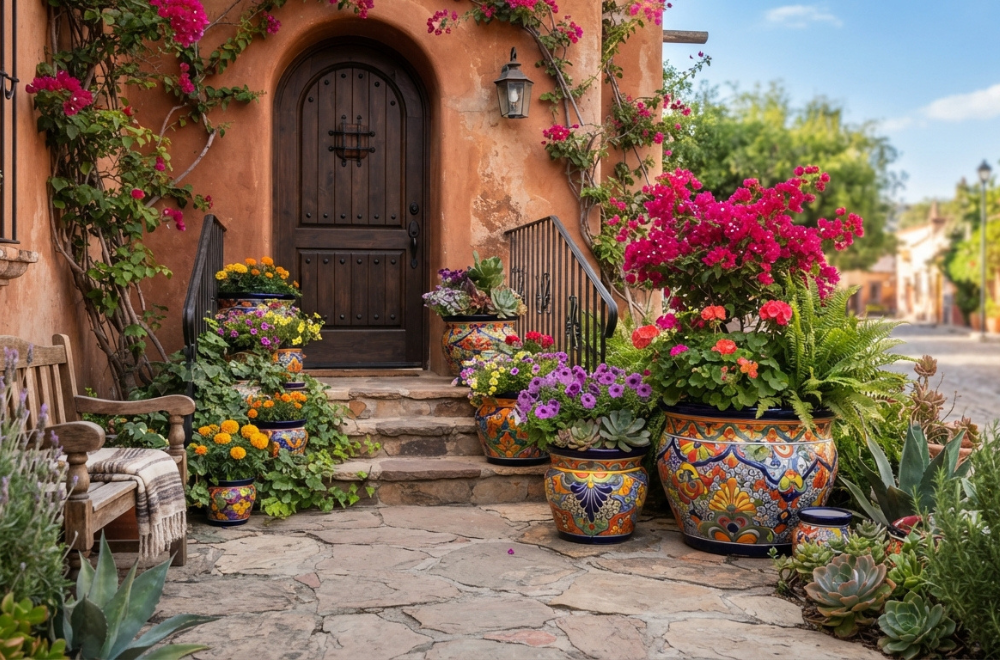
Talavera pottery is the gold standard when people search for authentic Mexican planters, and for good reason. These hand-painted ceramic pots come from Puebla, Mexico, and every single one is slightly different because a real person sat there with a brush and painted it. You’ll see cobalt blues, sunflower yellows, and deep greens in swirling floral patterns that look nothing like the mass-produced “Mexican-inspired” pots at big box stores.
I bought my first genuine Talavera pot at a pottery market in Oaxaca and nearly cried packing it in my suitcase. It survived the flight better than my dignity did explaining to airport security why I was wrapping a flower pot in three sweaters. That pot now holds a fire engine red geranium on my front steps, and it’s the first thing people comment on when they visit.
Here’s the thing nobody tells you: authentic Talavera is porous and can crack in a hard freeze if water gets trapped in the clay. If you live somewhere winters get brutal, bring these pots indoors or empty them out before the first freeze. I lost a gorgeous yellow one my second winter because I got lazy in November, and I still think about it.
Check for the words “Talavera de Puebla” or a certification stamp on the bottom if you want the real deal. Cheaper knockoffs exist everywhere, and while they’re fine for a budget-friendly look, they won’t have the same weight, glaze depth, or that slightly imperfect hand-painted charm.
2. Barro Rojo Clay Pots for an Earthy, Traditional Look
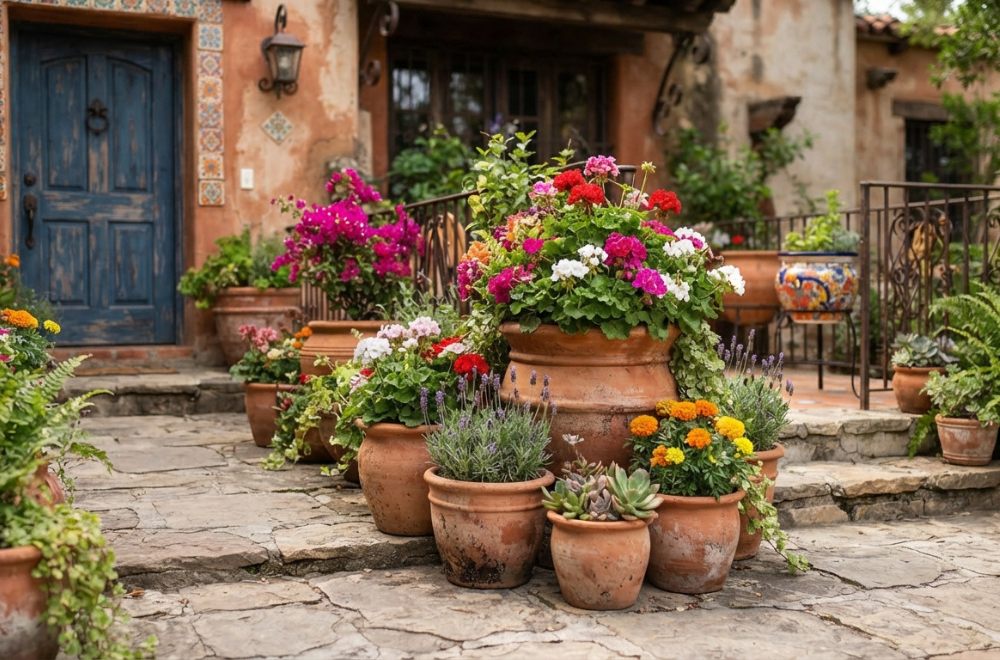
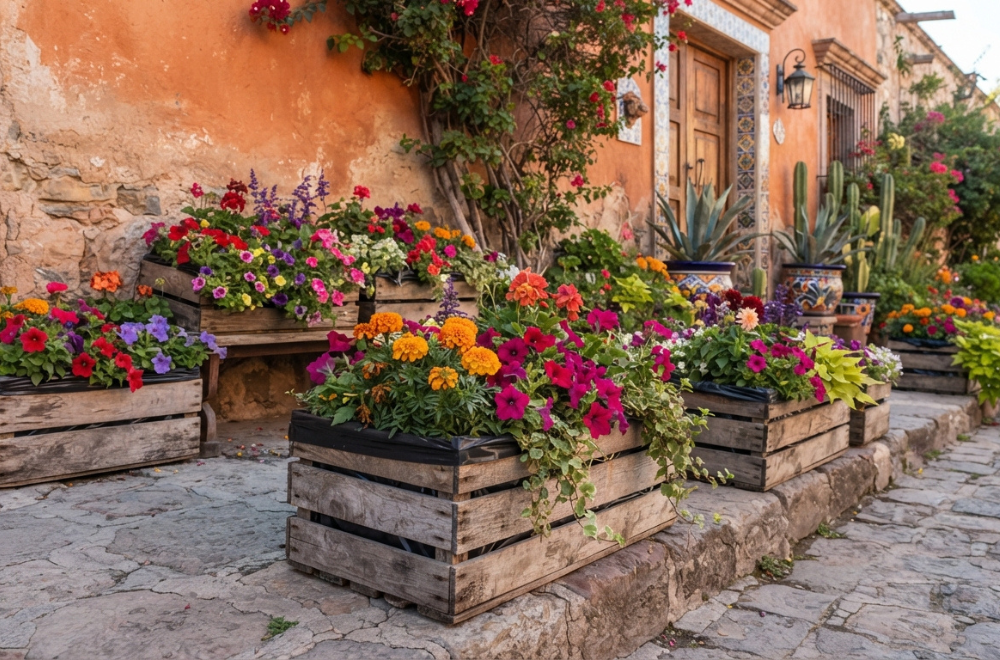
Barro rojo, or red clay pottery, is the unglazed, rustic cousin of Talavera. These terracotta-colored pots have been used in Mexican gardens for generations, and they’ve got a warmth that painted ceramic just can’t match. Think of the classic pots you’d see stacked outside a mercado, sun-baked and a little chipped at the rim.
I use barro rojo pots for my herbs — cilantro, epazote, and Mexican oregano all seem happier in unglazed clay than they ever were in plastic. The clay is porous, which means it breathes and lets excess moisture evaporate. That’s a genuine benefit if you tend to overwater like I do (guilty, every single time).
The downside is these pots are fragile compared to Talavera or concrete. Mine has a crack running up one side from the time I forgot to bring it in before an ice storm. I still use it — a cracked barro rojo pot with a little moss growing in the seam has its own kind of charm — but if you want something that’ll last decades without babying, this might not be your pot.
Pair barro rojo with plants that actually originate from Mexico for a look that feels cohesive rather than random. Marigolds, dahlias, and even small agave work beautifully against that warm red-orange backdrop.
3. Painted Tin Cans and Buckets for a Budget DIY Look
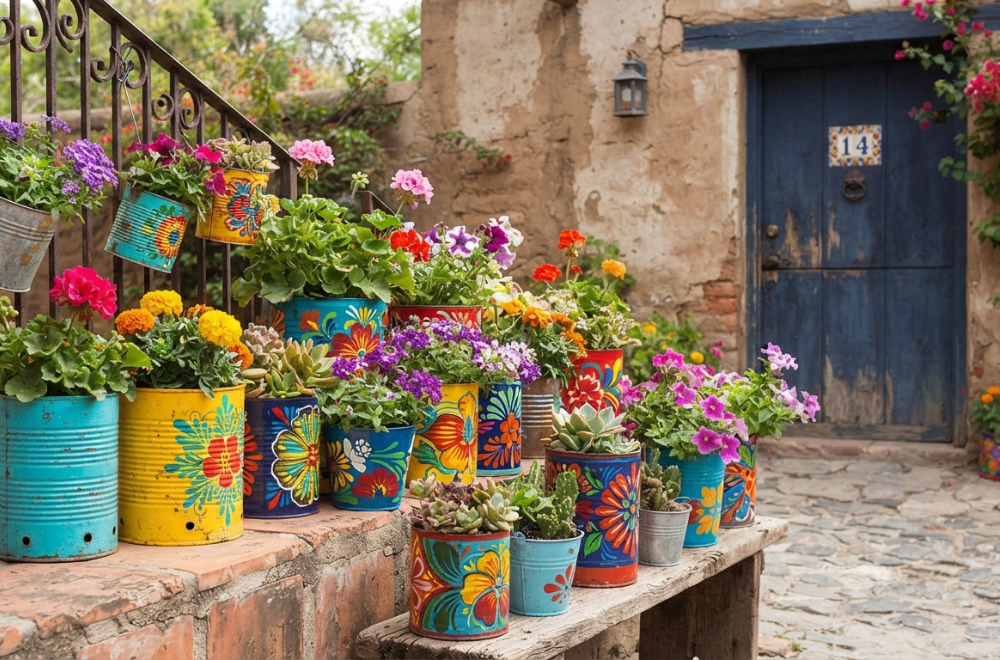
Not everyone has the budget for imported ceramics, and honestly, some of the most charming Mexican-style container gardens I’ve seen were made from recycled tin. Old coffee cans, paint buckets, even large tomato sauce tins get a second life when you sand them, prime them, and paint them in bold, saturated colors.
The trick is picking colors that actually read as “Mexican folk art” rather than “craft store clearance bin.” Think hot pink, turquoise, marigold orange, and deep purple — the kind of palette you’d see on a papel picado banner. I painted a set of five paint buckets in graduated shades of blue for my mom’s birthday, and she still has them lined up on her back steps three years later.
Drainage is the one thing you cannot skip here. Tin cans don’t come with holes, so you’ll need a hammer and a nail, or a drill if you’re not into swearing at metal in your driveway. Punch at least three or four holes in the bottom before you plant anything, or you’ll end up with root rot faster than you can say “why is my basil dying.”
These pots are perfect for annuals you’re not too precious about — zinnias, marigolds, and nasturtiums all do great in tin, and if the paint chips after a season or two, that’s part of the look. Nobody wants a Mexican folk garden that looks brand new.
4. Cazuela-Style Wide Bowl Planters for Succulents
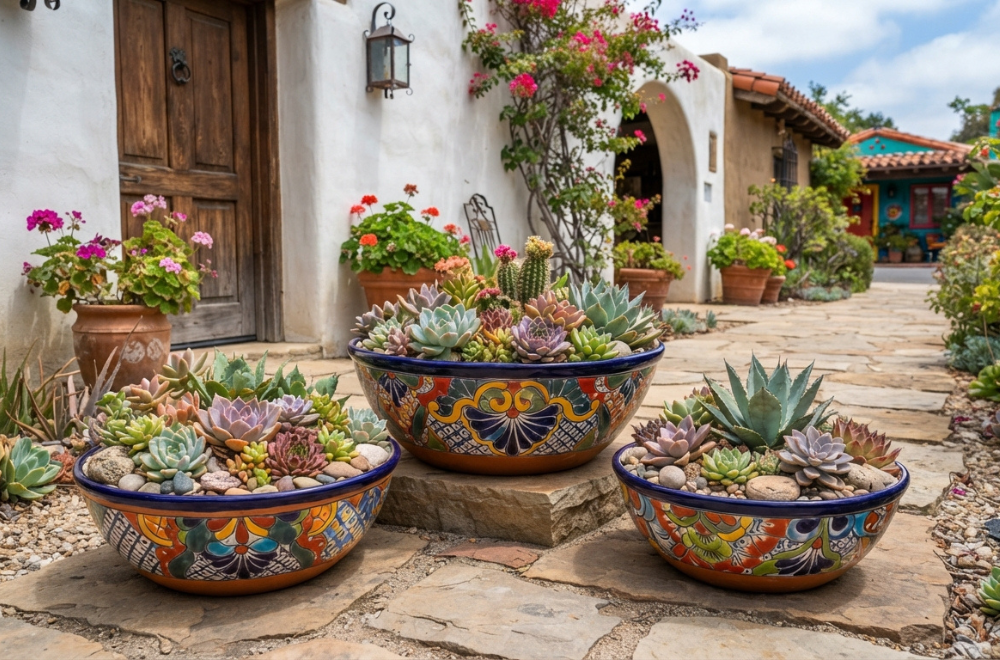
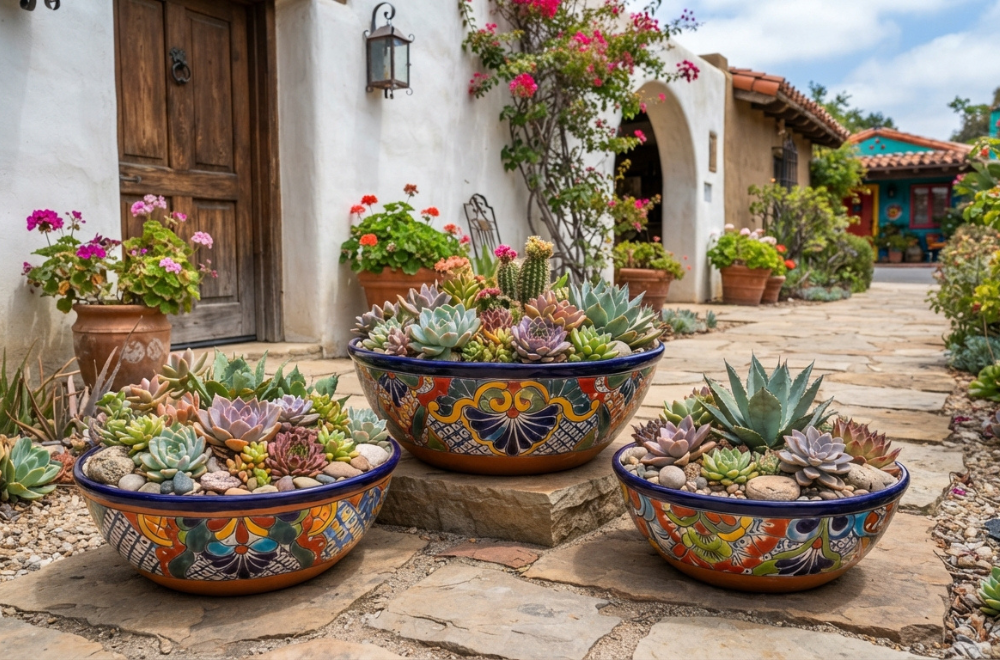
Cazuelas are traditional wide, shallow clay bowls originally used for cooking, and they make phenomenal succulent planters. The wide mouth gives you room to arrange multiple plants in one pot, and the shallow depth is actually perfect since most succulents have shallow root systems anyway.
I picked up a huge cazuela at a flea market for practically nothing because the vendor thought it was too chipped to cook in. Perfect for me — I filled it with a mix of echeveria, sedum, and a spiky little agave in the center, and it’s become the centerpiece of my back patio table.
Drainage matters even more here because of the shallow shape. Water pools fast in a wide, flat bowl, so drill extra holes if the cazuela doesn’t already have any, and use a gritty cactus mix instead of regular potting soil. Regular soil holds too much moisture and your succulents will rot before you notice anything’s wrong.
If you can’t find a genuine cazuela, any wide, shallow terracotta bowl will do the job. The key is the shape, not necessarily the provenance — though I’ll admit there’s something satisfying about knowing your pot has a history that goes back generations.
5. Vibrant Mosaic Pots Made From Broken Tile
Mosaic pottery, sometimes called “trencadís” style when it borrows from Gaudí’s technique, shows up all over Mexican gardens and patios in the form of broken tile mosaics glued onto plain terracotta or concrete pots. It’s an incredible way to use up leftover tile scraps, and every pot ends up completely one-of-a-kind.
I made my first mosaic pot after a bathroom renovation left me with a box of broken Talavera tile I couldn’t bear to throw away. I coated a plain terracotta pot in tile adhesive, pressed the pieces on in a rough sunburst pattern, and grouted the gaps once everything set. It took a full weekend and my fingers were sore for days, but the pot has survived four years outside without a single tile falling off.
This is a project, not a quick weekend fix, so don’t start it if you’re hoping to plant something by Saturday afternoon. Budget at least two days for the glue to cure and the grout to set properly. If you rush it, tiles pop off in the first hard rain, and that’s a special kind of disappointing.
Fill your finished mosaic pot with bright annuals that echo the tile colors — geraniums, petunias, or lantana all work well. The goal is to let the pot and the plant compete a little for attention instead of one overpowering the other.
6. Hanging Macetas With Marigolds and Bougainvillea
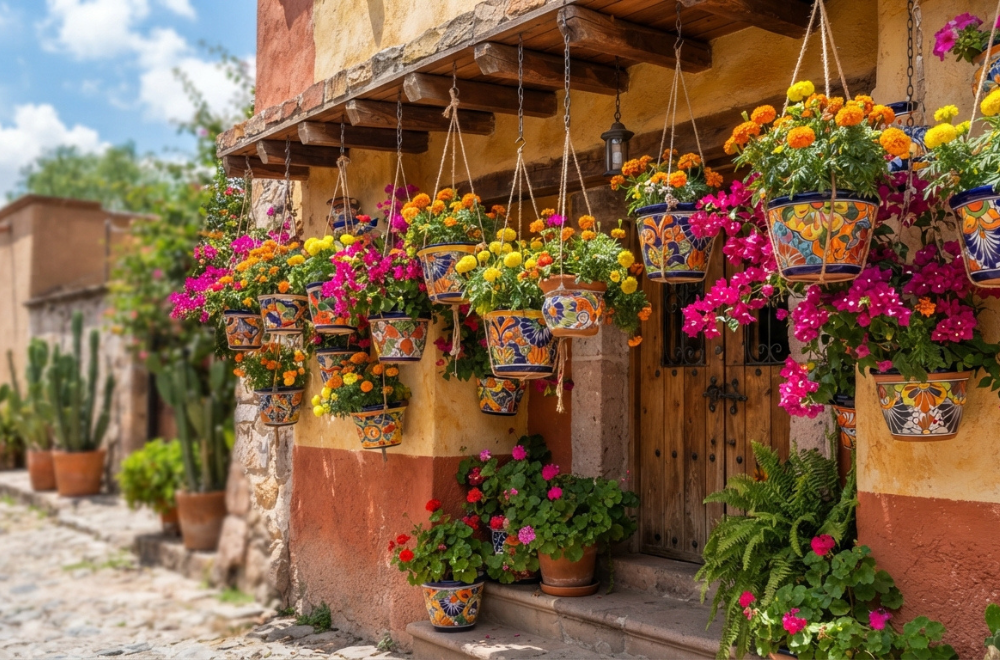
Macetas colgantes, or hanging pots, are everywhere in Mexican courtyards, usually strung along a wall or hung from a pergola dripping with color. The most iconic combination is bright orange marigolds or hot pink bougainvillea cascading out over the rim.
I hung three small clay pots along my back fence last spring, each one planted with a different marigold variety, and by midsummer they’d completely transformed a boring stretch of chain-link into something that actually looked intentional. Marigolds are ridiculously forgiving, which makes them a great starting point if hanging baskets have failed you before.
Bougainvillea is a different story — gorgeous, but it wants full sun and doesn’t love being crowded in a small hanging pot for too long. I killed my first bougainvillea by keeping it in a pot two sizes too small for an entire summer. Size up sooner than you think you need to, and only attempt bougainvillea in a hanging pot if your climate gives it real heat and sun.
Use lightweight potting mix for anything hanging, since a saturated pot of heavy clay soil can genuinely rip a bracket right out of your wall. I learned this by watching it happen to my neighbor’s porch, thankfully not mine.
7. Concrete Pots With Hand-Painted Aztec or Talavera Patterns
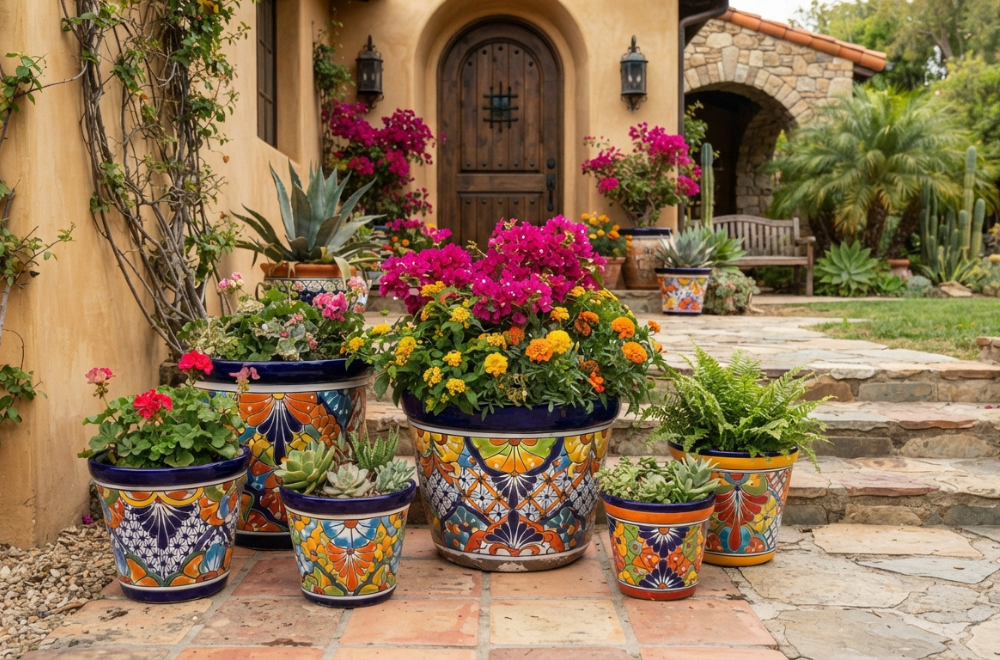
Concrete pots have serious durability going for them — they don’t crack in freezes the way clay does, and they can handle rough handling much better. Paint one with bold geometric Aztec-inspired patterns or a Talavera-style floral design, and you get the best of both worlds: toughness and color.
I painted an old plain concrete planter with acrylic outdoor paint in a repeating diamond pattern last summer, sealed it with a clear exterior sealant, and it’s held up through two winters without fading. Concrete is heavy though, so pick your spot before you paint, because moving a filled concrete pot solo is a great way to hurt your back.
The painting process itself is forgiving compared to tile mosaic work. If you mess up a line, you can just paint over it once it dries. I’d recommend sketching your pattern in pencil first if you’re not confident freehanding geometric shapes, since Aztec-style patterns rely on symmetry that’s easy to throw off by eye.
Fill these with something structural, like a small agave or yucca, to match the geometric vibe of the paint job. A soft, floppy annual tends to look out of place against sharp angular patterns.
8. Rustic Wood Crates Lined and Planted With Mixed Annuals
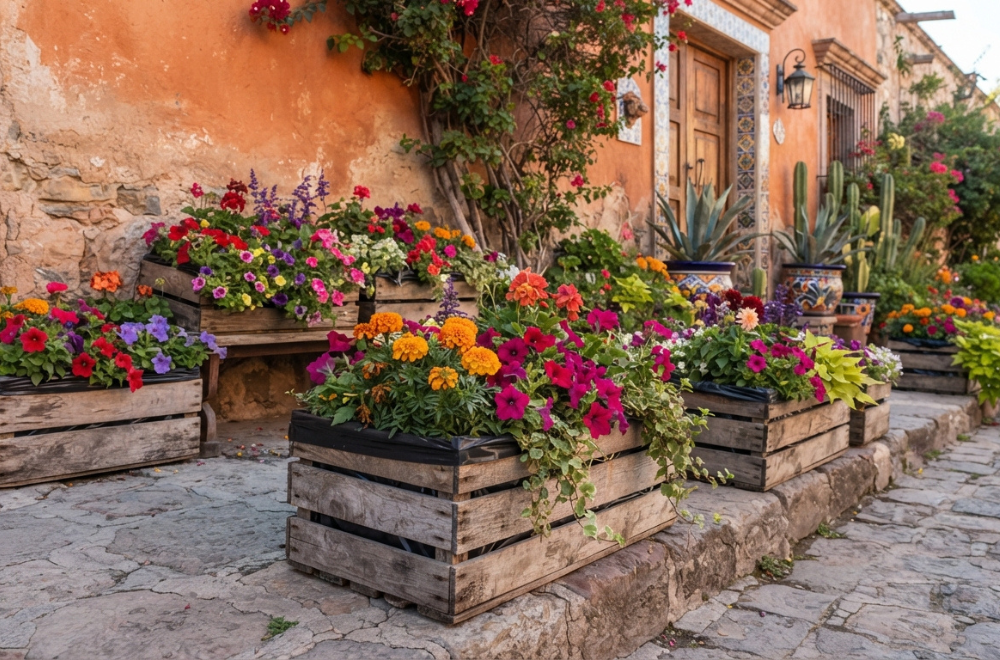
Not every authentic Mexican-style pot needs to be ceramic or metal. Weathered wood crates, the kind you’d see stacked at a produce market, make a fantastic rustic base for a mixed planting of marigolds, zinnias, and cosmos. The rough, sun-bleached wood plays beautifully against loud, saturated flower colors.
I picked up a stack of old crates from a local farm stand for a few dollars each and lined them with landscape fabric before adding soil, which keeps the wood from rotting out from underneath too fast. Even with the liner, wood crates aren’t a forever solution — mine last about two to three seasons before they start falling apart at the corners.
That’s honestly part of the appeal for me. There’s something nice about a planter that’s not meant to last forever, especially if you like switching up your patio look every couple of years anyway. When a crate finally gives out, I just break it down for kindling and grab another one.
Drill or poke drainage holes in the bottom before lining with fabric, and elevate the crate slightly on bricks or pot feet so it’s not sitting directly in a puddle after every rainstorm.
9. Sunny Yellow and Orange Pots for a Fiesta-Inspired Border
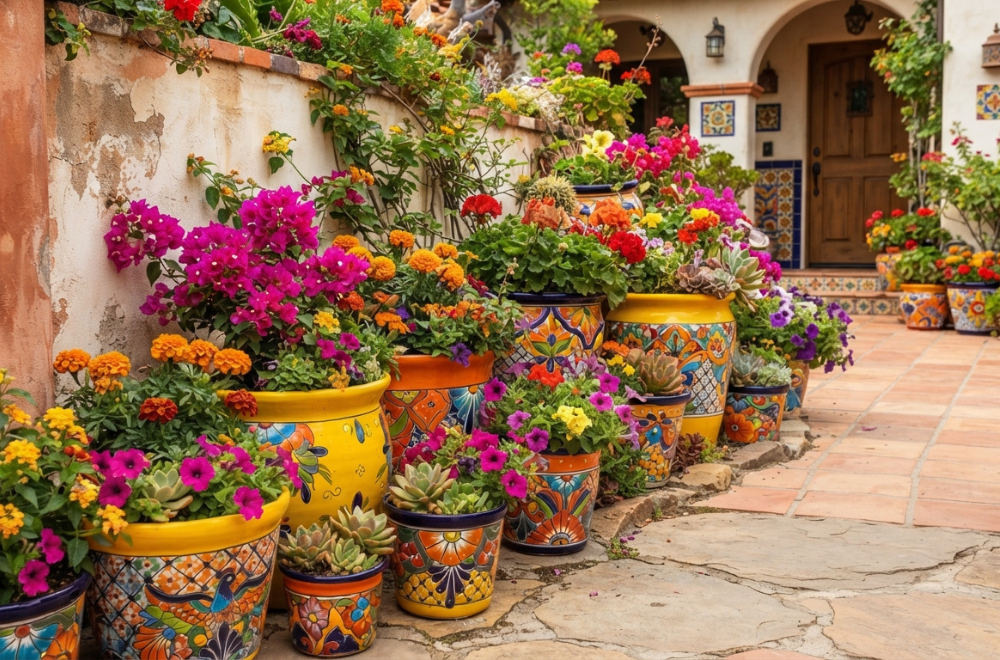
Sometimes the “authentic” look isn’t about a specific pottery style at all — it’s about color. Lining a garden path or porch step with a row of matching sun-yellow or marigold-orange pots creates that unmistakable fiesta energy, even if every single pot came from a regular garden center.
I did this along my driveway two summers ago using ten identical terracotta pots, all painted the same warm mustard yellow, each planted with red geraniums. The repetition is what sells it. One yellow pot looks cute; ten in a row looks like a design choice.
Consistency is everything with this idea, so pick one shade and stick with it rather than grabbing whatever bright color happens to be on sale that week. I made that mistake with my first attempt and ended up with a mismatched row that looked more like a yard sale than a border.
Geraniums, marigolds, and zinnias in red, orange, or hot pink all pop hard against a yellow pot. Avoid pale pastel flowers here — they tend to wash out completely against that much saturation.
10. Vertical Pallet Planters Painted in Traditional Colors
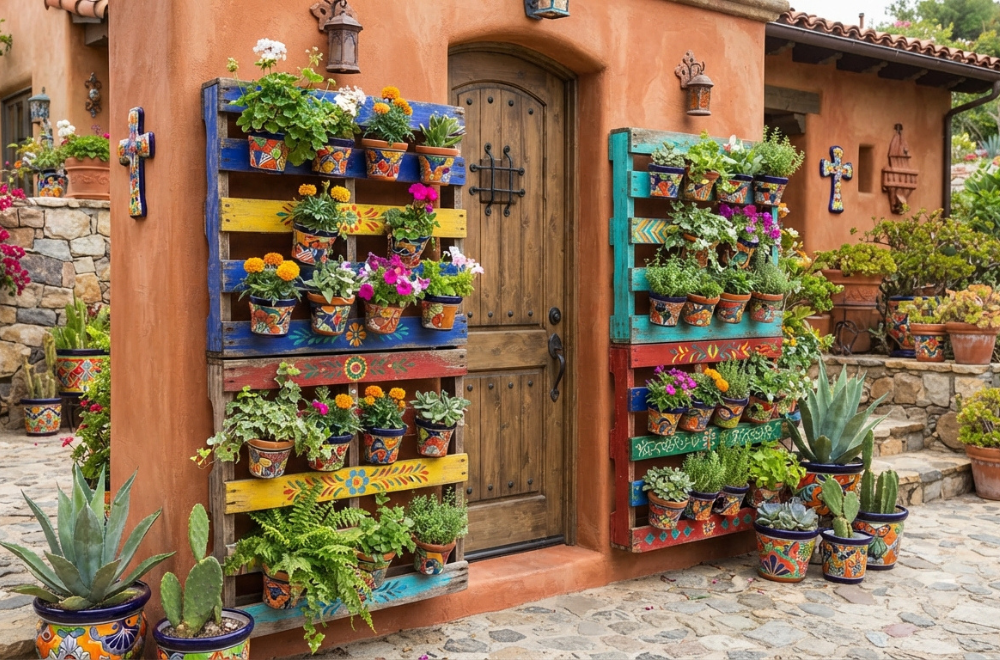
Vertical planting is having a real moment, and a wooden pallet painted in traditional Mexican colors and stuffed with succulents or herbs makes an incredible use of a small patio wall. Lean it against a fence, add landscape fabric and soil pockets between the slats, and you’ve got a living wall for a fraction of the cost of a fancy vertical garden system.
I built one from a free pallet I grabbed off a curb, sanded the rough edges, and painted the frame in alternating turquoise and coral stripes before adding hens and chicks, sedum, and a few trailing string-of-pearls in the gaps. It took an entire Saturday, mostly because sanding a pallet is more tedious than it sounds.
Succulents work best here because they don’t need deep soil and can handle the occasional dry spell if you forget to water your vertical garden for a week (we’ve all done it). Leafy herbs can work too, but they’ll dry out faster in those shallow pockets and need more frequent attention.
Make sure your pallet is actually rated safe for gardening use — some are treated with chemicals you don’t want leaching into anything edible. Stick to pallets marked “HT” (heat treated) rather than “MB” (methyl bromide) if you’re planning to grow herbs in it.
11. Repurposed Enamelware Pots for a Vintage Mexican Kitchen Look
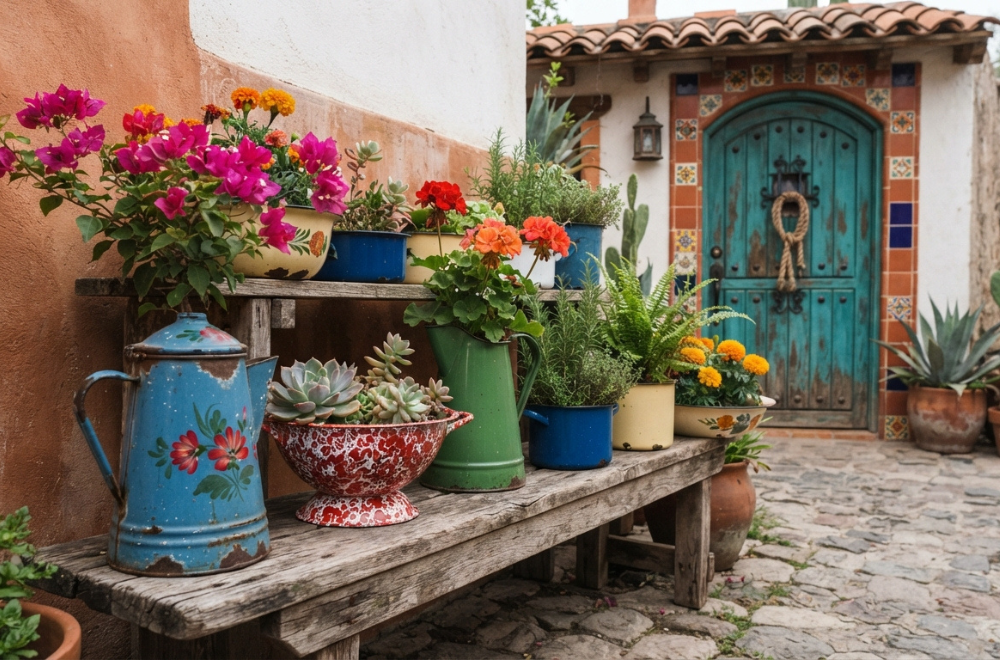
Vintage enamelware — the speckled blue, red, or white metal bowls and pots you’d find in an old Mexican kitchen — makes a surprisingly great planter once you drill a few drainage holes in the bottom. Thrift stores and flea markets are goldmines for this stuff, usually for a few dollars a piece.
I’ve got a chipped speckled-blue enamel pot on my kitchen windowsill holding a small basil plant, and it’s honestly one of my favorite containers I own, despite costing me two dollars at an estate sale. The chips and rust spots just add character at this point.
Enamelware is metal underneath the coating, so it conducts heat fast. On a hot windowsill or a sunny patio table, the soil inside can dry out much quicker than it would in ceramic or clay. Keep an eye on watering, especially in peak summer, or your plant will crisp up before you notice.
Small herbs, trailing succulents, or a single compact flower work best in enamelware since most pieces you’ll find secondhand are on the smaller side. Don’t force a big root system into a shallow enamel bowl — it’ll outgrow the space fast and you’ll be repotting within a month.
Quick Side Note: Don’t Forget the Saucers
This one’s small, but it trips people up constantly. Authentic clay and ceramic Mexican pots almost always need a saucer underneath, especially if they’re sitting on a wood deck, painted concrete, or anything you don’t want stained. That gorgeous cobalt Talavera pot will absolutely leave a ring of mineral deposits and water stains on your porch boards if you skip this step. I ruined a section of my deck learning this, and matching saucers cost way less than refinishing wood.
Real Talk: What Actually Goes Wrong With Mexican-Style Flower Pots
Here’s where I get honest with you, because Pinterest never shows you this part.
- Authentic pottery is expensive, and shipping makes it worse. A genuine Talavera pot from Puebla can run you anywhere from $40 for a small one to well over $200 for a large statement piece, and that’s before you factor in how badly ceramics can get damaged in transit. I’ve had two pots arrive in pieces despite “fragile” stickers plastered all over the box. If you’re ordering online, always buy from a seller with a real return or replacement policy.
- Freezing temperatures are the enemy of unglazed and painted clay. I’ve said this a few times already because it bears repeating: if you live somewhere winters dip below freezing, you either bring these pots indoors, elevate and empty them, or accept that you’ll be replacing a few every couple of years. There’s no clever workaround here. Water gets into the clay, freezes, expands, and cracks the pot from the inside.
- DIY paint jobs fade faster than you’d expect. Regular craft paint on outdoor pots looks amazing for about one season before the sun bleaches it into a washed-out version of itself. Always use exterior-rated acrylic paint and a UV-resistant sealant if you want your colors to hold up, and even then, expect to touch things up every year or two.
- Not every “Mexican-inspired” pot at the garden center is actually Mexican. A lot of mass-produced pottery borrows the color palette without any real connection to Talavera, barro rojo, or traditional Mexican craft techniques. There’s nothing wrong with buying these if the budget or the look is what matters to you, but if authenticity is the whole point, look for actual origin information before you buy.
- Some of these ideas are genuinely more work than they’re worth. I’ll be blunt: the tile mosaic pot was fun once, but I haven’t made a second one in four years because the process is slow and my patience for grout is limited. If you’re short on weekends, stick with painted terracotta or a good tin can — you’ll get 80% of the visual impact for a fraction of the effort.
Parting Wisdom
The best Mexican-style flower pot garden isn’t the one that perfectly matches a magazine spread — it’s the one that looks like it happened over years of picking up a pot here, painting a bucket there, and occasionally breaking something you loved. Mine certainly did. Start with one or two pieces that genuinely speak to you, get the plants right for your climate, and let the collection grow the messy, authentic way.
What’s your go-to pot style, and have you ever had one crack on you mid-winter like mine did? Drop your stories, questions, or plant pairing ideas in the comment box below — I read every single one.

About Syprose Kiche
Syprose Kiche is the creator and writer behind My Besuited Home, a practical home and garden website covering DIY projects, gardening, lawn care, landscaping, home improvement, and outdoor living. She focuses on turning everyday homeowner questions into clear, practical guides backed by careful research and useful real-world considerations.