
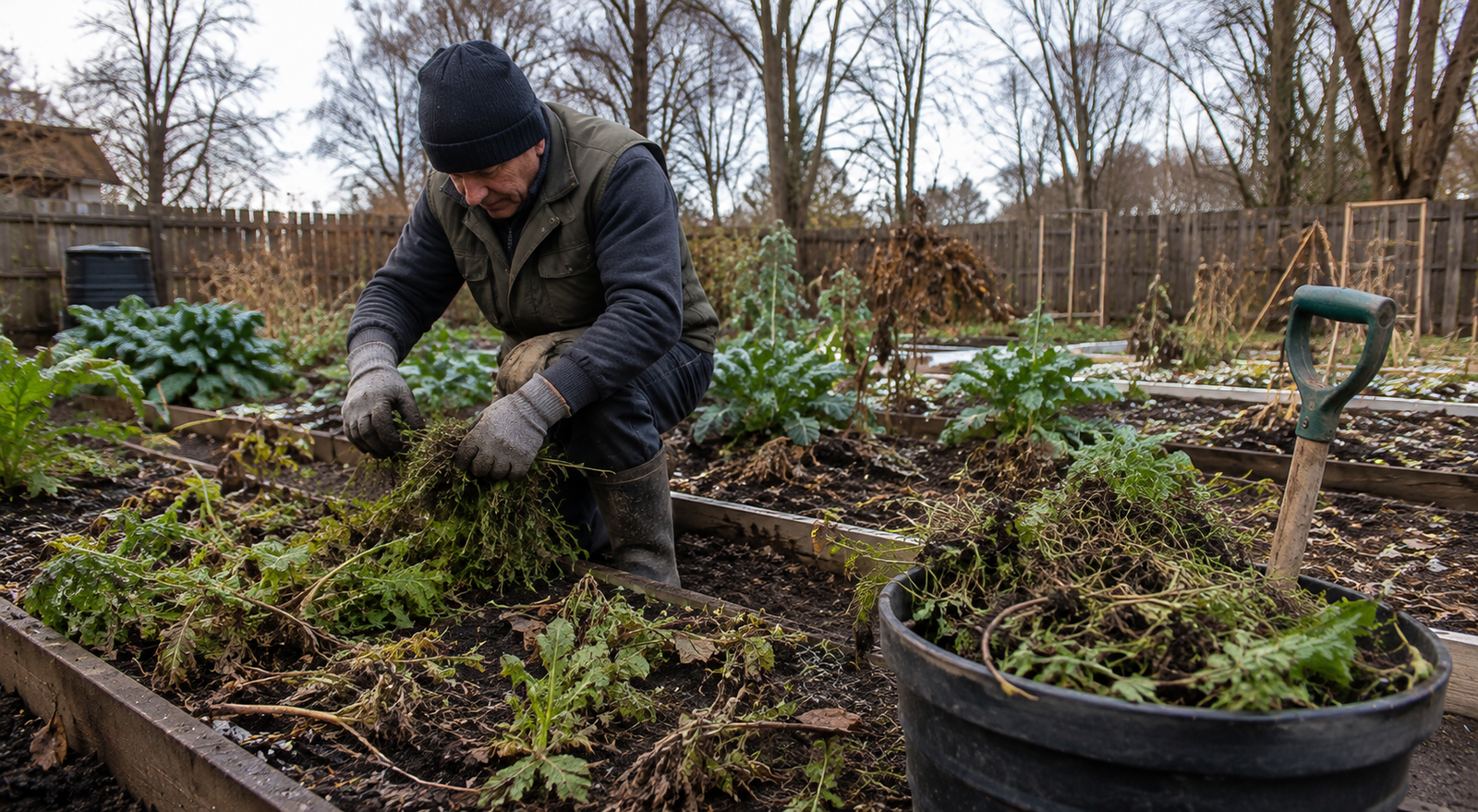
You cut your tomato plants down, rake up most of the leaves, and call it a season. Then April rolls around and your “fresh start” garden gets hit by the exact same aphids, squash bugs, and slugs that wrecked your zucchini last July. Sound familiar?
Here’s the thing nobody tells new gardeners: most garden pests don’t die when the weather turns cold. They just check into a hotel. Egg masses tuck into bark crevices, adult beetles burrow into mulch, and squash bug eggs ride out the winter in plant debris you left behind. Come spring, they wake up hungry and already have a head start on your seedlings.
I’ve been gardening for over a decade, and my first few years were basically a pest buffet because I didn’t understand this. I thought “putting the garden to bed” meant a quick rake and a shrug. It doesn’t. Fall cleanup is pest control — it’s just pest control that happens before the pests show up.
This guide walks through exactly what to do (and what to skip) so your garden isn’t a five-star overwintering resort. Let’s get into it.
Why Garden Pests Overwinter in the First Place
Insects are cold-blooded, so they can’t just power through a freeze the way we power through a cold snap with a space heater. Instead, they’ve got three main survival strategies: they lay eggs that are built to survive freezing, they find sheltered spots to go dormant as adults, or they burrow into soil below the frost line.
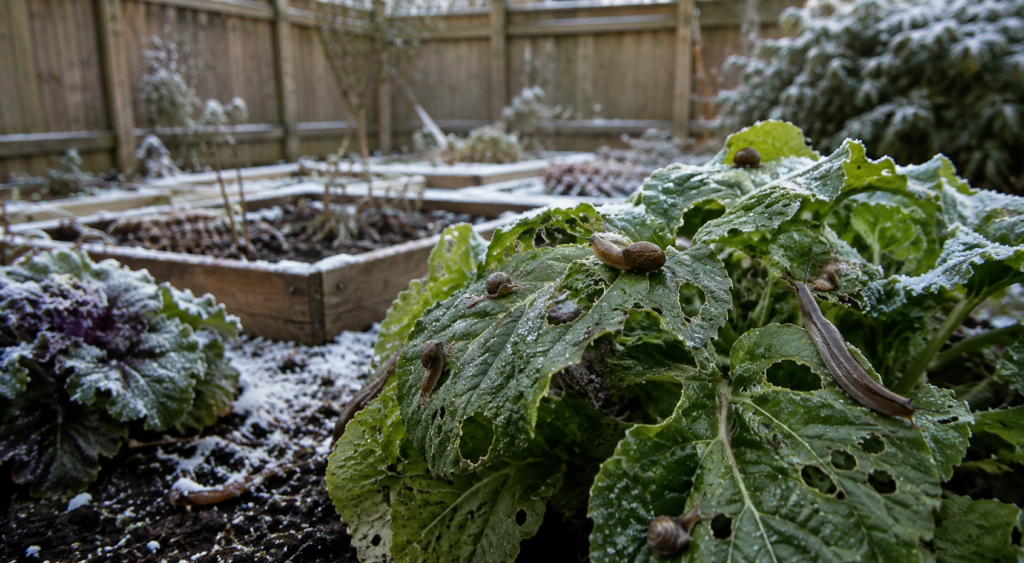
Squash bugs, for example, tuck themselves under leaf litter, mulch, or garden debris as full-grown adults and wait it out. Japanese beetle grubs drop deeper into the soil as it cools, then come back up in spring ready to eat your lawn roots. Aphids often overwinter as eggs glued right onto the stems of perennial plants and shrubs. Slugs and snails hide in damp mulch, under pots, or in any cool, moist crevice they can find.
The common thread? They all need cover. Dense mulch, leaf piles, dead plant stalks, cracked pots, stacked firewood, even a messy garden shed corner — these are all five-star accommodations if you’re a bug trying to survive January. Take away the cover, and you take away a huge chunk of next year’s pest population before it even starts.
Clean Up Garden Debris Before the First Hard Frost
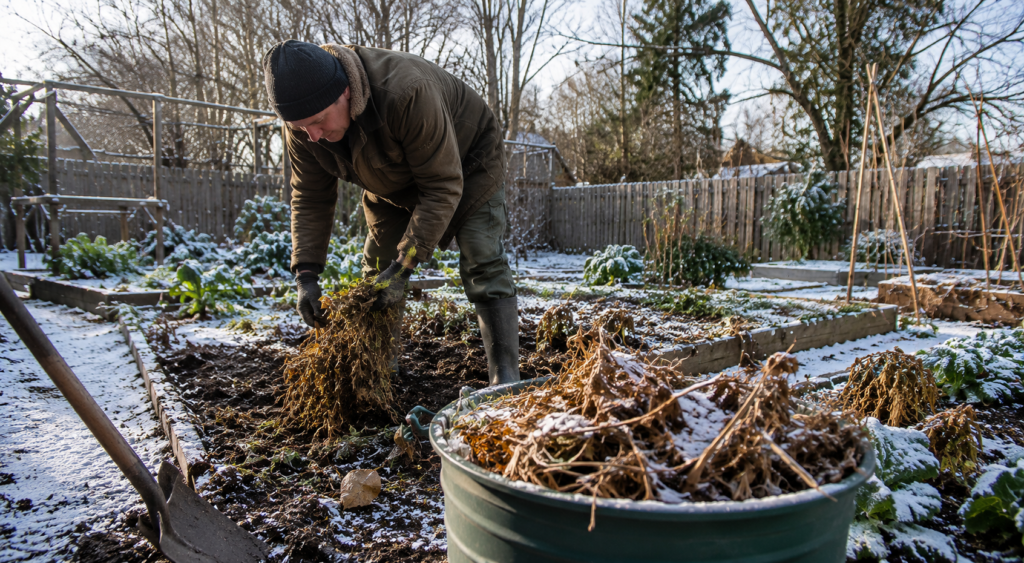
This is the single biggest thing you can do, and it’s also the thing most people skip because by October everyone’s tired of yard work. I get it. But this step alone knocks out a shocking number of pests.
Pull out spent annuals, vegetable plants, and any diseased or pest-damaged foliage as soon as they’re done producing. Don’t wait until everything in the bed has died back — squash vines, tomato plants, and bean plants that struggled with pests this season are exactly the ones harboring eggs or overwintering insects right now. The longer that debris sits, the more time pests have to settle in for winter.
Bag up and toss (don’t compost) any plant material that showed signs of disease or heavy pest damage. I know composting feels like the “right” thing to do environmentally, but a home compost pile rarely gets hot enough to kill pest eggs or fungal spores. You’re basically saving them for next year and giving them a free ride back to your garden when you spread that compost in spring.
Rake up fallen leaves from around the base of fruit trees, roses, and any plants that had pest problems this year. Apple scab, black spot, and plenty of insect eggs overwinter in leaf litter right at the base of the plant that fed them all summer. You don’t have to strip your whole yard bare — a light leaf layer in a wild corner is fine for beneficial insects (more on that below) — but around problem plants, get it up and out.
Quick side note: if you had a bumper crop with zero pest issues this year, you don’t need to be quite as ruthless with that bed. Healthy, pest-free plant debris can go straight into the compost pile without much worry.
Turn Over Your Soil in Fall to Expose Overwintering Insects
This one surprises people. A light till or turn of your garden soil in late fall does double duty — it exposes overwintering grubs, larvae, and pupae to the cold and to hungry birds, both of which will finish them off for you.
Grab a garden fork (not a rototiller, more on why in a minute) and gently turn over the top 4 to 6 inches of soil in beds that had pest pressure this year. Squash bug eggs, cutworm larvae, and various beetle pupae are often sitting just below the surface, and a hard freeze on exposed soil is a lot more lethal than a hard freeze on soil that’s insulated by mulch and plant cover.
Do this on a clear, cold morning if you can, and leave the soil turned rather than raking it smooth right away. Birds are surprisingly efficient at cleaning up exposed grubs, and I’ve watched robins and sparrows work a freshly turned bed like it’s an all-you-can-eat buffet. Let nature do some of the labor for you.
Timing matters here. You want to do this after your last harvest but before the ground freezes solid, since you need workable soil to actually turn it. In most temperate climates that’s sometime in October or November, but check your local first hard frost date and plan around it.
I’ll be honest about the limits of this one: it’s not a silver bullet, and it works best as a supplement to debris cleanup, not a replacement for it. Turning the soil without removing the plant debris on top just buries the problem instead of solving it.
Clear Out Weeds and Volunteer Plants Before Winter
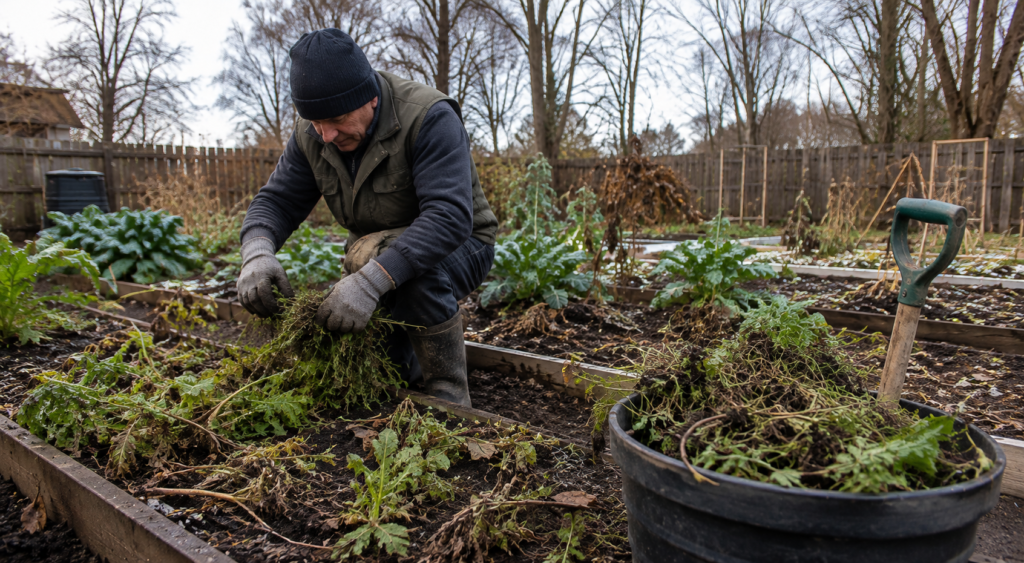
Weeds are pest hotels with room service. A lot of gardeners clean up their vegetable beds beautifully and then completely ignore the scraggly weed patch along the fence line, not realizing that patch is exactly where next year’s aphids, spider mites, and whiteflies are spending the winter.
Pull weeds from garden beds, walkways, and the perimeter of your yard before the ground freezes. Pay special attention to weeds that are close relatives of your vegetable crops — wild mustard near your brassicas, for instance, or nightshade family weeds near your tomatoes and peppers. Pests that specialize in a particular plant family will happily overwinter on the weedy cousin if your cultivated version is gone.
Volunteer plants (the tomato or squash that sprouted on its own from last year’s dropped fruit) deserve the same treatment. They feel like a fun garden surprise, but if the parent plant had pest issues, the volunteer is basically pest housing with a “welcome” mat out front. Pull them.
Don’t forget the edges of your property. Overgrown grass, brush piles, and weedy fence lines are prime real estate for overwintering pests to build up a population that migrates into your garden beds the following spring. A fall mow and edge-trim of these areas isn’t glamorous work, but it closes off a major pest highway into your growing space.
Store Pots, Tools, and Garden Structures Properly for Winter
This is the step almost everyone forgets, and it’s the reason some gardeners keep fighting the same pest battle year after year even after a thorough bed cleanup. Pests don’t just live in soil and plant debris — they hide in stacked pots, in the folds of row cover fabric, in the cracks of wooden raised beds, and on garden tools you never bothered to clean.
Empty, rinse, and scrub out any pots or containers that held plants with pest or disease problems this season. Use a mild bleach solution (about one part bleach to nine parts water) or a vinegar rinse, then let them dry completely before stacking them for winter storage. Terra cotta and plastic pots both hold onto pest eggs and fungal spores in their pores and seams more than people expect.
Clean your pruners, shovels, hoes, and any other tools that touched infected or infested plants this season. Wipe blades down with rubbing alcohol between uses on different plants, and give everything a final clean before it goes into storage for winter. A dirty pruner is a great way to spread pest eggs and disease spores from a sick plant to a healthy one next spring without you ever knowing it happened.
Check garden structures too — trellises, stakes, row cover hoops, and cold frames. Wood especially can develop cracks and crevices that become perfect overwintering spots for beetles and other insects. A quick inspection and cleaning now saves you from unknowingly reintroducing pests when you pull that trellis back out in April.
Bonus tip: if you use shade cloth, frost blankets, or row cover fabric, shake it out thoroughly and check the folds before storing it for the season. I once pulled out a roll of row cover in spring and found it had become a cozy little squash bug nursery over the winter. That was an unpleasant surprise.
Inspect Mulch, Firewood Piles, and Garden Structures for Hidden Pests
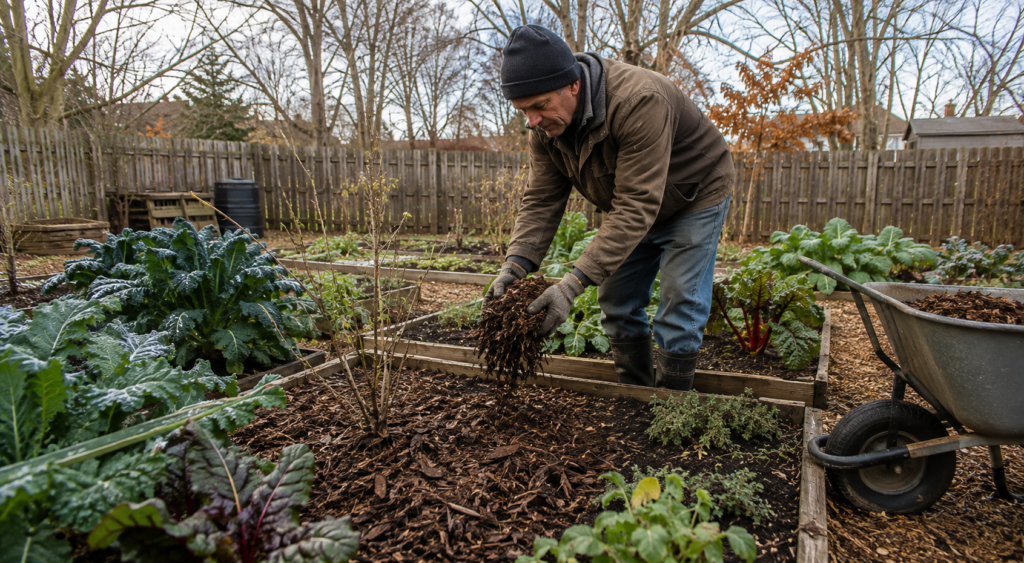
Mulch gets a lot of credit for insulating plant roots over winter, and it deserves that credit. But thick, undisturbed mulch is also one of the coziest overwintering spots a bug can ask for, especially if it’s been sitting in the same spot for a couple of years without being refreshed.
Before winter really sets in, pull back the mulch around any plants that struggled with pests this season and take a look at what’s underneath. Slugs, pill bugs, earwigs, and plenty of beetle species will be tucked right against the soil line where the mulch meets the stem. If you find heavy activity, rake that old mulch out, dispose of it away from the garden, and replace it with a fresh layer once temperatures drop closer to freezing. Fresh mulch applied right before a hard freeze still gives roots the insulation they need without giving pests a multi-month head start.
Firewood piles deserve a look too, and this one surprises a lot of people. Stacked wood right up against the house or garden shed is prime real estate for carpenter ants, borers, and various beetles looking for a sheltered spot to overwinter. I’d recommend keeping firewood stacked at least a few feet away from your home and garden structures, off the ground on a rack rather than directly on soil, and covered loosely enough that air can still move through the pile. A tightly tarped, ground-level woodpile right next to your tomato bed is basically an insect condo with a great commute to your vegetables.
Don’t skip your garden shed, cold frame, or greenhouse either. Sweep out corners, check for cracks where insects could squeeze in, and clear away any leftover potting soil bags or empty pots that have been sitting in a corner all season. I once found an entire colony of overwintering earwigs living in a stack of empty nursery pots I’d shoved into the back of my shed and forgotten about. They had a great winter. My pepper seedlings did not have a great spring.
Give Beneficial Insects a Place to Overwinter Too
Here’s where I have to be a little contradictory to everything I just said, and I think it’s important. Not every insect in your yard is a problem, and going full scorched-earth on every leaf and stem in your yard actually hurts you in the long run.
Ladybugs, lacewings, native bees, and plenty of other beneficial insects also overwinter in leaf litter, hollow plant stems, and undisturbed soil. If you strip your entire property bare every fall, you’re wiping out the predators that would otherwise be eating your aphids and pest eggs for you next season. I’ve found that a totally “clean” garden looks great on Pinterest but tends to have way more pest pressure than a garden with a few intentionally messy corners.
The fix is balance, not extremes. Clean up debris around plants that had known pest problems this year, and leave a wilder patch somewhere on the property — a brush pile, an unmowed corner, a section of standing perennial stems — for the beneficial insects to use. Native bee species in particular rely heavily on hollow or pithy plant stems for winter shelter, so cutting every single perennial down to the ground in fall does more harm than good for your pollinator population.
The Real Talk: What’s Overkill and What’s Not Worth Your Time
Let’s talk about where fall pest prevention crosses the line into wasted effort, because there’s a lot of bad advice floating around.
Rototilling your entire garden every fall sounds thorough, but it’s honestly not worth it for most home gardens. A rototiller destroys soil structure, kills off the beneficial fungal networks and earthworms you actually want, and doesn’t do meaningfully better pest control than a light hand-turn with a garden fork. Save the heavy machinery for a genuine soil renovation project, not routine pest prevention.
Spraying broad-spectrum pesticides on bare fall soil “just in case” is another one I’d skip. By the time most pests are settling in for winter, they’re often already sheltered in soil, bark, or debris where a spray won’t reach them effectively anyway. You’re mostly just killing beneficial insects and soil microbes for no real payoff. If you’ve got a genuinely bad infestation of something specific, treat that plant or that pest directly and skip the blanket spraying.
Dormant oil sprays on fruit trees are a real exception worth mentioning here, and they’re one of the few chemical treatments I actually recommend in fall. Applied on a dry day before the first hard freeze, dormant oil smothers overwintering insect eggs and scale on the bark of fruit trees without the collateral damage of a broad pesticide. That’s a targeted tool, not a spray-everything approach, and the difference matters.
I also want to be straight with you about expectations. No amount of fall cleanup gets you to a zero-pest garden next year. Pests migrate in from your neighbor’s yard, arrive on the wind, or hitch a ride on new plants you bring in. What fall prevention actually does is reduce your starting population so you’re not fighting an uphill battle from day one. That’s a realistic, worthwhile goal — just don’t expect a pest-free spring because you did a good cleanup in October.
Lastly, don’t burn a whole weekend trying to do everything on this list in one marathon session. Pest-prevention cleanup works fine spread across several weekends in October and November. Rushing it, especially with debris removal, tends to mean things get missed.
One more thing worth saying plainly: timing your cleanup around your specific climate matters more than following a generic calendar date. Gardeners in warmer zones with mild winters are dealing with pests that may not go fully dormant at all, just slow down, which means cleanup and monitoring both need to stretch further into the “off season” than a single fall push. If you’re in a colder zone with a hard, reliable freeze, you get more of a natural assist from the weather itself, and your window for cleanup can be a bit more relaxed. Know your zone, know your first frost date, and plan backward from there instead of just doing what a random blog post (including this one) tells you to do on a specific date.
Wrapping It Up
Preventing overwintering pests isn’t about one big fall project — it’s a handful of smaller habits that add up: clear the debris, turn the soil where pests were a problem, pull the weeds, clean your tools and pots, and leave a little wildness for the good bugs. Do that consistently every fall, and you’ll notice your spring garden starts a whole lot stronger than it used to.
What’s the one pest that keeps coming back for you every single year, no matter what you try? Drop it in the comments below — I’d love to hear what you’re dealing with and swap notes on what’s worked (and what’s been a total waste of time).

About Syprose Kiche
Syprose Kiche is the creator and writer behind My Besuited Home, a practical home and garden website covering DIY projects, gardening, lawn care, landscaping, home improvement, and outdoor living. She focuses on turning everyday homeowner questions into clear, practical guides backed by careful research and useful real-world considerations.