
Nothing stings quite like walking outside in April, coffee in hand, hoping to see those first green shoots poking through the soil — and finding nothing but mud where your favorite plant used to be. If you garden in a cold climate, you already know this heartbreak. You plant something gorgeous in June, it puts on a show all summer, and then winter shows up and just… deletes it.
I’ve killed more “hardy” perennials than I care to admit. Some of it was bad luck. Most of it was picking the wrong plants for my zone and hoping for the best. After more than a decade of digging, dividing, and occasionally cursing at frozen ground, I’ve landed on a list of perennials that don’t just survive a brutal winter — they come back stronger every single year.
This list covers plants that handle USDA zones 3 through 6 without a fuss. No babying, no elaborate winter wrapping rituals, no crossing your fingers. Just plant them once and enjoy them for years.
What Makes a Perennial Truly Cold-Hardy?
Before we get into the list, here’s what I actually look for when I’m choosing a cold-climate perennial:
- A hardiness zone rating at or below your actual zone. If you’re in zone 4, a zone 5 plant is a gamble.
- Deep or fibrous root systems that can handle freeze-thaw cycles without heaving out of the ground.
- A track record, not just a pretty tag at the garden center. Some of the best cold-climate plants aren’t the trendiest ones.
Alright, let’s get into it.
1. Peonies: The Cold-Climate Classic That Outlives You
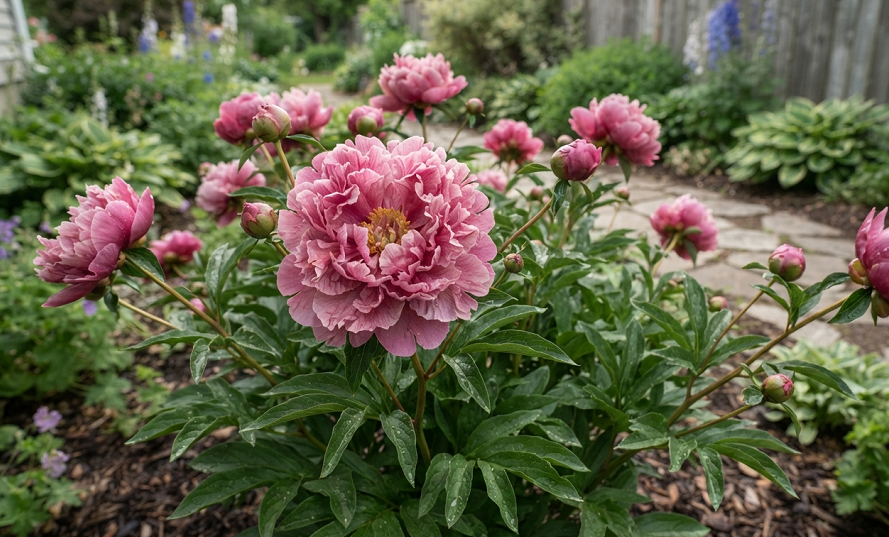
Peonies are basically the grandmothers of the cold-climate garden world, and I mean that as a compliment. These things can live for 50 years or more. I’ve seen peony bushes still blooming in the yards of houses that were torn down and rebuilt twice.
They actually need a hard winter to bloom well. Peonies require a solid chilling period to set flower buds, which is why gardeners in warmer states struggle to grow them at all. If you’re dealing with zone 3 or 4 winters, you’re basically giving peonies exactly what they want.
Plant them in early fall, about 1 to 2 inches deep — and this part matters — not any deeper. I planted mine too deep my first year and got exactly zero blooms for three seasons. Peonies are picky about depth but forgiving about almost everything else once they’re established.
Give them full sun and well-drained soil, and stake the big double-flowered varieties before a rainstorm flattens them. That’s the only real maintenance headache with peonies, and it’s a small price for decades of flowers.
2. Coneflowers (Echinacea): Pollinator Magnets That Barely Need You
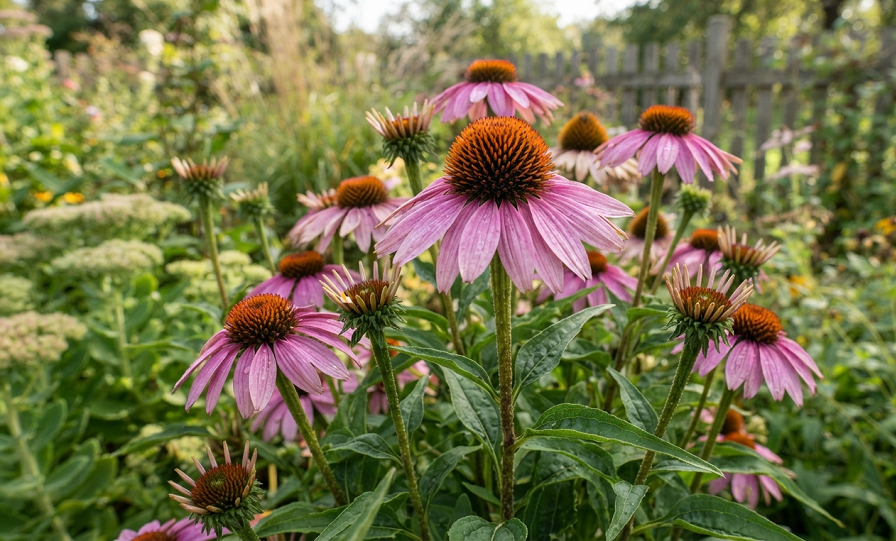
If you want a perennial that pulls double duty as a pollinator buffet and a low-maintenance bloomer, coneflowers are it. Bees, butterflies, and goldfinches all show up for these, and goldfinches especially love snacking on the seed heads in fall.
Coneflowers are prairie natives, which tells you everything about how tough they are. They evolved to handle drought, wind, poor soil, and brutal winters without a caretaker fussing over them. That resilience translates directly into your backyard.
I’ll be honest — I used to deadhead mine religiously to keep them tidy. Then I learned that leaving the seed heads standing through winter feeds birds and gives the garden some structure against the snow. Now I only cut them back in early spring. Less work, more birds. Everybody wins.
They’ll self-seed if you let them, so expect volunteer plants popping up nearby in a year or two. I actually like this. Free plants are my favorite kind of plants.
3. Hostas: The Shade Garden Workhorse
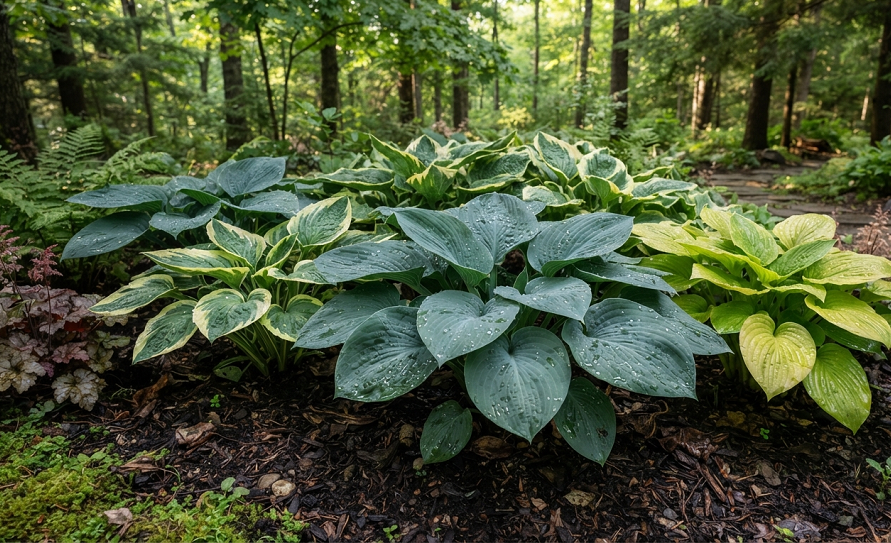
If you’ve got a shady spot where nothing else will grow, hostas are your answer. I’ve got a north-facing bed under a maple tree that grows nothing but weeds and hostas, and the hostas are winning that fight easily.
These plants are ridiculously cold-hardy, surviving down to zone 3 without any special care. The leaves die back completely in fall, which throws new gardeners off — they think the plant died. It didn’t. It’s just doing what hostas do. New growth comes back reliably every spring, often bigger than the year before.
The one enemy you actually need to worry about isn’t the cold. It’s deer and slugs. Deer will strip a hosta bed overnight like it’s an all-you-can-eat buffet, and slugs leave those telltale ragged holes in the leaves. A perimeter spray or some diatomaceous earth around the base handles most of that.
Hostas also divide beautifully every three to four years, so one plant eventually becomes five. That’s a great way to fill out a shady border without spending another dime at the nursery.
4. Daylilies: Nearly Impossible to Kill
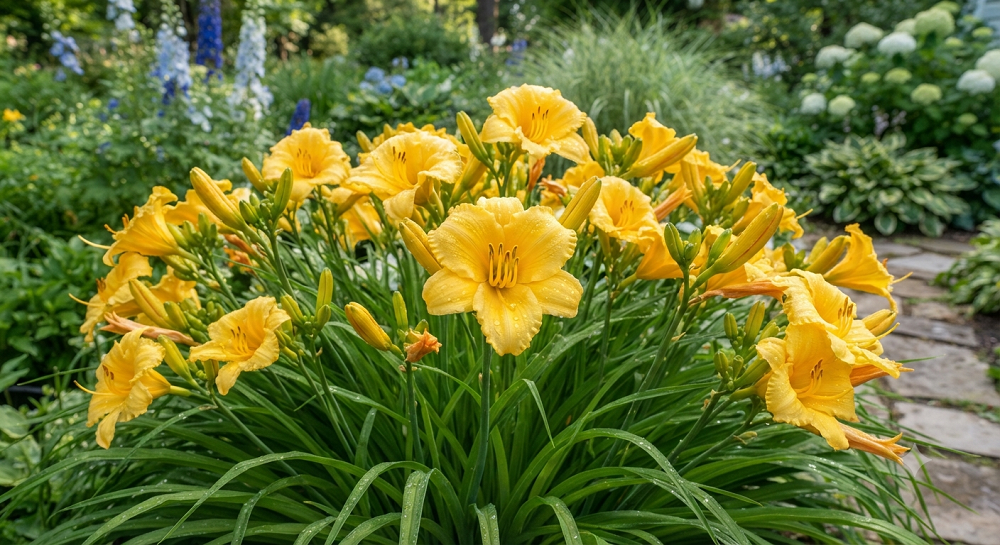
I say this with love: daylilies are the cockroach of the perennial world. In the best possible way. They survive neglect, drought, poor soil, and winters that would wipe out fussier plants, and they still bloom their heads off every summer.
Each flower only lasts one day — that’s where the name comes from — but a mature plant pumps out so many buds that you get weeks of continuous color. Varieties like Stella de Oro are practically bulletproof and will rebloom multiple times in a season if you deadhead the spent flowers.
Daylilies handle zone 3 winters without any protection at all. The foliage dies back, the crown sits tight underground, and it’s back at full strength come spring. I’ve never lost a daylily to cold, and I’ve had some in genuinely exposed, windy spots.
Divide clumps every three to five years once you notice fewer blooms or a “donut hole” forming in the center of the plant. It’s an easy job with a shovel, and you’ll end up with extra plants to fill gaps elsewhere in the yard.
5. Siberian Iris: Elegant Flowers, Zero Drama
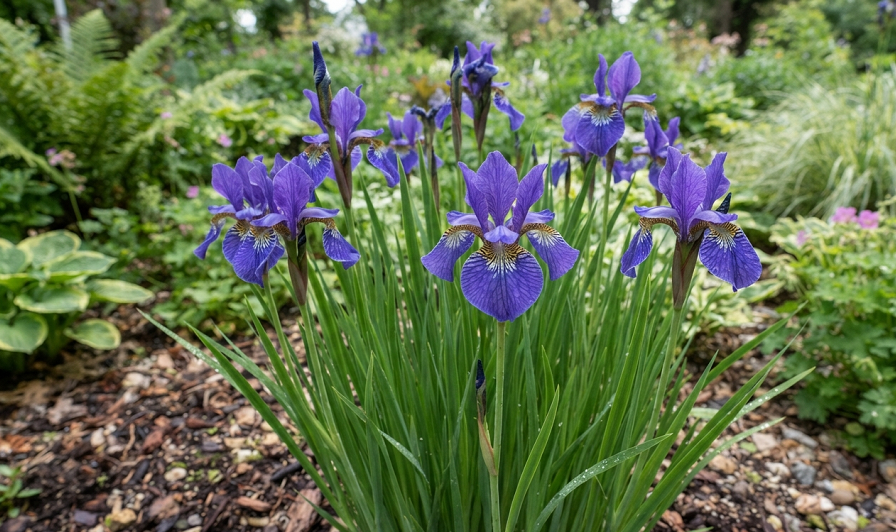
Siberian iris gets overshadowed by its flashier cousin, the bearded iris, and honestly, that’s a shame. Bearded iris rhizomes can rot in wet winters and need dividing more often. Siberian iris just sits there being tough and beautiful without asking for much.
These handle zone 3 cold without flinching, and the grassy foliage actually looks decent even after the blooms are done, which is more than I can say for a lot of spring bloomers that turn into a floppy mess by July.
Plant them in a spot with consistent moisture if you can — near a downspout or low spot in the yard works great. They’re not as drought-tolerant as daylilies, but they’re far more forgiving than most other iris varieties.
I split mine every four years or so, more out of habit than necessity. Honestly, Siberian iris can go much longer without dividing and still perform well. If you want a “plant it and forget it” flower with genuine elegance, this is it.
6. Sedum (Stonecrop): The Plant for Gardeners Who Forget to Water
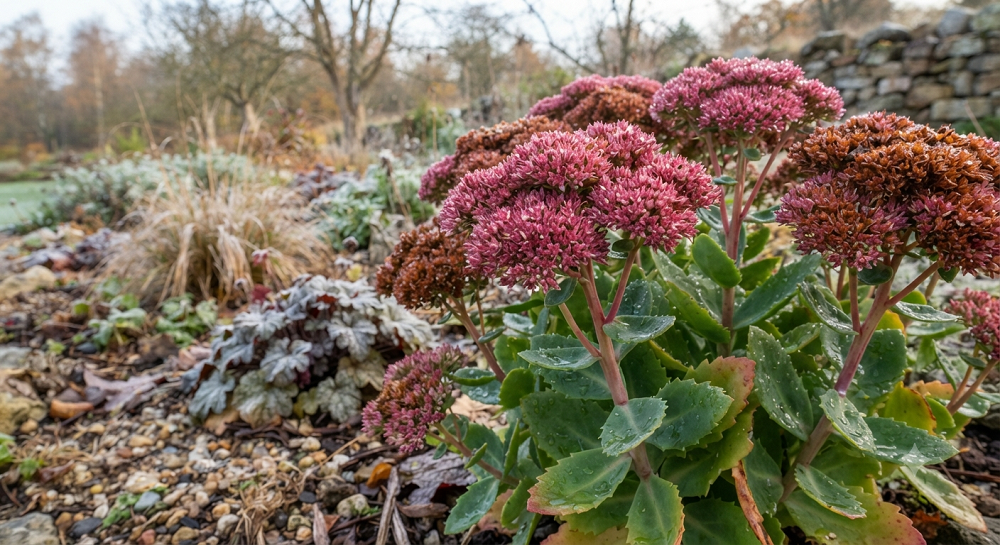
I’ve got a rock-hard, sun-blasted strip along my driveway where I’ve killed everything I’ve ever tried to plant there. Everything except sedum. That patch is thriving now, and I did basically nothing to earn it.
Sedum, also called stonecrop, stores water in its thick, succulent leaves, which is why it shrugs off drought and poor soil like it’s nothing. It’s also shockingly cold-hardy for a succulent-looking plant, handling zone 3 winters without protection.
Varieties like ‘Autumn Joy’ bloom in late summer into fall, right when a lot of other perennials are winding down, which extends your garden’s color season for free. The dried flower heads look great dusted with snow too, so I leave them standing through winter instead of cutting them back.
This is one of those plants I recommend to anyone who tells me they “kill everything.” Sedum is close to foolproof, and it genuinely looks intentional and modern in a border, not like an afterthought.
7. Black-Eyed Susan: Cheerful, Cheap, and Everywhere for a Reason
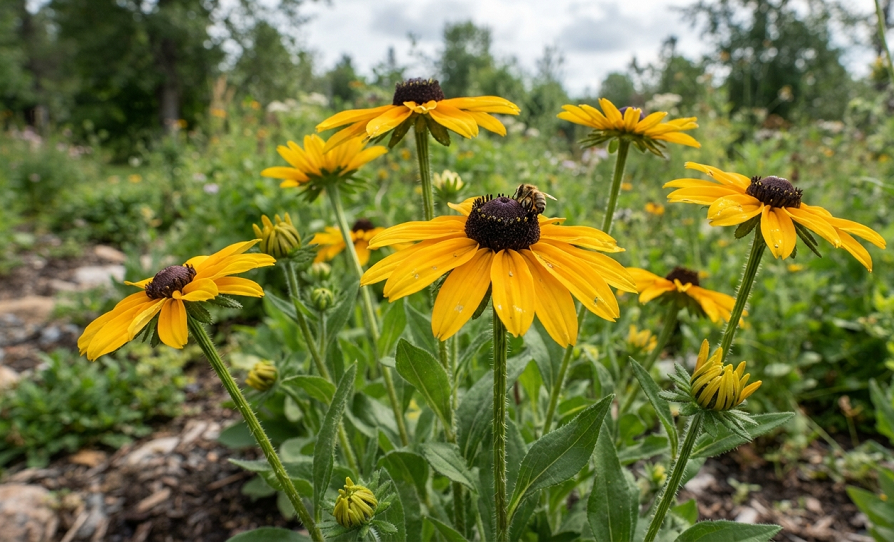
Black-eyed Susans show up in roadside ditches, abandoned lots, and prairie restorations for the same reason they’ll thrive in your yard: they’re tough as nails. That golden-yellow, dark-centered flower is one of the most recognizable perennials in North America, and it earns its popularity honestly.
They handle zone 3 and 4 winters without issue and bloom reliably from midsummer through the first frost. I’ve had clumps survive a winter with almost no snow cover for insulation, which is usually a death sentence for less hardy plants.
One thing worth knowing: some Black-eyed Susan varieties behave more like short-lived perennials or biennials, meaning individual plants might only stick around two or three years. Don’t panic if a clump thins out. They self-seed enthusiastically, so the patch as a whole keeps going even as individual plants come and go.
Full sun and average soil are all they ask for. I’ve genuinely never fertilized mine, and they bloom their heads off every year regardless.
8. Bee Balm: A Hummingbird Magnet With a Minty Kick
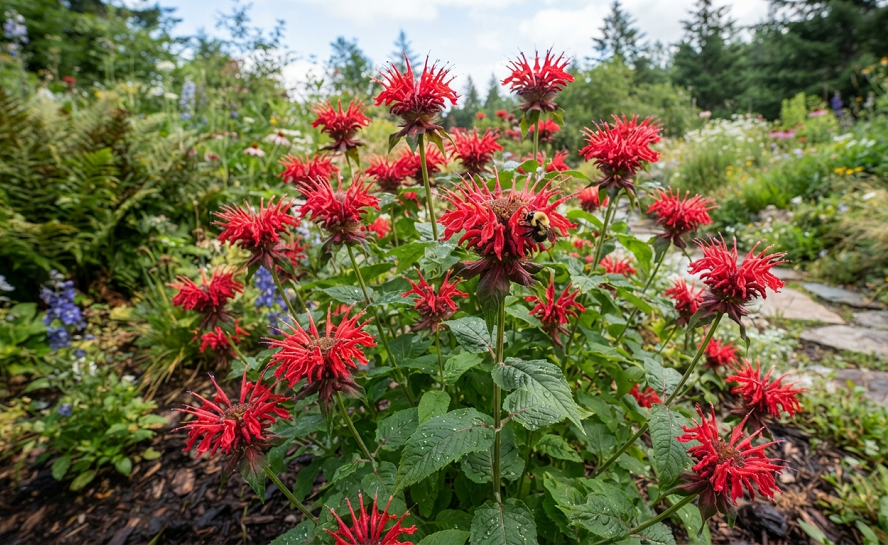
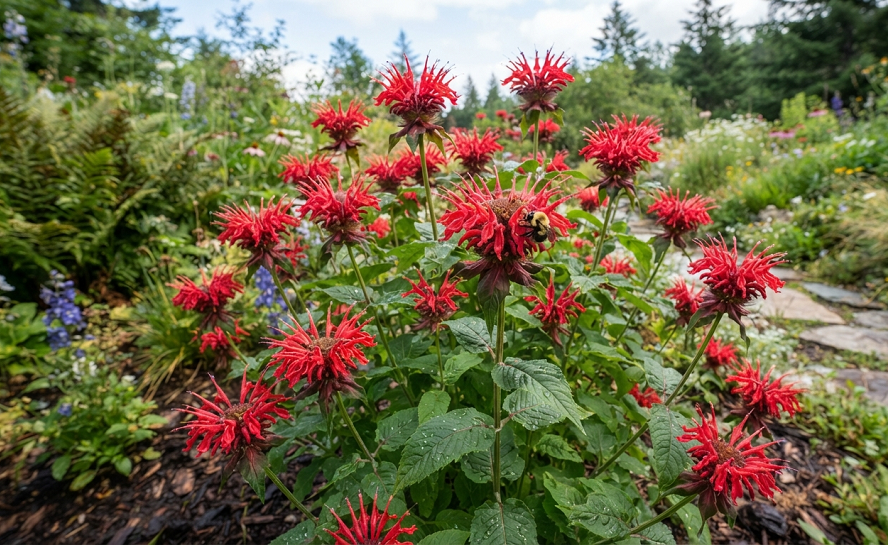
Crush a bee balm leaf between your fingers and you’ll get a burst of scent somewhere between mint and oregano. That’s not an accident — bee balm is actually in the mint family, which explains both its toughness and its tendency to spread.
Hummingbirds are obsessed with bee balm’s tubular flowers, and if you’ve never had a hummingbird buzz past your head while you’re weeding, this plant will make it happen. It’s hardy down to zone 4, sometimes zone 3 depending on the variety, and handles cold snaps without extra care.
The one real issue with bee balm is powdery mildew, that grayish-white coating that shows up on the leaves in humid summers. Good airflow helps a lot — don’t cram it into a tight corner with other tall plants. Newer mildew-resistant varieties like ‘Jacob Cline’ also make this a non-issue.
Because it’s in the mint family, bee balm spreads by underground runners and can get a little pushy in a small bed. I actually like this trait in a wilder cottage-style garden, but keep it in mind if you want a tidy, contained border.
9. Astilbe: Feathery Blooms for the Shady, Damp Corners
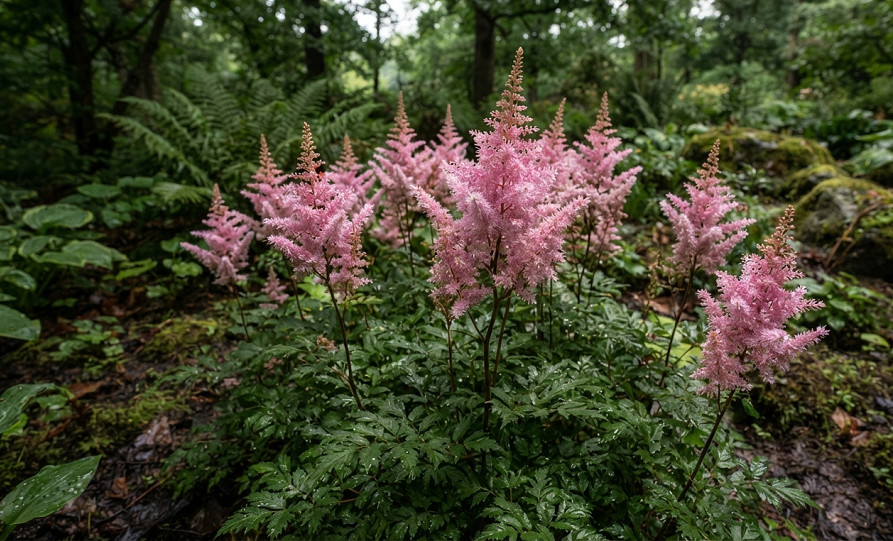
Every yard has that one spot that’s shady and stays a little too wet for most plants. Instead of fighting that spot, plant astilbe there and let it do its thing. This is one of the few perennials that actually prefers consistently moist soil over dry.
The feathery plume-shaped flowers come in shades of pink, red, white, and purple, and they add a soft texture that contrasts nicely against broad-leafed plants like hostas. Astilbe is reliably hardy to zone 4, and many varieties handle zone 3 without trouble.
It does need some morning sun or dappled light to bloom well — full deep shade will get you nice foliage but a disappointing flower show. I learned this the hard way after tucking mine under a dense spruce and wondering for two summers why it barely bloomed.
Divide astilbe every three to four years once the center of the clump starts looking tired. It’s an easy, low-drama plant once you’ve matched it to the right spot.
10. Russian Sage: Silvery Foliage That Laughs at Drought and Cold
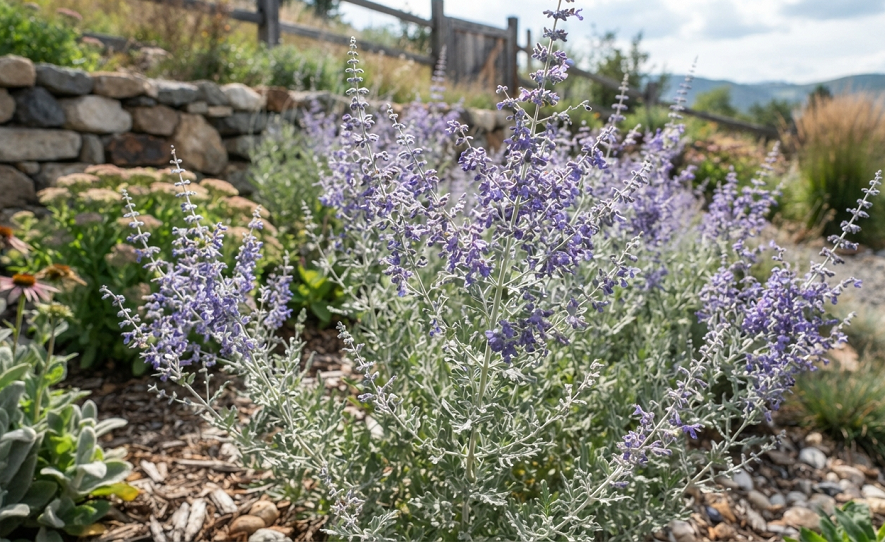
Russian sage brings something different to a cold-climate garden: airy, silvery-blue foliage and tall spikes of lavender-purple flowers that move beautifully in the wind. It looks delicate. It is not delicate.
This plant is hardy to zone 4, and honestly, the cold isn’t really its challenge — overly rich, wet soil is. Russian sage evolved in dry, rocky conditions, and it performs best when you basically ignore it. I’ve found that fertilizing it or planting it in heavy, moisture-retentive soil does more harm than any winter ever could.
It blooms from midsummer well into fall, giving your garden that soft purple haze right when a lot of spring perennials have gone quiet. Deer tend to leave it alone too, which is a nice bonus if that’s a battle you’re already fighting with your hostas.
Cut it back hard in early spring, not fall — the old woody stems actually help protect the crown through winter. I made the mistake of cutting mine back in October one year and lost about a third of the plant to a hard freeze that followed.
Quick Side Note: Coral Bells (Heuchera) Deserve a Mention Too
I couldn’t fit a full section in for every plant that earned a spot on this list, but coral bells deserve a shoutout. The foliage colors alone — deep purples, limes, ambers, almost-black — make them worth growing even without the delicate white or pink flower spikes they send up in early summer.
They’re hardy to zone 4 and do great in part shade, making them a nice companion to hostas and astilbe in that tricky shady border. Just watch for frost heaving in late winter, when freeze-thaw cycles can push the shallow-rooted crowns right out of the soil. A layer of mulch after the ground freezes solves this.
11. The Bonus Round: Lily of the Valley for the Toughest Spots in Your Yard
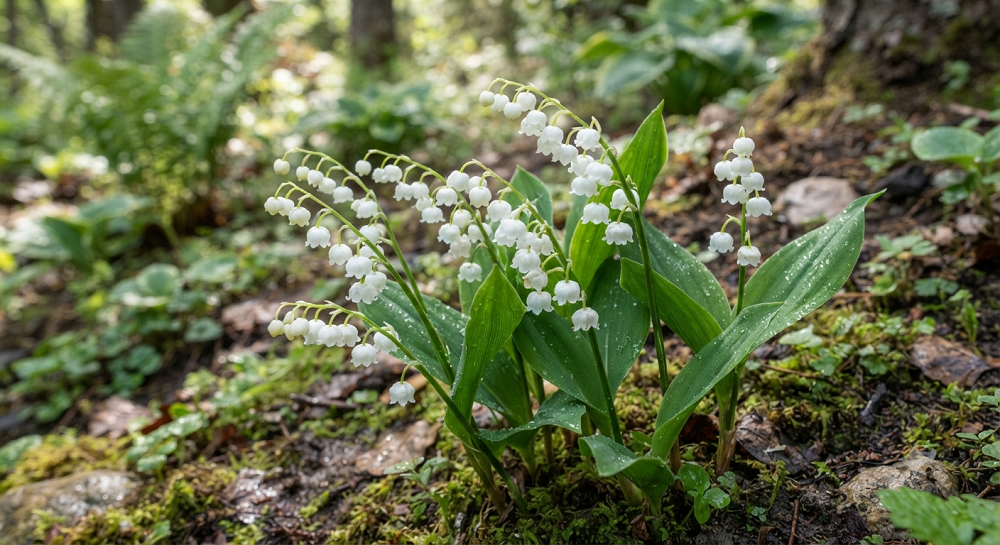
Here’s my bonus pick, and it comes with a warning label. Lily of the Valley is absurdly cold-hardy, thriving in zone 2 through zone 7, and it’ll grow in deep shade where almost nothing else survives. The tiny white bell-shaped flowers smell incredible in late spring.
It’s also aggressive. This plant spreads by rhizomes and will happily take over a bed if you let it. I planted a small patch under a tree eight years ago, and it’s now claimed a six-foot radius and shows no signs of stopping.
My honest take: use Lily of the Valley in a spot where you actually want a spreading groundcover, like a problem shade area under trees where grass won’t grow. Don’t plant it in a tidy mixed border unless you enjoy pulling it out every year. Consider yourself warned.
Real Talk: What Actually Goes Wrong With Cold-Climate Perennials
Here’s the stuff nobody puts on the plant tag.
Wet feet kill more plants than cold does. Most perennial deaths I’ve dealt with weren’t about temperature at all — they were about soil that stayed soggy through a freeze-thaw cycle and rotted the crown or roots. Drainage matters more than almost anything else on this list.
Mulching too early can do more harm than good. I used to pile mulch on right after the first frost, thinking I was helping. Actually, mulching before the ground fully freezes can trap warmth, encourage rot, and invite rodents looking for a cozy winter home. Wait until the ground is solidly frozen, then mulch.
Zone ratings aren’t a guarantee. A “zone 4 hardy” plant in an exposed, windy corner of your yard with no snow cover can still die, while the same plant tucked against a south-facing wall might thrive two zones colder than the label suggests. Microclimates in your own yard matter more than the map.
Fall planting has a deadline. Get perennials in the ground at least six weeks before your first hard frost so roots have time to establish. I’ve tried sneaking in late plantings in early November more than once, and it rarely ends well.
Don’t cut everything back in fall. I know it’s tempting to tidy up before winter, but leaving seed heads and stems standing on plants like coneflowers and sedum actually protects the crown and feeds birds. A perfectly clean fall garden isn’t always a healthy one.
Final Thoughts
Cold-climate gardening isn’t about babying fragile plants through winter. It’s about picking the right tough customers in the first place and getting out of their way. Every plant on this list has earned its spot in my yard through actual survival, not just a nice tag at the garden center.
Start with two or three of these, get a feel for your yard’s particular quirks, and build from there. Your future self, standing outside next April with that same cup of coffee, will thank you.
What’s the toughest perennial that’s survived your worst winter? Drop it in the comments below — I’m always looking for new plants to torture-test in my own yard.

About Syprose Kiche
Syprose Kiche is the creator and writer behind My Besuited Home, a practical home and garden website covering DIY projects, gardening, lawn care, landscaping, home improvement, and outdoor living. She focuses on turning everyday homeowner questions into clear, practical guides backed by careful research and useful real-world considerations.