
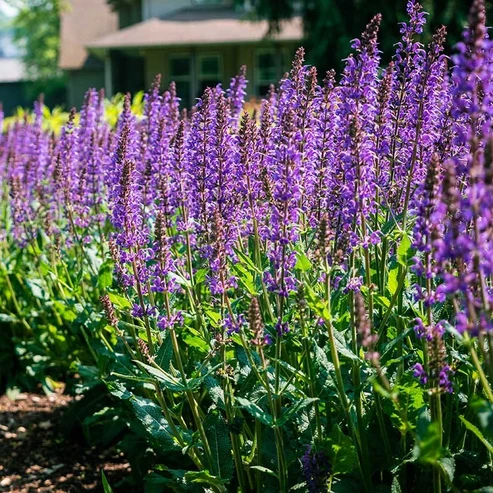
You want color that comes back every single year without you replanting the same bed every spring. I get it. Annuals are pretty, but they’re basically renting flowers for one season and then paying full price again next year.
Purple perennials solve that problem, and they do it in a color that pulls double duty. Purple reads as bold in a border and calming in a cottage garden. It works next to silver foliage, pink roses, or bright orange daylilies. Pollinators love it too — bees can see purple and blue wavelengths better than almost any other color in the garden.
I’ve spent more growing seasons than I care to admit swapping out sad little purple pansies every spring before I figured out that perennials were the smarter move. Once I built a real purple perennial lineup, my garden had structure and color from April through October without me lifting a trowel more than twice a year.
Here are 15 purple perennial flowers that actually earn their space, plus the growing tips that keep them thriving instead of just surviving.
1. Purple Coneflower (Echinacea purpurea)
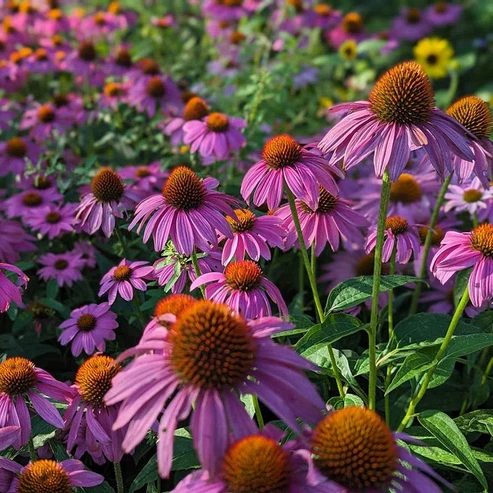
If you only plant one thing off this list, make it coneflower. It’s drought-tolerant, deer-resistant most years, and blooms from June through September if you deadhead it.
I planted my first patch of coneflower because I was tired of watering a section of my yard that got brutal afternoon sun. Three years later, that patch is the toughest thing in my entire garden. It’s outlived two rose bushes and a hydrangea I babied constantly.
Coneflower wants full sun and well-drained soil. It doesn’t want rich, fertilized soil — that actually makes it floppy and short-lived. Skip the fertilizer entirely and let it struggle a little. Struggling is what makes this plant strong.
Leave the seed heads standing through winter. Goldfinches will strip them clean, and the birds are worth more than a tidy bed in November.
2. Salvia ‘Mainacht’ (May Night Salvia)
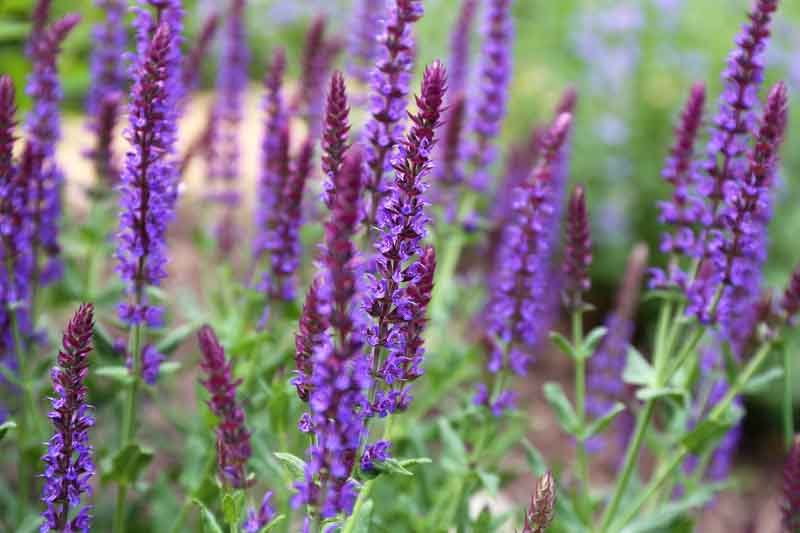
This is the plant every garden designer reaches for when they need a solid block of purple that doesn’t quit. The color is closer to true violet-blue, and it’s intense enough to read from across the yard.
May Night salvia blooms in late spring, and if you shear it back hard after the first flush, you’ll get a second round in late summer. Most people skip this step because it feels wrong to cut back a plant that’s still flowering a little. Do it anyway.
It needs full sun and soil that drains well. Soggy roots in winter are the number one way people kill this plant, so if you’ve got clay soil, amend it or plant salvia on a slight slope.
Pair it with lime-colored lady’s mantle or silvery artemisia. The contrast makes the purple pop even harder.
3. Russian Sage (Perovskia atriplicifolia)
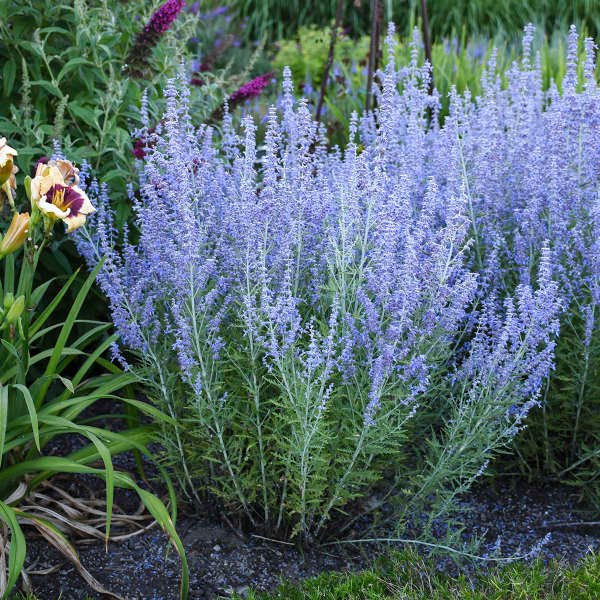
Russian sage isn’t technically a true sage, but nobody in the garden center is going to correct you, so let’s move on. What matters is that this plant gives you a hazy purple cloud from midsummer through fall, and it asks for almost nothing in return.
I put Russian sage along my driveway where the soil is compacted and terrible, and it’s the happiest plant on the property. It actually prefers lean, dry, sandy soil. Rich garden soil makes it grow tall and floppy, which means you’ll be staking it constantly.
Cut it back hard in early spring, down to about six inches. New growth comes from the base, and if you skip this step, you end up with a woody, sparse plant by year three.
One quick side note: the silvery foliage smells sharp and herbal when you brush against it. Some people love that. My neighbor thinks it smells like cat urine. Your nose, your call.
4. Balloon Flower (Platycodon grandiflorus)
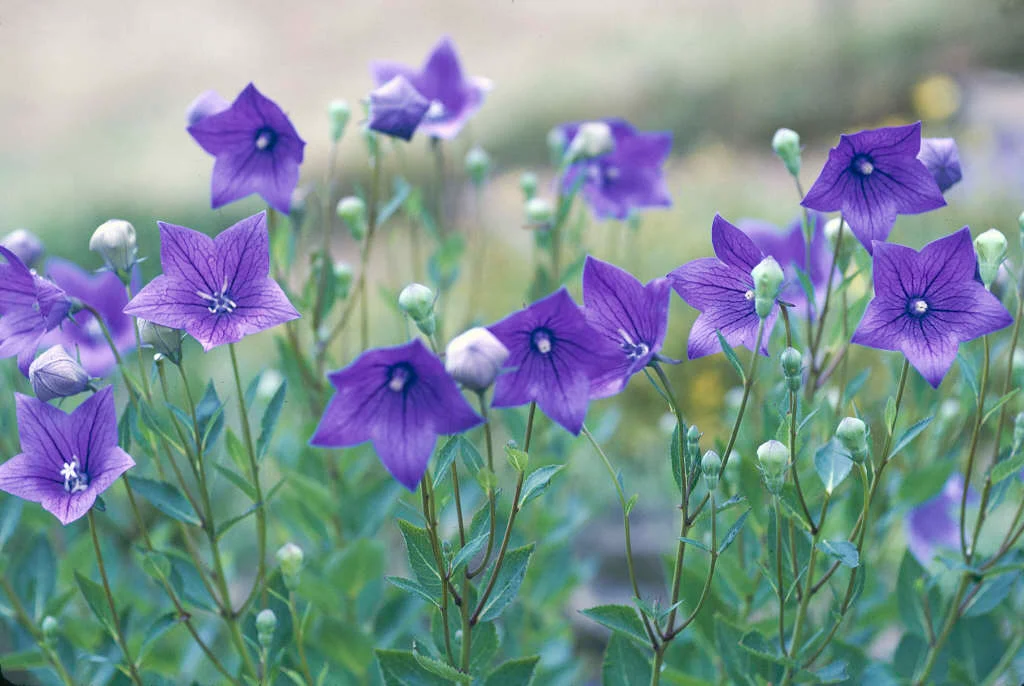
Balloon flower gets its name because the buds puff up like tiny paper lanterns before popping open into star-shaped purple blooms. It’s a slow starter in spring — later than almost everything else in the bed — so mark where you planted it or you’ll dig it up by accident thinking it’s dead.
This plant is genuinely low maintenance once established. It doesn’t need deadheading, doesn’t need staking in most conditions, and doesn’t attract many pests. It tolerates part shade better than most purple perennials on this list, which makes it useful if your yard doesn’t get full sun everywhere.
Give it well-drained soil and average water. It resents being moved once it’s settled in, since it develops a deep taproot, so plant it where you actually want it to live for the next decade.
Deer generally leave balloon flower alone, which earns it a permanent spot in my front bed where deer treat everything else like a salad bar.
5. Catmint (Nepeta)
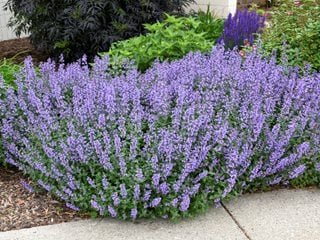
Catmint is the plant I recommend to anyone who says they “can’t grow anything.” It’s nearly impossible to kill, blooms for months, and the lavender-purple flower spikes look great spilling over a walkway or edging a bed.
The foliage is aromatic and gray-green, which means it looks good even between bloom cycles. Cats do occasionally roll in it, similar to catnip, so don’t be shocked if you find a flattened patch some mornings.
Shear it back by about a third mid-summer when it starts looking leggy. It’ll flush out fresh growth and rebloom within a couple of weeks. This is one of those plants that rewards you for being a little rough with the pruning shears.
Full sun, average soil, minimal water once established. If your catmint is struggling, it’s almost always because you’re overwatering or the soil is too rich.
6. Lavender (Lavandula angustifolia)
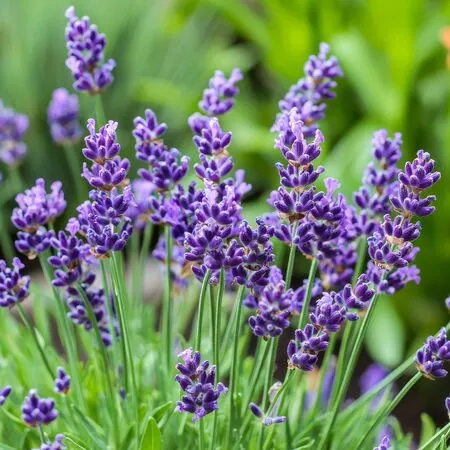
English lavender is the purple perennial everyone wants and almost nobody grows correctly. The plant itself is tough as nails in the right conditions. The problem is that most people plant it in soil that’s too rich and too wet, and then wonder why it rotted out over winter.
Lavender wants gravelly, poor, fast-draining soil and full sun. If you’ve got heavy clay, plant it in a raised bed or mound, or better yet, in a container with excellent drainage. Do not mulch with wood chips right up against the base — that traps moisture against the crown and kills it.
Prune lavender right after the main bloom flush, cutting back about a third of the plant. Never cut into old woody growth; lavender doesn’t reliably resprout from bare wood, and you’ll end up with a permanent bald spot.
The scent alone is worth the fuss, and dried lavender bundles hanging in a closet beat any air freshener I’ve ever bought.
7. Bellflower (Campanula)
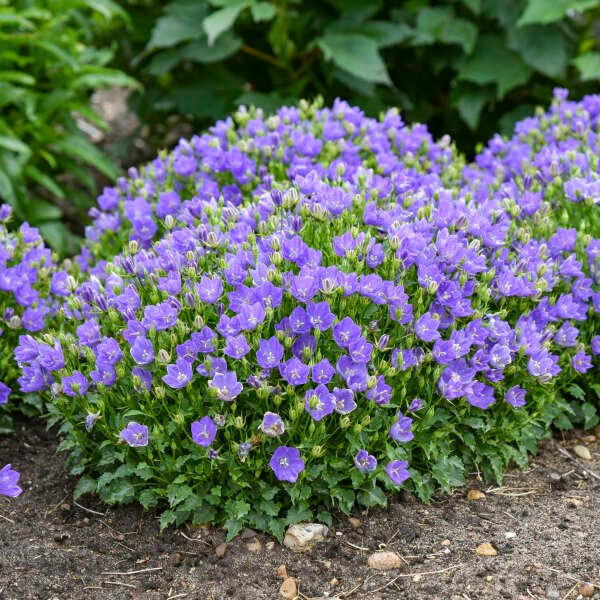
Bellflower covers a huge range depending on the variety, from low-growing groundcover types to tall spires that hit three feet. The bell-shaped blooms come in violet-blue and true purple, and they’re some of the most graceful flowers you can put in a cottage garden.
Clustered bellflower (Campanula glomerata) is my personal favorite because it forms tight domes of deep purple that look almost artificial, like something from a plastic flower display, except it’s completely real and completely alive.
Bellflower likes part sun to full sun and appreciates consistent moisture more than most plants on this list. Let it dry out completely too often and you’ll see the leaves crisp at the edges.
Some spreading varieties can get aggressive, so check the specific type before you plant it near delicate neighbors. Campanula rapunculoides, in particular, spreads by underground roots and can take over a bed if you’re not paying attention.
8. Siberian Iris (Iris sibirica)
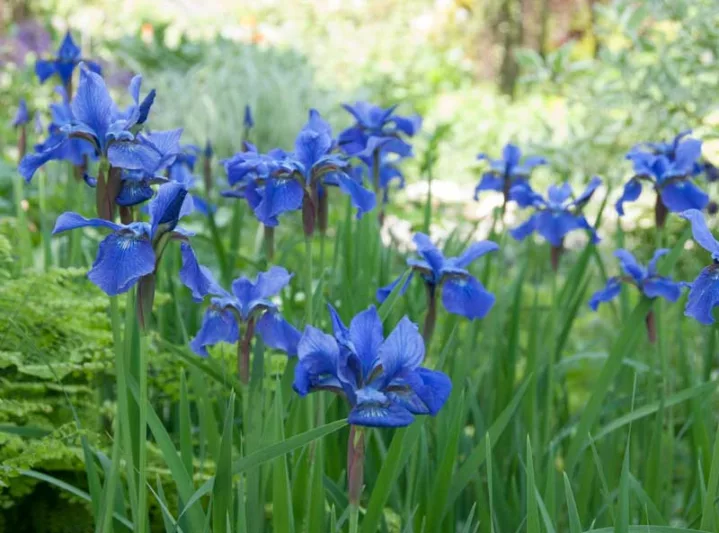
Siberian iris gives you narrow, grass-like foliage that looks tidy all season, topped with purple flowers in late spring. It’s tougher and lower-maintenance than bearded iris, and it doesn’t have the borer and rot problems that make bearded iris such a headache.
I switched almost entirely to Siberian iris after losing two bearded iris rhizomes to iris borers in the same summer. Siberian iris just doesn’t have those issues, and the clumps get better looking every year instead of needing constant dividing.
It tolerates wetter soil than most iris types, which makes it a solid choice near a downspout or a low spot in the yard that stays damp. It still wants at least a half day of sun to bloom well.
Divide clumps every four to five years if the center starts looking thin, but honestly, you can leave it alone far longer than that and it’ll still perform fine.
9. Purple Coral Bells (Heuchera)
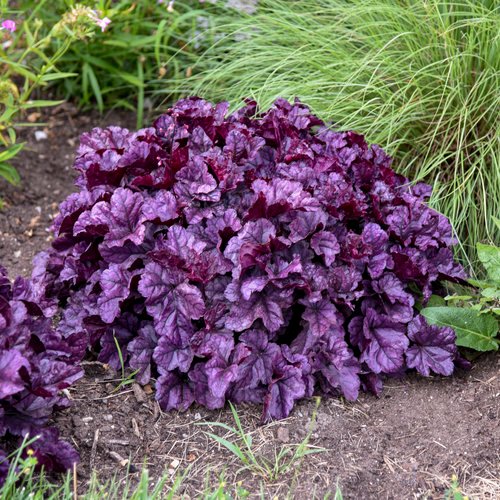
Coral bells are grown mostly for foliage, and the purple-leafed varieties give you color that lasts from spring through frost, with delicate flower spikes as a bonus in early summer.
This is the plant for shady spots where everything else on this list would sulk. Purple coral bells actually deepen in color with a bit of morning sun and afternoon shade, so it’s a good transition plant between your sunny beds and the shadier corners.
Soil needs to drain well. Heuchera crowns rot fast in soggy conditions, and heaving in winter — where freeze-thaw cycles push the crown up out of the soil — is a real problem in colder zones. A layer of mulch after the ground first freezes helps prevent that.
Divide every three years or so once the center of the clump starts to look woody and bare.
10. Meadow Sage (Salvia nemorosa)
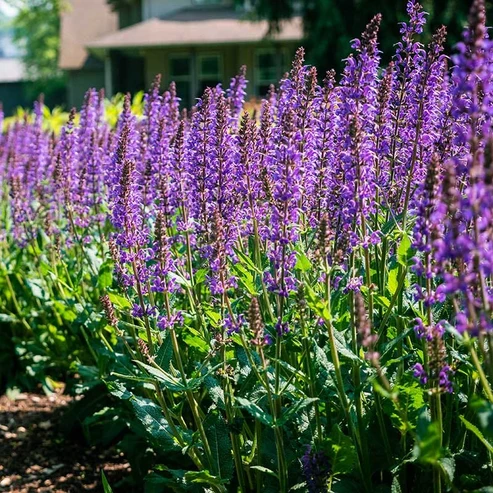
Meadow sage is close cousin to May Night salvia but comes in more color variations, including some gorgeous deep violet cultivars. It blooms earlier than a lot of perennials, giving you purple color in late spring when most of the garden is still waking up.
Bees absolutely swarm this plant. If you’re trying to build a pollinator garden, meadow sage belongs near the front of the list, right up there with coneflower.
Full sun and well-drained soil are non-negotiable. It struggles in humid climates with heavy clay, so if that’s your situation, plant it slightly raised or amend heavily with grit.
Cut back after the first bloom for a repeat show in late summer. Skipping this step is the single most common reason people say meadow sage “only blooms once.”
11. Purple Coneflower’s Cousin: Liatris (Blazing Star)
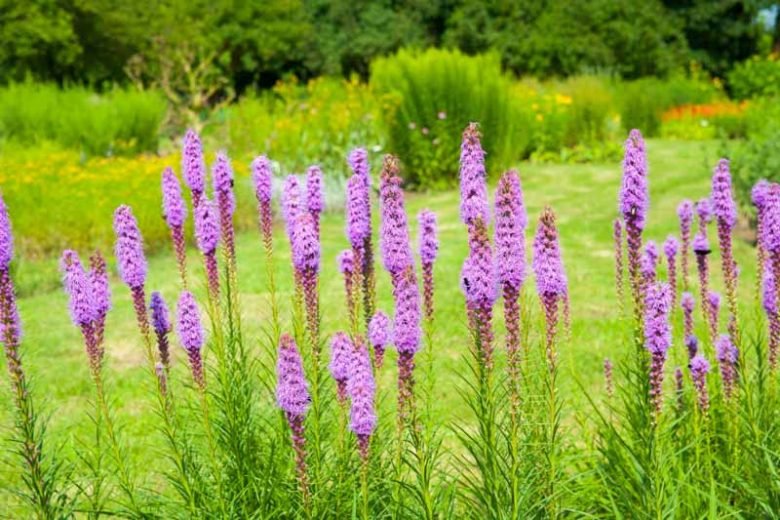
Liatris throws up tall, fuzzy purple spikes that bloom from the top down, which is the opposite of most flowering spikes and always confuses first-time growers who think something’s wrong with the plant. Nothing’s wrong. That’s just how it works.
It grows from a corm, similar to a bulb, and prefers full sun with soil that drains well. It’s genuinely drought-tolerant once established and doesn’t need fussing over.
Liatris is one of the best cut flowers on this entire list. The spikes hold up beautifully in a vase for over a week, and butterflies — especially monarchs during migration — treat it like a rest stop and buffet combined.
Plant it in groups of five or more. A single liatris spike looks a little lonely, but a cluster looks intentional and dramatic.
12. Purple Aster
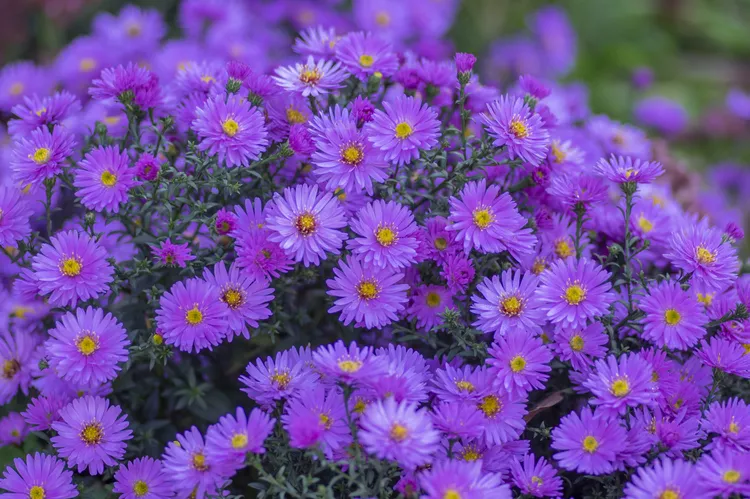
Asters wait until everything else in the garden is winding down and then throw a purple party right before frost. If you want color in September and October, aster is doing heavy lifting when nothing else is.
New England aster gets tall — three to four feet — and can flop without support, so plant it toward the back of a bed or pinch it back once in early summer to encourage bushier, sturdier growth. I skipped pinching mine one year out of laziness and ended up with a purple wall lying sideways across my walkway by October.
It wants full sun and consistent moisture, more than the drought-tolerant plants on this list. Powdery mildew can be an issue in humid, still air, so give it space for airflow between plants.
Late-season pollinators depend on aster more than people realize. It’s often one of the last nectar sources before frost shuts everything down.
13. Purple Larkspur (Delphinium)
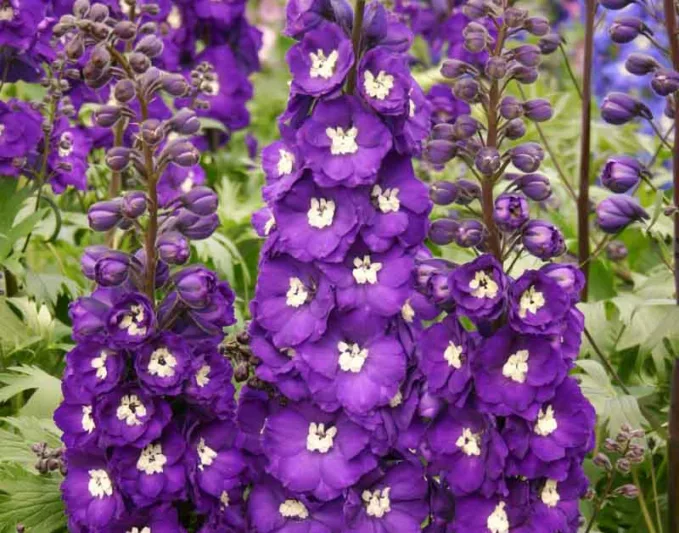
Delphinium gives you the tallest, most dramatic purple spikes on this list, easily hitting four to six feet in ideal conditions. It’s also the pickiest plant here, so I’ll be straight with you: this one takes more effort than the others.
Delphinium wants rich, well-drained soil, consistent moisture, and protection from strong wind, which will snap those tall stalks without warning. Staking is basically mandatory once the flower spikes start forming.
It also struggles in hot, humid summers and tends to act as a short-lived perennial in warmer zones, sometimes behaving more like a biennial. If you’re gardening somewhere with mild summers, you’ll get much better longevity out of it.
I still grow it because nothing else gives you that vertical drama, but I treat it as a bit of a project plant rather than something I plant and forget.
14. Purple Phlox (Phlox paniculata)
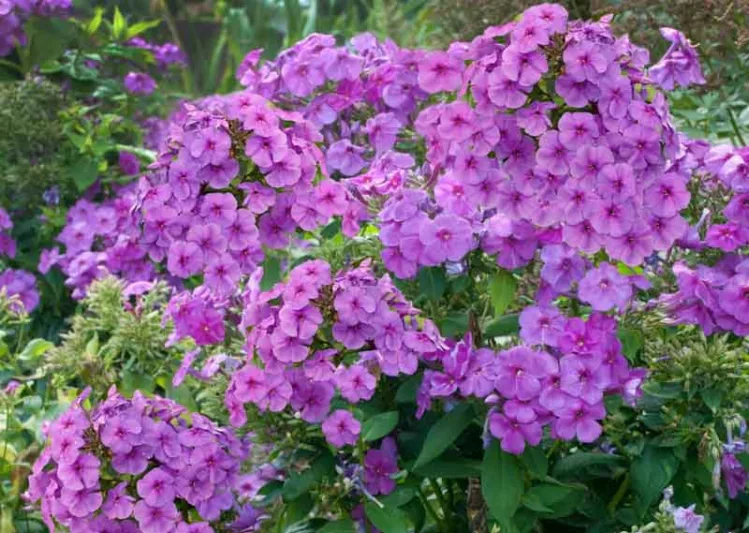
Garden phlox gives you big, fragrant clusters of purple blooms in mid to late summer, right when a lot of spring perennials have finished their show. The scent alone draws people over to smell it, which isn’t something most flowers on this list can claim.
The biggest issue with phlox is powdery mildew, that gray-white coating that shows up on the leaves in humid weather. Good airflow solves most of the problem — space plants further apart than feels necessary, and don’t crowd them against a wall or fence.
Water at the base instead of overhead, since wet foliage overnight is basically an invitation for mildew.
Deadhead spent blooms to keep the show going into September, and divide clumps every three years to keep the plant vigorous.
15. Purple Hosta (Blue-Toned Varieties with Purple Blooms)
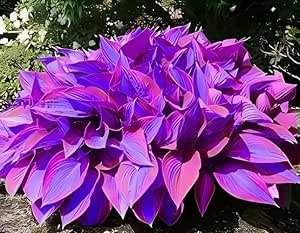
I’m including hosta on a “purple flower” list because a lot of people forget hostas flower at all. Many varieties send up tall spikes with lavender to purple blooms in mid to late summer, and they’re a genuinely nice surprise if you’ve only ever thought of hosta as a foliage plant.
Hosta is the answer for shady spots where sun-loving plants on this list simply won’t perform. It’s low maintenance, spreads slowly into handsome clumps, and comes back reliably year after year.
The one real threat is slugs, which treat hosta leaves like an all-you-can-eat buffet. Beer traps, crushed eggshells, or diatomaceous earth around the base all help, though none of them are a perfect fix.
Deer also love hosta, so if you’ve got a deer problem, this might be the one plant on this list I’d steer you away from unless your yard is fenced.
Real Talk: What’s Not Worth the Effort
Not everything on paper works out in the ground, and I want to save you some frustration here.
Delphinium is beautiful, but if you live somewhere with hot, humid summers, don’t expect it to act like a true long-term perennial. Treat it as a gorgeous short-term guest and you won’t be disappointed when it fades out after a couple of seasons.
Aggressive spreading bellflower varieties are a real problem, not a minor inconvenience. Campanula rapunculoides in particular will run under a fence, under a sidewalk, and into your neighbor’s yard if you let it. Research the specific variety before you plant, not after.
Lavender in heavy clay soil is basically a slow-motion failure. I know it’s tempting because the plant looks so tough and Mediterranean, but if your drainage isn’t right, you’re just buying a pretty plant a one-way ticket to root rot. Fix the drainage first or skip it entirely.
And phlox without adequate spacing will get powdery mildew nearly every single year in humid climates. It’s not a one-time fluke; it’s a pattern. Give it room or don’t bother.
Final Thoughts
Purple perennials give you more bang for your buck than almost any other color group in the garden, mostly because the range runs from tough-as-nails coneflower to fussier show-offs like delphinium, so there’s an option for every skill level and every corner of your yard.
Start with two or three from this list based on your actual sun conditions and soil type instead of trying to cram in all fifteen at once. Build from there once you see what thrives.
What’s your go-to purple perennial, and what have you found that just refuses to grow no matter what you try? Drop it in the comments below — I read every single one, and I’m always looking for the next plant to add to my own beds.

About Syprose Kiche
Syprose Kiche is the creator and writer behind My Besuited Home, a practical home and garden website covering DIY projects, gardening, lawn care, landscaping, home improvement, and outdoor living. She focuses on turning everyday homeowner questions into clear, practical guides backed by careful research and useful real-world considerations.