
My neighbor Carol used to stop by my porch every June just to stare at my pots. Not because they were fancy. Because they were blue. Real, honest, sky-colored blue, not the washed-out lavender that garden centers try to pass off as “blue” every spring. She’d point and say, “Okay, what is THAT, and where do I get five of them?”
Here’s the thing about blue flowers: they’re rare in nature, so our brains are basically wired to notice them first. If you’ve been fighting with pots full of red geraniums and yellow marigolds that look fine but never quite “wow” anyone, a little true blue changes the whole game. It cools down hot color combos, makes white flowers pop, and honestly just looks expensive even when the plant cost four dollars.
I’ve spent more growing seasons than I care to admit hauling bags of potting mix up my back steps, and I’ve killed my fair share of “easy” blue bloomers before figuring out what actually thrives in a container versus what sulks and dies by August. This list is the result of that trial and error. Some of these are classic cottage-garden staples, a couple are underused gems that deserve more attention, and one is a total workhorse that nobody gives enough credit to.
Why Blue Flowers Are Trickier in Pots Than in the Ground
Before I get into the list, a quick reality check. Container growing is a different animal than garden-bed growing. Pots heat up faster, dry out faster, and have way less buffer against nutrient swings. A lot of the plants famous for blue flowers — delphiniums, for instance — actually struggle in containers because their roots want to stretch out and anchor a tall stem against wind. Every plant on this list was picked specifically because it handles the container lifestyle without whining about it.
1. Lobelia (Lobelia erinus)
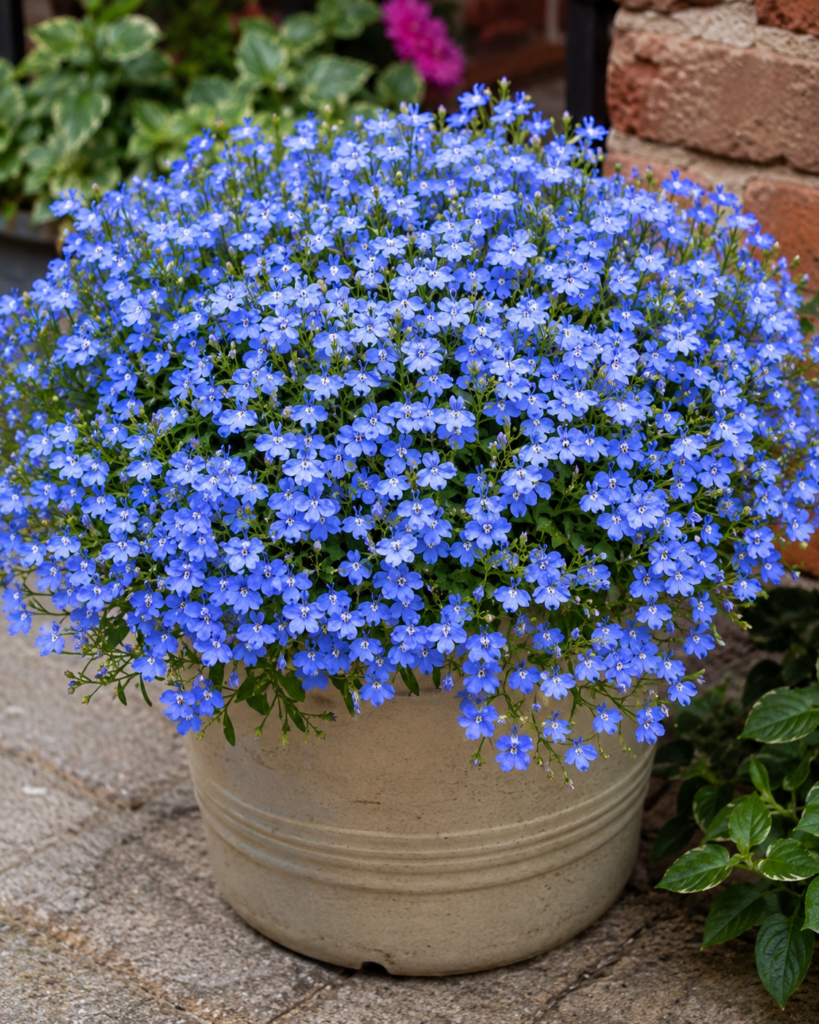
If you only try one plant from this list, make it lobelia. It’s the gold standard of light blue container flowers, and there’s a reason you see it cascading out of hanging baskets at every garden center in spring.
Lobelia forms a dense mound of tiny, almost electric blue flowers that just keep coming from spring through the first frost, especially if you’re diligent about deadheading. It’s compact, usually staying under a foot tall, which makes it perfect for the front of a mixed container or as a standalone in a smaller pot.
I grow mine in a spot that gets morning sun and afternoon shade, because lobelia genuinely hates baking in full, brutal summer heat. When temperatures spike, it can go a little sulky and stop blooming — that’s normal, not a death sentence. Cut it back by about a third and it’ll usually rebound once things cool off.
One quick side note: lobelia is thirsty. In a small pot during a heat wave, it can dry out twice a day. If you’re the type who forgets to water, pair it with a self-watering container or set a phone reminder, because this plant will tell on you fast.
2. Blue Salvia (Salvia farinacea ‘Victoria Blue’)
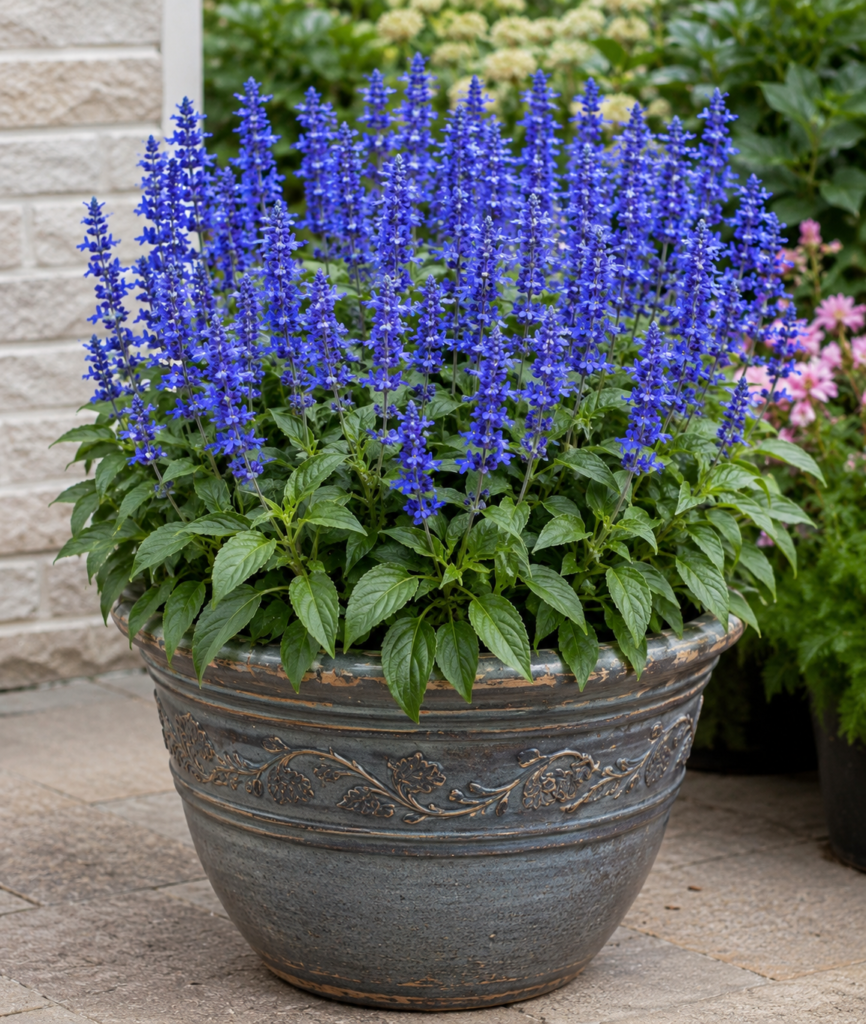
Salvia farinacea, often sold under the name Victoria Blue, gives you tall, spiky blue flower stalks that add vertical interest to a container arrangement. Most mixed-pot recipes follow a “thriller, filler, spiller” formula, and this plant is your thriller almost every time.
The color reads more true blue than violet, especially compared to some of the purple-leaning salvias out there, and bees absolutely lose their minds over it. If you want pollinators visiting your porch all summer, this is one of the best plants to search for at the nursery.
It handles heat far better than lobelia does, which makes it a smart pairing if you want blue blooms from spring through fall without constant babysitting. I’ve had pots of Victoria Blue salvia keep pushing out flower spikes well into October in a mild autumn, long after everything else in the container had given up.
Deadhead the spent spikes and you’ll get a second and sometimes third flush of blooms. Skip that step, and the plant will still survive, but it’ll look tired and leggy by midsummer.
3. Bacopa (Chaenostoma cordatum)
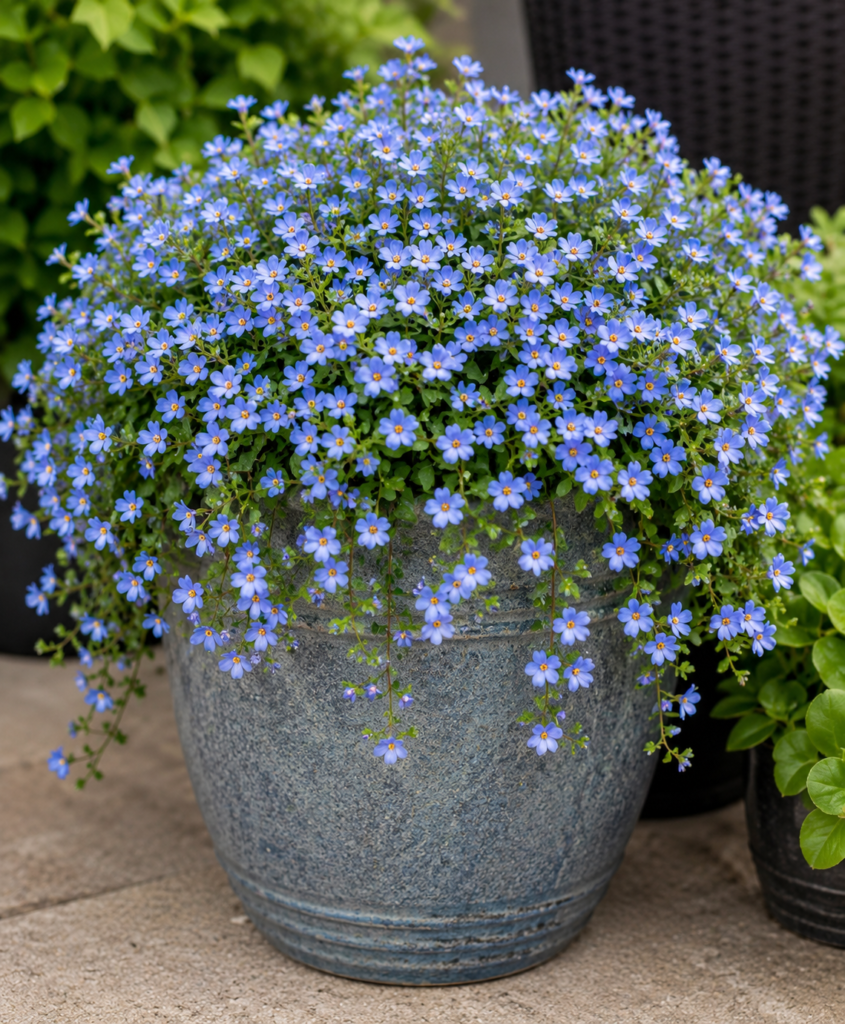
Bacopa is the spiller you didn’t know you needed. It produces small, star-shaped light blue flowers on trailing stems that drape gracefully over the edge of a pot, softening those hard container lines.
Compared to lobelia, bacopa is a bit more forgiving of heat and doesn’t sulk quite as dramatically in a summer scorcher, though it still prefers consistent moisture. I like combining it with something upright and structural, since bacopa’s whole job in a container is to fill in the gaps and cascade downward.
The flowers themselves are tiny individually, but a well-grown bacopa plant produces so many of them that from a few feet away it reads as a solid wash of pale blue. That makes it a fantastic filler for window boxes too, not just standalone pots.
If your bacopa starts looking sparse and stretched out mid-season, don’t be afraid to give it an aggressive haircut. It bounces back quickly and rewards you with a fresh flush of blooms within a couple of weeks.
4. Forget-Me-Not (Myosotis sylvatica)
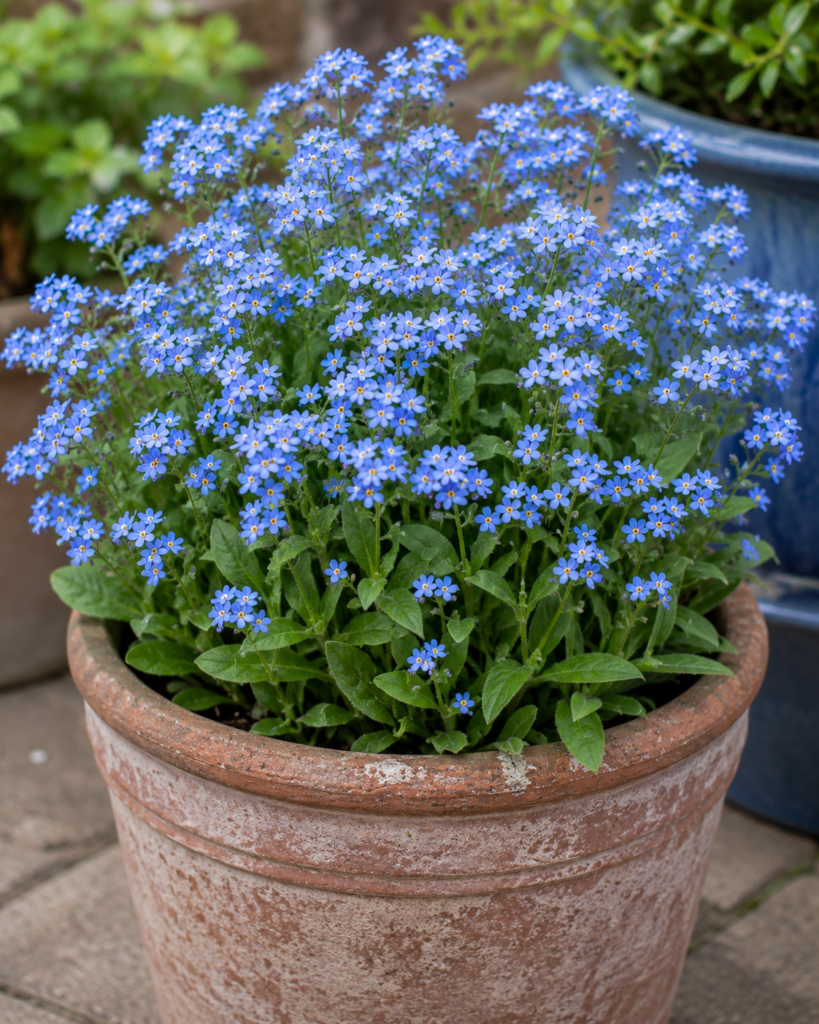
Forget-me-nots are the flower most people picture when they think “tiny blue flower with a yellow center,” and for good reason. They’re romantic, old-fashioned, and genuinely easy to grow in a container, especially in cooler climates or during spring and fall.
These prefer things on the cooler, shadier side, which makes them a great choice for a pot that lives on a porch that only gets a few hours of direct sun. In hot climates, treat forget-me-nots as a spring and fall performer rather than expecting them to survive a brutal summer.
They self-seed readily, which some gardeners love and others find annoying. In a container, that’s less of a problem than in an open bed, since the seedlings are contained to the pot itself. I actually let mine drop seed every year, and I get a fresh crop of volunteers each spring without lifting a finger.
The flower itself is that classic soft, powdery light blue that photographs beautifully, which is probably why forget-me-nots show up so often in cottage-garden and cutting-garden container designs.
5. Blue Fescue (Festuca glauca)
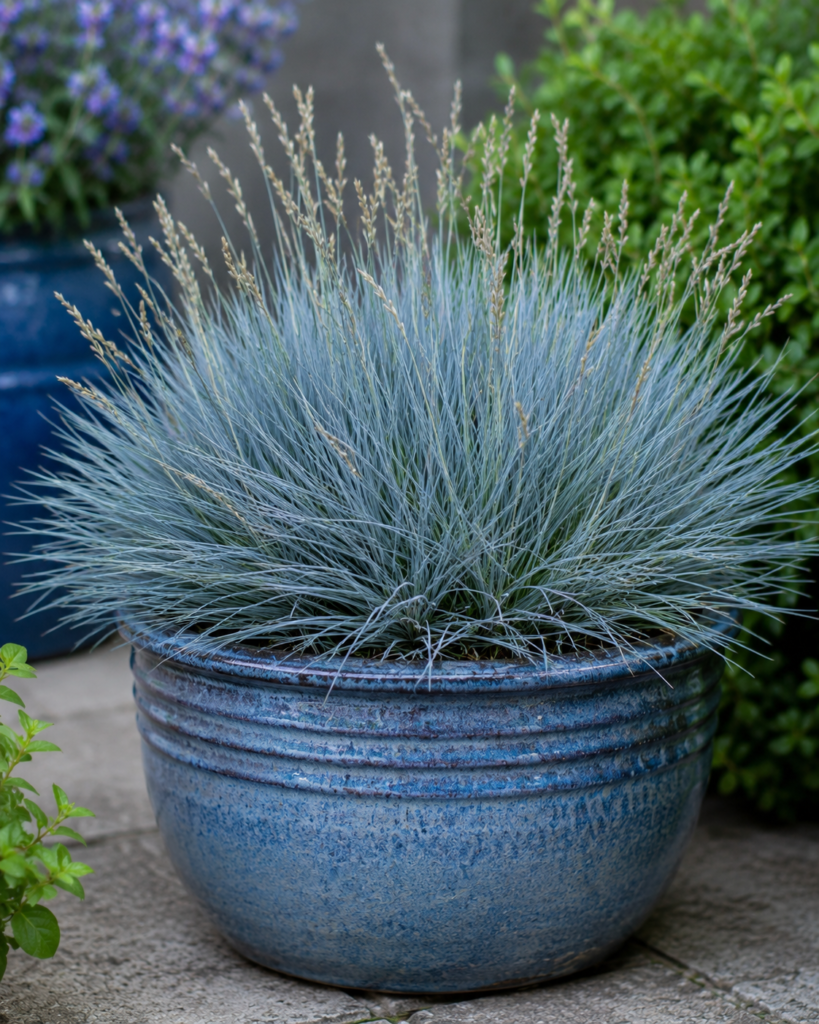
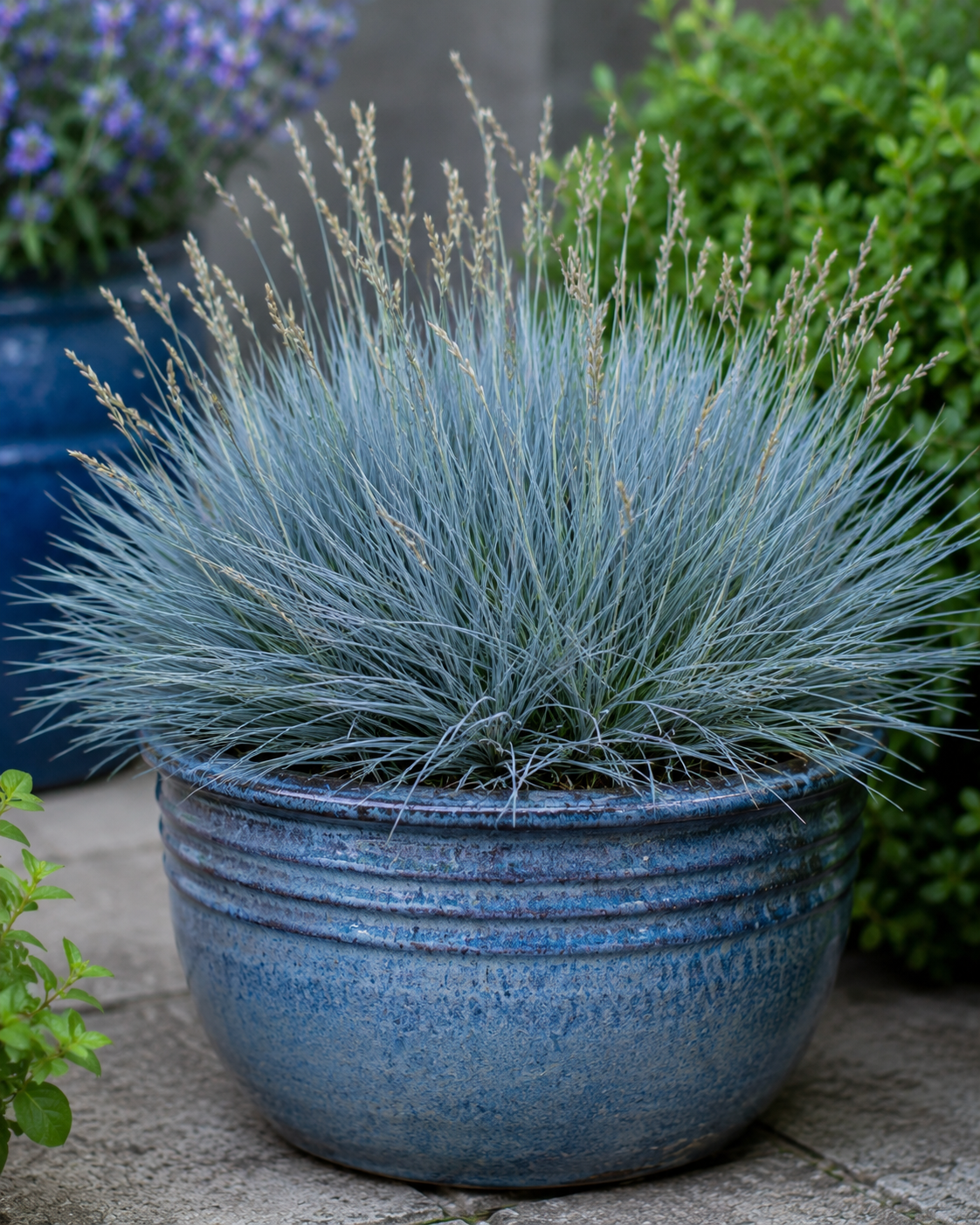
Okay, technically blue fescue is grown mainly for its striking blue-gray foliage rather than showy flowers, but I’m including it because the wispy seed heads it sends up in early summer have a genuine pale blue tint, and the plant itself is such a strong companion for the true bloomers on this list.
This ornamental grass forms a tight, spiky mound that stays under a foot tall, giving you texture and structure in a container without competing for attention. Pair it with lobelia or bacopa spilling over the edge and blue salvia standing tall behind it, and you’ve got a container that looks intentional and layered instead of like a random grab-bag from the garden center.
Blue fescue is drought-tolerant once established, which honestly makes it the low-maintenance backbone of a container that otherwise needs frequent watering. It doesn’t mind poor soil, doesn’t need much fertilizer, and handles both heat and a bit of neglect better than almost anything else on this list.
Divide it every couple of years if it starts looking tired in the center. That’s really the only maintenance chore this one demands.
6. Evolvulus (Evolvulus glomeratus ‘Blue Daze’)
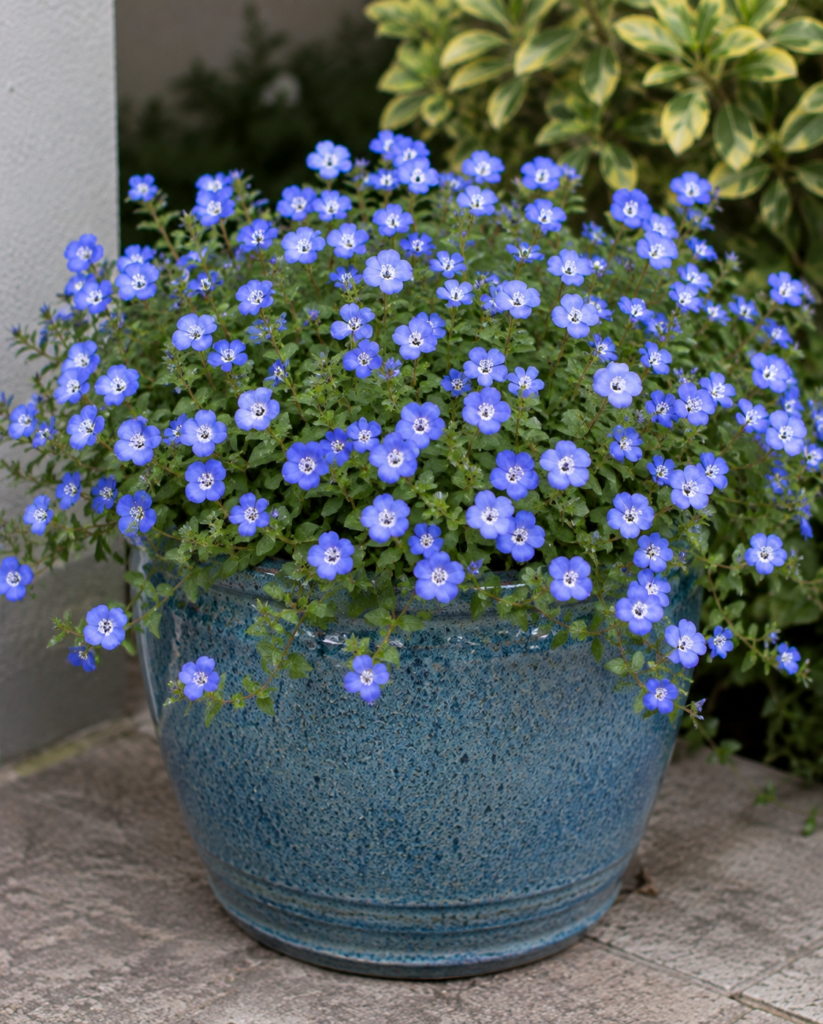
Blue Daze is a plant that deserves way more attention than it gets. It’s a low, mounding to slightly trailing plant covered in small but genuinely vivid blue flowers, each one lasting only a day but replaced constantly by new buds all summer long.
I stumbled onto this one almost by accident at a nursery clearance rack, and it’s become one of my go-to picks for hot, sunny containers ever since. Unlike lobelia, Blue Daze actually prefers full sun and heat. It thrives in the exact conditions that make other blue flowers throw in the towel.
The flowers close up on cloudy days and in the evening, which throws some gardeners off the first time they notice it, thinking something’s wrong with the plant. Nothing is wrong. It’s just doing its thing, and the blooms reopen with the next sunny morning.
It’s technically a tender perennial in warmer zones and grown as an annual everywhere else, so if you fall for it as hard as I did, take a cutting in fall and overwinter it indoors on a sunny windowsill.
7. Ageratum (Ageratum houstonianum)
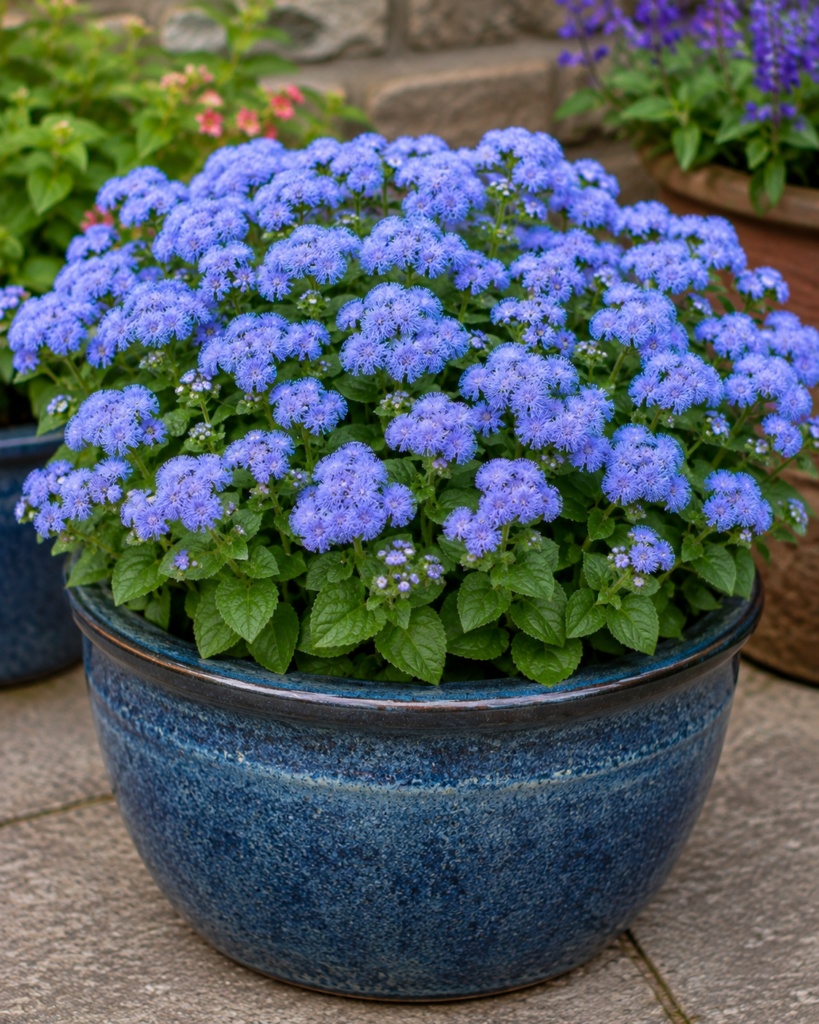
Ageratum gives you those fuzzy, almost powder-puff clusters of light blue flowers that add a soft, textured look totally different from the flat-faced blooms of salvia or lobelia. It’s an underrated container plant, honestly, and I think it gets overlooked because it’s so common in cheap bedding-plant flats that people assume it’s boring.
It’s not boring. Grown well, ageratum forms a tidy mound that blooms nonstop from late spring to frost, and the newer compact varieties are practically bred for container life. It stays low, doesn’t flop, and doesn’t need staking.
Ageratum handles heat and humidity better than a lot of blue flowers on this list, which makes it a smart pick if you live somewhere with sticky, brutal summers. I grow it in full sun here and it never skips a beat, even during the weeks I know I’m not watering as often as I should.
One thing to watch for: ageratum can get powdery mildew if airflow is poor. Give your container some breathing room, don’t crowd it against a wall, and you’ll mostly sidestep the issue.
8. Blue Daisy (Felicia amelloides)
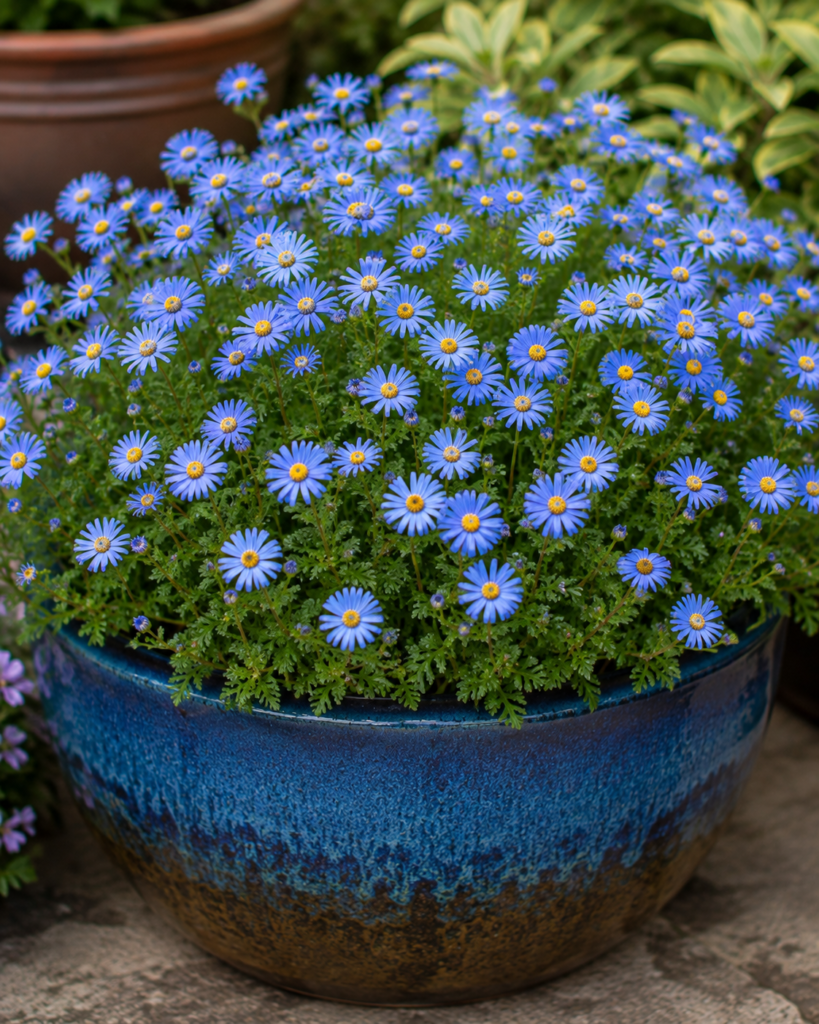
Blue daisy produces cheerful, true-blue, daisy-shaped flowers with a bright yellow center, and there’s something about that combination that just makes a container pop. It’s a South African native, which tells you right away it’s going to handle sun and a bit of drought without complaint.
This is one of those plants that blooms in flushes rather than nonstop, so don’t panic if it takes a short break mid-summer. Deadheading helps keep the flowers coming, and a light trim after a big bloom flush usually kicks off round two within a few weeks.
Blue daisy pairs beautifully with silver-leafed plants like dusty miller, since the cool gray foliage makes the blue petals look even more saturated by comparison. I use that combo in a big terracotta pot on my front steps and it gets more compliments than anything else I grow.
It’s a tender perennial, so in colder zones you’ll grow it as an annual, but if you’ve got a sunny windowsill, it’s worth trying to overwinter a cutting or two.
9. Browallia (Browallia speciosa)
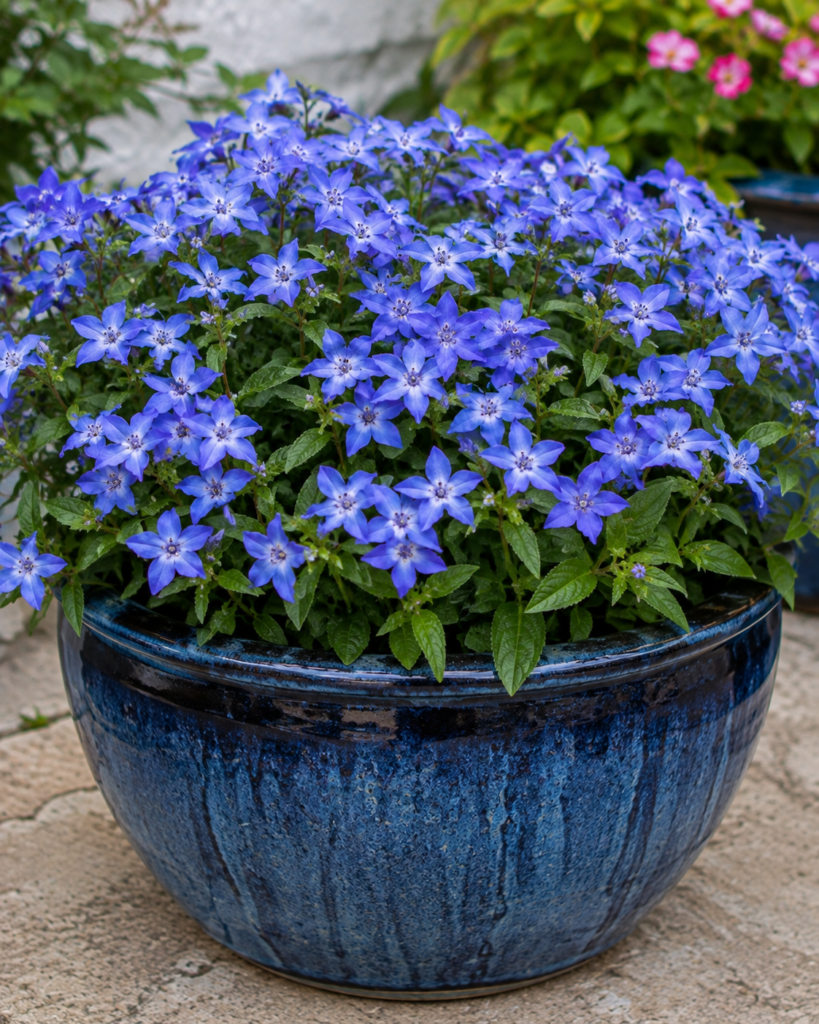
Browallia is the shade-garden answer to all these sun-loving blue flowers, and I honestly think it doesn’t get nearly enough credit. If your porch or patio gets more shade than sun, this is one of the very few true blue flowers that will still perform.
The blooms are trumpet-shaped, a rich periwinkle-blue with a white throat, and the plant blooms continuously without much fuss. It’s often marketed as “bush violet,” which is a little confusing since it’s not related to violets at all, but that’s the name you’ll see on plant tags at the store.
I grow browallia in a shaded container on my east-facing porch, where it gets a couple hours of gentle morning light and shade the rest of the day. It’s been one of the most reliable bloomers I’ve grown in that tricky low-light spot, honestly outperforming plants that are supposedly “shade tolerant” but bloom sparsely.
Keep the soil consistently moist but not soggy. Browallia doesn’t love drying out completely between waterings, and it’ll drop flowers if you let the pot go bone dry too many times in a row.
10. Blue Star Creeper (Isotoma fluviatilis)
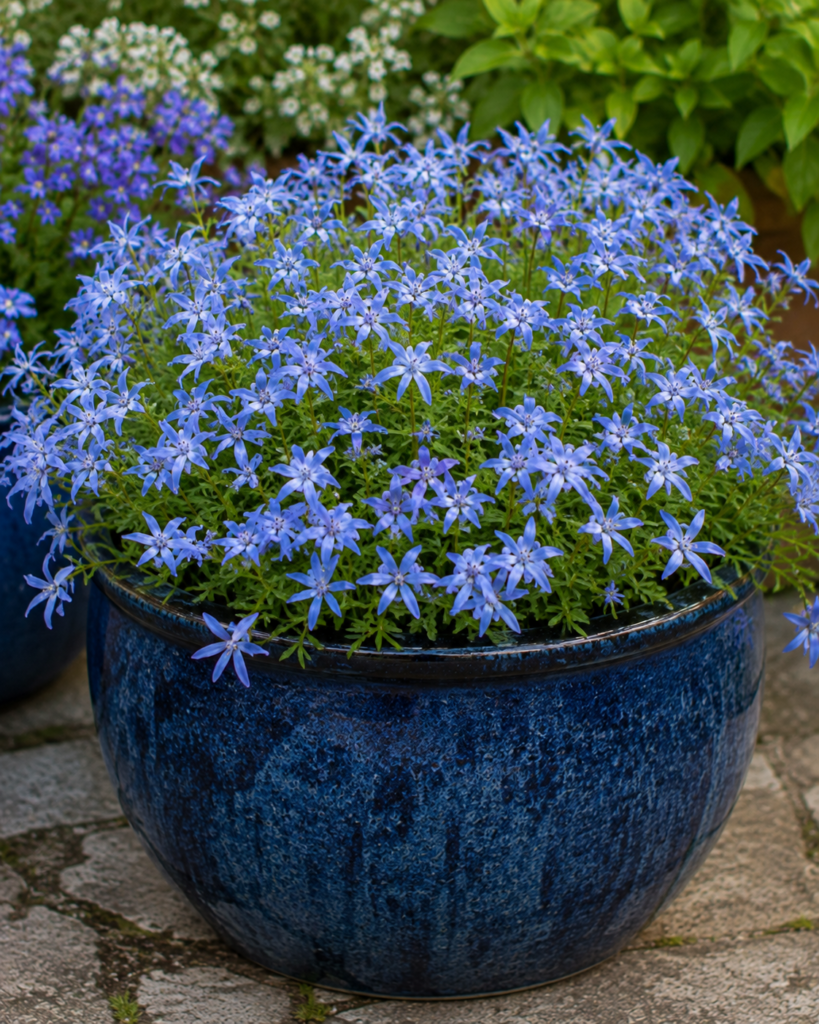
This one’s a bit of a curveball since it’s usually used as a groundcover rather than a headline plant, but blue star creeper is fantastic tucked around the base of a taller plant in a large container. It forms a low mat covered in tiny, pale blue, star-shaped flowers.
I like using it to cover bare soil at the base of a container’s “thriller” plant, since it fills that gap that otherwise just looks like dirt. It spreads readily but stays low, usually under two inches tall, so it never competes for light or attention with whatever’s growing above it.
It tolerates light foot traffic too, which is a fun detail if you’re using it in a larger planter box near a walkway. It’ll bounce back from being stepped on occasionally, something most flowering groundcovers absolutely cannot handle.
Blue star creeper does like consistent moisture, so it’s a better match for containers you’re already watering frequently for a thirstier centerpiece plant, rather than a drought-tolerant succulent arrangement.
11. Cape Leadwort (Plumbago auriculata)
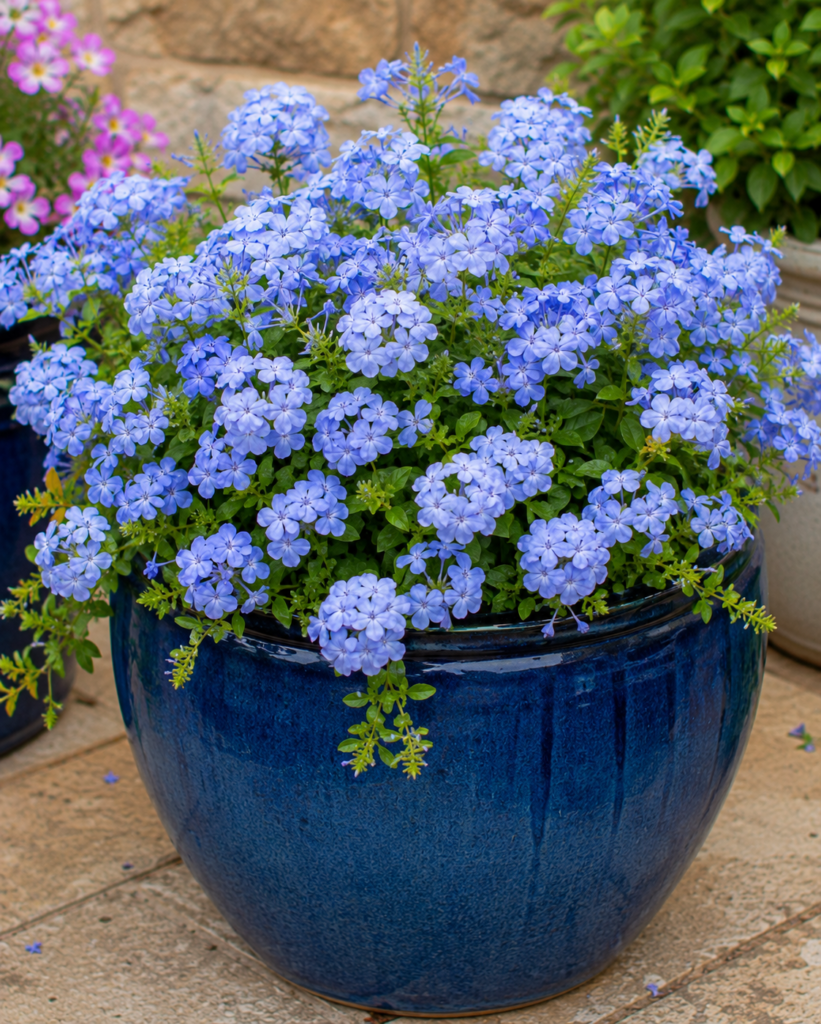
Cape leadwort, often just called plumbago, is my “go big or go home” pick on this list. In a large container, it can grow into a sprawling, arching shrub covered in clusters of soft, powdery light blue flowers from late spring straight through fall.
It needs a bigger pot than most of the other plants here, at minimum a 14 to 16 inch container, since it puts on real size over a season. But if you’ve got the space, it rewards you with a nearly nonstop flower show and a plant that looks lush and established even in its first year.
Plumbago handles heat like a champ and actually blooms better with more sun, not less. I’ve got mine on a south-facing patio where almost nothing else survives the reflected heat off the concrete, and it just keeps pushing out flower clusters all summer.
It’s a tender perennial in most of the U.S., so treat it as an annual unless you’re in a warmer zone, or be prepared to bring it indoors for winter if you want to keep it going year after year.
Real Talk: What Actually Goes Wrong With Blue Container Flowers
Let’s be honest about the stuff nobody puts in the glossy plant tags.
- True blue is rarer than advertised. A lot of flowers marketed as “blue” are actually violet or lavender under natural light. Lobelia, salvia, and Blue Daze are your safest bets for genuinely true blue. If a plant tag shows a photo that looks suspiciously purple, trust the photo over the name.
- Heat is the real enemy for half this list. Lobelia, forget-me-nots, and browallia can all crash hard in a heat wave. If you’re gardening somewhere with brutal summers, lean toward salvia, Blue Daze, blue daisy, and plumbago instead, and treat the cool-weather lovers as spring and fall specialty plants.
- Root-bound plants stop blooming. This is the mistake I see most often, and I’ve made it myself plenty of times. A container that looked perfectly sized in May can be completely packed with roots by July, and a root-bound plant puts all its energy into survival instead of flowers. If blooming suddenly stalls, check the roots before you blame the fertilizer.
- Overwatering kills more of these than underwatering does. It sounds backwards, but soggy roots and poor drainage cause more container plant deaths than a missed watering day ever will. Make sure every pot on this list has real drainage holes, not just decorative ones that don’t actually go through.
- Mixing bloom times leaves gaps. If you plant only forget-me-nots and browallia, you’ll get a gorgeous spring container and a sad, empty-looking pot by August. Combine an early bloomer with a heat-loving summer performer so something’s always flowering.
Final Thoughts
Blue isn’t a color nature hands out easily, which is exactly why a pot full of it stops people in their tracks. Start with lobelia or salvia if you want something forgiving and reliable, and once you’ve got the hang of container watering and deadheading, branch out into the trickier stuff like Blue Daze or plumbago.
What’s your porch or patio situation looking like this season — full baking sun, dappled shade, or somewhere in between? Drop a comment below and tell me which of these you’re planting, or which blue flower I left off the list that deserves a spot. I read every comment and I’m always looking for my next favorite pot filler.

About Syprose Kiche
Syprose Kiche is the creator and writer behind My Besuited Home, a practical home and garden website covering DIY projects, gardening, lawn care, landscaping, home improvement, and outdoor living. She focuses on turning everyday homeowner questions into clear, practical guides backed by careful research and useful real-world considerations.