
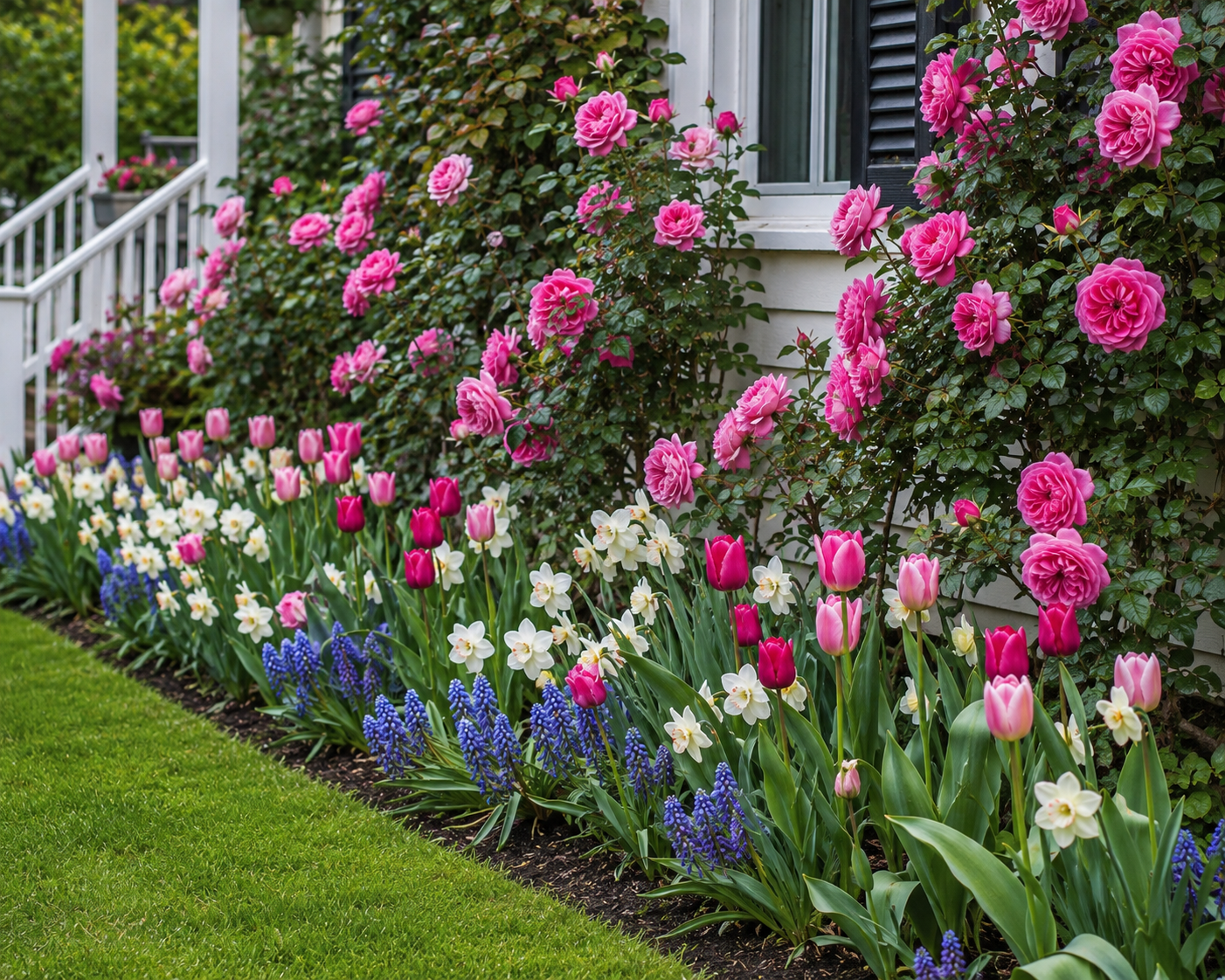
Rose bushes have a reputation problem. Half the people I talk to think they need a fussy English garden and a full-time gardener to grow them. The other half stuck one sad rose bush next to their mailbox in 2019, watched it get leggy and diseased, and swore off roses forever. Both groups are wrong, and I’ve got the scratched-up forearms to prove it.
My rose beds used to be an embarrassment. One lonely Knock Out rose, surrounded by mulch, looking like it lost a bet. Now I’ve got roses climbing my porch posts, roses doing the work of a privacy fence, and roses making my vegetable garden look like something out of a magazine. None of it required a landscape architect. It required stealing some ideas, killing a few plants along the way, and figuring out what actually holds up in a real yard with real weather.
Here are 13 rose bush landscaping ideas I’ve tested, tweaked, or flat-out stolen from better gardeners than me.
1. Build a Rose Hedge Instead of Buying a Fence
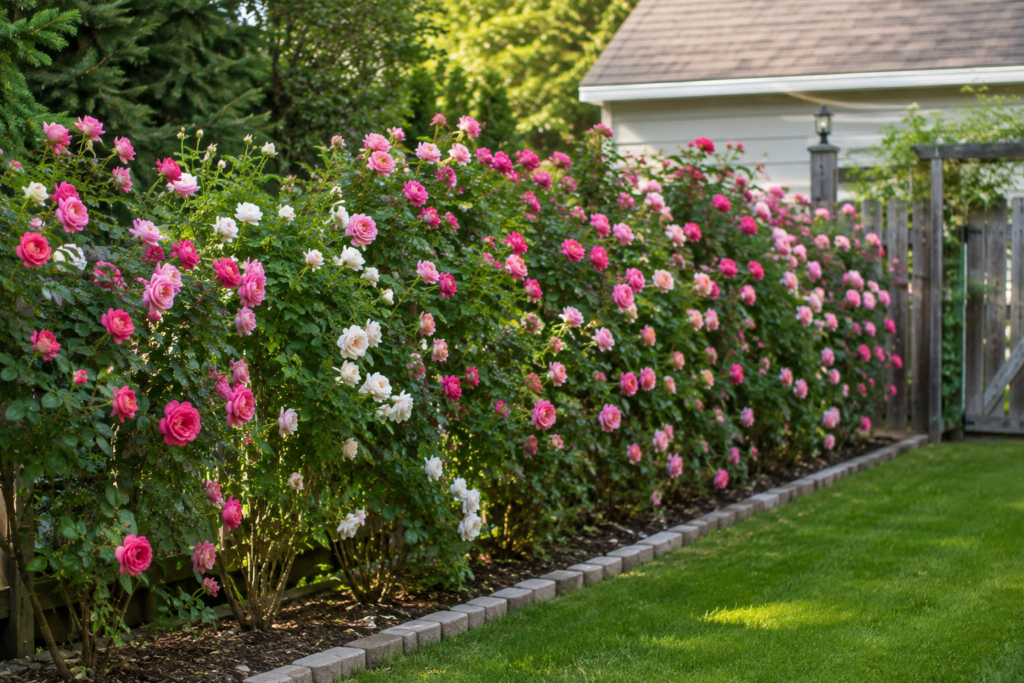
If you’re tired of staring at your neighbor’s trampoline, skip the vinyl fence quote and plant a rose hedge. Rugosa roses and shrub roses like Knock Out or Oso Easy varieties grow dense and thorny enough to keep out foot traffic, kids on bikes, and the occasional nosy dog.
I planted a run of ‘Radler’ Knock Out roses along my property line four years ago, spacing them about 3 feet apart. They filled in within two seasons and now I’ve got a living privacy screen that blooms from May through the first frost. A wood fence just sits there looking like a fence.
The trick is picking a repeat-blooming variety, not a once-a-year showoff. You want color all summer, not a two-week fireworks show followed by a wall of green. Rugosa roses are especially good for hedges because they’re salt-tolerant, drought-tough, and their thorns are genuinely mean, which is a feature here, not a bug.
Give the hedge room to breathe. Cramming roses too close together invites powdery mildew and black spot, and then your privacy fence turns into a science experiment.
2. Train a Climbing Rose Up a Porch Post or Pergola
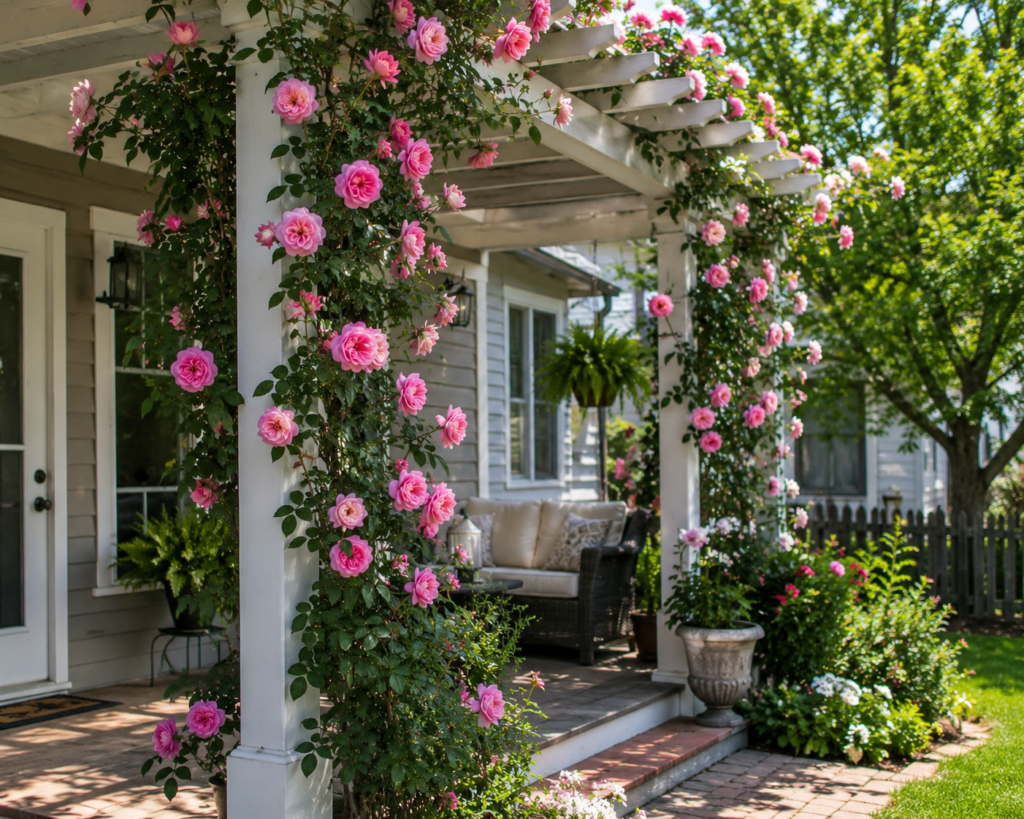
Climbing roses are the single best return on effort in my entire yard. I trained a ‘New Dawn’ climber up one porch post, and it now frames my front door every June like I hired someone to do it.
Climbers don’t actually climb on their own the way ivy does. You have to tie the canes to a trellis, post, or pergola with soft garden twine as they grow. Do this every couple of weeks during the growing season or you’ll end up with a tangled mess that flops over instead of reaching upward.
The payoff is huge. A well-trained climber on a pergola creates natural shade and turns a plain patio into something people take pictures of. I’ve had guests ask if I hired a professional. I did not. I just tied some string patiently for two summers.
One thing nobody tells you: climbers bloom best on horizontal or diagonal canes, not vertical ones. If you train the canes at an angle instead of straight up, you’ll get way more flowers per plant. This one trick doubled my bloom count.
3. Underplant Roses With Catmint or Lavender
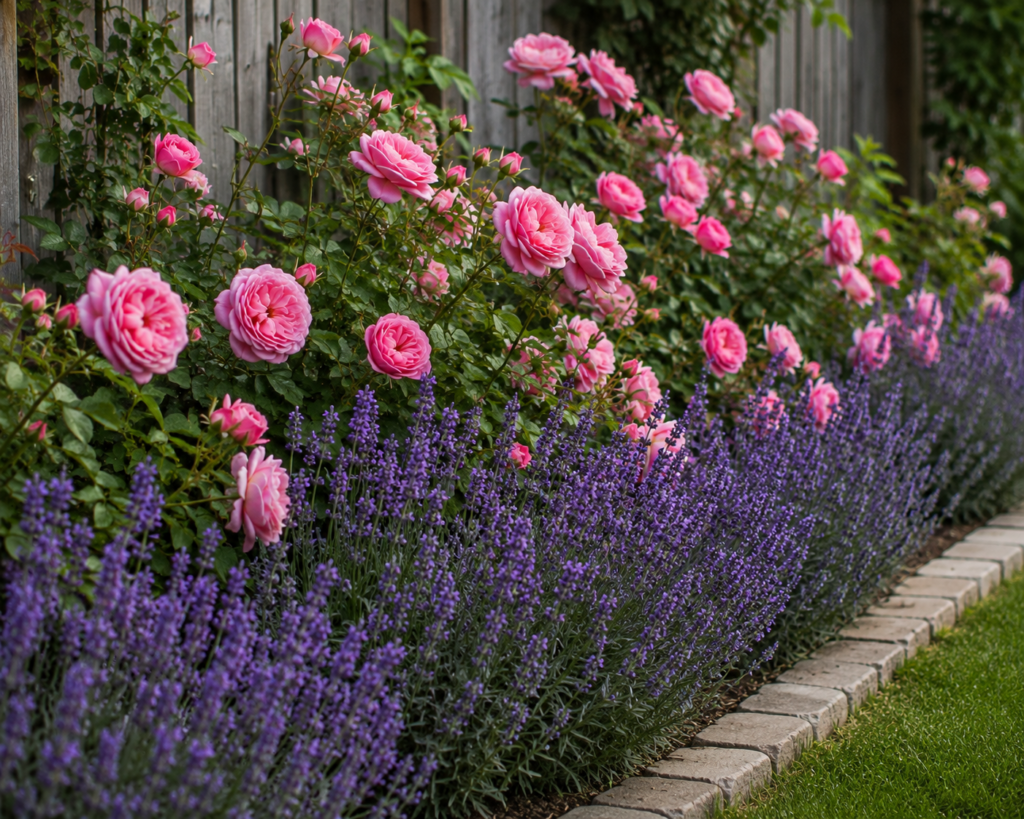
Bare mulch under a rose bush is a missed opportunity. I underplant all my roses with catmint (Nepeta) now, and it’s changed how the whole bed looks and performs.
Catmint spills out in soft purple mounds around the base of the rose, hiding the bare, woody lower stems that roses always seem to have. Lavender does the same job with a different color palette and a scent that actually helps mask the smell of rose fertilizer, which nobody talks about but everybody notices.
There’s a functional reason too. Catmint and lavender attract pollinators and can help confuse pest insects that would otherwise beeline straight for your roses. I lost fewer buds to aphids the year I added catmint borders, and I don’t think that’s a coincidence.
Keep the companion plants a few inches back from the rose’s main stem. Crowding the base traps moisture against the bark and invites fungal problems, which is exactly what you’re trying to avoid by companion planting in the first place.
4. Create a Rose Arch Entryway
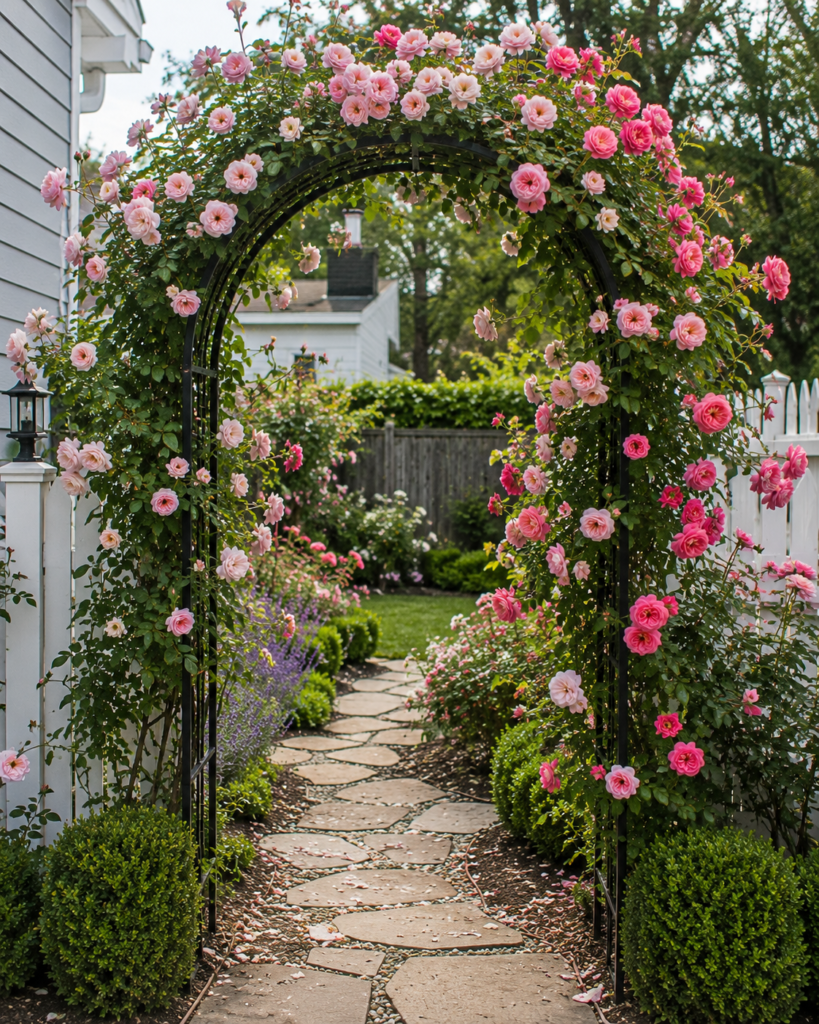
A rose arch over a garden gate or walkway is one of those ideas that sounds like a Pinterest fantasy until you actually build one and realize it’s not that complicated. I put one up using a $90 metal arbor from a hardware store and two climbing roses planted at the base.
Within three years, the arch was fully covered, and now walking under it in June feels like an event. It’s become the spot where every visitor stops to take a photo, which is more than I can say for my patio furniture.
Pick two vigorous climbers, one on each side, so they meet in the middle and cover the arch evenly. ‘Zephirine Drouhin’ is a solid choice because it’s nearly thornless, which matters a lot when you’re walking under it with kids or groceries.
Prune the arch roses hard in late winter to keep the arch from turning into a thorny cave. An arch that’s too overgrown stops being charming and starts being a hazard for anyone taller than five feet.
5. Line a Driveway or Walkway With Standard Tree Roses
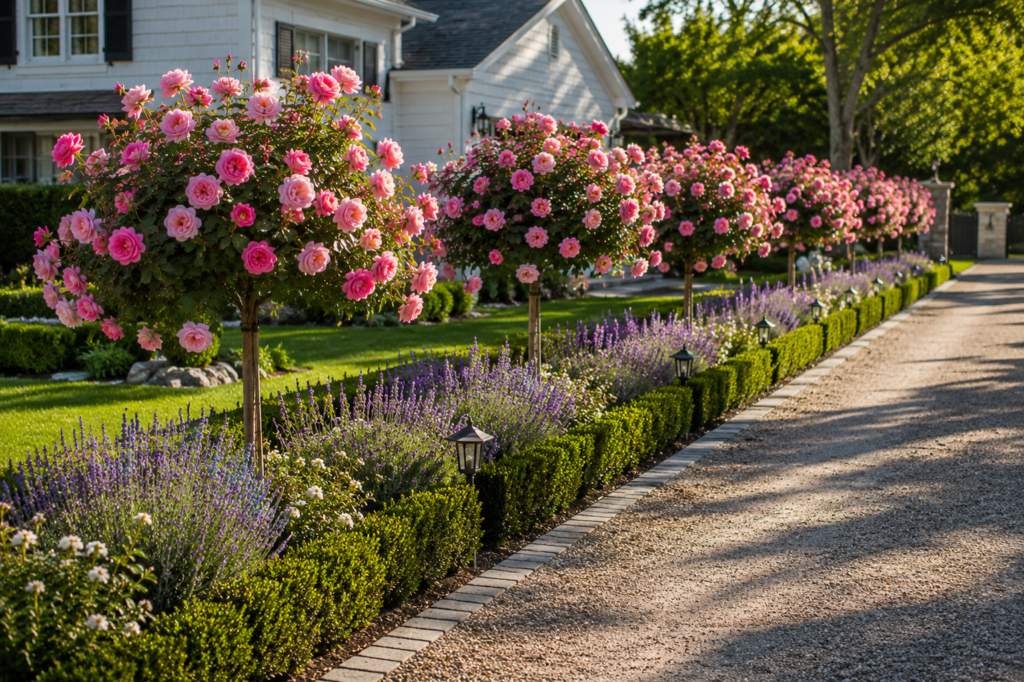
Tree roses, also called standard roses, are regular roses grafted onto a tall, bare trunk so the bloom happens up top like a little rose lollipop. Lining a driveway or front walkway with a row of them is one of the most formal, put-together looks you can get from a plant.
I used four tree roses to flank my front walkway, spaced evenly on both sides. The symmetry alone makes the whole front yard look intentional, which is honestly half the battle in landscaping.
Tree roses need staking, especially in windy areas, because that skinny trunk isn’t built to handle a top-heavy crown of blooms in a storm. I lost one in a summer thunderstorm the first year because I got lazy about staking. Lesson learned.
They also need a bit more winter protection than regular shrub roses since the graft union sits higher up, exposed to cold air instead of tucked near the ground. If you’re in a colder zone, wrap the trunk or plan on bringing potted tree roses into a garage for winter.
6. Mix Roses Into a Cottage-Style Perennial Border
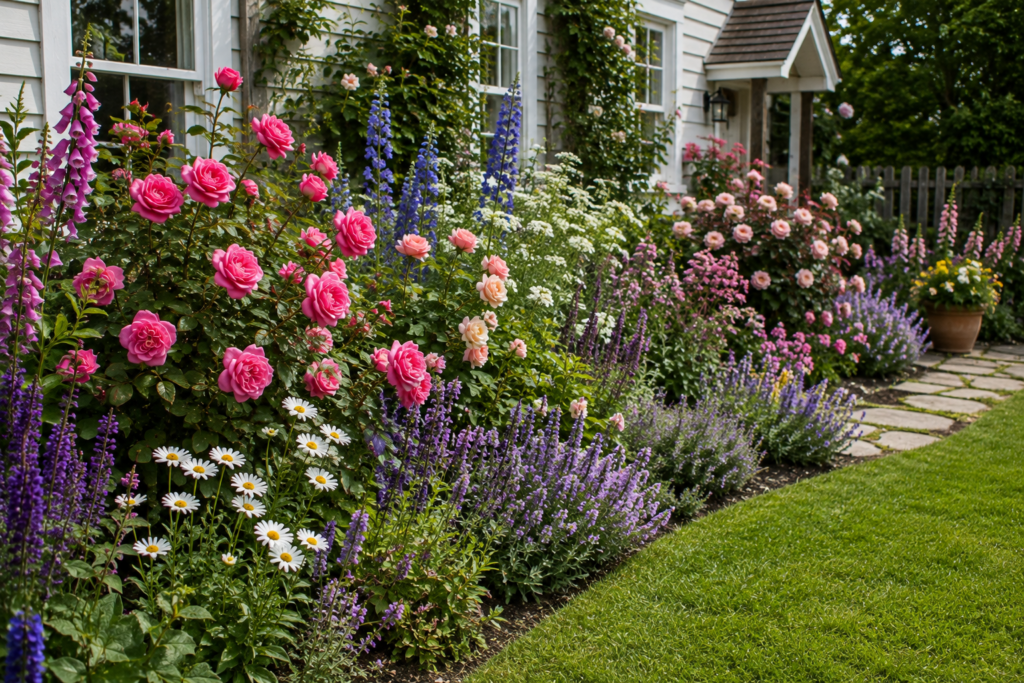
I’m not a fan of rose beds that only have roses in them. It looks stiff, and it means your bed goes bare and boring the second the roses finish a bloom cycle. Mixing roses into a cottage-style border with foxglove, delphinium, and salvia keeps the whole bed interesting even when the roses are between flushes.
My side yard border has three shrub roses mixed with salvia, coneflower, and a couple of ornamental grasses for texture. It reads as a full, layered garden instead of a row of shrubs with mulch in between.
This is also just smarter gardening. Different bloom times mean something is always flowering. And a mixed border with varied root structures and plant heights tends to have fewer pest and disease issues than a monoculture of roses packed tight.
Keep taller perennials behind the roses and lower-growing plants like catmint or alyssum in front, so nothing blocks the roses from getting their sun.
7. Plant a Rose and Herb Kitchen Garden
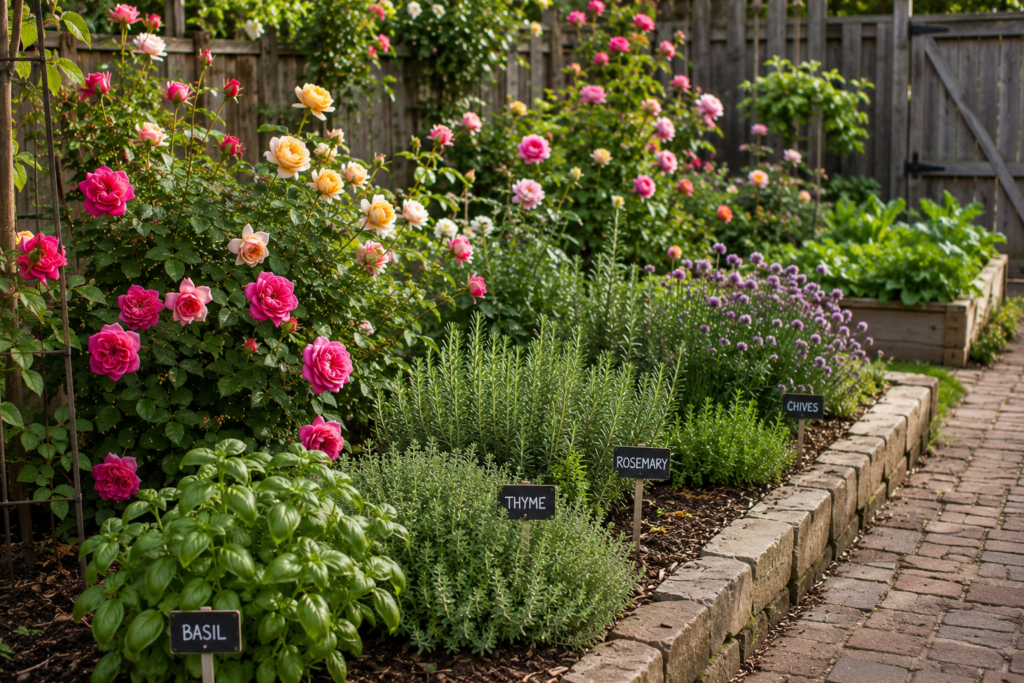
Roses and herbs have been planted together for centuries, and there’s a reason it’s stuck around. I’ve got a bed near my kitchen door with two shrub roses, rosemary, sage, and thyme all mixed in together, and it’s become my favorite corner of the whole yard.
Roses are technically edible too. Rose petals from unsprayed bushes can go in teas, jams, and simple syrups, so this isn’t purely decorative. That said, I’ll be honest: don’t eat petals from a rose you’ve treated with systemic pesticide. That’s a mistake you only make once, or at least you should.
Herbs like rosemary and lavender have woody, low-maintenance habits that pair well visually with rose canes, and they don’t compete hard for nutrients the way some perennials do.
Keep this bed close to the house. A kitchen garden you have to walk five minutes to reach is a kitchen garden you’ll stop using by August.
8. Use Miniature Roses in Container Groupings on a Patio
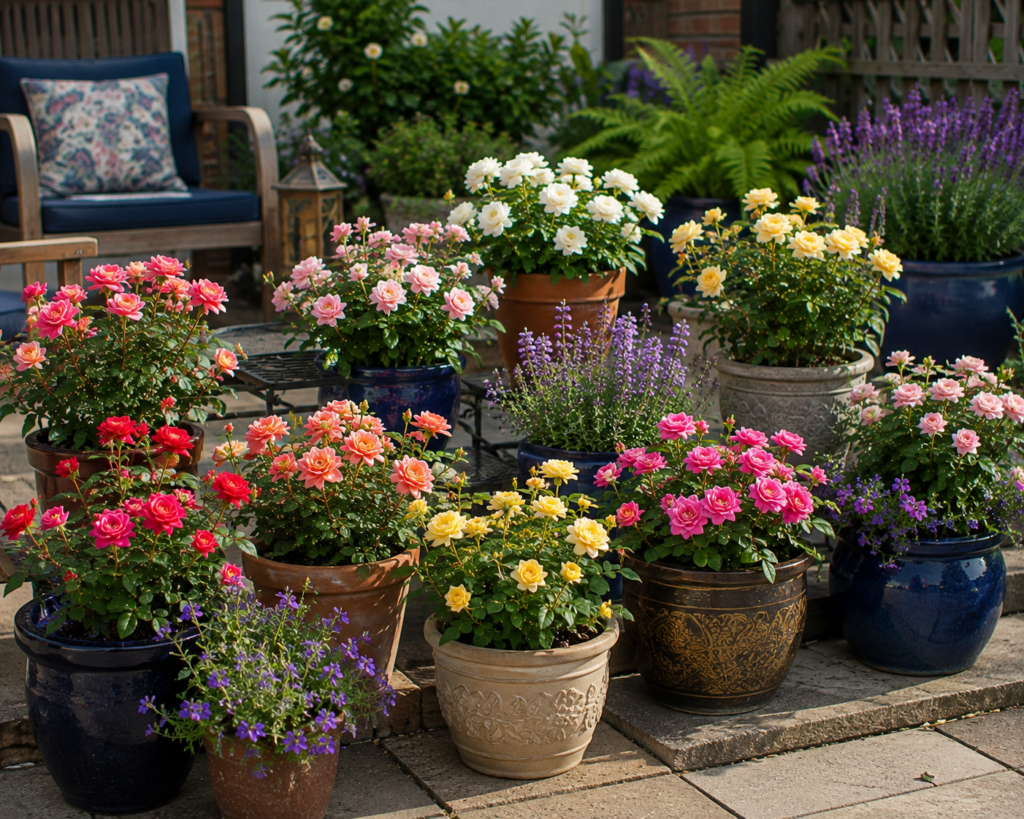
Not everyone has a yard for a full rose bed, and that’s fine. Miniature roses in containers can do almost everything a full-size rose garden does, just at patio scale.
I keep a cluster of five miniature rose containers near my back steps, different heights and pot colors so it doesn’t look like a matched set from a big-box store. Grouping odd numbers of pots, like three or five, almost always looks better than an even, matched pair. I don’t fully know why that rule works, but it does.
Containers dry out fast, especially in summer heat, so this is not a “water once a week” situation. I water mine every other day in July and feed them more often than in-ground roses, since nutrients wash out of pots quickly.
Quick side note: terra cotta pots look great but dry out faster than plastic or glazed ceramic. If you’re forgetful about watering, go glazed. Your roses will forgive a lot of things, but they won’t forgive drought stress and heat at the same time.
9. Anchor a Corner Bed With a Single Statement Shrub Rose
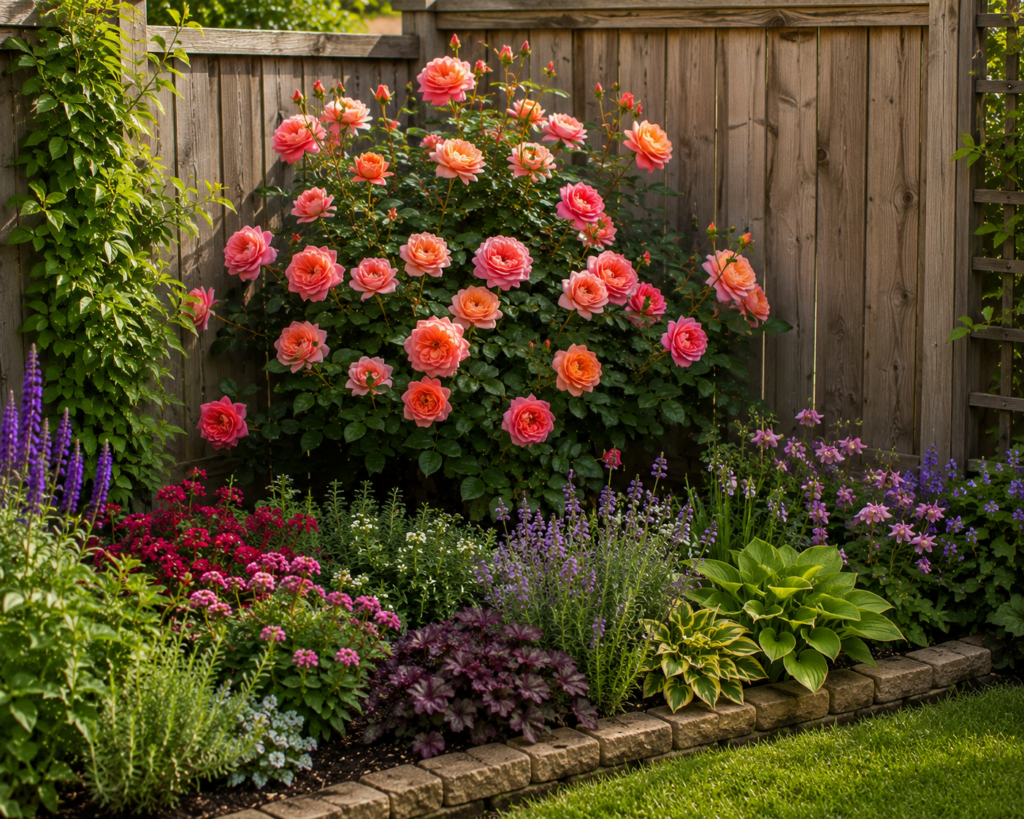
Sometimes the boldest move is restraint. Instead of packing a corner bed with a dozen plants, I’ve had great luck anchoring a corner with one large, mature shrub rose like ‘Bonica’ or ‘Carefree Beauty’ and letting it be the star.
A single statement rose, once it’s mature and full, has a presence that a crowded bed can’t match. My corner ‘Bonica’ rose is now nearly 5 feet across and covered in soft pink blooms most of the summer. It doesn’t need anything else around it to look finished.
This works especially well at the corner where a fence meets the house, or where two paths intersect, because a big rounded shrub softens hard architectural lines better than a row of small plants would.
Give it real space to reach full size. I’ve found that people plant statement shrubs too close to walkways or structures, and then spend years fighting the plant’s natural shape with aggressive pruning instead of just giving it room in the first place.
10. Grow a Living Rose Privacy Screen for a Pool or Hot Tub Area
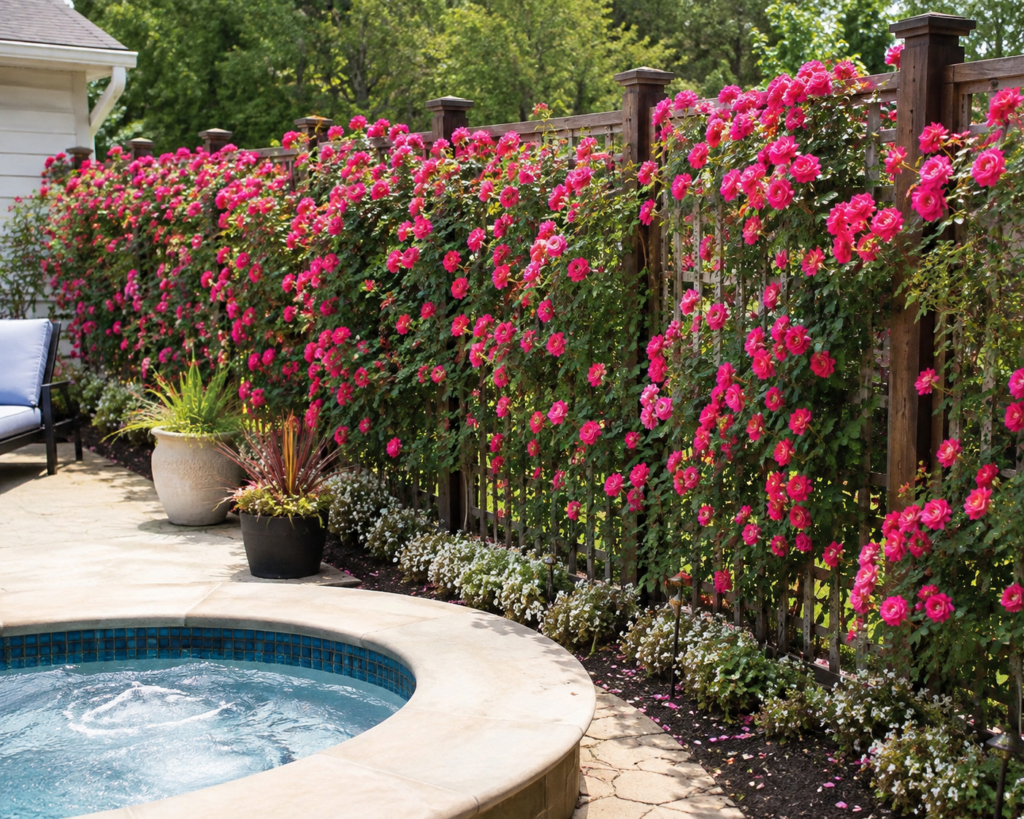
Pool areas need privacy, but chain-link and vinyl fencing look sterile next to water. A dense planting of thorny, repeat-blooming shrub roses does double duty: it screens the area from neighbors and it looks a hundred times better than fencing.
I used rugosa roses around one side of a friend’s pool deck because they’re tough enough to handle pool chemical splash and reflected heat without sulking. Not every rose can take that kind of abuse, so variety choice really matters here.
The thorns are actually a benefit for pool security too. A thick rose screen is a much better deterrent for anyone thinking about hopping the fence than a smooth vinyl panel.
Just plan for maintenance access. You’ll need a gap or gate somewhere in the screen so you can actually get to pool equipment without wading through thorns every time something needs fixing.
11. Underplant a Rose Bed With Spring Bulbs
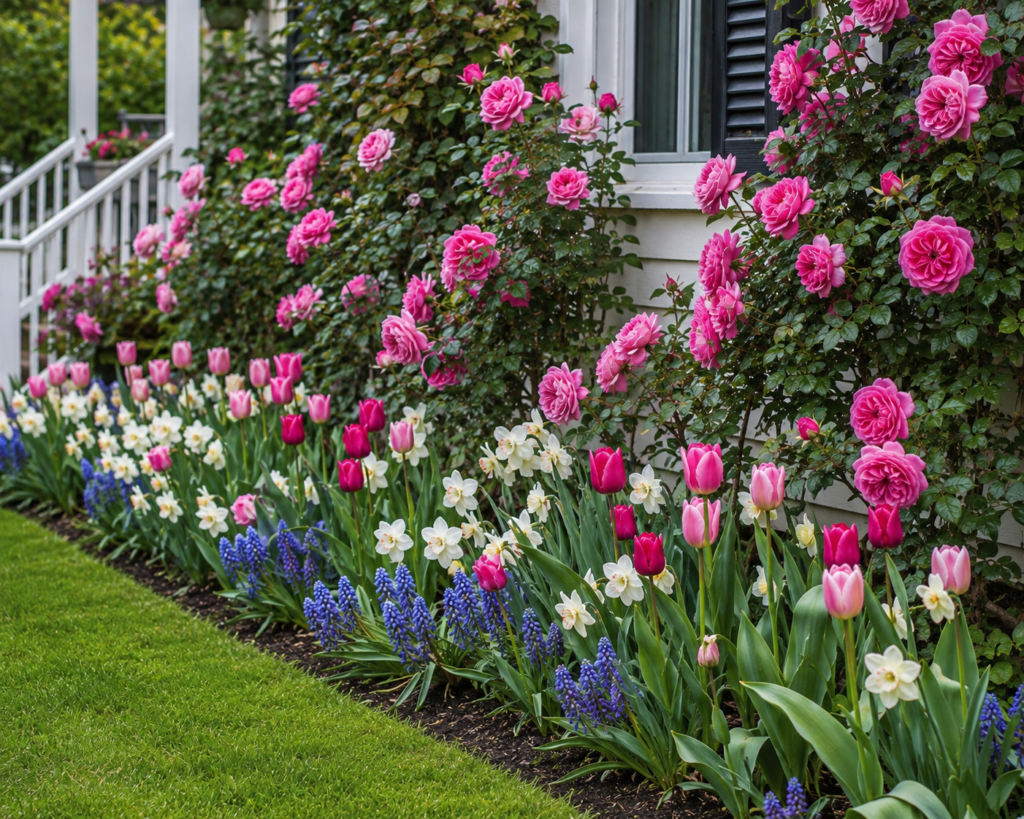
This one surprised me. Tucking daffodil and tulip bulbs under and around rose bushes gives you color in early spring, months before the roses even think about blooming.
I planted a ring of daffodils around the base of three shrub roses one fall, and by the following March, that bed was doing something interesting again instead of just sitting there as bare mulch and dormant canes.
Bulbs finish their bloom and die back naturally right around the time the rose foliage fills in and needs the space and sunlight for itself. It’s good timing, honestly better timing than I planned for the first time I tried it.
Skip tulips if you’ve got deer or rabbits in the area, since they’ll treat your rose bed like a salad bar before the roses even wake up. Daffodils are the safer bet because most animals leave them alone.
12. Create a Rose Color Gradient Bed
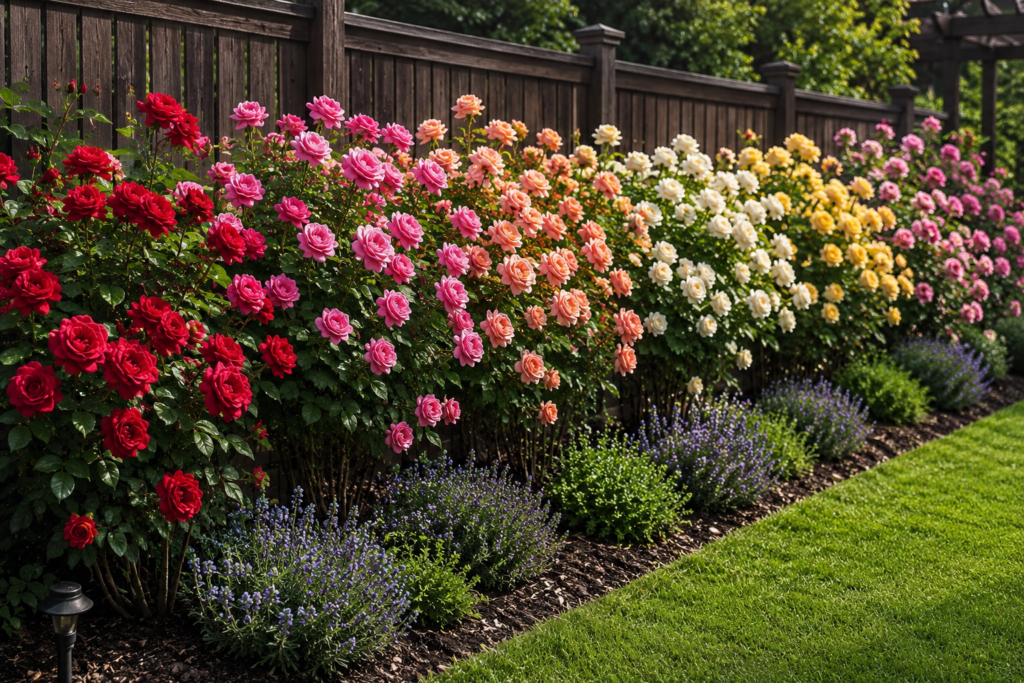
If you want a bed that looks genuinely designed instead of randomly planted, try a color gradient: light pink or white roses on one end, moving through deeper pinks, to red or burgundy on the other end.
I did this along a long, narrow bed against my garage, starting with a white ‘Iceberg’ rose, moving through pink ‘Bonica,’ and ending in a deep red ‘Mister Lincoln.’ The visual effect of walking the length of that bed is way more striking than I expected from what’s really just a sequencing trick.
This works best in a long, linear bed where people actually walk the length of it, like along a driveway, fence line, or front walkway. In a small square bed, the gradient effect gets lost because you see the whole thing at once instead of experiencing it as a sequence.
Match bloom times as closely as you can when picking varieties. A gradient bed where half the roses are blooming and half aren’t defeats the whole purpose of the color progression.
13. Bonus Idea: Repurpose an Old Ladder or Bicycle as a Rose Trellis
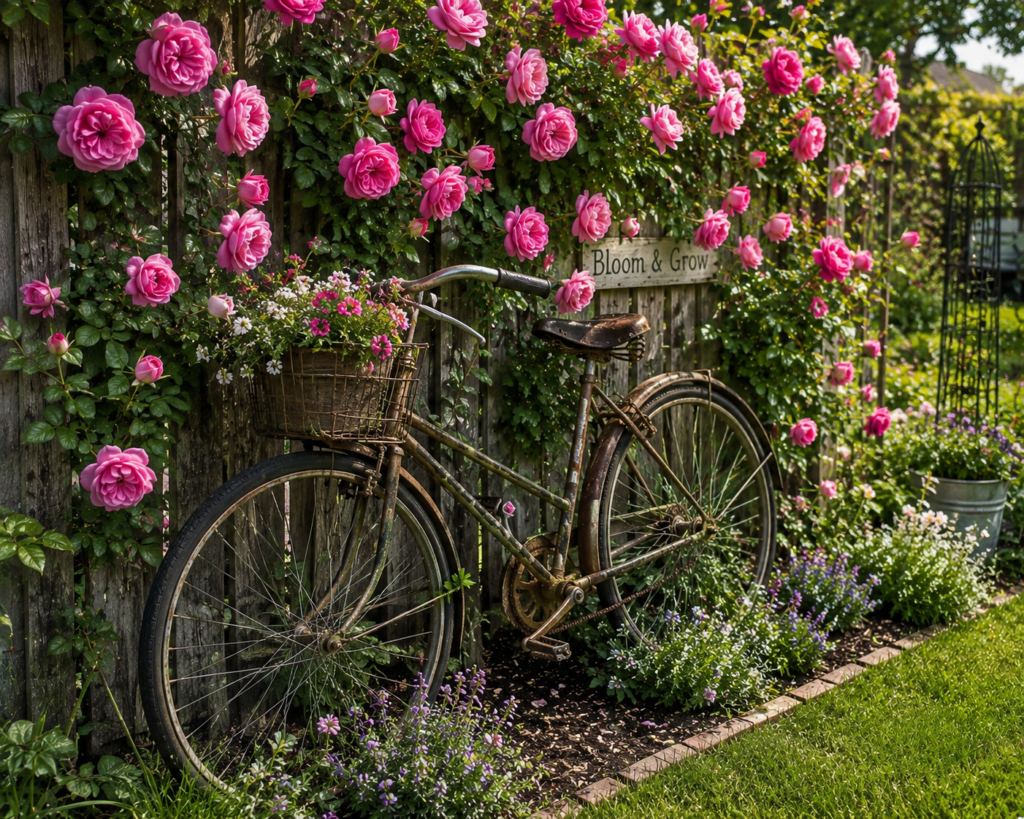
This is my favorite oddball idea, and I almost didn’t include it because it’s a little unconventional. An old wooden ladder leaned against a fence, or a rusty bicycle frame planted upright in the ground, makes a genuinely charming, low-cost trellis for a climbing or rambling rose.
I’ve got an old step ladder in my side yard with a ‘Zephirine Drouhin’ climber winding through the rungs, and it gets more compliments than the actual fence next to it. It cost me nothing except an afternoon and a rose I already owned.
This isn’t a permanent structural solution, and I wouldn’t use it for a heavy, aggressive climber that needs real support over 15 years. But for smaller ramblers or a fun accent piece in a casual garden, it’s a genuinely great look that costs almost nothing.
Make sure whatever object you repurpose is rot-resistant or metal, since wood ladders left outdoors in wet soil will break down faster than you’d expect, and a collapsing trellis mid-bloom is not a fun surprise.
Real Talk: What Can Go Wrong With Rose Bush Landscaping
Roses have a reputation for being high-maintenance, and honestly, some of that reputation is earned. Here’s what I wish someone had told me before I started.
Black spot and powdery mildew are relentless in humid climates. If you live somewhere with muggy summers, you will deal with fungal issues no matter how careful you are. Good air circulation between plants helps, but it won’t eliminate the problem entirely. Budget for a fungicide routine or accept some spotted leaves.
Thorny hedges and screens are genuinely painful to maintain. I’ve drawn blood pruning my rugosa hedge more times than I want to admit. If you’ve got small kids who play near the yard, think hard before planting a thorny screen at kid height.
Tree roses and standards are more fragile than they look. That graft union is a weak point, and a hard freeze or a rough storm can take out a tree rose that a regular shrub rose would shrug off. They also just don’t live as long as own-root shrub roses in my experience.
Companion planting and mixed borders take more planning than a rose-only bed. You’ve got to think about bloom sequence, sun competition, and root space, and it’s easy to end up with a border that looks chaotic instead of layered if you don’t plan it out first.
And here’s the one nobody wants to hear: roses need sun. Real sun, six hours minimum, not the dappled afternoon light under a tree that you’re hoping will be “good enough.” I moved a rose bed once because I refused to accept this, and the second location outperformed the first within one season.
Final Thoughts
Rose bushes don’t have to mean stiff, formal gardens with a single sad specimen by the mailbox. They can climb, screen, anchor, and mix into just about any style of yard once you stop treating them like a fussy houseguest and start treating them like the tough, adaptable shrubs they actually are.
Start with one idea from this list instead of trying to overhaul your whole yard at once. Pick the bed, arch, or container grouping that fits your space, get it right, then expand from there.
Which of these ideas fits your yard best, and what’s held you back from trying it before? Drop your questions or your own rose landscaping wins in the comment box below. I read every one, and I’m always looking for new ideas to steal.

About Syprose Kiche
Syprose Kiche is the creator and writer behind My Besuited Home, a practical home and garden website covering DIY projects, gardening, lawn care, landscaping, home improvement, and outdoor living. She focuses on turning everyday homeowner questions into clear, practical guides backed by careful research and useful real-world considerations.