
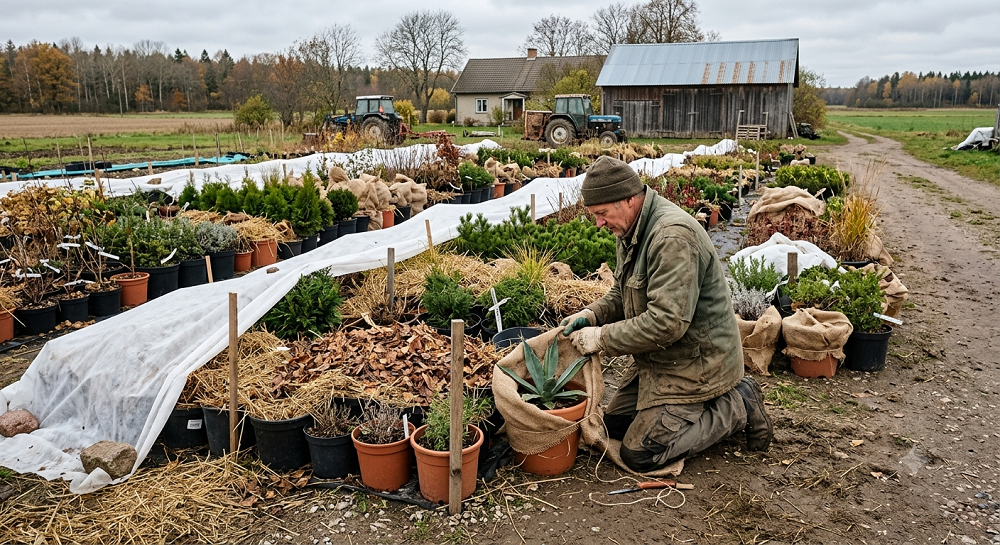
Your patio is full of pots, the forecast just dropped to freezing overnight, and you’re standing outside in your slippers wondering if your $40 Japanese maple is about to become compost. I’ve been there. More than once.
If you live in an apartment, a townhouse with no basement, or a house where “extra space” is a myth your realtor invented, overwintering container plants feels impossible. Every blog post about it assumes you have a heated greenhouse or a three-car garage just sitting empty. Most of us don’t.
The good news? You don’t need either. I’ve kept fig trees, rosemary, and even a stubborn lemon tree alive through winters in spaces smaller than most walk-in closets. Here’s exactly how.
Why Container Plants Struggle in Winter (And Why Size Matters)
Plants in the ground have one huge advantage: soil insulation. The earth around their roots stays relatively stable in temperature, even when the air gets brutal. A potted plant doesn’t have that luxury. The roots are essentially camping out in a thin plastic or ceramic shell, fully exposed to whatever the weather throws at them.
This is why a plant that’s perfectly hardy in your zone when planted in the ground can die in a pot during the same winter. The root zone freezes solid, and once that happens, the cells rupture and the plant can’t recover. I learned this the hard way with a rosemary bush that had survived two winters in the ground at my old place. First winter in a pot on my balcony? Dead by January.
Small-space overwintering isn’t about replicating a greenhouse. It’s about buying your plants just enough protection to survive until spring growth kicks back in.
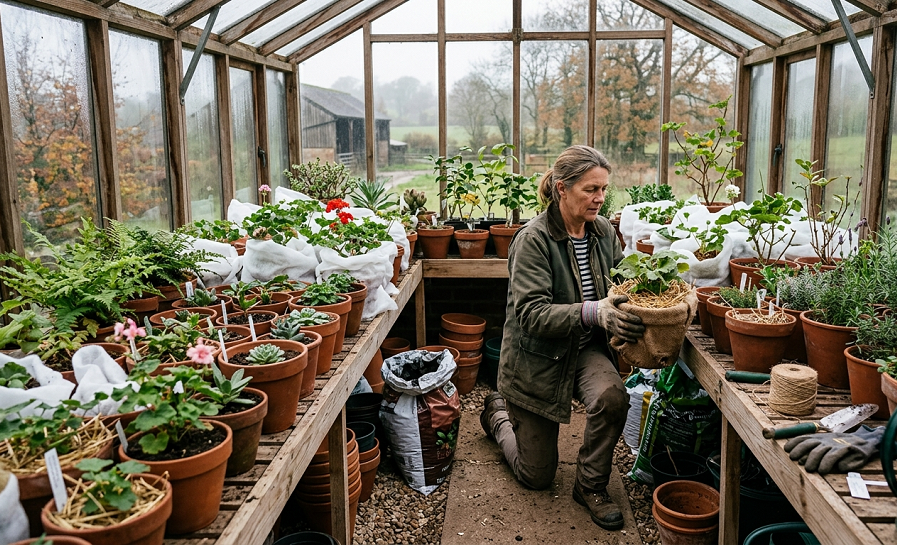
Step 1: Figure Out What Actually Needs to Come Inside
Not every container plant needs special treatment. This is where people waste energy they don’t have to spend.
Plants that usually need protection:
- Tropicals (citrus, hibiscus, elephant ears)
- Tender perennials grown outside their hardy zone
- Young or newly potted woody plants
- Anything labeled “zone 8+” if you live somewhere colder
Plants that are often fine outside, even in pots:
- Mature, cold-hardy perennials (hostas, sedum, many ornamental grasses)
- Dormant deciduous shrubs that match your hardiness zone
Check your USDA hardiness zone, then check the zone rating on the plant tag. If your zone number is lower than what the plant needs, it’s coming inside. If it matches or is higher, it can likely tough it out with some help (more on that below).
I made the mistake one year of dragging every single pot inside, including a hardy boxwood that absolutely did not need to be there. It took up space that my citrus tree desperately needed and the boxwood actually struggled with the lack of dormancy. Sort your plants first. It saves your sanity and your square footage.
Step 2: The “Cold But Not Frozen” Trick for Semi-Hardy Plants
For plants that are borderline hardy in your zone, you don’t necessarily need to bring them indoors at all. You just need to keep their roots from freezing solid.
- Group pots together against a south-facing wall. The wall radiates stored heat overnight, and clustering pots means they insulate each other.
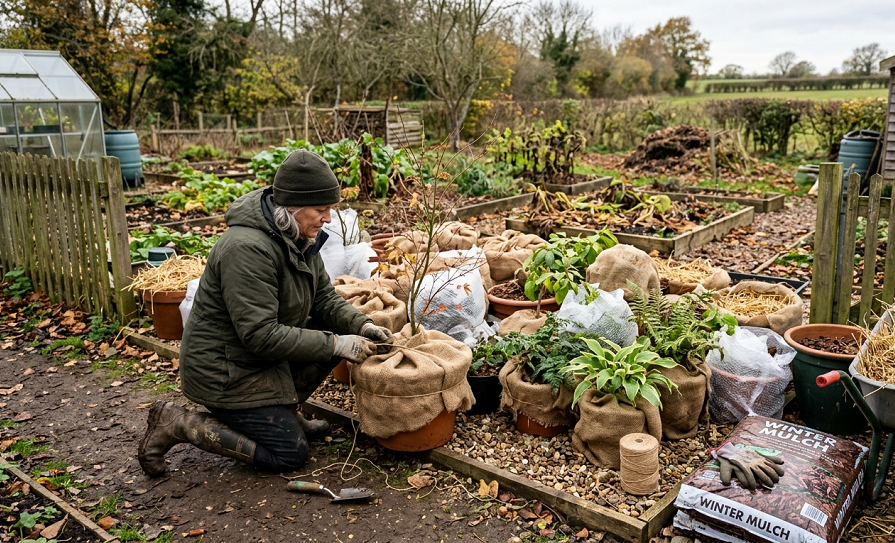
- Wrap the pots, not the plant, in burlap or an old moving blanket. Focus on the root zone since that’s the vulnerable part.
- Mulch the soil surface with straw or shredded leaves, about 3-4 inches deep.
- Elevate pots off concrete using pot feet or scrap wood. Concrete pulls heat fast, and direct contact makes the cold worse.
This method has saved me from hauling heavy ceramic pots up two flights of stairs more times than I can count. Heavy pots especially benefit from this approach since moving them is a workout you didn’t sign up for.
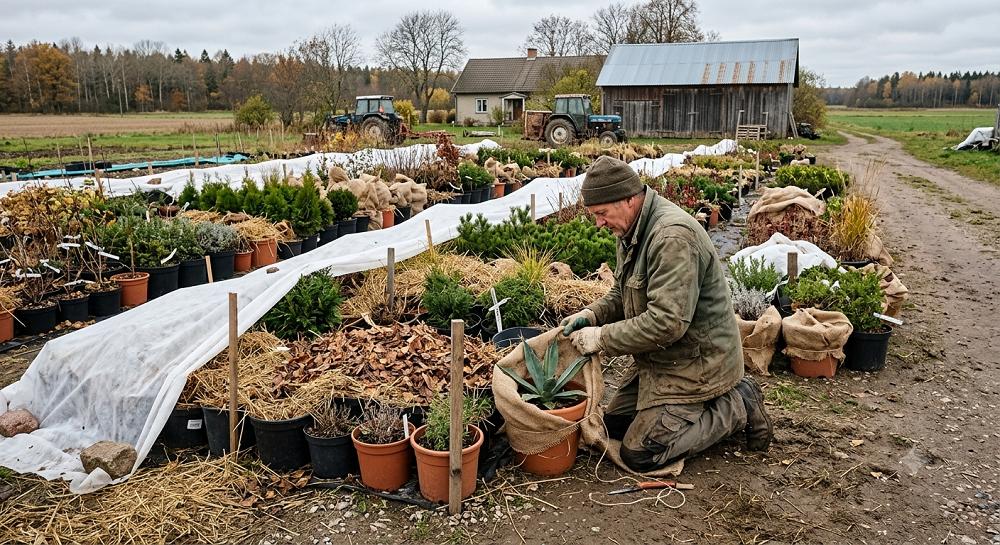
Step 3: Where to Actually Put Plants That Need to Come Inside
This is the part everyone asks me about, and the answer is: smaller spaces have more options than you think.
An unheated stairwell or entryway. These spots stay cooler than your living room but warmer than outside. Perfect for plants that need a “dormant but not dying” winter, like figs or Japanese maples.
Under a bed. I know how that sounds, but it works for short, shade-tolerant plants. Slide a tray underneath to catch drips and rotate the pot weekly so it doesn’t lean toward whatever light source it can find.
A closet with a window. Even minimal light helps. Crack the door for airflow so you’re not trapping humidity and inviting mold.
Near (not against) a cold window. Plants pressed directly against glass can get chilled or scorched. Leave a few inches of buffer with a curtain you can close at night.
A windowsill above a heat vent sounds smart but isn’t. The temperature swings between hot blasts and cold drafts confuse plants and stress them out. I tried this with a small lemon tree and watched it drop half its leaves in two weeks. Skip the vent spots entirely.
Step 4: Adjust Watering (This Is Where Most People Mess Up)
Here’s an opinion that might ruffle feathers: overwatering kills more overwintered plants than cold ever does. People panic, think the plant looks sad, and drown it in water out of guilt.
Dormant or semi-dormant plants need way less water than they did in summer. Their growth has slowed or stopped, so they’re not pulling moisture the way they used to.
My watering rule for winter: stick your finger two inches into the soil. If it’s dry, water. If it’s even slightly damp, wait. For most plants, that means watering every 10-14 days instead of every few days.
Overwatered roots sitting in cold, wet soil are a recipe for root rot, and root rot is way harder to fix than a slightly underwatered plant. I’d rather see a plant droop a little from thirst than turn to mush from rot.
Step 5: Don’t Forget About Light (Even in Tiny Spaces)
Indoor overwintering spots are often dim, and that’s actually fine for plants that are supposed to be semi-dormant. Citrus, figs, and other plants that drop into a resting state don’t need to photosynthesize at full speed.
But if you’re keeping something actively growing through winter, like a houseplant that just happens to summer outdoors, light matters more.
Quick side note: a cheap clip-on grow light is one of the best $20 investments I’ve made for small-space overwintering. It clips right onto a shelf or closet rod and doesn’t take up any floor space, which matters when your “plant room” is technically a hallway.
Step 6: Pest Patrol Before You Bring Anything Inside
I cannot stress this enough: inspect every single plant before it crosses your threshold. Outdoor pests that were manageable on a balcony become a full-blown infestation in a closed indoor space.
- Check under leaves for aphids, spider mites, and scale.
- Look at the soil surface for fungus gnats.
- Spray the whole plant down with a hose or shower head to knock off hitchhikers.
- Consider a light insecticidal soap treatment as a precaution, even if you don’t see bugs yet.
I once skipped this step because I was in a hurry, and within three weeks my entire bedroom windowsill had spider mites. They spread to a houseplant that had nothing to do with the original problem. That cleanup took an entire weekend I didn’t get back.
Real Talk: What’s Not Worth the Effort (And What Can Go Wrong)
Not every plant is worth saving, and I think more gardening articles should just say that out loud.
Cheap annuals you bought for $4 at a big box store? Let them go. The amount of indoor space, light, and attention required to keep a $4 plant alive isn’t worth it unless you’re emotionally attached. I’ve wasted entire closet shelves on plants that would’ve cost less to replace in spring.
Plants with no light source at all. If your only available indoor spot is a windowless bathroom or a dark basement corner, most plants will slowly decline no matter what you do. A grow light can help, but at some point you’re spending more on equipment than the plant is worth.
Mold and mildew in tight spaces. When you cram plants into a small closet or stairwell with poor airflow, mold loves it. Crack doors, use a small fan on low if you have room, and don’t let pots sit in standing water trays.
Pest explosions. As mentioned above, this is the number one regret I hear from other small-space gardeners. One missed pest check can undo months of careful overwintering.
Sudden leaf drop freaking you out. Plants like figs and some citrus drop leaves as part of normal dormancy. It looks alarming, but it’s not always a death sentence. Don’t panic and start dumping fertilizer on a plant that’s just trying to rest. That’s actually one of the biggest mistakes I made early on. I thought leaf drop meant the plant was dying, so I fed it heavily in January. The poor thing tried to push new growth in the dead of winter with terrible light, and it set the plant back more than if I’d just left it alone.
A Few Extra Tricks for Tight Spaces
- Repot before winter, not after. Trying to size up a pot in the middle of dormancy stresses the plant unnecessarily. Do any repotting in early fall.
- Label your pots. When everything is bare and dormant, plants start looking identical. I’ve genuinely forgotten which pot was the lemon and which was the lime.
- Use vertical space. Wall-mounted shelves or hanging hooks free up floor space for the bigger pots that can’t go anywhere except the floor.
- Bubble wrap as pot insulation. Wrapping the outside of a pot (not the plant) in bubble wrap adds a surprising amount of insulation for plants staying in semi-protected outdoor spots.
Parting Wisdom
Overwintering container plants in a small space isn’t about recreating ideal greenhouse conditions. It’s about giving your plants “good enough” conditions and trusting that most of them are tougher than you think. I’ve kept a fig tree alive in a stairwell for four winters running, and that thing has never once seen a heated greenhouse.
Pick your battles, protect the plants worth protecting, and don’t beat yourself up over the ones that don’t make it. Even experienced gardeners lose a few every year.
What’s the trickiest plant you’ve tried to overwinter in a small space? Drop your story or your questions in the comments below. I read every one, and I’d love to know what’s working (or not working) for you this winter.

About Syprose Kiche
Syprose Kiche is the creator and writer behind My Besuited Home, a practical home and garden website covering DIY projects, gardening, lawn care, landscaping, home improvement, and outdoor living. She focuses on turning everyday homeowner questions into clear, practical guides backed by careful research and useful real-world considerations.