
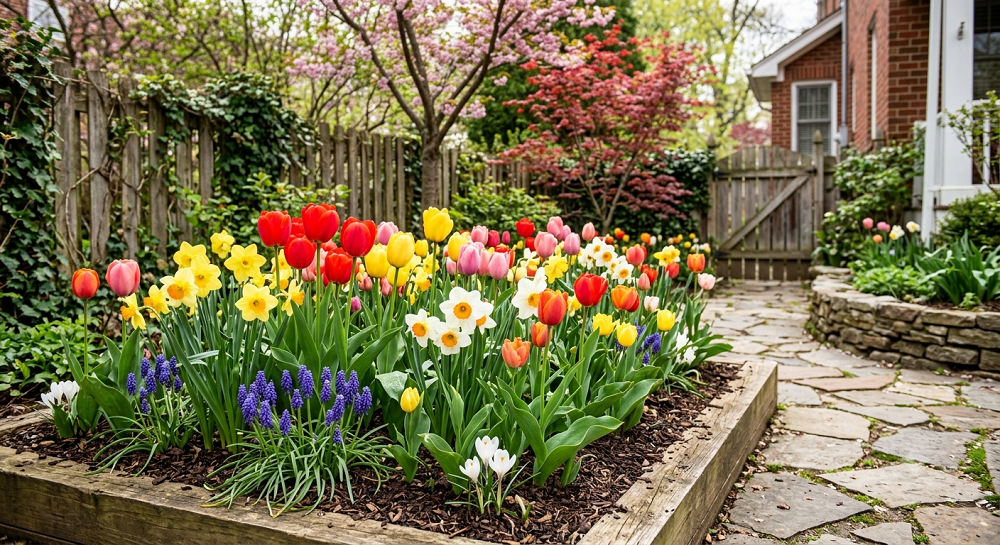
Your hands are cold, the ground’s half-frozen, and you’re staring at a paper bag of tulip bulbs wondering if you waited too long. Again.
I get this question every October from at least three neighbors: “Is it too late to plant bulbs?” Usually it’s not. But the panic is real, and I understand it. You bought the bulbs in September with the best intentions, then life happened, and now it’s late November and they’re sitting in your garage looking sad and shriveled.
My first year planting bulbs, I shoved daffodils into the ground about two inches deep because I was cold and wanted to go inside. Half of them never came up. The other half bloomed sideways, like they were trying to escape. That’s the kind of mistake this guide is going to help you skip.
Let’s get your bulbs in the ground the right way, so come April you’ve got a yard that makes the mail carrier slow down.
Why Fall Is the Only Time to Plant Spring Bulbs
Spring-flowering bulbs need a cold dormancy period to trigger blooming. This isn’t optional. It’s biology.
Tulips, daffodils, crocuses, hyacinths, and alliums all need roughly 12 to 16 weeks of soil temperatures below 40°F before they’ll bloom properly. Skip this and you’ll get weak, floppy flowers or no flowers at all. I tried forcing some leftover tulip bulbs in spring once just to see what would happen. What happened was nothing. A whole lot of nothing.
Planting in fall gives the bulb time to grow roots before the ground freezes solid. Those roots are doing quiet work all winter, even when you can’t see anything happening above ground. By the time spring rolls around, the bulb already has the foundation it needs to push up a stem and put on a show.
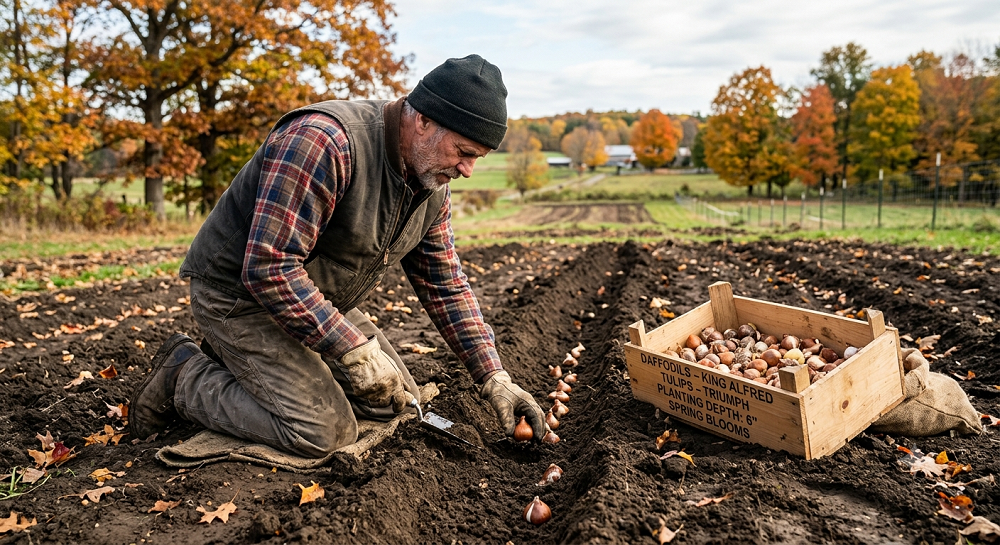
The general rule: plant when nighttime soil temps hit around 55°F and stay there. For most of the U.S., that’s late September through November, depending on your zone. Northern gardeners can plant earlier; southern gardeners (zones 8 and up) often need to refrigerate bulbs for 6-10 weeks before planting because winters aren’t cold enough on their own.
When to Plant Spring Bulbs: Timing by Zone
Here’s where people get tripped up. They think there’s one magic date. There isn’t.
Zones 3-5: Plant September through early October. Your ground freezes early, so don’t dawdle.
Zones 6-7: Mid-October through November is your window. This is most of the country, honestly.
Zones 8-9: Late November into December works, but pre-chill your tulips and hyacinths in the fridge first (not next to apples — they release ethylene gas that can damage the bulb).
Zone 10 and warmer: You’re basically buying annuals. Chill the bulbs, plant in December, enjoy them once, and don’t expect them back next year. I won’t sugarcoat that.
A trick I use instead of relying on the calendar: stick your finger in the soil. If it’s still warm an inch or two down, you can wait. Once it feels consistently cool, like a basement floor, get planting.
Choosing the Right Spring Bulbs for Your Garden
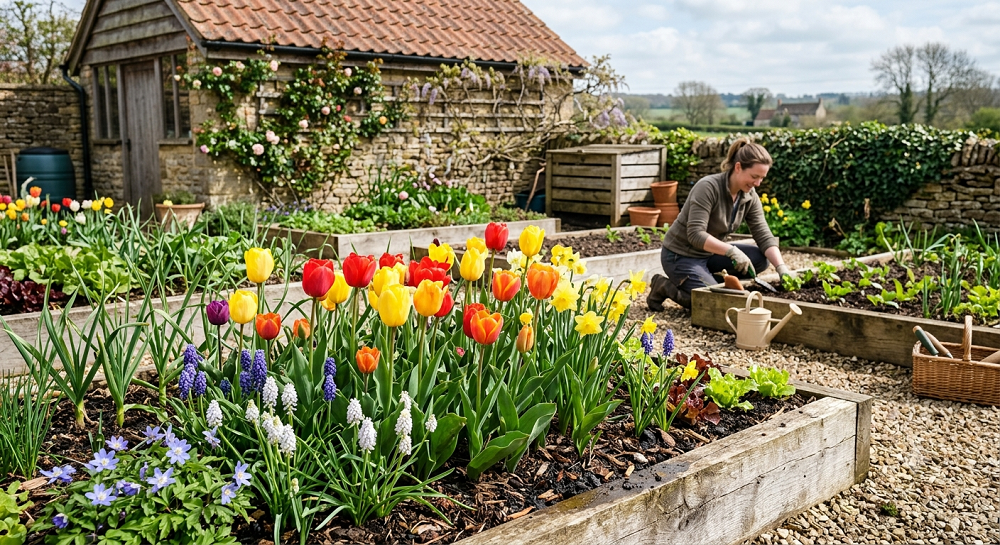
Not all bulbs are created equal, and I’ve got opinions here.
Daffodils are my ride-or-die. Squirrels and deer leave them alone because they’re toxic, they naturalize beautifully, and they come back reliably for years. If you only plant one type of bulb, make it this one.
Tulips are gorgeous but high-maintenance. Most hybrid tulips bloom big and beautiful the first year, then get smaller and sparser every year after that. Some gardeners treat them as annuals and replant every fall. I think that’s a totally reasonable choice, even though it feels wasteful the first time you do it.
Crocuses are the unsung heroes of early spring. They often push through actual snow. Plant a bunch near your front walkway so you get that first hit of color when everything else still looks dead.
Hyacinths smell incredible but tip over in heavy rain if you don’t plant them deep enough. Learned that one the hard way during a particularly soggy April.
Alliums look like something out of a sci-fi movie and deer hate them. If you’ve got a deer problem, lean heavily into alliums and daffodils and skip the tulips entirely.
Quick side note: buy your bulbs as early as garden centers stock them, even if you’re not planting for weeks. The good varieties sell out fast, and the bulbs left behind by Halloween are usually the soft, mushy rejects nobody wanted.
Step-by-Step: How to Plant Bulbs the Right Way
This is the part everyone actually wants, so here it is.
Step 1: Pick a Spot With Good Drainage
Bulbs rot in soggy soil faster than almost anything else in your garden. If water pools in a spot after rain, don’t plant bulbs there unless you fix the drainage first.
Step 2: Check the Sunlight
Most spring bulbs want full sun to partial shade. The trick is that they bloom before trees leaf out, so even spots under deciduous trees can work great since the bulbs get their sun before the canopy fills in.
Step 3: Dig to the Right Depth
This is the single most common mistake I see. The rule of thumb: plant bulbs about three times as deep as the bulb is tall, pointy side up.
- Small bulbs like crocus: 3-4 inches deep
- Medium bulbs like daffodils: 5-6 inches deep
- Large bulbs like tulips and alliums: 6-8 inches deep
Too shallow and they’re vulnerable to frost heave and critters. Too deep and they struggle to push through.
Step 4: Add Bulb Fertilizer (Not Bone Meal)
I’ll be opinionated here: bone meal is outdated advice that mostly just attracts raccoons and dogs to dig up your bed. Use a granular bulb fertilizer with phosphorus instead, mixed into the bottom of the planting hole.
Step 5: Space Them Properly
Crowded bulbs compete for nutrients. Give small bulbs 2-3 inches between them and larger bulbs 4-6 inches. For that natural, drift-of-flowers look, toss a handful of bulbs gently across the bed and plant them roughly where they land instead of lining them up in a row. Rows look like a military parade, not a garden.
Step 6: Cover, Water, and Mulch
Backfill with soil, water thoroughly to settle everything and trigger root growth, then add 2-3 inches of mulch once the ground starts to cool. The mulch isn’t for warmth — it’s to prevent the freeze-thaw cycle from heaving bulbs out of the ground.
Step 7: Walk Away
This is the hardest step for impatient gardeners like me. Don’t water again unless you’re in a serious drought. Don’t dig around to check on them. Just let winter do its job.
Real Talk: What Can Go Wrong and What’s Not Worth the Effort
Here’s the section nobody puts in the glossy gardening magazines.
Squirrels will eat your tulip bulbs. Not might. Will. I’ve lost entire beds overnight. If you’re in a squirrel-heavy area, either switch to daffodils and alliums (squirrels avoid these) or lay chicken wire over the planted bed and cover it with mulch. The wire stops digging without stopping the stems from growing through.
Bulb lasagna is more trouble than it’s worth for beginners. You’ll see this technique online where you layer different bulb types in one pot or hole for staggered blooms. It looks amazing on Pinterest. In practice, it’s fussy, easy to mess up the timing on, and honestly not worth it until you’ve got a few seasons of basic planting under your belt.
Forcing bulbs indoors for winter blooms sounds fun and rarely is. I tried this with paperwhites one year hoping for a cute holiday centerpiece. They grew six inches tall, flopped over like wet noodles, and smelled like a gym sock. Some people love it. I’m not one of them.
Don’t cut the foliage after blooming. This trips up almost everyone. Once the flowers fade, the leaves look ugly and your instinct is to chop them down. Don’t. The leaves are feeding the bulb for next year’s bloom. Let them die back naturally, usually 6-8 weeks, even though it looks messy.
Wet clay soil is a bulb killer. If your yard is heavy clay, amend it with compost before planting or build a raised bed. I lost an entire batch of hyacinths to root rot in clay soil before I figured this out, and it was a genuinely depressing thing to dig up in spring.
Bonus Tip: Plan for Next Fall While You’re at It
While you’re out there with dirt under your nails, jot down notes about what worked and what didn’t. I keep a garden journal because I never trust my own memory on this stuff. Where did the daffodils thrive? Where did the squirrels do the most damage? This five-minute habit saves you so much guesswork next October.
Final Thoughts
Planting spring bulbs in fall is one of those rare gardening tasks where you’re doing all the work now and getting zero payoff for months. That delayed gratification is tough, I know. But there’s nothing quite like walking outside on a gray March morning and spotting the first crocus pushing through old snow. It makes the cold fingers and dirty knees totally worth it.
Start with daffodils if you’re new to this. They’re nearly foolproof, and a little success builds the confidence to branch out into trickier bulbs next season.
What’s your bulb-planting horror story? Did the squirrels get yours too, or did you make the same depth mistake I did my first year? Drop it in the comments below — I read every one, and misery loves company.

About Syprose Kiche
Syprose Kiche is the creator and writer behind My Besuited Home, a practical home and garden website covering DIY projects, gardening, lawn care, landscaping, home improvement, and outdoor living. She focuses on turning everyday homeowner questions into clear, practical guides backed by careful research and useful real-world considerations.