
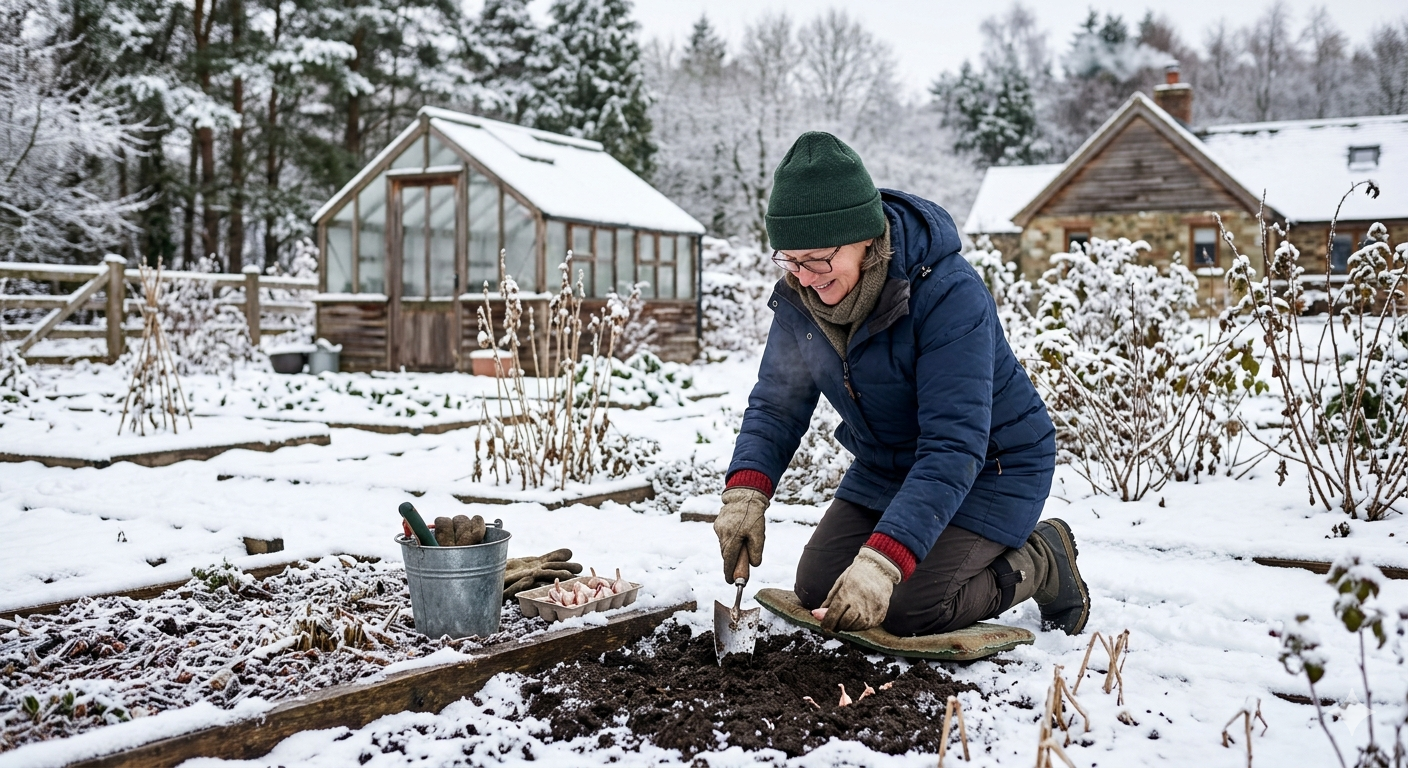
Every winter, I watch my neighbors do things in the garden that make me wince. Piling snow against the base of their fruit trees. Blowing salt-laden slush straight onto their perennial beds. Covering roses with nothing but a prayer. I get it — winter gardening advice is all over the place, and half of it is flat-out wrong.
I’ve been growing things in cold climates for over a decade. I’ve killed plants I loved, lost harvests to bad decisions, and spent good money fixing problems I caused myself. So let me save you the grief. Here are 14 snow gardening myths I want to kill off — and the real truth about what snow actually does to your garden.
Myth #1: Snow Always Kills Your Plants
The Fact: Snow is one of the best natural insulators your garden has, and in many cases, it’s actively protecting your plants — not killing them.
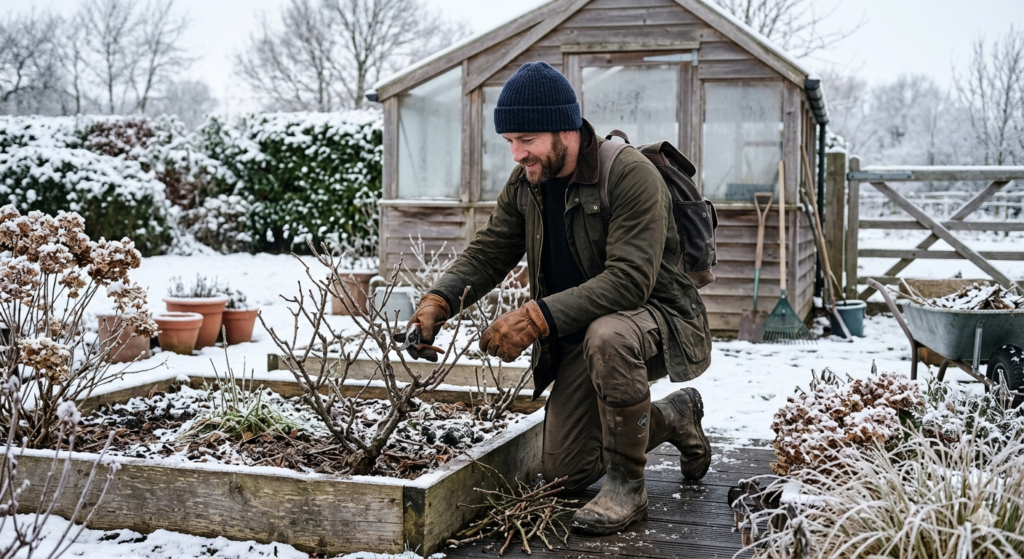
This one drives me crazy because it’s the opposite of the truth. When I first started gardening, I’d race outside after every snowfall and frantically brush snow off everything in a panic. What I didn’t know is that a layer of snow acts like a blanket, trapping soil warmth and shielding plant crowns from the real killer: freeze-thaw cycles.
The science backs this up. Soil under a foot of snow often stays close to 32°F (0°C), even when air temperatures plummet to single digits. Bare, exposed soil swings wildly — freezing hard, then thawing, then freezing again — which is what heaves perennial roots right out of the ground and kills them.
The plants most likely to die in winter aren’t the ones that got snowed on. They’re the ones that got exposed when the snow melted early and a sudden cold snap hit. Snow is not your enemy. Bare ground in January is.
Myth #2: You Should Remove Snow from Perennials Right Away
The Fact: Light to moderate snow on perennials is usually fine to leave alone. Wet, heavy snow on evergreen shrubs is the exception — not the rule.
The year I frantically swept snow off all my hostas and astilbes after a big storm, I thought I was being a responsible gardener. What I actually did was expose dormant crowns to a brutal wind chill. Those plants came up weeks later than my neighbor’s, which she had left covered.
For most herbaceous perennials — the ones that die back to the ground in fall — snow is a complete non-issue. They’re dormant. There’s nothing to damage. Where you do need to be careful is with evergreen shrubs like arborvitae, boxwood, and upright junipers. Wet, heavy snow can split their branches apart or cause “snow load” damage by bending limbs past the breaking point. For those, gently brush snow upward (not down — pulling branches down increases breakage risk) using a soft broom.
Ornamental grasses? Leave them alone completely. The stems protect the crown all winter, and the snow just adds to that protection.
Myth #3: Frost and Snow Are the Same Thing
The Fact: Frost and snow are very different weather events with very different effects on your garden. Treating them as one thing leads to bad decisions.
I made this mistake for two full seasons before a more experienced gardener straightened me out. Frost forms when surface temperatures drop below freezing and moisture in the air deposits directly on plant surfaces as ice crystals. Snow falls from clouds. The damage mechanisms are completely different.
A hard frost on a clear, calm night kills tender plants by forming ice crystals inside plant cells, rupturing them from the inside. A snowfall, paradoxically, can actually prevent frost damage — the snow cover reflects radiant heat back toward the soil and keeps surface temperatures more stable. It’s why savvy market gardeners sometimes welcome a light snow before a hard freeze.
Understanding the difference matters practically: frost cloth protects against frost by trapping radiated heat. It does almost nothing useful against a heavy snowfall. If you’re expecting both, you need to think about them separately.
Myth #4: Snow Is Bad for Soil Health
The Fact: Snowmelt is some of the best water your garden soil gets all year.
Here’s something I genuinely didn’t appreciate until my third or fourth year gardening: snowmelt soaks into soil slowly, deeply, and without the runoff and compaction you get from heavy rain. The gradual melt gives the ground time to absorb moisture, recharging the subsoil and feeding deep plant roots.
Beyond hydration, snow also acts as a nitrogen scavenger. As it falls through the atmosphere, snowflakes collect trace amounts of nitrogen compounds. It’s a tiny amount — don’t cancel your fertilizer program over it — but it’s a real thing. Old-timers used to call it “poor man’s fertilizer.”
What snow can do to harm soil structure is if you’re walking all over it constantly, compacting the ground beneath. I lost a raised bed pathway to compaction one winter because I kept trudging through the same route. Stay off saturated, snow-covered soil as much as possible.
Myth #5: Mulch Is Unnecessary If There’s Snow Cover
The Fact: Snow is unreliable. Mulch is always there. Use both.
This is the myth that cost me a dozen lavender plants the winter the snowpack came late. I had skipped mulching because we’d had good snow cover in previous years, and I figured the snow would handle it. Then November turned dry and cold, the ground froze hard before any snow came, and every single lavender I had planted that spring heaved out of the ground by February.
Mulch — 3 to 4 inches of shredded leaves, straw, or wood chips — does what snow does, but it’s reliable. It moderates soil temperature, prevents freeze-thaw heaving, and retains moisture. Snow is a bonus on top of that. Mulch is the baseline.
Apply mulch after the ground has lightly frozen in your area — usually after a few hard frosts. If you apply it too early, you invite rodents to nest in it right next to your plant crowns. I learned that one the hard way when something ate every one of my tulip bulbs from below. Lesson learned.
Myth #6: You Can’t Grow Anything in Winter — Just Wait for Spring
The Fact: Winter sowing is a legitimate, highly effective technique that uses freezing temperatures to your advantage.
The summer I discovered winter sowing, it changed my whole relationship with the cold season. The concept is simple: you sow seeds of cold-hardy plants in mini-greenhouses (think: milk jugs with drainage holes cut in the bottom and air holes cut in the top) and leave them outside all winter. The freeze-thaw cycles stratify the seeds naturally — doing for free what you’d otherwise spend weeks doing in your refrigerator.
Plants that thrive with winter sowing include almost all native wildflowers, many perennials, cold-hardy annuals like larkspur and bachelor’s button, and vegetables like kale, spinach, and certain varieties of lettuce. The seedlings that emerge from winter sowing are genuinely tougher than their greenhouse-started counterparts. They’ve been hardened off by actual winter. They transplant easily and rarely go into transplant shock.
I now start dozens of milk jug mini-greenhouses each December and January. It costs me almost nothing and gives me a massive head start on spring. If you’re not winter sowing yet, you’re leaving serious garden potential on the table.
Myth #7: Road Salt Runoff Is No Big Deal for Garden Plants
The Fact: Road salt — sodium chloride — is genuinely destructive to soil and plants, and the damage builds up over years.
This one I want to be blunt about: if your garden beds are near a road, driveway, or sidewalk that gets salted, you have a real problem that most gardening advice glosses over.
Sodium from road salt replaces calcium and magnesium in soil particles, degrading soil structure into a compacted, poorly draining mess. High sodium also draws water out of plant roots through osmosis — essentially causing drought stress in the middle of winter. I watched a beautiful old lilac hedge die over three winters because the homeowner’s plow kept piling salt-laden slush against it.
The fix is not glamorous: physical barriers (snow fencing, burlap screens), switching to sand or calcium chloride where possible, and amending affected soil with gypsum (calcium sulfate) to displace the sodium. I’ve also had good results rinsing affected areas heavily with water in early spring when the ground thaws. But honestly, the best strategy is prevention. Don’t let the salt reach your beds in the first place.
Myth #8: Snow Mold Is a Serious Threat You Need to Spray For
The Fact: Snow mold on lawns is mostly cosmetic and almost always resolves on its own. You do not need to spray fungicides.
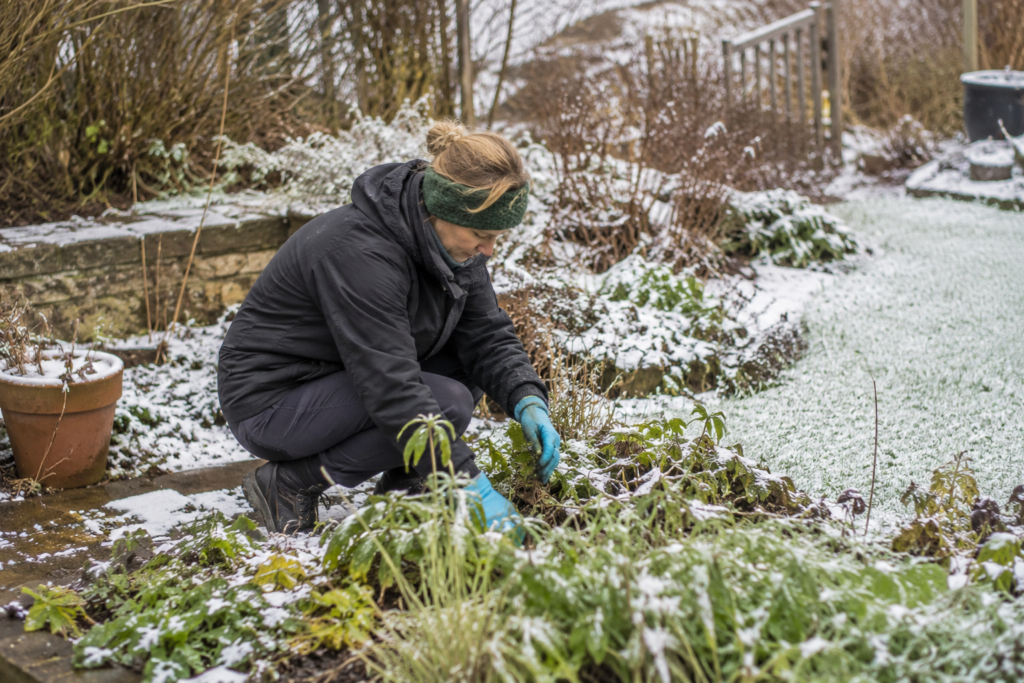
Every spring, my inbox gets flooded with panicked questions about the grayish-pink patches that appear in lawns after snowmelt. Snow mold — caused by Microdochium nivale (pink snow mold) or Typhula species (gray snow mold) — looks alarming but is almost never lawn-threatening on its own.
The fungi that cause snow mold grow under snow cover on matted, long grass. They stop growing once temperatures rise and the lawn dries out. In my experience, the vast majority of affected lawns recover fully with nothing more than a light raking to break up the matted debris and improve air circulation. New growth fills in within a few weeks.
I’ve seen landscapers charge hundreds of dollars to spray fungicides for this. I think it’s a total waste of money for a typical home lawn. The only scenario where I’d consider a fungicide is on a high-traffic, high-visibility lawn that saw severe, recurring infection for multiple years running — and even then, I’d start with cultural fixes first.
Myth #9: Evergreens Don’t Need Winter Protection
The Fact: Broadleaf evergreens and newly planted conifers are genuinely vulnerable to winter damage, particularly from desiccation (drying out), not just cold.
This myth is the reason so many boxwood and rhododendron plants look shredded every March. Winter desiccation — also called “winterburn” — happens when evergreen leaves continue transpiring (losing water) on sunny, windy winter days, but the frozen ground prevents roots from replacing that moisture. The result is brown, crispy foliage that looks like fire damage.
Anti-desiccant sprays (like Wilt-Pruf) help by coating leaf surfaces with a waxy film that slows water loss. Apply them in late fall, once temperatures are consistently below 40°F but before hard freezing. Reapply after heavy rain or ice events. Burlap windscreens on the south and west sides of vulnerable plants (the sides that get the most winter sun and wind) are highly effective and frankly underused.
Newly planted conifers — anything in the ground less than two years — are especially vulnerable. Their root systems haven’t spread enough to access deep soil moisture. Water them deeply in fall right up until the ground freezes. That stored soil moisture makes a huge difference.
Myth #10: A Hard Freeze After a Warm Spell Destroys Everything That Budded Out Early
The Fact: Most established plants are more resilient to a late freeze than you think. Panic-wrapping everything usually does more damage.
I’ve been through three or four of these “false spring” situations where temperatures hit 60°F in February, bulbs shoot up, fruit trees start blooming, and then a hard freeze slams back in. Every time, my neighbors wrap their trees in old bedsheets and cover their beds with plastic, and every time, several of them accidentally bake or smother their plants under plastic on a sunny day.
The reality: established daffodils, tulips, and other spring bulbs have been doing this for millions of years. A little frost damage on the tips of foliage is cosmetic. The flower buds often survive even when the leaves look terrible.
Fruit tree blossoms are the real concern — frost at bloom time can kill the current year’s crop. But the tree itself almost always survives. Row cover fabric (not plastic) draped lightly over smaller trees and shrubs on the coldest nights provides meaningful protection. Remove it during the day. Plastic traps heat and moisture and does real damage on any day with sun.
Myth #11: Snow Load Never Breaks Healthy Trees
The Fact: Heavy, wet snow absolutely does break branches on healthy trees, especially species with upright, co-dominant stems.
I lost a major limb on a mature ornamental pear tree to snow load. The tree was perfectly healthy. The problem was architectural — ornamental pears and certain cherry varieties have narrow branch angles with bark inclusion (bark trapped between stem and branch), which creates a structurally weak union that heavy snow can exploit.
Proactive pruning to remove co-dominant stems and develop a strong central leader is your best defense. Do this pruning in late winter or early spring while the tree is dormant. If you have a multi-stem ornamental tree that you love, consider installing a cable or brace system — an arborist can do this relatively affordably and it’s much cheaper than the cleanup (and heartache) after a major limb failure.
For smaller ornamental shrubs with upright forms, loosely tying the stems together with soft twine in late fall helps prevent snow from splitting them apart at the base.
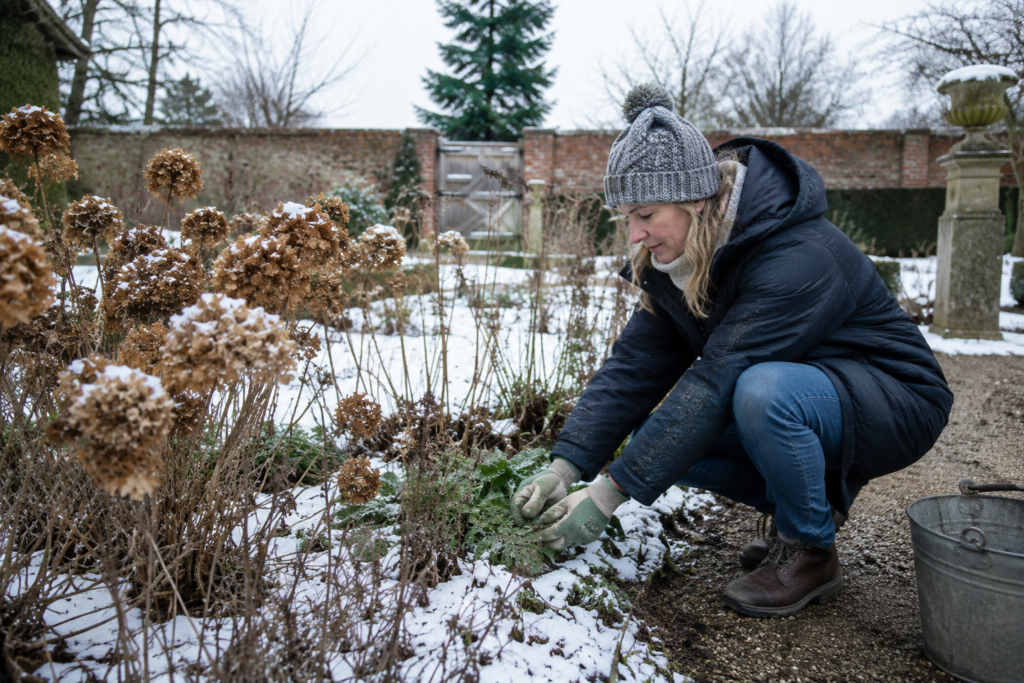
Myth #12: You Should Water Your Garden Right Up Until the First Snowfall
The Fact: Timing your final watering matters. The goal is moist-not-saturated soil going into freeze-up, not soggy waterlogged ground.
The nuance here is lost on most gardeners, including past-me. You absolutely want soil to have good moisture going into winter — this helps moderate soil temperatures and protects roots. But you don’t want waterlogged soil freezing solid, because water expands when it freezes and that expansion damages root cells.
My rule of thumb: water deeply 1–2 weeks before your expected hard freeze date, then stop. This gives the soil time to achieve field capacity — well-drained but moist — before temperatures drop. If you have heavy clay soil, stop even earlier. Clay holds water longer and is at higher risk of becoming a soggy mess that damages roots.
Container plants are the exception. They can dry out in winter even when temps are cold, and dry roots are more susceptible to freeze damage. Move containers to a sheltered location (garage, shed, against the house) and check moisture occasionally through winter.
Myth #13: Deer and Rodent Damage Is a Winter Problem You Can’t Prevent
The Fact: Most winter animal damage is completely preventable with simple physical barriers that cost almost nothing.
Deer cause the most spectacular damage — they’ll eat arborvitae and yew right to stubs when food is scarce in deep winter. But it’s the rodents that kill the most plants: voles and mice tunnel under snow cover and girdle young trees and shrubs by gnawing the bark in a ring around the base. Once a plant is girdled, it’s done. The top dies because nutrients can no longer move from roots to leaves.
Plastic trunk guards are cheap insurance on any tree or shrub planted in the last 5 years. Wrap from the soil line up 18–24 inches. Remove them in late spring — they can trap moisture and promote disease if left on year-round. For deer, a simple cylinder of hardware cloth (metal mesh) staked around vulnerable shrubs is far more effective than any spray repellent I’ve ever tried. I’ve used every spray on the market. The deer learn to ignore them, especially in a hard winter when they’re hungry.
Myth #14: A Heavy Snow Year Means a Better Garden Year
The Fact: Heavy snow years bring specific risks — especially heavy snow followed by a fast melt — that can be just as damaging as drought.
This is the sneaky one. We get so conditioned to thinking snow is good (and it mostly is) that a big snow year feels like a garden blessing. But rapid snowmelt on frozen ground causes something called soil heaving on a massive scale, and if it happens fast enough with a sudden warm-up, you can lose entire plantings of shallow-rooted perennials in a week.
A rapid snowmelt also means all that water runs off instead of soaking in, which defeats the moisture benefit entirely. In low areas, it causes flooding that drowns roots. I had a raised bed in a slight depression one year — a fast April melt put it underwater for four days. Lost everything in it.
The lesson: drainage is always important, but in a heavy snow year, it’s critical. Keep your beds slightly raised, your pathways clear, and make sure there’s somewhere for snowmelt to go that isn’t directly into your planting areas.
Real Talk: What’s Not Worth the Effort
A few things I’ve tried over the years that I’ve concluded are mostly a waste of time and money for home gardeners:
Commercial “frost blankets” from box stores — The ones sold in garden centers are often so thin they’re nearly useless below 28°F. Buy actual floating row cover fabric (Reemay or similar) rated for the temperatures you actually get. It costs less and works better.
Heated garden cables — Unless you have a very specific use case (like a small cold frame or a prized containerized plant you’re overwintering in an unheated garage), these are more trouble and expense than they’re worth. Better insulation almost always outperforms artificial heat for garden applications.
Elaborate DIY cold frames built in fall — Every few years I see someone spend a weekend building an elaborate cold frame out of scrap lumber and old windows, use it twice, then abandon it because the temperature management is too fiddly. A simple hoop tunnel with row cover is more flexible, cheaper, and takes fifteen minutes to set up.
Parting Wisdom
Snow gardening is mostly about getting out of winter’s way and letting your plants do what they’ve been doing for thousands of years. The interventions that actually work are simple: mulch reliably, protect from salt and deer, water thoughtfully going into freeze-up, and winter-sow your cold-hardy plants.
The biggest gardening mistake I see people make in winter isn’t neglect — it’s over-management. Relax a little. Trust your established plants. Save your energy for spring.
Now I want to hear from you: What’s the biggest snow or winter gardening mistake you’ve made — or avoided because of advice you got somewhere? Drop it in the comments below. The more we share this stuff, the fewer dead lavenders we all have to mourn in April.

About Syprose Kiche
Syprose Kiche is the creator and writer behind My Besuited Home, a practical home and garden website covering DIY projects, gardening, lawn care, landscaping, home improvement, and outdoor living. She focuses on turning everyday homeowner questions into clear, practical guides backed by careful research and useful real-world considerations.