
Your clay soil turns into a brick the second August rolls around, and every “easy perennial” you plant dies by October. Sound familiar? I’ve killed enough plants in heavy clay to write a very depressing memoir, so let me save you the trouble.
Clay soil holds water like a stubborn toddler holds a toy — it won’t let go, even when the roots are begging for air. Then it dries out and cracks like a desert floor. Most fall bloomers just give up. But a handful of tough perennials actually thrive in this mess, and I’m sharing my real favorites below.
These aren’t the polished, Instagram-perfect picks you see on every generic garden list. These are the plants that survived my clay, my neglect, and one particularly brutal drought in year three of my garden.
What Makes a Perennial “Clay Soil Tolerant”?
Before we get into the list, here’s the quick science lesson nobody asked for but everybody needs.
Clay particles are tiny and packed tight. That means water drains slowly, oxygen struggles to reach roots, and compaction is a constant threat. Plants that do well here usually have one of three traits: fibrous root systems that spread instead of dig deep, a natural tolerance for “wet feet,” or a prairie background where clay and drought are just Tuesday.
I look for plants with a history growing in clay-heavy prairie or meadow ecosystems. Nine times out of ten, if it evolved in the American Midwest, it can handle your backyard.
Now let’s get to the good stuff.
1. New England Aster (Symphyotrichum novae-angliae)
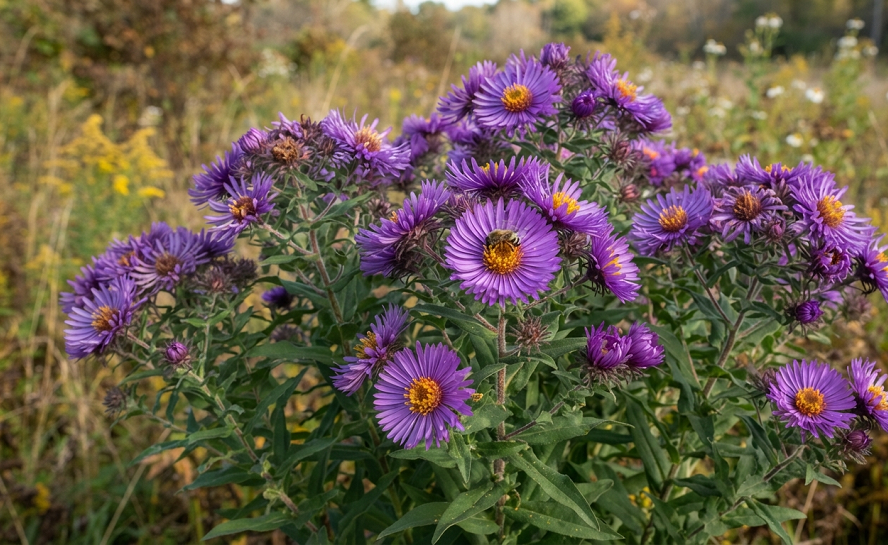
This is the plant that made me fall in love with fall gardening. New England aster explodes into purple, pink, or deep magenta blooms right when everything else is calling it quits for the season.
I planted mine in the worst corner of my yard — heavy clay, partial shade, basically a dumping ground. It didn’t just survive. It thrived and multiplied into a small colony within two years.
The flowers are magnets for late-season monarchs and bees fueling up before winter. If you want pollinator activity in your yard through October, this plant does the heavy lifting.
One quick tip: cut it back by a third in early July. This keeps it from flopping over like a tired teenager on a couch. Skip this step and you’ll be staking stems every single week.
2. Sedum ‘Autumn Joy’ (Hylotelephium ‘Herbstfreude’)
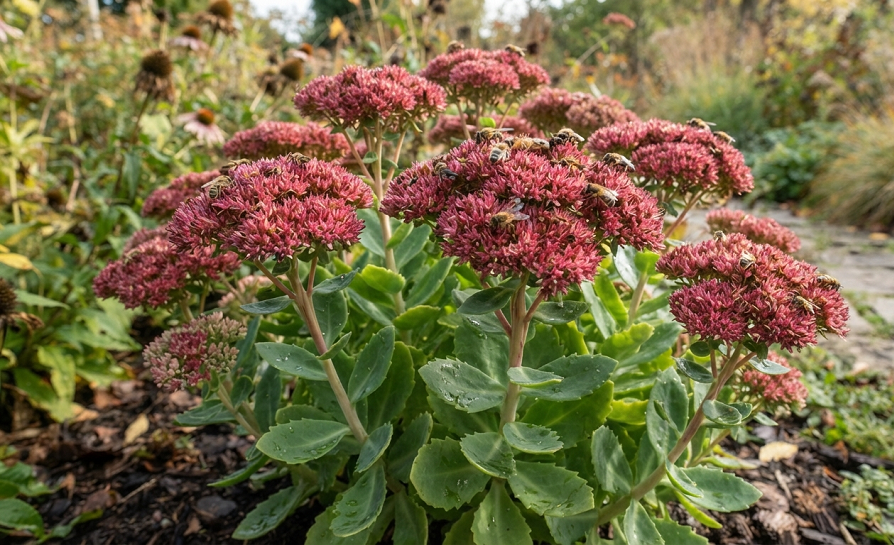
I’ve found that Sedum ‘Autumn Joy’ is basically the golden retriever of the plant world. Friendly, reliable, and nearly impossible to kill.
The fleshy leaves store water, which means clay’s drainage issues barely register. This plant actually prefers soil on the firmer side. Its broccoli-shaped flower clusters start green in summer, shift to soft pink, then deepen into rusty bronze by fall.
Deer mostly leave it alone, which is a huge win if you’re gardening anywhere near a wooded lot. I’ve watched deer nibble everything around my sedum patch and walk right past it.
Leave the dried flower heads standing through winter. They catch frost beautifully and give texture to an otherwise bare garden bed. Birds also pick at the seed heads, so you’re feeding wildlife without lifting a finger.
3. Black-Eyed Susan (Rudbeckia fulgida)
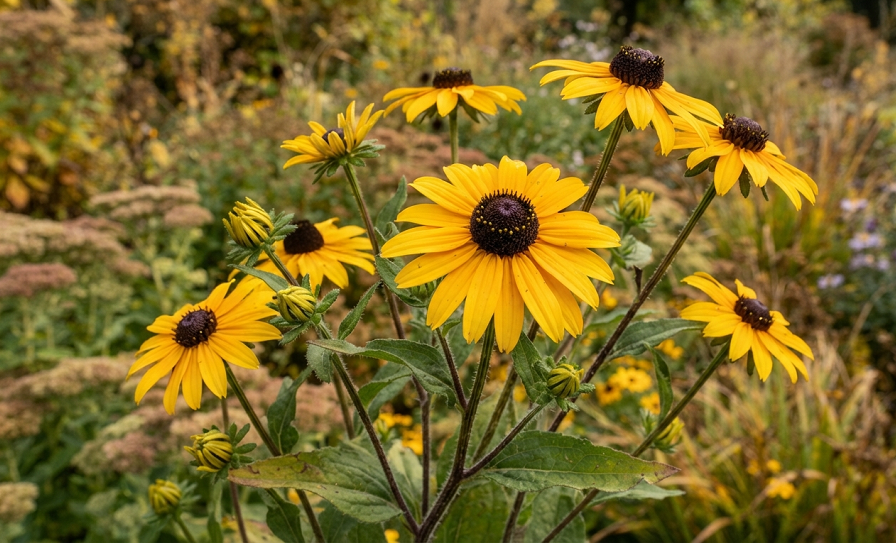
Black-eyed Susan is the plant every beginner gardener needs, whether they know it or not. Cheerful yellow petals with a dark chocolate center, blooming from midsummer straight into October.
This one comes from prairie stock, so clay soil is basically its natural habitat. I’ve grown it in soil so compacted a shovel practically bounced off it, and the Rudbeckia didn’t care one bit.
It spreads through underground rhizomes, so give it room. My patch went from a small clump to a six-foot swath in three seasons. If that sounds like too much commitment, divide it every couple of years to keep it in check.
Powdery mildew can show up late in the season, especially in humid climates. Good airflow between plants keeps this mostly under control, so don’t crowd your beds.
4. Russian Sage (Perovskia atriplicifolia)
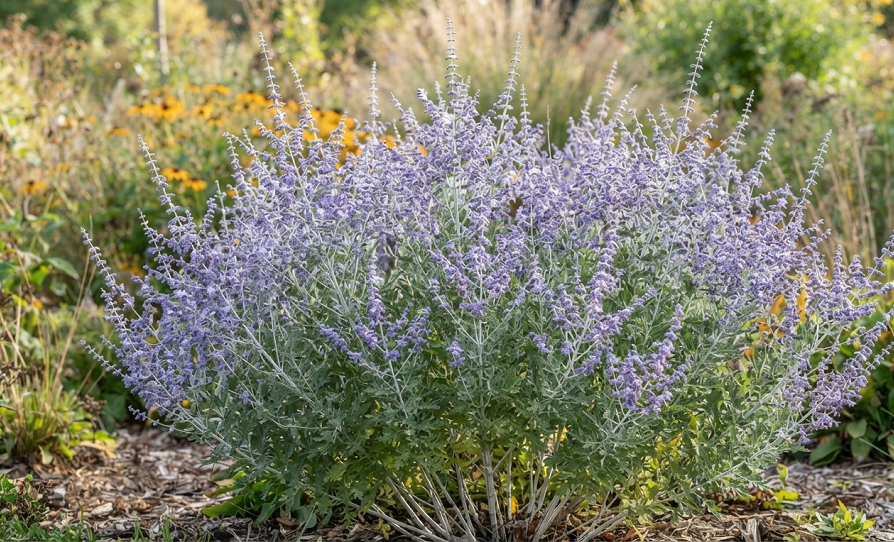
Russian sage brings a silvery, airy texture that most fall gardens desperately need. Without it, everything just looks like a wall of solid color and heavy foliage.
The lavender-blue flower spikes start in midsummer and keep going strong into early fall. Bonus: the silvery foliage smells fantastic when you brush past it, somewhere between sage and mint.
Clay soil that leans slightly alkaline actually helps this plant perform better. I planted mine near a concrete walkway where lime had leached into the soil for years, and it’s been my most drought-proof performer since.
The one mistake I made early on: planting it somewhere it got afternoon shade. Russian sage gets leggy and floppy without full sun. Give it at least six hours of direct light, and it rewards you with sturdy, upright growth.
5. Japanese Anemone (Anemone hupehensis)
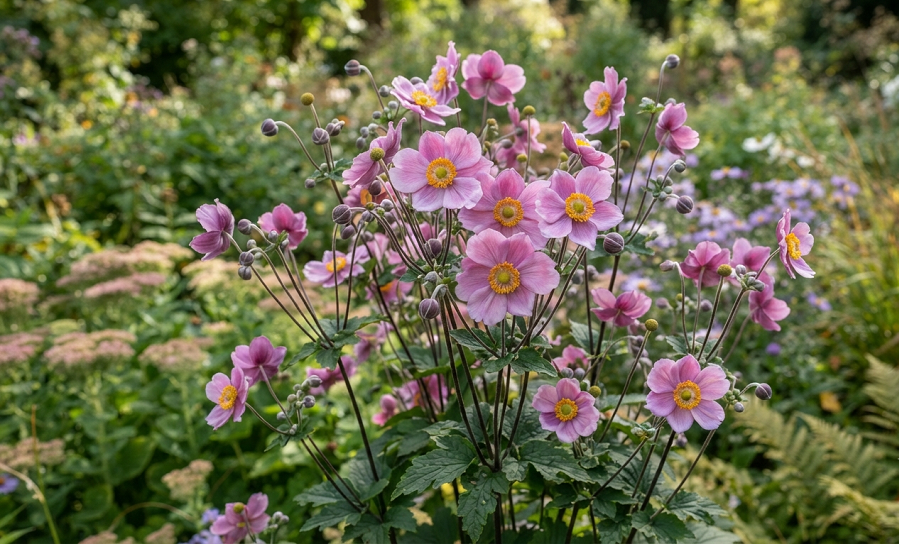
Japanese anemone is the plant that makes people stop and ask what it is. Tall, elegant stems topped with pink or white saucer-shaped flowers that sway in the slightest breeze.
It genuinely prefers moisture-retentive soil, which makes clay one of its better matches, not a limitation. I was shocked the first time I read this, since most plants on this list tolerate clay despite the drainage issues. This one actually benefits from them.
Give it partial shade if your summers run hot. Full sun in a scorching climate can stress the plant and shorten the bloom window.
Patience is required here. Japanese anemone takes a year or two to establish before it really takes off. My first season, I thought I’d wasted my money on a dud. By year three, it had become the star of my entire fall border.
6. Goldenrod (Solidago rugosa)
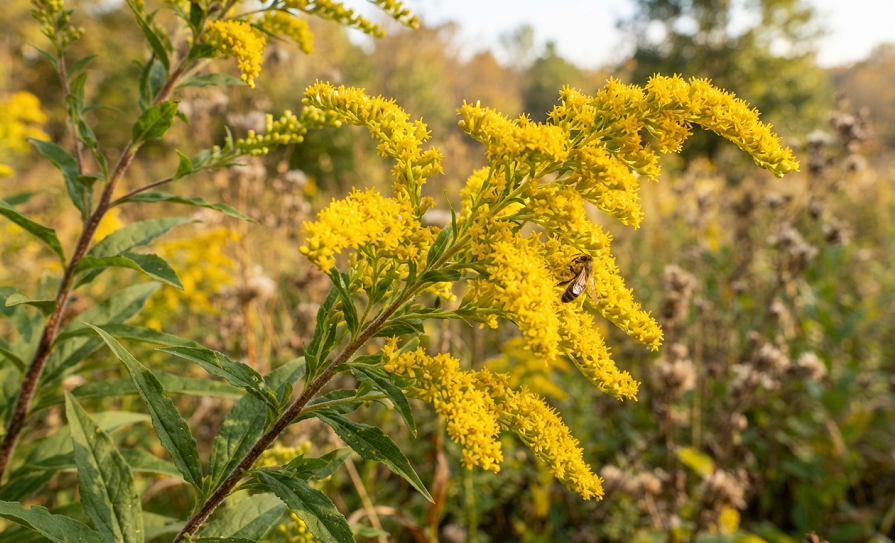
I need to clear something up immediately: goldenrod does not cause your allergies. That’s ragweed, blooming at the same time with wind-borne pollen. Goldenrod’s pollen is heavy and insect-carried, so it stays put.
Once you get past that myth, goldenrod is one of the toughest, most rewarding clay-soil perennials you can grow. Bright yellow plumes light up the garden from September through frost.
Bees absolutely swarm this plant in the fall, which is exactly what late-season pollinators need before winter. I’ve had entire branches humming with activity on a warm October afternoon.
Choose a cultivar like ‘Fireworks’ if you want a tidier, less aggressive spreader. The straight species can take over a bed faster than you’d expect, especially in loose, amended soil.
7. Purple Coneflower (Echinacea purpurea)
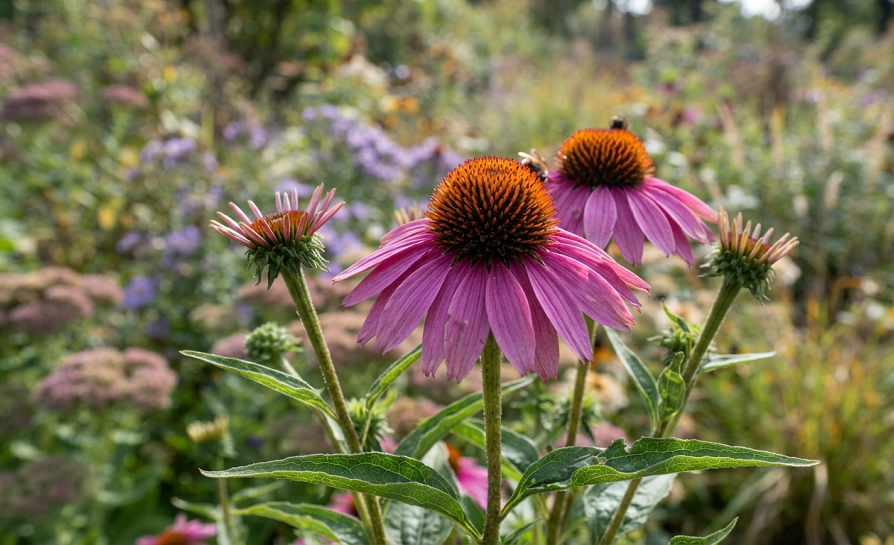
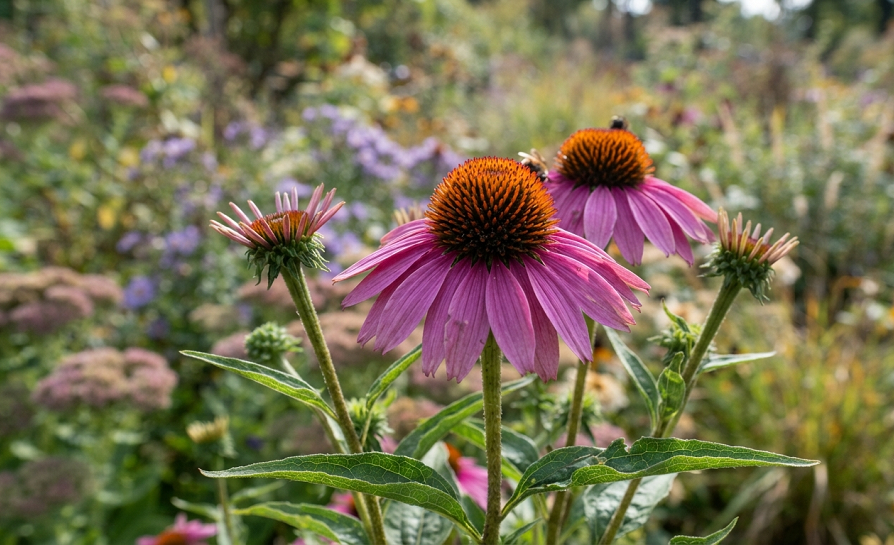
Coneflower blooms earlier than most plants on this list, but many varieties keep going strong right through the first fall frost, especially if you deadhead regularly.
This plant is basically drought-proof once established, and clay’s water retention actually helps it get through dry spells better than sandy soil would. I stopped watering mine entirely after the second year, and it didn’t skip a beat.
The seed heads are a fantastic food source for goldfinches in late fall and winter. I leave mine standing until spring cleanup specifically for this reason. Watching finches balance on the spiky cones is one of my favorite parts of the cold months.
Coneflower does need decent drainage at the crown, so avoid planting it in the lowest, soggiest part of your yard. A slight raise or amended planting hole solves this in even the heaviest clay.
8. Toad Lily (Tricyrtis hirta)
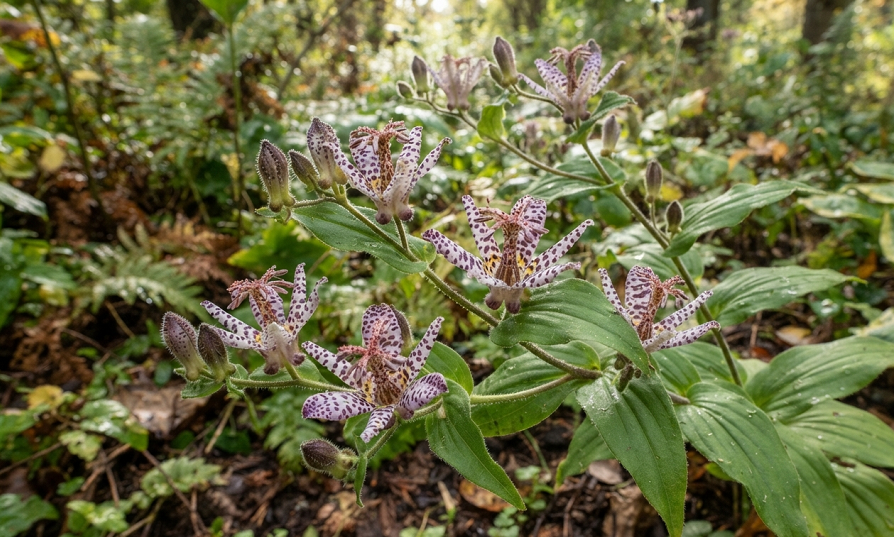
Toad lily is the underdog on this list, and honestly, most people have never heard of it. That’s a shame, because the speckled, orchid-like blooms are genuinely stunning up close.
It thrives in partial to full shade, which makes it perfect for that awkward clay-heavy spot under a tree where nothing else wants to grow. I have a patch under an old maple that gets almost no direct sun, and toad lily is the only flowering perennial that’s ever succeeded there.
Blooms show up in September and October, right as most shade plants are winding down for the year. This gives your shady beds a genuine reason to stay interesting into fall.
Slugs can be an issue in consistently damp clay. A ring of coarse sand or crushed eggshells around the base helps, though I’ll admit it’s not a perfect fix.
9. Turtlehead (Chelone glabra)
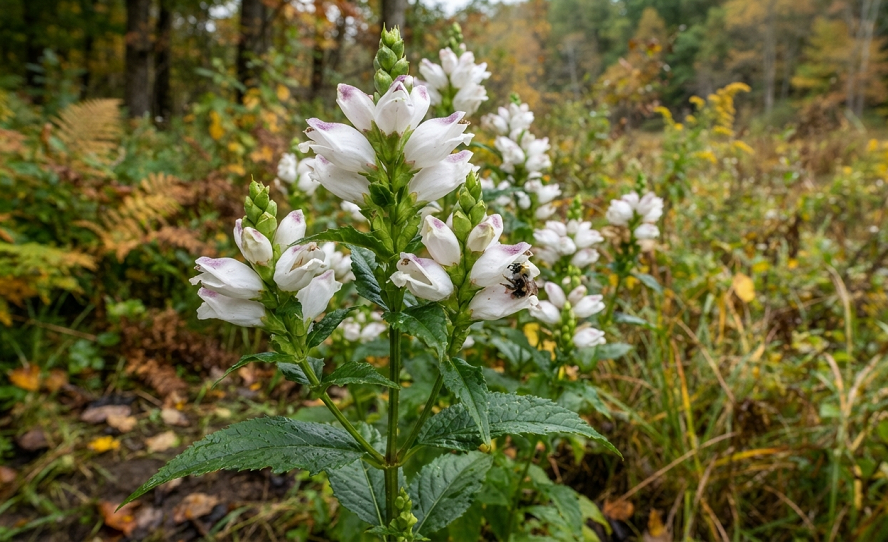
Turtlehead gets its name from flowers that genuinely look like a turtle’s open mouth, and once you see it, you can’t unsee it. Kids especially love this plant, which makes it a fun choice for family gardens.
This is a wetland-adjacent native, so clay’s slow drainage is a feature, not a bug. If you have a low spot in your yard that stays damp after rain, this plant will genuinely thank you for it.
Pink or white blooms appear in late summer through October, right alongside asters and goldenrod for a layered fall display.
I’ll be honest: this plant is a little slow to establish and doesn’t offer much visual excitement its first year. Give it time. By year two or three, you’ll have a dense, attractive clump that earns its spot in the garden.
10. Joe Pye Weed (Eutrochium purpureum)
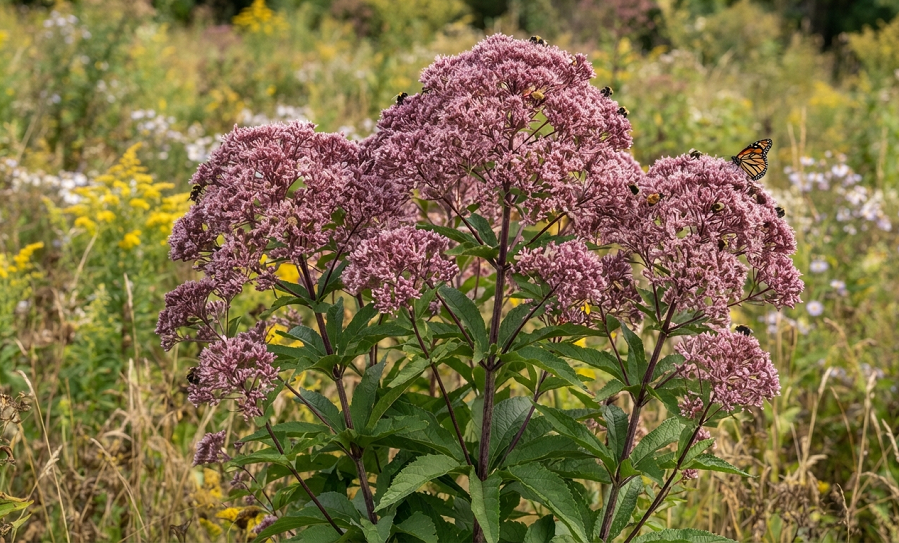
Joe Pye weed is not a subtle plant. It gets tall, sometimes five to seven feet, with huge dusty-pink flower clusters that look like something from a fairy tale.
I put mine at the back of a border because I underestimated the height, and it now blocks the view of my neighbor’s shed, which honestly might be the biggest win in this entire article.
Butterflies, especially swallowtails, treat this plant like an all-you-can-eat buffet. If butterfly watching is a goal, Joe Pye weed should be near the top of your list.
Clay soil with consistent moisture is exactly what it wants. This is not a plant for a dry, sandy slope. Give it a spot that stays damp, and it will reward you with height and drama most perennials can’t match.
11. Helenium (Helenium autumnale), a.k.a. Sneezeweed
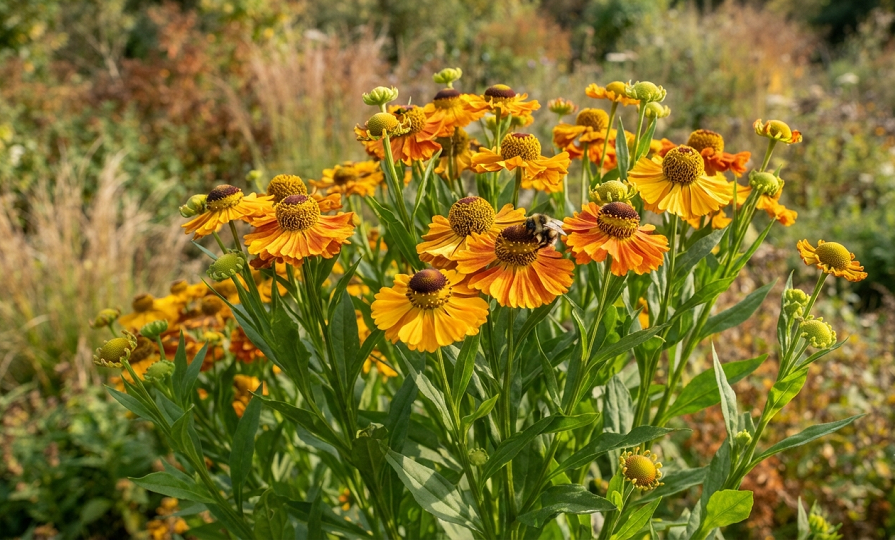
Don’t let the nickname scare you off. Sneezeweed doesn’t actually cause sneezing; the name comes from old herbal uses of the dried leaves, not the pollen.
The daisy-like flowers come in warm shades of red, orange, and gold, giving your garden that classic autumn palette without planting a single mum. I think mums are overrated and overpriced for what you get, honestly, and Helenium gives you the same seasonal color with far more staying power.
It genuinely prefers moist, heavy soil, making it one of the best straight-up matches for clay on this entire list. No amending required.
Pinch back the stems in early summer to encourage bushier growth and prevent flopping later. I skipped this step my first year and ended up with stems sprawled across the entire path.
Quick Side Note: Ornamental Grasses Deserve a Mention
This isn’t a flowering perennial, so it’s not getting its own full spot, but I’d feel wrong leaving it out. Switchgrass (Panicum virgatum) handles clay beautifully and adds movement and texture that pure flower beds often lack. Pair it with your asters and sedum for a fall display that actually looks designed instead of accidental.
Real Talk: What Actually Goes Wrong With Clay Soil Gardens
Here’s the part most garden articles skip completely.
Clay soil compaction is the number one killer of new perennials, and no plant on this list is completely immune. If you’re working with concrete-hard clay, spend a season loosening the top twelve inches with compost before planting anything. Skipping this step is how I lost three asters in a single summer.
Overwatering is shockingly common in clay gardens. People assume clay needs extra water since it looks dry and cracked on top, but the moisture is usually still sitting below the surface. I check soil moisture at four inches deep before watering anything, and it’s saved me from root rot more than once.
Some popular “fall perennial” picks are simply not worth the effort in clay. Chrysanthemums, despite being everywhere in September, struggle badly with clay’s drainage issues and often don’t survive winter as true perennials in heavier soil. I’ve stopped recommending them entirely for this reason, even though garden centers push them hard every fall.
Planting too late in the season is another common mistake. Anything on this list needs at least six weeks before your first hard frost to establish root systems. Planting in late October in a cold climate is basically setting your plant up to fail before winter even starts.
Final Thoughts
Clay soil isn’t the curse people make it out to be. It’s just picky about its friends. Once you find the perennials that actually want to grow in it, your fall garden practically takes care of itself.
Start with two or three plants from this list rather than all eleven at once. Give them a full season to settle in before judging results.
What’s growing in your clay soil right now, and what’s fighting you the hardest? Drop a comment below. I read every one, and I’m always happy to troubleshoot a stubborn garden bed.

About Syprose Kiche
Syprose Kiche is the creator and writer behind My Besuited Home, a practical home and garden website covering DIY projects, gardening, lawn care, landscaping, home improvement, and outdoor living. She focuses on turning everyday homeowner questions into clear, practical guides backed by careful research and useful real-world considerations.