
A freshly turned garden bed looks a lot like a litter box to a cat, and a lot like an all-night buffet to a raccoon. That’s the root of the problem. The soft, loose soil that makes seedlings easy to plant is exactly the texture a cat wants to dig in, and the worms, grubs, and fallen produce hiding underneath it are exactly what a raccoon is out looking for after dark. Neither animal is doing anything unusual. They’re just following instincts that happen to collide with your tomatoes.
Essential oil sprays have become one of the most searched-for solutions to this problem, mostly because they’re cheap, don’t require a fence, and feel less drastic than trapping or calling animal control. They can genuinely help as part of a broader strategy. But there’s an important complication that most articles on this topic skip over entirely: many of the essential oils people use to repel cats are also the ones that can make cats sick. If you have your own cat, or if the neighborhood strays you’re trying to discourage sometimes wander close to your own pet, that detail matters more than the recipe itself.
Why Garden Beds Attract These Animals in the First Place
Before spraying anything, it helps to understand what’s actually drawing the animal in, because that changes which parts of your yard need treatment.
Cats are drawn to loose, dry, well-drained soil because it’s easy to dig a shallow hole, use it, and cover it back up — the same behavior that makes a litter box work. Raised beds, freshly tilled rows, and mulched areas near a fence line are the most common targets. A cat isn’t interested in your plants; it’s interested in the substrate. That’s why cat problems tend to concentrate in bare soil between seedlings rather than in dense, low ground cover where there’s no exposed dirt to dig.
Raccoons are food-driven. They’ll dig up bulbs, root vegetables, and grubs, tip over compost, and raid anything that smells like it might be edible, including pet food left outside and fallen fruit under trees. A raccoon problem is rarely about the soil texture at all — it’s about what’s in or near the bed. This is worth sitting with for a moment, because it means an essential oil spray addressing “the smell of the garden” is treating a symptom. If a raccoon is coming back night after night, there’s usually a specific food source keeping it interested, and no amount of peppermint oil will out-compete a ripe tomato or an unsecured trash can for very long.
Why Scent Deterrents Work — When They Work
Both cats and raccoons rely heavily on smell to decide whether an area feels safe. Strong, unfamiliar scents can make an animal cautious enough to look elsewhere, at least at first. This is the mechanism essential oil sprays are relying on: not poisoning or physically blocking the animal, but making the immediate area smell unpleasant enough that it’s not worth investigating.
The honest limitation is that there’s no strong body of controlled research confirming how well specific essential oils repel cats or raccoons under real garden conditions. Most of what’s out there is anecdotal — gardeners reporting that a spray worked for a few weeks, or didn’t work at all once it rained. Animals also habituate. A raccoon that’s hungry enough, or a cat that has already established the bed as its regular spot, may push through an unpleasant smell if the payoff (food, or a familiar toileting spot) is worth it to them. Scent deterrents tend to work best as a first line of defense against animals that haven’t yet committed to your yard as a reliable resource, not as a fix for an established, repeat visitor.
The Safety Issue Nobody Mentions: Essential Oils and Cats
Here’s the part that gets glossed over in a lot of DIY pest-control advice, and it deserves more attention than a single warning box at the bottom of the page.
Cats process certain compounds in essential oils very differently than humans, dogs, or plants do. Their livers lack some of the enzyme pathways used to break down phenols and certain terpenes efficiently, which means oils that are considered low-risk for humans can build up in a cat’s system and cause real harm. Veterinary toxicology sources and the ASPCA’s poison control guidance consistently list tea tree oil, eucalyptus oil, pine oil, wintergreen, pennyroyal, and citrus oils among the ones that pose the highest risk to cats, with symptoms ranging from drooling and vomiting to tremors, liver stress, and in severe cases, more serious neurological effects. Peppermint and cinnamon oils are also frequently flagged as ones to use cautiously around cats.
This creates an odd irony: several of the oils most commonly recommended for repelling stray cats from a garden bed are the same oils that could make a cat sick if it walks through a freshly sprayed area, grooms oil residue off its paws, or if a spray drifts onto a surface a cat later rubs against. This is a genuine risk if you have your own outdoor cat, if strays or neighborhood cats are still likely to pass through the treated area even after being discouraged from digging there, or if you have young kittens in the vicinity that are more sensitive to toxin exposure than adult cats.
None of this means the sprays can’t be used. It means they need to be used in a way that keeps concentrated oil off the animal itself and off surfaces an animal is likely to lick or rub against, and it means anyone with their own cat should think carefully about whether a scent deterrent is the right tool at all, versus a physical barrier that doesn’t involve putting oil into the environment the cat lives in.
If you notice signs of illness in a cat — drooling, vomiting, wobbliness, tremors, or unusual lethargy — after any essential oil exposure, that’s a reason to contact a veterinarian or an animal poison control line right away rather than waiting to see if it passes.
Oils Commonly Used, and What’s Actually Known About Each
Citrus oils (orange, lemon, lime, grapefruit). These are widely used against both cats and raccoons because the sharp scent is unfamiliar and unpleasant to many mammals. The tradeoff: citrus oils are also among the more commonly flagged oils for feline toxicity, and they can cause phototoxic skin reactions in any mammal — including humans — if oil-contaminated skin is then exposed to direct sun. They can also cause leaf damage on some ornamental plants if sprayed directly and heavily in strong sunlight, so they’re better applied to soil, mulch, and bed borders than directly onto foliage.
Peppermint oil. One of the most frequently recommended raccoon deterrents, and it does have a genuinely strong, cold, sharp scent that many animals avoid on first exposure. It’s also one of the oils repeatedly named as a concern for cats, so it carries the same caution as citrus if there’s any chance a cat will contact treated surfaces directly.
Eucalyptus oil. Strong-smelling and sometimes recommended for raccoons, but it’s one of the more consistently flagged oils for cat toxicity, which makes it a poor choice for any yard where cats — yours or the neighborhood’s — are likely to be present.
Cinnamon oil. Used in some raccoon and squirrel deterrent recipes for its intensity. Like the oils above, caution applies around cats, and it can also irritate skin at high concentrations, including human skin, so gloves are worth using when mixing it.
Lavender oil. Generally considered one of the gentler options and lower-risk for cats compared to the oils above, though “lower-risk” is not the same as “risk-free,” and any oil should still be diluted and kept off an animal’s fur or paws. Lavender’s scent is also milder, which may mean it’s less effective as a raccoon deterrent specifically, since raccoons tend to need a more assertive scent to register as unpleasant.
If you’re specifically trying to discourage a cat and you have concerns about oil safety, it’s worth considering that scent deterrents are not the only option. Textured surface deterrents — like pinecones, chicken wire laid flat under a thin layer of mulch, or garden stakes spaced closely together — physically prevent digging without introducing any chemical exposure at all, and for cats specifically, changing the texture of the soil is often more effective than changing the smell, since digging behavior is driven by paw feel as much as scent.
Building a Basic DIY Spray
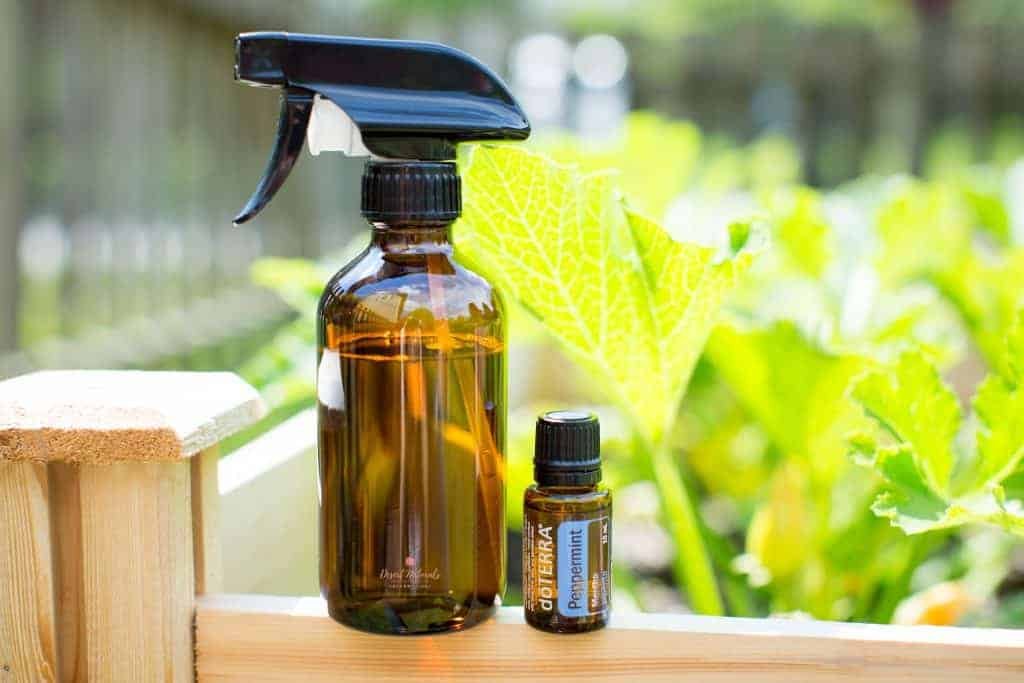
A standard dilution used in most home pest-deterrent recipes is 10 to 15 drops of essential oil per cup of water, with a teaspoon of liquid dish soap or castile soap added as an emulsifier so the oil disperses through the water rather than floating on top. Without the soap, oil-based sprays separate quickly and you end up spraying mostly water after the first few pumps.
Basic recipe:
- 1 cup water
- 10–15 drops essential oil (citrus, peppermint, or a blend, depending on target animal and cat-safety considerations above)
- 1 teaspoon liquid dish soap or castile soap
- Spray bottle
Shake before every use, since the oil and water will separate again within minutes of sitting still. Spray around the perimeter of the bed, on stakes or border materials, and on mulch — not directly onto edible portions of vegetables, and not in heavy concentration directly onto leaves, since some essential oils can cause leaf burn or discoloration when combined with direct sun exposure. A light misting on the outer edge of a bed does more to establish a scent barrier than heavy application on the plants themselves, and it reduces the amount of oil residue an animal, pet, or person might contact directly.
Some gardeners add crushed garlic or a small amount of cayenne pepper to the same spray for raccoons specifically, since capsaicin adds a taste deterrent on top of the scent deterrent, which matters because raccoons that are food-motivated may push through a smell that would stop a less determined animal. If you go this route, wear gloves when handling the mixture and avoid spraying it where pets or children might touch a treated surface and then touch their face.
Where and How Often to Reapply
Spray in the evening, since both cats and raccoons are most active at dusk and overnight, and the scent will be strongest exactly when it’s needed. Reapplication after rain is not optional — it’s the single most common reason DIY sprays “stop working.” Most essential oil scent barriers last a few days at most in dry weather and can be washed out entirely by a single rain event or heavy dew. If you’re relying on this method, plan to reapply every three to five days in dry weather and immediately after any rainfall, rather than waiting for a repeat visit to remind you.
Concentrate application on entry points rather than blanketing the whole bed: the corners where an animal is most likely to step over a border, gaps in fencing, and the specific spots where you’ve already found dug-up soil or paw prints. Treating the entire bed uniformly uses more oil for no real gain, since the animal only needs to smell the deterrent at the point where it would otherwise enter.
Why This Alone Often Isn’t Enough for Raccoons
It’s worth being direct about this: essential oil sprays are a mild deterrent, not a barrier. A cat that hasn’t yet committed to using your bed as a litter area may well be discouraged by an unfamiliar, unpleasant smell before it starts digging. A raccoon that has already found a reliable food source in your yard — ripe fruit, unsecured compost, pet food left outside overnight, or a garden bed it’s raided successfully before — is a much harder animal to turn away with scent alone, because the reward on the other side of that smell is worth the discomfort to it.
If raccoons are a repeat, established problem rather than an occasional visitor, scent sprays work far better paired with:
- Removing the actual attractant. Secure trash cans with locking lids, bring pet food in at night, pick up fallen fruit promptly, and use a well-sealed compost bin rather than an open pile.
- Physical barriers. Low electric fencing, a layer of chicken wire staked flat over the soil surface (raccoons dislike digging through wire mesh, and it doesn’t harm them), or motion-activated sprinklers, which startle animals with a burst of water and noise rather than relying on scent alone.
- Reducing hiding and denning spots. Raccoons that are denning nearby — under a shed, deck, or in an attic space — will keep returning to your yard regardless of what it smells like, because the yard is now next door to home. If you notice consistent activity from the same direction, especially in spring when raccoons commonly have young, that’s a sign the issue may be a den rather than a foraging pattern, and it’s a situation where a wildlife control professional is worth calling rather than continuing to treat the garden bed. Attempting to seal off or disturb a den site yourself, particularly one with young raccoons inside, can escalate the problem and carries its own risks.
Common Mistakes Worth Avoiding
Spraying oil directly onto the animal, or where it will make direct skin contact. The goal is an unpleasant scent in the air and on surfaces the animal approaches, not oil on its fur or paws. Direct contact increases the chance of skin irritation for the animal and, for cats in particular, increases the amount absorbed through skin or picked up during grooming.
Using strong concentrations on delicate foliage in full sun. Citrus and some other oils can cause leaf discoloration or burn spots when applied heavily and then exposed to direct sunlight. Keep application light and focused on soil, mulch, and border materials rather than saturating leaves.
Expecting a single application to solve an established problem. If an animal has already been visiting regularly, one spray session rarely changes the pattern. Reapplication and pairing with attractant removal or physical barriers matter more than the specific oil chosen.
Overlooking the cat-safety issue because “it’s natural.” Natural and safe are not the same thing, and this is the mistake most likely to cause real harm rather than just wasted effort. If there’s any chance a cat — yours, a neighbor’s, or a regular stray — will make direct contact with a treated area, reconsider using oils like tea tree, eucalyptus, pine, or wintergreen, and lean toward physical deterrents instead.
Ignoring what’s attracting raccoons in the first place. A scent barrier around a garden bed does very little if there’s an easier, more reliably scented food source ten feet away in an open trash can.

A Few Real Questions Readers Tend to Have
Will these oils hurt my vegetables or ornamental plants? Light application to soil, mulch, and border stakes is generally low-risk, but concentrated oil sprayed directly and repeatedly onto leaves — especially citrus oils in strong sun — can cause leaf burn or discoloration on some plants. When in doubt, test on a small, less visible section of a plant first and watch for a day or two before treating the whole bed.
Is it safe to use these sprays if I have an outdoor cat of my own? This is worth thinking through carefully rather than assuming “diluted” automatically means “fine.” If your cat has access to the treated area, oils like tea tree, eucalyptus, citrus, pine, wintergreen, and pennyroyal carry documented toxicity concerns for cats even in diluted form, largely because cats groom themselves and can ingest residue from their fur or paws. Lavender is generally considered a gentler option, but even then, keeping application light, away from direct skin contact, and limited to soil and border areas rather than surfaces your own cat regularly walks or lies on is the safer approach. If your cat shows any signs of illness after exposure — vomiting, drooling, tremors, unusual lethargy — contact a veterinarian or a pet poison control line promptly.
Why did the raccoons come back after a few days? Most likely because it rained, the scent faded, or the actual food source that drew them in the first place is still available. Reapplication schedule and removing attractants matter more here than switching to a different oil.
When should I stop trying DIY methods and call someone? If raccoons appear to be denning on or near your property — consistent nighttime activity from one direction, sounds from under a structure, or a sighting during daylight hours, which can (though doesn’t always) indicate a raccoon that’s stressed, sick, or protecting young — a wildlife control professional is a safer and more effective option than continuing to treat the surface symptom in the garden.
Where This Leaves You
Essential oil sprays are a reasonable first step for a garden bed that’s attracting occasional visitors, especially cats that haven’t yet settled into a routine. They’re inexpensive, easy to make, and can buy you time while you address the bigger picture. But they work best as one layer of a strategy rather than the whole plan — reapplied consistently, kept away from surfaces animals will directly contact, and backed up by removing whatever food source or soil texture made your yard appealing in the first place. If you have your own cat, that last point about direct contact isn’t a minor caveat; it’s the detail that determines whether this DIY project stays a garden fix or turns into a vet visit.

About Syprose Kiche
Syprose Kiche is the creator and writer behind My Besuited Home, a practical home and garden website covering DIY projects, gardening, lawn care, landscaping, home improvement, and outdoor living. She focuses on turning everyday homeowner questions into clear, practical guides backed by careful research and useful real-world considerations.