
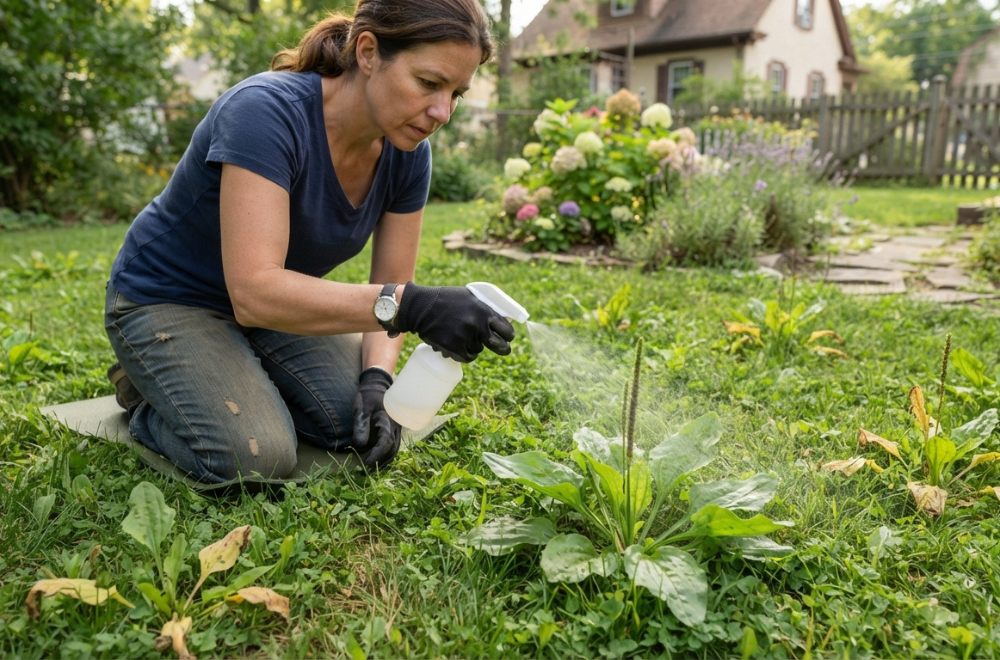
A patch of grass that looks thin and patchy in one spot but keeps producing wide, rubbery leaves no matter how often you mow is usually a sign of plantain, not a mowing problem. It’s one of the most common broadleaf weeds in home lawns, and it’s also one of the most misunderstood — plenty of people assume it’s a type of grass gone wrong, or confuse it with a completely different plant (the banana relative) because of the shared name. It isn’t related. Lawn plantain is a low-growing perennial weed that tolerates foot traffic, compacted soil, and mowing better than turfgrass does, which is exactly why it shows up where grass is struggling.
What Plantain Actually Looks Like
There are two species that show up most often in lawns: broadleaf plantain (Plantago major) and buckhorn plantain, also called narrowleaf plantain (Plantago lanceolata). Both grow as a low rosette, meaning the leaves radiate out from a central point close to the ground rather than growing on an upright stem.
Broadleaf plantain has wide, oval leaves with prominent parallel veins running from base to tip, and the leaves often have a slightly wavy or ribbed texture. The flower stalks are thin, upright spikes that can reach 6 to 10 inches, topped with a narrow cluster of tiny greenish-brown flowers that some people mistake for a seed head of grass.
Buckhorn plantain has narrower, lance-shaped leaves and a similar growth habit, but its flower spike is shorter and denser, almost cone-shaped, sitting atop a longer, wiry stem. Both species produce a fibrous root system anchored by a shallow taproot, and both can regenerate from root fragments left in the soil, which is one reason hand-pulling doesn’t always work as well as people expect.
If you’re trying to confirm what you’re looking at before deciding on a control method, a few details help rule out lookalikes:
- Dandelion has deeply toothed leaves and a single yellow flower on a hollow stem — plantain’s flower stalk is solid and the flowers are small and inconspicuous, not showy.
- Common mallow has rounder, more crinkled leaves and a more upright, branching growth habit.
- Crabgrass, despite sometimes growing in the same bare patches, is a true grass with narrow blades and no rosette structure.
If you’re still unsure, pulling a single plant and looking at the root can help. Plantain’s taproot is usually short and somewhat fibrous rather than long and tapering like a dandelion’s.
Why Plantain Shows Up Where It Does
Plantain doesn’t compete well with dense, healthy turf. It thrives where grass is thin, stressed, or absent — along frequently walked paths, near gates, around mailboxes, in areas with compacted clay soil, or in lawns that are mowed too short. Compacted soil is a particularly strong predictor of plantain, since compaction reduces oxygen and water infiltration in a way that stresses turfgrass roots far more than it stresses plantain, which has a more tolerant root structure suited to disturbed ground.
This matters for control strategy. Removing visible plants without addressing soil compaction or thin turf usually means the weed returns within a season, because the underlying condition that allowed it to establish hasn’t changed.
Confirming You Actually Have a Weed Problem, Not Just a Few Plants
A handful of plantain rosettes scattered through an otherwise healthy lawn is a different situation than a lawn where plantain has spread across large sections. The first is often manageable with spot treatment or hand-pulling. The second usually points to a broader issue with mowing height, soil compaction, or turf density that needs to be addressed alongside weed removal, or the same plants — or their offspring — will be back.
How to Get Rid of Plantain by Hand
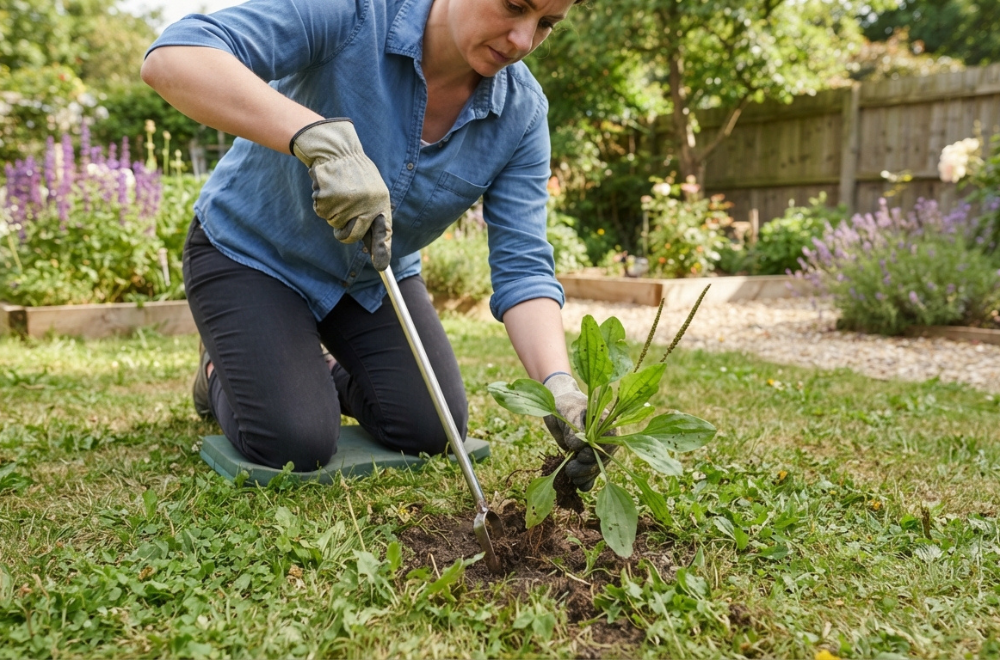
Hand-pulling works best on young plants growing in soil that’s soft, whether from recent rain or irrigation. Pulling plantain from dry, compacted soil almost always breaks the taproot below the crown, and any root left behind can regrow a new rosette within a few weeks.
A few practical notes on timing and technique:
- Water the area the day before, or pull after rain, so the soil releases the root more easily.
- Grip the plant at the base, as close to the soil line as possible, and pull steadily rather than yanking, which tends to snap the root.
- Use a dedicated weeding tool — a forked weeder or a long-handled tool with a narrow blade — for larger or more established plants. These tools let you loosen soil around the taproot before pulling, which reduces breakage considerably compared to pulling by hand alone.
- Check the hole after pulling. If part of the root is visibly left behind, it’s worth digging it out rather than assuming it won’t regrow.
Hand-pulling is realistic for a lawn with a scattered handful of plants. It becomes impractical, and often ineffective long-term, once plantain has spread across a significant portion of the yard, since the labor involved doesn’t scale well and the underlying soil conditions that encouraged the spread are still there.
Herbicide Options for Plantain Control
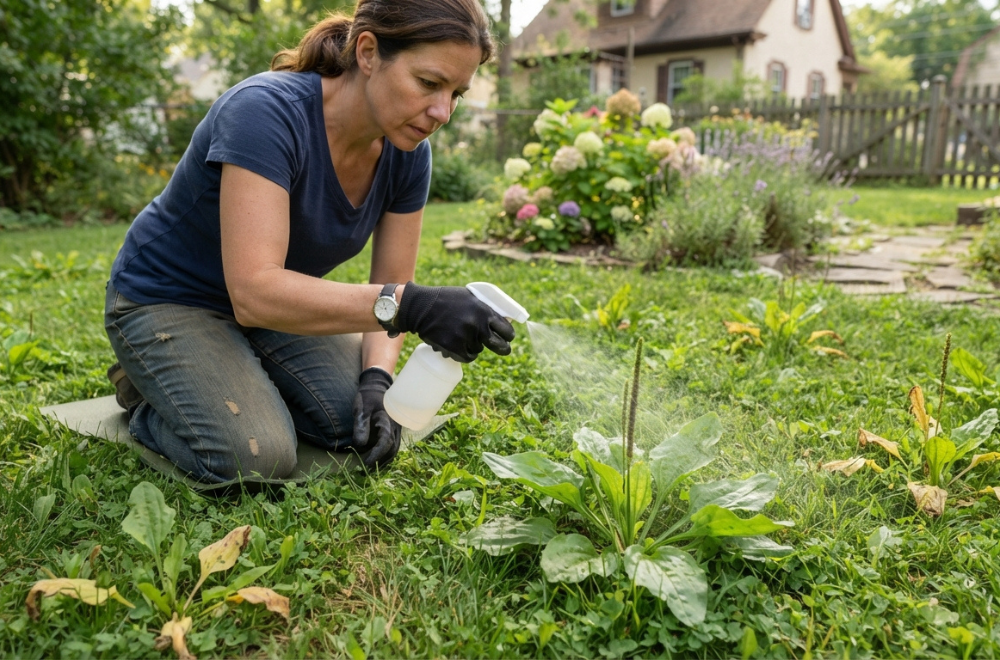
For larger infestations, selective broadleaf herbicides are the more practical option, since they target broadleaf weeds like plantain without harming turfgrass when used correctly.
Selective post-emergent herbicides containing active ingredients such as 2,4-D, dicamba, triclopyr, or combination products (often sold as “weed and feed” or three-way herbicide mixes) are labeled for use on plantain in lawns. These work by disrupting the plant’s growth hormones, and they’re generally more effective on actively growing plants in spring or fall than on plants under summer heat stress, when growth slows and less herbicide is absorbed.
A few practical considerations:
- Always read the product label for the specific turfgrass species in your lawn. Some herbicides can damage certain grass types, particularly newly seeded lawns or grasses like St. Augustine, which is more herbicide-sensitive than species like Kentucky bluegrass or tall fescue.
- Apply when rain isn’t expected for at least 24 hours, since rain can wash the herbicide off leaves before it’s absorbed.
- Avoid mowing for a few days before and after application. Mowing right before removes leaf surface area needed for absorption, and mowing too soon after can remove the herbicide before it’s translocated to the root.
- Spot-treat where possible rather than treating the whole lawn, especially if plantain is limited to a few areas. This reduces herbicide use and cost without sacrificing effectiveness.
- Non-selective herbicides like glyphosate will kill plantain, but they’ll also kill any grass they touch, so they’re only appropriate for spot treatment in bare areas you plan to reseed, not for use across an established lawn.
Broadleaf herbicides are generally considered low-risk for humans and pets once dry, but label instructions should be followed regarding keeping children and pets off treated areas until the recommended re-entry time has passed, and protective equipment such as gloves should be worn during application. If you have a well, garden beds nearby, or live somewhere with strict water runoff regulations, check local guidance before applying, since some products carry restrictions near water sources.
When Herbicides Don’t Work as Expected
A few situations commonly lead to disappointing results with herbicide treatment:
- Applying during summer dormancy or drought stress. Plants that aren’t actively growing absorb and translocate less herbicide, so treatments during hot, dry weather are often less effective even with correct application.
- Applying too soon after a light rain or heavy dew. Diluted herbicide on wet leaves may not be absorbed in an effective concentration.
- Treating mature plants expecting one application to be enough. Larger, more established plantain plants sometimes require a second application two to three weeks later, since the first treatment may not fully translocate to the root system in one pass.
- Ignoring the underlying soil condition. If compaction or thin turf isn’t addressed, new plantain seedlings from the soil seed bank will likely germinate in the same spots the following season, even after existing plants are killed.
Preventing Plantain From Coming Back
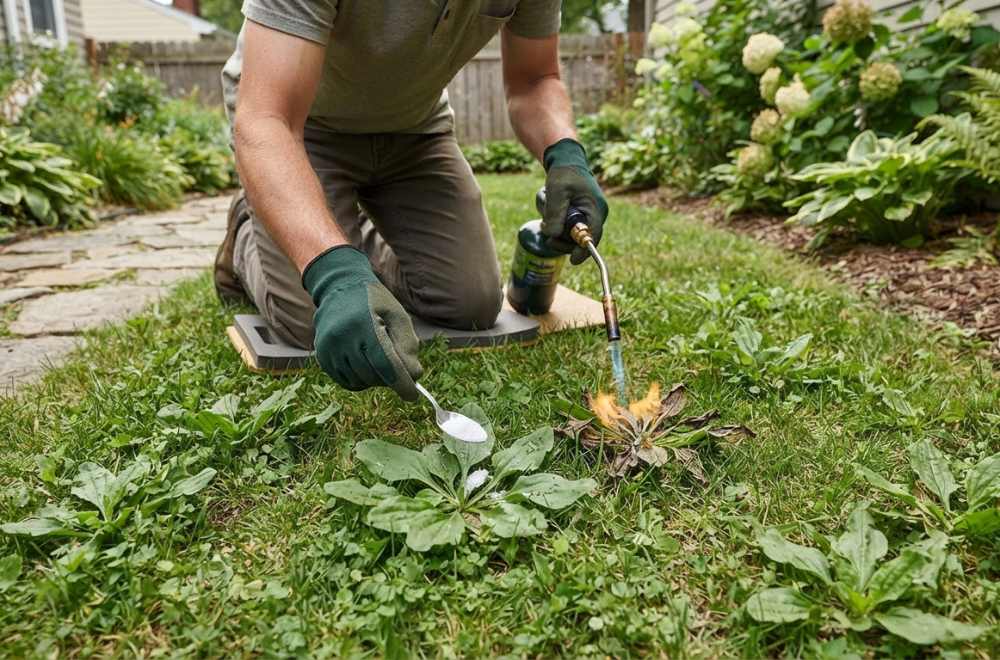
Since plantain establishes where turf is weak, prevention is mostly about making the lawn a harder environment for it to succeed in, rather than repeatedly treating symptoms.
- Address soil compaction. Core aeration, ideally done in fall for cool-season grasses or late spring for warm-season grasses, relieves compaction and improves the lawn’s ability to compete. This is particularly relevant in high-traffic areas like paths between a driveway and a door, where plantain tends to concentrate.
- Mow at the correct height for your grass type, and avoid cutting shorter than recommended. Mowing too low reduces the grass’s ability to shade out weed seedlings and stresses the turf’s root system, both of which favor plantain establishment. Most cool-season lawns do best mowed to around 3 to 3.5 inches; check the recommended range for your specific grass species, since this varies.
- Overseed bare or thin areas, particularly after removing weeds, so grass fills in the space before new weed seeds get the opportunity. Bare soil left exposed after weed removal is essentially an invitation for the next weed to establish, whether that’s plantain again or something else.
- Water deeply and less frequently rather than shallow, frequent watering, which encourages shallow turfgrass roots that compete poorly against more resilient weeds.
A Note on Timing
Plantain is a perennial, meaning established plants can survive winter and regrow the following year, though the visible foliage typically dies back or becomes less noticeable in cold climates during winter dormancy. Spring and early fall, when the plant is actively growing but not yet flowering, are generally the most effective windows for both hand removal and herbicide treatment. Once plantain has flowered and set seed, later in summer, controlling the existing plants still matters, but expect some seedling emergence the following season regardless, since seed can persist in soil for a period of time.
When to Consider Professional Lawn Care Help
A widespread plantain problem across a large lawn, especially one that’s part of a broader pattern of thin turf, compacted soil, and multiple weed species, is often more efficiently handled by a professional lawn care service with access to commercial-grade equipment for aeration and consistent, properly timed herbicide application. This is particularly worth considering if previous DIY attempts haven’t produced lasting results, or if the lawn covers a large enough area that spot-treating by hand isn’t practical.
Frequently Asked Questions
Is plantain weed harmful to pets or children? Plantain itself isn’t considered toxic, and in fact the leaves have a history of use in traditional herbal remedies. The main safety consideration isn’t the plant but the herbicides sometimes used to control it — always follow label instructions regarding re-entry time for children and pets after treatment.
Will plantain go away on its own if I just improve my lawn? Improving mowing height, soil compaction, and watering practices will make it harder for plantain to spread and can reduce new establishment significantly, but existing plants typically won’t disappear without being physically removed or treated with herbicide, since the plant is a hardy perennial once established.
Can I compost pulled plantain plants? Yes, as long as the plants haven’t gone to seed. If flower spikes are present with mature seed, it’s safer to dispose of them separately rather than composting, since home compost piles don’t always reach temperatures high enough to destroy weed seeds reliably.
Does vinegar kill plantain? Household vinegar (5% acetic acid) can damage the leaf surface of young plantain plants but rarely kills the root system, so regrowth is common. Horticultural vinegar (20% acetic acid or higher) is more effective but is a hazardous material that requires protective equipment and careful handling, and it will also damage any grass it contacts, so it’s not a practical option for use within a lawn.
The Practical Takeaway
A few scattered plantain plants in an otherwise healthy lawn are a hand-pulling job, best done after rain or watering. A lawn with plantain spread across large sections points to a soil and turf density issue that herbicide alone won’t permanently fix — pairing a selective broadleaf herbicide application with aeration, correct mowing height, and overseeding gives the grass a real chance to outcompete the weed once it’s gone, rather than leaving the same conditions in place for the next patch to take hold.

About Syprose Kiche
Syprose Kiche is the creator and writer behind My Besuited Home, a practical home and garden website covering DIY projects, gardening, lawn care, landscaping, home improvement, and outdoor living. She focuses on turning everyday homeowner questions into clear, practical guides backed by careful research and useful real-world considerations.