
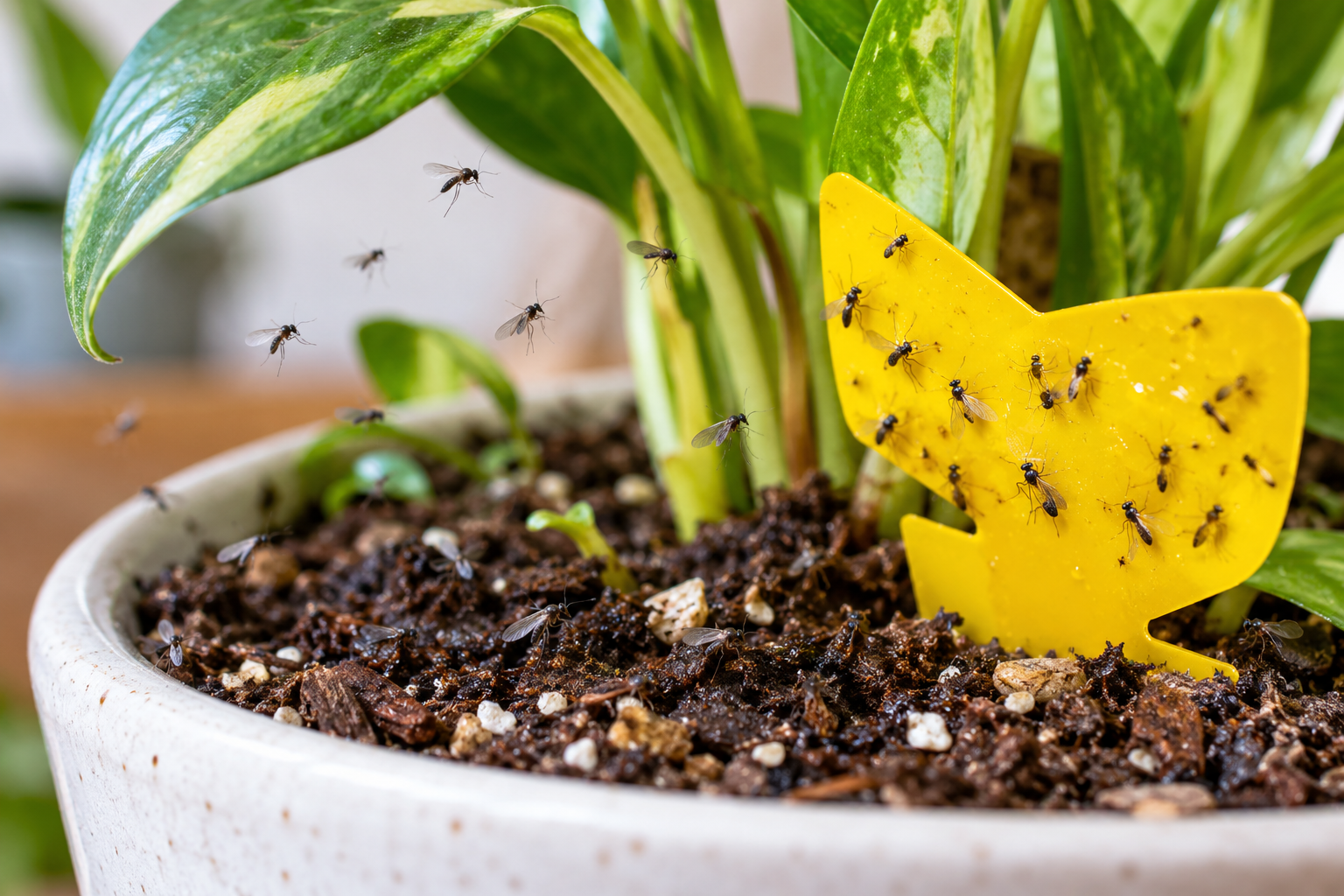
Small black flies drift up from a pot when you water it. They land on the window, crawl across the saucer, and end up in your coffee. Most people respond by swatting the adults, and a week later there are just as many. The flies you can see are the smallest part of the problem. The larvae feeding in the top layer of soil are where the population comes from, and any fix that ignores them will fail.
Fungus gnats are not hard to beat, but they are persistent. The soil conditions that let them thrive are usually created by the way a plant is watered, so the pest and the habit tend to appear together. This guide covers how to confirm that gnats are the problem, why they show up, and eleven natural methods ranked by what they actually do to the life cycle. It also covers the cases where popular advice falls short.
Confirm You’re Dealing With Fungus Gnats
Fungus gnats are slender, dark flies, usually about 1/8 inch long or smaller, with long legs and antennae. They fly weakly and erratically, and they tend to stay close to the plant or the window nearest it. They are often confused with fruit flies, which are rounder, tan or brownish, and gather around ripe fruit and drains rather than potting soil.
A quick test: press a slice of raw potato or a small piece of apple onto the soil surface and check it after a day. Gnat larvae will gather on the underside. You can also lay a yellow sticky card flat on the soil. Gnats rest and walk on the surface, so a card there will tell you quickly whether they are present.
The larvae are the stage that matters. They are translucent or whitish, with a shiny black head, and about a quarter inch long when mature. You will rarely see them without digging, but they live in the top couple of inches of damp potting mix.
Why Fungus Gnats Move In
Adults lay eggs in moist organic material. The larvae hatch and feed on fungi and decaying organic matter in the soil. They will also feed on fine roots, which is where plant damage comes from. The whole cycle from egg to adult takes roughly three to four weeks at normal indoor temperatures, so a small infestation can multiply into a large one within a month or so. Adults live only about a week, but they lay eggs during that time.
Three conditions favor them:
- Constantly wet soil. Soil that never dries out is the single biggest factor.
- Organic-rich potting mix. Mixes heavy in peat, bark, or compost hold moisture and supply food.
- A way in. Gnats often arrive in newly bought plants or bags of potting soil, and they can also enter on their own through windows and doors, especially in the cooler months when more people bring plants indoors.
That last point is why fall is such a common time for outbreaks. Plants that spent summer on a porch or patio come back inside, sometimes with gnats already established in the soil.
How Much Damage Do They Actually Do?
For a healthy, established houseplant, fungus gnats are mostly a nuisance. The larvae feeding on decaying matter does little harm. The risk rises with seedlings, cuttings, and young plants with small root systems, where larvae feeding on tender roots can slow growth or cause wilting and yellowing. Heavy infestations can also stress established plants, especially ones already struggling with overwatering.
This helps you decide how aggressive to be. A single mature pothos with a handful of gnats needs a change in watering. A tray of seedlings with larvae in the soil needs prompt, thorough treatment.
1. Let the Soil Dry Out Between Waterings
This is the foundation, and nothing else works well without it. Larvae need moist soil, and eggs laid in dry soil are far less likely to survive. Letting the top inch or two dry out between waterings interrupts the cycle.
How long to wait depends on the plant. Succulents, snake plants, and ZZ plants can tolerate the top half of the pot or more drying out. Ferns, calatheas, and other moisture-loving plants will not tolerate that, and for those you need to combine drying with other methods below instead of simply withholding water.
To check, push a finger into the soil to the second knuckle or use a wooden skewer. If the skewer comes out clean and dry, it is time to water. If it comes out dark and damp, wait.
One limitation: drying the soil will not kill larvae that are already deep in the pot where moisture lingers. It stops new generations but may take a few weeks to clear an existing population, so pair it with a larval treatment if the infestation is heavy.
2. Water From the Bottom
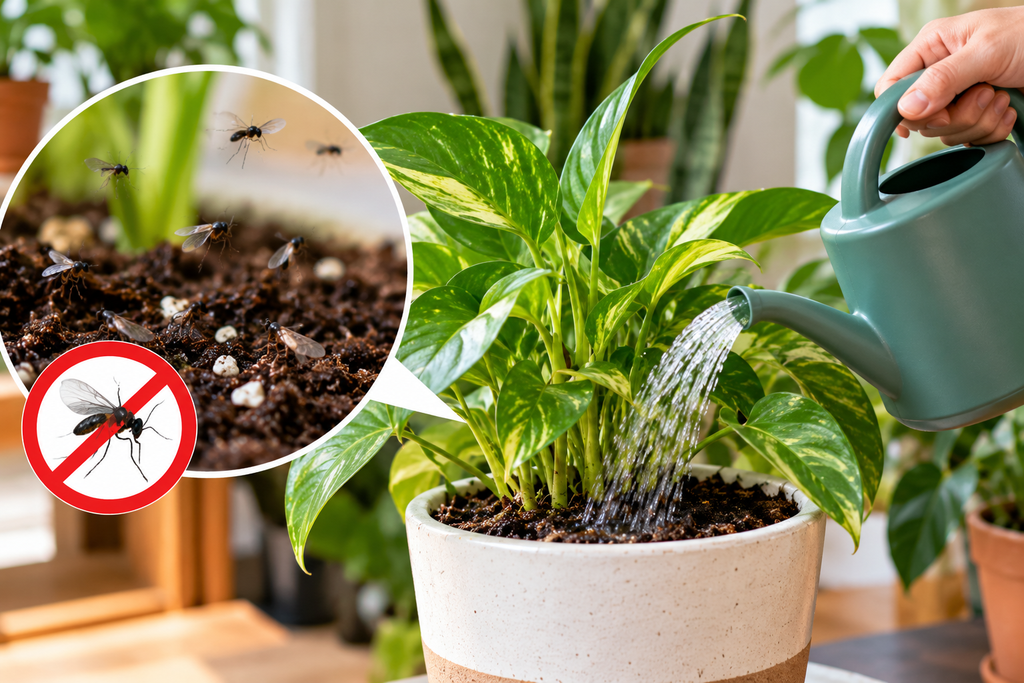
Bottom watering keeps the soil surface dry, which is exactly where females prefer to lay eggs. Set the pot in a tray or basin with an inch or two of water and let it soak for 15 to 30 minutes, until the top of the soil feels slightly damp. Then remove the pot and let it drain fully.
Do not leave the pot standing in water. That defeats the purpose and invites root rot. Also make sure the pot has drainage holes, because bottom watering depends on water being drawn up through them.
Bottom watering works best for plants with fairly small pots. For large, heavy containers it is impractical, and you may be better off relying on drying out and a top layer barrier.
3. Use Yellow Sticky Traps
Adult fungus gnats are attracted to yellow, and sticky cards catch them in large numbers. Place cards flat on the soil surface or stick them upright in the pot, close to where the flies gather.
What traps do well is monitor the population and remove egg-laying females. What they do not do is kill the larvae. If you rely on traps alone you will keep catching adults as new ones emerge from the soil. Use them as a gauge: if the number of gnats caught per card falls over a few weeks, your other methods are working.
Replace cards when they are covered, and keep them out of reach of pets and children. Sticky cards can also catch beneficial insects outdoors, so use them indoors only.
4. Add a Dry Barrier on the Soil Surface
A layer of coarse, dry material on top of the soil discourages females from laying eggs and makes it harder for emerging adults to get out. Options include:
- Coarse sand. About half an inch deep.
- Fine gravel or aquarium gravel. Works similarly and looks tidy in decorative pots.
- Horticultural grit or perlite. Light and easy to apply, although perlite can blow around when watering.
The barrier only works if it stays dry on top. If you water from above and the sand stays soggy, it will not help much. This is another reason it pairs well with bottom watering.
It is also not a cure on its own. Larvae already in the soil can still complete their development. Think of it as a way to keep a recovering pot from being reinfested.
5. Apply Mosquito Bits or BTI
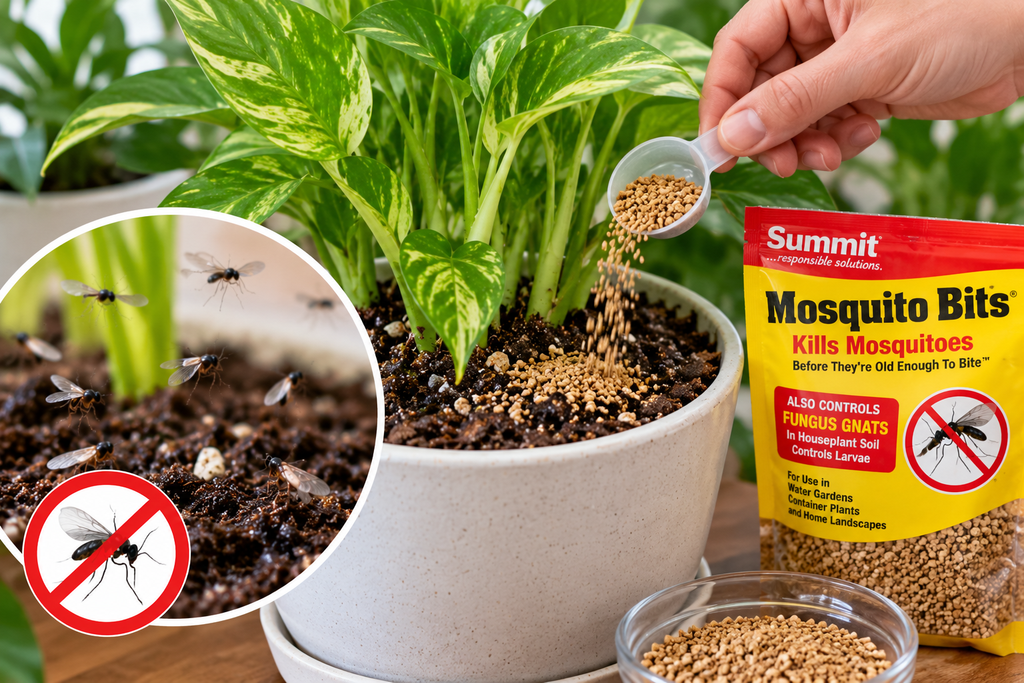
Bacillus thuringiensis subspecies israelensis, usually called BTI, is a naturally occurring soil bacterium that is toxic to the larvae of fungus gnats, mosquitoes, and black flies. It is sold as “mosquito bits” or “mosquito dunks” and as products labeled for fungus gnats.
For houseplants, the usual method is to soak mosquito bits in water, then use that water to irrigate the plant so the larvae ingest it. Follow the directions on the product label for the amount, because strengths vary between brands. Many gardeners use a small amount of bits soaked for a period of time, but do not rely on a generic figure from an article. Check your product.
BTI is considered low in toxicity to people, pets, and most non-target insects, but it is still a pest-control product. Read the label, avoid ingesting it, and keep it away from food preparation surfaces. It works only on larvae, so expect adult numbers to decline a week or two after treatment rather than overnight. Repeating treatments over a few weeks is typical because eggs continue to hatch.
6. Try Beneficial Nematodes
Steinernema feltiae is a species of beneficial nematode, a microscopic roundworm that parasitizes fungus gnat larvae in the soil. It is sold by mail-order suppliers as a live product, usually mixed with water and poured onto the soil.
This is a good option for heavy infestations or for people with many plants, since one package can treat a lot of pots. It comes with practical constraints:
- Nematodes are living organisms, so they need to be applied soon after arrival and stored as directed.
- They need moist soil to move, which can conflict with letting soil dry out. Treat first, then resume drying out gradually.
- They are sensitive to heat and sunlight, so apply according to the supplier’s instructions.
They are not harmful to people, pets, or plants, but they cost more than BTI and require ordering ahead. For a small collection, BTI is usually simpler.
7. Use a Hydrogen Peroxide Soil Drench With Care
A diluted hydrogen peroxide solution is a common home remedy. The idea is that it kills larvae on contact and adds a little oxygen to the soil as it breaks down into water and oxygen.
The commonly cited mix is one part 3% hydrogen peroxide to four parts water, poured onto the soil in place of a normal watering. University extension sources vary in how strongly they endorse this, and the evidence is less robust than for BTI or nematodes, so treat it as a supplementary option rather than a main treatment.
Cautions worth knowing:
- Use standard 3% drugstore peroxide only. Stronger solutions can damage roots and are a skin and eye hazard.
- Do not mix peroxide with vinegar or other household chemicals.
- Use it on established plants. Seedlings and sensitive roots can be damaged.
- Test on one plant first and watch for stress.
- Peroxide fizzes when it hits organic matter. That is normal.
If the plant is already struggling from overwatering, a peroxide drench adds moisture to a pot that probably needs to dry out, so consider a different approach.
8. Repot When the Infestation Is Severe
Sometimes the soil itself is the problem. If a pot has stayed wet for months, smells sour, and is full of larvae, replacing the mix can be quicker than trying to treat it.
To repot:
- Take the plant out and shake off as much old soil as you can.
- Inspect the roots. Trim any that are black, mushy, or smell rotten.
- Rinse the pot with hot water and a little soap, or use a fresh one.
- Use new, fresh potting mix. Avoid bags that have been open and stored damp.
- Water lightly and resume a drier watering routine.
Discard the old soil outdoors in a sealed bag or far from other plants. Do not add it to a compost bin where gnats can breed.
Repotting disturbs the plant, so do it when the plant can handle it, ideally in the growing season. For plants that dislike root disturbance, treat with BTI or nematodes instead.
9. Choose a Faster-Draining Mix
If gnats keep coming back to the same plant, the mix may be the underlying issue. Peat-heavy mixes hold moisture and stay damp near the surface. Adding perlite, coarse sand, or orchid bark improves drainage so the top layer dries faster.
The right blend depends on the plant. Cacti and succulents do best in a gritty mix, while tropical foliage plants prefer something that retains some moisture but drains well. A good rule is to match the mix to the plant’s natural conditions, and then water according to the pot’s actual dryness rather than a calendar.
Also consider the container. Pots without drainage holes make overwatering much more likely. Terracotta dries faster than glazed ceramic or plastic and can help for plants prone to staying wet.
10. Make a Simple Apple Cider Vinegar or Fruit Trap
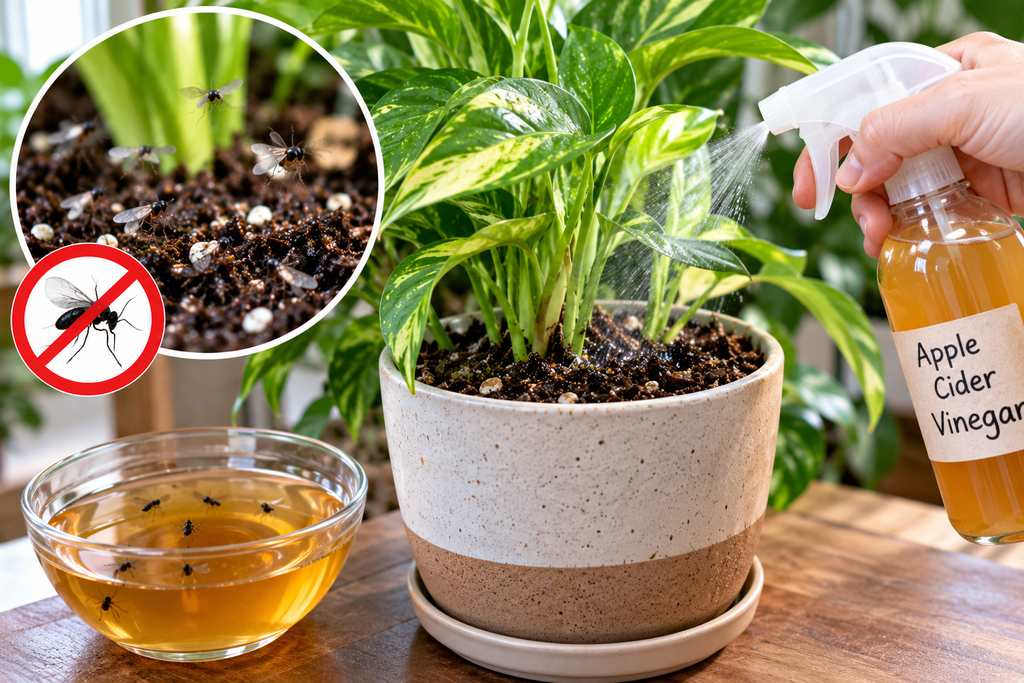
A shallow dish with apple cider vinegar and a drop of dish soap attracts adult gnats, and the soap breaks the surface tension so they sink. Place it near the affected plant.
This catches adults but, like sticky cards, does not touch larvae. It is a useful supplement. Be aware that it mostly attracts fruit flies, so catching a mix of insects does not mean you have misidentified your pest. If you have a fruit fly problem too, this trap will help with both.
Replace the vinegar every few days, and keep it out of reach of pets.
11. Stop Reinfesting: Check New Plants and Soil
Prevention matters because gnats can come back from other sources. Before bringing a plant home or moving one indoors for the winter, check the soil surface, then quarantine it away from other plants for a couple of weeks. A sticky card in the pot will tell you quickly if adults are present.
A few other habits help:
- Store opened bags of potting soil sealed and dry.
- Clean up fallen leaves and dead plant material from the soil surface.
- Avoid letting water collect in saucers.
- Keep compost and kitchen scraps away from houseplants.
If you put plants outdoors for summer, treat them with BTI or check for larvae before they come back inside.
What Doesn’t Work as Well as People Claim
Several popular remedies get repeated more than they deserve:
- Cinnamon. Some people sprinkle it on soil as an antifungal. Cinnamon can reduce surface mold, but there is little reliable evidence that it controls fungus gnat larvae.
- Matchsticks. The idea that sulfur from match heads will kill larvae has no good evidence behind it.
- Soap or dish detergent drenches. These can harm roots and are not reliably effective.
- Neem oil as a drench. Neem is used against some pests, but its effect on fungus gnat larvae is inconsistent, and a heavy application can stress plants.
- Spraying adults with insecticide. Even if it kills the flies in the air, it does nothing to the larvae, so the population rebuilds.
Using fewer methods consistently works better than trying all of them at once.
A Realistic Timeline
Expect a few weeks, not a few days. Because the life cycle runs about three to four weeks, eggs and pupae already in the soil will keep producing adults after you start treating. A reasonable approach:
- Week 1. Let soil dry, set out sticky cards, start BTI or nematodes.
- Weeks 2 to 3. Keep soil drier, repeat BTI as labeled, add a dry barrier if desired.
- Weeks 4 to 5. Adult numbers should be falling clearly. Keep traps up until none are caught for a couple of weeks.
If gnats are still abundant after six weeks of consistent treatment, check for hidden sources: an overwatered plant you forgot, a wet saucer, a bag of damp soil, or decaying material in a drain or planter.
When Gnats Point to a Different Problem
Large numbers of gnats around a plant that is yellowing, wilting, or has soft stems usually signal overwatering and possibly root rot. Treat the watering first. If the plant does not recover after the soil dries, inspect the roots, and consider repotting.
If you have many gnats and cannot find them in houseplants, check other moist spots: drains, potted plants with trays, overwatered planters, or a wet basement. Fungus gnats also breed in damp organic material that has nothing to do with plants.
Frequently Asked Questions
Can fungus gnats bite or harm people?
No. Adults do not bite, and the larvae live in soil. They are an annoyance rather than a health hazard, though large numbers can be irritating.
Will they go away on their own?
Sometimes, if you let the soil dry thoroughly for long enough, but a well-established infestation often continues if the watering habit stays the same.
Do I need to treat every plant or just the one with gnats?
Adults fly between plants, so inspect all of them. Use sticky cards on several pots to see which ones are infested, then treat those and apply drier watering across the collection.
Is BTI safe around pets?
It is generally regarded as low in toxicity to mammals, but follow the label, and keep pets from drinking the treated water or eating the bits.
Can I use the same methods on seedlings?
BTI and a dry soil surface are the safest bets. Avoid peroxide drenches on tender seedlings, and let the surface dry between waterings as much as the seedlings allow.
Key Takeaways
Fungus gnats are a moisture problem first and a pest problem second. Dry the top layer of soil between waterings, switch to bottom watering where practical, and treat the larvae with BTI or nematodes while traps catch the adults. Repot only when the soil is truly spoiled, and quarantine new plants so the problem does not return. Give it a few weeks, because the life cycle is longer than most people expect.

About Syprose Kiche
Syprose Kiche is the creator and writer behind My Besuited Home, a practical home and garden website covering DIY projects, gardening, lawn care, landscaping, home improvement, and outdoor living. She focuses on turning everyday homeowner questions into clear, practical guides backed by careful research and useful real-world considerations.