
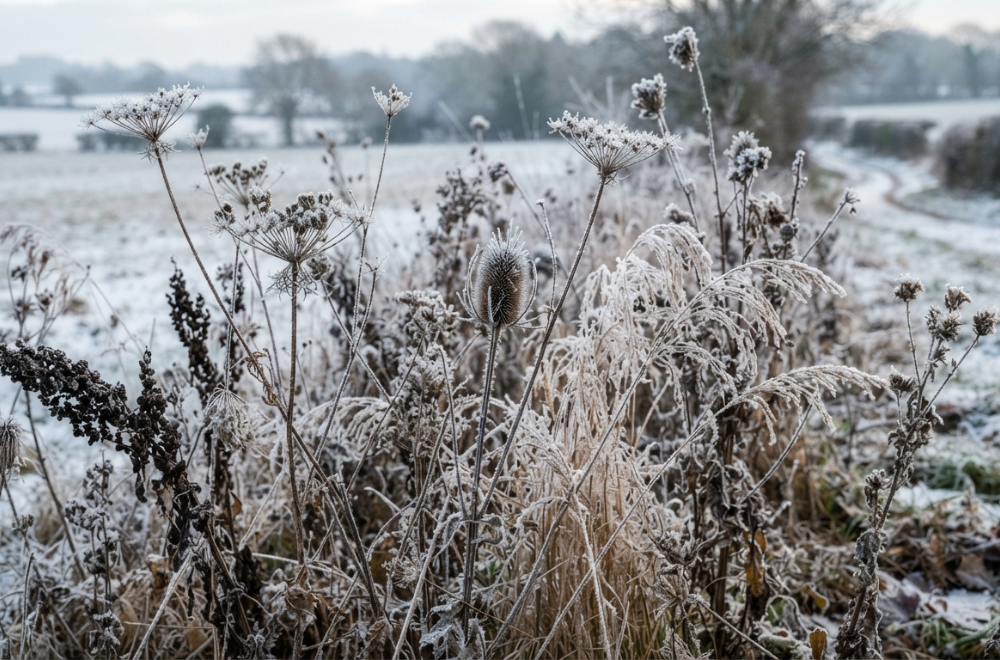
Your lawn looks fine right now. That’s the problem.
Late summer and early fall are when winter weeds are already plotting their takeover, and most homeowners don’t notice a thing until January, when their fescue or bluegrass is suddenly polka-dotted with henbit, chickweed, and poa annua. By then, it’s too late to stop them with anything except a lot of cussing and a bottle of post-emergent herbicide that only half works.
I’ve been doing lawn care long enough to know that winter weed control isn’t a winter job at all. It’s a September job. If you wait until you SEE the weeds, you’ve already lost the timing window that actually matters.
This guide is going to walk you through exactly when to put down pre-emergent, which products actually work for cool-season lawns, and what mistakes will waste your money faster than a “miracle” grass seed infomercial. I’ve made most of these mistakes myself, so consider this the shortcut.
Why Fall Is the Real Battle for Winter Weed Control
Here’s the thing nobody explains clearly enough: pre-emergent herbicide doesn’t kill weeds. It stops seeds from germinating in the first place.
That means timing is everything. Once a weed seed has already sprouted, pre-emergent does basically nothing for it. You’re just pouring granules on a lawn and hoping.
Winter annual weeds like chickweed, henbit, poa annua, and annual bluegrass germinate when soil temperatures drop into the 55-70°F range, usually sometime between early September and mid-October depending on where you live. That soil temperature drop is your signal, not the calendar date.
I used to go strictly by dates. Circle September 15th on the fridge calendar, put down product, call it done. Then one year we had a warm September that stretched into October, and my “on schedule” application went down two weeks after the weeds had already germinated. I got a lawn full of chickweed anyway and couldn’t figure out why until a buddy who does this for a living asked me if I’d actually checked soil temp. I hadn’t. Lesson learned.
Grab a cheap soil thermometer, stick it two inches down in a few spots around your yard, and watch for that consistent drop below 70°F for several days in a row. That’s your green light.
Best Pre-Emergent Herbicides for Cool-Season Lawns
Not all pre-emergents are created equal, and picking the wrong one for your grass type can do more harm than the weeds would have.
Prodiamine is my go-to for most cool-season lawns. It’s got a long residual, meaning one solid application in early fall can carry you through most of the winter germination window without a second round. It’s sold under a bunch of brand names, so check the active ingredient on the bag, not just the product name.
Dithiopyr is a strong second option, especially if you’re a little late to the party. It has some early post-emergent activity, meaning it can catch weed seeds that have JUST cracked open, which prodiamine can’t really do. If you’re applying in early October instead of early September, this is the safer bet.
Here’s my opinionated take: skip the “weed and feed” combo products for fall application. I know they’re convenient and they’re stacked at the front of every garden center in September, but I’ve found that they’re a total waste of money for winter weed prevention. The fertilizer ratios are almost never right for what your lawn actually needs going into dormancy, and you end up compromising both the weed control and the feeding. Buy them separately. It costs a little more effort but it actually works.
If you’ve got a lawn that’s due for overseeding this fall, this is where things get tricky, and I’ll cover that in the next section because it trips up more people than anything else in this whole process.
Pre-Emergent Timing and Overseeding: The Conflict Nobody Warns You About
This is the mistake I see most often, and I made it myself my second year doing this seriously.
Pre-emergent herbicide doesn’t know the difference between a crabgrass seed and the grass seed you just paid good money for. It stops germination across the board. So if you put down pre-emergent and then try to overseed your fescue lawn a few weeks later, you’re going to be disappointed when nothing comes up.
I overseeded a client’s backyard in early October one year, right after I’d put down a standard prodiamine application in September. I genuinely thought the timing gap was enough. It was not. We got maybe 20% germination on that seed, and I ended up eating the cost of a second seeding round because it was my error.
Here’s how to actually sequence it:
- Decide on overseeding first. If your lawn needs it, that decision comes before anything else.
- Overseed in early-to-mid September for most cool-season grasses, giving seed time to germinate and establish before it gets cold.
- Wait at least 6-8 weeks after seeding before applying a standard pre-emergent, ideally letting the new grass go through a couple of mowings first.
- Consider mesotrione-based products if you need weed suppression sooner, since a few pre-emergents on the market are labeled safe for use around new seedlings. Read the label closely because this varies by brand.
- Skip pre-emergent that fall entirely if you’re seeding late, and instead plan to catch weeds with a post-emergent in late winter once you can see what’s actually growing.
That’s the honest tradeoff. You can have a thick, overseeded lawn or an early pre-emergent barrier, but doing both on the same patch of dirt at the same time isn’t realistic.
How to Apply Pre-Emergent the Right Way
Application technique matters almost as much as timing. A perfectly timed application with sloppy coverage still leaves you with weed patches.
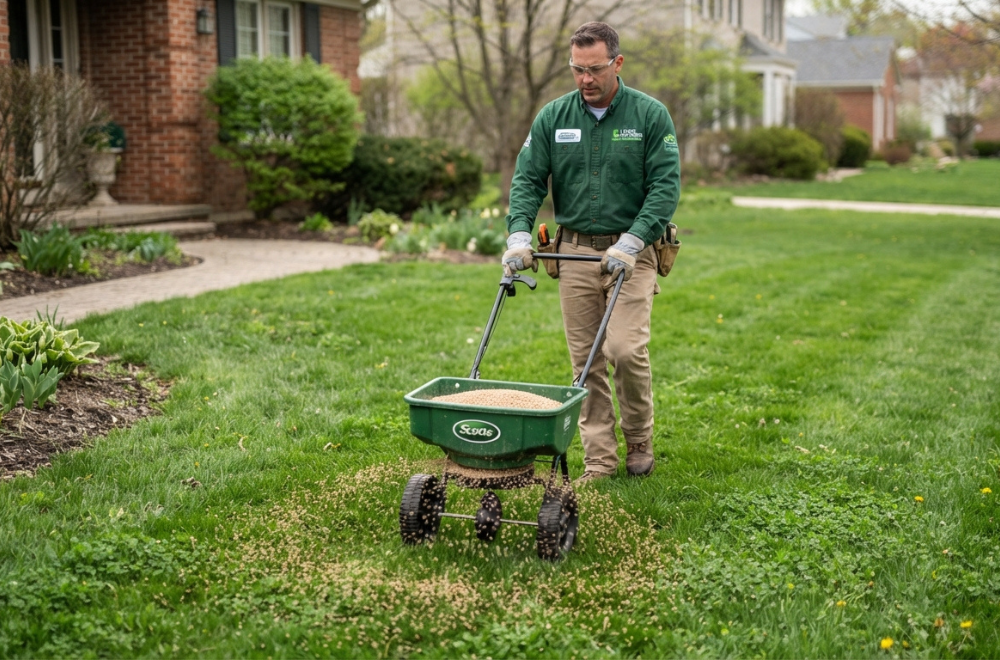
Water it in. This is the step people skip, and it’s the one that matters most. Pre-emergent needs to be watered into the top layer of soil to form that chemical barrier. If it just sits on top of dry grass, a lot of it breaks down in sunlight before it ever does its job. Apply, then water with about a quarter to half inch of irrigation within 24 hours if rain isn’t in the forecast.
Use a calibrated spreader, not guesswork. I know it’s tempting to eyeball it, especially if you’ve done this a dozen times. But under-application leaves gaps in your barrier, and over-application can stress your lawn or waste product you paid for. Check the bag for spreader settings and actually use them.
Don’t skip the edges. Pre-emergent barriers work best when there are no gaps, and edges along driveways, sidewalks, and garden beds are exactly where weeds sneak through. Go slightly heavier along these transition zones, within label limits.
Reapply based on residual, not memory. Prodiamine can last 4-6 months, but weather, heavy rain, and soil type all affect breakdown. Mark your actual application date somewhere you’ll see it, not just in your head, so you know when a second light application makes sense for extended coverage into late winter.
Real Talk: What Goes Wrong and What’s Not Worth It
I want to be straight with you here, because most articles gloss over this part.
Pre-emergent will not fix an already-thin, patchy, stressed-out lawn. It stops NEW weed seeds from germinating, but it does nothing for existing bare spots, and bare spots are where weeds win regardless of what chemical barrier you’ve laid down. If your lawn is thin going into fall, your actual priority is thickening it up through proper mowing height, fall fertilization, and aeration. Weed prevention is secondary to a lawn that can out-compete weeds on its own.
Also, don’t bother applying pre-emergent to areas you’re planning to dig up, regrade, or landscape that winter. I had a homeowner call me confused about why grass wouldn’t grow in a section where they’d put down a full pre-emergent application in September, then decided in November to extend a flower bed into that same spot. The barrier was still active. Nothing was germinating there, flowers included. Pre-emergent doesn’t care what kind of seed it is.
One more honest note: don’t expect pre-emergent alone to handle a serious poa annua problem if you’ve got a bad history with it. Poa annua germinates in flushes, sometimes over an extended window, and a single application timed for early fall can wear off before the last flush of seeds tries to sprout in late winter. This is a case where a split application, one in early fall and a lighter follow-up in late fall, genuinely earns its cost.
Quick side note: I get asked constantly about “natural” pre-emergent options like corn gluten meal. It does have some pre-emergent properties, and I won’t tell you it’s useless. But in my experience it’s inconsistent, weather-dependent, and nowhere near as reliable as prodiamine or dithiopyr for actual winter annual control. If you’re committed to an organic approach for other reasons, fine, use it and adjust expectations. If your main goal is a weed-free lawn, it’s not the tool I’d reach for first.
Final Thoughts on Beating Winter Weeds
The whole game with winter weed prevention comes down to one uncomfortable truth: you have to act before you see the problem. That’s hard for a lot of people, myself included back when I started. It feels like you’re spending money and effort on a lawn that looks perfectly fine.
But that gap between “looks fine” and “full of chickweed” is exactly where pre-emergent does its work, quietly, underground, before you’d ever notice anything wrong.
Get your soil thermometer out, watch for that temperature drop, and get your application down before the seeds start cracking open. Your January self will thank your September self.
What’s your biggest winter weed headache? Drop a comment below and let me know what you’re dealing with, I read every one and I’m happy to help troubleshoot your specific situation.

About Syprose Kiche
Syprose Kiche is the creator and writer behind My Besuited Home, a practical home and garden website covering DIY projects, gardening, lawn care, landscaping, home improvement, and outdoor living. She focuses on turning everyday homeowner questions into clear, practical guides backed by careful research and useful real-world considerations.