
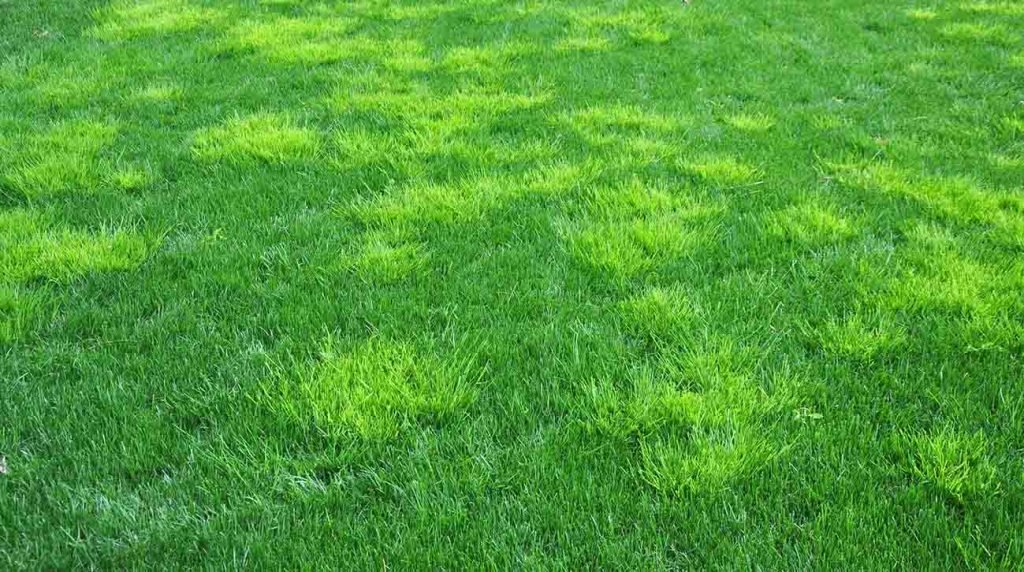
Every spring, a lot of lawns develop patches of grass that look almost too healthy — a brighter, lighter green than the rest of the turf, growing low and dense in clumps. By early summer those same patches turn brown and die out, leaving bare, thinning spots right when the rest of the lawn should be filling in. This pattern, more than anything else, is the signature of annual bluegrass. Homeowners often assume they’re dealing with a fungal disease or a watering problem, when the real issue is a grassy weed that’s been quietly setting seed since the previous fall.
Annual bluegrass (Poa annua) is one of the most common and most misunderstood lawn weeds in the country. It isn’t toxic, it isn’t particularly hard to identify once you know what to look for, and it doesn’t spread through underground runners the way some perennial weeds do. But it is persistent, it produces seed at a scale most weeds can’t match, and the timing of control matters far more than the product you choose.
What Annual Bluegrass Looks Like Up Close
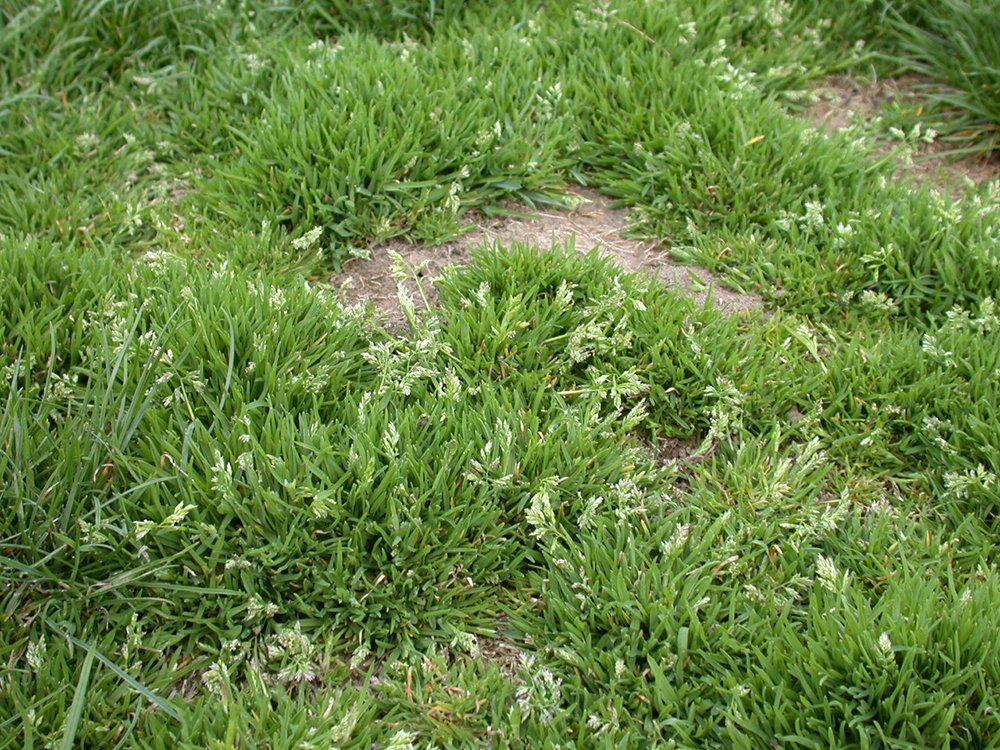
Annual bluegrass is a low-growing, clumping grass with light green to yellow-green foliage — noticeably brighter than most cool-season lawn grasses like tall fescue or Kentucky bluegrass. The leaf blades are soft, fine-textured, and end in a distinctive boat-shaped or canoe-shaped tip, similar to what you’d see on Kentucky bluegrass but paler and floppier.
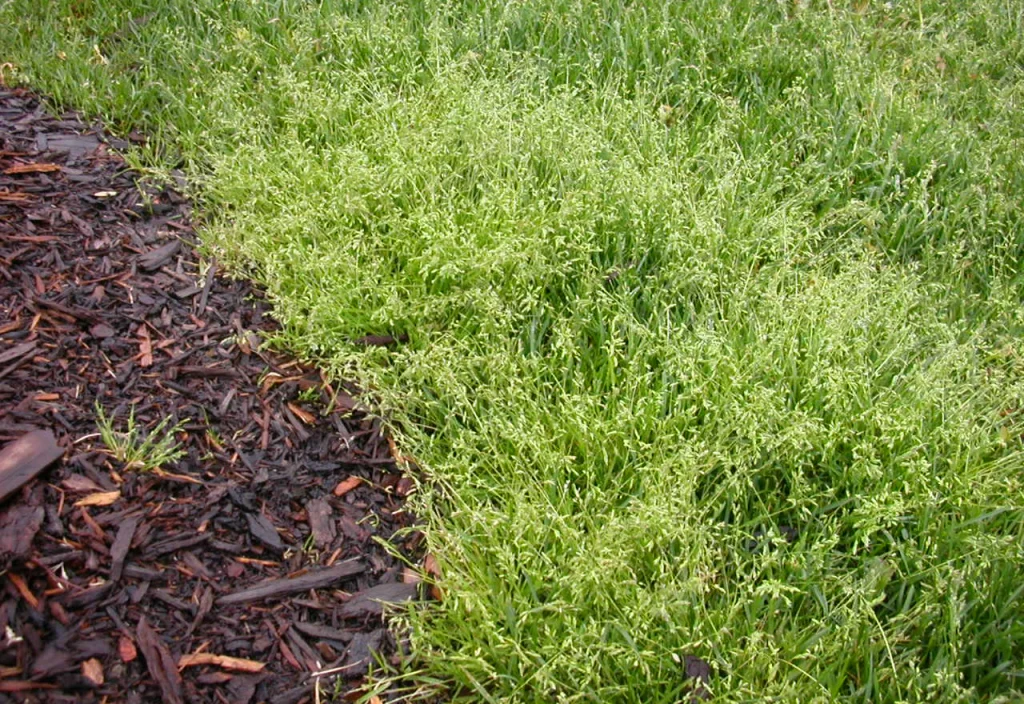
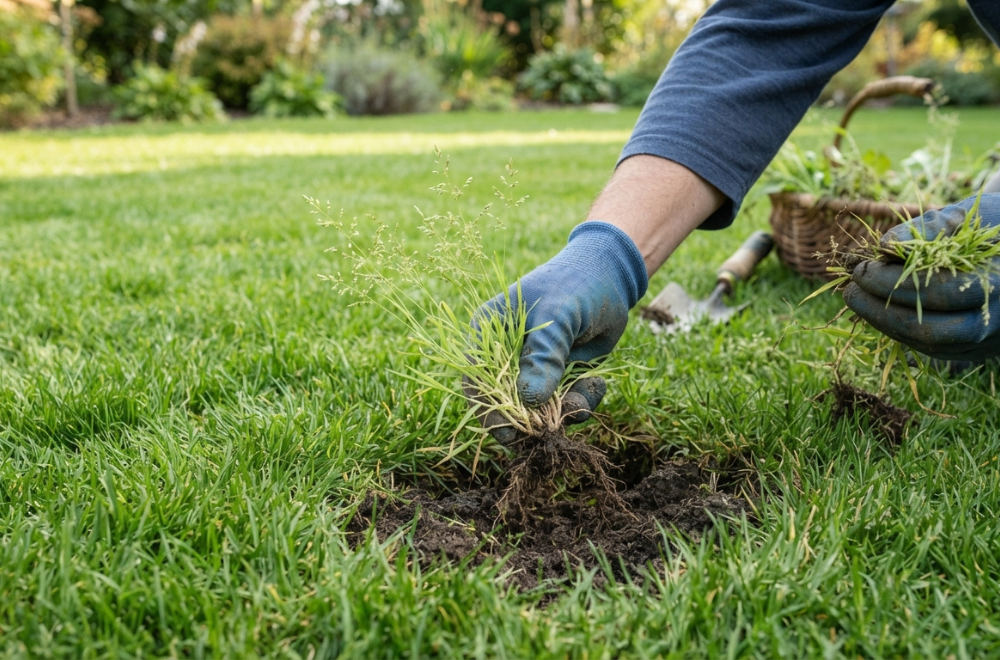
The easiest identifying feature, especially in spring, is the seed head. Annual bluegrass produces whitish, somewhat fluffy seed heads even when mowed short, often just an inch or two above the surrounding turf. Most desirable lawn grasses don’t seed out this aggressively at mowing height, so a lawn dotted with small white-tufted seed heads in April or May is a strong sign of a Poa annua infestation.
If you’re not sure whether you’re looking at annual bluegrass or something else, part the grass and look at the base of a few plants. Annual bluegrass has a shallow, fibrous root system and grows in a bunch-type habit rather than spreading by rhizomes or stolons. Crabgrass, by comparison, doesn’t show up until later in summer and has a coarser, more sprawling growth habit. Quackgrass has visible underground rhizomes and a more upright growth pattern. If in doubt, a local extension office can usually identify a lawn weed from a photo or a physical sample.
Two Different Weeds Wearing the Same Name
Something worth knowing before choosing a control strategy: “annual bluegrass” actually refers to two biologically different forms of the same species.
The true annual type (Poa annua var. annua) behaves the way its name suggests — it germinates in fall, grows through winter and spring, sets seed, and dies as summer heat arrives. This is the version most homeowners are dealing with, and it’s the one responsible for those late-spring dead patches.
A perennial biotype (Poa annua var. reptans, sometimes classified as Poa annua subsp. reptans) behaves more like a creeping perennial grass. It’s more commonly a problem on golf course putting greens and heavily maintained turf than in typical home lawns, but it can persist through summer in cooler, shadier, or consistently irrigated conditions rather than dying back on schedule. If a “dead patch” pattern in your lawn doesn’t disappear by midsummer, you may be dealing with this perennial form, which generally needs a different, more sustained management approach than the annual type.
Why It Shows Up When It Does
Annual bluegrass seed germinates when soil temperatures cool into roughly the mid-50s to low 60s°F, which in most of the country lines up with late summer through fall — often the same window homeowners are overseeding or preparing lawns for winter. Seeds that germinate in fall spend the cooler months growing largely unnoticed, since the surrounding lawn is also green and the annual bluegrass blends in reasonably well through winter.
Growth accelerates as temperatures warm in spring, and this is when the weed becomes obvious: it grows faster than the surrounding turf, produces seed heads at low mowing heights, and creates that lighter-green, clumpy appearance. Once summer heat and reduced soil moisture set in, the annual biotype dies off, leaving thin or bare patches just as the rest of the lawn is trying to thicken up for summer.
This life cycle explains a common source of frustration: by the time a homeowner notices the weed and starts researching how to kill it, the plant is often already flowering and about to release seed for the following fall. Killing the visible plant at that point does little to prevent next year’s infestation, because the seed has already been produced.
Annual bluegrass also favors specific lawn conditions. It tends to establish more readily in:
- Compacted soil, especially along walkways, driveway edges, and heavily trafficked areas
- Areas that stay consistently moist, such as low spots, poorly drained sections, or zones near sprinkler heads
- Lawns mowed very short, since low mowing heights favor its low-growing habit over taller, upright turfgrasses
- Thin or bare turf where there’s little competition from a dense, healthy stand of grass
Recognizing which of these conditions apply to your lawn matters, because addressing them is often more effective long-term than relying on herbicide alone.
Confirming the Problem Before You Treat It
Before spending money on herbicide, it’s worth taking ten minutes to actually confirm the diagnosis, since several lawn issues can produce a similar “off-color patch” appearance in spring:
- Annual bluegrass shows the bright green clumps with visible whitish seed heads, typically most obvious in April and May, followed by dieback in early summer heat.
- Fungal patch diseases, such as necrotic ring spot or summer patch, tend to create ring or patch patterns without the tell-tale seed heads, and often appear later in summer under heat and humidity stress.
- Nutsedge has a triangular stem (you can roll it between your fingers and feel three sides) and grows faster than surrounding grass, but doesn’t produce the same fluffy white seed heads at mowing height.
- Crabgrass typically doesn’t germinate until soil temperatures warm into the 55–60°F range in spring and becomes most visible in the heat of summer, the opposite timing of annual bluegrass.
If the patches in your lawn are showing up in early spring, are lighter green with visible seed heads, and are concentrated in compacted or damp areas, annual bluegrass is a reasonable working diagnosis.
Cultural Changes That Reduce Annual Bluegrass Pressure
Herbicide alone rarely solves an annual bluegrass problem long-term, because the underlying lawn conditions that let it establish in the first place are usually still present. A few adjustments make a meaningful difference:
- Raise the mowing height. Because annual bluegrass grows low and spreads readily in short turf, mowing desirable grass at the higher end of its recommended range (generally 3 to 3.5 inches for tall fescue, for example) shades the soil surface and gives established turf a competitive edge. Mowing scalped-short lawns is one of the more common, and more fixable, contributors to a recurring annual bluegrass problem.
- Improve drainage and relieve compaction. Core aeration in fall, before the germination window opens, helps reduce the compacted, poorly drained conditions annual bluegrass favors. Areas with standing water after rain, or consistently soggy soil near downspouts and low spots, are worth addressing with grading or drainage work if the problem is chronic — not something a single season of aeration will necessarily fix.
- Avoid overwatering, especially frequent shallow watering. Annual bluegrass has a shallow root system and thrives with frequent light watering, while most desirable lawn grasses do better with deeper, less frequent irrigation that encourages a deeper root system. Watering deeply once or twice a week, rather than a few minutes daily, tends to favor the turf you actually want over the weed.
- Overseed thin areas in early fall. A dense, actively growing lawn is one of the best long-term defenses against annual bluegrass establishment, since it reduces the bare soil and light penetration the weed’s seeds need to germinate. The timing here requires some coordination with herbicide use, discussed below, since pre-emergent products that stop annual bluegrass seed from germinating will also stop grass seed from germinating.
Pre-Emergent Herbicides: The Most Effective Timing Window
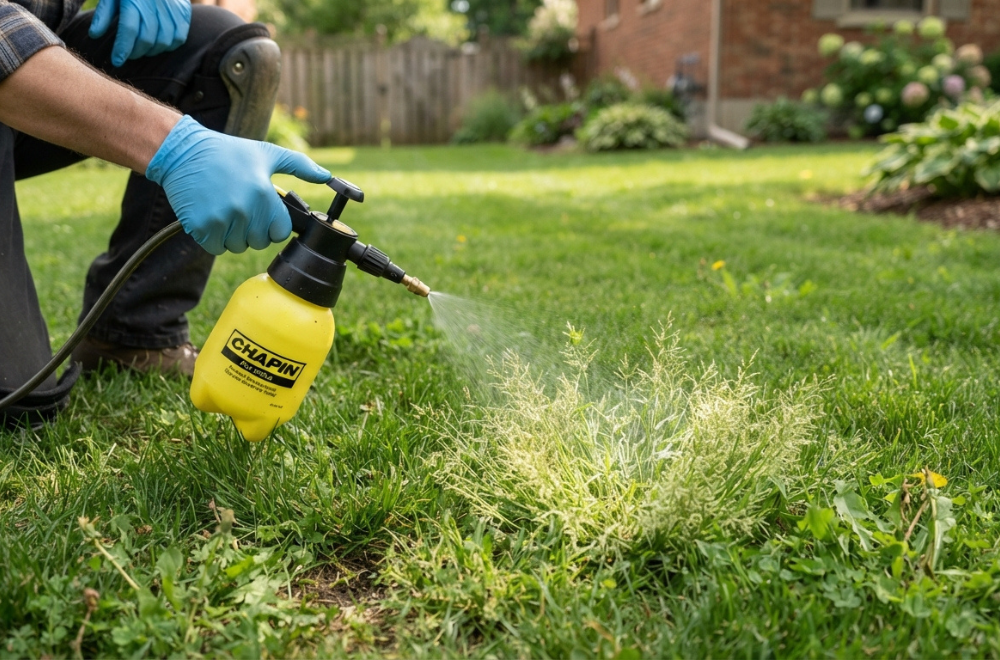
For homeowners dealing with annual bluegrass, timing matters more than product choice. Pre-emergent herbicides work by preventing weed seeds from germinating in the first place, which means they need to be applied before germination occurs, not after the weed is already visible.
Since annual bluegrass typically germinates as soil temperatures fall into the mid-50s to low 60s°F range in late summer or early fall, this is the window when pre-emergent products are applied — generally several weeks before germination is expected in your area, since these products need time to form a barrier in the soil. Products containing active ingredients such as prodiamine or dithiopyr are commonly used for this purpose and are widely available at garden centers, though exact rates, timing, and reapplication intervals vary by product and region. Always follow the specific label instructions for the product you’re using, since label directions reflect testing for that formulation and are the most reliable source of application guidance.
The most common mistake homeowners make with pre-emergent control is applying it in spring, once the weed is already visible. By that point the seed has already germinated the previous fall, so a spring pre-emergent application does nothing for the plants already growing — it can only help prevent the next generation, and even then only if applied before the following fall’s germination window.
The second common mistake is applying a pre-emergent and then overseeding the lawn in the same season. Most pre-emergent herbicides don’t distinguish between weed seed and desirable grass seed; they’ll prevent both from germinating. If a lawn needs overseeding to thicken up thin areas, that generally needs to happen either well before the pre-emergent application or, more commonly, the pre-emergent needs to be delayed until after new grass seed has germinated and become established — often a gap of six to twelve weeks depending on the product, which is why planning the season’s lawn care around a single calendar rather than treating each task separately makes a real difference.
Options for Annual Bluegrass Already Growing in the Lawn
Post-emergent control of annual bluegrass already established in a lawn is more limited and more complicated than pre-emergent prevention, largely because annual bluegrass is a grass, not a broadleaf weed — which means many products that easily kill broadleaf weeds like dandelion or clover without harming turf won’t distinguish between annual bluegrass and the desirable lawn grass around it.
Selective post-emergent options do exist, and some, such as products containing ethofumesate, are labeled for annual bluegrass control in certain cool-season turf types, while others rely on different modes of action depending on the specific lawn grass species present. Because selectivity depends heavily on the type of turfgrass in the lawn — a product safe on one species may injure another — this is an area where reading the label carefully, or consulting a local extension service or lawn care professional before applying anything, is genuinely worthwhile rather than a formality. Misapplied post-emergent herbicide is one of the more common ways a homeowner damages an otherwise healthy lawn while trying to fix a much smaller weed problem.
For small, spot infestations, some homeowners choose to spot-treat with a non-selective herbicide (which kills the annual bluegrass along with any turfgrass it touches) and reseed the resulting bare patch, accepting a short period of visible damage in exchange for simplicity. This tends to make more sense for isolated patches than for a lawn with a widespread infestation.
When Hand-Removal Is a Realistic Option
For small patches, hand-pulling can work, particularly on the true annual type, since its shallow, fibrous root system tends to come out relatively easily from moist soil, especially compared to weeds with deep taproots. This is most practical when the infestation is limited to a few clumps rather than covering a significant portion of the lawn, and it should be done before seed heads mature and shatter, since disturbing a plant that has already set seed can spread the problem rather than solve it.
Hand-removal is far less practical for the creeping perennial biotype, which tends to be more established and more diffusely spread through turf, and generally isn’t a realistic option for lawns with widespread infestation regardless of which biotype is present.
When the Problem Is Bigger Than a Weekend Project
A few situations are worth flagging honestly rather than treating as a simple DIY task:
- If the “dead patches” persist through summer rather than following the typical annual die-back pattern, the perennial biotype may be involved, and getting an accurate identification (through a local extension office, if needed) will save time compared to guessing.
- If more than a significant portion of the lawn’s grass turns out to actually be annual bluegrass rather than the desired turf species, a full renovation — killing off the existing stand and reseeding or resodding — may be more efficient than trying to selectively remove the weed from an otherwise thin, weed-dominated lawn.
- If chronic drainage problems are driving the infestation, and grading or drainage work is beyond a homeowner’s comfort level, a landscaping contractor may be the more practical route than repeated herbicide applications on a lawn that will keep favoring the weed regardless.
A Realistic Timeline for Getting Ahead of It
Because annual bluegrass control is so timing-dependent, it helps to think of it as a year-round sequence rather than a single treatment:
- Late summer to early fall: Apply pre-emergent herbicide before soil temperatures drop into the germination range for your region, if a pre-emergent strategy fits your plans for the lawn.
- Fall: Aerate to reduce compaction, and overseed thin areas — coordinating the timing with any pre-emergent application already made.
- Winter to early spring: Watch for the early signs of annual bluegrass (brighter green patches, low seed heads) so a post-emergent decision can be made before the plants mature and set seed.
- Late spring: Address any established patches with an appropriate selective post-emergent, spot treatment, or hand-removal, ideally before seed heads mature.
- Summer: As true annual bluegrass dies back naturally, address bare patches through overseeding once temperatures cool again, and adjust mowing height and watering habits to reduce conditions the weed favors going forward.
Frequently Asked Questions
Will annual bluegrass go away on its own? The true annual type dies back on its own each summer, but it typically reseeds heavily before doing so, which means it usually returns the following fall unless the seed production cycle or the underlying lawn conditions are addressed. It rarely disappears permanently without some intervention.
Is annual bluegrass harmful to pets or people? Annual bluegrass isn’t toxic. Its seed heads can occasionally cause minor skin or paw irritation in some pets, similar to foxtail-type grasses, though it’s far less prone to embedding in fur or paws than true foxtail grasses are.
Can I just let it take over instead of fighting it? Some lawns, particularly in cooler, shadier climates with consistent moisture, are managed with annual bluegrass as the dominant “turf” species rather than as a weed to eliminate — this is more common on golf courses than home lawns, though. For most homeowners wanting a uniform, dense lawn of a specific turfgrass species, the seasonal die-back and bare patches it leaves behind make it a poor long-term substitute for actual turfgrass.
Why did the pre-emergent I applied not work? The most common cause is timing — applying too late, after germination has already occurred, or too early, allowing the product to break down before the germination window arrives. Soil temperature, not the calendar date, is the more reliable guide, and conditions vary by region and by year.
The Practical Next Step
If you’re looking at a lawn full of light green, seedy patches right now, the most useful thing to do isn’t to treat what’s visible today — it’s to mark the calendar for late summer and plan a pre-emergent application timed to soil temperature rather than a fixed date, while addressing the mowing height, drainage, or watering habits that let the weed establish in the first place. Treating the current infestation matters for appearance, but preventing the next generation from germinating is what actually breaks the cycle.

About Syprose Kiche
Syprose Kiche is the creator and writer behind My Besuited Home, a practical home and garden website covering DIY projects, gardening, lawn care, landscaping, home improvement, and outdoor living. She focuses on turning everyday homeowner questions into clear, practical guides backed by careful research and useful real-world considerations.