
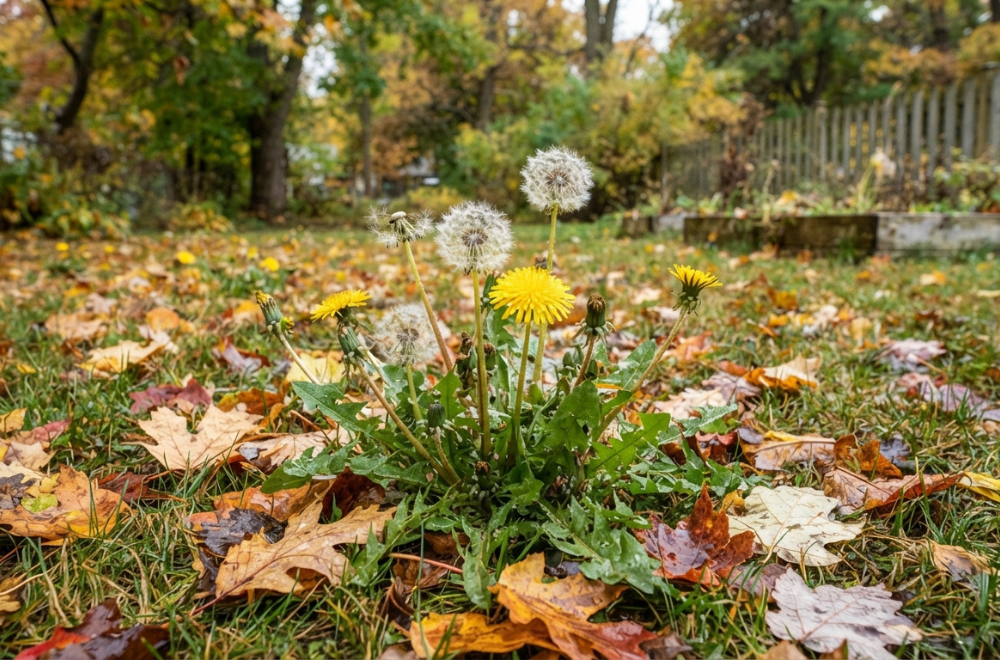
Every spring, my neighbor Carl stands in his yard with a bottle of weed killer, muttering at a lawn that looks like a field of tiny yellow suns. Every spring, those dandelions come right back. He’s been fighting the same losing battle for years, and honestly, it’s kind of painful to watch.
Here’s the thing nobody tells you at the garden center: spring is the worst time to go to war with dandelions. By the time you see those cheerful yellow flowers, the plant has already won. It’s flowering because it’s healthy, established, and sitting on a root that can run two feet deep.
Fall is different. Fall is when dandelions are quietly doing something that makes them incredibly easy to kill — if you know what to look for. I’ve spent more falls than I’d like to admit elbow-deep in lawn care experiments, and I’m going to walk you through exactly why this season works, and how to actually get these things out by the root instead of just mowing off the flower and calling it a day.
Why Fall Is Prime Time for Dandelion Removal
Dandelions are perennials, which means they’re not just growing a flower and calling it quits. They’re building an underground storage system for winter. In late summer and early fall, the plant shifts its energy away from making seeds and starts pumping sugars and nutrients down into the taproot to survive the cold.
This is the good part. Any product or method you apply to the leaves during this window gets pulled down into the root along with everything else the plant is storing. It’s like the dandelion is doing your dirty work for you, hauling the poison (or the vinegar, or whatever you’re using) straight to the part you actually need to kill.
I tried explaining this to Carl once and he looked at me like I’d just told him the earth was flat. But it’s basic plant biology, and it’s the reason lawn care companies quietly push a fall broadleaf treatment as their “second round” application.
There’s a second reason fall works so well: the weather cooperates. Cooler temperatures mean less moisture stress on the plant, so it’s not shutting down its systems to conserve water. The dandelion is actively growing roots and storing energy right up until the first hard frost, which gives you a solid six-to-eight week window depending on where you live.
Compare that to spring, when the dandelion is racing to flower and go to seed before anything can stop it. You’re basically trying to hit a moving target. In fall, the plant is calm, focused, and vulnerable. Use that.
Natural Root-Level Killing Methods That Actually Work
I’m not a fan of dumping chemicals on my lawn, and I’ve found that most of the “instant” natural remedies people share online are a total waste of a Saturday afternoon. Below are the methods I’ve actually used, with the ones that work best listed first.
1. Hand-Digging With a Dandelion Fork (Still the Gold Standard)
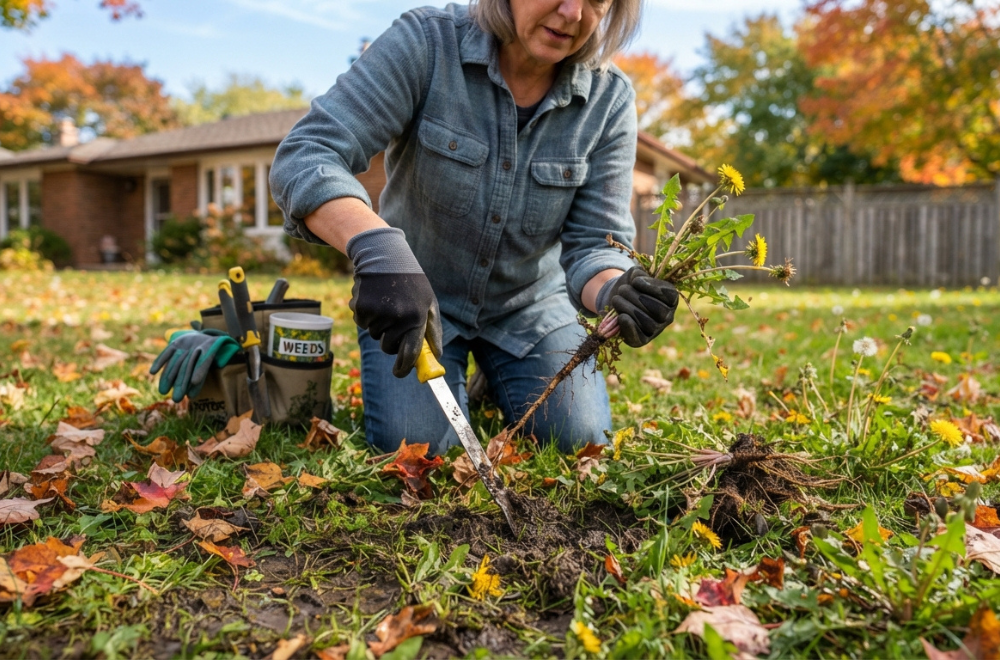
This sounds too simple to be effective, but it’s the method I trust the most, especially for a lawn with 20 or 30 dandelions rather than an entire infestation.
Buy a dandelion weeder or a fork with a forked, notched tip — not a regular garden trowel. The notch is designed to grip the taproot and pop it out with the crown intact. If you leave even an inch of that crown behind, the plant will regrow, which is the single most common mistake I see people make.
Water the area the night before if the soil is dry. Damp soil lets the root slide out instead of snapping. Drive the fork down alongside the taproot at a slight angle, about 4 to 6 inches deep, then lever it up and out in one smooth motion.
Fall soil tends to be softer than the hard-baked dirt of August, so this is genuinely easier this time of year. I can pull a dandelion in fall in about 15 seconds. In July, the same root fights me for a full minute and usually wins.
2. Boiling Water for Isolated Spots
I use this one for dandelions growing in cracks in my driveway or along the edge of a garden bed where I don’t mind killing everything nearby. This is not a lawn-safe method — boiling water will kill your grass just as dead as the weed.
Boil a full kettle and pour it directly onto the crown of the plant, letting it soak down into the root zone. You’ll see the leaves wilt within a few hours. Give it two or three applications over a week for the root to fully die back, especially on older, more established plants.
The mistake I made the first time I tried this: I poured too fast and too high up, so most of the water splashed off the leaves instead of soaking into the crown. Pour slowly, right at the base, like you’re watering a very small, very doomed plant.
3. Vinegar Solutions (With a Big Asterisk)
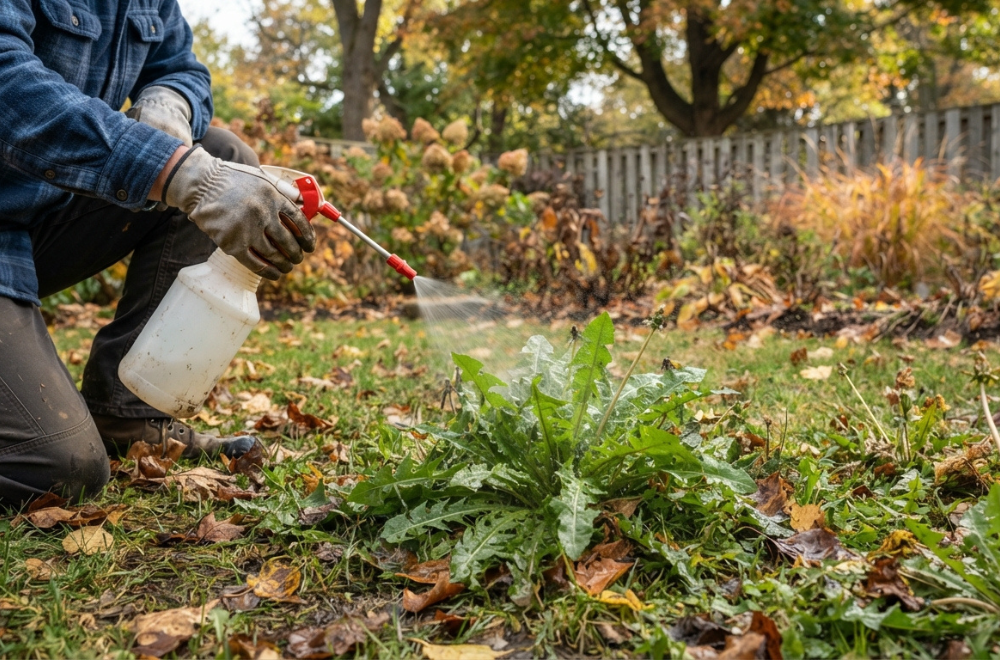
Straight household vinegar (5% acidity) will burn back the leaves of a dandelion, but it almost never kills the root on its own. Horticultural vinegar, which runs at 20% acidity, does a much better job, but it’s also strong enough to cause real skin and eye irritation, so gloves and eye protection aren’t optional here.
Mix in a squirt of dish soap as a surfactant so the vinegar actually sticks to the waxy leaves instead of beading up and rolling off. Spray on a dry, sunny fall day — rain within a few hours will wash away all your effort.
I’ll be straight with you: vinegar is better as a repeat-application strategy than a one-and-done fix. Spray it every 5 to 7 days for a few weeks and you’ll wear the plant down. Treat it as a single application and you’re just giving the dandelion a bad haircut.
4. Corn Gluten Meal for Prevention (Not Removal)
This one gets recommended constantly and it drives me a little crazy because people expect it to kill existing dandelions. It won’t. Corn gluten meal is a pre-emergent, which means it stops dandelion seeds from germinating in the first place.
Apply it in fall as a way to reduce next year’s crop, not as a treatment for the dandelions you’re staring at right now. Spread it evenly across your lawn following the bag’s rate (usually around 20 pounds per 1,000 square feet), and water it in lightly.
It also happens to be roughly 10% nitrogen, so you get a small lawn-greening bonus as a side effect. I use it every fall alongside hand-digging, and over three seasons I’ve noticed a real drop in new seedlings popping up. Just don’t expect it to touch the mature plants already established in your yard.
5. Boosting Lawn Density So Dandelions Can’t Get a Foothold
This isn’t glamorous, and it’s not really a “kill” method, but it’s the one that’s made the biggest long-term difference in my own yard. Dandelions are opportunists. They thrive in thin, compacted, bare-patch lawns because there’s nothing competing with them for sunlight and space.
Fall is the best time of year to overseed, because cooler air temps and warmer soil create ideal germination conditions without the stress of summer heat. Core aerate first if your soil is compacted, then overseed with a grass variety suited to your region, and top-dress with a thin layer of compost.
A thick, healthy lawn shades out dandelion seedlings before they ever get established. I overseeded my back yard three falls ago after getting tired of pulling the same ten dandelions in the same ten spots. This year, I found exactly two.
Quick side note: don’t skip the aeration step if your lawn gets regular foot traffic. Compacted soil is basically a welcome mat for dandelions, and overseeding into hard-packed dirt wastes half your seed.
The Real Talk: What’s Not Worth the Effort (and What Can Go Wrong)
I want to save you some frustration, because a lot of dandelion advice online skips the failure stories entirely.
Salt is one I’d steer you away from. Yes, it kills the plant. It also kills the soil for months or years afterward, and it can leach into surrounding areas and damage grass or garden beds you actually care about. I tried it once on a patio crack, and the bare, dead patch stuck around way longer than I expected.
Mowing before the flowers open feels productive but does almost nothing to the root. You’re just delaying seed production by a week or two. If your real goal is root-level removal, mowing is maintenance, not treatment.
Flame weeding — yes, people actually do this with a propane torch — looks satisfying and is genuinely fun for about the first three dandelions. Then you realize you’re standing in a dry fall lawn with an open flame, which is a fire risk I’m just not willing to take, especially anywhere near mulch beds or dry leaves. Skip it unless you’re working on bare gravel or a driveway.
One more honest note: no single-application method gives you a 100% kill rate on established taproots. Even professional-grade herbicide often needs a second treatment. If a product or method promises one-and-done total eradication, be skeptical. Dandelion taproots are tough, and any piece left behind can regrow a whole new plant from a fragment as small as an inch.
Timing matters, too. Wait too long into fall and a hard freeze will send the plant into full dormancy, at which point it stops absorbing anything through its leaves, natural or chemical. You want to get your treatments done before your first frost date, not after.
When to Actually Do This: A Simple Fall Timeline
To keep this from feeling overwhelming, here’s roughly how I plan my own fall dandelion routine:
- Early September: Start hand-digging established plants while the soil is still workable and warm.
- Mid-September: Apply vinegar or boiling water treatments to spot-problem areas like cracks and edges.
- Late September to early October: Aerate and overseed thin patches of lawn.
- October: Spread corn gluten meal to reduce next spring’s seed germination.
- Before first frost: Do a final walk-through and hand-pull anything you missed.
You don’t need to do all five in one weekend. I spread mine out over about six weeks, which makes the whole project feel manageable instead of like a second job.
Parting Wisdom
Dandelions aren’t actually the villains most lawn magazines make them out to be — they feed early pollinators and their roots break up compacted soil — but I get it, a weed-free lawn feels good, and fall gives you the best shot at getting there without dumping harsh chemicals everywhere.
Pick one or two methods above, be consistent, and be patient. You’re not going to erase every dandelion in one season, but you’ll make a real dent, and next spring you’ll be the one standing in your yard looking smug instead of frustrated.
What’s your dandelion horror story? Drop it in the comments below — and if you’ve tried a method I didn’t mention here, I want to hear whether it actually worked or just wasted your weekend.

About Syprose Kiche
Syprose Kiche is the creator and writer behind My Besuited Home, a practical home and garden website covering DIY projects, gardening, lawn care, landscaping, home improvement, and outdoor living. She focuses on turning everyday homeowner questions into clear, practical guides backed by careful research and useful real-world considerations.