
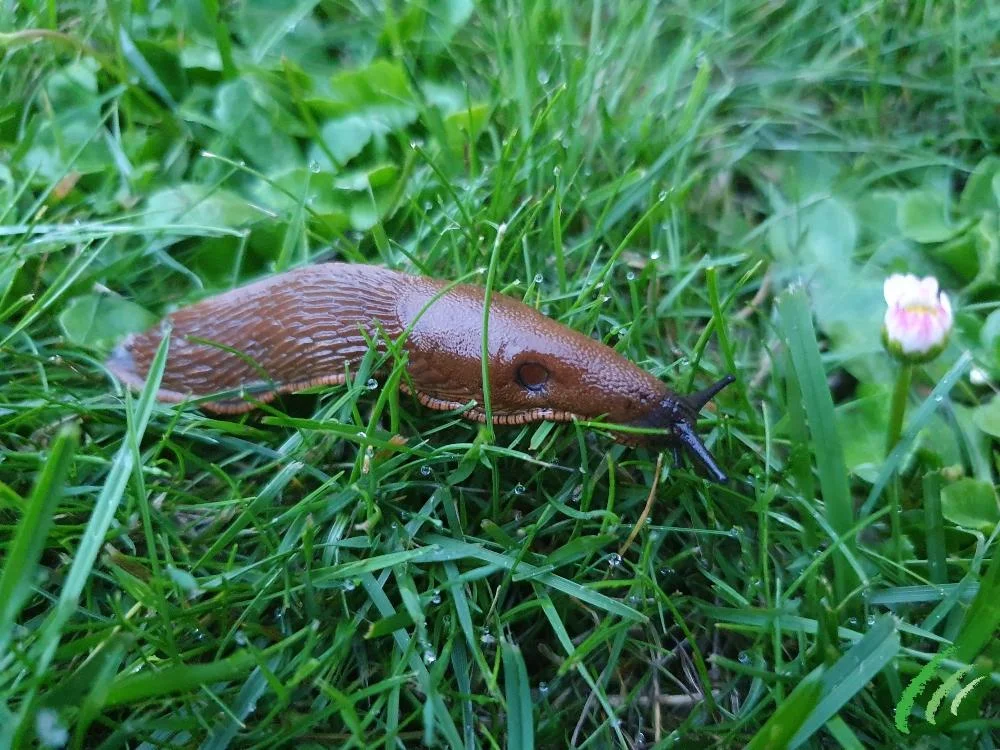
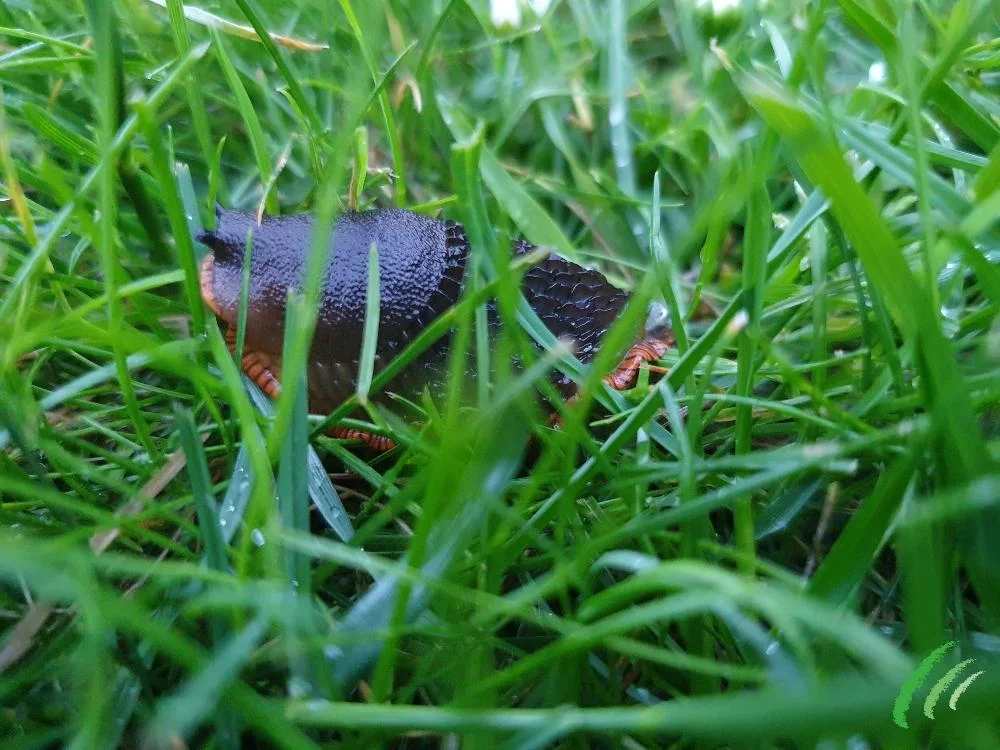
You go out at 7 a.m. with your coffee to check on your hostas, and they look like someone took a shotgun to them overnight. Ragged holes, slime trails glistening across the porch steps, and maybe a chewed-up strawberry that was supposed to be dinner tonight. Slugs did that. And if you’ve got a dog who eats literally everything off the ground or a cat who treats the backyard like her personal hunting grounds, you can’t just grab whatever blue pellets are on the shelf at the hardware store.
I get it. My golden retriever, Biscuit, once ate an entire sock, three crayons, and half a tennis ball in one summer. The idea of scattering standard slug bait — which is usually loaded with metaldehyde — anywhere near her felt like playing Russian roulette with a vet bill I couldn’t afford. Metaldehyde poisoning in dogs is nasty. Tremors, seizures, the whole terrifying list. So I spent years testing homemade slug control methods in my own garden beds, throwing out what didn’t work, and keeping what did.
This list is the result of that trial and error. Every method below uses ingredients that won’t send you sprinting to the emergency vet if your pup licks the soil or your cat decides the mulch pile is a good nap spot. Some of these are dead simple. A couple take a little more setup. One of them is honestly kind of gross, but it works so well I still use it every June.
Let’s get into what actually kills slugs without putting your animals at risk.
Why Slugs Love Your Garden (and Why Regular Bait Is Risky for Pets)
Slugs come out at night or on cloudy, damp days because they’re basically walking water balloons. Their bodies are somewhere around 80-90% water, so direct sun dries them out fast. That’s why you rarely see the little jerks during a sunny afternoon but find fresh damage every single morning.
Standard commercial slug pellets almost always contain metaldehyde or, in some “pet-safe” branded products, iron phosphate. Metaldehyde is the one you really need to watch for. It’s attractive to dogs because it smells slightly sweet, and even a small amount can cause serious neurological symptoms. Iron phosphate is safer in small quantities, but plenty of pet owners (myself included) would rather not roll the dice with a curious puppy who doesn’t know the difference between fertilizer and a treat.
That’s the whole reason this list exists. Every method here relies on things you probably already have in your kitchen or garage — beer, coffee grounds, crushed eggshells, copper, diatomaceous earth, wool pellets, and a beer trap variation that takes things up a notch. None of it is going to hurt Biscuit if she decides to investigate.
One quick note before we start: “pet-safe” doesn’t always mean “zero risk in massive quantities.” Even coffee grounds can upset a dog’s stomach if they eat a huge pile of it. Common sense still applies. But compared to metaldehyde bait, these options are miles safer.
1. Beer Traps (The Classic That Actually Works)
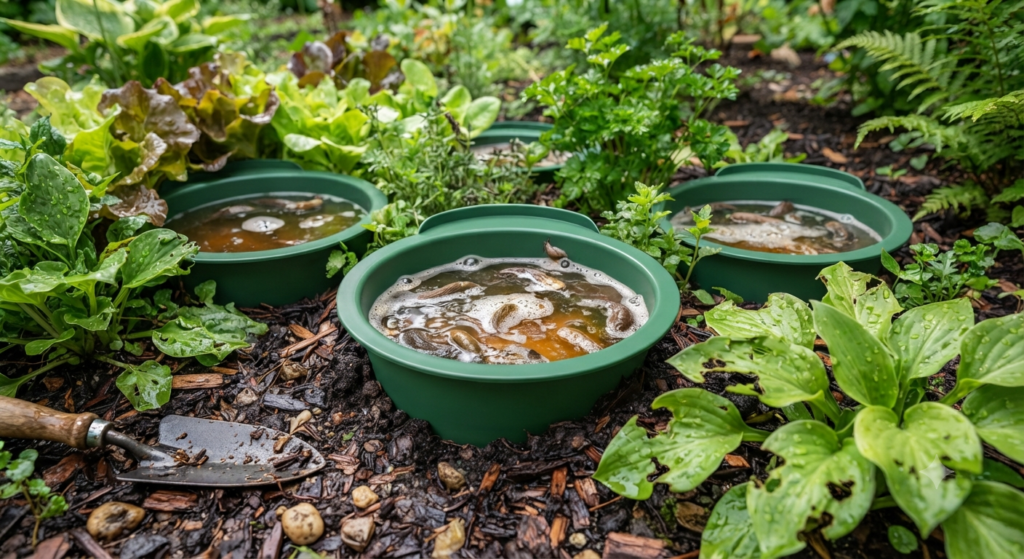
Beer traps are the granddaddy of homemade slug control, and there’s a reason they’ve stuck around for decades. Slugs are drawn to the smell of fermenting yeast, they crawl in, and they drown. It’s not glamorous, but it’s effective, and it doesn’t require you to touch a single slug with your bare hands, which honestly matters more than people admit.
Here’s how to set one up. Take a shallow container — a tuna can, a yogurt cup, or a plastic deli container all work fine — and bury it in the soil near the plants getting hit hardest. The rim needs to sit about an inch above ground level. This part trips people up constantly. If the rim is flush with the soil, you’ll drown beneficial ground beetles right along with the slugs, and those beetles are actually eating slug eggs for you for free. Keep that lip raised.
Fill the container about halfway with cheap beer. I mean the cheapest stuff on the shelf. Slugs genuinely do not care if it’s a fancy IPA or the $4 six-pack from the gas station; they’re after the yeast and the fermentation smell, not the hops. Check the traps every morning and dump the drowned slugs into the trash or your compost pile if you’re not squeamish about it.
The downside, and it’s a real one for pet owners: dogs occasionally find these traps and try to drink from them. A tuna can of beer isn’t going to seriously harm most dogs in a single lap, but repeated exposure or a small dog getting a big gulp isn’t something you want either. My workaround is placing a small overturned crate or a piece of wire mesh with slug-sized gaps over each trap. It keeps Biscuit’s nose out while still letting the slugs crawl in.
2. Crushed Eggshell Barriers
Crushed eggshells work on a pretty simple principle — slugs have soft, sensitive bodies, and crawling over sharp, jagged edges is uncomfortable enough that a lot of them will turn around rather than push through. It’s not a guaranteed force field, but it’s a genuinely useful line of defense, especially combined with other methods on this list.
Save your eggshells for a week or two instead of tossing them straight into the trash. Rinse them out so they don’t attract pests, let them air dry on a paper towel, and then crush them by hand or with a rolling pin. You want pieces that are still somewhat chunky and sharp, not powder. If you grind them too fine, they lose the texture that actually deters the slugs.
Sprinkle a thick ring of crushed shell around the base of vulnerable plants — hostas, lettuce, strawberries, and anything in the cabbage family are usually slug magnets. The ring needs to be continuous. Slugs are patient, and they’ll find the one gap in your barrier if you leave one.
The bonus here is that eggshells break down over time and add calcium back into your soil, which tomatoes and peppers appreciate. It’s genuinely one of the few pest control methods that also functions as a slow-release soil amendment. As for pet safety, eggshells are completely non-toxic. Some dogs might nibble a piece out of curiosity, and that’s not going to hurt them, though a large ingested amount could theoretically cause minor digestive irritation, so don’t go overboard right next to your dog’s favorite lounging spot.
3. Coffee Ground Deterrent
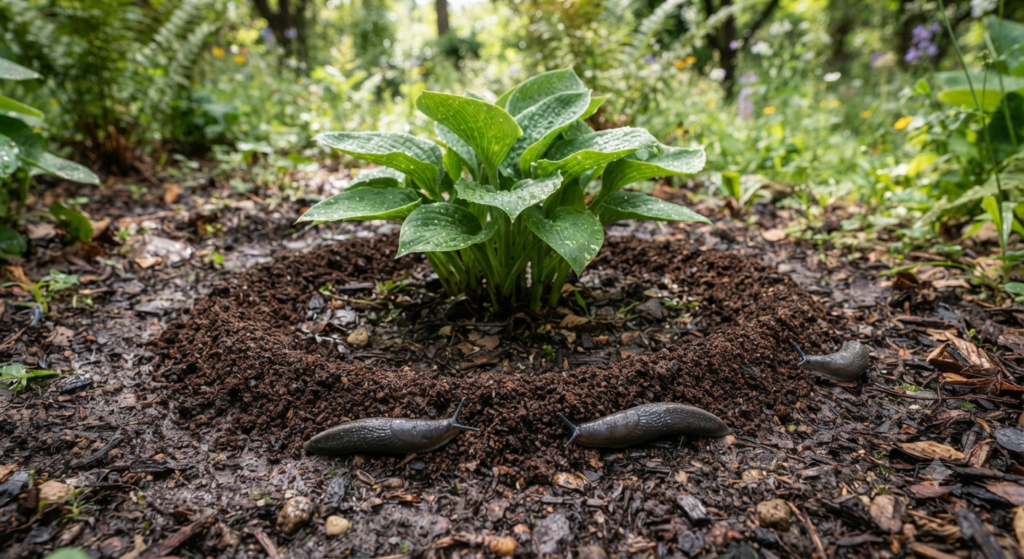
Coffee grounds get thrown around as a cure-all in gardening circles, and honestly, half the claims about them are overblown. But for slugs specifically, there’s real substance behind it. The caffeine content is mildly toxic to slugs and snails in concentrated amounts, and the gritty texture bothers their soft undersides similarly to eggshells.
Used coffee grounds work better than fresh ones for this purpose, mostly because fresh grounds are more acidic and can mess with soil pH if you use them heavily around acid-sensitive plants. Ask your local coffee shop — most will hand over used grounds for free, and some even bag them up specifically for gardeners. I’ve never had a barista say no when I brought my own bucket.
Spread a thin layer of grounds around the base of plants you’re trying to protect, similar to the eggshell method. You can also mix coffee grounds directly into a spray: steep a cup of used grounds in a gallon of water overnight, strain it, and spray it directly onto slugs when you catch them out in the open. A direct hit with concentrated caffeine can actually kill them outright, while the ambient smell around your plants just keeps new ones from wandering in.
For pets, coffee grounds are where I’d tell you to actually pay attention. Caffeine is toxic to dogs and cats in large quantities, so you don’t want a dog eating a whole pile of used grounds. In the small amounts used as a garden deterrent, spread thinly across soil, the risk is low. Still, if you have a dog who’s notorious for eating dirt (you know who you are), I’d lean toward eggshells or one of the other options instead.
4. Diatomaceous Earth (Food-Grade Only)
Diatomaceous earth, or DE, is fossilized algae ground into a fine powder that’s microscopically sharp to small invertebrates while being completely harmless to mammals — as long as you buy food-grade DE and not the pool-filter version, which is chemically treated and a totally different product. This distinction matters a lot, so double-check the bag before you buy.
DE works by damaging the outer layer of a slug’s body, causing it to dehydrate. Remember how I mentioned slugs are basically water balloons? DE is basically a very effective way to pop that balloon slowly. It’s not an instant kill, but slugs that crawl through a layer of DE typically die within a day or two from moisture loss.
Sprinkle a ring of DE around your plant beds, focusing on the areas where you’ve spotted slime trails. Here’s the catch that trips a lot of people up: DE stops working the second it gets wet. Since slugs are most active after rain or during humid nights, you’ll need to reapply DE after every watering session or rainstorm. It’s a bit high-maintenance compared to eggshells, but the kill rate is noticeably better.
Food-grade DE is safe enough that it’s actually sold as a dewormer for livestock and occasionally for pets, so a dog walking through it or licking a paw afterward isn’t cause for panic. That said, it’s a fine powder, and inhaling large amounts isn’t great for anyone’s lungs, pets included. Apply it on a still day, and don’t go overboard piling it up where your dog likes to roll around.
5. Copper Tape and Copper Mesh Barriers
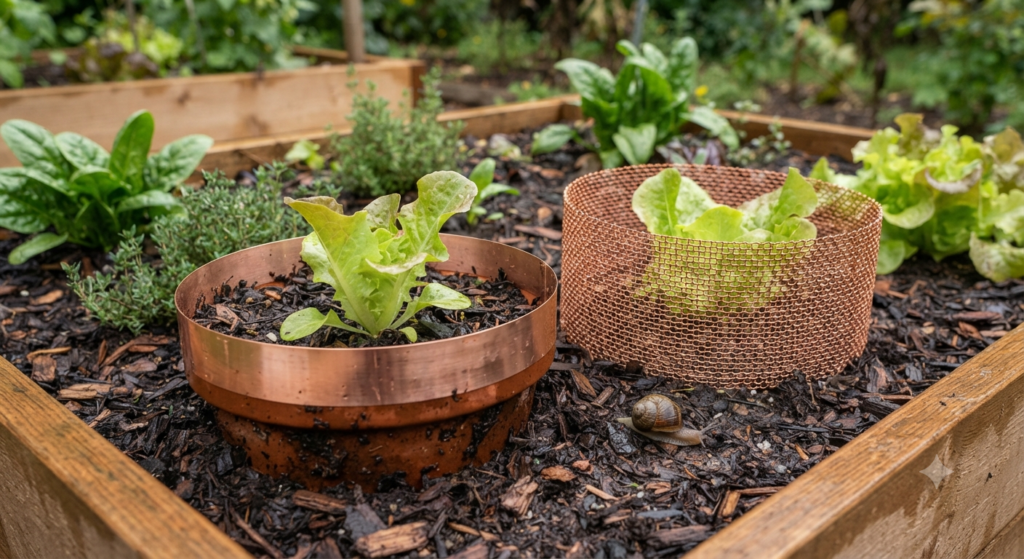
Copper creates a small electrical reaction when it comes into contact with slug slime, delivering a mild shock that most slugs find unpleasant enough to turn back. It sounds almost too simple to work, but I’ve used copper tape around my raised beds for three seasons now, and it’s held up better than most of my other methods.
Copper tape is the easiest version to apply. Wrap it around the rim of raised beds, planter pots, or even the legs of a table if you’re protecting container plants on a patio. The tape needs to make a full, unbroken ring — a single gap is basically an open door as far as a determined slug is concerned. Most garden centers or online retailers sell adhesive-backed copper tape specifically marketed for this purpose.
For in-ground beds where tape doesn’t have a clean surface to stick to, copper mesh works as an alternative. You lay it flat around the base of plants, and slugs get the same shock reaction crawling over it. It’s a little more labor-intensive to install but holds up longer against weather than tape, which can peel at the edges after a couple of rainy seasons.
One thing worth knowing: copper’s effectiveness fades a bit as it oxidizes and picks up a layer of grime, so wiping it down with vinegar every month or two during peak slug season keeps the reaction strong. As for pets, copper barriers are about as safe as it gets. There’s no ingestion risk that matters, no powder to inhale, nothing to lick up. My only complaint is the upfront cost if you’re covering a large garden, but for smaller raised beds it’s a one-time investment that lasts years.
6. Wool Pellets
Wool pellets are a newer entry in the homemade slug control world, and I was skeptical the first time a fellow gardener at my local co-op recommended them. They’re small pellets made from sheep’s wool that expand when they absorb moisture, creating a rough, fibrous barrier that slugs dislike crawling across, similar to the texture deterrent from eggshells but longer-lasting.
Spread the pellets in a ring around your plants, same approach as the other barrier methods on this list. Once they get wet from rain or watering, they swell up and form a denser mat that’s genuinely hard for a slug to push through. Unlike DE, which needs reapplying after every rain, wool pellets actually work better once they’ve absorbed some moisture, so you’re not fighting against the weather here.
There’s a secondary benefit that surprised me: as wool pellets break down over a season, they slowly release nitrogen into the soil, acting as a mild fertilizer. It’s not a huge amount, but it’s a nice bonus for beds that need a little extra feeding anyway. I’ve started using them specifically around my leafy greens, which take the worst slug damage every spring.
Safety-wise, wool pellets are about as benign as it gets. They’re literally sheep’s wool — no chemicals, no sharp edges dangerous to paws, nothing toxic if a curious dog decides to taste-test one. The only real downside is cost, since wool pellets run more expensive per bag than eggshells or coffee grounds you’re getting for free. For a small vegetable patch, though, the price is easy to justify.
7. Bonus: Hand-Picking at Night (Free, Effective, Slightly Gross)
I’m calling this one a bonus because it’s not exactly a “product” like the other six, but it deserves a spot on this list because it’s genuinely the most effective single method if you’re dealing with a serious infestation and don’t mind getting your hands a little slimy.
Grab a flashlight and a bucket with some soapy water in it, and head out to the garden about an hour or two after dark. This is when slugs are most active, out in the open, feeding on your plants instead of hiding under mulch and rocks. Pick them off by hand — wearing gloves if slime grosses you out, which, fair — and drop them straight into the soapy bucket. The soap breaks down their protective mucus layer and they die quickly.
Do this for four or five nights in a row during a bad outbreak, and you’ll see a dramatic drop in slug damage within about a week. It sounds tedious, and it is a little, but there’s something satisfying about physically removing the problem instead of just deterring it. My kids actually think this part is fun, in a “gross but cool” kind of way, which is more than I can say for most garden chores I try to rope them into.
This method has zero pet safety concerns whatsoever, since there’s no bait, no powder, no chemical of any kind involved. It’s just you, a flashlight, and a bucket of soapy water. If your dog wants to tag along on slug patrol, more power to you both.
Real Talk: What Doesn’t Work (and What’s Not Worth Your Time)
I want to be straight with you about a few things that get recommended constantly online but that I’ve found to be a total waste of money, even if they look pretty on Pinterest.
Crushed pistachio shells and other “sharp barrier” alternatives get suggested as eggshell substitutes, but in my experience, they don’t hold their sharp edges nearly as well once they get rained on, and they attract other pests looking for leftover nut oils. Stick with eggshells or DE for the barrier approach.
Beer traps, while effective, need daily maintenance to actually keep working. If you go on vacation for a week and forget about them, you’ll come home to a stinking mess of dead slugs and stale beer that’s honestly worse for your garden’s smell than the slug damage was. If you’re not going to check traps daily, skip this method or ask a neighbor to handle it while you’re away.
Copper barriers stop working if soil or mulch builds up on top of the tape, bridging the gap and giving slugs a free pass over the “shock zone.” I’ve made this mistake myself more than once, wondering why slugs were still getting through, only to realize a thin layer of dirt had built a bridge right over my expensive copper tape.
And salt — I know it’s the method everyone’s grandmother swears by. Yes, salt kills slugs almost instantly. But it also kills your soil, leaching into the ground and making it inhospitable for plant roots over time. I’d avoid it entirely, even in a small garden bed, unless you genuinely don’t care about growing anything there again for a while.
Finally, don’t expect any single method on this list to solve the problem completely on its own. Slug control works best as a layered approach — combine a physical barrier like copper or eggshells with an active removal method like beer traps or hand-picking, and you’ll see far better results than relying on just one trick.
Wrap-Up: Keep Your Garden and Your Pets Both Happy
Slugs are relentless, but so are gardeners who’ve had enough of waking up to shredded lettuce. The good news is you don’t have to choose between a slug-free garden and a safe backyard for your dog or cat. Between beer traps with a protective cover, eggshell rings, careful use of coffee grounds, food-grade DE, copper barriers, wool pellets, and old-fashioned hand-picking, you’ve got a full toolkit that won’t send anyone to the emergency vet.
My advice? Don’t try all seven at once and expect a magic overnight fix. Pick two or three methods that fit your garden layout and your pet’s habits, give them a couple of weeks, and adjust from there. My own routine right now is copper tape around the raised beds plus a weekly hand-picking session with my kids, and it’s kept the hostas looking better than they have in years.
What’s your slug situation looking like this season? Drop a comment below and let me know which method you’re trying first, or if you’ve got a homemade trick that’s not on this list — I’m always up for testing something new in my own backyard.

About Syprose Kiche
Syprose Kiche is the creator and writer behind My Besuited Home, a practical home and garden website covering DIY projects, gardening, lawn care, landscaping, home improvement, and outdoor living. She focuses on turning everyday homeowner questions into clear, practical guides backed by careful research and useful real-world considerations.