
Everyone tells you to plant “pops of color.” Red for drama, yellow for cheer, purple for elegance. Nobody ever mentions brown. Say the word “brown flower” at a garden club meeting and you’ll get the same look you’d get if you suggested painting your living room the color of wet cardboard.
I get it. Brown sounds like the color of a dead plant, not a thriving one. But once you start growing brown blooms next to your usual orange and gold, something clicks. The brown doesn’t disappear into the dirt like you’d expect. It makes everything around it look richer, like the mat around a painting. My neighbor Carol thought I’d lost my mind when I ripped out half my hosta bed for chocolate cosmos and brown-eyed coneflowers. Now she’s got her own patch and won’t stop texting me photos of it.
If you’re tired of a garden that looks like a bag of Skittles exploded, or you just want something your neighbors haven’t already planted three times over, brown flowers are your answer. Here are 14 varieties that prove brown is not boring, it’s bold.
Why Grow Brown Flowers in Your Garden
Before I get into the list, let’s talk about why you’d even want brown flowers for landscaping in the first place.
Brown is what designers call a “grounding” color. It sits low on the color wheel and makes the brighter flowers around it look like they’re glowing. Plant a patch of brown blooms next to your marigolds or black-eyed Susans, and the yellow suddenly looks three shades more vivid. It’s the same trick interior designers use with neutral rugs. The rug isn’t the star, but the room falls apart without it.
Brown flowers also tend to be tough. A lot of the varieties on this list evolved in prairies, deserts, or rocky slopes where flashy color wasn’t a survival strategy. That toughness carries over to your garden. Several of these plants shrug off drought, poor soil, and the kind of neglect that would kill a hydrangea in a week.
And here’s my honest opinion: a garden that’s all bright color starts to look like a cartoon. I’ve found that adding brown tones is a total waste-free way to add sophistication without spending a dime on new hardscaping or fancy pots. You’re just swapping plants.
1. Chocolate Cosmos (Cosmos atrosanguineus)
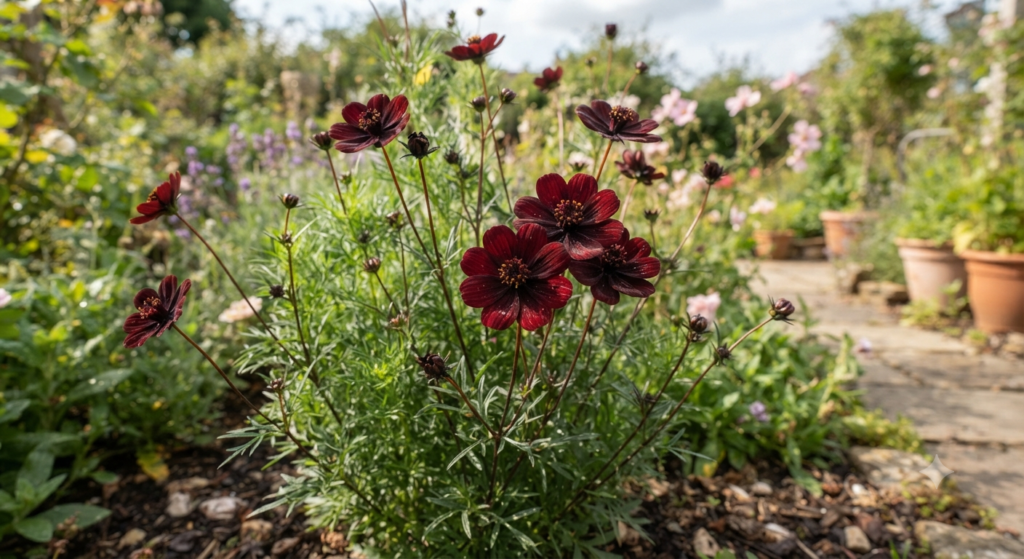
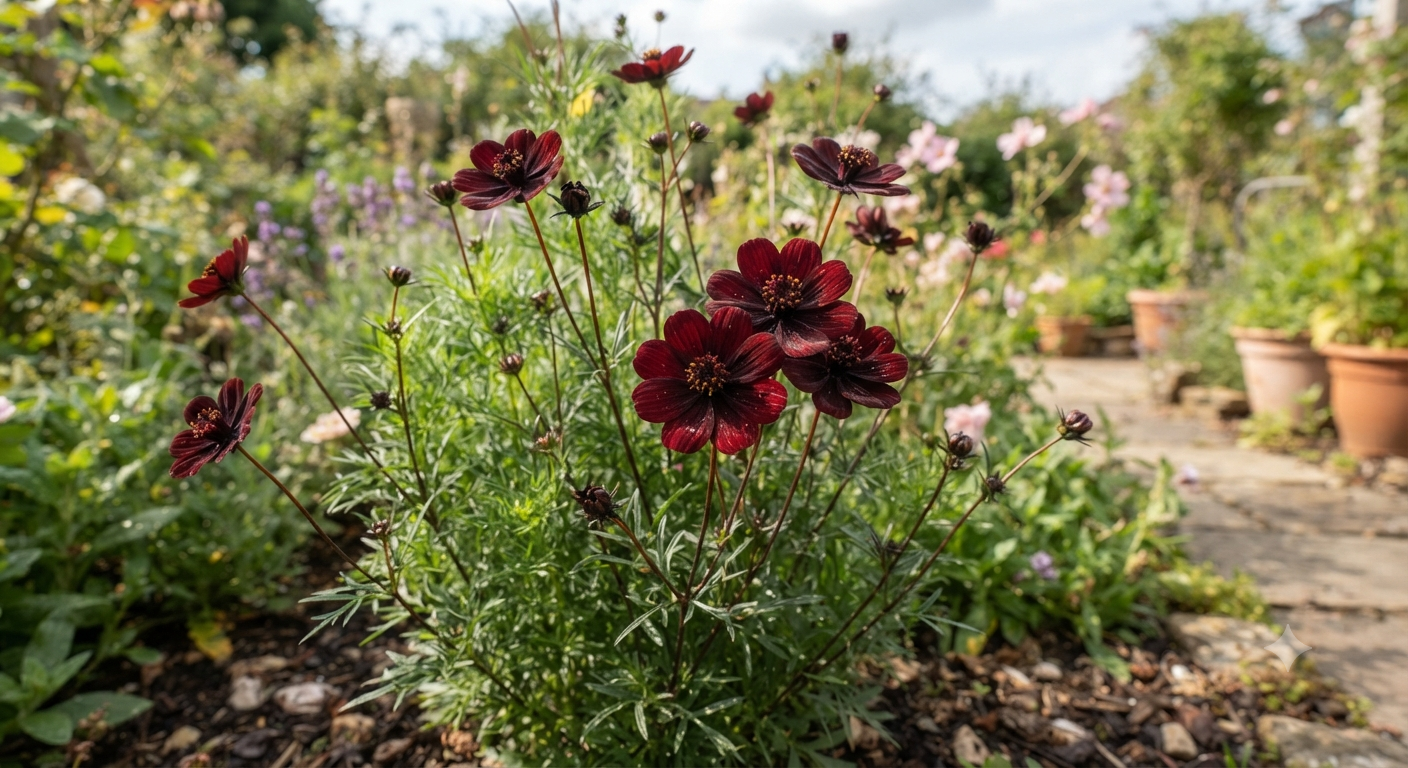
This is the celebrity of the brown flower world, and for good reason. Chocolate cosmos has deep maroon-brown petals that genuinely smell like a cocoa bar left in the sun. I planted three of these near my back porch the summer my zucchini took over the entire ZIP code, mostly because I needed something that wasn’t going to try to conquer the yard too.
Chocolate cosmos grows from tubers, similar to a dahlia, and it tops out around 18 to 24 inches. It loves full sun and well-drained soil, and it is not a fan of soggy roots in winter. If you live somewhere with hard freezes, dig up the tubers in fall and store them like you would dahlia tubers, in a paper bag with some peat moss, in a cool dark spot.
The bloom season runs from midsummer through the first frost, and the flowers keep coming as long as you deadhead spent blooms. This is a plant people will stop and smell before they even notice the color, and that’s half the fun of growing it.
Search terms people use for this one include “chocolate scented flower,” “brown flower that smells like chocolate,” and “cosmos atrosanguineus care.” If you’ve searched any of those, this is your plant.
2. Brown-Eyed Susan (Rudbeckia triloba)
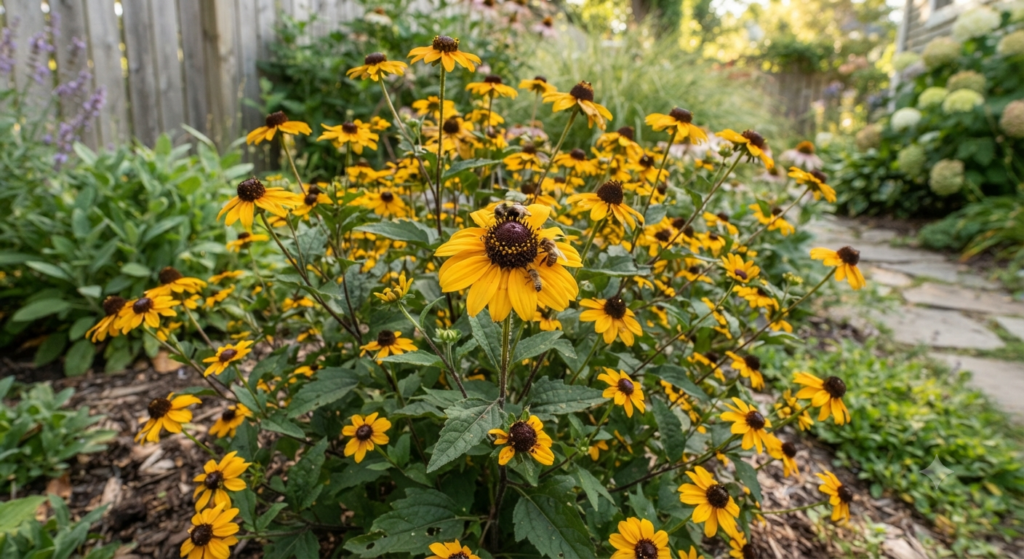
Don’t confuse this with the classic black-eyed Susan. Brown-eyed Susan has a similar daisy shape, but the center cone is a warmer chocolate brown, and the plant produces way more flowers per stem.
I grow this one along my back fence because it self-seeds like crazy and fills in gaps I’m too lazy to plant myself. A single plant can produce hundreds of small, one-inch blooms over the course of a season, which makes it one of the best budget options on this list. Buy one plant, get a colony within two years.
It’s a biennial or short-lived perennial depending on your zone, thriving in USDA zones 3 through 7. Full sun is non-negotiable here. Give it partial shade and you’ll get a leggy, floppy plant that falls over in the first summer storm.
Pollinators go nuts for brown-eyed Susan. If you’re trying to attract bees and butterflies to a native plant garden, this should be near the top of your shopping list, not an afterthought.
3. Brown Bearded Iris
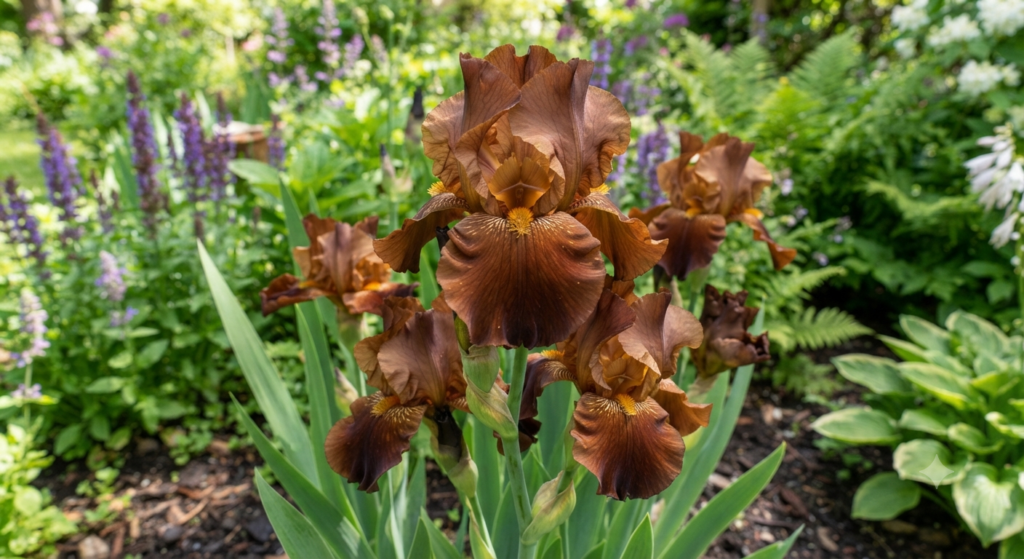
Bearded irises come in almost every color, and the brown and bronze varieties are criminally underused. Cultivars like ‘Kentucky Bourbon’ or ‘Copper Classic’ have a warm, coppery brown that catches the evening light in a way that makes the whole flower bed glow around sunset.
These grow from rhizomes, and the number one mistake I see people make is planting the rhizome too deep. It should sit right at or just barely below the soil surface, with the top slightly exposed to air. Bury it like a bulb and you’ll get lush leaves and zero flowers, which is one of the most frustrating things that can happen to a new gardener.
Bearded iris blooms in late spring, and one planting can come back for a decade or more if you divide the rhizomes every three to four years. Overcrowded clumps stop flowering, so mark your calendar and do the division even if the plant still looks fine.
Full sun and sharp drainage are the two things this plant demands. Skip both and you’ll be dealing with rhizome rot by midsummer.
4. Coneflower ‘Sundown’ and Other Rust-Brown Coneflowers
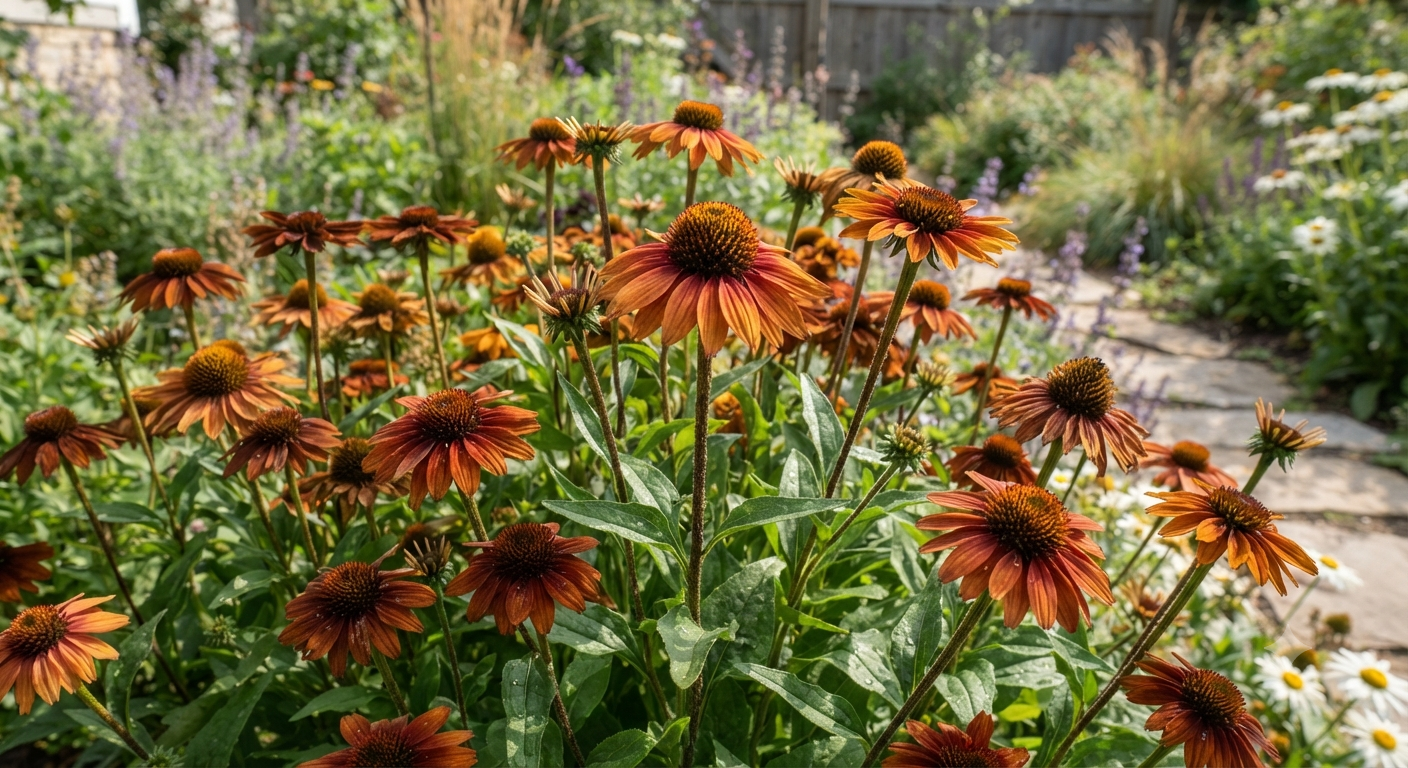
Echinacea has exploded in popularity over the last decade, and breeders have gone wild with color. Varieties like ‘Sundown’ and ‘Tiki Torch’ bring a rusty, burnt-orange-brown that looks like a sunset frozen in petal form.
These are perennial coneflowers, meaning you plant once and enjoy them for years, unlike a lot of the fussier hybrid brown flowers out there. They handle drought well once established, and I mean genuinely well, not the “drought tolerant” label that garden centers slap on everything to sell more plants.
Give them full sun and soil that drains. Coneflowers hate wet feet, and a rainy spring in heavy clay soil is a fast way to lose the whole planting. If your soil holds water, work in some compost or coarse sand before you plant.
Deer mostly leave coneflowers alone, which is a huge relief if you’ve ever watched a herd strip your garden overnight. Pair these with brown-eyed Susans for a prairie-style bed that basically takes care of itself once it’s established.
5. Brown Tulips (‘Cafe Noir’ and ‘Brown Sugar’)
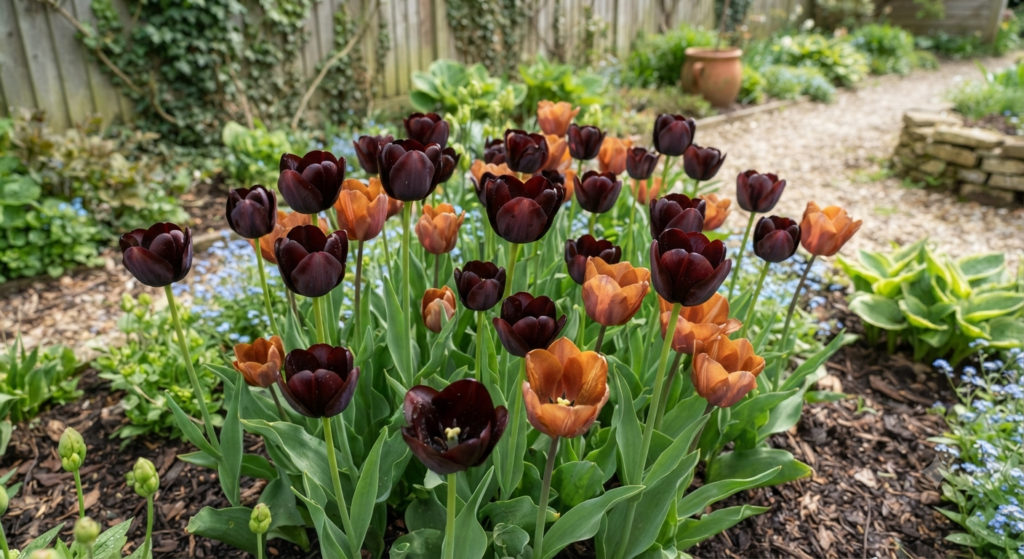
Tulips in brown and bronze shades feel almost gothic, in the best way. ‘Cafe Noir’ has deep mahogany-brown petals that look nearly black in low light, and ‘Brown Sugar’ brings a softer, caramel-toned bronze.
Plant tulip bulbs in fall, about six weeks before the ground freezes solid where you live. They need a cold period to bloom properly, which is why gardeners in warmer zones sometimes have to chill their bulbs in the fridge for six to eight weeks before planting.
Here’s my blunt opinion: tulips are not a “plant once and forget it” flower in most climates. They tend to bloom big the first year and get smaller every year after. If you want that jaw-dropping first-year display, treat them like an annual and replant fresh bulbs each fall. I know that feels wasteful, but skimping on new bulbs is how you end up with a sad little tulip patch by year three.
Brown tulips look incredible mixed into a bed with white or cream tulips. The contrast makes the brown look intentional and elegant instead of muddy.
6. Brown Daylily (‘Chicago Brown Eyes’ and Similar Cultivars)
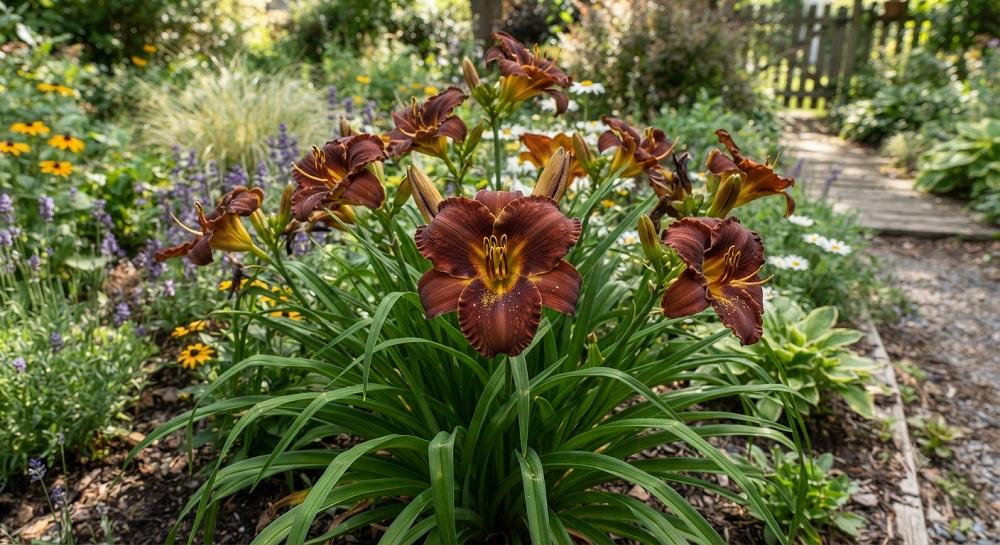
Daylilies are the workhorse of the perennial world, and brown-toned varieties bring depth to a plant that’s usually all orange and yellow. ‘Chicago Brown Eyes’ has a warm gold petal with a striking chocolate-brown eye zone near the center.
Daylilies are about as low-maintenance as flowering perennials get. They tolerate poor soil, drought, heat, and general neglect. I’ve got a patch that’s survived three different renters before me at my current house, and nobody watered it on purpose for at least two of those years.
Each flower only lasts one day, which is where the name comes from, but a mature plant produces so many buds that you get weeks of continuous bloom. Deadheading spent flowers keeps the plant looking tidy, though it’s honestly optional if you don’t mind a slightly messier look.
Divide daylily clumps every three to five years to keep them blooming well. Overcrowded clumps get stingy with flowers, same as the bearded iris.
7. Brown Pansies (‘Molasses’ and ‘Coco’)
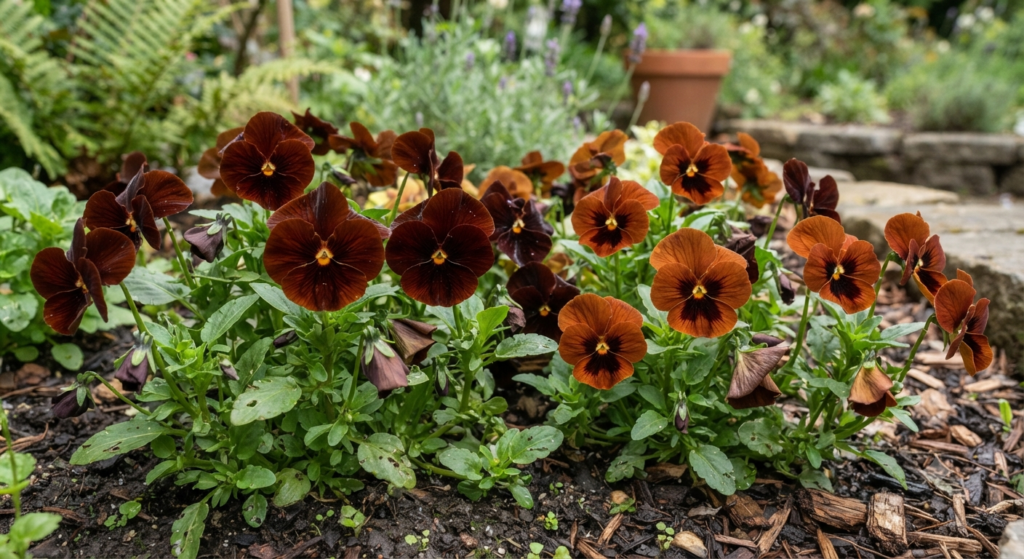
Pansies get written off as a beginner flower, but the brown varieties are anything but boring. ‘Molasses’ has deep, velvety brown-red petals, and ‘Coco’ brings a lighter caramel tone with darker veining that looks almost hand-painted.
These are cool-season flowers, meaning they thrive in spring and fall and often sulk or die outright in peak summer heat. In mild climates, brown pansies can even bloom through a light winter, giving you color when almost nothing else in the garden is doing anything.
Pansies want rich, well-draining soil and consistent moisture. Let them dry out completely even once and you’ll notice the flowers get smaller and the plant starts to look stressed within days.
Quick side note: pansies are edible. The brown varieties make a genuinely striking garnish on a cake or salad, and most people have no idea a flower on their plate came in that color until they see it themselves.
8. Foxtail Lily, Bronze Variety (Eremurus)
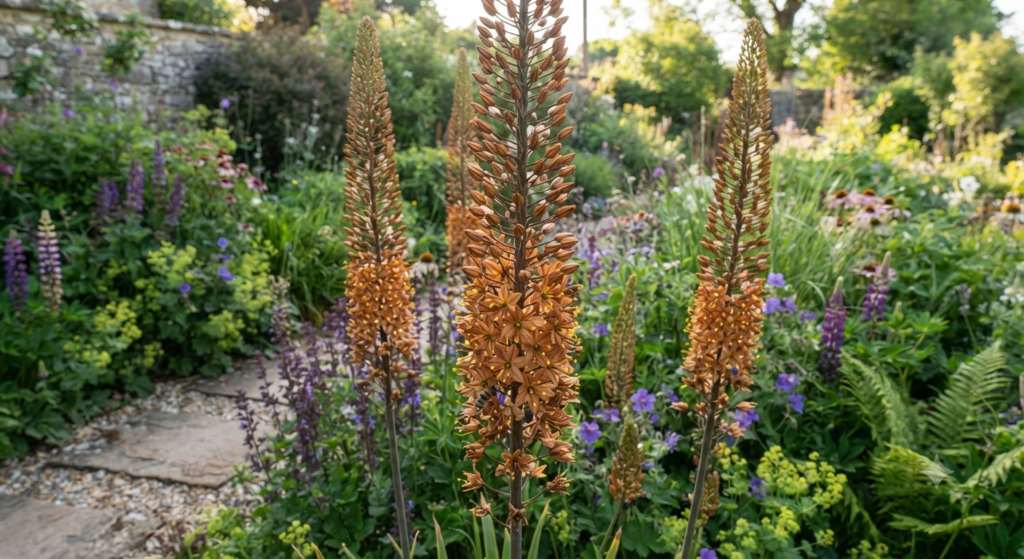
Foxtail lily isn’t subtle. These plants send up flower spikes that can reach four to six feet tall, covered top to bottom in small star-shaped blooms. The bronze and copper-brown cultivars look like something out of a fantasy movie set.
Plant the octopus-shaped root (yes, it genuinely looks like a small octopus) in fall, in a spot with excellent drainage. Standing water will rot the root over winter faster than almost anything else on this list will kill a plant.
Foxtail lily needs a spot with full sun and, ideally, some protection from strong wind, since those tall spikes can snap in a bad storm. I lost my first planting to a windy April and had to stake the replacements, which is an annoying extra step but worth it for the payoff.
This isn’t a cheap plant, and it’s not the easiest to establish. But if you want a genuine showstopper that nobody else on the block is growing, foxtail lily earns its price tag.
9. Brown Dahlias (‘Chat Noir’ and ‘Chocolate Star’)
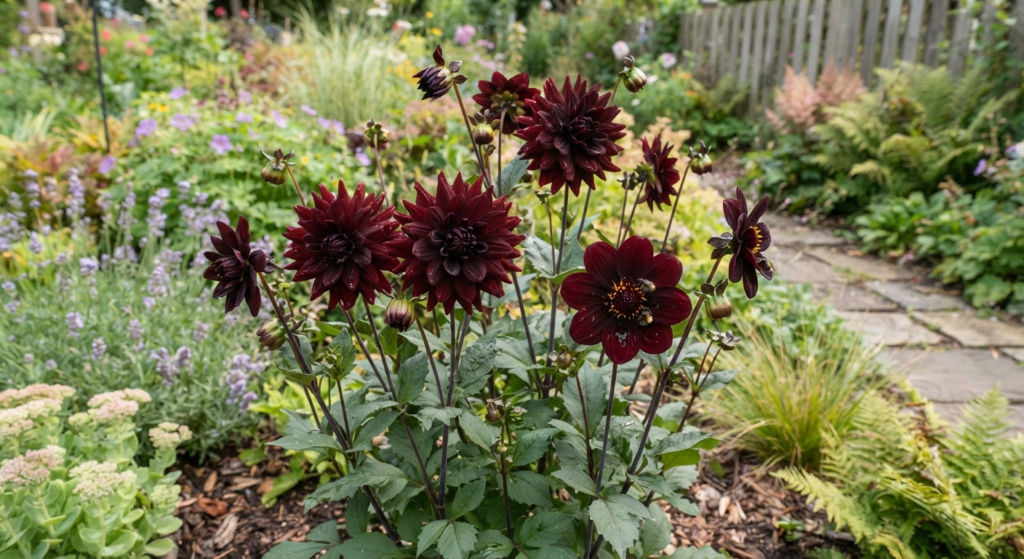
Dahlias in near-black brown tones bring serious drama to a late-summer garden. ‘Chat Noir’ produces deep burgundy-brown blooms with a velvety texture, and ‘Chocolate Star’ has a more open, single-petal form in a warm cocoa shade.
Dahlias grow from tubers and need to be planted after your last frost date, once the soil has warmed up. Plant too early into cold, wet soil and the tuber will rot before it ever gets a chance to sprout.
These plants are heavy feeders. I fertilize mine every three to four weeks through the growing season with a balanced fertilizer, and I’ve found that skipping this step is the single fastest way to end up with weak stems and disappointing blooms. Dahlias also benefit from staking, especially the taller varieties, since a loaded flower head can snap a stem in a summer storm.
Like chocolate cosmos, dahlia tubers need to be dug up and stored over winter in most climates. It’s an extra chore in fall, but multiplying tubers means free plants for next year, and eventually enough to share with the whole street.
10. Brown Hellebore (‘Chocolate Cherry’)
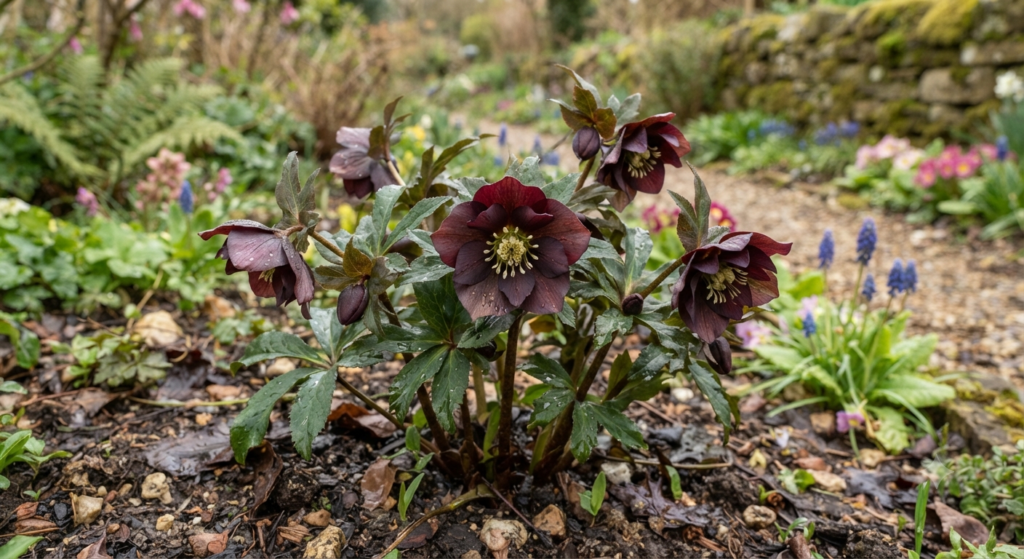
Hellebores bloom absurdly early, sometimes pushing flowers up through late snow. The chocolate-toned varieties bring a rich, almost wine-brown color to a part of the garden that usually has nothing going on in late winter and early spring.
These plants prefer partial to full shade, which makes them one of the few brown flowers on this list that actually wants a spot under trees or on the north side of a house. Rich, well-drained soil with plenty of organic matter keeps them happy for years.
Hellebores are slow to establish. Don’t expect a big show the first year. I tell people to think of the first year as a “settling in” period, and by year three you’ll have a full, mounding clump loaded with nodding flowers.
They’re also deer and rabbit resistant, since the whole plant is mildly toxic if eaten. That toxicity is worth knowing about if you’ve got small kids or curious pets who like to put things in their mouths.
11. Brown Snapdragon (‘Chocolate’ Variety)
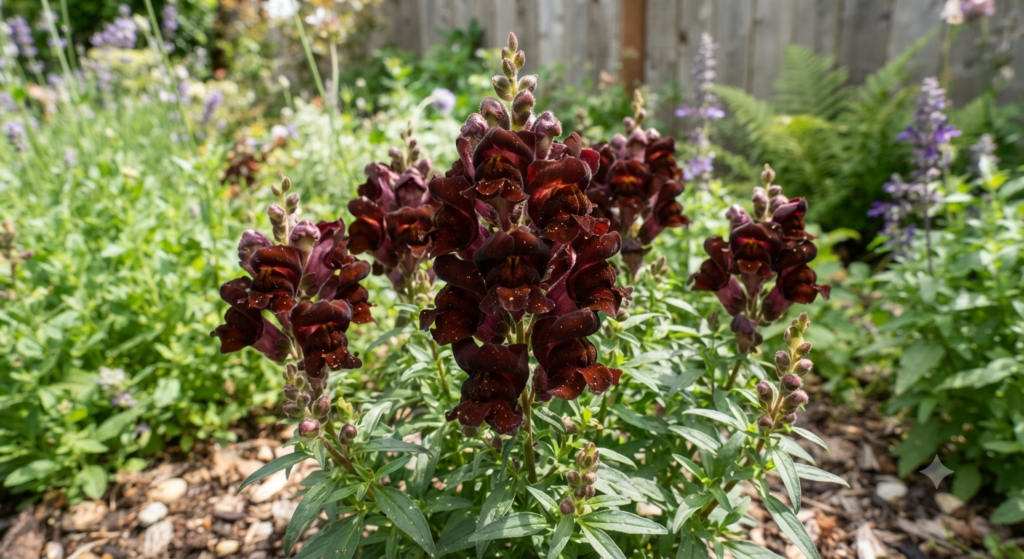
Snapdragons come in nearly every color, and the brown and bronze cultivars add a moody, autumnal note to spring and fall plantings. The classic snapping flower shape is a favorite for kids, who love squeezing the sides to make the “mouth” open and close.
These are cool-season annuals in most climates, meaning they do their best work in spring before summer heat kicks in, and again in fall once temperatures drop. In mild winter climates, brown snapdragons can bloom nearly year-round.
Pinch the growing tips when plants are young to encourage bushier growth and more flower spikes. Skipping this step gives you a taller, leggier plant with fewer total blooms, which is a mistake I made my first year growing them.
Snapdragons make excellent cut flowers, and the brown varieties look striking mixed into a bouquet with cream and burnt orange blooms. They’ll last a week or more in a vase with fresh water.
12. Brown-Toned Ornamental Grasses (Technically Not a Flower, But Hear Me Out)
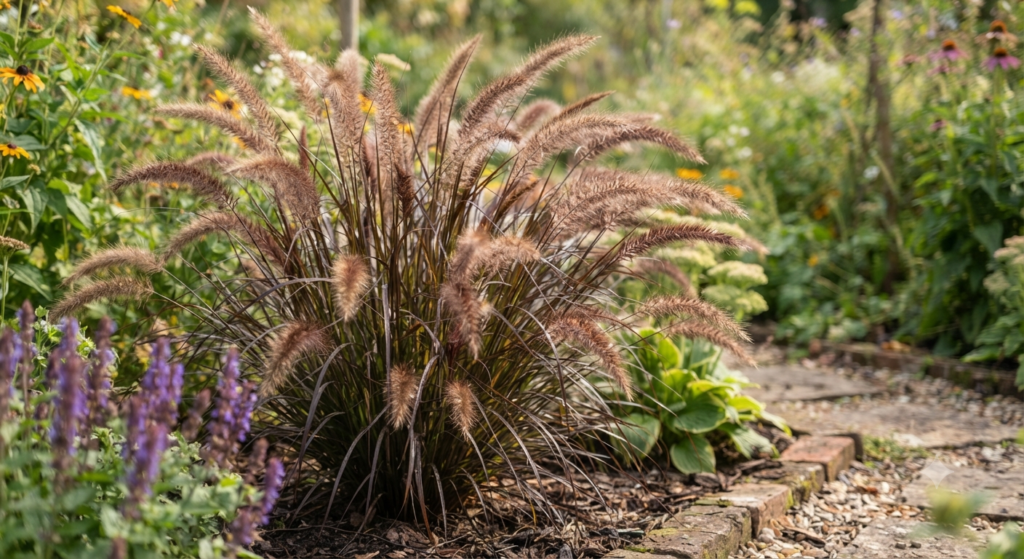
This one’s my bonus pick, and I’m breaking my own rules to include it. Ornamental grasses like brown fountain grass or certain sedge varieties produce feathery brown seed heads that function like flowers in a garden design, catching light and movement in a way that actual blooms often can’t match.
These grasses need almost nothing from you once established. Full sun, decent drainage, and an annual cutback in late winter is basically the whole maintenance list. If you want brown texture without the fuss of a fussier flowering plant, this is where I’d point a busy gardener.
13. Brown Calla Lily (‘Odessa’ and Similar Cultivars)
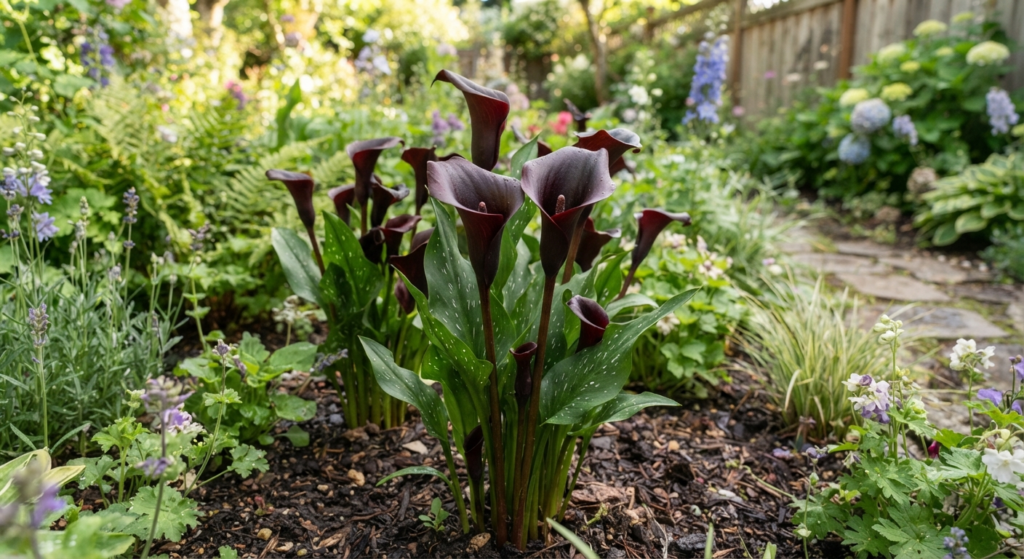
Calla lilies usually bring to mind white funeral flowers, but the brown and burgundy-brown cultivars completely change that image. ‘Odessa’ has a deep wine-brown, almost velvet-textured spathe that looks incredible in both garden beds and cut arrangements.
Calla lilies grow from rhizomes and prefer consistently moist, rich soil. Unlike most of the drought-tolerant plants on this list, calla lilies actually want regular watering and will wilt fast if they dry out during a hot stretch.
In colder zones, dig up the rhizomes before the first hard frost and store them indoors over winter, similar to dahlias and chocolate cosmos. In zones 8 and warmer, you can usually leave them in the ground with a layer of mulch for protection.
These make phenomenal cut flowers for anyone doing DIY wedding or event arrangements, since brown callas photograph beautifully against both light and dark backgrounds.
14. Brown Hollyhock (‘Nigra’)
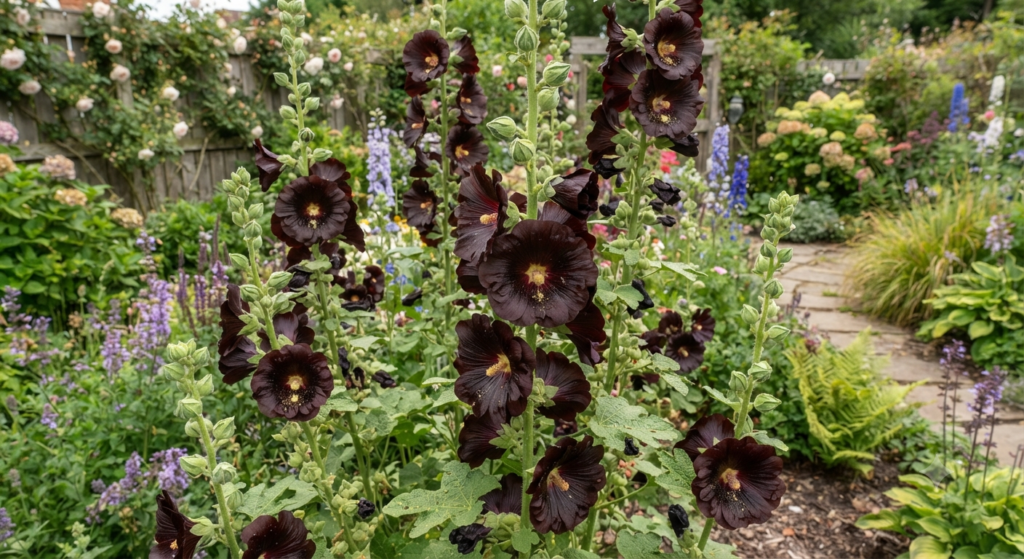
Hollyhock ‘Nigra’ produces deep maroon-brown, almost black flowers on stalks that can reach six feet or taller. It’s a cottage garden classic with a genuinely dramatic color twist.
Plant hollyhocks against a fence or wall, since the tall stalks benefit from some support once they’re loaded with flowers. I learned this one the hard way after a summer thunderstorm flattened an entire row I’d planted out in the open with nothing behind them for support.
Hollyhocks are technically biennial, meaning they grow leaves the first year and flower the second year before dying back. Let a few flowers go to seed each season, though, and you’ll get a self-sustaining patch that keeps coming back on its own timeline.
Watch for rust, a fungal disease that shows up as orange-brown spots on the leaves. It’s mostly cosmetic and won’t kill an established plant, but removing affected leaves helps keep the plant looking its best.
Real Talk: What Can Go Wrong With Brown Flowers
Not everything about brown flowers is sunshine and easy wins, so let’s get real for a minute.
Brown flowers can look muddy in the wrong setting. Plant a whole bed of nothing but brown, and instead of looking sophisticated, it can just look like the flowers died. The trick is contrast. Pair brown blooms with white, cream, silver foliage, or bright orange and gold. Without that contrast, you’re just going to confuse your mail carrier into thinking you gave up on your yard.
Several of these plants, especially the tuber and rhizome types like dahlias, chocolate cosmos, and calla lilies, require digging up and storing over winter in colder zones. That’s real work in the fall, right when you’re already busy raking leaves and winterizing everything else. If you’re not up for that annual chore, stick to the true perennials on this list, like coneflower, daylily, and hellebore.
Brown and bronze flower varieties are also sometimes harder to find at big box garden centers. You may need to order from a specialty online nursery or a local perennial farm, which means planning months ahead of your actual planting date instead of grabbing something on a Saturday whim.
And I’ll be honest: some of the brown cultivars are pricier than their standard-colored siblings, simply because they’re less common and harder to breed. Foxtail lily and specialty dahlias in particular are not budget plants. Don’t go all in on brown flowers your first season. Test a few, see what actually thrives in your specific soil and light conditions, and expand from there.
Final Thoughts on Growing Brown Flowers
Brown flowers aren’t a gimmick. They’re the secret ingredient that makes the rest of your garden look pulled together instead of thrown together. Start small, pick two or three varieties from this list that match your climate and sun exposure, and watch how much richer your whole flower bed looks once that warm, earthy color is doing its quiet work in the background.
Have you grown any of these brown beauties before, or are you adding your first one this season? Drop a comment below and let me know which variety you’re most excited to try, or ask me anything about getting these established in your own garden.

About Syprose Kiche
Syprose Kiche is the creator and writer behind My Besuited Home, a practical home and garden website covering DIY projects, gardening, lawn care, landscaping, home improvement, and outdoor living. She focuses on turning everyday homeowner questions into clear, practical guides backed by careful research and useful real-world considerations.