
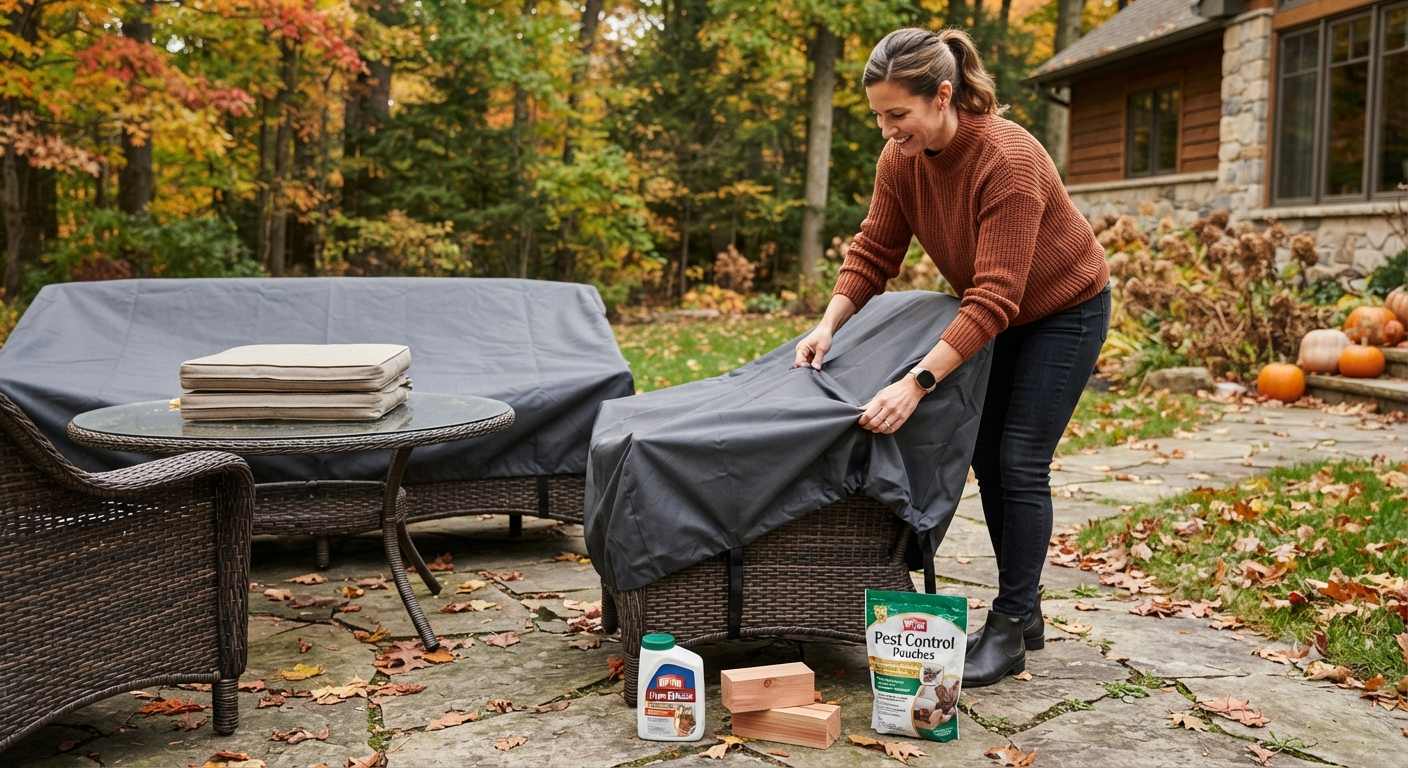
You covered the grill. You dragged the cushions inside. You even remembered to flip the umbrella base so it doesn’t fill with rainwater. And then, come March, you pull the tarp off your patio set and find a mouse nest tucked into the seat cushions, a family of spiders living in the hollow legs of your wicker chair, and something has clearly been gnawing on your resin loveseat.
I’ve had all three happen to me. Not in the same year, thankfully, but close enough that I now treat “winterizing the patio” with the same seriousness as winterizing the pipes. Pests don’t care that your furniture is decorative. To them, it’s a five-star hotel with room service, and once they check in, they’re expensive to evict.
This is everything I do every single fall to keep mice, spiders, wasps, carpenter ants, and even the occasional raccoon out of my patio furniture. Some of it is common sense. Some of it I only figured out after finding evidence I’d rather not describe in detail.
Why Patio Furniture Attracts Winter Pests in the First Place
Before you can pest-proof anything, it helps to know why your furniture is even a target. It’s not personal. It’s real estate.
Cushions, hollow furniture frames, and storage boxes offer three things pests want as the weather turns cold: shelter from wind, insulation from freezing temperatures, and darkness. A stack of cushions is basically a mouse condo. Hollow aluminum or resin furniture legs are perfect tunnels for ants and spiders. Even a folded umbrella can hide a wasp nest you won’t discover until you open it back up in June and get stung in the face.
Food matters too. If you grill anything within ten feet of your patio set, grease residue drifts onto nearby cushions and fabric. Mice can smell that from a surprising distance, and once one shows up, it tells its friends.
Here’s the part most people miss: pests don’t wait until it’s freezing to move in. They start scouting in late summer and early fall, while it’s still warm enough for you to be lounging out there without a jacket. By the time you’re thinking about winterizing, they’ve already picked their spot.
Best Materials for Pest-Resistant Patio Furniture
If you’re shopping for new furniture, or replacing pieces pests have already ruined, material choice matters more than most buying guides tell you.
- Metal (aluminum or steel) with solid, not hollow, construction is your best bet. Pests can’t chew through it, and it doesn’t hold moisture the way wood does. The catch is that hollow metal tubing, which is extremely common in budget patio sets, is still an open invitation for insects looking for a dry tunnel. Check the ends of the legs. If they’re not capped, cap them yourself with rubber furniture ferrules before the first cold snap.
- Teak and other dense hardwoods naturally resist rot and insects better than pine or cheaper softwoods, thanks to their natural oils. This is why teak furniture costs more, and honestly, for anyone who has replaced a termite-damaged pine bench, it’s worth every extra dollar.
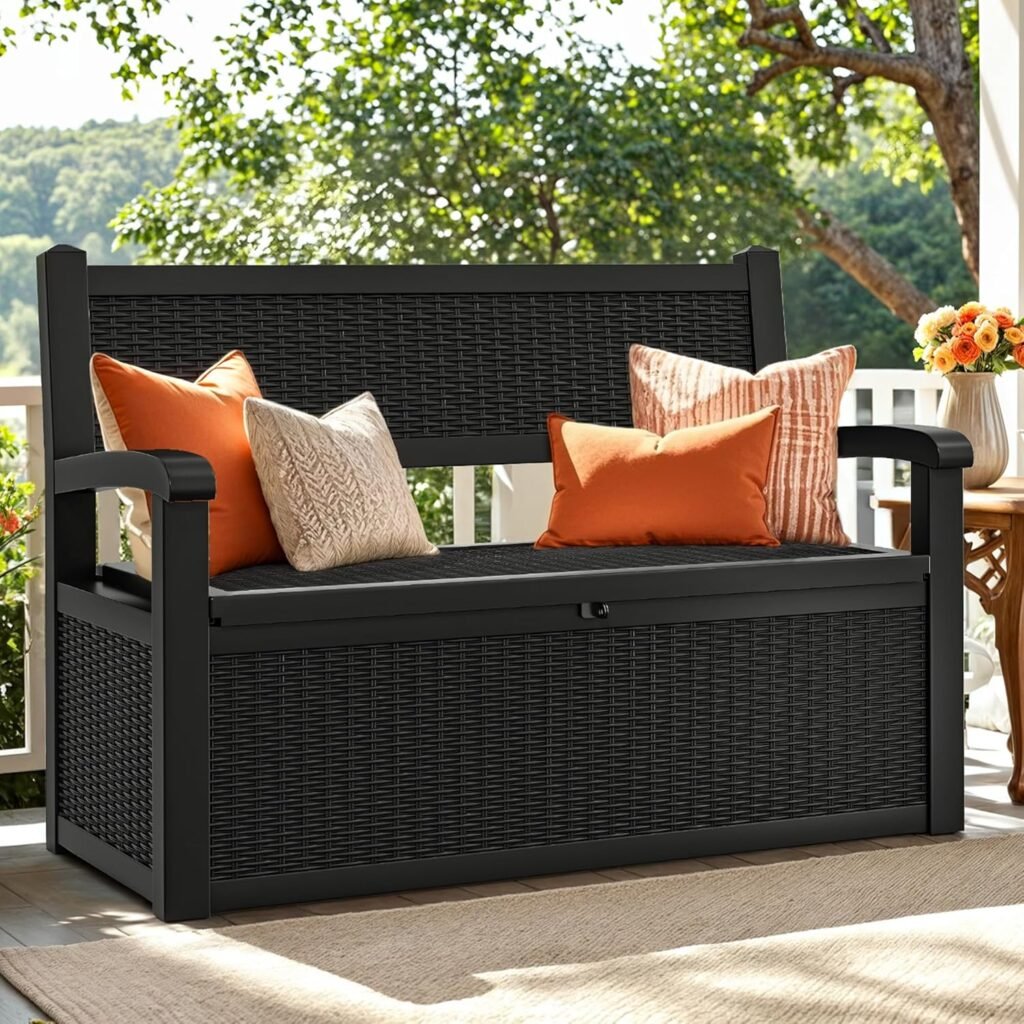
- Wicker and rattan are gorgeous and I will die on the hill that a well-made wicker set elevates a patio instantly. But natural wicker is basically a woven insect apartment complex. If you love the look, go with synthetic resin wicker instead. It photographs the same in your Instagram post and gives spiders nothing to nest in.
- Plastic and resin furniture is generally pest-resistant on its surface, but mice have been known to chew through thin resin to get at insulation or nesting material trapped inside, especially on furniture with foam-filled arms or seats. If you own resin pieces with any foam padding built in, treat them the same as cushioned furniture below.
How to Store Cushions So Mice and Spiders Can’t Get In
Cushions are pest magnet number one, so this deserves its own section instead of being buried in a general list.
- Wash and fully dry every cushion before storage. Any lingering food smell, sunscreen residue, or moisture is an invitation. A damp cushion is also an invitation for mold, which is its own separate nightmare.
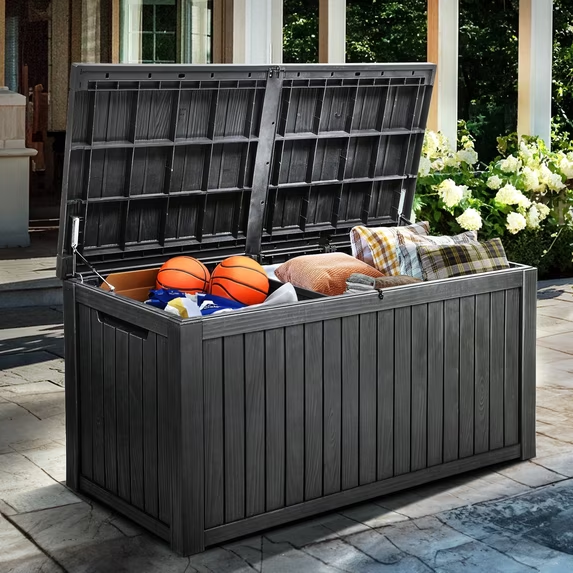
- Store cushions in sealed, hard-sided plastic totes, not soft storage bags. Soft canvas or vinyl storage bags look tidy, but mice chew through them without much effort. A hard plastic tote with a locking lid is the single best upgrade I’ve made to my winterizing routine.
- Add a few sachets of dried peppermint or cedar chips inside the tote. Rodents dislike the smell. I’m not going to pretend this is a bulletproof mouse deterrent on its own, but combined with sealed storage, it adds another layer they have to get past.
- Store totes off the ground. A shelf, a pallet, cinder blocks, anything that gets the container a few inches above concrete or dirt. Mice and insects travel along the ground far more than they climb, so elevation alone removes a huge chunk of risk.
- Skip the shed corner if the shed has any gaps. I learned this by trial and error with my own shed, which had a half-inch gap under the door that I assumed was too small to matter. It was not too small to matter. Mice can squeeze through openings the width of a pencil. If your shed has visible daylight coming through anywhere, patch it before you store anything pest-sensitive inside.
Sealing and Covering Furniture Frames Against Insects
For furniture you’re leaving outside all winter, covered rather than boxed up, the frame itself needs attention.
Start with the legs. Any hollow tubing should get a cap, a cork, or even a wad of steel wool pushed into the opening. Steel wool works particularly well because insects and mice can’t chew through it the way they can through foam or fabric. I keep a bag of it in my garage specifically for this job every October.
Next, check joints and welds for gaps. Wasps especially love tucking nests into small crevices where two metal pieces meet. A bead of exterior-grade silicone caulk over any gap larger than a couple millimeters closes off potential nesting spots without affecting how the furniture looks once it’s covered anyway.
For furniture covers themselves, buy ones with a drawstring or elastic hem that cinches tight underneath the furniture, not covers that just drape loosely over the top. A loose cover is basically a tent that pests can walk right under. I’ve found that the cheap $15 covers from big box stores rarely cinch tight enough, and I now spend the extra money on covers rated for actual wind and weather resistance. It’s not just about pests either; a properly cinched cover survives windstorms that will send a loose one sailing into your neighbor’s yard.
If you have an umbrella, take it down completely rather than just closing it. A closed umbrella still has folds and gaps perfect for a wasp nest. I store mine standing upright in a dry corner of the garage, fully collapsed, wrapped in its own carrying sleeve.
Natural and Chemical Repellents That Actually Work
There’s a lot of Pinterest advice floating around about pest repellents, and I want to separate what actually works from what just smells nice.
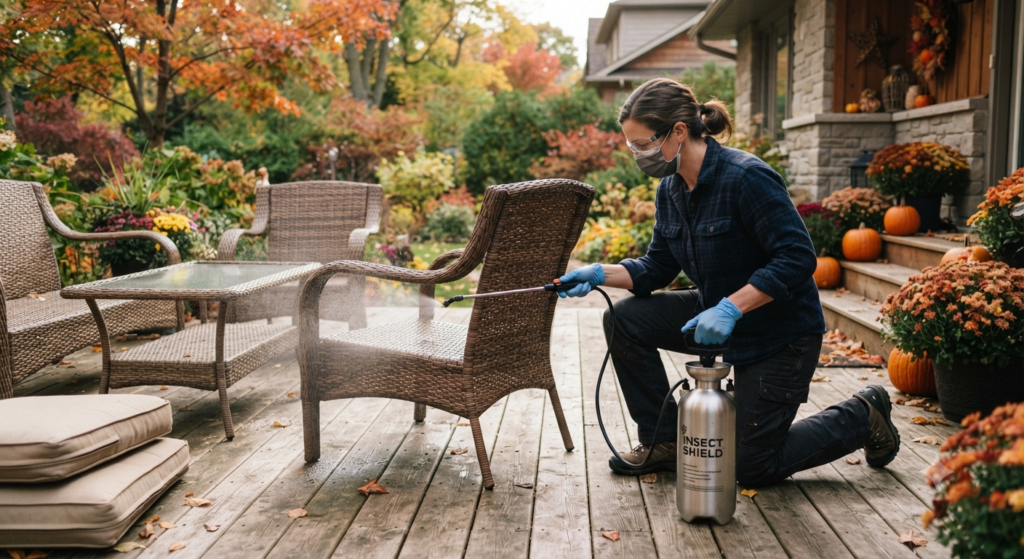
- Peppermint oil genuinely does repel mice and spiders to a meaningful degree, but it needs to be reapplied every two to three weeks to stay effective, since the scent fades. Cotton balls soaked in peppermint oil, tucked into storage totes and furniture crevices, are cheap and low-effort enough that I do this every fall regardless of what else I’m doing.
- Cedar works on a similar principle and lasts longer than peppermint, which is why cedar shavings or cedar blocks are worth the investment if you’re storing cushions long-term.
- Diatomaceous earth, food-grade version specifically, is excellent against crawling insects like ants and spiders. Sprinkle a thin line around the base of furniture legs or storage areas. It’s not toxic to pets or people in the amounts you’d use here, but it does need to stay dry to keep working, so it’s better suited to covered or indoor storage than fully exposed furniture.
- Mothballs get recommended constantly online, and I want to be direct about this: I don’t use them, and I’d recommend you skip them too. They’re genuinely toxic to pets, can be harmful to kids who get curious, and the smell lingers in fabric for months. There are better options above that don’t come with that risk.
For actual rodent problems that have already taken hold, snap traps or enclosed bait stations placed near, not inside, your storage area are far more effective than any scent-based repellent. Repellents are a prevention tool. Once mice have already moved in, you need something that actually removes them.
Where to Store Patio Furniture for Winter (Garage vs. Shed vs. Left Outside)
People ask me this constantly, and the honest answer is: it depends on what pests are already established in each location, not just which one seems cleanest.
- Garages tend to be the safest option if yours is fully sealed, meaning no gaps under the main door and no vents that lead directly outside without a screen. The downside is that garages often already have a mouse problem you don’t know about, especially if you store birdseed, pet food, or trash cans in there. Furniture stored in a garage with an existing rodent issue is not protected furniture, it’s just relocated furniture. Do a walk-through for droppings or gnaw marks before you move anything in.
- Sheds are hit or miss. Wooden sheds, especially older ones, tend to have more gaps at the base and around windows than people realize, and they’re rarely insulated, which means condensation builds up inside during freeze-thaw cycles. That moisture attracts insects even if rodents aren’t a problem. If your shed is your only option, spend an afternoon in early fall caulking gaps and adding a door sweep. It’s a couple hours of work that pays off all winter.
- Basements work well for cushions and small accessories, but I’d avoid storing full furniture frames down there unless you have a dehumidifier running. Basements that run damp create the same mold and insect risk as a leaky shed, just indoors.
- Leaving furniture outside, covered, is genuinely fine for frames made of metal, resin, or teak, as long as you’ve capped the legs and you’re using a properly cinched cover. Where people get into trouble is leaving cushions or fabric pieces outside under a cover all winter. Fabric holds moisture, and moisture plus cold plus dark equals exactly the conditions pests are looking for. My rule of thumb: hard furniture can stay outside, anything with padding or fabric comes in.
If you’re short on indoor space and stuck choosing between a slightly damp shed and leaving furniture outside under a quality cover, I’d pick outside every time. A well-made cover beats a poorly sealed structure, and I’ve had better luck over the years going that route than cramming everything into a shed that was already a little bit of a pest liability to begin with.
Seasonal Timeline: When to Start Winterizing Against Pests
Timing trips more people up than technique does. Most of the calls I get from friends asking for advice happen in November, when honestly, the ship has mostly sailed for prevention and we’re already into damage control.
Late August to early September is when pests start scouting for winter shelter, even though it still feels like summer. This is the window to cap hollow furniture legs and do a first round of cleaning, before anything has had a chance to move in.
Late September to October is your main winterizing push. Wash and store cushions, seal gaps, apply repellents, and get covers cinched down tight. By the time overnight temperatures start dropping into the 40s consistently, you want this done.
November through January is monitoring season. This is when I do my mid-winter checks, refresh any scent-based repellents that have faded, and keep an eye out for new activity, especially during any unseasonably warm stretch that might tempt pests to relocate.
February through March is when pest activity often spikes again as temperatures start climbing and everything that overwintered nearby starts moving around looking for food. Don’t relax your guard just because the worst of winter is behind you.
Checking Your Furniture for Pest Activity Before Spring Arrives
Even with a solid winterizing routine, I do a mid-winter check, usually in late January when there’s a warm-ish day. It takes fifteen minutes and has saved me from bigger headaches more than once.
Here’s what to check for:
- Small chew marks on fabric edges or foam, especially near zippers and seams where mice like to burrow in.
- Droppings, which look like small dark grains of rice, typically clustered near the entry point rather than spread evenly.
- Silk webbing in corners or hollow frame openings, which usually means spiders have set up shop, not necessarily a crisis but worth clearing out.
- A faint but distinct musty odor coming from covered furniture, which often means moisture has built up, and moisture plus fabric equals an insect and mold party you don’t want.
If you catch activity early, in January instead of April, you have time to relocate cushions, add fresh repellent, or set traps before the problem multiplies. Rodents in particular breed fast, and a single mouse in December can be a family of a dozen by the time spring rolls around.

Real Talk: What’s Not Worth the Effort
I want to be honest about a few things the pest-proofing industry doesn’t always tell you.
Ultrasonic pest repellent stakes, the solar-powered ones you stick in the ground around your patio, are largely a waste of money. I bought a four-pack a few years back convinced by glowing reviews, and I never once noticed a measurable difference in mouse or insect activity. Save the twenty bucks.
Fully dismantling and storing every piece of furniture indoors each winter sounds thorough, but for most people it’s simply not realistic, especially if you don’t have garage or basement space to spare. A properly cinched cover plus sealed hollow legs gets you 90 percent of the protection with a fraction of the labor. Don’t let perfect be the enemy of done here.
Also, don’t assume expensive furniture is automatically pest-proof just because it cost more. I’ve seen premium teak sets with foam-cushioned built-in seating get chewed into just as badly as a budget plastic set, because the pests don’t care about your receipt. The price tag protects your wallet from rust and rot, not necessarily from rodents.
One more thing: if you find an active wasp nest anywhere in your furniture during your winter check, do not try to knock it down yourself in the cold, thinking the wasps are dormant and harmless. Cold-weather wasps are sluggish, not dead, and a sluggish wasp that gets disturbed will absolutely still sting you. Call in pest control for anything beyond a small, clearly abandoned nest.
Quick side note: if you live somewhere that gets genuinely brutal winters, below freezing for weeks at a time, your pest pressure actually drops naturally once real cold sets in. Most of your risk window is that in-between stretch in early fall and again in early spring when it’s cold enough for pests to seek shelter but not cold enough to kill them off. Focus your energy there rather than worrying all winter long.
Parting Wisdom
Winterizing your patio furniture against pests isn’t a one-and-done task you knock out in an afternoon and forget about. It’s closer to a habit, a fifteen-minute check here, a fresh sachet of cedar there, spread across the whole cold season. Do the boring stuff now, seal the legs, wash and box the cushions, cinch the covers tight, and you’ll thank yourself when you pull everything out in spring and it’s exactly how you left it.
What’s the strangest thing you’ve ever found nesting in your patio furniture? I’ve heard some wild stories from readers over the years, and I’d genuinely love to hear yours. Drop it in the comments below, and if you’ve got a pest-proofing trick I didn’t mention here, share that too. I’m always looking to steal a good idea.

About Syprose Kiche
Syprose Kiche is the creator and writer behind My Besuited Home, a practical home and garden website covering DIY projects, gardening, lawn care, landscaping, home improvement, and outdoor living. She focuses on turning everyday homeowner questions into clear, practical guides backed by careful research and useful real-world considerations.