
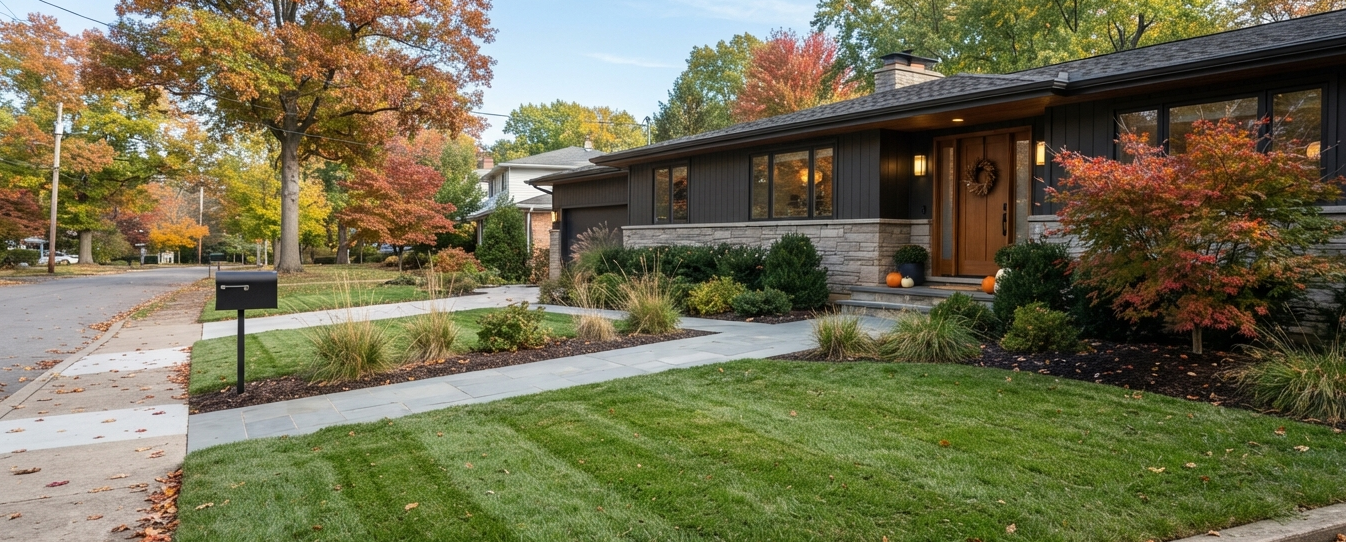
My neighbor Gary spends every October weekend out there with a leaf blower strapped to his back like he’s suiting up for battle. Tarps everywhere. Forty bags of leaves lined up at the curb. By the time he’s done, his back is wrecked and his front yard looks like a golf course that got scared straight.
I don’t do that anymore. Ten years of gardening taught me that most fall “cleanup” is just busywork dressed up as responsibility. Your front yard doesn’t need a military-grade purge every autumn. It needs a handful of smart moves that protect your soil, keep your beds tidy, and get you back inside before the good football games start.
I used to be Gary, by the way. My first fall as a homeowner, I raked leaves into forty-two bags. I know the exact number because I counted them at the curb like some kind of trophy collection. Two weeks later, half of them had split open in a windstorm and I was chasing wet leaves down the street in my socks. That was the year I decided there had to be a smarter way.
This is my stripped-down, minimalist approach to fall cleanup. Ten tips, one bonus, zero wasted Saturdays.
Why Minimalist Fall Cleanup Actually Works Better
Here’s the thing nobody tells you at the garden center: a spotless, leaf-free yard in November is actually worse for your soil than a slightly messy one.
Fallen leaves are free mulch. They insulate plant roots, feed earthworms, and break down into nutrients your soil will beg for come spring. When you rake, bag, and haul away every single leaf, you’re literally throwing away free fertilizer and then paying for bagged compost in April. I’ve done the math on this more than once, and it never makes sense.
Minimalist fall cleanup isn’t about being lazy. It’s about doing less work that matters more. You’re targeting the specific tasks that protect your yard through winter and skipping the cosmetic stuff that only looks good for about a week before the wind undoes it anyway.
1. Mow Your Leaves Instead of Raking Them

This is the single biggest time-saver I know, and most homeowners have no idea it works.
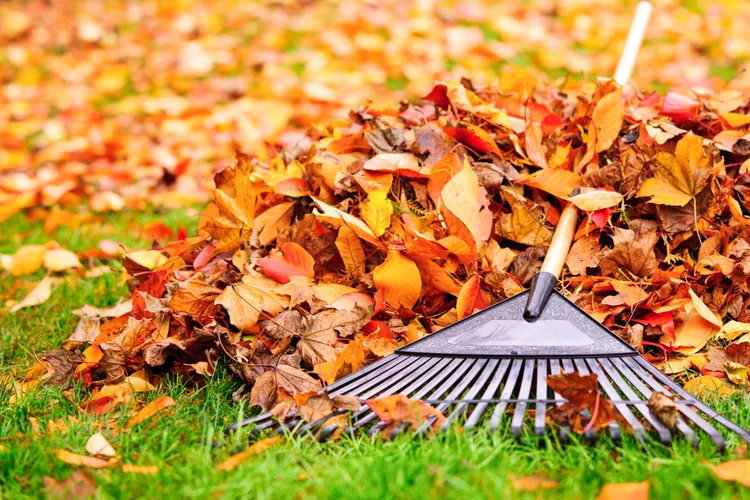
Instead of raking leaves into bags, just run your mower over them a couple of times with the mulching setting on. This shreds the leaves into confetti-sized pieces that settle down into your lawn instead of sitting on top of it.
The shredded leaves break down fast and feed your soil with nitrogen and organic matter all winter long. You skip the raking, skip the bagging, skip the trip to the curb. It’s maybe 20 minutes of mowing versus two hours of raking.
One caveat: this only works if the leaf layer isn’t too thick. If your yard is buried under six inches of maple leaves, you’ll need to mow more than once, or bag some of the excess first. A thin-to-moderate layer mulches beautifully. A thick blanket just clogs your mower deck.
I run a mulching mower over my front lawn about once a week through October, right when I’d normally be mowing anyway. It’s not an extra chore, it’s just a swap. Instead of a separate raking session, the leaf work happens automatically while I’m doing something I was already going to do. If you’ve got oak leaves specifically, know that they’re tougher and take longer to break down than maple or birch. Give them an extra pass or two with the mower to chop them smaller so they don’t sit on the surface as intact leaves through winter.
2. Cut Back Perennials Only If They Look Bad
I used to chop every perennial down to the ground every October because that’s what the old gardening books told me to do. Total waste of effort, and honestly, it hurt more than it helped.
Here’s my rule now: if the plant is diseased, floppy, or turning to mush, cut it back. If it’s still standing upright and looks reasonably tidy, leave it.
Plants like coneflowers, black-eyed Susans, and ornamental grasses actually look great through winter, with frost catching on their seed heads. They also feed birds and give beneficial insects a place to overwinter. Cutting them down in fall means you lose all of that for zero benefit.
Save the big perennial cleanup for late winter or early spring, right before new growth starts. Your yard stays interesting all winter, and you cut your fall workload roughly in half.
There’s a practical reason beyond aesthetics too. Hollow perennial stems, the kind you get on plants like bee balm or Joe Pye weed, are prime real estate for native bees that overwinter inside them. Chop those stems down in October and you’ve just evicted next year’s pollinators before they even moved in. I leave mine standing until temperatures are reliably above 50 degrees in spring, then cut everything back at once.
The one exception to my “leave it standing” rule is anything that had a disease problem this year. Powdery mildew on bee balm, black spot on roses, that kind of thing. Fungal spores overwinter in dead plant material and reinfect the same spot next season. For diseased plants specifically, cut them back and bag the debris rather than composting it.
3. Edge Your Beds Once and Call It Done
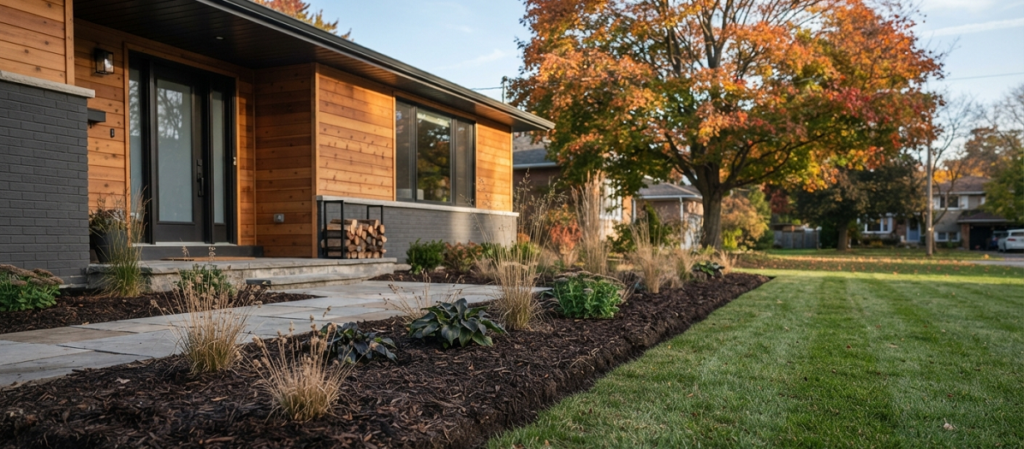
A clean edge between your lawn and your flower beds makes the whole front yard look intentional, even if the plants inside those beds are a little wild. This is the cheapest visual upgrade in gardening, and it takes maybe 15 minutes per bed.
Use a half-moon edger or a flat spade to cut a clean line, about 4 to 6 inches deep, along the border of each bed. You don’t need to do this every month. One good edging session in fall holds its shape well into spring, especially once the ground starts to freeze and growth slows down.
I’ve found that homeowners obsess over weeding and mulching but skip edging entirely, and it’s backwards. A crisp edge with slightly messy beds reads as “minimalist and intentional.” Perfectly weeded beds with a ragged edge just read as unfinished.
If you want the edge to hold even longer, angle your cut slightly, about 45 degrees, so the trench catches mulch and soil instead of letting it spill onto the lawn. This little trench also acts as a natural barrier that slows grass roots from creeping into your beds over winter, which saves you a maintenance headache come spring.
4. Skip the Full Mulch Layer and Top-Dress Instead
Every fall, garden centers push the “put down a fresh 3-inch layer of mulch” advice, and every fall I roll my eyes a little. For a minimalist yard, that’s overkill and it’s expensive.
Instead, just top-dress. Add an inch, maybe an inch and a half, of mulch only where the old layer has thinned out or washed away. Check around tree bases, along bed edges, and near any exposed soil. Those spots need protection before a hard freeze. Areas that already have decent mulch coverage from spring don’t need a fresh blanket.
This cuts your mulch bill by more than half and cuts the labor time to match. You’re not hauling wheelbarrow after wheelbarrow across the whole yard. You’re doing targeted patches where it actually matters.
Quick side note: never pile mulch up against tree trunks or stems, the volcano-mulching look you see at office parks. It traps moisture against the bark and invites rot and pests. Keep a couple inches of clearance around every trunk.
5. Pull Weeds Before They Go to Seed, Not After
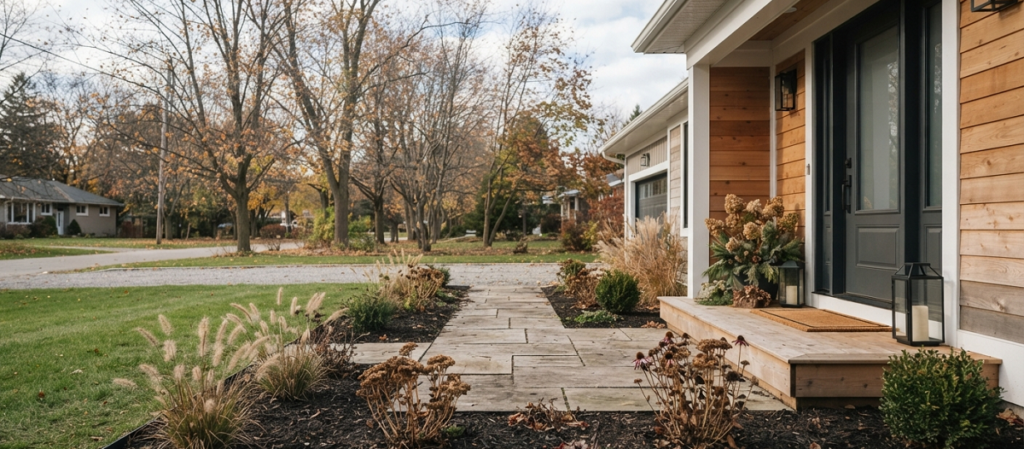
Fall weeding feels pointless when the growing season’s winding down, so most people skip it entirely. That’s a mistake that costs you double in spring.
A lot of common weeds, think dandelion, chickweed, and crabgrass, are actively dropping seed in early fall. Every seed head you ignore now becomes ten new weeds next April. Ten minutes of targeted pulling in October saves you an entire weekend of weeding in May.
You don’t need to weed the whole yard. Walk your beds and your lawn edges specifically looking for seed heads, the fluffy or spiky tops that mean the plant is about to scatter its offspring everywhere. Pull those first. Everything else can wait.
6. Clean Your Gutters Before You Touch the Beds
This one isn’t technically a “front yard” task, but it directly protects your front beds, so it makes the list. Clogged gutters overflow, and that overflow dumps straight into whatever’s planted below your roofline.
I made this mistake my second year in my current house. Water poured off a clogged gutter section all winter and drowned an entire row of hostas I’d planted that spring. Root rot, the whole bed, gone by March.
Clear your gutters before your first hard rain of the season. It takes 30 minutes with a ladder and a pair of gloves, and it protects every plant beneath your roofline for the entire winter. Do this before you start any bed work, because there’s no point tidying up plants that are about to get flooded anyway.
7. Divide Overgrown Perennials Instead of Ripping Them Out
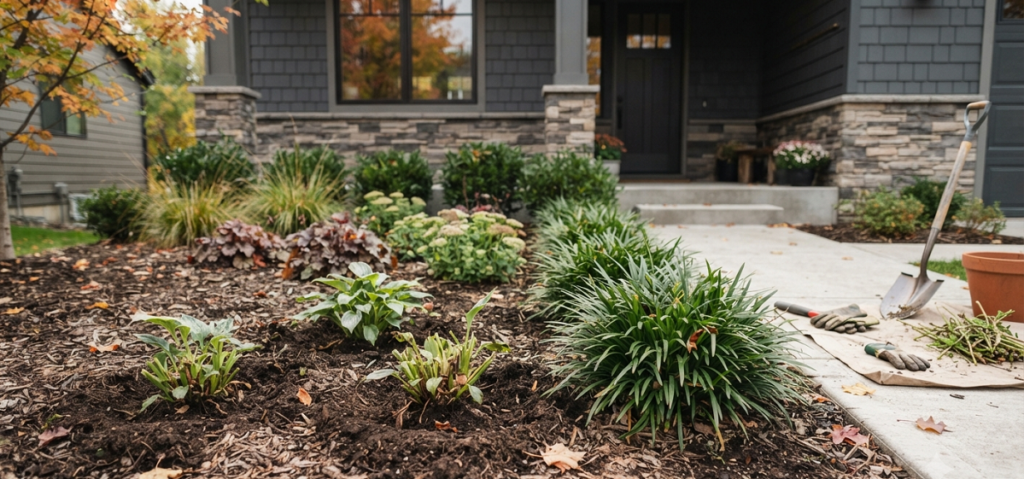
If you’ve got a hosta, daylily, or ornamental grass clump that’s outgrown its space and looks crowded, fall is actually the ideal time to divide it, not remove it.
Dig up the whole clump, split it into two or three sections with a spade or your hands, and replant the healthiest divisions. You get free plants for other spots in your yard, and the original plant comes back stronger and less crowded next year.
This takes maybe 20 minutes per plant and it’s genuinely satisfying work. It’s also the closest thing to “free landscaping” you’ll find. Instead of buying new perennials in spring, you’re multiplying the ones you already have.
Cool weather in fall is easier on transplant roots than the heat stress of spring or summer division, so your success rate goes up too.
8. Protect Container Plants With the Least Effort Possible
If you’ve got pots on your porch or along your front walk, don’t overthink winter protection. Most people either abandon their containers completely or go overboard building elaborate frost covers.
The minimalist move: group your pots together against a wall, ideally one that gets some afternoon sun, and wrap the group loosely in burlap if a hard freeze is coming. Clustering pots insulates them better than spacing them out, since they share warmth and block wind for each other.
For containers with plants you want to keep long-term, move them into an unheated garage or shed once temperatures dip below freezing regularly. For annuals that are done for the season anyway, just dump the soil into your compost or garden beds and store the empty pots. No need to babysit a plant that was never going to survive winter regardless of what you do.
9. Aerate Your Lawn Only If It’s Actually Compacted
Every fall lawn-care checklist tells you to aerate. Most yards don’t actually need it, and I think this is one of the more overhyped tasks in the whole minimalist cleanup conversation.
Here’s a quick test: push a screwdriver into your lawn. If it goes in easily, your soil isn’t compacted and you can skip aeration entirely this year. If you’re fighting to get it more than an inch or two deep, your soil is compacted and could use a fall aeration to let air, water, and nutrients reach the roots before winter.
High-traffic areas, like the strip of lawn next to your driveway or a path where people cut across regularly, are the most likely spots to actually need this. The rest of your lawn probably doesn’t. Renting an aerator for the one compacted section instead of the whole yard saves you money and a sore back.
10. Do One Final Walk-Through Instead of a Deep Clean
This is the tip that ties the whole minimalist approach together. Once you’ve mowed your leaves, edged your beds, top-dressed your mulch, and handled any compacted spots, don’t start a second full pass of the yard looking for more to do.
Instead, do one slow walk from the curb to your front door. Note anything that’s actively a problem: a dead branch hanging low, a trip hazard on the walkway, a plant that’s clearly diseased. Fix those specific things. Ignore everything else.
I’ve found that this final walk-through catches 90% of what actually matters and takes 10 minutes instead of another two hours of “just in case” cleanup. Minimalist gardening means trusting that a mostly-done yard is a done yard.
Real Talk: What’s Not Worth the Effort
Fall cleanup has a lot of tasks that feel productive but don’t move the needle much. Here’s where I think people waste their time.
- Bagging every single leaf. Unless your yard is smothered under a thick layer, mulching beats bagging every time. Bagged leaves go to a landfill where they don’t even decompose properly because they’re sealed away from air. That’s a lose-lose: extra work for you and wasted organic matter that could’ve fed your soil.
- Applying fall fertilizer to every bed. Fertilizer only helps if your soil actually needs the nutrients it provides. Without a soil test, you’re guessing, and over-fertilizing can burn root systems right before a freeze, which is worse than doing nothing at all. A basic soil test kit costs less than a bag of fertilizer, and it’ll actually tell you whether you need nitrogen, phosphorus, or nothing at all.
- Wrapping every shrub in burlap. I see this constantly, and it’s mostly unnecessary unless you’re in a genuinely harsh climate or dealing with a plant that’s marginally hardy for your zone. Most established shrubs handle winter fine without a burlap straightjacket. Save the wrapping for young plants or borderline-hardy varieties.
- Power-washing walkways and driveways. It looks nice for about a week until the next leaf storm or rain hits. This is pure cosmetic effort with almost no functional payoff for your plants or soil. Do it in spring if you want your hardscaping to look sharp for the season people actually spend outside.
The common thread here is effort that photographs well but doesn’t actually protect anything. If a task is purely cosmetic and won’t survive the first hard rain or windstorm, it’s not worth your Saturday. Save your energy for the tasks that hold up through winter.
Bonus Tip: Take Five Minutes to Photograph Your Beds
Here’s a small habit that’s saved me more headaches than almost anything else on this list. Before the frost hits and everything dies back, walk your front beds with your phone and snap a few photos.
Come March, you will not remember where your daylilies were planted, or which spot had the perennial that never came back, or where you meant to add more color next spring. I’ve dug up dormant bulbs by accident more times than I want to admit because I forgot they were there. A quick photo record solves this completely, and it takes less time than it took you to read this paragraph.
The Parting Wisdom
A minimalist front yard in fall isn’t a neglected yard. It’s a yard where every task you did actually mattered. Mow your leaves instead of bagging them. Cut back what’s actually falling apart, not what’s just going dormant. Fix the compacted spots, not the whole lawn. That’s the whole philosophy, really: less performative labor, more targeted care.
Your future spring self will thank you, and so will your back.
What’s on your fall cleanup list this year? Drop your questions or your own shortcuts in the comments below. I read every one, and I’m always up for stealing a good time-saving trick.

About Syprose Kiche
Syprose Kiche is the creator and writer behind My Besuited Home, a practical home and garden website covering DIY projects, gardening, lawn care, landscaping, home improvement, and outdoor living. She focuses on turning everyday homeowner questions into clear, practical guides backed by careful research and useful real-world considerations.