

The first cold snap of the season does something predictable to a mouse population: it sends them looking for a warmer address. A yard that seemed fine all summer suddenly has gnaw marks on the shed door, a rustling sound in the wall behind the stove, or droppings along the garage baseboard that weren’t there in September. None of this means anything went wrong. It means the temperature dropped, and mice responded the way mice always respond.
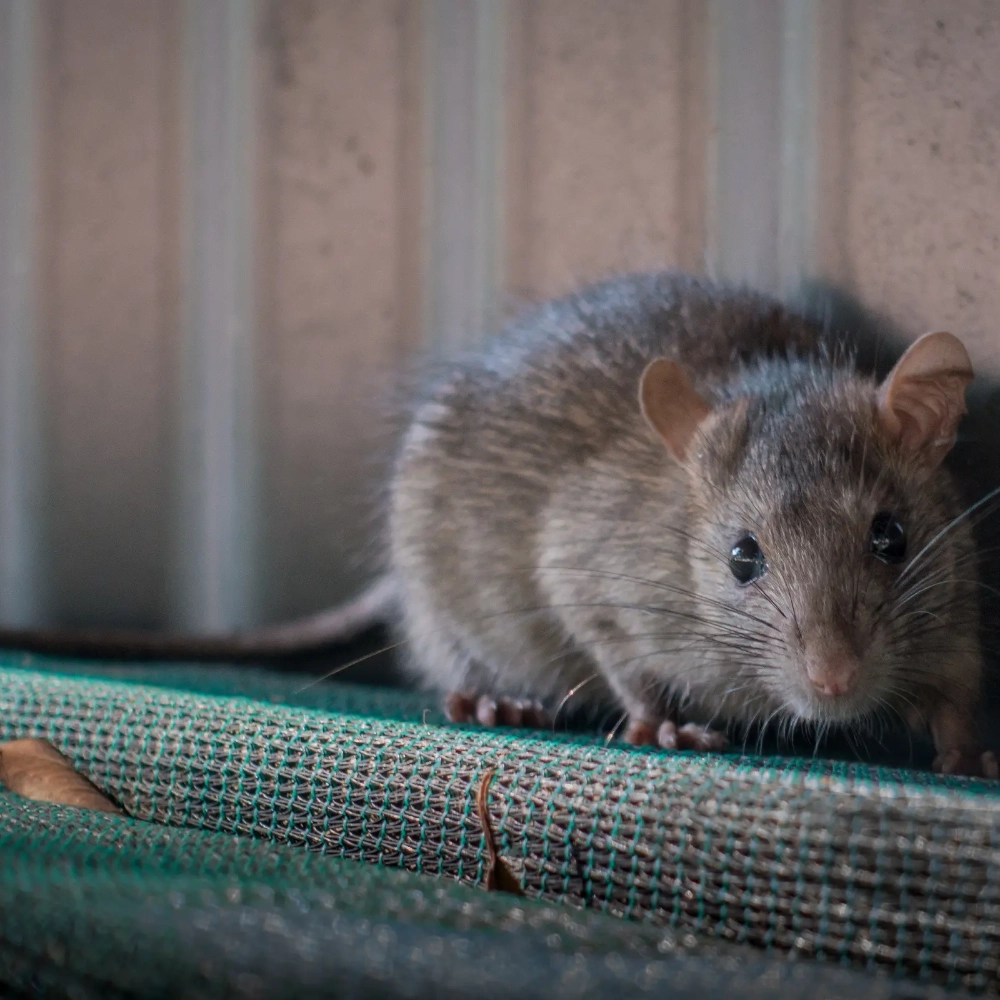
House mice don’t hibernate, and they don’t tolerate sustained cold especially well for their size. As outdoor temperatures fall through the 50s and into the 40s, mice that spent the warmer months living in brush piles, tall grass, or field edges start actively searching for structures that hold heat: sheds, garages, crawl spaces, and houses. This isn’t a slow drift — it’s often a fairly sudden shift once nighttime lows start regularly dropping below the mid-50s, which is why so many people notice mouse activity spike in October and November even in yards that were quiet all summer.
Understanding that timing matters, because it changes the strategy. Late summer is about reducing what attracts mice. Once temperatures actually start dropping, the priority shifts to blocking the routes mice use to get from “outside, exposed” to “inside, warm.” Both matter, but they’re not the same task, and treating them as one is how a lot of pest-proofing efforts fail.
Why Mice Move Toward Houses When Nights Get Cold
A house mouse weighs somewhere around half an ounce to an ounce. That small body mass means a large surface-area-to-volume ratio, which means heat loss happens fast. Mice compensate behaviorally more than physiologically — rather than growing thick winter fur or slowing their metabolism dramatically, they seek out insulated, sheltered spaces and often nest communally to share body heat.
A house offers three things a mouse actively looks for in autumn: stable warmth, protection from wind and precipitation, and — usually — a food source somewhere nearby, whether that’s a pantry, pet food bowl, birdseed, or compost pile. When all three are available in one place, that structure becomes far more attractive than the field or hedgerow the mouse spent summer in.
This is also why fall infestations often look different from summer ones. A mouse that gets inside in July might use the house as one of several territories. A mouse that gets inside in November is more likely to stay, because leaving means going back out into weather it’s trying to avoid. That’s part of why prevention timed before the cold arrives works better than reacting after mice are already settled in.

Signs Mice Are Already Checking Out Your Property
Before deciding what to do, it helps to know whether you’re preventing a problem or already managing one. A few signs point to active mouse activity rather than just old evidence:
- Fresh droppings — small, dark, rice-grain-shaped pellets. Old droppings are dry and crumble; fresh ones are darker and slightly moist, and they’ll keep appearing in the same spot day after day if mice are actively using that path.
- Gnaw marks on wood, plastic, or wiring near the base of walls, in cabinets, or around utility entry points. Mice need to gnaw to keep their incisors worn down, and they favor edges and corners.
- A grease trail — a thin, darkened smudge along a baseboard or wall where mice repeatedly brush against the same surface on their way in and out.
- Scratching sounds, usually most noticeable at night, coming from wall cavities, the space above a drop ceiling, or under appliances.
- Nesting material — shredded paper, insulation, or fabric pulled into a corner of a garage, attic, or storage box.
If you’re seeing two or more of these, you’re not really in prevention mode anymore — you’re in an active situation that needs both exclusion and some form of trapping or removal, which is covered further down.
Start Outside: Reduce What’s Drawing Mice to the Property in the First Place
Sealing a house is important, but it addresses symptoms without touching the cause. If the yard is still offering food and shelter, mice will keep testing the perimeter until they find a way in — and a determined mouse tests a lot of gaps.
Food sources people forget about
Bird feeders are one of the most common overlooked attractants. Spilled seed accumulating under a feeder is a reliable, calorie-dense food source, and mice will nest close to a consistent food supply rather than travel far for it. This doesn’t mean feeders have to go, but a tray beneath the feeder to catch spillage, combined with raking up fallen seed every few days, removes a lot of the incentive.
Compost piles are a second common source, particularly ones that include fruit scraps, bread, or cooked food rather than just yard waste. A compost bin with a secure lid does the same job as an open pile without the rodent access. Pet food left outside overnight, whether for a dog, cat, or backyard chickens, is another one — bringing bowls in after dark removes a food source that’s active exactly when mice are foraging.
Fallen fruit under trees, unharvested garden vegetables left to rot on the vine, and unsecured trash or recycling bins round out the list. None of these need to be eliminated entirely, but each one left unaddressed is a reason for mice to stay close to the house rather than pass through.
Shelter close to the foundation
Mice avoid open ground when they can help it, because it exposes them to predators. Woodpiles, dense shrubs, ivy, or leaf piles stacked against the house or garage wall function as a covered highway straight to the siding. A few practical adjustments help:
Keep firewood stacked at least 18 to 24 inches off the ground and, ideally, several feet away from the structure rather than against it. Trim back shrubs and ornamental grasses so there’s a visible gap between foliage and the foundation — mice are far less willing to cross open, exposed ground than to travel under continuous cover. Clear leaf litter and dense mulch away from the base of walls, especially around vents and utility penetrations, since deep mulch both hides gaps and gives mice a place to stage before making a run at an entry point.
None of this eliminates mice from the yard. It’s not meant to. It’s meant to make the area right next to the house less appealing than it would otherwise be, which reduces the number of mice actively probing your walls once the weather turns.
Natural Rodent Repellents: What Has Real Support and What Doesn’t
“Natural” rodent control gets marketed heavily, and some of it is genuinely useful as a supplement — but very little of it works as a standalone solution, and it’s worth being honest about that rather than overselling it.
Peppermint oil
Peppermint oil is the most commonly recommended natural deterrent, and there’s a reasonable mechanism behind it: mice have a strong sense of smell and generally avoid strong, unfamiliar odors, including concentrated mint. In practice, though, the effect tends to be inconsistent and short-lived. The scent fades within a day or two, mice can habituate to it with repeated exposure, and it does nothing to address an existing entry point — a mouse that’s already established a route through a gap will often push through it regardless of a cotton ball soaked in oil sitting nearby.
If you want to try it, treat it as a minor deterrent layered on top of exclusion work, not a replacement for it. Soak cotton balls in undiluted peppermint essential oil and place them at likely entry points — along the base of exterior walls, near vents, inside cabinets where pipes enter the house — and replace them every few days as the scent fades. Diffusers and sprays exist too, but coverage and reapplication frequency are the limiting factor either way. Keep any peppermint oil products away from cats specifically, since cats process certain essential oil compounds poorly and can experience toxicity from concentrated exposure.

Predator scent and other olfactory deterrents
Products using fox or coyote urine work on a similar logic — mice avoid areas that smell like predators. The evidence here is even thinner than for peppermint oil, and effectiveness in real yards, with wind, rain, and open space diluting the scent quickly, tends to be limited. It’s a reasonable low-cost addition around a shed or garage perimeter but not something to rely on for a house with an active infestation.
Ultrasonic repellent devices
These plug-in devices claim to emit sound frequencies that irritate rodents without being audible to humans. Independent testing on these products has generally found effectiveness to be weak or short-lived — mice often habituate to a constant frequency within days, and the sound doesn’t travel through walls or around corners, so coverage in a real house is inconsistent at best. If you already own one, it’s not harmful to keep using it as one small layer, but it shouldn’t be the basis of a prevention plan.
Planting mint, daffodils, or alliums around the foundation
A related idea shows up often in gardening forums: planting mint, daffodils, or alliums (onions, garlic, chives) around the foundation to keep mice from approaching. The reasoning is the same as with the oil — strong-smelling plants, the thinking goes, create a barrier mice won’t cross. In practice, a live plant releases far less concentrated scent than an essential oil, and mice have been observed nesting near and even in mint patches when food and shelter were otherwise favorable, which undercuts the idea that the plant itself is a reliable deterrent. Daffodil bulbs are genuinely avoided by many rodents because they’re mildly toxic, which is more a matter of mice not eating the bulb than the plant repelling them from the area generally. None of this means these plants are pointless in a garden bed — mint is useful for other reasons, and daffodils are a fine choice near a foundation for other pest-resistance reasons, including deer and vole avoidance — but they shouldn’t be counted on as a mouse barrier on their own.
What actually functions as a natural repellent
Cats and dogs with regular outdoor access do measurably reduce mouse activity around a property, both through direct predation and through scent marking that mice pick up on. This isn’t a fit for every household, but it’s worth mentioning because it’s the one “natural” method with a solid behavioral basis behind it. Beyond that, the most effective “natural” strategy is really the combination already covered above: removing food and shelter, plus the physical exclusion work in the next section. Scent-based repellents are a supplement to that plan, not a substitute for it.
Why Many Homeowners Skip Poison Bait for Outdoor Use
Rodenticide bait stations come up often enough in this conversation that it’s worth addressing directly, even in an article focused on natural methods. Anticoagulant baits work by causing internal bleeding over several days, and a mouse that’s eaten a lethal dose doesn’t die immediately — it keeps moving, foraging, and is often eaten by a predator before the poison takes effect. That’s how secondary poisoning happens: hawks, owls, foxes, and household pets that catch or scavenge a poisoned rodent can absorb enough of the anticoagulant to sicken or kill them too. Several states and municipalities have restricted certain anticoagulant formulations for exactly this reason, and wildlife agencies in a number of regions have documented exposure in birds of prey linked to residential and agricultural bait use.
This is a large part of why exclusion and trapping are generally the preferred approach for a yard with pets, chickens, or regular wildlife activity, rather than scattering bait stations around the perimeter. If bait is used at all, tamper-resistant, locked stations placed well away from areas pets or children access are the minimum precaution, and checking local regulations is worth doing first, since rules on rodenticide use vary by state and have changed in several places in recent years. For most residential situations, though, the combination already covered in this article — reduced attractants, sealed entry points, and snap traps where mice are already active — handles the problem without introducing a poison that can move up the food chain.
How to Seal Gaps Against Mice: Entry Point Sealing That Actually Holds
This is the part of mouse prevention that does the most work, and it’s also the part people most often do halfway.
How small a gap actually matters
The number worth remembering is a quarter of an inch — roughly the width of a standard pencil, or the size of a dime. A mouse’s body is flexible almost everywhere except its skull, and its skull is the limiting factor for what it can squeeze through. A gap that looks purely cosmetic — a slightly separated pipe collar, a hairline crack at the foundation sill, a worn corner on a garage door seal — is functionally an open door from a mouse’s point of view. This is why “the hole looked too small” is one of the most common things people say after finding mice inside anyway. If you can fit a pencil through it, assume a mouse can too.

Where to actually look
Entry points cluster at three general heights, and a thorough check needs to cover all three rather than just the ground floor, because mice climb well and will use vertical routes when they’re available.
At and below foundation level: Gaps where utility lines, pipes, or cables enter the house are one of the most common access points, because the hole cut for the pipe is almost always slightly larger than the pipe itself. Check around outdoor faucets, gas lines, electrical conduit, and dryer vents. Foundation cracks, especially where settling has widened a joint over time, are another common spot, along with the gap often left where siding meets the foundation.
At door and window level: Garage doors are a frequent weak point — worn or gapped weatherstripping along the bottom edge, and the small triangular gaps that form at the corners where the door meets the track, are both wide enough for mice once the seal degrades. Exterior doors with worn sweeps, and basement or crawl-space windows with damaged screens or loose frames, fall into the same category.
Above ground level: Roofline gaps where fascia boards have pulled away, gable vents and soffit vents with damaged or missing screening, and chimneys without a properly fitted cap all give mice a route in from above — one that’s frequently missed because most people inspect at eye level and don’t get up on a ladder to check the roofline.
What to seal with, and why the material matters
Not every sealing material actually stops a mouse, because mice are capable of chewing through several common options.
- Steel wool is genuinely effective because mice generally won’t chew through it — it shreds their teeth and gums uncomfortably. It works best stuffed tightly into a gap and then sealed in place with caulk, since steel wool alone can be worked loose and pulled out over time. It’s a good fit for small to medium gaps around pipes and cables.
- Copper mesh does the same job as steel wool and holds up better in damp, corrosion-prone spots like crawl spaces or exterior sill areas where steel wool would eventually rust.
- Hardware cloth — quarter-inch or smaller galvanized wire mesh — is the right choice for larger openings: vent covers, the underside of sheds, or gaps around foundation vents. It can be cut to size and screwed or stapled into place.
- Expanding spray foam, used alone, is not rodent-proof. Mice can and do chew straight through cured foam. It’s genuinely useful as a secondary seal — filling in around steel wool or hardware cloth to weatherproof the repair and hold it in place — but it shouldn’t be the only material used on a gap you know or suspect is an active entry point.
- Caulk is appropriate for genuinely small cracks and gaps under a quarter inch, and for finishing the edges of a steel wool or mesh repair, but it’s not enough on its own for anything larger, since a determined mouse can work through a bead of caulk over time.
For garage doors, replacing worn weatherstripping with a new door-bottom seal solves most of that particular gap. Door sweeps serve the same purpose on exterior doors — a gap greater than a quarter inch under a door is enough for mice to pass beneath, so a snug-fitting sweep matters more than it looks like it should.
A Winter Pest-Proofing Walkthrough for the Whole House
Sealing individual gaps is more effective when it’s done as a systematic walk-through rather than a few scattered fixes. Going room by room, or zone by zone, tends to catch things a one-off inspection misses.
Start outside with a full lap of the foundation, checking every point where something — a pipe, a wire, a vent, a hose bib — passes through the wall. Move up to check window wells and any ground-level vents, then check the garage door seal along its full width, not just the center, since wear is often worse at the corners. If you’re comfortable getting on a ladder safely, a check of the roofline, soffit vents, and chimney cap is worth doing before the weather turns, since these spots are much less pleasant to inspect once it’s cold and wet.
Inside, focus on places where utilities enter through walls or floors: under sinks, behind the washer and dryer, around the water heater, and anywhere a pipe disappears into a wall cavity. Attics and crawl spaces deserve a look too, since insulation disturbance, droppings, or a strong ammonia-like odor are often noticed there before anywhere else in the house.
Storage areas matter more than people expect. Cardboard boxes are easy for mice to chew through and make appealing nesting material, so shifting long-term storage into sealed plastic totes — particularly in garages, basements, and attics — removes both a food-adjacent hiding spot and an attractive nesting material in one step.
None of this needs to happen in a single afternoon. A staged approach — foundation and garage one weekend, attic and crawl space the next — is realistic for most households and still gets the job done before the coldest weather arrives.
What to Do If Mice Are Already Inside
If you’re past prevention and already dealing with activity, exclusion work still matters, but it needs to happen alongside removal, not instead of it. Sealing every entry point while mice are already inside just traps the problem indoors.
Snap traps remain the most effective and most humane option for actual removal, when checked and cleared regularly. Peanut butter, a small amount, works better as bait than cheese despite the stereotype, because mice can’t easily pull it off the trigger without setting it off. Placement matters more than most people assume — traps work best set perpendicular to a wall, with the trigger end against the baseboard, since mice travel along walls rather than through open floor space.
Glue traps are widely available but raise welfare concerns, since they don’t kill quickly and can cause prolonged suffering; many pest control professionals and animal welfare organizations recommend against them for that reason. Live-catch traps are an option for some households, but they come with a real limitation: a mouse released even a short distance away, unless it’s several hundred yards from any structure and in suitable habitat, will often find its way to the nearest house, which may just be a neighbor’s.
Sanitation matters just as much during an active problem as it does for prevention — clearing food sources, cleaning up droppings and nesting material with gloves and a disinfectant rather than a vacuum or broom (disturbing dried droppings can aerosolize particles), and continuing the exclusion work described above all reduce how attractive the interior stays to any mice that are still present.
Common Mistakes That Let Mice Back In
A few patterns show up repeatedly in situations where sealing work didn’t hold.
Sealing the obvious gap instead of the active one. A visible crack near the front door often gets attention while a much smaller, less noticeable gap around a dryer vent — the one actually being used — goes untouched. If droppings or gnaw marks point to a specific area, that’s the gap to prioritize, even if it looks less dramatic than others.
Using foam or caulk alone on a gap larger than a quarter inch. As covered above, this buys time rather than solving the problem.
Treating the yard and the house as separate projects. Sealing entry points without addressing food and shelter sources nearby just means more mice will keep testing the same repaired areas, and eventually find whatever gap was missed.
Doing the work once and not rechecking. Weatherstripping wears, caulk cracks with seasonal expansion and contraction, and settling can reopen a foundation gap that was sealed the year before. A yearly check before the weather turns is worth the half hour it takes.
When It’s Time to Call a Professional
Natural and DIY methods handle a large share of situations, particularly when they’re applied before a real infestation develops. A few situations are worth bringing in a licensed pest control professional or wildlife control operator instead of continuing to handle it alone: an infestation that isn’t shrinking despite consistent trapping over several weeks, evidence of chewing on electrical wiring (which is a fire risk, not just a nuisance), mice in wall cavities or ductwork that are difficult to reach safely, or a large-scale entry point like a substantial gap in a foundation wall or a compromised roofline that needs structural repair rather than a DIY seal.
There’s also a health consideration worth naming directly. Mouse droppings and urine can carry hantavirus, transmitted through inhaling contaminated dust, and can also contribute to allergy and asthma symptoms in sensitive individuals. Heavy accumulation in an attic, crawl space, or wall cavity is a reasonable trigger to bring in someone equipped to clean it up safely, particularly if anyone in the household has respiratory sensitivities.
And if you’re a tech survy home owner like me, here is a product I always find effective, silent, and mess-free: Ultrasonic Indoor Pest Repeller, 3-Mode Mouse Traps, 6 Pack.

Frequently Asked Questions
Do mustard oil, cayenne pepper, or dryer sheets actually repel mice? These come up often in home remedies, and the evidence for them is even weaker than for peppermint oil. They may cause brief avoidance the first time a mouse encounters the smell, but there’s little indication any of them provide meaningful, lasting protection, and none of them address the underlying entry points. Not harmful to try as a minor addition, but not worth relying on.
Will getting rid of a bird feeder solve a mouse problem on its own? Usually not entirely, since mice respond to multiple attractants at once, but removing or better managing a feeder — using a catch tray and cleaning up spillage — often reduces activity noticeably within a few weeks, especially when it’s combined with entry point sealing.
Is it normal to still see an occasional mouse after sealing everything? Yes, particularly in the first couple of weeks. Mice that were already established inside before sealing began need to be trapped and removed; sealing stops new entry, it doesn’t remove mice that are already there. If activity hasn’t dropped off within a few weeks of combining sealing with active trapping, that’s a sign either an entry point was missed or the infestation is larger than initially apparent.
The Practical Next Step
If you only do one thing this season, make it the entry point walk-through. Food and shelter reduction in the yard helps, and scent-based repellents can play a minor supporting role, but neither one stops a mouse that’s already found a quarter-inch gap and decided your house is warmer than the yard. Start at the foundation, work your way around with a flashlight and a pencil as your test gauge, and seal what you find with steel wool or hardware cloth backed by caulk — not foam alone. That single afternoon of work does more to keep mice out through the cold months than any spray, oil, or gadget on its own.

About Syprose Kiche
Syprose Kiche is the creator and writer behind My Besuited Home, a practical home and garden website covering DIY projects, gardening, lawn care, landscaping, home improvement, and outdoor living. She focuses on turning everyday homeowner questions into clear, practical guides backed by careful research and useful real-world considerations.