
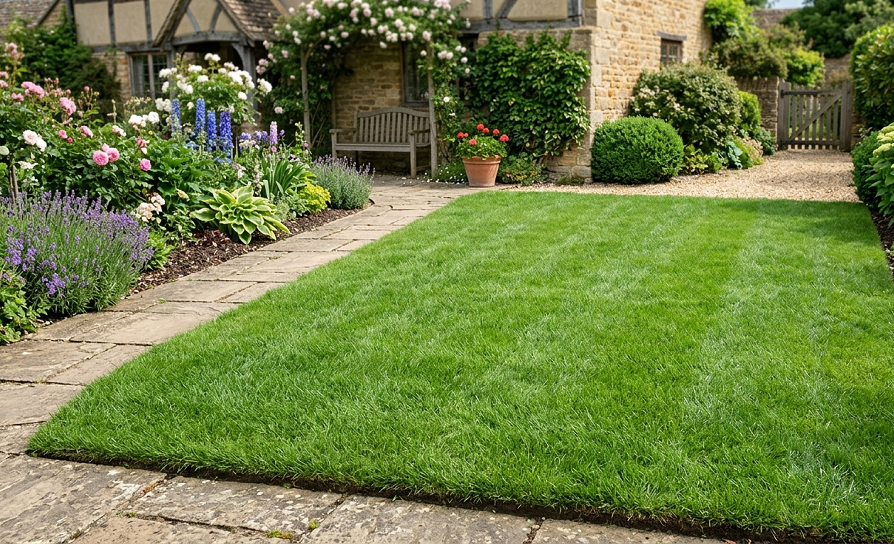
Your ryegrass was gorgeous in May. Thick, green, the kind of lawn that makes the mail carrier slow down a little. Then July hit triple digits for six straight days and now it’s the color of a manila folder. You’re standing in your yard with a hose in one hand and a sinking feeling in your stomach, wondering if you killed it or if it’s just sulking.
I get this exact phone call from neighbors every single summer. Ryegrass is a cool-season grass pretending it can handle a desert. It can, for a little while, but only if you change your routine the second the heat dome shows up. Wait too long and you’re not reviving a lawn anymore — you’re reseeding one.
Here’s everything I’ve learned from a decade of babysitting ryegrass through brutal summers, including the mistakes that cost me a lawn and a weekend.
Why Ryegrass Struggles So Much in Extreme Heat
Ryegrass loves mild temperatures, somewhere between 60 and 75 degrees. Once you cross into the 90s, the plant basically goes into survival mode. Its roots are shallow compared to grasses like bermuda or zoysia, so it can’t pull moisture from deep in the soil when things get rough.
This is why ryegrass turns brown and crispy so fast during a heat wave while a neighbor’s warm-season lawn barely flinches. The grass isn’t always dead. A lot of the time it’s dormant, which is the plant’s version of playing possum until conditions improve.
The problem is most homeowners can’t tell the difference between dormant and dead just by looking at it. I’ve torn out lawns that would’ve bounced back in two weeks if I’d left them alone. My rule now: pull a few blades and check the crown, the little white base where the blade meets the soil. If it’s still firm and pale, the grass is alive. If it’s brown and mushy or crumbles between your fingers, that section is gone.
Understanding this difference changes how you treat the lawn during a heat event. You’re not trying to force lush green growth in 100-degree weather. You’re trying to keep the crown and roots alive until the heat breaks.
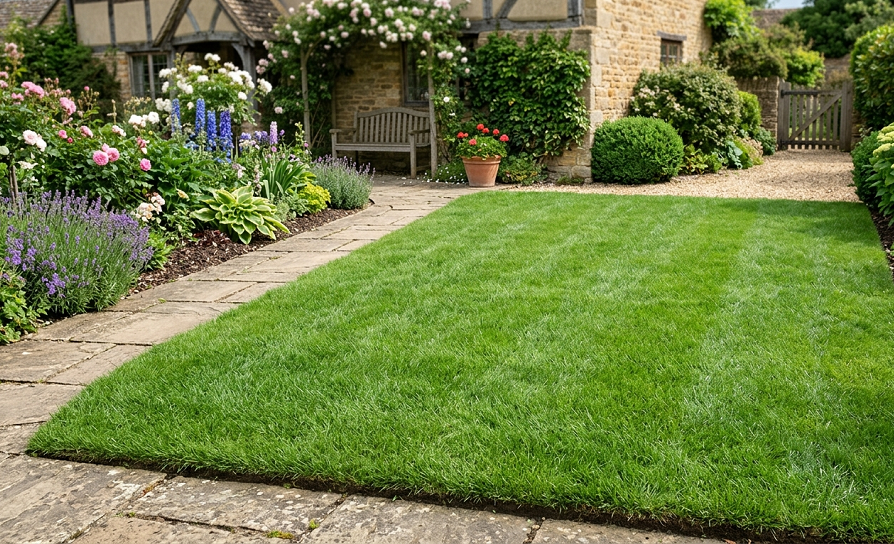
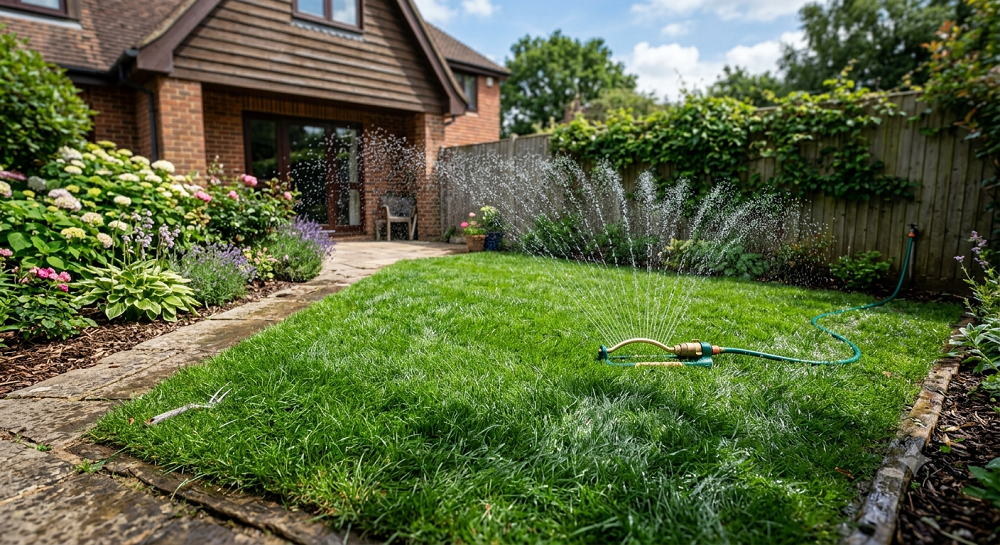
Watering Ryegrass in a Heat Wave: Timing Matters More Than Volume
Everyone assumes more water equals more survival. That’s not exactly true, and it’s the single biggest mistake I see. Overwatering in extreme heat invites fungus, and ryegrass roots that sit in soggy soil during a heat wave actually struggle to breathe.
Here’s the watering approach that’s kept my own lawn alive through multiple heat domes:
- Water early, between 5 and 8 a.m. Watering at night leaves the grass damp for hours in warm temperatures, which is basically an invitation for brown patch and pythium blight.
- Water deeply but less often. Aim for about an inch of water across two sessions per week rather than a quick daily sprinkle. Shallow daily watering trains roots to stay near the surface, which is the opposite of what you want.
- Check soil moisture with a screwdriver. Push it into the lawn. If it slides in easily six inches deep, you’ve got enough moisture. If it stops at two inches, water again.
- Add a light midday “syringe” only on the worst days. This isn’t deep watering — it’s a quick five-minute sprinkle just to cool the grass blades during peak heat, like 95-plus degrees. Skip it on normal hot days.
The summer my sprinkler timer broke during a heat wave and I didn’t notice for four days, I learned just how fast ryegrass taps out without water. But the summer after that, I overcorrected and watered every evening, and ended up with a lawn covered in fungal rings that looked like crop circles. There’s a narrow lane here, and timing matters as much as the amount.
A lot of people search for “how often to water ryegrass in summer,” expecting a single magic number. The honest answer depends on your soil type. Sandy soil drains fast and needs more frequent watering. Clay soil holds moisture longer, so watering too often there is how you drown the roots instead of saving them.
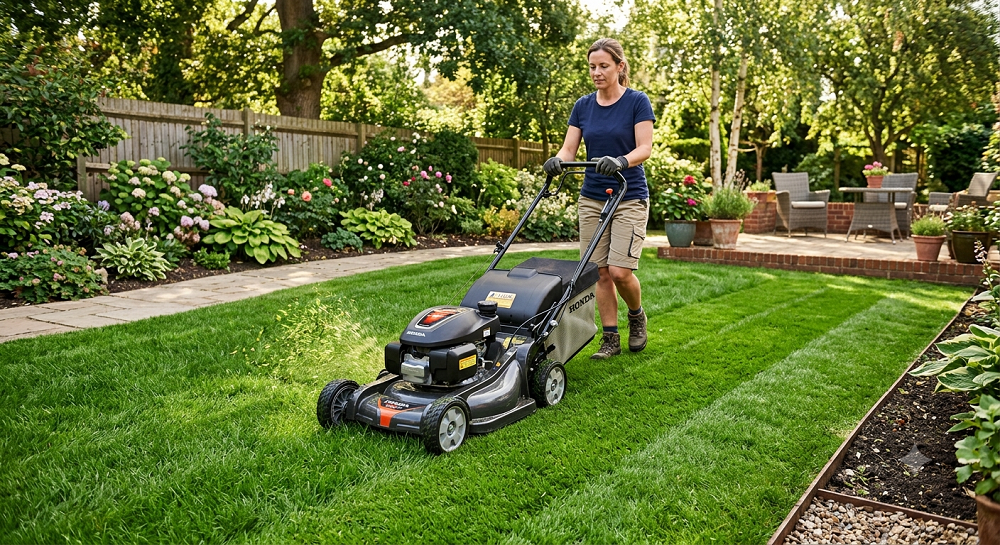
Mowing Height During a Heat Wave: Why Taller Grass Survives Better
I used to mow my ryegrass at the same height all year. That was a mistake, and it’s the kind of mistake that quietly wrecks a lawn over a summer instead of all at once.
Taller grass blades shade the soil and the crown of the plant, which keeps roots cooler and reduces water evaporation. Mow it too short during a heat wave and you’re basically removing the lawn’s own sunscreen.
Here’s what I do once temperatures climb past 90 for several days in a row:
- Raise the mower deck to the highest setting, typically around 3.5 to 4 inches for ryegrass.
- Never cut more than one-third of the blade length at once, even at the taller height. Scalping stressed grass is like giving a sunburned person a deep tissue massage — technically an action, definitely not helpful.
- Mow in the evening, not midday. Cutting grass while it’s stressed and the sun is blasting down adds insult to injury.
- Keep your mower blades sharp. Dull blades tear the grass instead of cutting it cleanly, and torn blades lose moisture faster and heal slower.
I once mowed a client’s ryegrass lawn short right before a heat wave because they wanted that “freshly cut golf course” look for a backyard party. Three weeks later that lawn looked like a patchy welcome mat while the rest of the neighborhood’s grass held on fine. Lesson learned the expensive way.
Should You Fertilize Ryegrass During a Heat Wave? Here’s the Truth
Short answer: no, and I mean it. Fertilizing stressed ryegrass during extreme heat is one of those things that sounds helpful but actually backfires.
Nitrogen pushes new top growth, and new growth needs water and energy the plant doesn’t have to spare during a heat event. You end up forcing the lawn to spend its limited resources on leaves instead of survival, which can speed up die-off in already-stressed areas.
If your lawn looks rough mid-heat-wave, resist the urge to “feed it back to health.” Wait until temperatures drop into a more reasonable range, ideally consistent highs under 85 degrees, before applying anything with nitrogen.
What you can use safely during the heat itself is a light application of potassium, sometimes labeled as a “heat stress” or “stress relief” lawn product. Potassium helps with the plant’s internal water regulation and stress tolerance without forcing new growth the way nitrogen does. I’ve used this on lawns going into a known heat wave, applied a few days before temperatures spike, and seen noticeably better color retention compared to untreated sections of the same yard.
My neighbor once fertilized her entire front lawn the same week a heat wave hit because the bag said “summer blend.” Two weeks later, half her yard was crispier than mine, and mine hadn’t been touched with fertilizer in over a month. That one stuck with me.
Dealing With Heat-Wave Lawn Diseases and Pests in Ryegrass
Heat stress doesn’t just dry the grass out — it opens the door for problems you wouldn’t normally deal with in spring or fall.
Brown patch and dollar spot show up most often when high heat pairs with humidity or overwatering. You’ll spot brown patch as roughly circular dead zones, sometimes with a darker ring around the edge. Dollar spot looks like small, silver-dollar-sized bleached patches scattered around the lawn.
Chinch bugs are the other heat-wave troublemaker. They thrive in hot, dry conditions and feed right at the soil surface, which makes their damage look almost identical to drought stress. The way I tell them apart: chinch bug damage spreads in an irregular blob from a starting point, while drought stress tends to show up more evenly across sunny, exposed areas first.
Here’s my heat-wave disease and pest checklist:
- Improve airflow before the heat hits. Avoid letting grass clippings, leaves, or thatch build up, since trapped moisture under debris is a fungal welcome mat.
- Water early in the day, never in the evening, for the reasons covered earlier.
- Do the float test for chinch bugs. Cut both ends off a coffee can, push it a couple inches into the soil in a suspicious area, fill it with water, and wait ten minutes. Chinch bugs will float to the surface.
- Treat spot infestations rather than blanket-spraying the whole yard. Most heat-wave pest issues are localized, and full-yard pesticide treatments are overkill that also wipes out beneficial insects.
A quick side note here: don’t panic and apply fungicide the moment you see a brown patch during a heat wave. A lot of the time it’s heat stress mimicking disease, and treating heat stress with fungicide does nothing except cost you money.
Real Talk: What’s Not Worth the Effort During a Heat Wave
I’ll be straight with you about a few things that get recommended online but aren’t worth your time or money.
Misting systems and lawn cooling sprinklers marketed as heat-wave lifesavers are, in my experience, mostly a waste of cash for residential lawns. They’re built for golf courses and sports fields with the budget and labor to run them constantly. For a regular backyard, a properly timed early-morning watering does basically the same job for a fraction of the cost.
Lawn paint or “green-up” sprays to mask brown ryegrass during a heat wave are another one I’ve found to be a total waste of money, even if it looks pretty on Pinterest before-and-after posts. It doesn’t help the grass survive — it just covers up dead or dormant grass with dye that wears off and stains shoes, pets, and patio furniture in the meantime.
Aggressive aerating or dethatching during the heat wave itself is also a bad call. Both of those processes stress the lawn even under normal conditions, and doing them while the grass is already fighting to survive heat stress can finish it off. Save aeration for early fall when ryegrass is actively growing again and can recover quickly.
And reseeding mid-heat-wave almost never works. New ryegrass seed needs consistently cool soil temperatures and steady moisture to germinate. Throwing seed down during a 100-degree week is throwing money at birds. Wait for early fall, which is genuinely the best window for ryegrass seeding anyway.
One more honest note: sometimes a section of lawn is just gone. I’ve spent entire weekends trying to nurse back a patch that was, in hindsight, dead the moment the heat wave hit. There’s no shame in accepting a small reseed job in September instead of fighting a losing battle in July.
Quick Heat-Wave Survival Checklist for Ryegrass
- Water deeply, early morning, two to three times a week instead of daily
- Raise your mower height and keep blades sharp
- Skip the fertilizer until temperatures cool down
- Watch for chinch bugs and fungal disease, but don’t overreact to every brown spot
- Save aeration, dethatching, and reseeding for fall
Final Thoughts (And a Question for You)
Ryegrass during a heat wave isn’t asking for a miracle product or some secret hack. It’s asking for patience, smarter watering timing, and you keeping your hands off the fertilizer bag until the weather breaks. The lawns I’ve watched survive the worst summers weren’t the ones that got the most attention — they were the ones that got the right attention at the right times.
If your ryegrass is looking rough right now, give it a few weeks of the routine above before you write it off as dead. Most of the time, it’s just waiting out the heat the same way the rest of us are.
What’s your lawn dealing with right now? Drop a comment below with what you’re seeing — brown patches, bare spots, the whole yard going crispy — and I’ll help you figure out what’s actually going on.

About Syprose Kiche
Syprose Kiche is the creator and writer behind My Besuited Home, a practical home and garden website covering DIY projects, gardening, lawn care, landscaping, home improvement, and outdoor living. She focuses on turning everyday homeowner questions into clear, practical guides backed by careful research and useful real-world considerations.