
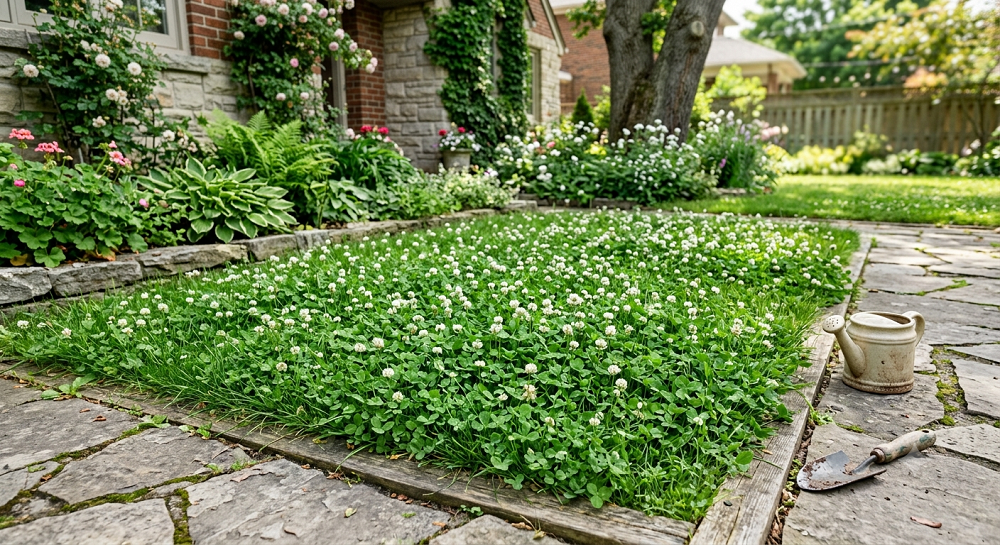
My neighbor Gary spent four summers fighting his front yard. Crabgrass in June, brown patches in August, a sprinkler bill that made his wife wince every July. Then one day he just… stopped. Ripped the whole thing out and threw down clover seed instead. Now he waters maybe twice a month and his lawn looks better than mine.
That’s the moment I started paying real attention to clover lawns. I’ve since put one in at my own place, helped two friends convert theirs, and killed one accidentally (more on that later). If you’re sick of mowing every weekend and dumping money into fertilizer that the rain just washes into the storm drain anyway, clover deserves a serious look.
But it’s not magic. It’s not perfect for every yard, every climate, or every person’s tolerance for bees buzzing around their bare feet. Let’s get into what actually happens when you switch.
What Exactly Is a Clover Lawn (And Why It’s Suddenly Everywhere)
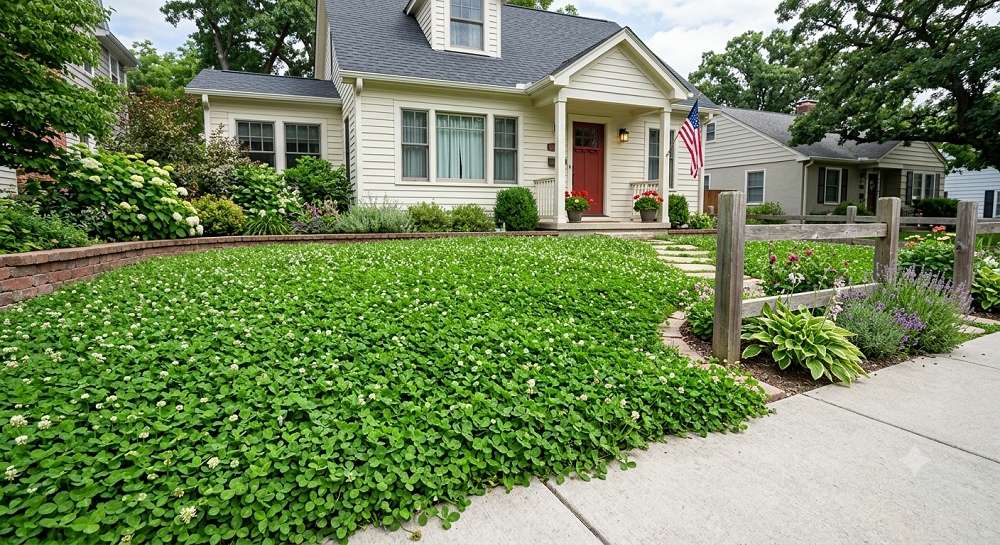
A clover lawn swaps out some or all of your turf grass for clover, usually white Dutch clover or its smaller cousin, microclover. Some folks go full clover. Others mix it into existing grass, which is honestly where I’d start if you’re nervous about commitment.
Clover isn’t new. Before WWII, clover was a standard ingredient in grass seed mixes. Then broadleaf weed killers came along in the 1950s, and since clover gets killed right alongside dandelions by those chemicals, lawn companies quietly stopped including it. Decades of marketing later, everyone forgot clover was ever part of the plan.
Now it’s having a comeback because people are tired of the maintenance treadmill and a little more interested in feeding bees than having a golf-course-green yard. Search interest for “clover lawn alternative” has climbed steadily for the past few years, and I get why. The pitch is genuinely appealing: less mowing, less water, less money.
The question isn’t whether clover lawns are trendy. They are. The real question is whether one fits your yard, your climate, and your lifestyle. That’s what I want to walk through.
The Real Benefits of a Clover Lawn (Not Just Marketing Talk)
It Fixes Its Own Nitrogen, So You Can Skip the Fertilizer
Clover is a legume, same family as peas and beans. Legumes pull nitrogen straight out of the air and convert it into a form plants can use, storing it in little nodules on their roots. Basically, clover fertilizes itself, and it fertilizes whatever grass is growing next to it too.
I stopped buying lawn fertilizer the year I added clover to my back section. That’s not a small thing. A typical homeowner spends somewhere between $200 and $400 a year keeping a traditional lawn fed and treated. Clover cuts that bill down dramatically, sometimes to zero.
This matters more than people realize for soil health long-term too. Synthetic fertilizer runoff is one of the biggest contributors to algae blooms in lakes and streams. Clover does the same job without the runoff problem. Your yard, your wallet, and the pond down the street all benefit.
You’ll Mow Way Less, and That Alone Sells Most People
White clover tops out around 4 to 8 inches and grows slow compared to grass. Microclover stays even shorter. Most people I know who switched went from mowing weekly to mowing once a month, sometimes less.
I’ve found that mowing frequency is honestly the biggest selling point for most homeowners, way bigger than the eco-friendly angle. Nobody wants to spend their Saturday morning pushing a mower. Clover gives you that Saturday back.
There’s a side benefit here too: less mowing means less gas burned (if you’ve got a gas mower) and way less wear on the machine itself. My mower has lasted years longer since I cut back on how often it runs.
Clover Stays Green When Your Neighbor’s Grass Goes Brown
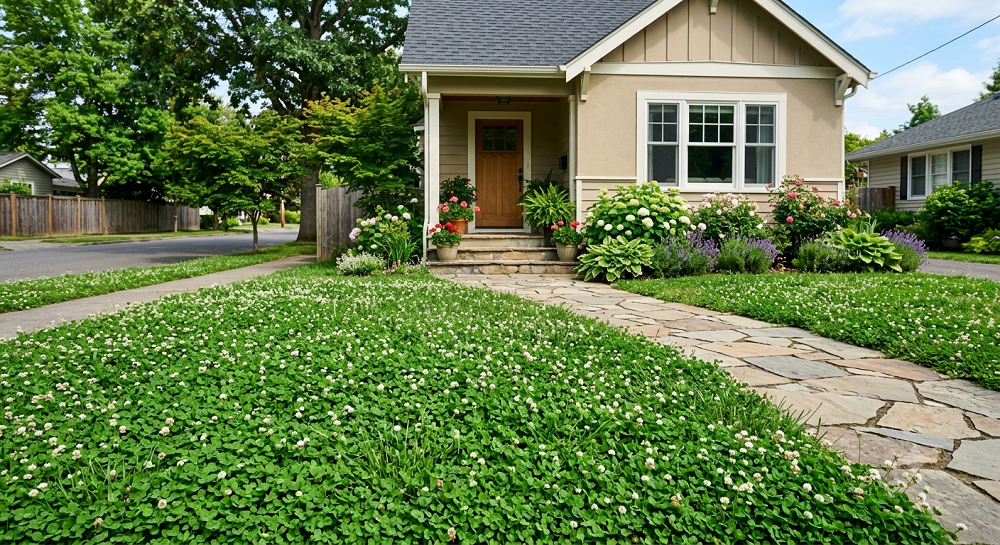
This is the one that converted Gary. Clover has a deep root system and handles drought way better than most turf grass varieties. During a dry July when everyone’s lawn on the block looks like toast, clover holds its color.
It doesn’t need anywhere near the watering schedule that fescue or Kentucky bluegrass demands. I water mine maybe twice a month during a normal summer, sometimes not at all if we get a decent rain every couple weeks. Compare that to the twice-a-week soaking traditional turf wants, and you start seeing real water savings on your bill.
If you live somewhere with watering restrictions, or you’re just tired of watching your water bill spike every summer, this alone might be worth the switch.
It’s Genuinely Better for Bees and Other Pollinators
Clover flowers, and bees love clover flowers. If you care even a little about pollinator decline (and you should, because we need bees for roughly a third of the food we eat), a clover lawn is a small but real way to help.
I’m not going to pretend this is some massive ecological save-the-planet move. It’s a few square feet of habitat. But multiply that across millions of suburban lawns and it adds up. Plus, watching bumblebees work your front yard on a summer morning is genuinely nice. It’s a different kind of lawn pride than the striped-mower look.
Quick Side Note: It’s Soft and Surprisingly Pet-Friendly
I’ll throw this in as a bonus rather than a full point, because it’s smaller but worth mentioning. Clover doesn’t stain like grass does, so dog pee patches are way less of an issue. My friend’s golden retriever used to leave yellow rings all over her old lawn. Her clover patch barely shows it.
It’s also soft underfoot, softer than most turf grass, which my kids noticed before I did. They started doing cartwheels on it within a week.
Where Clover Lawns Actually Struggle
Heavy Foot Traffic Wears It Down Faster Than You’d Think
Clover handles moderate use fine, but it’s not built like turf grass for constant pounding. If you’ve got kids running drills for soccer practice every evening, or a dog that sprints the same path along the fence every single day, you’ll see worn trails faster in clover than in a tough fescue blend.
I learned this the hard way. The path from my back door to the garden gate turned bald within a season because I walk it fifty times a day hauling tools and watering cans. I eventually just put down stepping stones, which honestly should’ve been step one.
It Goes Dormant and Turns Brown-ish in Real Cold
Clover isn’t evergreen everywhere. In colder climates, it dies back in winter and comes back in spring, similar to how some grasses behave but a bit less reliably. If you live somewhere with harsh winters, expect a few months of a less-than-pretty yard.
It also doesn’t love deep shade. If your yard is mostly shaded by big trees, clover will thin out and struggle to fill in, leaving patchy bald spots that look worse than a uniform lawn would.
It Can Get Slippery, and Bees Will Be Bees
Wet clover gets slick, more than grass does, especially on any kind of slope. If your yard has a hill the kids like to run down, or you’ve got an area near steps, that’s worth thinking about before you commit.
And yes, bees. If anyone in your household has a bee allergy, or you’ve got toddlers who like running around barefoot without looking down, a clover lawn full of flowering bees is a real consideration. You can mow more frequently to keep the flowers from forming, but that defeats some of the low-maintenance appeal.
How to Actually Start a Clover Lawn
- Test your existing setup first. Decide if you’re going full clover replacement or just overseeding into your current grass. Overseeding is way less work and way less risky, and it’s where I’d recommend almost everyone start.
- Mow your current lawn short. Cut it down low, around 1 to 2 inches, so clover seed can actually reach the soil instead of getting stuck in tall grass blades.
- Rake to expose some soil. You don’t need bare dirt everywhere, but seed needs contact with soil to germinate. A few passes with a stiff rake does the job.
- Spread microclover or white Dutch clover seed. Microclover is the better pick for most yards since it stays shorter and spreads denser. White Dutch clover is cheaper and more widely available but grows a bit taller and patchier.
- Water consistently for the first three weeks. This is the one part of clover that’s actually labor-intensive, but only at the start. Keep the top inch of soil moist while seeds germinate, which usually takes 7 to 10 days.
- Be patient through the awkward middle stage. Your yard will look thin and a little rough for the first month or two. This is normal. Resist the urge to overseed again out of impatience; just give it time to fill in.
Real Talk: What Actually Goes Wrong With Clover Lawns
Here’s the part nobody puts in the glossy “switch to clover” articles. I want to be straight with you about the headaches.
Full clover conversions take longer than people expect, especially if you’ve got existing turf grass that needs to die off first. If you skip that step and just throw clover seed on top of living grass, you’ll end up with a patchy mess where the grass outcompetes the seedlings in most spots. I made this mistake on my first try and had to start over the next spring.
Weed control gets trickier too. Most broadleaf herbicides will kill your clover right along with the dandelions, since clover is technically a broadleaf plant itself. That means you’re stuck hand-pulling weeds or accepting a slightly weedier look, which not everyone has the patience for.
If you’ve got a homeowner’s association, check your rules before you commit to anything. Some HOAs still have outdated bylaws requiring a “traditional turf appearance,” and clover can run you afoul of that even though it looks perfectly tidy in person. I’ve heard of people getting warning letters over this, which is a frustrating way to find out your neighborhood is stuck in 1985.
And honestly, full clover lawns just aren’t the right call for high-traffic family yards with constant ball games and dog sprints. I’d steer those folks toward a clover-grass blend instead of pure clover, which gives you some of the benefits without the bald-patch problem. A 50/50 mix with a tough fescue holds up to abuse way better than clover alone, even if it’s slightly less low-maintenance.
One more honest note: pure clover lawns can look a little uneven compared to the manicured, uniform look some people want for their front yard. If you’re after that flawless magazine-cover lawn, clover might disappoint you, even though it’s healthier for your soil and your water bill. I’ve found that the people happiest with clover are the ones who already wanted a more relaxed, natural-looking yard in the first place.
Final Thoughts on Making the Switch
A clover lawn isn’t a miracle fix, but for the right yard, it’s about as close as you’ll get to a lawn that takes care of itself. Less mowing, less watering, less money spent on fertilizer, and a yard that actually helps the bees instead of just looking pretty for the neighbors. Gary’s still happy with his, three years in, and I haven’t gone back to a pure grass yard since my own switch.
Start small if you’re unsure. Overseed a back corner, see how it handles your specific yard, your climate, and your foot traffic, and expand from there if you like the results.
Have you tried clover in your own yard, or are you thinking about it? Drop your questions or your own clover horror stories in the comment box below. I read every one, and I’d genuinely love to hear what’s worked (or completely flopped) for you.

About Syprose Kiche
Syprose Kiche is the creator and writer behind My Besuited Home, a practical home and garden website covering DIY projects, gardening, lawn care, landscaping, home improvement, and outdoor living. She focuses on turning everyday homeowner questions into clear, practical guides backed by careful research and useful real-world considerations.