
Every spring I walk past my neighbor’s yard and feel a pang of garden envy so sharp it practically leaves a mark. Her pink garden — layers of blush, rose, and hot pink blooms cascading from May all the way through October — looks effortless. It took me seven years of trial, error, and one genuinely embarrassing conversation with a nursery employee (“What do you mean it’s an annual?”) before I finally built a pink flower garden I’m actually proud of.
If you’ve been Googling “pink flower garden ideas” and you’re staring at a blank bed or a sad patch of dirt that’s seen better days, you’re in the right place. I’m going to give you what actually works — not just what looks gorgeous on a mood board.
Why a Pink Flower Garden Works in Every Season (Yes, Including Winter)
Before we get into the specific plants and designs, here’s the thing most gardening content skips over: a pink garden fails when people plant for one season. They cram in peonies, step back, and wonder why it looks dead in August.
The secret is layering bloom times. Early bloomers, mid-season workhorses, and late-season finishers. Throw in a few plants with pink foliage or seed heads that hold their structure in winter, and you’ve got a garden that never truly goes dark.
I’m not going to pretend this is easy the first time you do it. My first attempt at a “four-season pink garden” looked amazing in June and like a crime scene by September. But once you understand the framework, it clicks.
1. Bleeding Heart (Dicentra spectabilis) — The Early Spring Show-Stopper
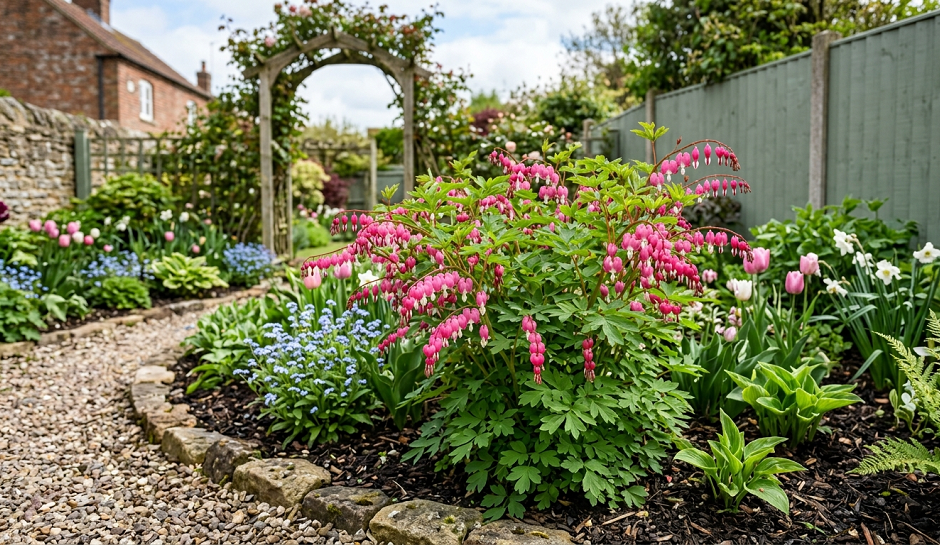
If you want a spring pink garden that makes people slow down and stare, bleeding heart is your plant. Those arching stems hung with perfectly shaped, heart-like pink flowers are genuinely one of the most dramatic things you can grow in a shaded or partly shaded spot.
I planted mine along the north side of my fence about eight years ago. It comes back every spring without fail — one of those perennials that makes you feel like a gardening genius for doing almost nothing. It starts blooming in late March to April depending on your zone, which means it fills the “nothing is happening yet” gap perfectly.
The one thing beginners get wrong: bleeding heart goes dormant in summer. It yellows and disappears. Plan for that. I grow hostas alongside mine — they emerge just as the bleeding heart starts to fade and cover the gap completely. That kind of tag-team planting is how you build a garden that looks intentional all season.
Grow it in zones 3–9, part to full shade, moist well-drained soil. Deer tend to leave it alone, which is a genuine blessing.
2. Peonies — The Classic Pink Garden Centerpiece That Pays Off for Decades
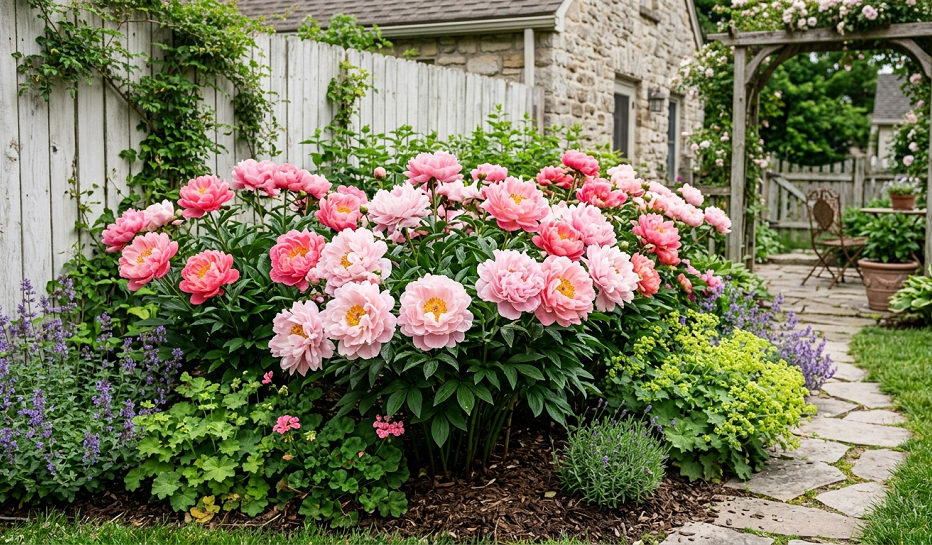
Peonies are an investment that pays off for thirty years if you plant them right. I’ve seen people dig up and move peonies that were planted by their grandmothers, and they still bloom. That’s the kind of plant loyalty I respect.
The big mistake people make is planting them too deep. The eyes (those pink buds at the base) should sit no more than one to two inches below the soil surface. Go deeper and they’ll grow lush foliage and zero flowers — something I found out the painful way after two years of waiting and blaming the weather.
For a pink garden specifically, I love ‘Sarah Bernhardt’ (soft shell pink, massive fragrant blooms), ‘Bowl of Beauty’ (hot pink outer petals with a creamy center), and ‘Kansas’ (vibrant rose-red that photographs as a deep pink). They bloom in late spring — May to early June for most of us — and the show only lasts a couple of weeks. So again, have your summer succession plan ready.
Peonies need full sun and good drainage. They hate wet feet. I lost one to a poorly draining corner and it still stings.
3. Knockout Roses — The Low-Maintenance Pink Repeat Bloomer Most Gardens Need
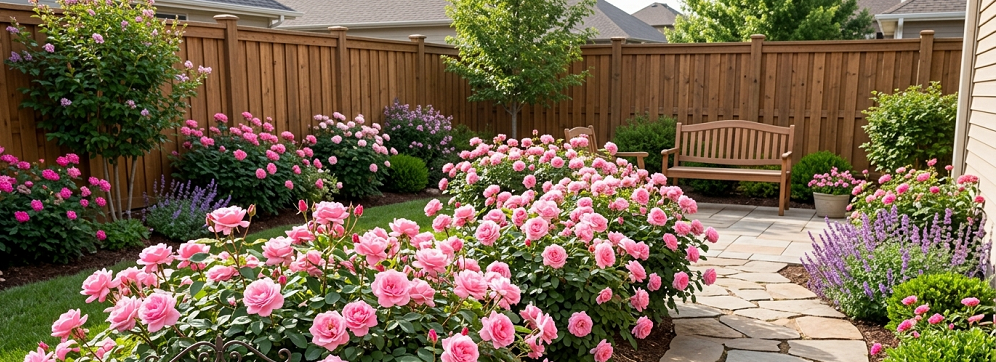
I’ll be upfront: I was a rose snob for years. I thought if it wasn’t a climbing heirloom or an antique shrub rose, it wasn’t worth growing. Then I got tired of spraying, pruning, and nursing hybrid teas back from black spot every August, and I planted three Knockout roses.
They bloom from late spring until frost. They don’t get black spot. They don’t need deadheading. They just grow and bloom and make your neighbors ask what you’re doing differently. For a pink flower garden that needs to look good from June through October, I don’t know a better plant.
Pink Double Knockout is my top pick — double blooms with a more “real rose” look than the single varieties. Blushing Knockout gives you a lighter, softer pink if that’s your vibe. Plant them in full sun, give them decent soil, prune them back hard in early spring (I mean really hard — knee height), and they’ll reward you all season.
The only honest downside: they can look a bit stiff and corporate if you plant them in a row. Mix them with something loose and airy — Russian sage, ornamental grasses, catmint — and they settle into the garden beautifully.
4. Echinacea (Coneflowers) — The Mid-to-Late Summer Pink Garden Hero
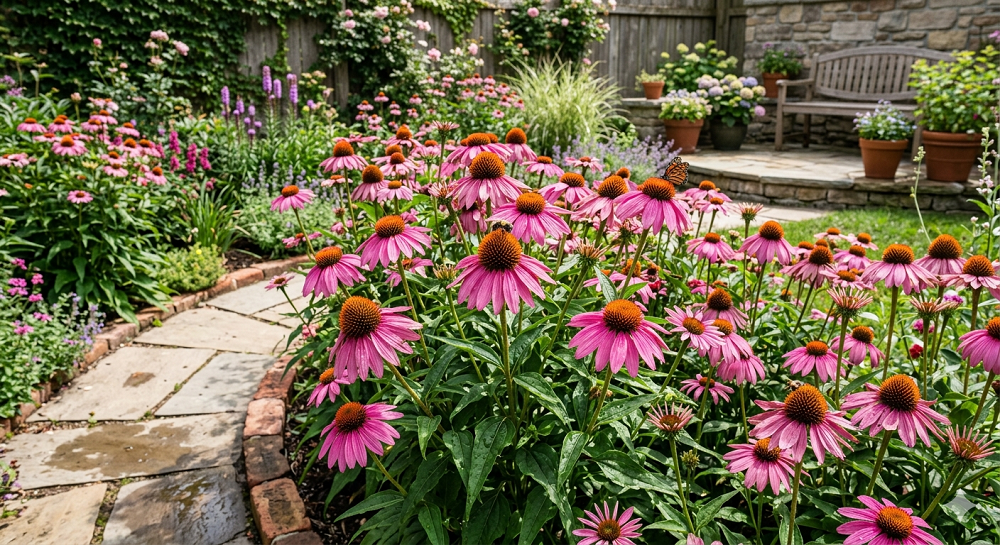
Echinacea is what saves a pink garden in July and August when everything else has given up. The classic Echinacea purpurea has those cheerful, slightly droopy pink-purple petals with orange-brown centers, and it blooms prolifically from midsummer through early fall.
The newer varieties have expanded the pink palette considerably. ‘Magnus’ is a tried-and-true workhorse with big flat petals in deep rose pink. ‘Pink Double Delight’ gives you a pom-pom look that’s wildly popular right now. ‘Cheyenne Spirit’ comes in a mix that always includes gorgeous warm pinks.
Here’s something I wish someone had told me earlier: leave the seed heads standing in fall and winter. They’re architecturally beautiful — little spiky globes that catch frost and snow — and the goldfinches will thank you. It also means you’re getting winter interest from your pink garden without doing anything extra.
Echinacea is drought tolerant once established, which makes it genuinely hard to kill. It self-sows modestly, so after a few years you’ll find little seedlings you can move around. Grow it in full sun, zones 3–9.
5. Astilbe — The Pink Flowering Powerhouse for Shady Spots
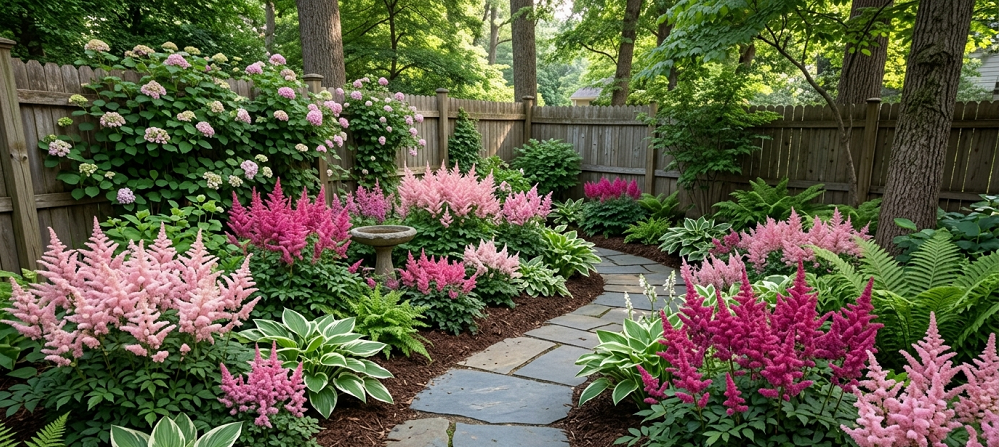
Most “pink garden” guides focus on sunny beds. But what if your yard is mostly shade? Astilbe is your answer, and I want to be emphatic about this: it’s one of the most beautiful plants you can grow, full stop.
Those feathery, plume-like flower spikes in shades of blush, shell pink, hot pink, and deep rose are genuinely breathtaking when massed together. They bloom from late spring through midsummer depending on variety, and the foliage — glossy and fern-like — looks good even when they’re not blooming.
For a long bloom season in shade, I stagger varieties. ‘Fanal’ (deep rose-red) blooms early. ‘Rheinland’ (clear pink) comes in mid-season. ‘Finale’ (soft pink) pushes into late summer. Together they give me nearly three months of pink in spots where almost nothing else thrives.
The catch: astilbe wants consistent moisture. It’ll sulk and go crispy in a dry summer if you don’t water. Amend your soil with compost, mulch heavily, and don’t let it dry out. That’s the whole secret.
6. Japanese Anemone — The Fall Pink Flower Garden Saver
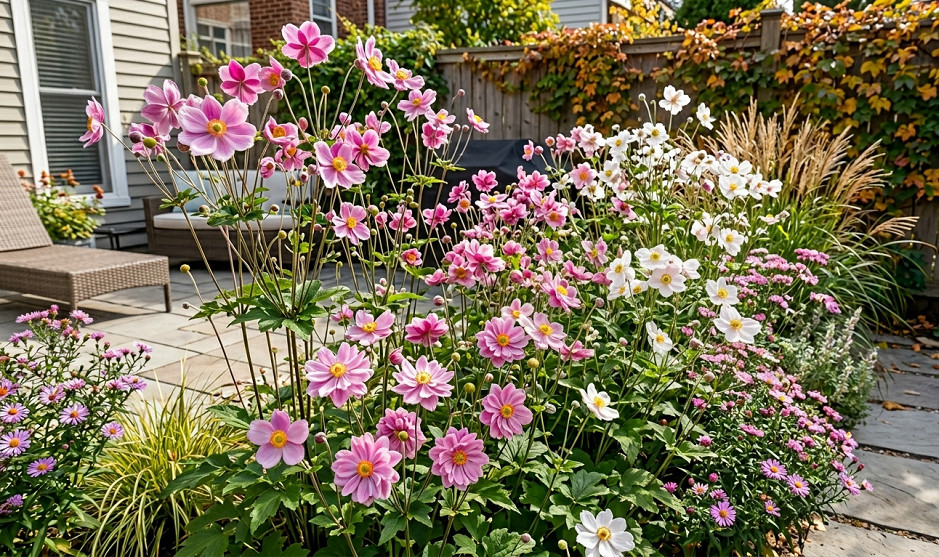
By September, most gardens are looking tired and I’ve started mentally composing apology letters to my yard. Japanese anemones are the rescue plant I never knew I needed until I grew them.
They bloom from late August through October. Tall, elegant stems carry simple, cup-shaped flowers in soft pink or white with a yellow center. They sway in the breeze in a way that feels almost cinematic. My ‘Honorine Jobert’ (white) and ‘September Charm’ (soft pink) are genuinely the stars of my garden in early fall when everything else is fading.
One honest warning: Japanese anemones spread. Aggressively. The first couple of years they’re demure and charming. By year four, they’re colonizing everything within reach. Plant them where you either want them to spread (a large border, a naturalized area under trees) or be prepared to pull out runners every spring.
They do best in part shade with moist soil — similar conditions to astilbe. Full sun works if you keep them watered. Zones 4–8.
7. Pink Crepe Myrtle — A Summer-Long Pink Flowering Tree for Warmer Climates
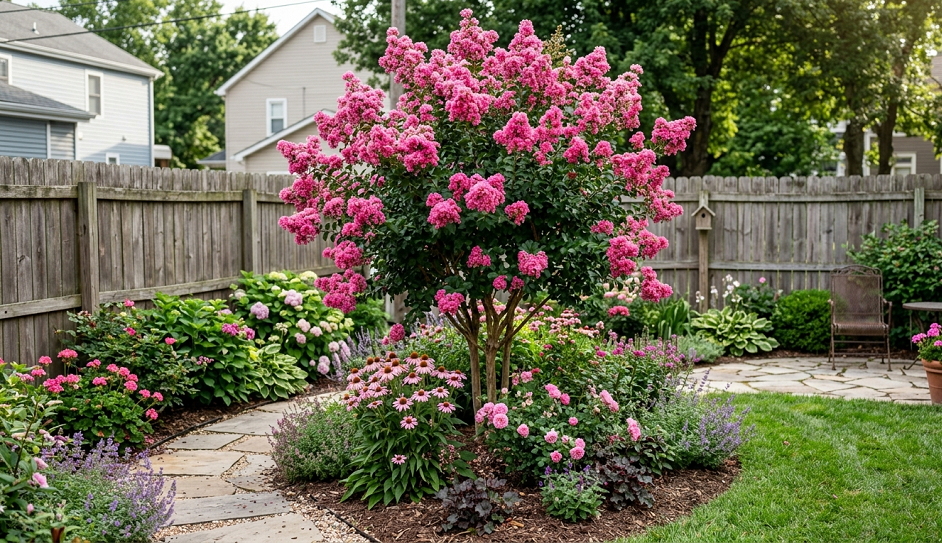
If you’re in zones 6–9, a crepe myrtle is one of the best investments you can make for a pink garden. These trees — and they really do become trees — bloom from June through September. That’s nearly four months of pink flowers on a single plant.
‘Dynamite’ gives you brilliant red-pink. ‘Natchez’ has white blooms but stunning fall foliage. For true pink, ‘Tuscarora’ (coral pink) and ‘Catawba’ (purple-pink) are both excellent. For smaller gardens, the ‘Pocomoke’ dwarf variety tops out around three feet and blooms its head off.
The one thing that drives me crazy is “crepe murder” — that brutal, ignorant practice of topping crepe myrtles every spring, leaving ugly knobby stubs. It damages the tree, destroys its natural form, and isn’t necessary. If your crepe myrtle is too big, you planted the wrong variety. Choose the right size for your space and just do light pruning to remove crossing branches.
8. Pink Flowering Perennial Geraniums — The Best Groundcover for a Pink Garden Border
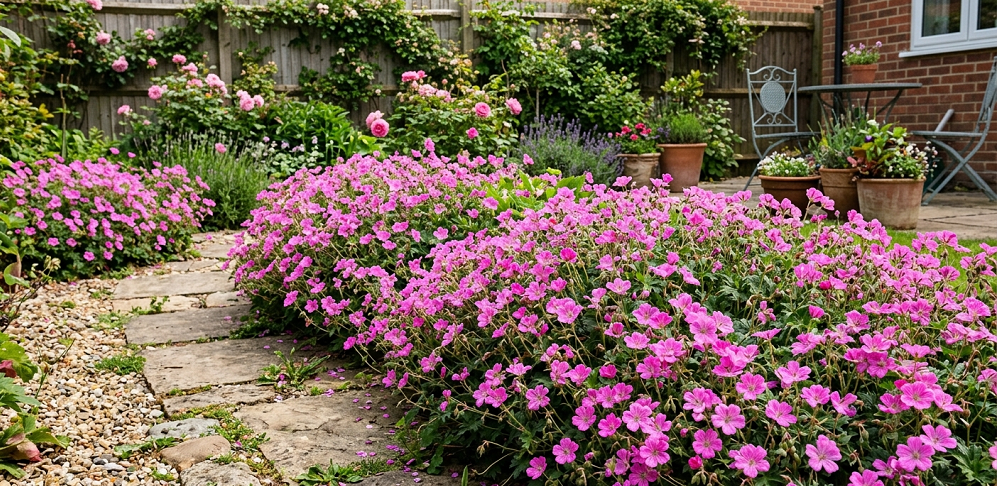
Not to be confused with the annual geraniums (Pelargoniums) in pots on everyone’s porch, hardy perennial geraniums are one of the most underused plants in the American garden. They’re tough, they spread to fill space, they bloom for weeks, and they suppress weeds like champions.
‘Rozanne’ is technically violet-blue, so for a pink garden specifically, I reach for ‘Wargrave Pink’ (soft salmon-pink, vigorous spreader) or ‘Biokovo’ (white-pink, low-growing, good fall color). ‘Max Frei’ has a deep magenta-pink that punches above its weight at the border edge.
They bloom heavily in late spring and early summer, then often repeat or re-bloom after a midsummer cutback. Chop them back by a third in July — it looks brutal for about two weeks, then they regenerate with fresh foliage and another flush of flowers.
Grow them in full sun to part shade, zones 4–8. Drought tolerant once established. I haven’t watered mine in three summers and they keep coming back.
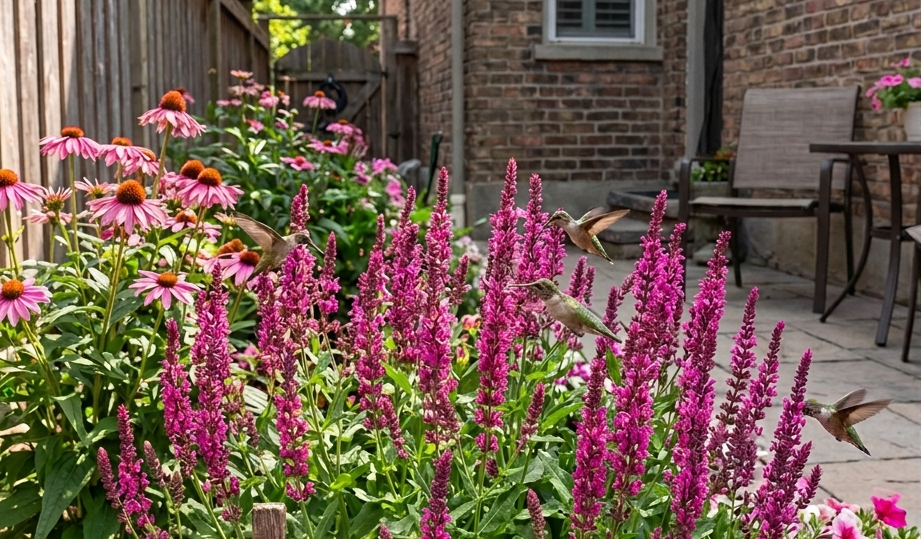
9. Salvia ‘Pink Friesland’ — The Hummingbird Magnet Your Pink Garden Is Missing
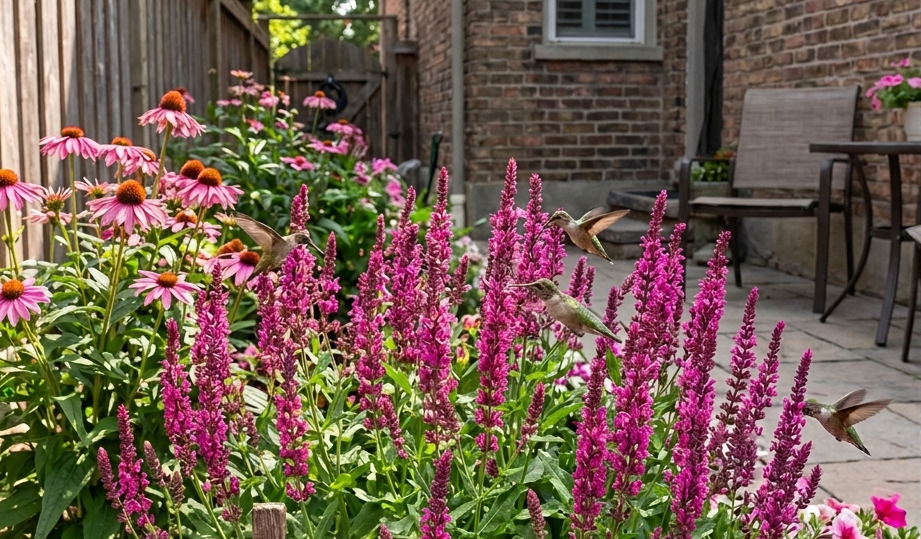
Most people reach for lavender or Russian sage when they want vertical structure in a perennial border. I’d argue pink salvia is a better choice for a pink-themed garden — and it’s criminally underplanted.
‘Pink Friesland’ specifically is my go-to. It blooms from June to September, the spikes are a warm rose-pink, and the hummingbirds treat it like an open bar. It’s also one of those plants that looks good in a vase — bonus if you like cut flowers.
It wants full sun and well-drained soil. It’s drought tolerant. It doesn’t flop. It doesn’t need staking. It doesn’t get any of the fungal problems that plague phlox and other pink standbys. I’ve been growing it for four years and it’s never given me a moment of trouble, which in my experience makes it nearly unique among perennials.
Cut it back by half after the first flush of bloom and it’ll rebloom strongly in late summer. Zones 4–8.
10. Sedum ‘Autumn Joy’ (Now Called Hylotelephium) — Late-Season Structure and Color
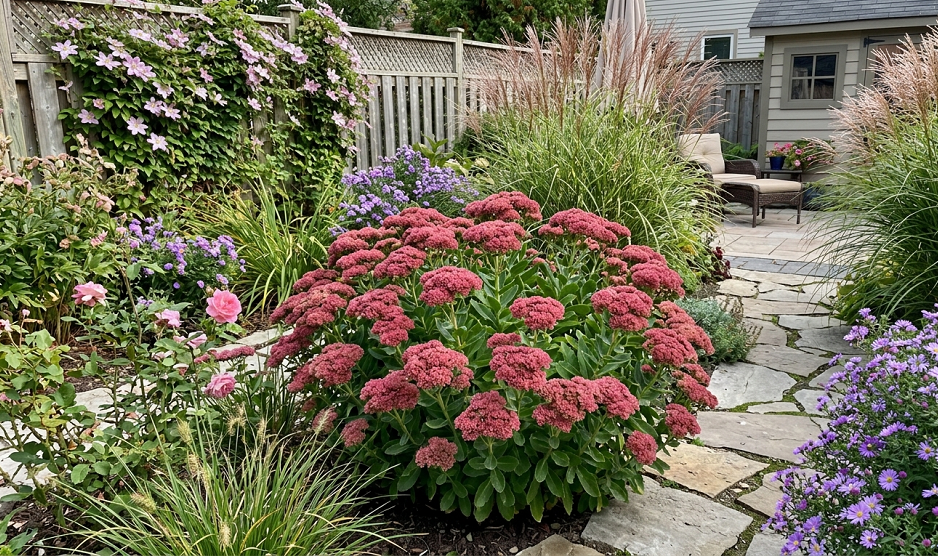
I’m going to be direct: if you’re not growing Sedum ‘Autumn Joy,’ you’re leaving fall and winter interest on the table. This plant starts the season with glaucous blue-green succulent foliage (already handsome), develops flat-topped pink flower clusters in late summer, deepens to rosy-red in fall, and then turns a warm copper-rust that holds its structure through winter.
That progression — green to pink to red to copper — is exactly the kind of multi-season payoff that makes a garden look designed rather than accidental. I use it as a structural anchor in my border and pair it with ornamental grasses and the seed heads of echinacea for a late-season display that I think looks better than the full-bloom summer version.
It grows in full sun, zones 3–9, and tolerates poor, dry soil. It’s one of the few plants I’d call genuinely indestructible. Cut it to the ground in early spring and it comes back stronger every year.
11. Annual Cosmos — The Airy, Budget-Friendly Pink Garden Filler That Seeds Itself
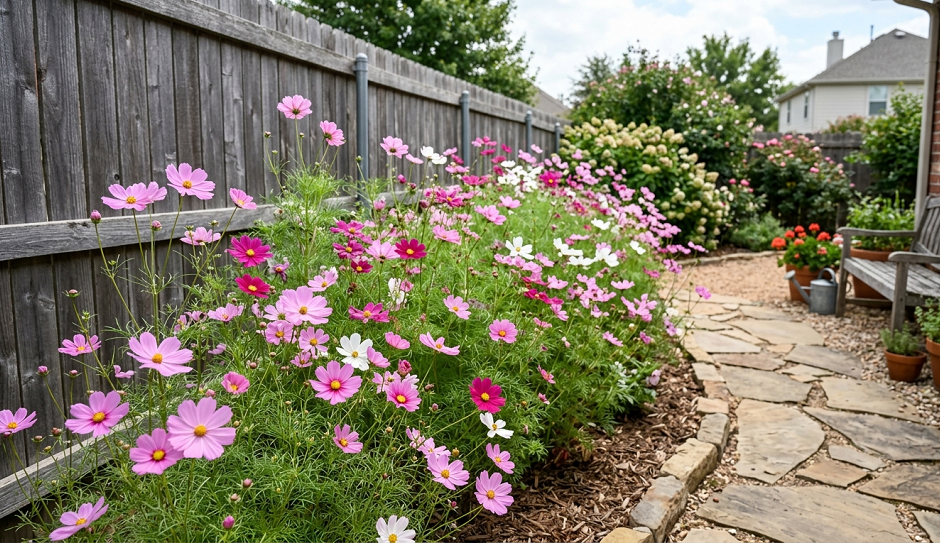
Pink cosmos might be the best value in gardening. A two-dollar seed packet sown directly in May will give you three-foot-tall plants covered in tissue-paper-thin pink blooms from July through frost. They’re feathery, light, and beautiful, and they fill gaps in the border that nothing else covers as well.
The classic ‘Sensation’ mix gives you a range from white through shell pink to deep rose. For a more saturated pink, ‘Dazzler’ and ‘Rubenza’ lean into rose and magenta. For something quieter, ‘Cupcakes Blush’ has those doubled, bowl-shaped flowers that are genuinely stunning.
Here’s the trick with cosmos: let some go to seed. They self-sow reliably and you’ll have free plants the following year without lifting a finger. I stopped buying cosmos seeds about five years ago — my patch just reinvents itself every spring. The seedlings are easy to spot and easy to transplant if they come up somewhere inconvenient.
Grow them in full sun, poor to average soil. Rich soil produces lots of foliage and fewer flowers. Don’t fertilize them. Just plant, water once or twice while they establish, and let them do their thing.
Real Talk: What’s Not Worth the Effort in a Pink Flower Garden
Pink phlox looks dreamy on Pinterest and is a powdery mildew nightmare in real life. Garden phlox (Phlox paniculata) gets white powdery mildew on its lower leaves every August without fail in most climates. You can choose mildew-resistant varieties like ‘David’ (which is white, not pink) or ‘Jeana,’ but even those get hit in humid summers. I still grow phlox because the flowers are beautiful and the fragrance is incredible — but I plant it toward the back of the border where the mildew-damaged foliage is hidden by plants in front. Go in with eyes open.
Pink impatiens are not worth the effort in many regions. Downy mildew wiped out impatiens populations across the US a few years back, and while improved varieties exist, I’d spend my shade budget on astilbe and bleeding heart instead. You’ll get more return for less risk.
‘Knock Out’ roses labeled as “pink” vary wildly. The “Pink Knock Out” in the tag at the nursery sometimes looks more salmon or coral than true pink, especially in heat. Buy them in bloom so you see the actual color before committing.
Pink tulips are gorgeous but completely impractical as a perennial display. Yes, I know — you see those meadow-style tulip gardens on Instagram and you want that. But in most of the US, tulips don’t reliably perennialize. They bloom beautifully the first year and decline after that. Treat them as annuals and you won’t be disappointed. Plant them in fall, enjoy them in spring, pull them when they’re done, and move on.
Putting It All Together: A Sample Four-Season Pink Garden Plan
Here’s roughly how I layer these plants for continuous color:
- Early spring (March–April): Bleeding heart, early tulips
- Late spring (May–June): Peonies, perennial geraniums, early astilbe
- Early summer (June–July): Knockout roses, salvia, crepe myrtle, mid-season astilbe
- Midsummer (July–August): Echinacea, cosmos, late astilbe, salvia rebloom
- Late summer–fall (August–October): Japanese anemone, sedum ‘Autumn Joy,’ echinacea seed heads, cosmos until frost
- Winter: Sedum structure, echinacea seed heads, ornamental grass silhouettes
That’s six seasons of something to look at. It takes three to four years for the perennials to really settle in and fill their space, but once they do, the maintenance drops dramatically and the display gets better every year.
Parting Wisdom
My best piece of advice after more than a decade of pink gardens: stop trying to make it look perfect in year one. The summers I’ve enjoyed my garden the most were the ones where I relaxed my expectations and paid attention to what was actually thriving rather than fixating on what wasn’t. That astilbe that sulked in the sunny bed? I moved it to the shaded corner and it’s been spectacular for six years. That’s gardening — it’s responsive, not prescriptive.
The pink flower combinations that look most beautiful aren’t the ones you saw on Pinterest. They’re the ones that evolved in your specific soil, in your specific light, with your specific tendency to forget to water on Tuesdays.
Now I want to hear from you: what’s your biggest challenge with keeping a pink garden looking good from spring through fall? Is it a specific plant that keeps disappointing you, or is it bridging those dead zones between bloom times? Drop your questions or your own hard-won tips in the comments below — I read every one of them.

About Syprose Kiche
Syprose Kiche is the creator and writer behind My Besuited Home, a practical home and garden website covering DIY projects, gardening, lawn care, landscaping, home improvement, and outdoor living. She focuses on turning everyday homeowner questions into clear, practical guides backed by careful research and useful real-world considerations.