
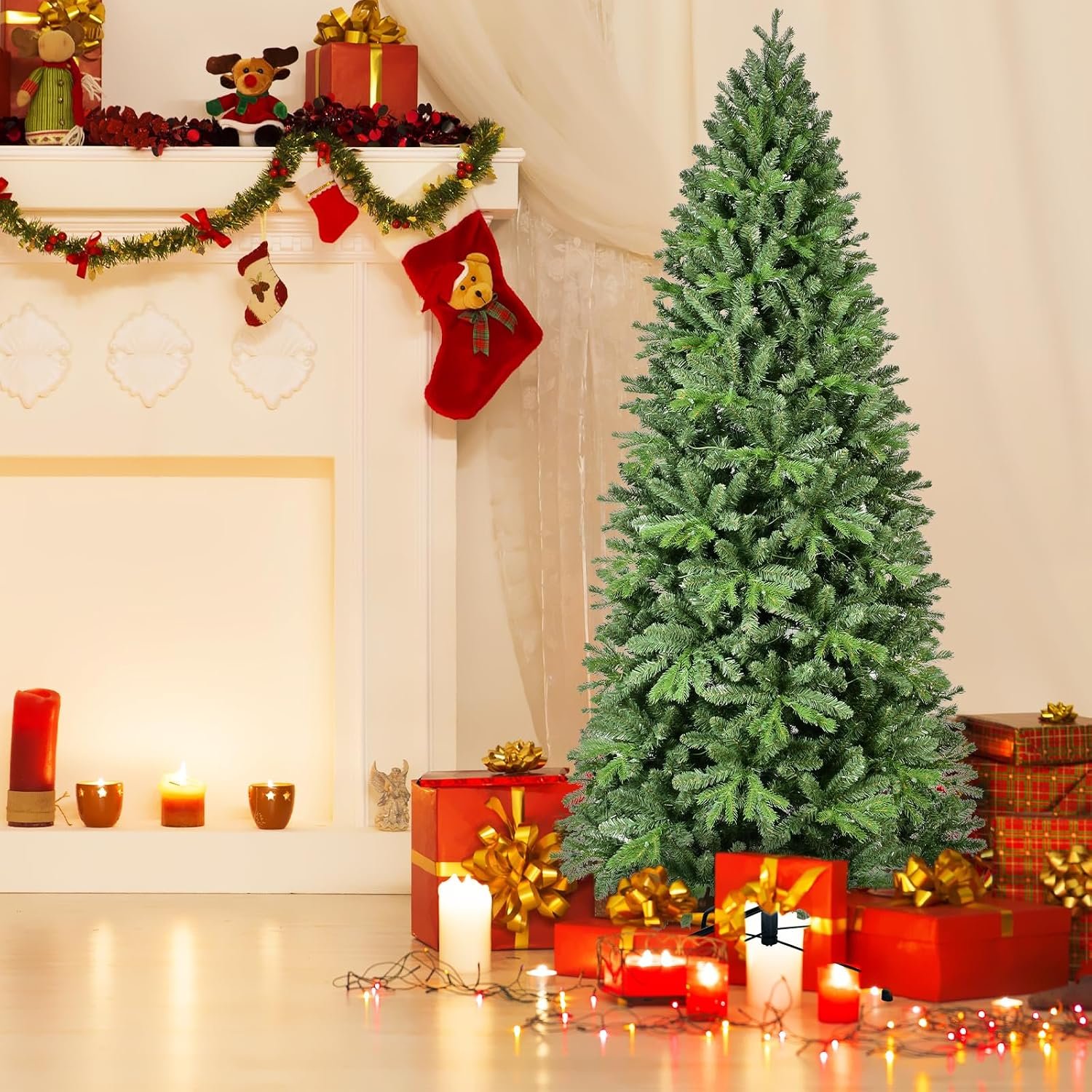
Every November, I get the same panicked text from at least three neighbors: “Is my fake tree secretly destroying the planet?” It’s a fair question, and honestly, it’s one I used to lose sleep over too.
For years I felt this weird guilt every time I hauled my artificial tree out of the garage. Real tree people would give me that look — you know the one — like I’d personally clogged a landfill with my own two hands. Meanwhile, real-tree skeptics would corner me at parties insisting that cutting down a living tree every single year is basically an environmental crime scene.
Here’s the thing: both sides are partly right and partly talking nonsense. The actual answer depends on how long you keep your tree, where you live, and what you do with it when it finally dies. I spent an entire January a few years back going down a rabbit hole of lifecycle studies and forestry reports because I needed to know, once and for all, whether my beloved 9-foot pre-lit fake tree was something to be ashamed of.
Spoiler: it’s complicated. But by the end of this article, you’ll know exactly where you stand, and you’ll never have to awkwardly change the subject at a holiday party again.
What Plastic Christmas Trees Are Actually Made Of
Most artificial trees are made from PVC, which is short for polyvinyl chloride. Some of the pricier “realistic” branch trees mix in PE, or polyethylene, which is molded to look more like actual pine or fir needles.
PVC is a petroleum-based plastic. That means it starts its life as crude oil or natural gas before getting refined into resin, extruded into those thin needle strips, and wrapped around a metal frame. The metal itself is usually steel, sometimes with an aluminum center pole.
I’ll be blunt: PVC isn’t a material anyone should feel warm and fuzzy about. It requires chlorine production during manufacturing, and older or cheaper trees have been known to contain lead, which was historically used to stabilize the plastic and keep it from degrading in sunlight. Reputable brands have mostly phased lead out, but if you own a tree from before 2010 or bought a bargain-bin one from an unclear source, it’s worth checking the tag or contacting the manufacturer.
The metal frame, hooks, and hinges add to the manufacturing footprint too. None of this is neutral. So right out of the gate, plastic trees are not some magically green alternative — they’re a manufactured product with a real environmental cost baked into every branch.
The Carbon Footprint Math: Real vs. Fake Trees
This is where things get genuinely interesting, and where most online arguments completely fall apart because people skip the math.
A widely cited lifecycle assessment from the carbon consulting firm ellipsos found that an artificial tree has to be reused for at least 20 years before its per-year carbon footprint drops below that of buying a real tree annually. Twenty years. Think about that for a second. Most families don’t keep the same couch for twenty years, let alone a tree that gets shoved into a dusty box every January.
A real, live-cut tree, by comparison, has a much smaller footprint per use because it was actively pulling carbon out of the atmosphere while it grew. Once it’s mulched, composted, or used for erosion control after the holidays, that carbon mostly returns to the soil rather than sitting in a landfill for centuries.
Here’s my honest take: if you’re the type of person who upgrades your fake tree every 5 or 6 years because you saw a fluffier one on sale, you are absolutely not making the eco-friendly choice, no matter what the box says. I’ve found that most people who buy artificial trees “to save the planet” have zero intention of keeping that exact tree for two decades, and that’s where the whole argument quietly falls apart.
On the flip side, if you’ve had the same fake tree since your kid was in diapers and that kid is now applying to college, you’re genuinely doing better than someone buying a fresh-cut tree every December.
How Long You Need to Keep a Fake Tree to Make It Worth It
Let’s break down the actual math so you can figure out where your own tree lands.
- Manufacturing footprint of an average 6.5-foot PVC tree: roughly 40 kilograms of carbon dioxide equivalent, according to most lifecycle studies, once you account for materials, production energy, and shipping from overseas factories.
- Annual footprint of a real tree grown on a local farm: somewhere between 3.5 and 6 kilograms of CO2 equivalent per year, depending on how far you drive to buy it and whether it gets composted afterward.
- Break-even point: dividing those numbers out lands you somewhere between 7 and 20 years, with most credible studies landing closer to that higher number once shipping and disposal are factored in.
- Realistic tree lifespan: most families I know replace their fake tree every 8 to 10 years, either because branches start falling out or because the lights (if pre-lit) stop working and nobody wants to deal with rewiring 900 individual bulbs.
Quick side note: if your tree ships from overseas, which the vast majority do, tack on extra emissions for the boat ride across the ocean. That’s rarely included in the flashy “eco-friendly” marketing copy on the box, and it genuinely moves the needle.
So if you’re buying a decent quality tree and committing to keeping it for 15-plus years, doing basic maintenance instead of replacing it at the first sign of wear, you’re in solidly defensible territory. If you’re the type who redecorates the whole living room every few Decembers, a real tree is the better call for your conscience.
The Disposal Problem Nobody Talks About
This is the part that really gets under my skin, because it’s the piece almost every “eco-friendly” tree comparison completely skips.
PVC does not biodegrade. Not in 10 years, not in 100 years, not really ever in any meaningful human timescale. When your fake tree finally gives up the ghost — branches drooping, wires exposed, that one section that never quite fluffs out right anymore — it goes to a landfill and sits there indefinitely.
Real trees, by contrast, get chipped into mulch, composted, sunk into lakes as fish habitat, or used to rebuild sand dunes after storms. My city runs a curbside pickup program every January where they collect real trees and turn them into mulch for the public parks. I drag mine to the curb, and two months later I’m literally walking through composted Christmas tree at the playground. That’s a genuinely closed loop.
There is essentially no equivalent closed loop for a PVC tree. You can’t compost it, you can’t safely burn it (please don’t — burning PVC releases some genuinely nasty chlorinated compounds), and recycling centers almost universally refuse to take them because the mixed plastic-and-metal construction makes them a nightmare to process.
A few cities have started niche recycling programs specifically for artificial trees, breaking them down into separate metal and plastic streams, but this is still rare. If you’re getting rid of an old fake tree, your best bet honestly isn’t the trash — it’s donating it. Churches, community centers, and secondhand shops often take gently used artificial trees, which extends the life of that plastic and pushes the carbon math further in your favor.
Water and Land Use: The Overlooked Piece of the Puzzle
Everybody focuses on carbon, but there’s another side to this that barely gets mentioned: land and water.
Real Christmas tree farms are, functionally, working forests. They filter groundwater, stabilize soil, provide habitat for birds and small mammals, and produce oxygen for the 7 to 10 years it takes a tree to reach a sellable height. According to the National Christmas Tree Association, farms in the U.S. plant one to three new seedlings for every tree that’s harvested, which keeps the land in continuous production rather than stripped bare.
Plastic tree manufacturing, meanwhile, uses water and energy in the refining and molding process, but it doesn’t provide any of those ongoing ecological services. A fake tree sitting in your garage for eleven months of the year isn’t filtering anything or housing any woodpeckers.
That said, tree farms aren’t purely virtuous either. Many use pesticides and herbicides during the growing years, and monoculture tree farming isn’t the same as a genuinely biodiverse forest. If you want the greenest possible real tree, look for a farm that’s certified organic or at least transparent about its spray schedule. I buy from a small family farm about 40 minutes from me specifically because the owner will actually tell you what he sprays and when, which is more than I can say for the big-box lot outside the grocery store.
Allergies, Pests, and the Stuff Nobody Warns You About
This isn’t strictly an “eco” issue, but it matters for the decision, so I’m including it.
Real trees can bring mold spores, sap, and the occasional stowaway bug into your house. I once found a very confused praying mantis calmly hanging out on my living room curtains three days after we set up the tree — my dog was thrilled, my wife was not. If anyone in your house has pine allergies or asthma that flares up around fresh greenery, that’s a legitimate factor that has nothing to do with carbon footprints and everything to do with quality of life during the holidays.
Fake trees solve that problem entirely. No sap, no spores, no mystery bugs, no needles embedded in your socks until March. That convenience is real, and I’m not going to pretend it doesn’t matter just because this is technically an eco-focused article.
How to Make an Artificial Tree Actually Worth the Purchase
If you’ve decided a fake tree is the right call for your household, there are a few things that genuinely change the math in your favor.
- Buy quality over cheap bulk deals. A flimsy $40 tree from a discount store usually sheds needles within three seasons and ends up in the trash by year four. That’s the worst possible outcome — you paid the full manufacturing carbon cost and got almost none of the multi-decade benefit. Spend more upfront on a tree with a solid hinge system and thicker PVC tips, because those details are exactly what determine whether it survives to year fifteen.
- Skip the pre-lit models if you can. I know, pre-lit trees are convenient. But the light strings are almost always the first thing to fail, and once a third of the bulbs go dark, most people just buy a whole new tree instead of restringing lights themselves. A tree with no built-in lights forces you to buy separate LED strings, which is more setup work but means your tree itself can outlive multiple generations of lights.
- Store it properly. Humidity, sunlight, and getting crushed under a stack of holiday decorations are the top three tree killers. I use a proper rolling storage bag with a rigid frame instead of the flimsy cardboard box it came in, and my tree has survived nine seasons without a single bent branch.
- Fix instead of replace. Loose branches can usually be re-bent or reattached with a bit of florist wire. A drooping top piece can often be reinforced with a zip tie hidden behind the trunk. These small fixes add years to a tree’s life for basically zero cost.
- Bonus tip: if your tree smells like garage or basement after storage, a few dryer sheets tucked into the storage bag over the summer will keep it smelling normal by the time December rolls around again. Small thing, but it’s the difference between excitement and dread when you open that bin.
Here is one eco-friendly options you can consider:
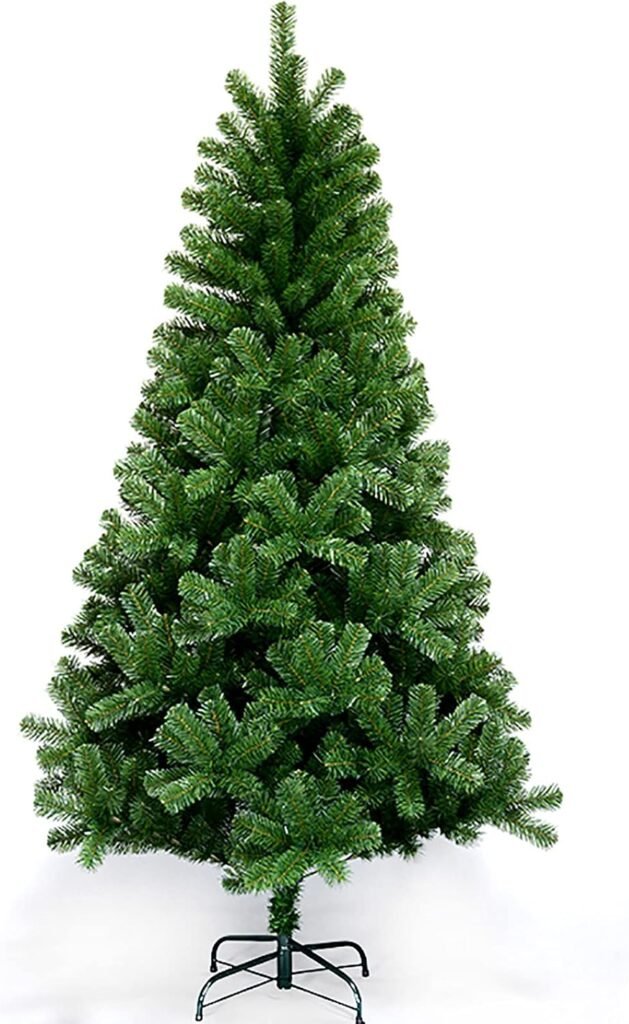
What to Look For If You Want a Genuinely Better Fake Tree
Not all artificial trees are created equal, and a few labels are actually worth paying attention to when you’re shopping.
Search for trees explicitly labeled lead-free, especially if you’re buying for a household with small kids or pets who might chew on branch tips. Reputable manufacturers list this clearly, and if a listing doesn’t mention it at all, that’s usually a red flag rather than an oversight.
Some newer trees use recycled PVC or a blend that includes post-consumer plastic, which lowers the manufacturing footprint somewhat compared to virgin PVC. It’s not a silver bullet, but it’s a meaningful step in the right direction, and I’d rather support that shift than pretend it doesn’t matter.
A handful of companies have also started offering take-back or trade-in programs, where they’ll accept your old tree for responsible recycling when you buy a new one from them. These programs are still rare, but if you’re in the market for a new tree anyway, it’s worth a quick search to see if the brand you’re considering offers one.
Real Talk: Where This Whole Debate Falls Apart
Here’s where I get a little opinionated, because I think both camps oversell their case.
The “real trees are always better” crowd tends to ignore that plenty of real trees get driven long distances, wrapped in plastic netting, and then thrown out on the curb without ever being composted, which erases a lot of their environmental advantage. If your city doesn’t have a mulching program and your tree just goes to a regular landfill, a real tree loses a big chunk of its edge.
The “fake trees are eco-friendly because you reuse them” crowd conveniently ignores the 20-year break-even math and the fact that most people replace their tree way sooner than that. Marketing copy on artificial tree boxes loves the word “sustainable,” but very few of those companies will tell you the actual carbon numbers, because the numbers don’t flatter them until you’re a decade and a half into ownership.
And here’s the part that really is not worth the effort: buying an artificial tree specifically because you think it’ll save you money over time. I ran these numbers for myself once, factoring in the original purchase price, storage bin, replacement lights, and eventual disposal costs, and the savings versus buying a modest real tree every year for 10 years were smaller than I expected. If cost savings is your main motivation, do the actual math for your situation before assuming the fake tree wins.
One more honest confession: I switched to a fake tree originally because I was tired of vacuuming needles out of the carpet until Easter, not because of any environmental conviction. The eco-friendliness only became a real talking point for me after doing the research. If your motivation is convenience, just own that — you don’t need an environmental justification to want fewer needles in your socks.
So Which One Should You Actually Buy?
If I had to give you a straight answer, it’s this: the greenest tree is the one you already own.
If you’ve got a fake tree in the garage right now, the most eco-friendly move is to keep using it until it physically falls apart, not to swap it for a “greener” model that claims to be recyclable. Buying a new tree, even one marketed as sustainable, adds fresh manufacturing emissions that a 10-year-old tree sitting in your basement simply doesn’t have.
If you’re starting from scratch and don’t own a tree at all, a real tree from a local farm, disposed of through a mulching or composting program, is generally the lower-impact choice year after year, especially if you don’t want to commit to two decades of storage bins in your garage.
And if you genuinely love the convenience of a fake tree — no sap, no mess, no annual shopping trip — buy the sturdiest one you can afford and commit to it for the long haul. Treat it like a piece of furniture, not a disposable decoration. Store it properly, fix loose branches instead of replacing the whole thing, and get every possible year out of it.
Parting Wisdom
At the end of the day, the “real vs. fake” Christmas tree debate gets way more heated than it needs to be, mostly because people want a simple villain and a simple hero. The truth is messier: it depends on how long you keep what you buy and what happens to it when the holiday magic wears off.
My honest advice after years of overthinking this exact question? Stop feeling guilty about the tree you already own, and start being intentional about the next one.
What’s your setup — real, fake, or one of those weird upside-down trees I still don’t understand? Drop a comment below and tell me how long you’ve had your tree. I’m genuinely curious how many of you are secretly sitting on a 20-year-old artificial tree without realizing you’ve already won the eco math.

About Syprose Kiche
Syprose Kiche is the creator and writer behind My Besuited Home, a practical home and garden website covering DIY projects, gardening, lawn care, landscaping, home improvement, and outdoor living. She focuses on turning everyday homeowner questions into clear, practical guides backed by careful research and useful real-world considerations.