
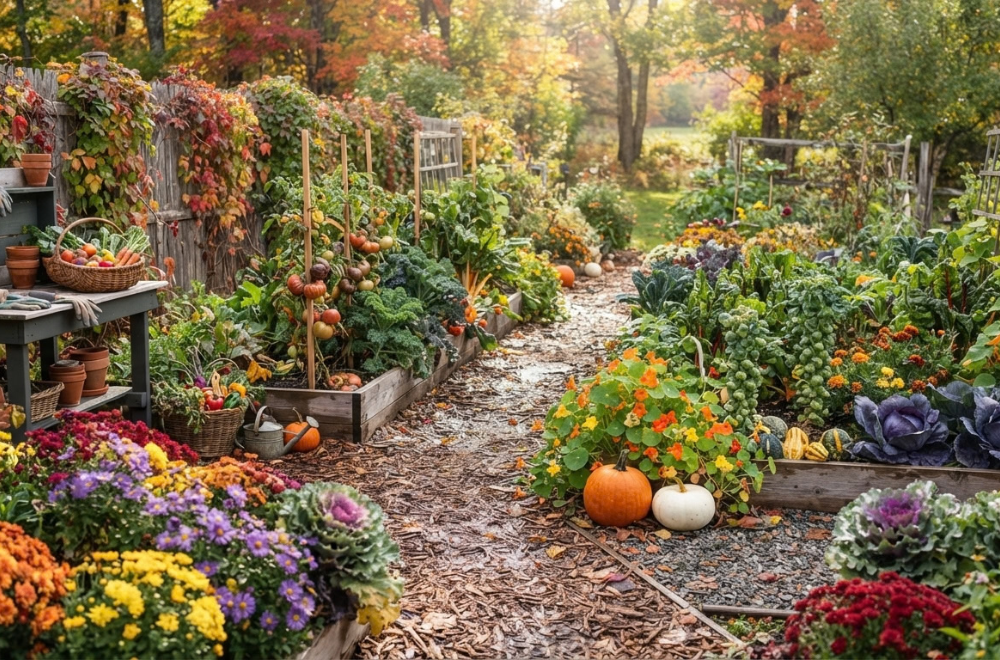
A hydrangea that looks like a bundle of brown sticks in October is one of the most tempting things in the garden to cut down. For some hydrangeas that’s the right call. For others it removes next summer’s flowers before they’ve had a chance to open. The same split runs through the rest of the border: a few plants really do need cutting in fall, several are better left standing until late winter, and a handful can be damaged by a fall haircut.
Most confusion comes from advice that treats “fall cleanup” as one job. It’s really several different jobs with different reasons behind them, and once you know the reasons the plant-by-plant answers are easier to remember.
Note: this guide is written for temperate climates with a real winter, where “fall” means falling temperatures and a first frost. If you garden somewhere frost-free, there’s a short section on that near the end.
Three questions that settle most cutback decisions
Before picking up the pruners, three questions cover most of the situations you’ll meet.
Where will next year’s flowers come from? Some shrubs and perennials form flower buds on stems that grew the previous season (“old wood”) and open them the following year. Others flower on stems that grow fresh each spring (“new wood”). Cutting old-wood bloomers in fall or winter removes buds. Cutting new-wood bloomers is mostly harmless. The plant type decides this, not the calendar.
Does the old growth carry disease or pests through winter? Some plants have foliage that harbors fungal spores, slug eggs, or nematodes over winter. For those, cutting and disposing of the debris in fall is a real sanitation step. Others have clean foliage, and removing it accomplishes very little except a tidier bed.
Is the standing growth doing anything useful? Dead grass blades and stems can shelter the plant’s crown from winter wet. Seed heads feed birds, and hollow stems shelter overwintering bees and other insects. Leaving these plants standing costs you some winter neatness and gives back something real.
Timing matters too. A common trigger for fall cleanup is a hard frost, generally defined as a night around 28°F (-2°C) or colder, which kills tender growth and pushes perennials into dormancy. Cutting a perennial while its leaves are still green cuts short the process where it moves energy down into its roots and crown. A yellowed, collapsed plant has finished that process. A green one hasn’t.
Hydrangeas: what you do depends on which kind you have
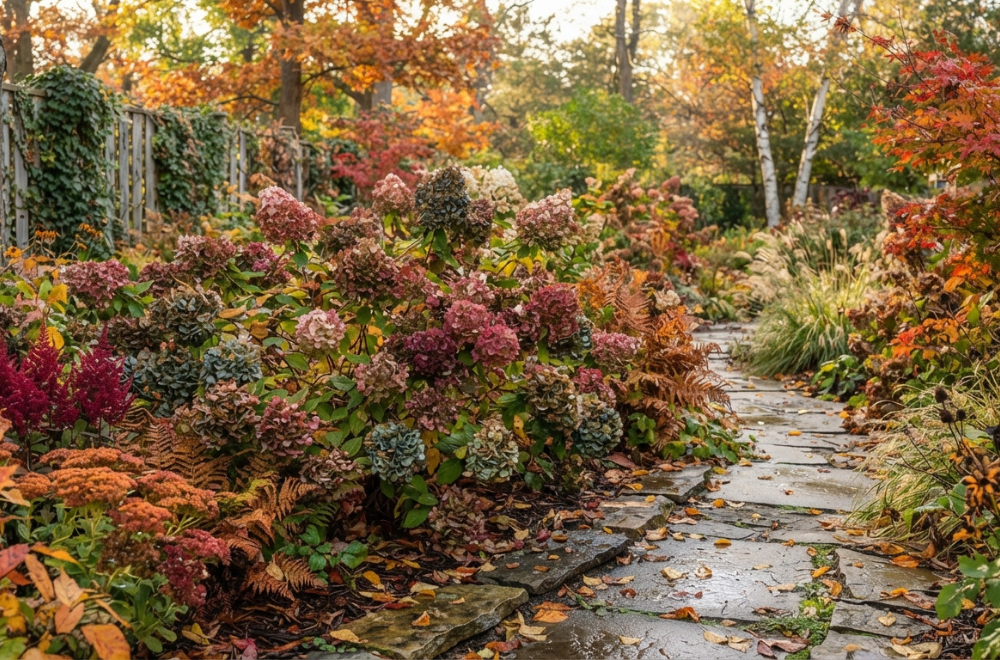
There’s no single hydrangea rule, and this is where most flowerless summers come from. Look at your plant and find it below.
Bigleaf (mophead and lacecap) and mountain hydrangeas (Hydrangea macrophylla and H. serrata) are the classic old-wood bloomers. The flower buds for next summer are already forming on the stems by late summer and fall. Cut those stems and you’ve cut the flowers. Some reblooming cultivars flower on both old and new wood, but the early flush still comes from old stems, so a hard cut costs you that first round of blooms.
Oakleaf hydrangeas (H. quercifolia), recognizable by lobed leaves that look like oak leaves, also bloom on old wood. They have the added benefit of peeling bark and good fall color, which you lose if you cut them back.
Panicle hydrangeas (H. paniculata, with cone-shaped flower clusters, including the widely sold ‘Limelight’ types) and smooth hydrangeas (H. arborescens, including ‘Annabelle’) bloom on new wood. These are the ones you can prune hard without losing flowers. Even so, late winter or early spring is the usual timing, because the dried flower heads add winter interest and you can judge the plant’s shape better once the leaves are gone.
For the old-wood types, the safe fall routine is to remove nothing, or at most snip off spent flower heads just below the bloom. Then wait for spring. Bigleaf hydrangeas can look dead well into the season; stems that appear lifeless in March may leaf out in May. Wait until you see which buds are swelling, then cut back only stems that are truly dead, either to the ground or down to the first pair of live buds. A stem is dead if it’s brittle and snaps cleanly with a dry interior, and alive if it’s flexible with green underneath the bark when scratched lightly with a fingernail.
If you can’t tell which type you have, do nothing this fall. Waiting costs a scruffy winter. Guessing wrong on a bigleaf costs a season of flowers.
For panicle and smooth types in late winter, common guidance is to reduce panicle hydrangeas by up to about a third, or to a framework of a few feet if you want a specific size. Smooth hydrangeas are often cut back to somewhere between the ground and about 12–18 inches. Both handle harder cuts than old-wood types, but check the tag or your source for the cultivar you own, since recommended heights vary.
Ornamental grasses: leave them standing, cut them late
Ornamental grasses look their best in fall, when plumes catch low sun, so it’s a relief that most of them are better left uncut until late winter. The standing foliage does a few jobs. Many gardeners and extension sources note that the dead blades help shield the crown from winter wet, which is what actually kills many grasses in cold, soggy soil. The seed heads feed birds. And a bed of tawny grass against snow is one of the few things a winter garden has going for it.
The cutting window is late winter to early spring, before the new green shoots start pushing up. That timing varies by region, but the rule is the same everywhere: cut before new growth, so you aren’t slicing off fresh tips or fighting to separate old and new blades.
How low to cut depends on the size of the clump. Medium clumps are commonly cut to somewhere around 4 to 6 inches. Very large grasses, such as big miscanthus, are often left with taller stubs simply because a neat 4-inch cut through a dense clump is difficult. Tie the whole clump into a bundle with twine or a bungee cord before cutting. This keeps the blades from flying across the yard and makes cleanup a matter of carrying one bundle to the compost pile. A hedge trimmer or sharp loppers works well on large clumps.
Not all grasses fit this pattern.
- Warm-season grasses (switchgrass, little bluestem, fountain grass, most miscanthus) go fully dormant and brown in winter. These are the ones to cut back in late winter.
- Cool-season and evergreen types (blue fescue, blue oat grass, most sedges) stay semi-green through winter. Cutting them to the ground looks harsh and can set them back. Comb through the clump with gloved fingers or a rake to pull out the dead blades, and trim only the tips if they look ragged.
- Feather reed grass (Calamagrostis) starts growing early. If you wait too long in spring, you’ll be cutting into new growth, so aim for late winter.
Two cautions. First, sharp-edged grasses such as pampas and some miscanthus can cut skin. Wear gloves and long sleeves. Second, in wildfire-prone regions, tall dry grass near a house is a fuel source. Local fire authorities publish guidance on defensible space, and it may recommend cutting dry grasses close to structures in fall, which overrides the general advice to wait.
Lavender: the one where a fall haircut can do real damage
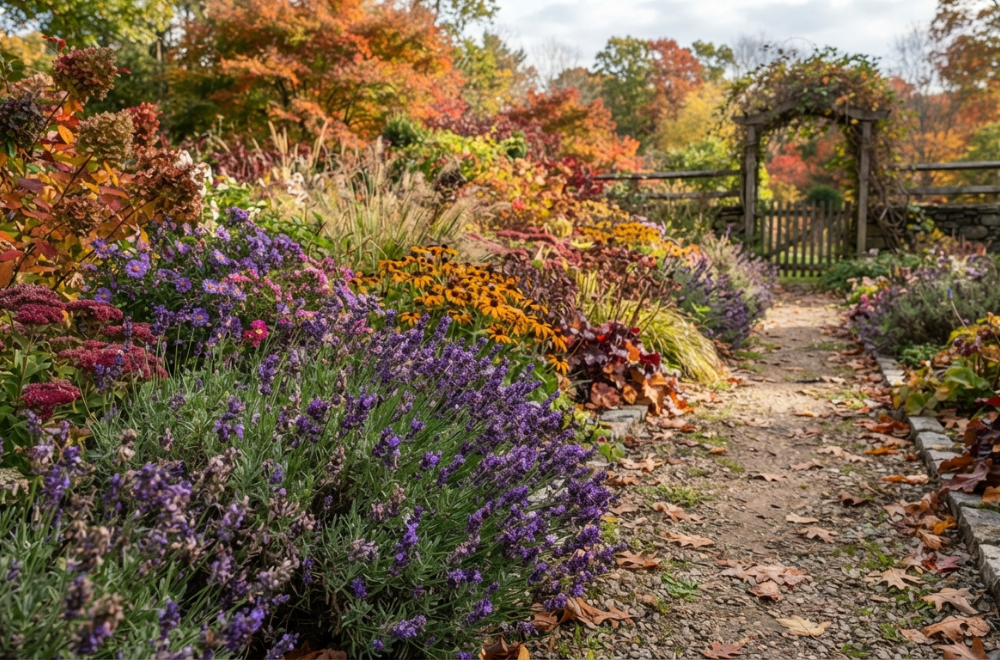
Lavender is unusual because its woody base doesn’t reliably regrow. Cut back into bare, leafless wood and the stem often just sits there, so an overenthusiastic trim can leave a permanent gap in the plant.
The pruning that matters happens right after flowering in summer. Cut off the spent flower stalks and a small amount of green growth beneath them, roughly an inch or so, always staying in leafy growth. That light shearing keeps the plant compact and slows the woody base from creeping upward.
In fall, prune nothing more. New growth stimulated by late pruning is tender and gets damaged by frost, and the intact foliage provides some protection to the plant’s crown during winter. In spring, once you can see new green growth emerging along the stems, trim the plant back by up to about a third, stopping above the point where the stems turn from green to bare wood.
Winter losses of lavender are more often about drainage than cold. Lavender tolerates cold better than it tolerates wet crowns, especially heavy, slow-draining soil. If a plant is sitting in soggy ground, the fix is improving drainage (raised planting, sandy or gritty soil, gravel mulch around the crown), not additional pruning. Organic mulches piled against the stems can hold moisture where you don’t want it.
Hardiness also varies by type. English lavender (Lavandula angustifolia) is generally the hardiest, tolerating much colder winters than the tender Spanish and French types. If you’re unsure which you have, check the tag before deciding whether the plant needs winter protection.
A word on old, leggy plants: if a lavender has become mostly woody with a tuft of foliage at the tips, hard rejuvenation pruning is unreliable. Taking cuttings in summer and replacing the plant every several years is usually more successful.
Roses: fall is for cleanup, not pruning
Cutting roses back hard in fall is one of the most common gardening habits and one of the least helpful. Hard pruning is best done in late winter or early spring, when the buds begin to swell and the worst cold has passed. Cutting in fall can stimulate growth that then gets nipped by frost, and it leaves fresh cuts exposed through winter.
That doesn’t mean roses get ignored in fall. A few tasks are worthwhile.
- Stop deadheading a month or more before first frost. Many rose growers stop removing spent blooms in late summer so the plant can form hips and begin hardening off for winter. Continuing to deadhead keeps the plant producing soft new growth.
- Rake up fallen leaves. Black spot fungus can persist on fallen leaves, so removing them reduces the source of infection next season. Bag diseased leaves rather than composting them, since home compost piles often don’t stay hot enough to reliably kill spores.
- Take out dead, diseased, or damaged canes. These can be cut any time. Cut back to healthy tissue, where the inside of the cane is white or light green rather than brown.
- Shorten very tall canes if wind is a problem. Long canes on hybrid teas and floribundas can whip around in winter storms, loosening the roots (often called wind rock). Trimming them to a manageable height, commonly around 3 to 4 feet, reduces this. It’s a trim, not a real prune.
- Protect the base in cold climates. In regions with hard winters, the usual practice is to mound soil or mulch about 8 to 12 inches high around the base of grafted roses after the ground starts to freeze. Mounding before then can hold in warmth and moisture too early.
The rule that surprises people: once-blooming roses, including many old garden roses and ramblers, flower on last year’s canes. Prune them right after they bloom in summer. Cut in fall or spring and you remove the flower buds. Repeat-blooming shrub roses and hybrid teas bloom on new growth, which is why late-winter pruning works for them.
Climbing roses sit between the two. Tie long canes to their support in fall so wind doesn’t damage them, but leave the main pruning and training for the dormant season, or right after flowering for once-bloomers.
Coneflowers: a choice between neat and useful
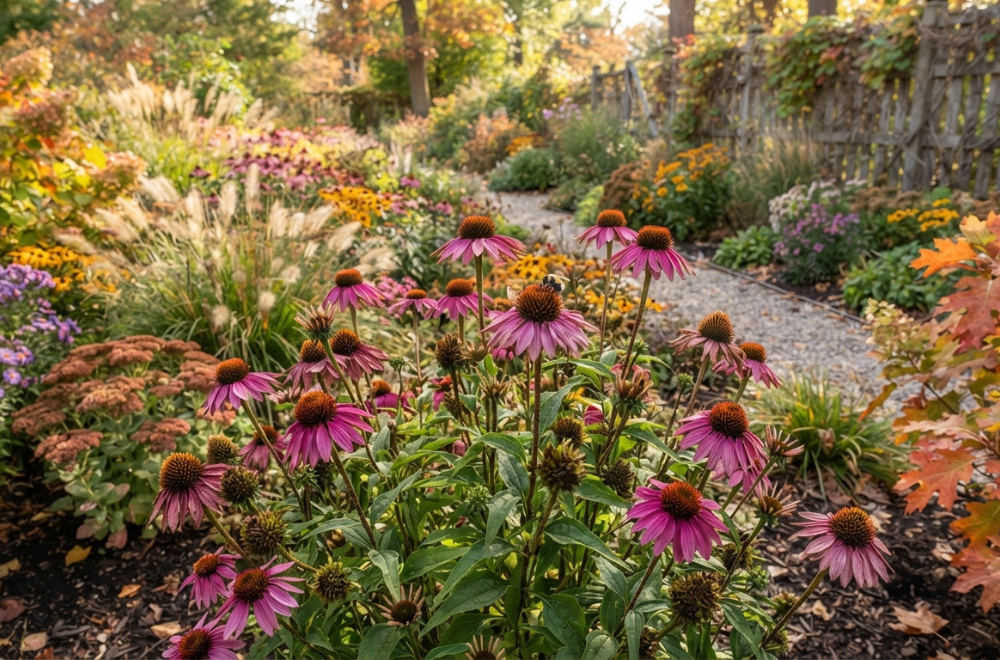
Coneflowers (Echinacea) don’t need fall cutting to stay healthy, which makes this a question of preference more than plant care.
Leaving the seed heads standing has real advantages. Goldfinches and other small birds feed on the seeds through fall and winter, and the dark cones look good with frost on them. Hollow or pithy stems can also give small native bees a place to overwinter. Coneflowers self-seed readily if you leave the heads, though seedlings from named hybrid varieties often revert toward the plain purple species, so don’t expect them to match their parents.
The case for cutting in fall is mostly about disease and tidiness. If the foliage had spotting or heavy powdery mildew, removing it in fall reduces what’s left to carry over. Cut the stems down to just above the low basal leaves and dispose of the material rather than composting it.
One situation calls for more than cutting. If a coneflower has distorted, greenish, frilly flower parts and stunted growth, it may have aster yellows, a disease spread by leafhoppers. That plant can’t be cured, and the standard advice is to dig it up and dispose of it rather than leaving it to spread.
A workable compromise is to cut back the stems that look diseased or ragged and leave a share of healthy seed heads up for the birds. In late winter or spring, cut whatever remains down to a couple of inches above the ground before new growth appears.
Hostas: cut after the leaves collapse, not before
Hostas are a plant that benefits from fall cutting, with one condition: wait until frost has turned the leaves yellow and limp. The leaves are still sending energy to the crown while they’re green, and cutting early cuts that short.
Once the foliage has collapsed into a slimy mat, remove it. Slugs lay eggs in the debris around hosta crowns, and decaying leaves are a good hiding place. Foliar nematodes, microscopic worms that cause brown streaking between the veins, can also overwinter in old leaves. Cleanup won’t eliminate slugs, but it removes some of their cover and reduces disease pressure.
Cut the leaves off at the base, and put them in the trash or a municipal green-waste system rather than a home compost pile, especially if the plants had nematode symptoms.
Sanitize your pruners if you’ve cut into a hosta showing signs of hosta virus X, which appears as odd mottling or streaking that doesn’t follow the normal leaf pattern. The virus spreads through sap on tools. Wipe blades with rubbing alcohol (around 70%) between plants when you suspect virus.
If you skip fall cutting entirely, the plant will survive. The mush can be cleared in spring, though it’s a wetter, less pleasant job.
Daylilies: cut by type, not by date
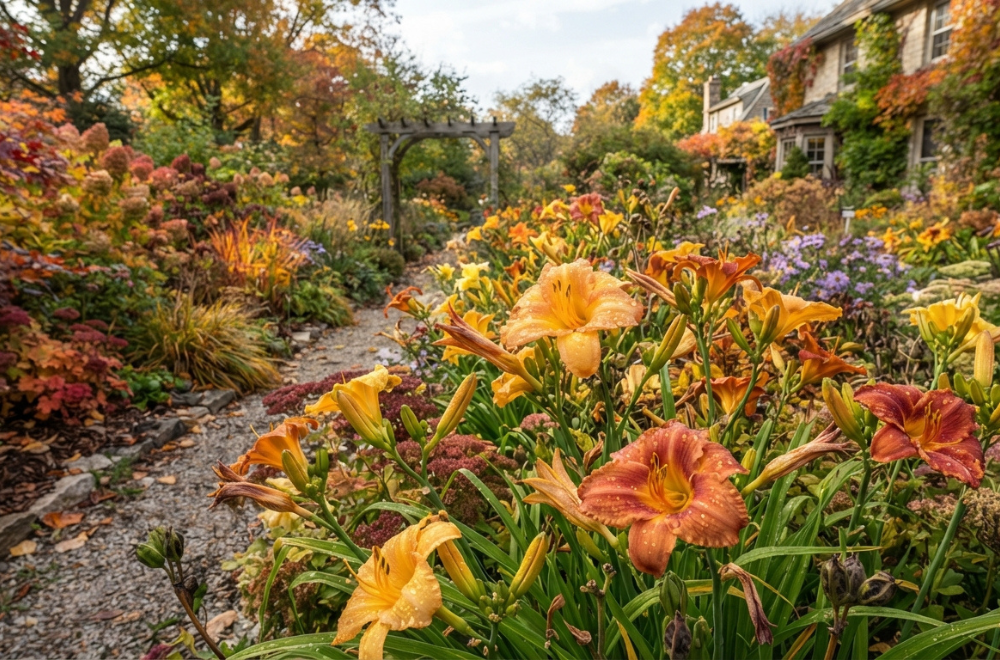
Daylilies come in three foliage habits, and the right treatment is different for each.
Dormant (deciduous) daylilies die back completely in winter. Once the foliage has yellowed and flopped, cut it to a couple of inches above the ground. Or leave it until spring, when the dead leaves pull away easily by hand.
Evergreen daylilies hold green foliage through winter in mild climates. Don’t cut those back. Remove the dead leaves and leave the rest.
Semi-evergreen types fall in between, and the practical rule is the simplest one: if the foliage is yellow and collapsed, cut it. If it’s green, leave it.
Flower stalks (scapes) can be removed at the base any time after blooming.
Fall cutting isn’t essential for plant health. It reduces the matted foliage that sits on the crown, and it can help if the plants had leaf streak or other foliage problems, since the debris is removed. It also makes spring cleanup easier. But leaving the leaves through winter doesn’t harm a healthy plant, so this is a good place to save effort if your time is limited.
Peonies: herbaceous and tree types need opposite treatment
Peonies split into two groups that look similar in bloom and require very different care in fall.
Herbaceous peonies die back to the ground each winter. After frost has yellowed and collapsed the foliage, cut the stems down to an inch or two above the soil, being careful not to damage the pink or red “eyes” at the crown, which are next year’s shoots. Remove the foliage from the garden entirely. Peony foliage can carry botrytis blight (gray mold) and leaf blotch, which overwinter on debris and reinfect new growth in spring. Bag the trimmings rather than composting them.
Intersectional (Itoh) peonies are treated much like herbaceous types. Cut them back to a few inches above ground in fall.
Tree peonies are woody shrubs and do not die back. Cutting them to the ground would remove their framework of buds. Leave the stems alone in fall. Clean up fallen leaves around the base, and in spring remove only wood that’s clearly dead.
Peonies that don’t bloom are usually planted too deeply, or in too much shade, rather than suffering from a pruning error. But cutting a tree peony to the ground can delay bloom for years, so identifying the type first matters.
Herbs: sort them by growth habit
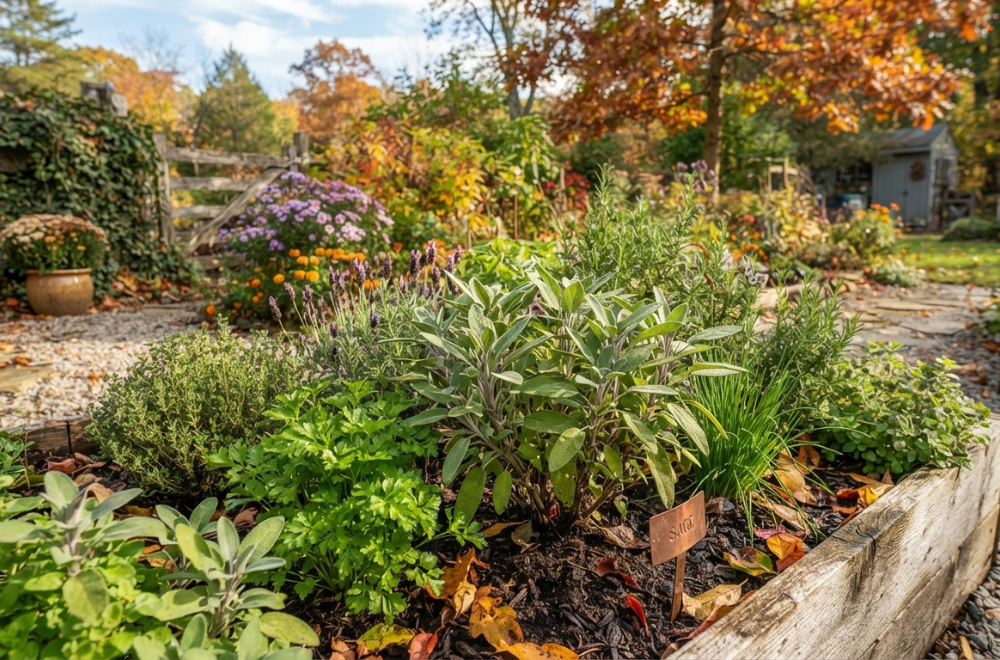
“Herbs” isn’t a single category, and there’s no single fall rule. Sort them by how they grow.
Woody perennials (rosemary, thyme, sage, lavender): These shouldn’t be pruned hard in fall. The general recommendation is to finish any significant trimming about four to six weeks before the first frost, so new growth has time to harden. Later than that, stimulated tender shoots can be damaged by cold. Shape sage and thyme in spring, cutting to just above new growth and avoiding bare, woody stems where regrowth is unreliable. Rosemary is the most cold-sensitive of the group: many cultivars are only reliably hardy in milder zones, and in colder areas it’s often grown in a pot and brought indoors, which makes cutting back beside the point.
Herbaceous perennials that die back (mint, chives, lemon balm, tarragon, bee balm): These can be cut to the ground after frost or left standing through winter and cut in spring. Mint spreads aggressively, so cutting it back in fall gives you a chance to check its boundaries. Chives can be trimmed to an inch or so after they die back.
Oregano sits in between. Many gardeners leave its stems standing through winter and cut them back to a few inches in early spring.
Tender annuals (basil): Basil is damaged by chilly temperatures, not just frost. Harvest everything before nights dip toward the 40s°F (about 5–9°C), since cold damage shows as blackened leaves. Basil leaves can be frozen in a paste with oil or turned into pesto.
Biennials and self-seeders (parsley, dill, cilantro): Parsley is a biennial that survives light frost and can be harvested through much of the cold season. Dill and cilantro finish quickly; letting a few seed heads mature lets them reseed.
Container herbs are more exposed than in-ground plants because pots freeze through more easily. Tender potted herbs are better brought inside than trimmed.
Quick reference
| Plant | In fall | Wait until |
| Bigleaf, mountain, oakleaf hydrangea | Nothing (old-wood bloomers) | Spring, once buds show which stems are alive |
| Panicle, smooth hydrangea | Optional deadheading | Late winter or early spring |
| Ornamental grasses | Nothing | Late winter, before new growth |
| Lavender | Nothing beyond a light post-bloom trim in summer | Spring, once new growth appears |
| Repeat-blooming roses | Clean up leaves, remove dead canes, shorten very tall canes | Late winter or early spring for real pruning |
| Once-blooming roses | Clean up leaves | Right after flowering |
| Coneflowers | Optional | Late winter or spring |
| Hostas | Cut after leaves collapse | Not applicable |
| Daylilies | Cut yellowed foliage of dormant types | Spring is fine too |
| Herbaceous peonies | Cut to 1–2 inches after leaves yellow; bag debris | Not applicable |
| Tree peonies | Nothing but leaf cleanup | Spring, for dead wood only |
| Woody herbs | Nothing | Spring shaping |
Leaving some of the garden standing without it looking neglected
Standing stems and seed heads help wildlife, but plenty of people want a garden that looks intentional through winter. A few approaches balance the two.
Leave the plants that look good standing (grasses, coneflower heads, sedum) and cut the ones that turn to mush (hostas, peonies) in fall. That gives you structure and a clean look in the same bed.
If you do cut stems in spring, conservation groups such as the Xerces Society suggest leaving them at roughly a foot or more, or leaving the cut stems in a loose pile, since bees may be nesting inside. Timing also matters. Waiting until temperatures are consistently in the 50s°F (around 10°C) gives overwintering insects time to emerge before the stems go.
Leaf litter is worth keeping in beds where it isn’t smothering plants. Fallen leaves shelter insects and break down into soil, and a light layer under shrubs does no harm. Thick, wet mats over perennial crowns are the exception, since they can encourage rot.
Tools and disposal
Sharp bypass pruners make cleaner cuts than dull ones, and clean cuts heal faster. Loppers handle thicker stems, and a hedge trimmer speeds up large grass clumps.
If you’re cutting plants that had disease (peonies with gray mold, roses with black spot, hostas with virus), wipe your blades between plants. Rubbing alcohol at around 70% works and is easy on metal. A diluted bleach solution is commonly recommended too, but it corrodes blades, so rinse and oil the tools afterward.
For diseased plant material, bag it and put it in the trash or in a municipal green-waste stream that composts at high temperature. Backyard compost piles often don’t reach or sustain the heat needed to kill fungal spores, so diseased material can carry infection back into your garden.
Questions that come up when the pruners are already out
I already cut my hydrangea to the ground in fall. Did I kill it? Almost certainly not. A bigleaf or oakleaf hydrangea cut this way will regrow, but it may skip flowering for a year because the buds were removed. Panicle and smooth types will bloom as usual. Leave it alone and let it regrow.
What if I cut into the bare wood of my lavender? Bare, leafless stems often don’t regrow, so those stems may stay bare. Green growth below the cut is more likely to recover. Wait until spring to see what leafs out, and avoid cutting further.
Does any of this apply where it doesn’t freeze? Partly. In frost-free regions plants don’t go dormant on the same schedule, so “wait for the first frost” doesn’t apply. The old-wood versus new-wood question still does, so the hydrangea and rose guidance holds. For grasses and perennials, watch the plant rather than the calendar: cut back dormant or declining growth before the spring flush, and leave anything still green.
What to do this weekend
If you have time for one round of cleanup, do the jobs where waiting has a real cost: cut and bag the collapsed hosta and herbaceous peony foliage, rake up rose leaves with black spot, and remove any clearly dead or diseased stems. Leave the hydrangeas, grasses, lavender, and coneflower heads standing. Then put a reminder on your calendar for late winter, when grasses, panicle hydrangeas, and roses are ready for their real pruning.

About Syprose Kiche
Syprose Kiche is the creator and writer behind My Besuited Home, a practical home and garden website covering DIY projects, gardening, lawn care, landscaping, home improvement, and outdoor living. She focuses on turning everyday homeowner questions into clear, practical guides backed by careful research and useful real-world considerations.