
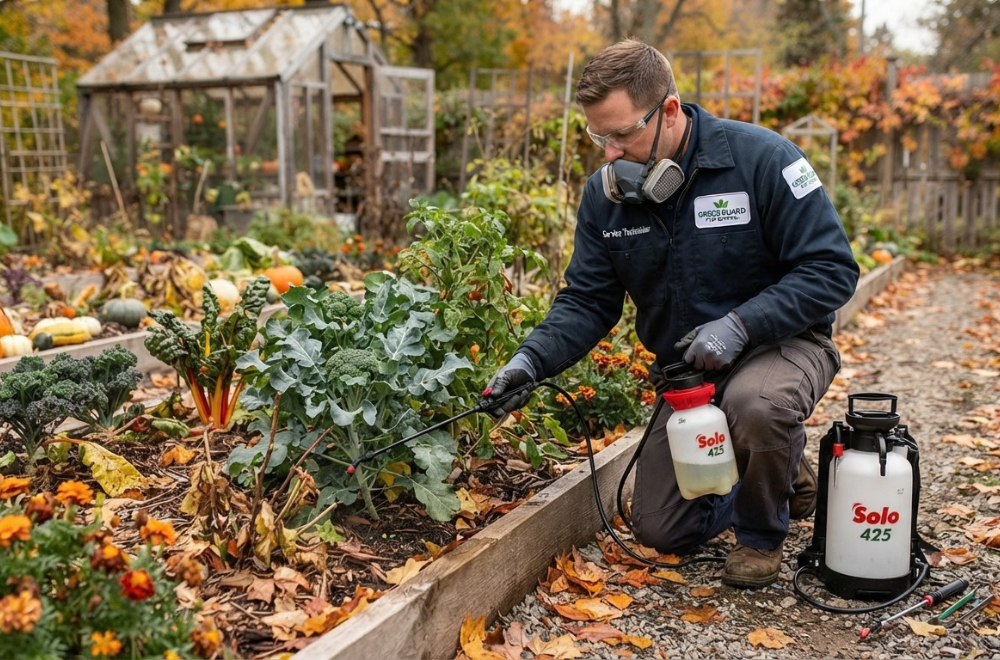
The first hard frost does less to garden pests than most people expect. Squash bugs, codling moth larvae, slug eggs, aphid eggs, and bagworm eggs all wait out winter in a handful of predictable places. Most of those places look like ordinary fall scenery: a drift of leaves under a rose, a ring of mulch, a hollow stem, a flowerpot pushed against the fence, a crack in the bark of an apple tree.
That makes fall the cheapest time to deal with next year’s pest problems. A squash bug adult under a board is one insect you can drop into soapy water in a second. The same insect in June is laying egg clusters on every squash leaf. In fall the pests are stationary, the leaves are down so trunks and branches are visible, and most of the work needs no spray at all.
Sort Pests From Beneficials Before You Clean Anything Up
The spots below shelter pests, but they also shelter ladybugs, lacewings, ground beetles, native bees, firefly larvae, and butterfly chrysalises. A blanket cleanup of every leaf pile and stem removes the helpers along with the pests.
A workable rule is to clean up where a specific problem happened this year. If squash bugs wrecked your zucchini, the bed and the debris around it deserve attention. If your roses had black spot, the fallen leaves under them do. If the apples were wormy, the trunks and dropped fruit come first. Areas with no history of trouble can stay a little messy, and that mess is useful habitat.
Timing depends on climate. In cold regions most of these stages are dormant by late fall and stay put until spring, so cleanup can run from the first leaf drop until the weather warms. In mild climates some pests stay active longer. Your local extension office can tell you when insects in your area typically become active in spring, which is the deadline for most of this work.
The 12 Spots at a Glance
| Spot | What may be there | Best fall move |
| Leaf litter | Slug eggs, plum curculio adults, fungal spores | Remove or shred around problem plants only |
| Mulch | Voles, mice, slugs, earwigs | Thin it, pull it back from stems |
| Soil | Grubs, pupae, wireworms, borer cocoons | Dig and check problem beds |
| Old perennial foliage and stems | Iris borer eggs, corn borer larvae | Cut and remove specific plants |
| Bark | Codling moth cocoons, scale, mite and aphid eggs | Inspect, scrape loose bark, consider dormant oil |
| Twigs and evergreens | Bagworm bags, tent caterpillar and spongy moth eggs | Hand-remove and destroy |
| Fallen and mummified fruit | Brown rot fungus, fruit-feeding larvae | Pick up and dispose |
| Spent vegetable plants | Squash bugs, chrysalises, borers | Pull, bag, or remove |
| Stones, boards, stakes | Squash bugs, slugs, earwigs, egg masses | Lift, check, store off the ground |
| Pots and containers | Vine weevil larvae, slugs, hitchhikers on houseplants | Tip out, inspect, quarantine |
| Compost pile | Slugs, earwigs, rodents, carried-over pests | Keep infested material out |
| Sheds and house walls | Stink bugs, boxelder bugs, lady beetles, mice | Seal gaps, declutter |
Ground Level: Leaves, Mulch, and Soil
1. Leaf litter under roses, fruit trees, and brassicas
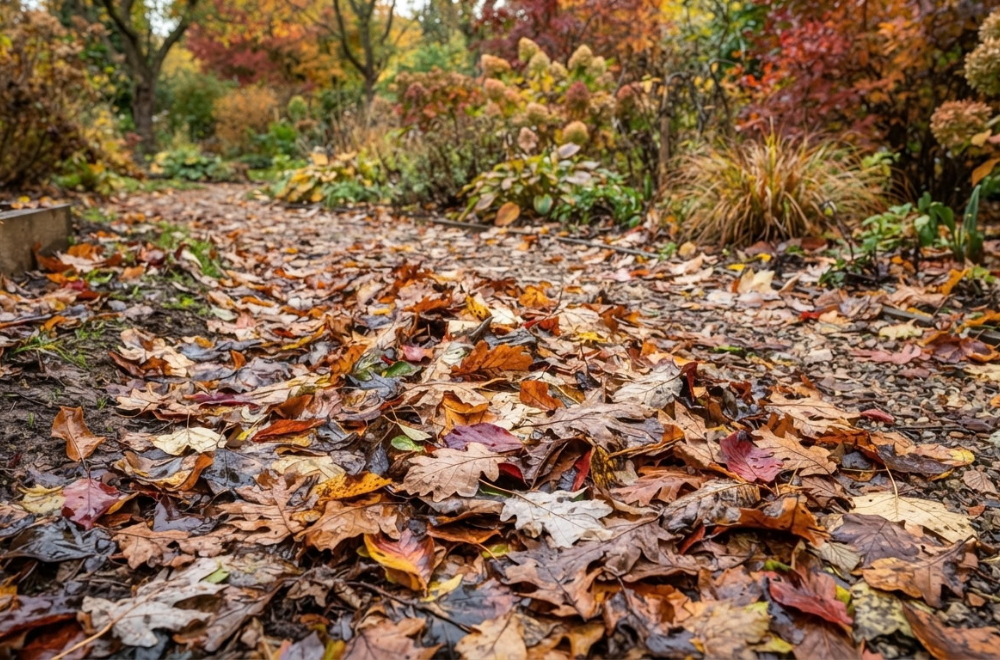
Fallen leaves are the most common hiding place and the most misjudged one. Slug and snail eggs are laid in damp, sheltered spots and often end up in the leaf layer or the soil just below it. Plum curculio adults are known to overwinter in leaf litter and ground debris near fruit trees. Some fungal diseases overwinter on fallen foliage too. Apple scab and rose black spot are the usual examples, and they aren’t insects, but they travel on the same rake.
To check, pull back a handful of leaves at the base of a plant that had trouble. Slug eggs look like small, pearly, translucent spheres in clusters. Squash bugs are flat, brownish-gray, and shield-shaped.
If a plant had a repeat problem, rake the leaves away and dispose of them rather than tucking them back under it. Shredding with a mower helps too, since chopped leaves break down much faster and give the fungi less time to survive. For a badly infected tree, removal is more reliable than shredding. Healthy leaves from unaffected areas are better left in place or shredded into beds as mulch.
2. Mulch that’s too thick or too close to stems
Mulch holds moisture and moderates temperature, which is what slugs, earwigs, and sowbugs want. In winter it does something more damaging: a deep, undisturbed layer gives voles and mice a sheltered place to nest and feed. Voles gnaw bark at the base of young trees and shrubs, and gnawing all the way around the trunk can kill a tree.
To check, pull mulch back from the base of young fruit trees and shrubs. Look for narrow runways in the surface layer, small round holes, and chewed bark near the ground.
The fix is mostly about depth and placement. A layer around 2 to 3 inches thick, kept a few inches away from trunks and stems (no mulch volcanoes), gives most of the benefit with less of the cover. Where voles are a known problem, a cylinder of quarter-inch hardware cloth around the trunk is the standard physical barrier. For perennial beds that need winter protection, wait until the ground has frozen before adding extra mulch. Applied earlier, it gives rodents a warm place to settle before the cold arrives.
Also check the mulch against your house wall. Many pest-control and extension sources recommend leaving a gap between mulch and the foundation, since damp organic material against a wall can attract ants and termites.
3. Soil around roots and in vegetable beds
A large group of pests passes winter underground, mostly as larvae or pupae: white grubs (including Japanese beetle grubs), wireworms, some cutworm species, hornworm pupae, squash vine borer cocoons, and cabbage root maggot pupae. Adult Colorado potato beetles dig into the soil to overwinter as well.
Digging a spade-width hole a few inches deep in a bed that had problems takes minutes. White grubs are creamy, C-shaped, and brown-headed. Wireworms are slender, hard-bodied, and yellow-brown. A tomato or tobacco hornworm pupa is a glossy reddish-brown case with a distinctive curved, handle-like projection.
Fall tillage can expose some of these to cold and to birds, but it isn’t free. Turning the soil disrupts structure, buries organic matter, and destroys habitat for ground beetles and earthworms. If you use it, limit it to the beds where borers, hornworms, or potato beetles were serious.
Rotation helps, with limits. Beetles that overwinter in the soil mostly walk out in spring, so putting potatoes far from last year’s bed makes them travel. Squash vine borer moths fly, so moving squash reduces the problem without eliminating it.
Grub control in lawns is a timing problem. Many treatments work best in late summer while grubs are small and feeding near the surface. As soil cools they burrow deeper and stop feeding, which narrows your options. Fall is more useful for monitoring than treating. Extension services publish region-specific thresholds for when grub numbers justify treatment, and those are worth checking before buying anything.
Plants and Trees
4. Old perennial foliage and hollow stems
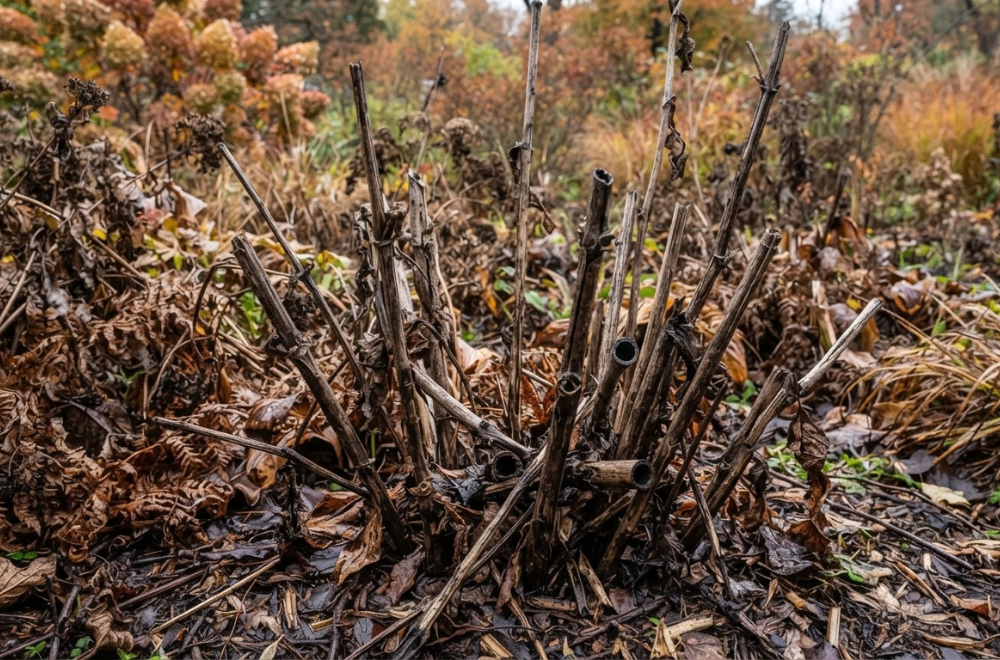
Iris borer eggs are laid in late summer and fall on old iris leaves and nearby debris, then hatch in spring and tunnel down into the rhizomes. The eggs are tiny and hard to find, so don’t search for them. Cut iris foliage down in fall, remove it from the garden, and don’t compost it. European corn borer overwinters as a full-grown larva inside corn stalks and some other thick-stemmed plants, so cornstalks are worth removing rather than leaving standing.
Hollow and pithy stems are also where many native bees pass winter, and some beneficial insects shelter in standing plant material. So this is a place to be selective. Cut and remove plants tied to a known borer problem. For coneflowers, asters, and most other perennials with no such history, leaving stems standing until spring costs you little. Many pollinator-conservation guides suggest waiting until temperatures are reliably warm before spring cleanup, so overwintering insects can emerge first.
5. Bark crevices on fruit and shade trees
Codling moth larvae, the worms in apples and pears, finish feeding, leave the fruit, and spin silken cocoons in bark crevices or in debris at the base of the tree. Scale insects, aphid eggs, and mite eggs also overwinter on bark and buds, depending on the species.
Look at rough bark and the trunk base for small silk-covered cocoons. Scale insects show up as small, immobile bumps in gray, brown, or white. Scrape one with a fingernail. A colored body or moisture underneath suggests it’s alive, while a hollow shell suggests it’s dead.
Loose, flaking bark on mature fruit trees can be gently scraped off and destroyed. Don’t dig into living tissue, and don’t scrape aggressively on young, thin-barked trees. A band of corrugated cardboard around the trunk gives codling moth larvae a place to hide, but it only works if you remove and destroy the band over winter, before the moths emerge.
Dormant oil sprays target scale, mite eggs, and aphid eggs, but they have limits. Application windows are set by temperature and plant dormancy, and late winter is commonly recommended. Some plants, including blue-toned conifers such as blue spruce, can be discolored or injured, so read the label for both the temperature range and the plants it excludes. For large trees or a heavy scale infestation, a certified arborist is the safer route.
6. Twigs, evergreens, and small egg cases
Some pests overwinter in plain sight as eggs. Bagworm females lay eggs inside their own spindle-shaped bag, often 1 to 2 inches long and studded with bits of foliage. They hang on junipers, arborvitae, spruce, and various deciduous trees, and the bags stay on through winter. Eastern tent caterpillar eggs form dark, glossy, varnish-like bands wrapped around small twigs of cherry, apple, and crabapple. Spongy moth (formerly called gypsy moth) egg masses are tan, fuzzy, and sponge-like. They appear on trunks, under branches, on rocks, on outdoor furniture, and on firewood.
Removal is simple where you can reach. Cut bags off with pruners and drop them into a bucket of soapy water, or seal them in a bag for the trash. Dropping a bag on the ground doesn’t help, because the eggs inside can still hatch. Prune out twigs carrying tent caterpillar bands. Scrape spongy moth egg masses into soapy water. Wear gloves for that job. Cutting a bag open to look for a mass of tiny eggs is the most reliable way to tell a full bag from an empty one.
Hand removal works only within reach. For tall trees, a professional is the better option.
Not every egg case is a pest. Praying mantis egg cases look like brown, foamy or Styrofoam-like lumps, often walnut-sized, attached to twigs and stems. Leave them alone.
7. Fallen and mummified fruit
Brown rot fungus survives winter in shriveled, gray-brown fruit mummies, both on the ground and still hanging on branches. Fruit-feeding larvae can also leave dropped fruit to pupate nearby. Picking up dropped fruit and removing mummies from the tree in fall lowers the inoculum and the pest carryover.
Bag it and put it in the trash, or use a municipal yard-waste program that composts at high heat. Home compost is a poor place for it unless your pile gets reliably hot throughout. Check local rules before burying or burning anything.
There’s a wildlife angle too. Fallen fruit draws wasps, rodents, and deer, and in areas with bears it’s a real attractant. Clearing it is a safety measure as well as pest control.
Vegetable Garden Leftovers
8. Spent vegetable plants and dead vegetation
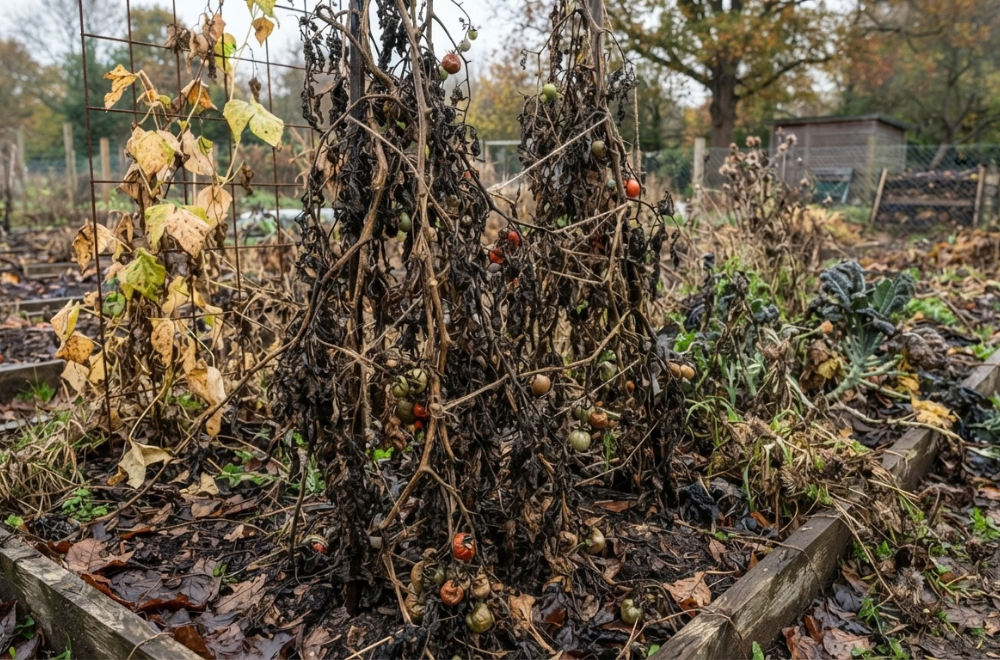
Squash bug adults shelter in plant debris, under stones and boards, and in nearby buildings. Cabbageworm (imported cabbageworm) chrysalises can hang on crop debris and nearby fences. European corn borers ride out the winter in stalks. Diseases like early blight also persist on tomato and pepper residue. Leaving whole dead plants standing or lying in the bed gives all of these a ready-made winter home.
After harvest, pull entire plants and remove them from the bed rather than chopping them in place. Heavily infested vines, such as squash with vine borer damage, shouldn’t go into a home compost pile.
Weeds and tall grasses at bed edges matter too. Stalk borer, for example, lays its eggs on grasses and weedy vegetation in late summer and fall, so clearing them near vegetable beds removes egg sites.
A trap-board trick can help with squash bugs late in the season. Lay a flat board in the squash bed. Adults tend to shelter under it overnight, so lift it in the morning and drop them into soapy water. It won’t catch every insect, but it’s cheap and it works on the individuals that hide near the crop.
9. Stones, boards, stakes, and other clutter
Any flat object sitting on the ground gives slugs, snails, earwigs, sowbugs, and squash bugs a dry, dark underside. Spongy moth egg masses turn up on rocks and stacked materials. Bamboo canes and hollow stakes shelter beneficial bees as well as pests, so the same caution from earlier applies.
Lift the flat things in and around the beds you had trouble in and check the undersides. Stack tomato cages and stakes off the ground rather than leaving them in place, and shake out row cover fabric and tarps before folding them, since egg masses and chrysalises can hide in the folds.
Some clutter is useful. Ground beetles, toads, and garter snakes all shelter under the same debris and eat slugs and other pests. If you want to keep a little of that habitat, leave one board or stone in an out-of-the-way spot away from your most vulnerable beds.
Containers, Compost, and Buildings
10. Pots, saucers, and plants you’re bringing indoors
Black vine weevil larvae feed on roots in container soil from late summer through spring, and they favor plants like heuchera, primulas, and strawberries. The first sign is often a plant that wilts even though the potting mix is moist. Tip the plant out of its pot and look at the roots. The larvae are creamy white, C-shaped, and brown-headed. Adult weevils also hide in pot rims and under saucers.
Slugs, snails, and earwigs tuck under the lips of pots and into saucers, and ants may nest in the mix. If you find pests in a pot, dispose of the potting mix rather than reusing it. Some biological nematode products are sold for vine weevil larvae, and formulations differ in the soil temperatures they need, so check the label.
The bigger risk in fall is what you carry indoors. Plants that summered outside can bring scale, mealybugs, spider mites, aphids, and fungus gnats into your house. Inspect the undersides of leaves and the stem joints, rinse foliage with water, and keep new arrivals separate from your other houseplants for a couple of weeks before they join the group. Store emptied pots upside down after a wash with hot, soapy water.
11. The compost pile
A compost pile is winter shelter for slugs, sowbugs, earwigs, and, if scraps are handled badly, mice and rats. It can also pass pests and pathogens forward if the material never gets hot enough.
A well-managed hot pile can reach roughly 130 to 160°F (54 to 71°C) at its center, which kills many pests, pathogens, and weed seeds. Most home piles don’t hold that heat throughout, and the outer layers stay cooler. Material there can survive and be spread with the finished compost.
So keep infested material out of the pile: iris foliage, borer-riddled vines, heavily diseased tomato plants, bagworm bags, and fruit mummies. Healthy plant material and kitchen vegetable scraps are the right feedstock. Avoid meat, dairy, and oils, and use an enclosed bin with quarter-inch hardware cloth if rodents are a known problem. When you spread finished compost in spring, make sure it’s dark and crumbly. Half-finished compost is where hitchhikers tend to survive.
12. Sheds, garages, and the walls of the house
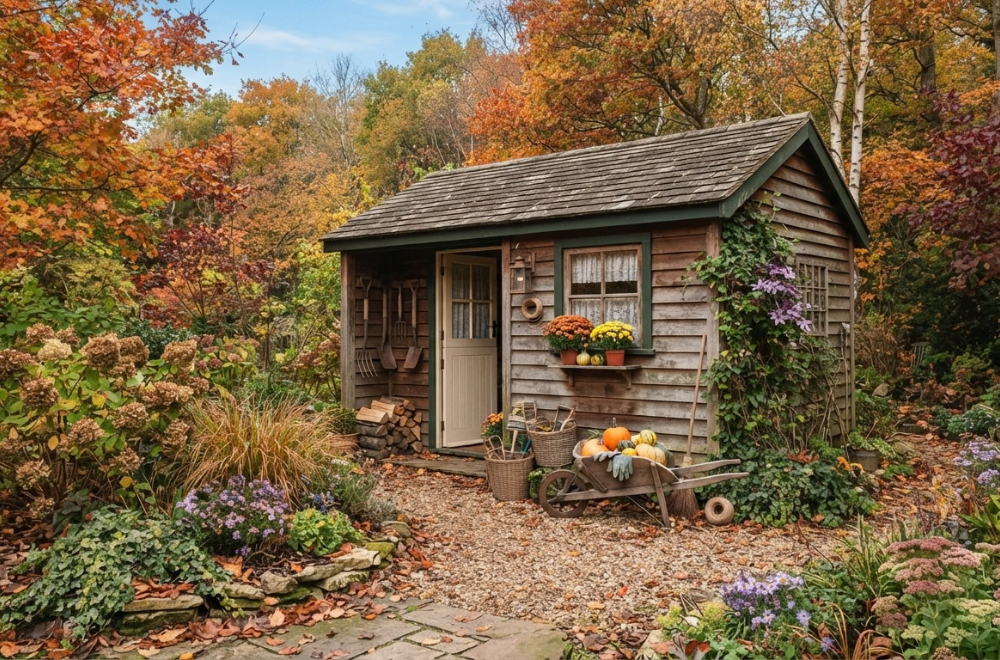
Several overwintering insects treat buildings as winter shelter: boxelder bugs, brown marmorated stink bugs, and multicolored Asian lady beetles. On warm fall afternoons they gather on sunny walls, then find gaps to slip inside. Stink bugs feed on fruits and vegetables during the growing season, so they’re a garden pest as well as a household nuisance.
Sealing entry points is the most effective fix, and it’s best done before they start moving in, which in many regions is around September and October. Caulk gaps around window and door frames, seal utility penetrations, repair torn screens, and check vent covers and siding joints. Sealing after they’ve already settled into the wall voids can trap them inside, where they may emerge into rooms on warm winter days. Indoors, vacuum rather than crush them. Extension guidance generally doesn’t recommend indoor sprays, which have limited effect and expose people and pets to the product.
In the shed itself, clear out what mice like: loose bags of seed and fertilizer, piles of tarps, cardboard boxes. Store bird seed and pet food in metal or thick plastic containers. Keep firewood stacked off the ground and away from the structure.
When Fall Spraying Is Worth It (and When It Isn’t)
Broad-spectrum insecticide sprayed across bare soil, bark, and debris in fall is rarely the right answer. It hits beneficial insects and overwintering pollinators indiscriminately, many of the pests you’re targeting are dormant and protected inside cocoons or eggs, and label restrictions on flowering plants and pollinators vary.
The exceptions are narrow: dormant oil for a confirmed scale, mite-egg, or aphid-egg problem, timed and used as the label directs; biological nematodes for specific soil pests; and professional treatment for large trees. Read the label for the target pest, temperature limits, protective equipment, and pet and child re-entry times. Ventilate enclosed spaces and never mix products unless the label says you can.
A Sensible Order for One Weekend
Sequencing matters more than intensity. Start by writing down which plants and beds had problems this year, since that list tells you where to spend your time. Walk the trunks and branches first, while leaves are down and eggs and bags are easiest to see. Then pull spent vegetable plants and fruit mummies, and dig the beds that had borers or hornworms. Check pots and any plants moving indoors. Seal gaps in the house and clear the shed. Save mulch adjustments until the ground has frozen.
Questions Gardeners Ask About Overwintering Pests
Does a hard freeze kill overwintering pests?
Mostly no. Insects that overwinter in the soil, under bark, or inside buildings are insulated from surface temperatures and many have physiological cold tolerance. A cold winter can reduce some populations, but you can’t count on it. Snow cover often protects them better than bare ground.
Is it better to clean up in fall or wait until spring?
Fall suits the pests that hide in specific places and can be removed then: bagworm bags, egg masses, fruit mummies, and borer-prone crop residue. Spring is safer for general perennial cleanup where beneficial insects overwinter in stems and litter. Splitting the job by purpose gets most of the benefit of both.
Can I just compost everything infested?
Only if your pile gets reliably hot all the way through. For most home piles the safer approach is to bag and remove the specific infested material (iris foliage, borer-damaged vines, fruit mummies) and compost the rest.
Where to Start This Weekend
You don’t need to inspect all twelve spots. Pick the three that match what went wrong in your garden this year: the squash bed, the fruit tree, and the pots, say. Check those first, remove what you find, and leave the rest of the garden’s habitat alone. A short, targeted cleanup now will do more than a thorough but indiscriminate one.

About Syprose Kiche
Syprose Kiche is the creator and writer behind My Besuited Home, a practical home and garden website covering DIY projects, gardening, lawn care, landscaping, home improvement, and outdoor living. She focuses on turning everyday homeowner questions into clear, practical guides backed by careful research and useful real-world considerations.