
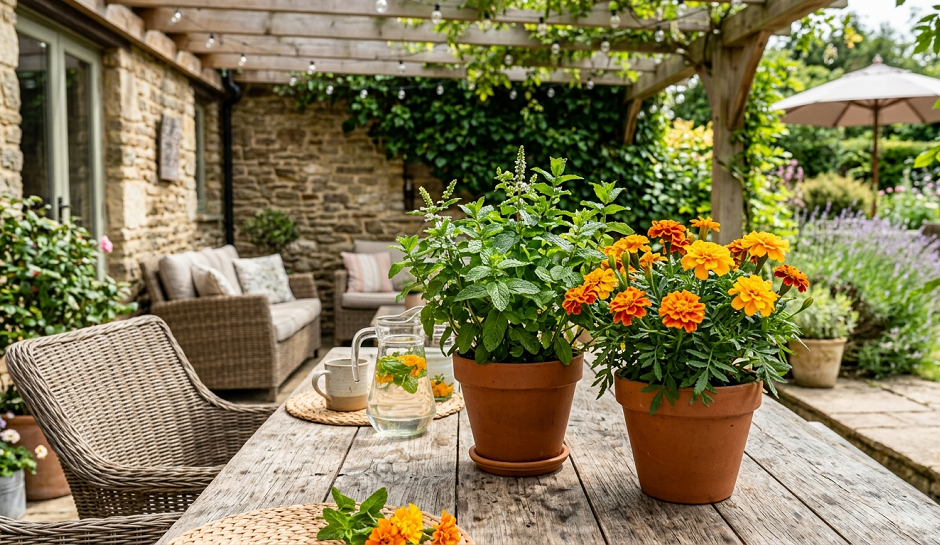
You are settled into your favorite patio chair, a cold drink in hand, ready to enjoy a gorgeous summer evening, when it happens. Buzz. A massive, airborne housefly lands directly on the rim of your glass. Then another locks onto your plate. Within five minutes, your peaceful backyard escape turns into a swatting match that you are thoroughly losing.
I know that exact frustration. Over the last twelve years of getting my hands dirty in the garden, I have fought just about every flying pest under the sun. My neighbors look at my backyard as a peaceful sanctuary, but let me tell you, that sanctuary was bought with a lot of trial, error, and some genuinely spectacular failures. Take the summer my zucchini took over the entire ZIP code and swallowed half my lawn furniture, for instance. I learned the hard way that unchecked growth leads to massive stagnation, which happens to be a five-star resort for backyard bugs.
If you are tired of breathing in toxic chemical bug sprays or listening to the constant, aggressive zap of electronic traps while trying to eat dinner, you are in the right place. There is a completely natural way to reclaim your outdoor living space using nothing but a couple of dirt-cheap annuals and herbs. It is a strategy I call the Mint and Marigold trick, and it is the single best way to keep flies away from patios naturally without spending a fortune.
Let’s break down exactly how this botanical shield works, how to plant it so you don’t accidentally ruin your yard, and the real-world strategy needed to make it actually work.
How to Repel Flies with Peppermint and Spearmint
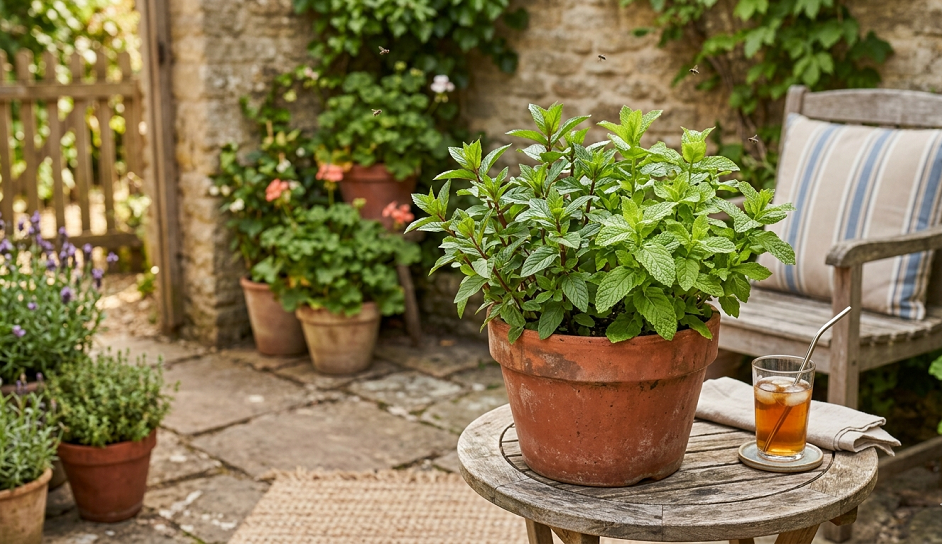
When people ask me how to get rid of flies on porch areas permanently, the very first word out of my mouth is always mint. Flies navigate the world entirely through their sense of smell. They are highly attracted to decaying organic matter, trash, and fermentation. Mint operates on the exact opposite end of the olfactory spectrum. It is packed full of volatile aromatic compounds, specifically menthol and pulegone, which act as a massive sensory assault to flying insects. To us, a crushed mint leaf smells incredibly crisp and refreshing; to a common housefly or blowfly, it smells like an absolute hazardous waste zone.
I rely heavily on both peppermint (Mentha x piperita) and spearmint (Mentha spicata) around my seating areas. Peppermint has a slightly higher concentration of menthol, giving it a sharper, punchier scent profile, while spearmint offers a sweeter, sharper note that is excellent for masking food smells on an outdoor dining table. The secret to maximizing this insect-repelling power is simple: you have to disturb the foliage. A mint plant just sitting passively in a corner will do a little bit of work, but if you want a true barrier, you need to release those essential oils into the air.
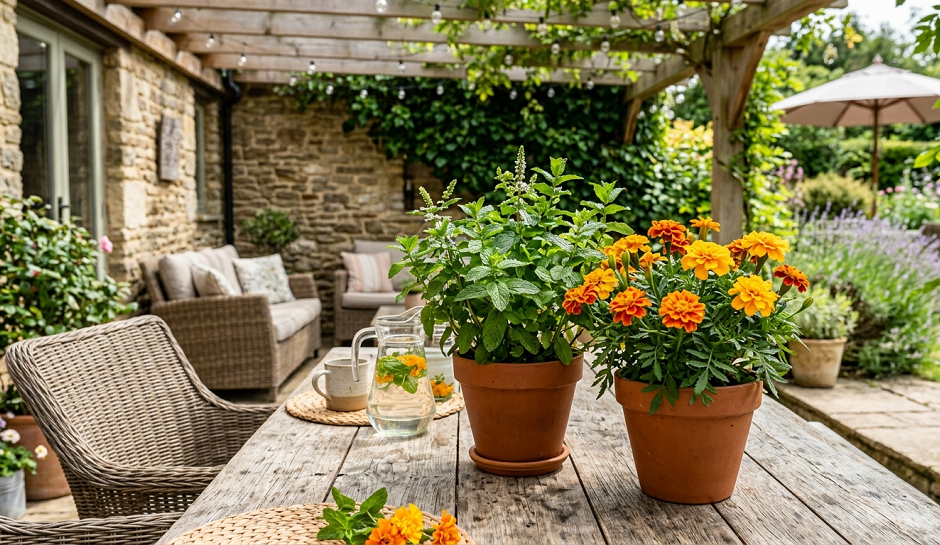
Every single time I walk past my patio planters, I run my hands aggressively through the mint leaves. I bruise them, step on a few stray runners purposefully, and even harvest handfuls to crush up and scatter around the base of my patio chairs. That burst of fresh oils creates a localized vapor barrier that sends flies buzzing in the opposite direction. It is a simple, highly effective routine that transforms a passive plant into an active defensive tool.
However, we need to address the absolute elephant in the garden bed: mint is an aggressive, subterranean invader. If you plant mint directly into your landscape beds, it will use its underground runners, called rhizomes, to conquer your yard, choke out your prize-winning perennials, and eventually claim equity in your home. I once spent an entire miserable April digging up an entire border bed because I thought a patch of chocolate mint would look pretty next to my hydrangeas. It was a total nightmare. Keep your mint strictly confined to heavy-duty containers, pots, and raised planters to save your sanity.
Best Marigolds for Natural Pest Control
Marigolds are the unsung, hard-working backbone of companion planting, but a lot of folks treat them like cheap, old-fashioned bedding plants that belong exclusively in a grandmother’s vegetable patch. That is a massive mistake. These vibrant little powerhouses contain a natural organic compound called limonene, alongside various thiophenes, which are highly repellent to a massive array of flying and crawling pests. While the mint creates a sharp, menthol-heavy screen, marigolds offer a distinct, pungent, musky odor that acts as a fantastic secondary layer of defense.
When you go to your local garden center to pick up your supplies, you will likely see two main varieties: African marigolds (Tagetes erecta) and French marigolds (Tagetesula). If your main goal is building an ironclad fly barrier, you want to lean heavily into the French varieties. French marigolds are smaller, bushier, and frankly, they smell a lot worse to bugs. They produce a much higher concentration of those pungent volatile oils than the larger, showier African types. The goal here isn’t to grow massive, prize-winning floral showpieces; we want stinky, resilient, oil-producing little soldiers.
I position my marigold containers directly in the path of the prevailing wind across my deck. When the summer breeze blows through those dense, musky flowers, it carries the airborne limonene right across the seating area, creating a protective blanket of scent. They also pull double duty by attracting highly beneficial predatory insects like hoverflies and ladybugs, which actively hunt down garden pests while keeping the annoying filth flies far away from your barbecue.
To keep your marigolds pumping out these pest-repelling compounds all summer long, you must deadhead them regularly. Don’t just leave the faded, brown blossoms sitting on the plant. Pinch them off right at the joint of the stem. This forces the plant to divert its energy away from seed production and right back into growing fresh, oil-rich foliage and brand-new blooms. It takes less than two minutes a week, but it keeps your natural defensive wall running at peak performance.
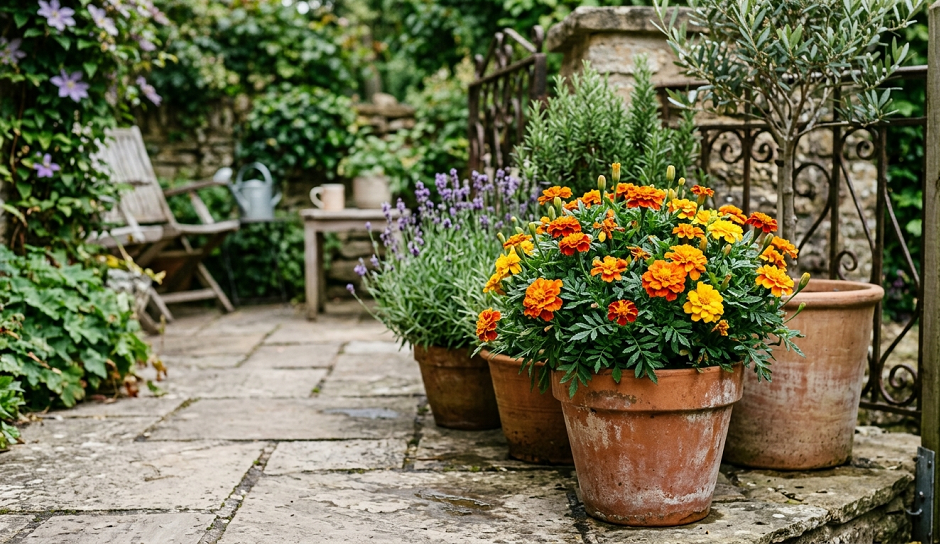
Companion Planting for Patio Insect Repellent
If you want to maximize the effectiveness of this setup, you shouldn’t just scatter random pots around your deck like an afterthought. You need to design a deliberate layout that creates a continuous, multi-tiered scent wall around your outdoor living space. Think of it like setting up a home security system; you want to protect the entry points, block the perimeter, and cover the high-traffic zones where you actually hang out.
I love grouping these plants together in large, multi-tier container arrangements. Because mint wants to spread out horizontally and can easily crowd out companions, I use a nesting strategy. I plant a vigorous French marigold right in the center of a wide container to give it some height and structural support. Then, I surround the base with a few smaller companion herbs, or I dedicate an entirely separate, slightly lower pot to the mint so it can cascade over the sides without choking out the marigold’s root system.
Take a look at how these two plants compare when you are setting up your patio layout:
| Plant Type | Ideal Sunlight | Watering Needs | Primary Pest Targeted | Growth Habit |
| French Marigold | Full, direct sun (6+ hours) | Moderate; let topsoil dry | Houseflies, gnats, mosquitoes | Bushy, upright mound |
| Peppermint / Spearmint | Partial shade to full sun | High; prefers consistent moisture | Flies, ants, spiders, mice | Aggressive, trailing runners |
Notice how their growth habits and water needs differ slightly. Mint can handle a bit of afternoon shade and loves a damp root zone, whereas marigolds absolutely crave blazing, baking sunlight and will rot if their feet stay wet for days on end. By placing them in separate containers grouped tightly together, you can cater to their individual cultural needs while still creating a seamless, highly fragrant barrier of defense right next to your patio table.
DIY Marigold Spray for Outdoor Fly Control
While having live, growing plants on your deck does a phenomenal job, sometimes you need a quick, highly concentrated tactical strike—especially right before hosting a weekend backyard cookout. That is when I brew up a batch of my homemade marigold and mint botanical spray. This is a trick I picked up years ago from an old market farmer, and it has saved my outdoor dinners more times than I can count. It is incredibly cheap, completely non-toxic, and takes under ten minutes of actual active work.
To make a batch, harvest two packed cups of fresh marigold leaves, stems, and flowers, along with one cup of fresh mint foliage. Toss them into a clean bucket or a large glass bowl and use an old rolling pin, a pestle, or even a clean piece of scrap wood to thoroughly bruise and smash the plant material. You want to see the juices start to release. Pour four cups of boiling water over the crushed greenery, cover the container with a towel, and let it steep in a cool, dark closet for about three to four days. This allows all those potent, fly-repelling compounds to thoroughly seep into the liquid.
Once the steeping period is over, strain the dark green liquid through a piece of cheesecloth, an old clean t-shirt, or a mesh strainer, squeezing out every single drop of concentrate. Pour the liquid into a heavy-duty garden spray bottle. To help the mixture actually stick to surfaces instead of just rolling off, add about a half-teaspoon of natural castile soap or liquid dish soap. Give it a gentle shake to combine, and your natural pest control spray is ready to go.
On the morning of a backyard gathering, I walk out to my deck and liberally spray down the perimeter. I coat the legs of the patio furniture, the underside of the wooden deck railings, the patio stones, and the outer rims of my planters. Do not spray this directly onto your food tables or fine fabrics, as the natural plant pigments can cause light green staining. This concentrated blast of limonene and menthol turns the entire structure of your deck into a giant, invisible no-fly zone that lasts for several days, provided it doesn’t pour rain.
Real Talk: What Doesn’t Work and Garden Pitfalls
Let’s cut through the internet nonsense for a minute. If you spend any time scrolling through social media gardening groups, you will see people claiming that putting a single pot of mint on your outdoor table will magically vaporize every bug within a three-mile radius. That is total garbage, and anyone telling you otherwise is selling something. Living plants are not commercial aerosol foggers; they do not emit a high-pressure cloud of death to insects.
If you leave a pile of rotting lawn clippings, unwashed pet waste, or an open, sticky trash can sitting ten feet away from your seating area, no amount of mint or marigolds on earth will save you. Flies are driven by primal biological urges to feed and lay eggs. The scent of decaying organic matter will easily override the repulsive smell of your herbs if the attractant is strong enough. Natural pest control is a game of management and reduction, not absolute elimination.
The Golden Rule of Backyard Fly Control: You must eliminate the breeding grounds before you can expect your botanical barriers to do their job. Clean your patio surfaces down, keep trash cans tightly sealed with rubber gaskets, and never let standing water pool under your deck boards.
Another major pitfall is buying the wrong plants entirely. I see folks go to big-box stores and buy gorgeous, scentless hybrid marigolds that have been bred specifically for massive, colorful blooms at the expense of their natural oils. If you sniff a marigold at the nursery and it doesn’t make you wrinkle your nose a little bit, don’t buy it. The flies won’t care about it either. Stick to heirloom, pungent varieties.
Quick Bonus Tip: The Water Bag Myth
While we are busting backyard myths, let’s talk about hanging bags of water with shiny pennies inside from your porch rafters. I tried this one summer because a viral blog post swore it confused the flies’ compound eyes. It looked incredibly tacky, caught the wind like a sail, and the flies literally used the plastic bags as a convenient landing pad to sun themselves. Skip the internet gimmicks and rely on actual plant chemistry instead.
Reclaiming Your Outdoor Space
Gardening is all about working with nature instead of constantly trying to beat it into submission with heavy chemical interventions. By combining the sharp, refreshing punch of container-grown peppermint with the deep, musky, limonene-rich defense of French marigolds, you can drastically reduce the flying pest population on your deck without harming bees, butterflies, or your family.
It is a cheap, beautiful, and deeply satisfying project that makes your backyard feel like a custom resort rather than a battleground. Just remember to keep that mint in its pots, bruise the leaves whenever you walk past, and keep your patio surfaces clean of food scraps.
What natural pest control tricks have you tried in your own yard? Have you ever had a mint plant completely escape and take over a garden bed like I did? Drop your questions, thoughts, or horror stories in the comment box down below—I read every single one and would love to help you troubleshoot your setup!

About Syprose Kiche
Syprose Kiche is the creator and writer behind My Besuited Home, a practical home and garden website covering DIY projects, gardening, lawn care, landscaping, home improvement, and outdoor living. She focuses on turning everyday homeowner questions into clear, practical guides backed by careful research and useful real-world considerations.