
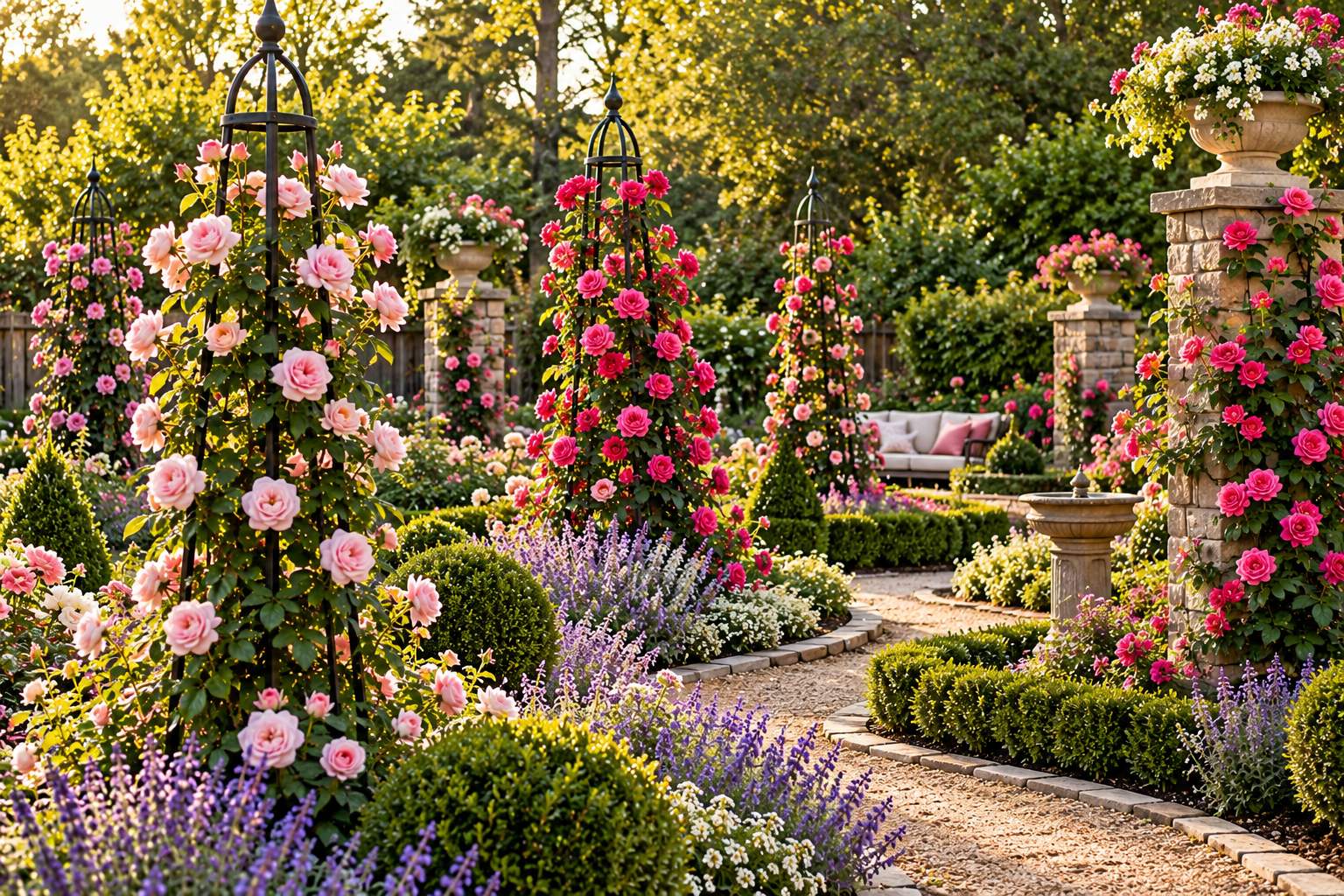
A romantic rose garden rarely fails because of the roses. It fails because of the layout around them. Bushes lined up in a bare bed, each with a ring of mulch and nothing else, read as a plant display rather than a garden. Climbers planted against a north wall produce long, leggy canes and very few flowers. An arch that looks sturdy in the shop can lean after one summer, once the rose on it is heavy with growth and wet after rain.
The softness people want from a rose garden comes from height, enclosure, scent and companion planting, with the roses as the centrepiece rather than the whole show. The ideas below are organised around those four things. First, though, there is a naming question to settle, because the phrase ‘Romani rose’ is harder to pin down than it looks.
What ‘Romani Rose’ Actually Refers To
Roses are identified by cultivar name, and a single rose can be sold under several. The Kordes floribunda registered as ‘KORbin’ is sold as ‘Iceberg’ in English-speaking markets and as ‘Schneewittchen’ in Germany. A label reading ‘Romani’ therefore needs checking before the plant goes in the ground, and before the name goes into anything published.
No cultivar under the exact name ‘Romani’ appeared in the rose databases and nursery listings consulted for this article. The nearest names are:
- ‘Romanze’: a pink floribunda (also classed as a hybrid polyantha), bred in Germany by Dr. Eckart Haenchen and introduced by Victor Teschendorff in 1972, according to HelpMeFind. That database lists blooms of about 1.5 inches across on a low plant of roughly 30 to 40 cm. Some retailers describe a taller plant with larger flowers under the same name, so published sizes differ by source.
- ‘Romanza’: described by at least one retailer as a bright pink floribunda. It was not confirmed in a rose database, so treat it as unverified.
If a plant tag or a seller says ‘Romani’, these checks narrow it down:
- Class. Hybrid tea, floribunda, shrub, climber, rambler and English rose each behave differently. A seller who cannot name the class probably does not know the plant well.
- Flower form and colour. Count petals (a single rose has about five, a double has many), note whether the bloom is flat, cupped or quartered, and compare the colour in the open with photographs of the candidate cultivars.
- Habit and size. Upright, arching or sprawling, and the mature height and spread.
- Flowering pattern. Repeat-flowering or once a year. This decides how and when it is pruned.
- Foliage, thorns and hips. Leaf gloss, thorn density and hip shape are often what separate look-alikes.
- Registration or breeder code. Ask the supplier for it. A trade name alone is not enough.
The garden ideas that follow are built around what a rose does (climb, hedge, edge, fill a pot) rather than around one name, so they work for any repeat-flowering rose with a soft, romantic character. Match the class to the job and the rest follows.
Before Any Design: Sun, Soil and Air
Roses forgive a lot of design mistakes. They are far less forgiving of a poor site.
Sun. Aim for at least six hours of direct light, and morning sun is worth more than afternoon sun because it dries dew from the leaves early, which makes blackspot and mildew harder to establish. A rose can survive in less light, but it flowers less and tends to get more disease.
Soil and drainage. Roses want fertile, well-drained soil with plenty of organic matter, slightly acidic to neutral. Standing water rots roots, and thin, sandy soil starves them. Dig a hole, fill it with water, and see how long it takes to drain. If water is still there the next morning, build a raised bed rather than hoping for the best.
Airflow. Crowded foliage stays damp, and damp foliage invites fungal disease. Keep companion plants a few inches clear of the rose crown and leave gaps between bushes so air can pass through.
Planting depth. Where winters are cold, the graft union on a grafted rose is generally set an inch or two below the soil surface. In mild climates it sits at or just above soil level. Check the supplier’s instructions for your zone, because the right depth depends on it.
Hardiness. Confirm the plant’s hardiness zone before buying. A romantic old rose that dies in the first hard winter is not a bargain.
Paths, Arches and Walkways
1. A Path Edged With Catmint, Roses Set Back From the Edge
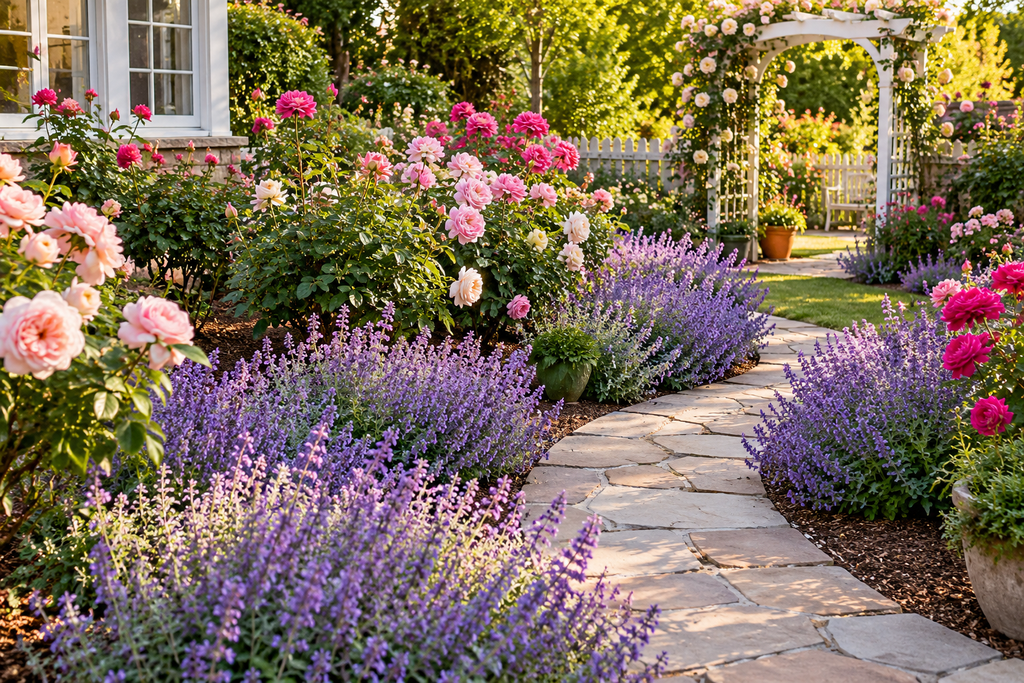
Thorns and paths do not mix. Plant shrub roses 18 to 24 inches back from the path edge and let a softer plant take the front. Catmint (Nepeta) is a good partner: its blue-violet flowers last for weeks, and cutting it back by about a third after the first flush usually brings a second round. It also hides the bare lower stems that many roses develop.
Lavender is the classic alternative, with one catch. Lavender prefers lean, fast-draining soil, while roses prefer richer, moister ground. Put lavender on a slightly raised, gravelly strip at the very edge and keep the rose bed itself well fed. If both have to share the same soil, catmint is the easier match.
Width matters more than most plans allow for. A path of at least three feet lets two people walk side by side without brushing the plants.
2. A Rose Arch Built for the Weight
A mature climbing rose in full leaf, soaked by rain, is heavy. Thin decorative arches bend or tip under that load. Choose a sturdy metal or hardwood frame, set the legs deep as the manufacturer directs (concrete or ground anchors for lightweight models), and check it after the first storm of the season.
Size is a practical decision as well as a visual one. As a rule of thumb, an opening of about four feet wide and eight feet high lets people walk through without catching their hair or sleeves on canes. Thorny roses over a narrow opening are a regular source of scratches.
Vigour is the other trap. A moderate, repeat-flowering climber such as ‘New Dawn’ (pale pink, widely grown) or ‘Pierre de Ronsard’ suits an arch. Giant ramblers do not. For a spot where people pass close by, the thornless Bourbon climber ‘Zéphirine Drouhin’ is a traditional choice, although it is known for mildew, so give it good airflow and a sunny position.
Train canes sideways across the frame rather than straight up, and use soft ties that allow for thickening stems.
3. A Pergola Walk With One Climber Per Post
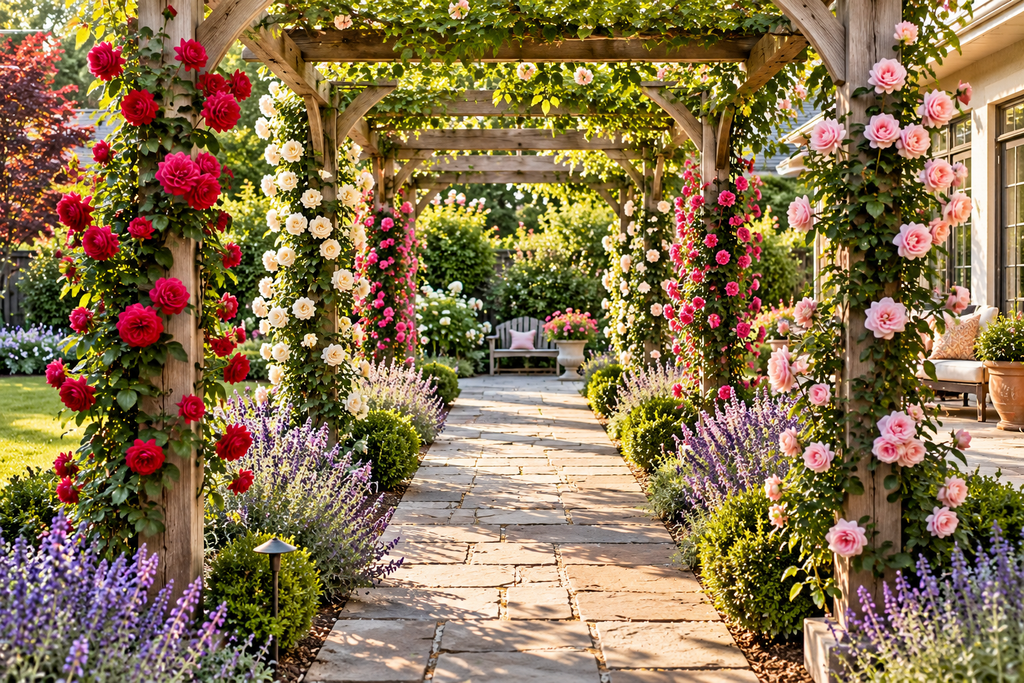
A pergola gives roses height and gives you shade, but plant them correctly. The soil right beside a post is often dry and shaded by the structure itself. Plant each climber 12 to 18 inches away from the base of the post and lean the canes towards it on wires or a short bamboo cane.
Space the climbers so that each post carries one plant, then let the canes reach across the beams over two or three seasons. Flowers on top of a pergola are visible mostly from below, so choose roses with fragrance and flowers that face outward or hang gracefully. Check wooden posts for preservative treatment before planting, since rubbing canes and wet soil shorten the life of untreated timber.
Borders and Beds
4. A Cottage Border That Layers Height
The cottage-garden look is mostly a matter of layering. Put tall, narrow plants at the back (foxgloves, delphiniums, hollyhocks), shrub roses in the middle, and low, spreading plants at the front (hardy geraniums, lady’s mantle). Plant in odd-numbered drifts of three or five so the border looks planned, and repeat a few plants along its length so the eye has something to follow.
Roses planted as a group of three of the same variety, 18 to 24 inches apart for compact types, give a fuller effect than a single bush. Larger shrub roses may need three feet between plants, so read the mature spread on the label.
One safety note: foxgloves and delphiniums are toxic if eaten. That is worth considering if young children or grazing pets use the garden.
5. Obelisks and Pillars for Height Without a Wall
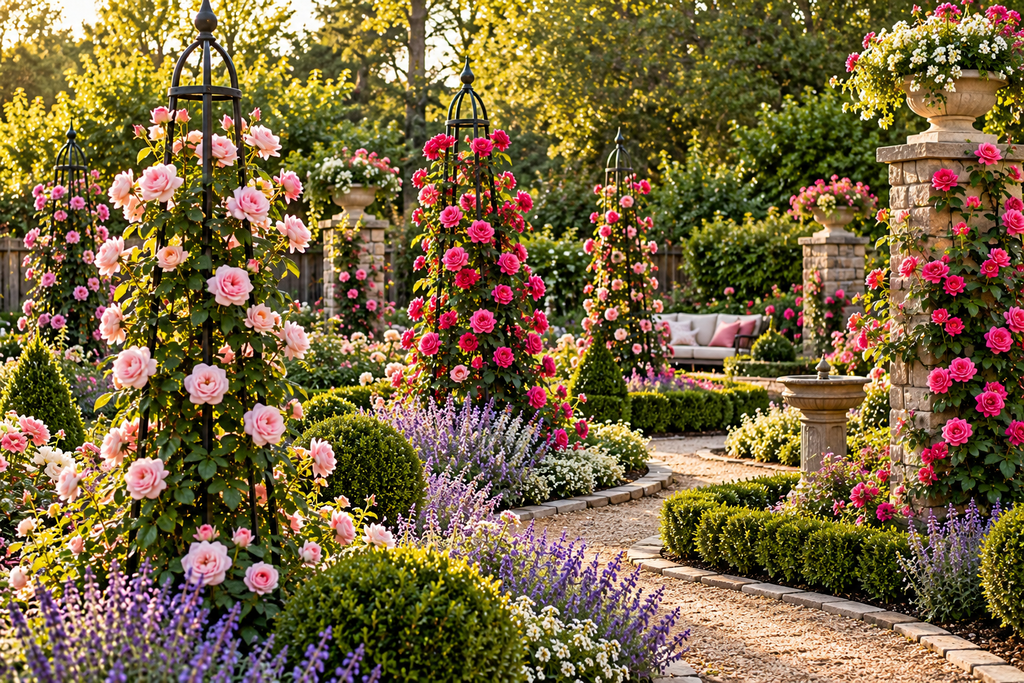
An obelisk of six to eight feet lifts a rose out of the flower bed and gives a small garden vertical interest with a tiny footprint. Climbing roses and some English shrub roses that can be trained as short climbers, ‘Gertrude Jekyll’ among them, work well on obelisks.
Training matters more than variety here. A cane tied straight up tends to flower mainly at the top, because the plant sends its energy to the highest buds. Spiral the canes around the obelisk, or tie them as close to horizontal as the frame allows, and flowers form along the whole length. Plant a clematis at the base if the rose has a bare lower half.
6. A Round Bed Around a Focal Point
A birdbath, sundial or simple bench in the centre of a circular bed gives a rose garden a destination. Set the tallest roses nearest the centre and shorter ones at the edge, and border the bed with low hedging, such as dwarf box or lavender, or with a ring of paving.
Keep the bed small enough to maintain. If you cannot step into it, you can only comfortably reach two to three feet from the edge, so beds wider than about five or six feet need a stepping stone or two for pruning and deadheading. If you add a birdbath, empty and refill it regularly so it does not become a breeding spot for mosquitoes.
7. A Rose Bed Dedicated to Cutting
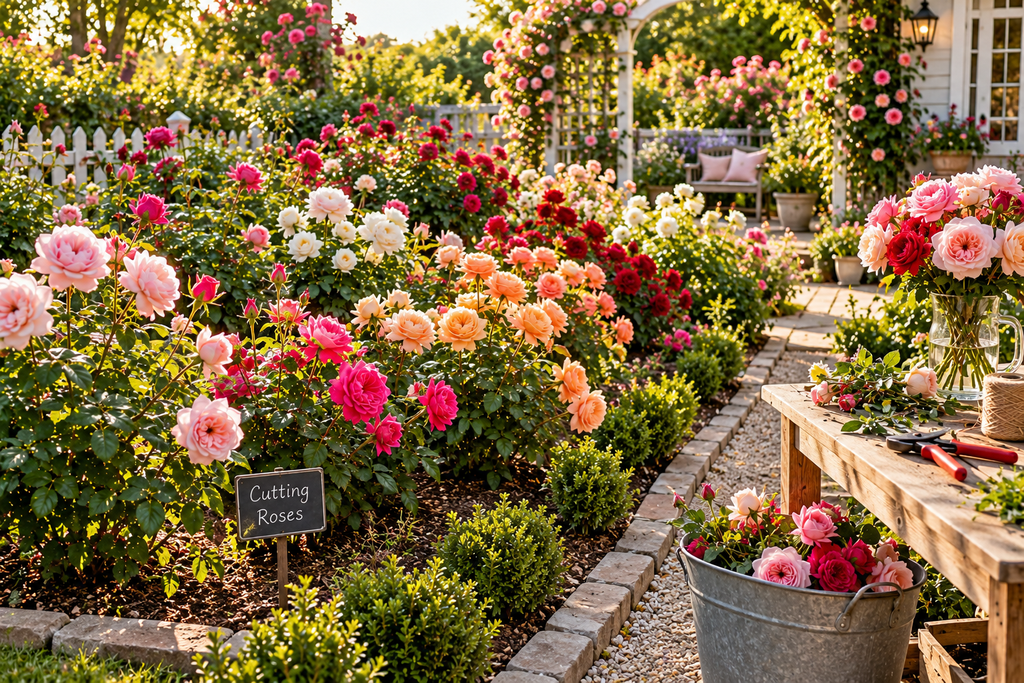
Bushes grown for bouquets do not need to look pretty in a design. They need to produce well and be easy to reach. Plant hybrid teas or floribundas in a row or two, about two to three feet apart, with a working path beside them.
Cut in the early morning with clean, sharp secateurs. Choose buds where the outer petals have started to loosen, cut just above an outward-facing leaf, and leave enough foliage on the plant to keep it feeding. Strip leaves that would sit below the waterline and put the stems into cool water straight away. Recut the stems at an angle and change the water every day or two.
Climbing, Training and Structure
8. A Fence or Wall Trained Wide, Not Tall
Wire runs spaced 12 to 18 inches apart and held two to four inches clear of the wall keep air moving behind the canes and stop dampness building against masonry. Plant the rose 12 to 18 inches out from the base of the wall, where the soil is less dry, and fan the canes out sideways.
Direction of the wall affects the choice. A wall with little direct sun gives poor results for most roses, and a rose that suits a shadier position, such as the fragrant white noisette ‘Madame Alfred Carrière’, still needs some direct light to flower well. A sunny fence or south- or west-facing wall suits almost any climber.
Avoid tight ties. Canes thicken year after year, and a tie that fits when planted can cut into the stem.
9. Clematis Threaded Through Roses
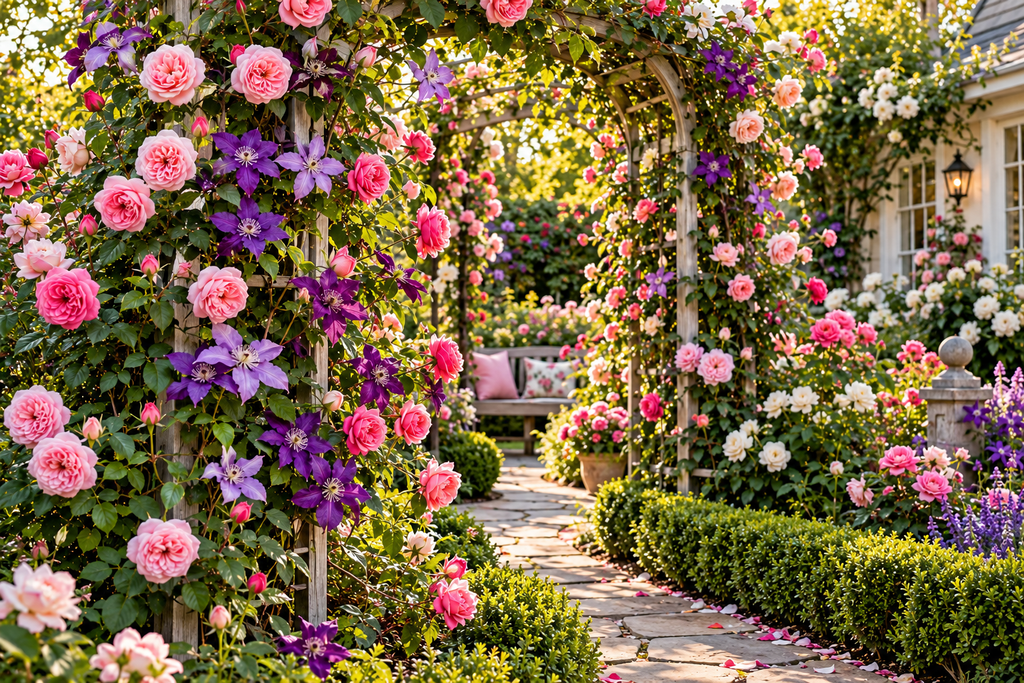
A climbing rose and a clematis can share a support and bloom in sequence. The safest partner is a late-flowering clematis in pruning Group 3, which gets cut hard in late winter. That timing means the clematis can be cut right back without disturbing the rose.
Plant the clematis 18 inches or more from the rose, lean it onto a cane or string, and keep its roots shaded, since clematis prefers a cool base and a sunny top. Skip very vigorous spring clematis such as montana types, which can smother a rose in a couple of seasons.
10. A Rambler Over a Tree or Outbuilding, After Checking Its Size
Ramblers can turn an old shed or a dead tree into a cascade of flowers, but the type matters. ‘Kiftsgate’ (a form of Rosa filipes) is famously vigorous and can climb to well over thirty feet, so it suits a large property rather than a suburban backyard. A smaller rambler is a better choice for a garden shed.
If the plan involves an existing tree, confirm the tree is healthy and strong enough to carry a heavy rose, plant the rose a few feet from the trunk to avoid root competition, and expect to water it regularly through the first seasons. Most ramblers flower once, on last year’s growth, and are pruned straight after flowering, so cutting back in spring removes the next season’s flowers. Allow safe access to any roof or wall you may need to maintain, since pruning a thorny rambler off a roof is a job for a professional.
Where the Roses Meet the Living Space
11. A Seating Nook Where Scent Matters
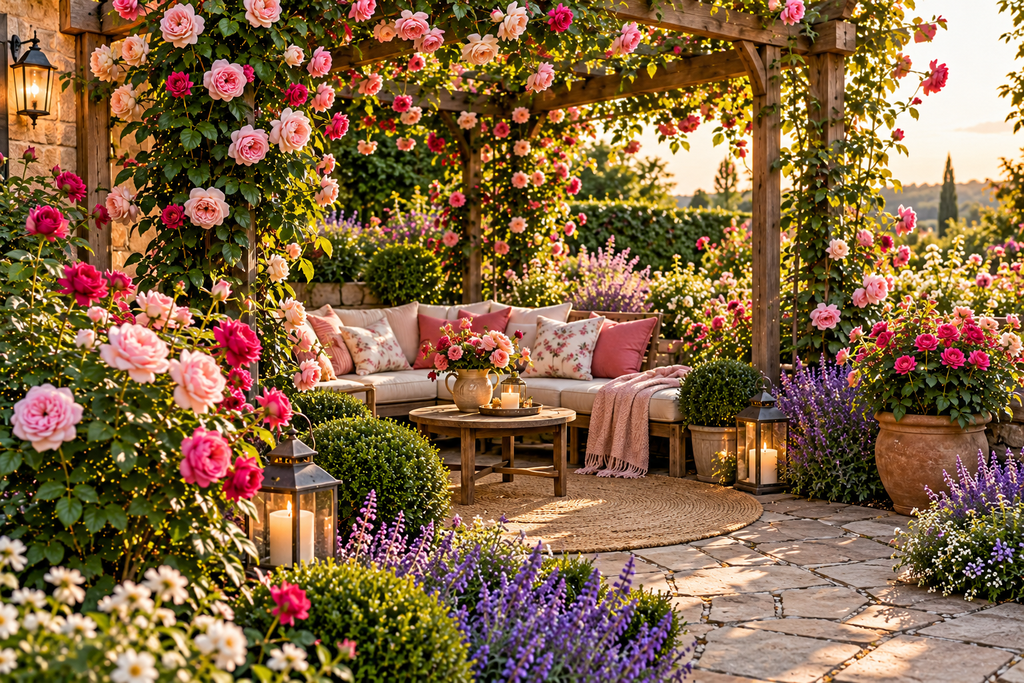
Fragrance varies by variety, temperature and time of day, and it carries best in warm, still air. That makes a sheltered corner the ideal position for a bench or small table. ‘Gertrude Jekyll’ and ‘Munstead Wood’, both English roses from David Austin, are listed with a strong old-rose fragrance.
Smell a rose in person where possible, since descriptions are subjective. Place thorny roses at least two feet away from where people sit or brush past, and consider a thornless variety right beside the seat. A trellis or hedge behind the bench gives shelter from wind and makes the corner feel enclosed.
12. Standard Roses as Romantic Punctuation
A standard (tree) rose is a rose grafted on an upright stem, usually three to four feet tall, with the flowering head on top. A pair on either side of a gate or at the end of a path gives a garden a formal rhythm, and low perennials underneath hide the bare stem.
They need a stake, and in regions with hard freezes the exposed head and graft are vulnerable, so plan on winter wrapping or choose a different form. In mild climates they are much easier.
13. A Rose Hedge Instead of a Plain Fence
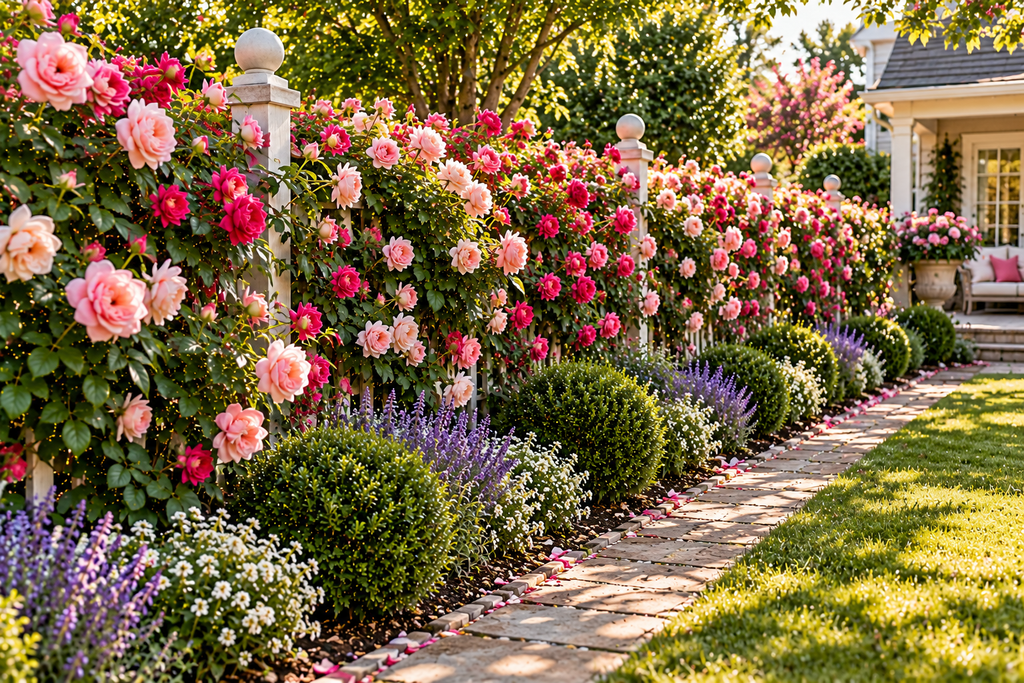
A hedge of roses provides scent, summer flowers, and in some cases hips for birds in autumn. Rugosa roses are a tough option. They tolerate cold, poor soil and some wind, and many are fragrant. Note that some spread by suckers, so give them space or install a root barrier.
Space hedge roses about three to four feet apart, depending on the variety. For a tidier, more formal look, ‘Iceberg’, a white floribunda raised by Kordes in 1958, is widely used. Thorny hedges also make a useful barrier, but they make maintenance painful, so wear thick gloves and long sleeves when pruning.
14. Roses in Containers on a Patio
Compact floribundas and patio roses suit pots. Choose a container at least 15 to 20 inches wide and deep, with drainage holes, and use good potting mix rather than garden soil. Pots dry out faster than beds, so check moisture often in summer, and feed regularly since nutrients wash out.
Winter is the weak point. Roots in a pot have less insulation than roots in the ground, so in cold climates move the pot against a sheltered wall or wrap it. Replace some of the soil every couple of years to keep the plant growing well.
15. A White Rose Garden for Evening
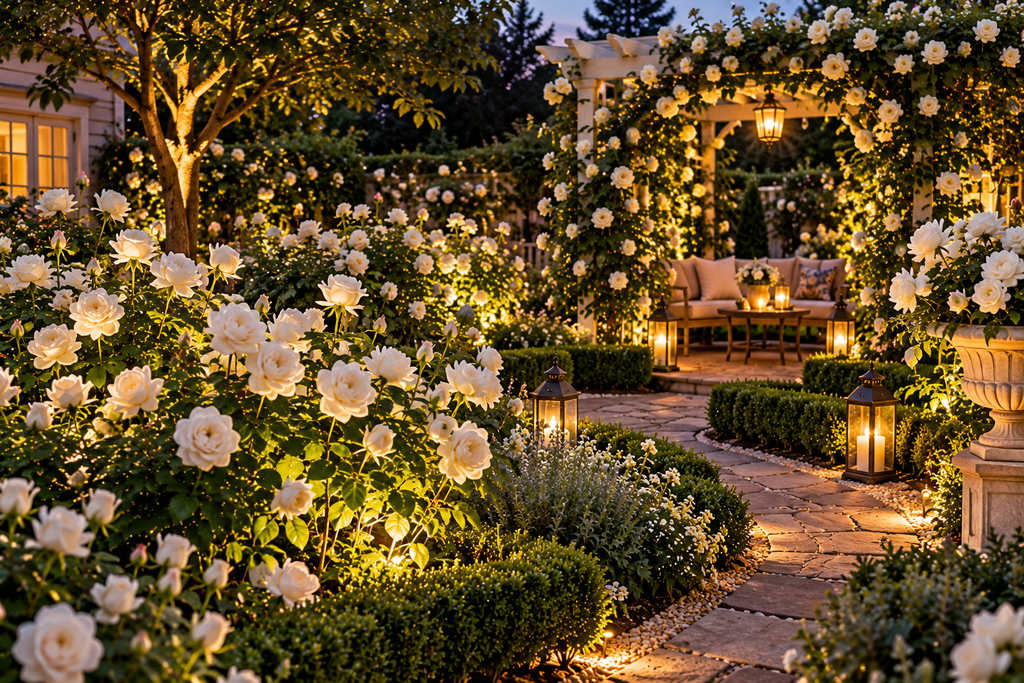
White flowers glow at dusk, which makes a white rose garden the best choice for people who are mostly outdoors in the evening. Pair white roses such as ‘Iceberg’ with silver foliage (lamb’s ear, artemisia), white foxgloves and white phlox. Add low solar path lights to define the walkway after dark.
White blooms show brown edges quickly, so remove spent flowers promptly from repeat-flowering varieties.
Companion Plants Worth Growing With Roses
- Catmint (Nepeta): soft blue, long-flowering, hides bare stems. Cut back after the first flush. It spreads, so allow room.
- Hardy geraniums, such as ‘Rozanne’: a dense, flowering groundcover that suppresses weeds around the base.
- Lady’s mantle (Alchemilla mollis): chartreuse flower sprays that set off pink and white roses. It self-seeds freely.
- Alliums: round flower heads in late spring, before most roses open, and the tall stems rise above the bare base of the bush. The leaves fade untidily, so plant them where other foliage can cover them.
- Salvia: upright spikes that contrast with the round rose flowers.
- Lavender: best at the dry, sunny edge of the bed.
- Sweet alyssum: a low annual that edges a bed and attracts hoverflies, which feed on aphids.
- Late-flowering clematis: see idea 9.
What to avoid: aggressive spreaders such as mint planted directly in the bed, large shrubs or trees whose roots compete with the rose, and plants that cast heavy shade over the bush.
Mistakes That Quietly Ruin a Rose Garden
- Planting too close. Overcrowding reduces airflow and raises the disease risk. Follow the mature spread on the label.
- Watering from above. Water at the base, in the morning, so leaves dry quickly. Established roses generally need a deep soaking about once a week in dry weather rather than a daily sprinkle.
- Mulching against the stems. Spread two to three inches of mulch to retain moisture but keep it a couple of inches clear of the canes.
- Pruning at the wrong time. Repeat-flowering roses are generally pruned in late winter or early spring. Once-flowering ramblers and old roses are pruned after they bloom.
- Feeding late. In cold climates, stop fertilising roughly six to eight weeks before the first expected frost so that tender new growth does not get caught.
- Leaving diseased leaves on the ground. Blackspot spores overwinter on fallen leaves, so rake them up and bin them rather than composting.
- Reaching for sprays first. Resistant varieties, good spacing, and a strong jet of water to dislodge aphids deal with many problems. If a pesticide is needed, follow the label precisely, and keep children and pets away until it has dried.
- Skimping on protection. Thorns are sharp and wounds can get infected, so wear thick gloves and long sleeves, and keep tetanus vaccination up to date.
Questions Readers Actually Ask
Can I plant a new rose where an old rose died?
Try not to. Rose replant disease affects new roses planted in soil where roses grew before, and the new plant may be stunted. Plant in a fresh spot, or replace a large volume of soil in the planting hole, and check local extension advice for your region.
How long does a climbing rose take to cover an arch?
It varies with the variety, the climate and the care. A moderate climber generally needs a couple of seasons to establish roots and a few more to fill a frame, and a vigorous rambler is faster. Treat any exact timeline as an estimate.
Will roses grow in partial shade?
Some will survive, but they produce fewer flowers and are more prone to disease than roses in full sun. If only part of the garden gets enough light, put the roses in the brightest spot and plant shade-tolerant perennials elsewhere.
What should I do if the nursery cannot confirm the rose’s name?
Ask for the breeder, class and a registration or breeder code. If none can be provided, treat the plant as unidentified and compare its flowers, leaves and habit with photographs on a database such as HelpMeFind once it blooms.
Key Takeaways
- Verify the exact cultivar behind the name ‘Romani’ before relying on it. The nearest matches found, ‘Romanze’ and ‘Romanza’, are pink floribunda roses, and their reported sizes vary.
- Site comes first: six hours of sun, well-drained soil, and enough space for air to move.
- Match each rose to its job. Moderate climbers belong on arches and obelisks, rugosas and floribundas on hedges, compact types in pots, and giant ramblers only where space allows.
- Train canes sideways, set supports firmly, and plant climbers away from the base of posts and walls.
- Companion plants such as catmint, hardy geraniums and late-flowering clematis cover bare stems and extend the season, as long as they are kept clear of the rose crown.
- Thorns, toxic companions and pesticides each carry a safety angle, so choose positions and products with children and pets in mind.

About Syprose Kiche
Syprose Kiche is the creator and writer behind My Besuited Home, a practical home and garden website covering DIY projects, gardening, lawn care, landscaping, home improvement, and outdoor living. She focuses on turning everyday homeowner questions into clear, practical guides backed by careful research and useful real-world considerations.