
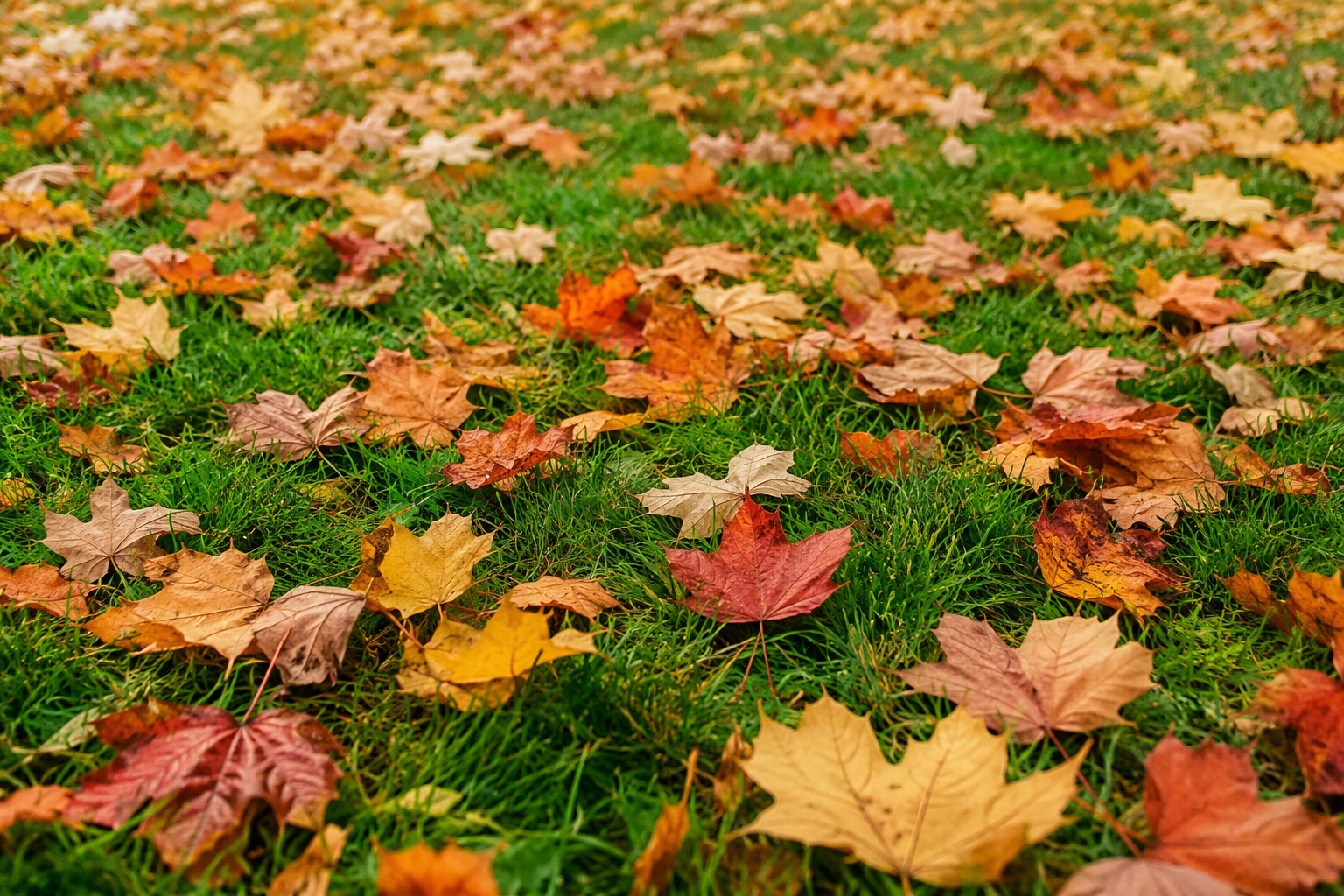
A thin scatter of leaves across the lawn doesn’t do much harm. A wet, matted layer that sits there for two or three weeks is a different story. Underneath it, grass blades stop getting light, the soil stays damp longer than it should, and by the time the leaves finally get raked off in November, there’s often a patch of yellow, thinned-out turf waiting underneath. The leaves themselves aren’t the enemy here — it’s how they’re handled, and how long they’re left, that decides whether they help the lawn or hurt it.
That distinction matters more than most leaf-cleanup advice lets on. Leaves that get mowed, shredded, or moved along on a reasonable schedule can actually feed the soil and cut down on spring weeds. Leaves that get ignored until they’ve formed a soggy mat can trigger fungal problems that don’t even show up until the snow melts. The methods below are organized around that difference — working with the natural breakdown of leaves instead of just hauling everything to the curb, while still protecting the grass underneath.
What Actually Happens to Grass Under a Layer of Leaves
Grass needs light to keep producing energy through photosynthesis, even in the cooler weeks of fall when growth has slowed but hasn’t stopped. A thick leaf layer blocks that light. At the same time, leaves trap moisture against the crown of the grass plant — the part where the blades meet the roots — and that combination of darkness and dampness is exactly the environment fungal pathogens prefer.
The most common consequence is one gardeners don’t usually notice until spring: snow mold. Cool-season lawns across the northern half of the country are susceptible to this fungal disease, which develops when grass stays cold, wet, and covered for extended stretches — conditions that leaf litter left over winter helps create. It shows up as circular patches of matted, gray or pink-tinged grass right after snow melts, and while the turf often recovers on its own once it dries out and warms up, badly affected areas sometimes need reseeding.
Even without snow, a dense mat of wet leaves left on turf for several weeks can smother the grass underneath simply by cutting off light and air circulation. The lawn doesn’t need to be buried in leaves for this to matter — a single layer that’s thick enough to hide the blades of grass, left in place through a few rounds of rain, can do it.
There’s a useful rule of thumb for judging when leaf cover has crossed from “fine” to “a problem”: if you can still see more than half the lawn through the leaves, the turf is generally getting enough light and air to be okay for a while longer. Once less than half the grass is visible, it’s time to deal with it — either by mulching it in or removing it, which is covered in more detail below.
1. Mow the Leaves Into Fine Mulch Instead of Raking Them Off
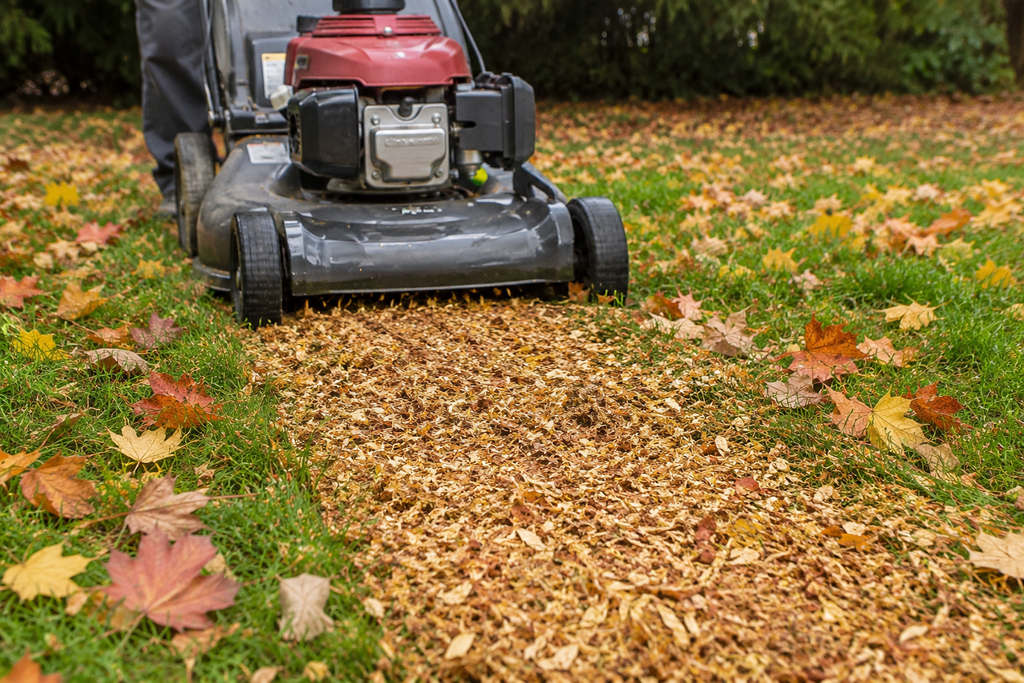
For most yards, this is the method that saves the most time and does the most good, and it’s the one recommended most consistently by university turf programs. Instead of raking leaves up and bagging them, the mower shreds them into small pieces that settle down into the grass canopy and decompose over the following weeks.
The mechanics matter here. Set the mower deck to its highest cutting height, then mow over the leaves as you normally would. Go over the area a second time in the opposite direction, creating a crisscross pattern — this is what breaks whole leaves down into confetti-sized pieces rather than leaving larger fragments sitting on top of the grass. A dedicated mulching mower can shred a layer of leaves up to about 6 inches deep in one session; a standard rotary mower without a mulching blade will usually need more passes, or should be used on a thinner layer of leaves to begin with.
Dry leaves shred more finely than wet ones, so mulching works best after a day or two without rain, if the schedule allows for it. Mulching once a week during peak leaf drop tends to keep pace with most deciduous trees; waiting two or three weeks between mowings lets leaves pile up faster than a single mowing session can chop them down, which defeats the purpose.
What makes this method worth the extra mowing sessions is what happens afterward. As the shredded leaf pieces break down, they release nitrogen, phosphorus, and potassium back into the soil — one estimate from turf researchers puts the added nutrients from mulching a 2-inch layer of leaves over a season at somewhere around 3 to 3.5 pounds of nitrogen per 1,000 square feet, which is a meaningful dent in the lawn’s fertilizer needs. Multi-year studies from Michigan State University turf specialists also found a sharp drop in weed pressure, including dandelions and crabgrass, in lawns that had leaves mulched into them for a few consecutive autumns. The theory is straightforward: decomposing leaf fragments cover the bare or thin patches in a lawn where weed seeds would otherwise germinate.
Where this method falls short: it only works if the leaf layer stays thin enough for sunlight to reach the grass blades between mowings. If a heavy leaf drop outpaces the mowing schedule — common under large oaks, maples, or sycamores — mulching alone won’t keep up, and the leaves need to come off the lawn entirely for a while (see the next section). It’s also not a good fit for lawns that are already newly seeded or overseeded in fall, since young grass seedlings can be smothered by mulched leaf fragments just as easily as by whole leaves.
2. Know When Mulching Stops Working and Switch to Bagging
This is less a standalone method than a decision point, but it’s one that gets skipped in a lot of leaf-care advice, and skipping it is how a well-intentioned mulching routine ends up hurting the lawn instead of helping it.
The general guidance from turf extension programs is to keep mulching leaves into the lawn as long as you can still see roughly half the grass surface through them after mowing. Once leaf cover regularly exceeds that — meaning even a shredded, crisscrossed pass still leaves more than half the lawn hidden — it’s time to start collecting and removing leaves instead of leaving the shredded pieces in place. At that point, excess leaf residue sitting on the surface through fall and into winter is more likely to contribute to matting and snow mold than to feed the soil.
In practice, this usually means switching strategies partway through the season rather than sticking to one method from October through December. Early and mid-fall, when leaf drop is light to moderate, mulching in place tends to be enough. Late fall, when the bulk of leaves come down over a short stretch of a few weeks, bagging or raking becomes the more reliable choice, at least until the volume drops off again.
A bagging mower makes this easier to manage, since it can be run in mulching mode on lighter weeks and switched to collection mode when leaf volume spikes — no separate raking session required. Without a bagging mower, this is where a tarp or a leaf vacuum earns its keep, both covered further down.
3. Rake Into a Pile and Let Fungi Break the Leaves Down Into Leaf Mold
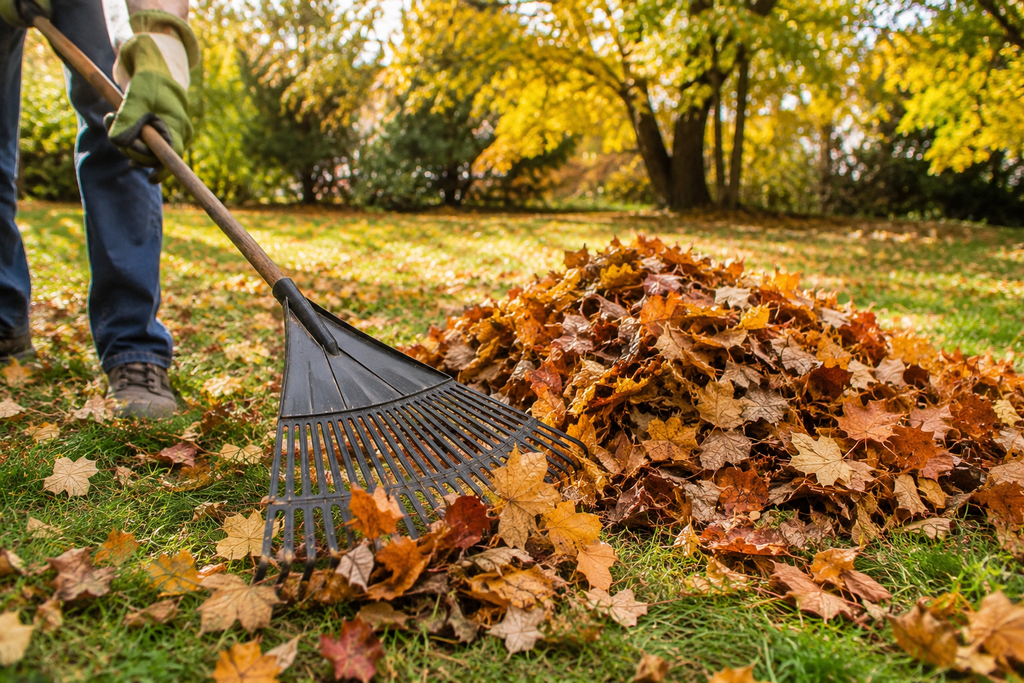
Raking leaves into an out-of-the-way corner of the yard and leaving them to decompose on their own — rather than bagging them for curbside pickup — turns yard waste into a soil amendment called leaf mold. It’s a different process from composting food scraps or grass clippings, which relies mainly on bacteria and heat. Leaf mold forms through slower fungal decomposition, and it doesn’t need to be turned constantly or balanced with “green” nitrogen-rich material to work.
The process is close to hands-off. Rake fallen leaves into a pile in an area that won’t be an eyesore and won’t get scattered by wind — against a fence line or in a back corner works well. A wire bin, a section of chicken wire formed into a cylinder, or even a few perforated garbage bags will hold the pile together and let air circulate, though a freestanding pile works too. Keep the leaves damp, not soaked — about the moisture of a well-wrung sponge — and the fungi already present on fallen leaves will start breaking them down without much else needed.
The tradeoff is time. Left whole, a leaf pile can take one to three years to fully decompose into the dark, crumbly material gardeners use as mulch or soil conditioner. Shredding the leaves first — running them through a mower or leaf shredder before piling them — speeds this up considerably, since it exposes more surface area to the fungi doing the work; a shredded pile can be usable in as little as six months to a year if kept consistently moist. A pile roughly 4 feet square and 4 feet tall holds enough mass to retain the moisture and stay biologically active enough to break down at a reasonable pace; smaller, looser piles tend to dry out and stall.
This method doesn’t return nutrients to the lawn directly the way mulch-mowing does, but it produces something arguably more useful for garden beds: leaf mold significantly improves soil structure, water retention, and aeration, especially in heavy clay soils, without the smell or maintenance a food-scrap compost pile requires.
4. Drag a Tarp Instead of Filling Bag After Bag
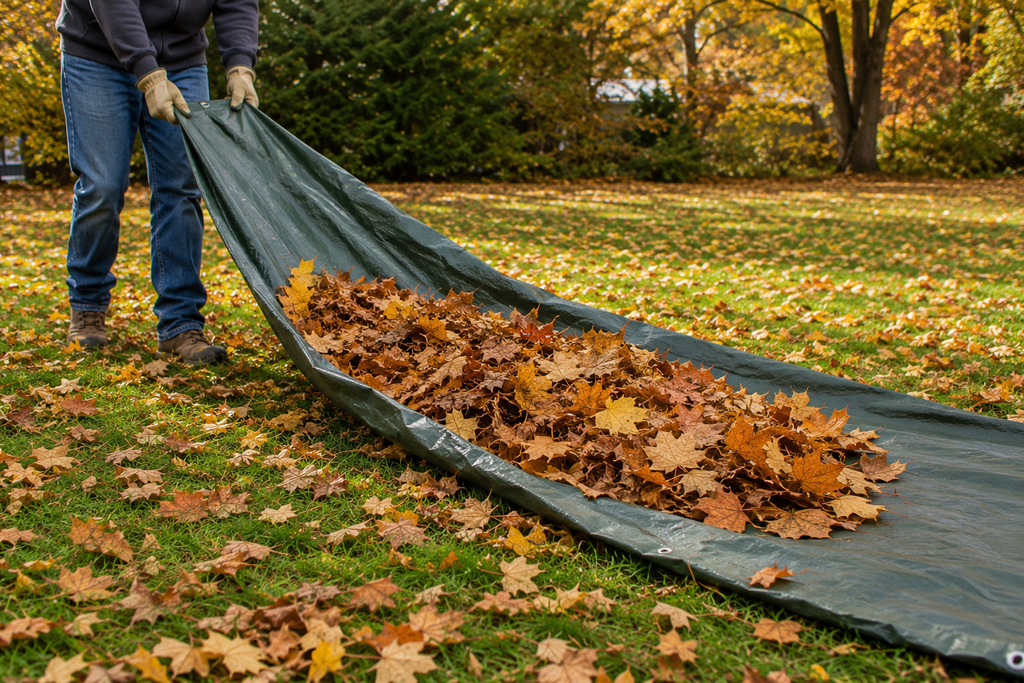
For lawns with heavy leaf drop and no mulching mower on hand, the tarp method solves the most physically punishing part of leaf cleanup — repeatedly bending down to scoop leaves into bags. Rake leaves onto a large tarp or heavy plastic sheet instead of directly into bags, and once there’s a reasonable pile on it, gather the corners and drag the whole load to a compost pile, a garden bed, or the curb in one trip.
It’s a low-tech fix, but it changes the math on a big cleanup considerably. A single tarp load can move what would otherwise take four or five bags’ worth of raking-and-bagging cycles, and dragging is easier on the back than repeated bending and lifting. On sloped yards, this also doubles as a way to slide leaves downhill toward a collection point without carrying anything.
The main limitation is that it still requires raking the leaves onto the tarp in the first place, so it doesn’t save labor on very large properties the way a mower or vacuum would. It works best as a way to consolidate leaves that have already been raked into loose piles, or to move leaf mulch and finished leaf mold around the yard without needing a wheelbarrow.
5. Use a Vacuum-Shredder to Collect and Chop Leaves in One Pass
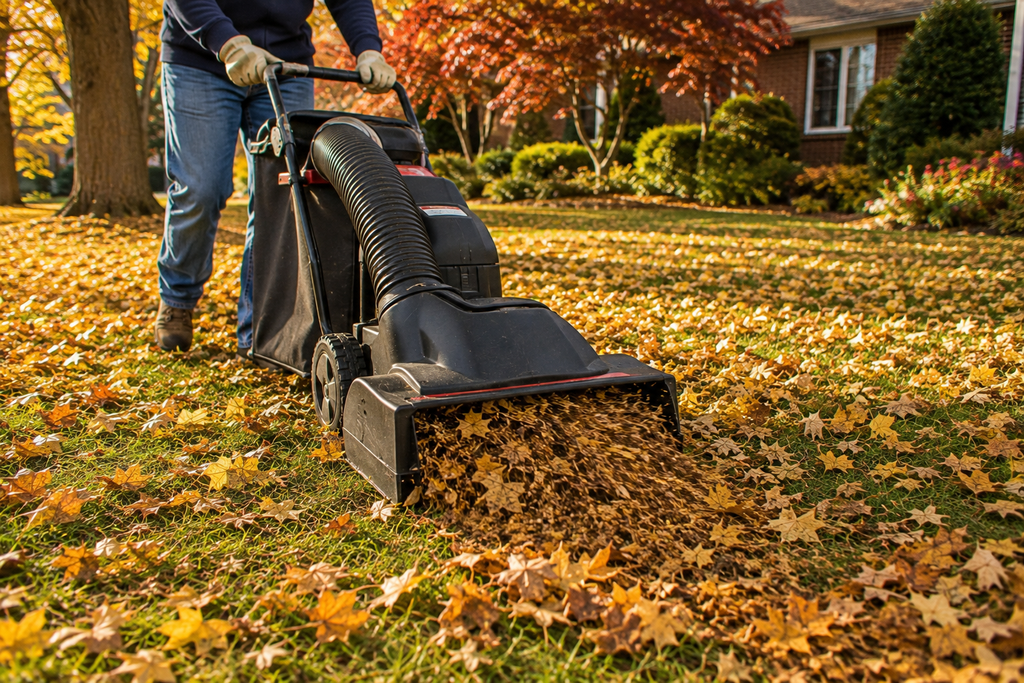
A handheld or wheeled leaf vacuum with a built-in shredding function collects leaves and reduces their volume at the same time, which matters more than it sounds like it should. Shredded leaves take up a small fraction of the space whole leaves do — some sources put it at roughly one-sixteenth the volume, depending on how fine the shredding is — so a single bag of shredded leaves can represent what would have been several bags of whole ones.
This method is particularly useful for leaves that have collected in places a mower can’t easily reach: against foundations, in garden beds, along fence lines, or in the narrow strip between a driveway and a lawn edge. Running a vacuum-shredder over those spots and then using the output as mulch in planting beds accomplishes two things at once — it clears the debris and produces a usable material without a separate shredding step.
Gas-powered leaf vacuums are considerably louder and more polluting than a standard mower pass, which is worth factoring in for anyone clearing leaves in a neighborhood with noise-sensitive hours or trying to keep the whole process lower-impact. Battery-powered and corded electric models are quieter and produce no direct emissions, though they typically have less suction power and shorter run times than gas versions, which matters more on a large property than a small one.
6. Spread Chopped Leaves Around Trees, Shrubs, and Garden Beds Instead of Hauling Them Away
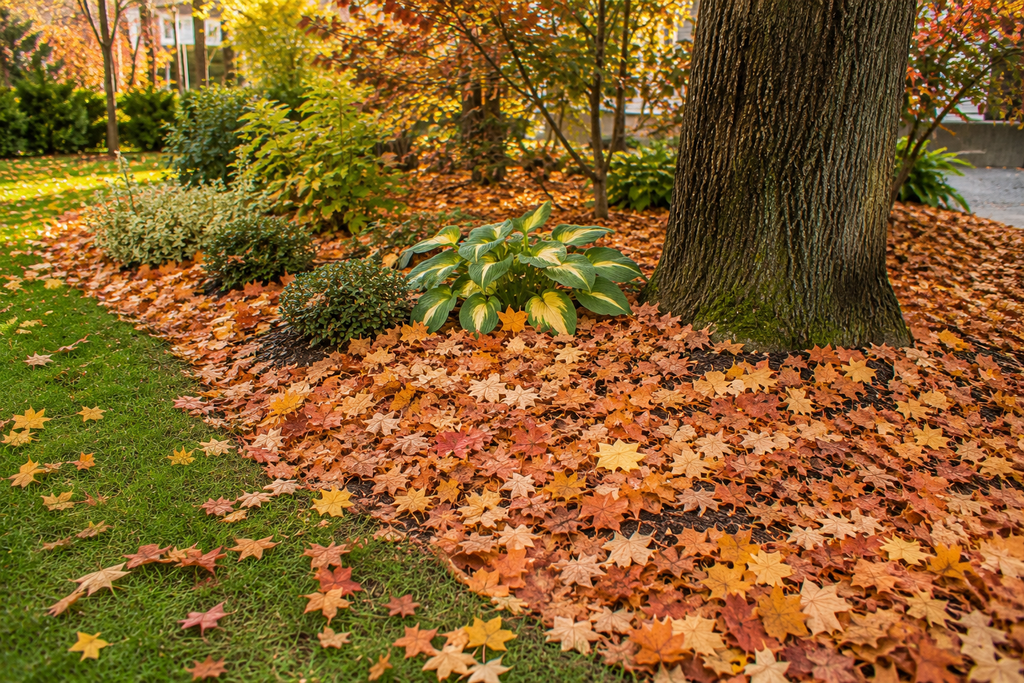
Not every leaf needs to end up back on the lawn or in a slow-decomposing pile. Chopped leaves make a serviceable mulch layer around trees, shrubs, and perennial beds, doing double duty as insulation for plant roots over winter and as a weed suppressant that blocks light from reaching weed seeds trying to germinate in exposed soil.
A 2- to 3-inch layer of shredded leaves spread around the base of trees and shrubs — kept a few inches back from the trunk or stems to avoid trapping moisture against the bark — insulates roots against temperature swings and helps the soil retain moisture through dry fall stretches. In vegetable gardens and annual beds that have been cleared for the season, the same shredded leaves can be spread over bare soil to prevent erosion and cut down on the winter annual weeds that would otherwise take hold in open ground.
This approach works well alongside a bagging mower: mulch the lawn on lighter leaf-drop weeks, and switch to bagging mode during heavier drop, using the bagged, shredded leaves as bed mulch rather than sending them to the curb. It’s a way to get value out of the leaves the lawn itself can’t absorb without needing a separate compost pile or municipal yard-waste pickup.
Whole, unshredded leaves aren’t a great choice for this purpose — they tend to mat down into a soggy layer that can smother small perennials the same way they’d smother grass, and they take much longer to break down without being chopped first. If a shredder or mulching mower isn’t available, running a string trimmer through a contained pile of leaves in a garbage can is a rougher but workable substitute for chopping them down to size.
7. Time Leaf Clearing Around Weather and Leaf Drop, Not a Fixed Calendar Date
Sticking to a single leaf-cleanup day in October, regardless of how many leaves are actually down or how wet they are, is one of the more common ways this whole process goes sideways. Leaf drop timing varies by tree species and by year — a warm fall can push peak drop weeks later than usual, while an early frost can bring it on fast — and mowing or raking on autopilot without checking the yard misses both the too-early sessions that leave more leaves still to fall and the too-late sessions where a mat has already formed.
A more reliable approach is to check the lawn every few days during peak leaf drop, generally mid-fall for most deciduous trees, and to act based on what’s actually accumulated rather than what’s on the calendar. Mow or mulch as soon as a thin, even layer covers the grass, rather than waiting for leaves to build up into a thick mat first — thinner layers shred and settle into the turf far more easily than a dense one does. If rain is forecast for several days in a row, clearing leaves beforehand, even if the layer seems manageable, keeps a wet mat from forming and sitting through the rain window.
The other timing consideration is the tail end of the season. Whatever combination of methods gets used through October and November, the lawn should go into winter free of a heavy leaf layer — this is the detail most directly tied to preventing snow mold. Turf specialists specifically recommend clearing leaves and other debris before extended snow cover sets in, since leaves trapped under snow create the damp, dark conditions the fungus needs. A final cleanup pass after the last significant leaf drop, even if it feels late in the season, matters more for lawn health than getting an early start ever did.
Common Mistakes That Undo Otherwise Good Leaf Management
Mowing over wet, matted leaves and calling it mulching. A mower can shred dry leaves into fine pieces in one or two passes. On soggy, matted leaves, the same mower tends to clump them into wet wads that sit on top of the grass instead of settling into the canopy — which recreates the smothering problem the mulching was supposed to prevent. Waiting for a dry day, or at least a dry few hours, makes a real difference here.
Mulching a layer that’s already too thick. Mulching works by chopping leaves fine enough that light and air still reach the grass underneath. Once a leaf layer builds past a certain depth — generally more than a few inches, or enough that mowing over it still leaves more than half the lawn hidden afterward — no amount of extra mowing passes fully solves it, and the leaves need to be collected and removed instead.
Letting leaves sit in gutters, on walkways, or against foundations while focusing only on the open lawn. Leaves piled against a house foundation or clogging gutters create their own moisture problems — trapped water against siding, ice dams in colder climates — separate from anything happening on the turf. A full leaf-management routine usually needs to account for these areas too, even though they’re not part of the lawn itself.
Bagging leaves for curbside pickup by default, without considering mulching or leaf mold first. Many municipalities still landfill collected leaf waste, where it decomposes without oxygen and produces methane rather than breaking down the way it would in a home compost pile or mulched lawn. Where curbside yard-waste programs specifically compost the material, this concern doesn’t apply — checking with the local municipality is worth doing before assuming bagged leaves are being handled the same way everywhere.
Best Tools for Clearing Leaves Without Damaging Turf
- A mulching mower or a standard mower with the deck set high. This is the core tool for method one, and for most lawns it’s the only piece of equipment that’s strictly necessary. A dedicated mulching blade shreds leaves more finely in fewer passes than a standard blade, but a standard mower will still work with an extra crisscross pass.
- A wide, spring-tine leaf rake. Useful for garden beds, foundation lines, and anywhere a mower can’t reach. Plastic tine rakes are lighter and less likely to gouge soft turf than metal ones.
- A tarp or heavy plastic sheet, at least 8 by 10 feet for a typical suburban lot, for hauling raked leaves without repeated bagging.
- A leaf vacuum with a shredding function, corded, battery, or gas, for narrow spaces and for reducing leaf volume before composting or bed mulching.
- A wire compost bin or chicken-wire cylinder, for containing a leaf mold pile without needing solid walls that block airflow.
A leaf blower alone — without a vacuum or shredding attachment — mostly just relocates leaves rather than reducing or breaking them down, so it’s more useful for consolidating leaves into a pile before raking or mowing than as a complete solution on its own.
When Leaves Have Already Smothered a Patch of Lawn
If a section of turf has been under a wet leaf mat for a few weeks and looks yellowed, matted, or thin once the leaves come off, the first step is simply raking that area clear and letting it dry out and get light again — a surprising amount of recovery happens on its own once the grass has access to sun and air. Circular or irregular patches with a grayish or pinkish, matted look, especially ones that show up right after snow melts, are the signature of snow mold rather than simple light deprivation; these areas typically green back up as the weather warms and the turf dries, and a light raking to fluff up the matted blades speeds that along.
Patches that don’t recover within a few weeks of consistent light and normal fall or spring weather may need overseeding to fill back in, particularly if the grass died back entirely rather than just yellowing. For lawns with a recurring, severe snow mold problem year after year, a lawn care professional or local extension office can advise on whether a preventive fungicide application makes sense — this isn’t a step to take on a one-off patch, but it’s a reasonable question to ask if the same area keeps coming back damaged every spring.
Frequently Asked Questions
Is it actually true that leaves are good for lawns, or is that just a way to avoid raking? Mulched, finely chopped leaves genuinely do return nutrients to the soil and have been shown in multi-year turf research to reduce weed pressure — it’s not just a rationalization for skipping yard work. The benefit depends entirely on the leaves being shredded fine enough to settle into the grass rather than sitting on top of it as a whole, intact layer.
How often should leaves be mowed or raked during peak fall drop? Checking the lawn every few days and mulching or clearing as soon as a thin, even layer builds up works better than waiting for a set day each week, since leaf drop volume varies with weather and tree species. As a general benchmark, once weekly is often enough during moderate drop; heavier drop under large trees may call for more frequent passes.
Can leaves be mulched into a newly seeded or overseeded lawn? This is one case where mulching isn’t the right call. New grass seedlings need direct light and don’t have the established root system to push through a layer of decomposing leaf matter the way mature turf does. Raking or vacuuming leaves off newly seeded areas, rather than mowing them in, protects the seedlings while they establish.
Do all tree species drop leaves that behave the same way once mulched? No — leaves with a higher lignin content, like oak and holly, decompose considerably more slowly than thinner-leaved species like maple. This matters more for leaf mold piles, where a mix of leaf types tends to break down more evenly than a pile of all oak leaves, than for mulch-mowing, where the mower does the physical breakdown regardless of leaf type.
A Practical Next Step
The single decision that matters most across all seven of these approaches is checking the lawn’s leaf cover on a rough regular schedule through fall, rather than picking one method in October and running it unchanged until the leaves stop falling. A lawn that’s mulched weekly while the layer stays thin, then switched to bagging or vacuuming once drop picks up, and cleared completely before any extended snow cover sets in, gets the nutrient and weed-suppression benefits of natural leaf management without the smothering risk that comes from letting any single method run past the point where it’s still working.

About Syprose Kiche
Syprose Kiche is the creator and writer behind My Besuited Home, a practical home and garden website covering DIY projects, gardening, lawn care, landscaping, home improvement, and outdoor living. She focuses on turning everyday homeowner questions into clear, practical guides backed by careful research and useful real-world considerations.