
A soil test that comes back at 5.4 in October looks like bad news, but it’s actually good timing. Most of the amendments used to correct pH — agricultural limestone especially — work slowly, sometimes over several months, which means a fall application has a full winter to react before spring planting even starts. Wait until April to test and correct, and you’re often chasing the problem a full season behind.
That’s the part many homeowners miss. Soil pH correction isn’t a quick fix like fertilizing. It’s closer to a slow chemical reaction that needs time, moisture, and soil contact to finish. Autumn happens to be one of the better windows to start that process, but only if the amendment, the rate, and the timing are matched to what the soil actually needs.
Why Fall Is a Practical Window for pH Correction
Soil pH measures how acidic or alkaline the soil is, on a scale of 0 to 14, with 7 being neutral. Most lawn grasses and garden vegetables grow best somewhere between 6.0 and 7.0, though there’s real variation by species — blueberries and azaleas prefer more acidic conditions closer to 4.5–5.5, while lilacs and many brassicas tolerate or even prefer slightly alkaline soil.
Lime, the most common material used to raise pH, doesn’t dissolve and act instantly. It has to react with water and soil particles over time, and that reaction speeds up with freeze-thaw cycles and the natural soil movement that happens over winter. Applying lime in fall gives it several months of contact time before a spring lawn or garden needs to perform. Applying the same amount in early spring, right before planting, often means the correction is still incomplete when the growing season starts.
There’s a second, more practical reason fall works well: soil is usually easier to work with. Summer heat and dry spells can bake garden beds and lawns hard, making it difficult to get amendments worked into the top few inches where they’re most effective. After the first cooler, wetter weeks of autumn, soil texture typically loosens up, and there’s less risk of scorching actively growing plants with a sulfur or lime application.
None of this means spring correction doesn’t work. It does, especially for smaller pH adjustments. But if a soil test shows a significant gap — more than a full point off target — fall is the better time to start closing it.
Fall Soil Testing: What to Actually Do Before Buying Anything
Buying lime or sulfur before testing is one of the most common mistakes homeowners make, and it’s the reason so many yards end up with pH problems that get worse instead of better. Applying the wrong amendment, or the right one in the wrong amount, can push soil further from where it needs to be.
When to Test
Early-to-mid autumn is a good window, ideally 6–8 weeks before the ground is expected to freeze in colder climates. This leaves enough time to get results back, apply an amendment, and let it settle into the soil before winter dormancy. In milder climates without hard freezes, testing can happen later, but it’s still worth doing before the rainy season if amendments need to be worked in while soil is workable.
How to Take a Sample Correctly
A single scoop of topsoil from one corner of the yard isn’t representative, and testing labs will tell you this if you ask. The standard approach:
- Take 8–12 small samples from different spots across the area you’re testing (a lawn, a vegetable bed, a landscape bed), avoiding areas right next to concrete, recently fertilized patches, or spots where wood ash or lime has been dumped before.
- Dig each sample to about 4–6 inches deep for lawns and garden beds — that’s the zone where most root activity and nutrient exchange happens.
- Mix the samples together in a clean bucket, then send a portion of that mixed sample to a lab, or use it for a home test kit.
- Test different areas separately if they’re used differently — a vegetable garden, a lawn, and an ornamental bed can easily have different pH levels even a few feet apart, especially if they’ve been amended differently in the past.
Home Kits vs. Lab Testing
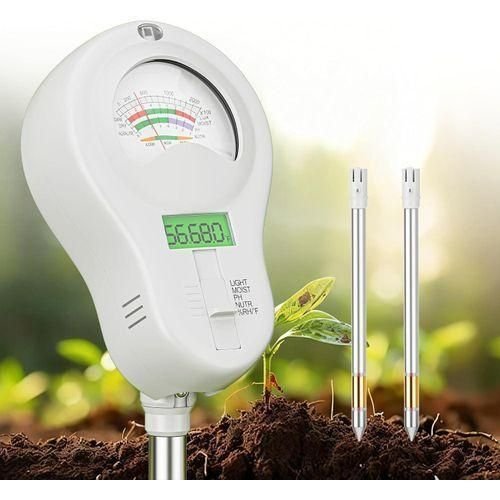
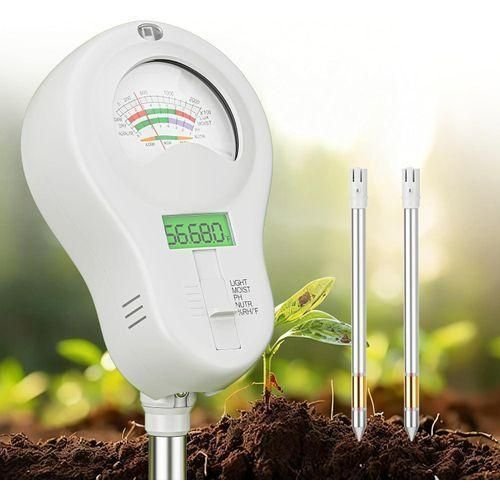
Inexpensive home pH test kits and probes can give a rough reading, but they’re known to be inconsistent, particularly the meter-style probes that don’t require batteries or chemical reagents. They’re useful for a quick check but not reliable enough to base a lime or sulfur application on, especially for a larger yard or a garden where over-application carries real cost.
A lab test through a state or county extension service is the more reliable option, and it typically costs relatively little for a basic pH and nutrient panel. Extension labs also report a “buffer pH” or “lime requirement” alongside straight pH — this number accounts for how much the soil resists pH change, which varies by soil type, and it’s the number that should actually be used to calculate lime rates. Two soils can have the same pH reading but need very different amounts of lime to correct, depending on clay content and organic matter.
Reading the Results: What Target Range Actually Matters
Most lab reports will list a target range for the specific plant or turf type entered on the sample form, which is one good reason to specify what’s growing in that area rather than submitting a generic sample.
For cool-season lawn grasses like Kentucky bluegrass, fescue, or perennial ryegrass, the target is usually 6.0–7.0. Warm-season grasses like bermudagrass and zoysia tolerate a slightly wider range but still generally prefer 5.5–6.5. Most vegetable gardens do well in the 6.0–6.8 range, since that’s where phosphorus, potassium, and most micronutrients stay most available to plant roots. Outside that range — either too acidic or too alkaline — certain nutrients become chemically locked up in the soil even if they’re technically present, which is why a nutrient deficiency sometimes turns out to be a pH problem instead.
Acid-loving plants — blueberries, rhododendrons, azaleas, camellias — are the exception, and treating their bed like the rest of the yard is a common mistake. If a homeowner limes an entire property uniformly without accounting for a blueberry patch or an azalea bed, those plants can develop yellowing leaves (chlorosis) from iron deficiency within a season or two, even though the rest of the yard looks fine.
Agricultural Limestone Application: Raising a Low pH
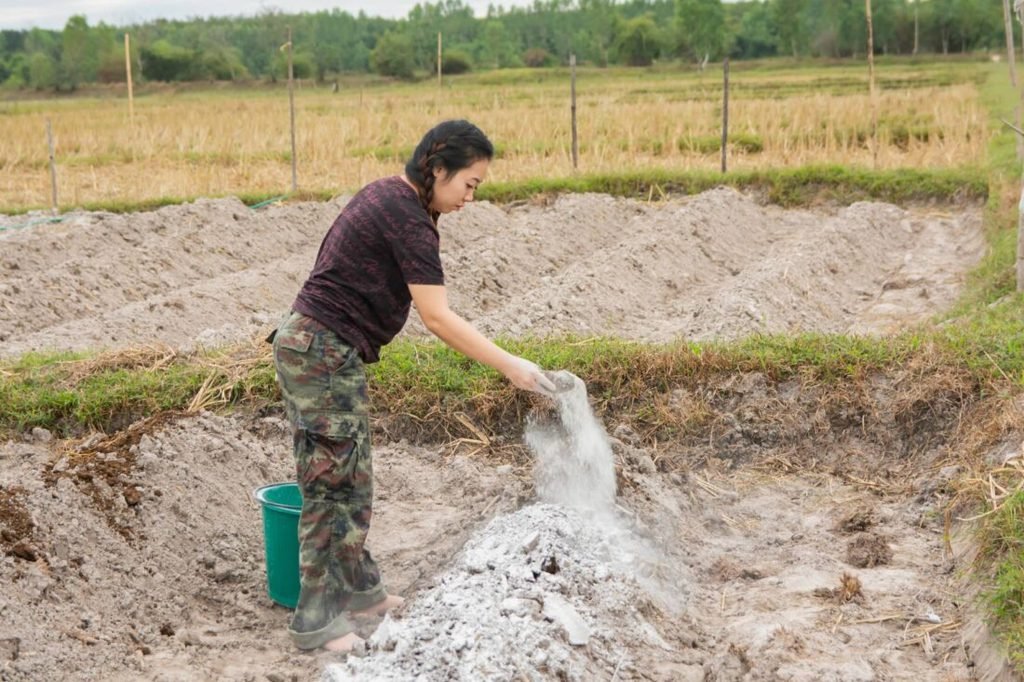
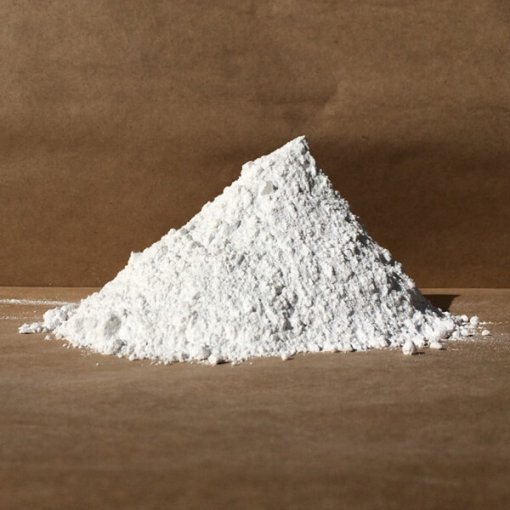
If the test comes back acidic — anything below the target range for what’s growing there — agricultural limestone is the standard correction. It works by neutralizing excess soil acidity through a chemical reaction between the calcium (and sometimes magnesium) carbonate in the lime and hydrogen ions in the soil.
Choosing Between Calcitic and Dolomitic Lime
There are two common types, and picking the wrong one is a frequent, avoidable mistake:
Calcitic limestone is primarily calcium carbonate. It’s the better choice when a soil test shows adequate or high magnesium levels already, since it won’t push magnesium any higher.
Dolomitic limestone contains both calcium and magnesium carbonate. It’s useful when a soil test shows low magnesium alongside low pH, correcting both at once.
Using dolomitic lime on a soil that’s already high in magnesium can create an imbalance that affects soil structure and nutrient uptake over time, particularly in clay-heavy soils. This is exactly the kind of detail a basic pH-only test kit won’t reveal, but a full lab panel will.
How Much to Apply
This is where “just spread some lime” advice causes real problems. Application rates depend on three things: how far off the current pH is from target, the soil’s buffer capacity (clay and organic matter hold onto acidity more stubbornly than sandy soil), and the type of lime used, since particle size affects how fast it reacts.
As a general reference point, correcting sandy soil by roughly one full pH point might take somewhere around 5 pounds of ground agricultural limestone per 100 square feet, while heavier clay soil needing the same correction could take double that or more, because clay buffers against pH change more strongly. These figures vary enough by region and soil type that they should be treated as a starting reference, not a formula — the lime requirement number on a lab report, when available, is far more accurate than any general rule of thumb.
Overliming is a real risk, not just a theoretical one. Pushing pH too high — above 7.5 in most garden and lawn contexts — starts locking up iron, manganese, and zinc, producing the same kind of chlorosis and stunted growth that low pH can cause, just from the opposite direction. Correcting an overliming mistake is slower and more frustrating than correcting low pH in the first place, since it usually requires sulfur applications and patience rather than a quick fix.
Applying It
Lime should be worked into the top 4–6 inches of soil where possible, since it doesn’t move down through soil quickly on its own — surface-applied lime on undisturbed soil can take years to affect pH more than an inch or two down. For an existing lawn, that’s not practical, so surface application with a spreader followed by watering is the standard approach, accepting that the correction will be slower than it would be in a tilled garden bed. For a garden bed being turned over for fall cleanup anyway, working the lime into the top several inches while the bed is already disturbed makes the correction noticeably faster.
Applying lime dry on a windy day wastes product and risks drifting onto neighboring beds or hardscaping, where it can stain concrete or affect nearby acid-loving plants. Calm, slightly damp conditions are better for even application.
If the correction needed is large — more than what a single fall application safely allows — it’s better to split the total amount across fall and the following spring rather than applying it all at once. Large single applications are more likely to overshoot the target or create temporary nutrient imbalances while the soil adjusts.
Elemental Sulfur for Soil: Lowering a High pH
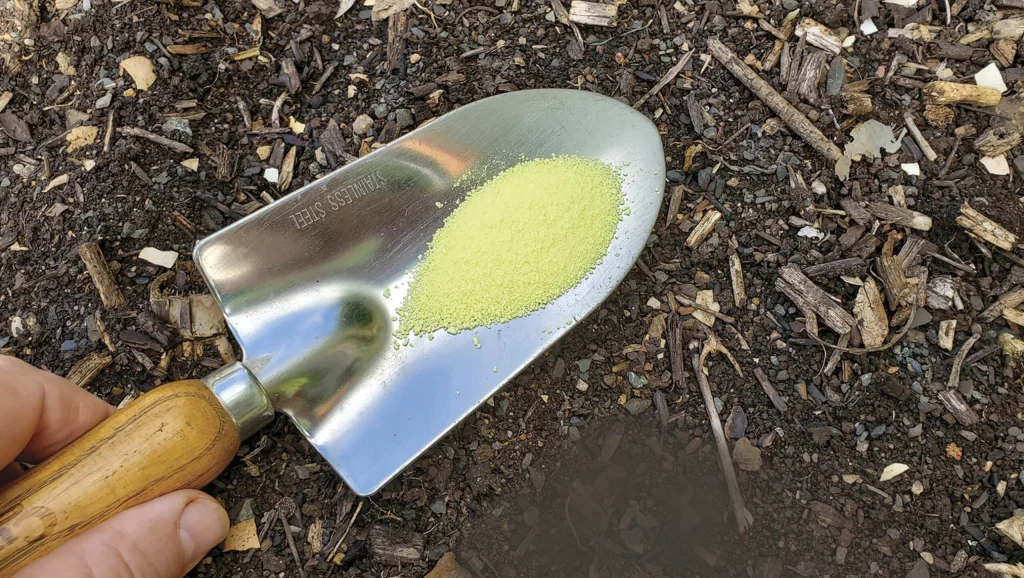
When soil tests alkaline — common in regions with limestone-based bedrock, or in soil near concrete foundations and walkways where lime leaches out over years — elemental sulfur is the standard correction. It works differently than lime: soil bacteria convert the sulfur to sulfuric acid over time, which then lowers pH. That microbial dependency is the single most important thing to understand about using it in fall.
Why Timing Matters More for Sulfur Than for Lime
Soil bacteria slow down significantly as soil temperature drops, and the conversion process essentially stalls once soil temperatures fall into the 50s Fahrenheit and below. This means an elemental sulfur application made in late autumn, right before soil cools for winter, may sit largely unreacted until the following spring when bacterial activity resumes. It isn’t wasted — it will still work once temperatures rise — but the fall timing advantage that applies so clearly to lime doesn’t apply the same way to sulfur.
For that reason, early autumn, while soil is still relatively warm, is a better window for sulfur application than late fall. In regions with mild winters where soil temperature doesn’t drop dramatically, this constraint matters less.
How Much to Apply
Like lime, sulfur rates depend on the current pH, the target pH, and soil texture. Sandy soils need less sulfur to achieve the same pH change than clay or organic-matter-rich soils, which resist the change more. As a general reference, lowering pH by about one point in sandy soil might take somewhere around 1–2 pounds of elemental sulfur per 100 square feet, with clay soils needing meaningfully more — but as with lime, a lab-calculated recommendation based on actual soil buffer capacity is far more reliable than a general rate.
Overapplying sulfur is a genuine risk. Because the acid-forming reaction happens gradually, it’s tempting to apply more than recommended when nothing seems to be happening after a few weeks. That’s a mistake — the lag is expected, not a sign of under-application — and adding more sulfur than the soil can safely process can crash the pH too low, harming soil biology and root health in the process. Splitting a large correction into two applications, one in fall and a follow-up the next year after retesting, is safer than trying to force the full correction in a single season.
Elemental Sulfur vs. Aluminum Sulfate
Garden centers often carry both elemental sulfur and aluminum sulfate for lowering pH, and they’re not interchangeable in how they work. Aluminum sulfate lowers pH immediately on contact with water, without needing bacterial conversion, which makes it appealing for a fast result. But it takes considerably more aluminum sulfate than elemental sulfur to achieve the same pH change, and aluminum can accumulate to levels that are toxic to plant roots if it’s overused, particularly in smaller garden beds treated repeatedly over several seasons. Elemental sulfur is generally the safer choice for garden and lawn use specifically because of its slower, more self-limiting reaction — even if that means less dramatic results before winter.
Soil Amendment Timing: Getting the Sequence Right
Timing isn’t just about the calendar month. It’s about matching the amendment to soil conditions at the time of application.
Soil should be moist but not waterlogged. Both lime and sulfur need some soil moisture to begin reacting, but applying either to soggy or standing water conditions risks the material washing away or pooling unevenly rather than being absorbed where it’s spread. If a fall has been unusually wet, waiting for a drier stretch produces a more even result than working around mud.
Soil shouldn’t be frozen. This sounds obvious, but in transitional weather, a light overnight frost can leave the surface hard even when the ground below isn’t fully frozen. Amendments applied to a frozen or crusted surface tend to sit on top rather than making the soil contact they need.
Avoid applying right before or during a fertilizing application, particularly with nitrogen fertilizers, since large pH shifts can temporarily affect how available that fertilizer’s nutrients are. Spacing lime or sulfur applications a few weeks apart from fertilizing, rather than doing both at once, gives each product a cleaner chance to work as intended.
Retest before assuming the job is done. Because both lime and sulfur react slowly, the fall application won’t show its full effect immediately. Retesting in spring, roughly 4–6 months after a fall application, gives a much more accurate picture of where the soil landed than judging by plant appearance alone. Plants can look fine for a season even with pH still somewhat off, especially established lawns and shrubs with deeper root systems that can access nutrients less-affected areas of soil.
Organic Garden pH Management
Gardeners managing an organic vegetable bed or ornamental garden have essentially the same lime-and-sulfur toolkit available, since both agricultural limestone and elemental sulfur are naturally mined or produced minerals accepted under most organic certification standards (specific standards should be checked against USDA organic guidelines or a certifying body if formal certification matters). The bigger consideration for organic gardeners is usually how ongoing soil-building practices interact with pH over time.
Compost has a mild buffering effect. Well-finished compost tends to nudge soil pH toward neutral over repeated applications, regardless of whether it started acidic or alkaline, because of its organic acid content and buffering capacity. This is generally beneficial, but it also means a garden bed with a long history of heavy compost use may show a more moderate pH than the surrounding, unamended soil, which is worth accounting for when interpreting a test result from a heavily composted bed versus one from an untouched area of yard.
Wood ash is not a substitute for agricultural lime, despite sometimes being recommended that way. Wood ash does raise pH, and it’s a byproduct many home gardeners have on hand from fireplaces or fire pits, but its effect is faster and less predictable than ground limestone, and it also adds potassium and trace salts that can build up with repeated use. It’s best used sparingly, tested for periodically, and never as the primary fall pH correction on a bed already close to target.
Peat moss and pine needle mulch lower pH gradually, which some gardeners use intentionally around acid-loving plants like blueberries instead of, or alongside, elemental sulfur. This is a slower, gentler approach better suited to maintaining an already-correct pH than fixing a significantly alkaline soil in one season.
Manure and certain organic fertilizers can shift pH slightly over time, generally toward acidic, depending on the source. This is rarely dramatic enough to require separate management, but it’s part of why organic garden beds with a long amendment history sometimes drift from their original pH even without anyone applying lime or sulfur directly.
Common Mistakes Worth Avoiding
Applying lime or sulfur without testing first. This is the single most common and most costly mistake. Guessing based on plant symptoms alone is unreliable, because nutrient deficiencies caused by high pH, low pH, poor drainage, and actual nutrient shortages in the soil can look similar aboveground.
Treating the whole yard as one soil. Lawns, vegetable beds, and ornamental beds with different amendment histories can have meaningfully different pH levels within the same property, especially near foundations, driveways, or areas that have received wood ash, manure, or lime in the past.
Expecting a fast result. Neither lime nor sulfur works overnight. A fall application is about starting the correction with enough lead time, not about seeing a dramatic change within a few weeks.
Overcorrecting after impatience sets in. Adding more product because nothing visibly changed is one of the more common ways a pH problem gets worse instead of better, particularly with sulfur, where the reaction is inherently slow.
Ignoring buffer pH in favor of the plain pH number. Two soils reading the same pH can need very different amendment rates depending on texture and organic matter, which is why the lime or sulfur requirement listed on a full lab report is more useful than the raw pH reading alone.
Handling Lime and Sulfur Safely
Both agricultural limestone and elemental sulfur are generally considered low-risk compared to many garden chemicals, but they’re not entirely without hazard, and basic precautions matter, especially with children or pets using the same yard.
Powdered or pelletized lime and sulfur can irritate eyes, skin, and the respiratory tract during application, particularly on a windy day or when spreading a fine powder rather than pelletized product. Gloves and eye protection are a reasonable precaution, and a dust mask is worth using with fine powdered forms. Always follow the specific product label, since formulations, concentrations, and safety guidance can vary between manufacturers.
Keep pets and children off treated areas until the product has been watered in and settled, generally at least until the area has had a chance to dry, and follow any re-entry guidance on the product label if one is listed. Store unused lime or sulfur in its original, labeled container, out of reach of children and pets, and away from areas prone to moisture, since both products can clump or degrade if they absorb humidity.
Avoid mixing lime and sulfur applications together or applying both to the same area in immediate succession, since they’re working toward opposite pH effects and combining them defeats the purpose of testing in the first place. If a property genuinely has different pH problems in different zones — acidic lawn, alkaline vegetable bed, for example — treat each zone separately with the appropriate product rather than blending approaches.
For large-scale corrections, such as an acreage lot, a failing lawn across a large property, or a soil pH problem tied to a known issue like nearby construction debris or old ash disposal, it’s reasonable to bring in a landscaping professional or agricultural lime spreading service rather than handling bulk quantities by hand. Professional spreaders can also achieve more even coverage across larger areas than a handheld or push spreader typically manages.
Frequently Asked Questions
Can I apply lime and plant a fall garden in the same week? It’s better to wait. Lime needs time and moisture to begin reacting, and disturbing freshly limed soil right before planting doesn’t give it the head start that makes fall application worthwhile in the first place. If a fall garden is already planned, applying lime a few weeks before planting, worked lightly into the surface without disturbing root zones, is a reasonable compromise.
Will one fall application permanently fix my soil pH? Not necessarily. Soil pH tends to drift back toward its natural tendency over years, especially in regions with naturally acidic or alkaline parent soil, ongoing fertilizer use, or heavy rainfall that leaches calcium from limed soil over time. Periodic retesting, roughly every 2–3 years for an established lawn or garden, is the more realistic approach than expecting a single application to be permanent.
Is it too late to correct pH if the ground is about to freeze? For lime, a late application still provides some benefit even if it doesn’t fully finish reacting before freezing, since the reaction resumes once soil thaws. For elemental sulfur, a late-fall application in a cold climate will likely sit mostly inactive until spring warms the soil enough for bacterial conversion to resume, so an early fall or even spring application may be more effective if the sulfur window has already passed.
My soil test says my pH is fine, but my plants still look unhealthy. What else could it be? A correct pH doesn’t rule out other problems — compacted soil, poor drainage, nutrient deficiencies unrelated to pH, or pest and disease pressure can all produce similar symptoms. A full lab test that includes nutrient levels, not just pH, is a better diagnostic starting point than assuming the issue is pH-related.
A Practical Next Step
If there’s one thing to take from all of this, it’s that a fall soil test should come before any bag of lime or sulfur, not after. The specific numbers on that report — pH, buffer pH, and ideally a full nutrient panel — determine which product is needed, how much, and how urgently, and skipping that step is what turns a straightforward correction into a multi-season guessing game. Once the results are in hand, fall gives lime more time to work than any other season, and gives sulfur a workable window as long as it goes down while soil is still warm enough for the soil bacteria driving the reaction to stay active.

About Syprose Kiche
Syprose Kiche is the creator and writer behind My Besuited Home, a practical home and garden website covering DIY projects, gardening, lawn care, landscaping, home improvement, and outdoor living. She focuses on turning everyday homeowner questions into clear, practical guides backed by careful research and useful real-world considerations.