
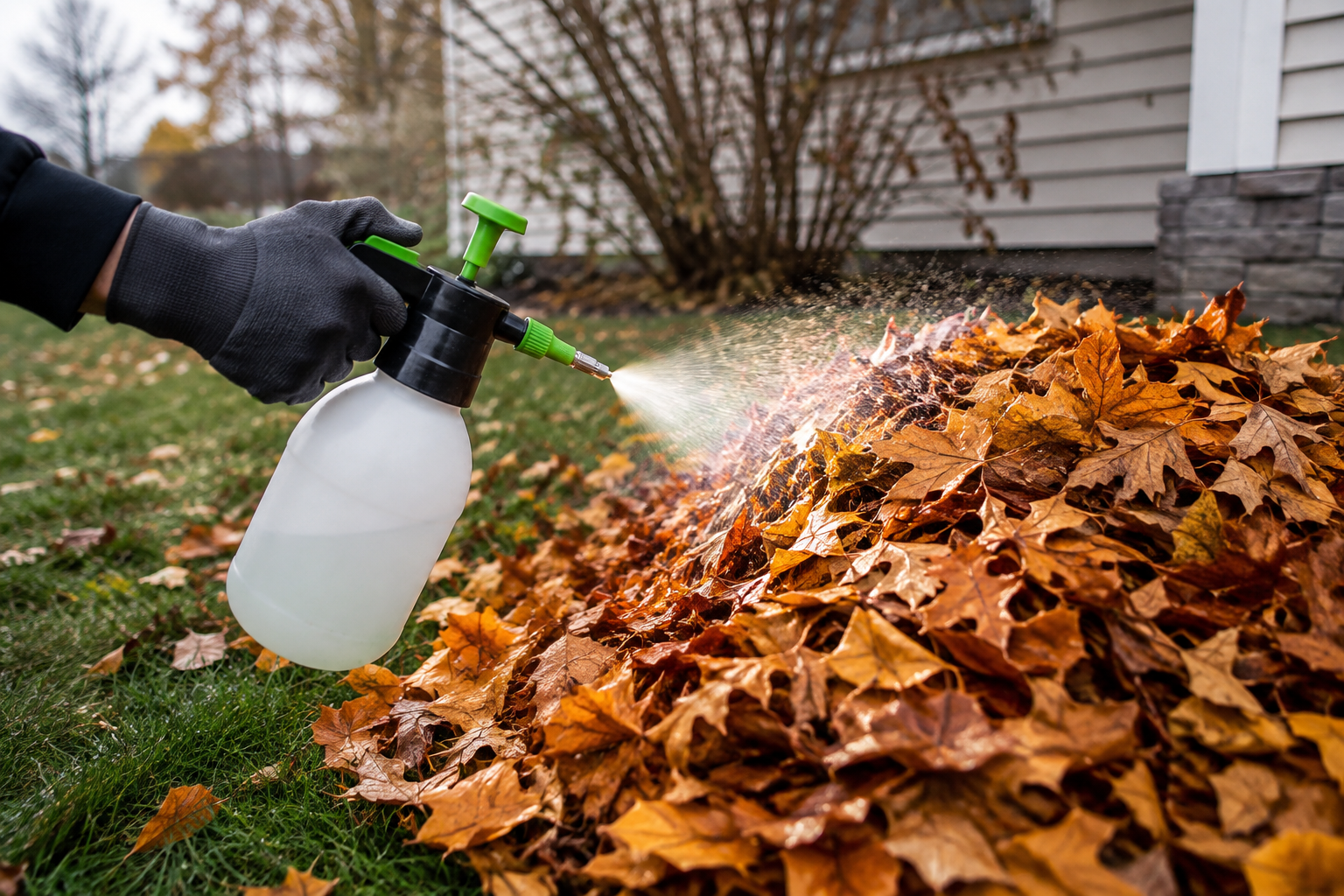
A pile of leaves against the fence line looks harmless. It’s shaded, it’s damp underneath, and it’s exactly the kind of spot where mice, chipmunks, and rabbits like to shelter — which means it’s also exactly the kind of spot where fleas and ticks like to wait. Most backyard flea and tick problems don’t start on the lawn itself. They start in the debris: the leaf litter under trees, the pile that’s been sitting since October, the mulch bed that never quite dries out.
Getting rid of them without reaching for a synthetic pesticide is possible, but it takes more than spraying something and hoping. It means understanding why the pile is attractive to these pests in the first place, treating the debris itself rather than just the grass around it, and being realistic about what natural methods can and can’t do.
Why Leaf Litter Is Prime Habitat, Not Just an Eyesore
Fleas and ticks aren’t drawn to leaves themselves. They’re drawn to what leaves provide: humidity, shade, and a steady stream of hosts.
Tick eggs and larvae need consistently moist conditions to survive — a dried-out lawn kills them off fairly quickly, but a shaded leaf pile holds moisture for days after rain, sometimes longer. Flea larvae have a similar requirement; they can’t survive in direct sun or on dry, exposed ground, so they migrate into whatever organic debris is nearby, feeding on the flea dirt (essentially, dried blood) that drops from adult fleas on passing animals.
Then there are the hosts. Leaf piles and brush at the edge of a yard are where small mammals live — chipmunks, voles, mice, and rabbits, all of which are common hosts for both flea and tick life stages. Deer will also pass through debris-heavy edges of a property, dropping off adult ticks as they brush past. Remove the shelter and food source for those animals, and you remove a large part of what’s sustaining the flea and tick population, not just the individual bugs.
This is why a yard can look “clean” — mowed lawn, no visible pests — and still have an active problem tucked into the leaf pile by the shed or the drift of leaves that collects under a hedge every fall.
Confirming You Actually Have a Problem There
Before treating anything, it’s worth confirming the leaf pile is the source rather than assuming.
For ticks, the standard method is a drag or flag test: pull a piece of light-colored fabric, like a flannel sheet or towel, across the leaf litter and surrounding grass, then check it every few feet. Ticks will latch onto the fabric as it passes. If you’re finding several per drag near the pile and few or none on the open lawn, the debris is your source.
For fleas, the classic check is the white sock test — walk through the suspected area wearing tall white socks and watch for small dark specks jumping onto the fabric. It’s not scientific, but it’s a fast way to confirm activity before investing time in treatment.
If pets are bringing fleas or ticks indoors, it’s also worth checking where they spend the most outdoor time. A dog that likes to nap under a shrub or dig near a leaf-covered fence line is a strong clue about where the infestation is concentrated.
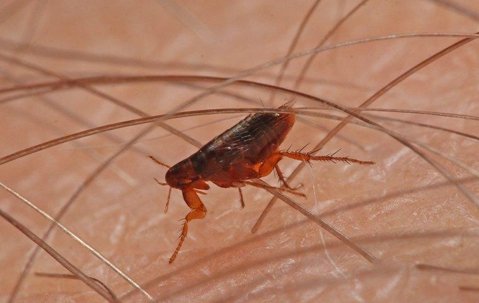
Start With the Debris and the Layout, Not the Spray Bottle
The most effective step in flea and tick control has nothing to do with essential oils or diatomaceous earth. It’s altering the yard so it stops being hospitable in the first place. Extension services and the CDC both frame this as creating a “tick-safe zone,” and the same principles reduce flea pressure too, since both pests depend on similar habitat and hosts.
- Remove or relocate leaf litter, especially near play areas and paths. Leaves that collect against a fence or under a hedge should either be composted (more on that below), bagged, or moved well away from where people and pets spend time. This alone eliminates a meaningful amount of tick habitat, since ticks depend on that moisture and cover to survive between meals.
- Keep the grass mowed and edges cleared. Ticks quest — climb onto grass or leaf stems and wait with their front legs extended — from a specific height range. Tall grass and unmown edges give them more places to do this at the height where they can grab onto a passing person or animal.
- Create a dry barrier between wooded or brushy areas and the lawn. If your leaf pile sits near a tree line or unmanaged brush, a strip of gravel or wood chips roughly three feet wide, placed at the border, is a widely used physical deterrent. Ticks avoid crossing hot, dry surfaces, so the barrier functions less like a chemical treatment and more like a moat.
- Keep play equipment, seating, and pet areas away from wooded edges and debris. Even a well-treated leaf pile is still leaf litter. Sun-exposed lawn a good distance from tree cover and brush is inherently less hospitable, regardless of what you spray on it.
None of this requires a product. It’s the reason pest-control professionals often say landscaping changes do more for long-term tick reduction than any single treatment — the treatment matters less if the habitat that sustains the pest is left intact.
Turning the Compost Pile Into Part of the Solution
If leaves are being composted rather than discarded, the way that pile is managed matters. A hot compost pile — one that’s actively turned and reaches internal temperatures in the range of 130–160°F — kills most insect eggs and larvae, including flea larvae, within the heated core. A cold, undisturbed leaf pile does the opposite: it stays cool at the edges, holds moisture, and essentially functions as a nursery.
If you’re managing a compost pile specifically to reduce pest pressure:
- Turn it every one to two weeks so the outer material cycles through the hot center.
- Keep the pile large enough to generate heat — a small, loose scattering of leaves won’t reach composting temperatures no matter how often it’s turned.
- Avoid letting the pile sit directly against a fence, shed wall, or foundation, since that’s exactly the kind of undisturbed, shaded edge that flea larvae and tick nymphs prefer even within an otherwise active pile.
If turning a compost pile regularly isn’t realistic, it’s better to bag and remove leaves from problem areas than to let them sit as an unmanaged cold pile.
What Diatomaceous Earth Actually Does — and Doesn’t Do
Diatomaceous earth (DE) is fossilized algae ground into a fine powder that damages the exoskeletons of insects like fleas, causing them to dehydrate. It’s a legitimate tool, but it has real limitations that get glossed over in a lot of advice online.
Use food-grade DE, not the filter-grade or pool-grade product, which is treated differently and isn’t intended for this kind of application. Apply it directly onto the leaf litter and the surrounding soil surface where fleas or tick larvae are suspected, working it lightly into the debris rather than just dusting the top.
The major limitation is moisture. DE works by physically abrading the pests, and it stops working once it gets wet — a heavy dew is often enough to reduce its effect for the day. In a shaded, damp leaf pile, that’s a significant problem, since the exact conditions that make the pile attractive to fleas and ticks are also the conditions that neutralize DE. It typically needs reapplication after rain or irrigation, which in a persistently damp pile can mean quite often.
It’s also non-selective. DE doesn’t distinguish between fleas and beneficial insects like ground beetles or pollinators that might visit the area, so it’s worth applying it in targeted spots rather than broadcasting it across garden beds. And when applying it dry, a basic dust mask is a reasonable precaution — the fine particles can irritate the lungs and eyes with repeated exposure, even though the product itself is low in toxicity.
Beneficial Nematodes for Flea Larvae Living in the Debris
Beneficial nematodes are microscopic roundworms that occur naturally in soil and actively hunt insect larvae. The species most relevant here is Steinernema carpocapsae, which parasitizes flea larvae and pupae (along with several other soil-dwelling pests) by entering the insect’s body and releasing a bacterium that kills it within a day or two. The nematode then reproduces inside the dead host before moving on to find more prey. If there’s nothing left to parasitize, the nematodes simply die off — they don’t persist indefinitely or become a nuisance themselves.
This makes them a genuinely useful tool for leaf litter specifically, since that’s where a large share of the flea life cycle — the larval and pupal stages — actually takes place, rather than on the animals themselves.
A few practical notes on using them effectively:
- Nematodes are sold live, usually shipped in a refrigerated package, and need to be applied close to the date you receive them. They’re mixed with water and applied with a sprayer or watering can.
- They require moist soil and moderate temperatures to survive and hunt effectively — most products specify a range roughly between 60°F and the mid-80s. Applying them to bone-dry leaf litter or during a heat wave reduces their effectiveness considerably, so watering the area lightly before and after application helps.
- Avoid applying them in direct, intense afternoon sun — early morning or evening application gives them a better chance to move into the soil and litter before UV exposure and heat become a factor.
- They won’t do anything for adult fleas already on a pet or adult ticks already questing in the grass; their impact is specifically on the immature stages developing in the debris and soil.
Nematodes are one of the few natural options with a reasonably clear mechanism and a body of research behind them, including work from agricultural researchers looking at their effect on tick populations, though results there have been more limited than with fleas specifically. They’re not a one-time fix — most guidance suggests treating debris-heavy areas at the start of the season and monitoring rather than assuming a single application solves the problem long-term.
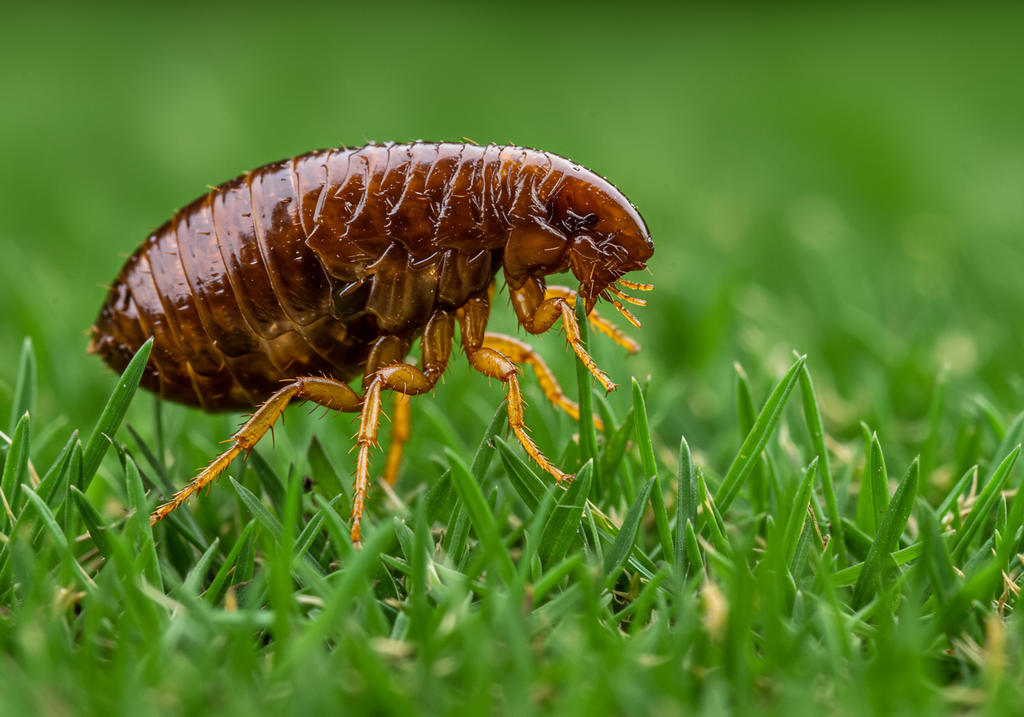
Cedar as a Deterrent, With Realistic Expectations
Cedar — as mulch, chips, or oil — is one of the most commonly recommended “natural” tick and flea deterrents, and there’s some legitimate basis for it: many insects, fleas included, tend to avoid areas with a strong cedar scent. Spreading cedar mulch or chips through the debris zone, particularly along the barrier between lawn and wooded edge, can help make that area less appealing.
Where it falls short is duration and coverage. Cedar’s effect fades as the volatile oils that make it aromatic dissipate, especially with sun and rain exposure, so mulch that’s been down for a season won’t offer the deterrent effect it did when it was fresh. It’s also a repellent, not a pesticide — it discourages some pests from settling in an area, but it won’t eliminate ticks or flea larvae that are already established in the debris underneath it. Cedar works best layered onto a yard that’s already had the underlying moisture, host-animal, and leaf-litter issues addressed, rather than as a standalone fix.
DIY Tick Spray for Lawn and Garden: What Actually Goes Into One
A homemade tick spray for the yard is typically built around a small number of essential oils diluted in water, sometimes with a surfactant like castile soap added to help the oil mix and adhere to leaves and grass rather than beading off. Commonly used oils include cedarwood, lemongrass, geraniol, and clove.
A general approach some gardeners use is diluting a modest number of drops of essential oil — often in the range of 10 to 20 — per 8 to 16 ounces of water, with a small amount of liquid castile soap as an emulsifier, applied with a spray bottle or pump sprayer to leaf litter, mulch beds, and the base of shrubs where ticks are most likely to be questing.
It’s worth being direct about the evidence here: homemade essential oil sprays have not been tested with anywhere near the rigor of EPA-registered acaricides, and independent research on their real-world efficacy against ticks in yard conditions is limited. Some essential oil compounds, like those found in cedarwood and certain geraniol-based products, have shown repellent or insecticidal activity against ticks in laboratory studies, which is part of why they’re commercially formulated into some EPA-registered natural pesticides. But a hand-mixed spray applied inconsistently in a backyard is a different thing from a tested, standardized formulation, and it’s reasonable to expect a DIY spray to reduce tick activity somewhat rather than eliminate it.
A few practical limitations to plan around:
- Essential oil sprays break down quickly in sunlight and rain, so they typically need reapplication every few days to remain effective, especially in a leaf pile that’s frequently damp.
- They work as a contact or area repellent, not a residual barrier — they don’t sink into the debris and keep working for weeks the way some synthetic products claim to.
- Concentration matters. Too little oil and the spray does very little; too much, and there’s a real risk of leaf burn on sensitive plants and unnecessary exposure for pets and beneficial insects in the treated area.
Essential Oils to Kill Fleas in Yard: Which Ones, and the Safety Concerns That Actually Matter
Several essential oils are commonly cited for outdoor flea control, but treating this as a simple ingredient list misses the more important issue, which is safety — particularly for cats.
Cats lack certain liver enzymes that let dogs and humans break down some of the compounds in essential oils, which means oils that are relatively low-risk around dogs can still be dangerous for cats through skin contact, grooming, or even inhalation in an enclosed space. Pennyroyal oil, sometimes mentioned in older natural pest-control advice, is a clear case to avoid entirely — it’s recognized as toxic to both pets and people even in small quantities, with real risk of liver damage. Tea tree oil carries similar warnings; veterinary and poison-control resources consistently flag it as one of the more dangerous oils for cats specifically, and it offers no clear advantage over other options for outdoor flea control that would justify the risk.
Oils that show up more often in yard-safe formulations — cedarwood, lemongrass, and to a lesser extent clove and geraniol — are generally considered lower risk when properly diluted and used outdoors rather than sprayed directly on animals, but “lower risk” isn’t the same as risk-free. Any concentrated essential oil should be:
- Diluted before use — never applied to leaf litter or soil at full strength.
- Applied when pets aren’t in the immediate area, and kept off surfaces pets walk on or lie on until the spray has dried.
- Avoided in enclosed or poorly ventilated spaces, such as a covered patio where a cat spends time.
- Kept away from ponds or water features, since some essential oil compounds are harmful to fish and aquatic invertebrates.
If there’s any uncertainty about a specific pet’s sensitivity — cats especially, but also smaller dog breeds or animals with existing liver or respiratory conditions — it’s worth checking with a veterinarian before using essential oils outdoors at all, rather than assuming “natural” means automatically safe.
How to Treat Yard Debris for Ticks and Fleas, Step by Step
Putting the above together, a reasonable sequence for treating a leaf-pile problem looks like this:
- Confirm the source with a drag test or white sock check so effort isn’t wasted treating the wrong area.
- Reduce the habitat first — remove or relocate leaf litter near high-traffic areas, mow and clear brush at the yard’s edges, and establish a gravel or wood-chip barrier if the debris sits near a tree line.
- Address moisture where possible. If the pile sits in a low spot that stays wet, consider whether drainage or relocation is realistic — dry conditions do more to suppress both pests than any spray.
- Apply beneficial nematodes to the leaf litter and surrounding soil if flea larvae are the main concern, watering before and after application and choosing a cooler part of the day.
- Use diatomaceous earth in targeted, drier spots where nematodes aren’t practical, reapplying after rain.
- Layer in cedar mulch or a diluted essential oil spray along the treated perimeter as a supplementary repellent, understanding it needs regular reapplication and isn’t a substitute for the steps above.
- Recheck with a drag test or sock test after one to two weeks, and repeat the treatment cycle rather than assuming a single round is sufficient.
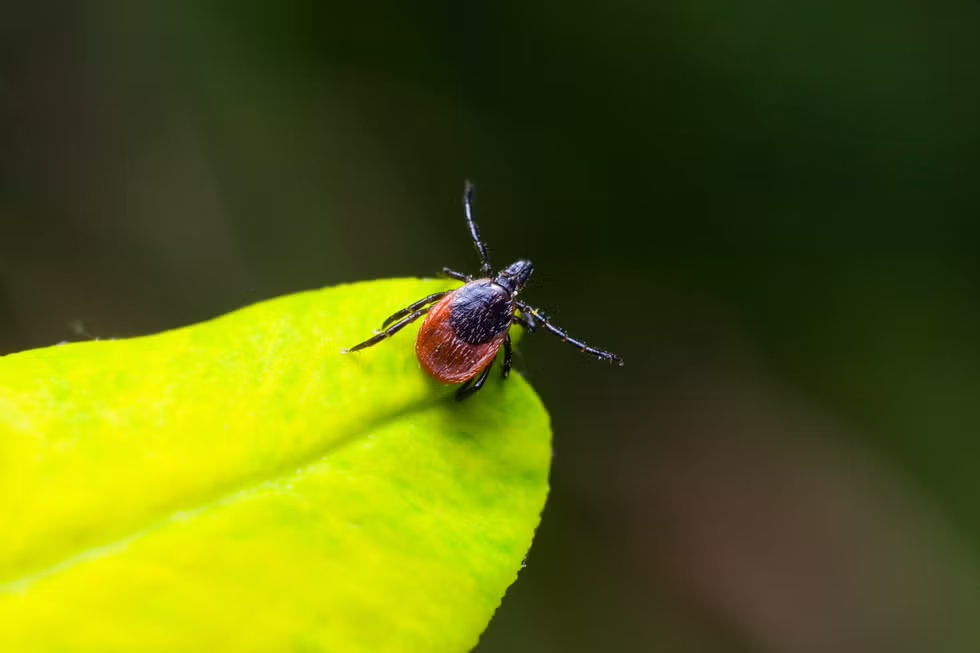
Mistakes That Quietly Undo Natural Treatment
A few patterns come up repeatedly with yard flea and tick control:
Treating the lawn but leaving the leaf pile alone. If the debris itself isn’t addressed — moved, composted properly, or treated directly — spraying the surrounding grass does little, since that’s not actually where the pest population is concentrated.
Applying diatomaceous earth or essential oil sprays once and expecting lasting results. Both break down or wash away relatively quickly. A single application in a persistently damp, shaded area is unlikely to hold.
Ignoring host animals. If chipmunks, mice, or rabbits have easy access to food sources (bird feeders, unsecured trash, brush piles) near the treated area, they’ll keep bringing new fleas and ticks in regardless of what’s been applied to the debris.
Mowing too short. Very short grass can actually stress lawns and create bare, compacted patches that hold moisture differently than a healthy lawn cut to a moderate height — the goal is removing tall grass and overgrowth, not scalping the yard.
Assuming “natural” treatments are as fast-acting as synthetic pesticides. Nematodes take time to establish and hunt; essential oils act as repellents more than as a kill-on-contact solution. Expecting overnight results with these methods usually leads to giving up on them prematurely.
When Natural Methods Aren’t Enough
Natural methods work best as an ongoing management approach, not a one-time cure, and they have real limits. In areas with high tick-borne disease risk — where Lyme disease, anaplasmosis, or other tick-borne illnesses are common in the local deer or rodent population — a combination approach that includes an EPA-registered acaricide applied by a licensed pest control professional, alongside the habitat changes described above, is often the more reliable option, particularly for the specific perimeter zone bordering woods or brush where tick density tends to be highest.
If a pet has already brought fleas indoors, outdoor yard treatment alone won’t resolve an active infestation — that also requires treating the pet directly (through a veterinarian-recommended product) and addressing indoor carpets, bedding, and furniture, since indoor flea populations don’t depend on the yard once established.
It’s also worth calling in a professional if repeated natural treatment over a full season hasn’t reduced activity, or if there’s a known case of tick-borne illness in a person or pet who spends time in the yard. At that point, the cost of continued exposure outweighs the appeal of a purely natural approach.
A Seasonal Approach
Fall is when most leaf piles form, but it’s also when treating them matters most, since untreated debris left over winter gives fleas and ticks a head start heading into spring. Removing or composting leaves promptly in autumn, rather than letting them sit against fences and sheds through the cold months, does more for the following year’s pest pressure than any spring treatment can undo on its own.
Spring is the better window for nematode application, since soil and air temperatures are more likely to sit in the moderate range nematodes need to survive and hunt, and it lines up with when flea and tick larvae are becoming active again after winter. Reapplying diatomaceous earth and essential oil treatments through the wetter parts of spring, when they wash away faster, is generally more work than doing the same in a drier summer stretch — so expect the maintenance schedule to shift with the season rather than staying constant year-round.
Frequently Asked Questions
Will raking and bagging leaves alone solve a flea or tick problem? It removes a major habitat source, which helps significantly, but it doesn’t address ticks or fleas already established in the surrounding soil, mulch beds, or brush. It’s a strong first step, not a complete solution on its own.
How long does it take to see results from beneficial nematodes? Most guidance suggests results become noticeable within one to two weeks as the current larval population is affected, though ongoing monitoring and possibly a repeat application later in the season is common, since nematodes don’t provide indefinite residual control the way some synthetic treatments claim to.
Is it safe to use a DIY essential oil spray around vegetable gardens? Diluted sprays applied to soil and mulch around ornamental beds are generally lower risk, but concentrated oils can affect beneficial insects like pollinators and natural predators of garden pests. Applying in the early morning or evening, when pollinator activity is lower, and avoiding direct application to flowering plants, reduces that risk somewhat.
Do I need to treat the whole yard, or just the leaf pile? Focus on the leaf litter, shaded edges, brush, and the border between lawn and any wooded area — that’s where the pest population is actually concentrated. Open, sunny, well-mowed lawn away from debris is far less hospitable to begin with and usually doesn’t need the same level of treatment.
The Practical Takeaway
The leaf pile isn’t a side issue in a flea and tick problem — for a lot of yards, it’s the actual source. Sprays and powders can help manage what’s already there, but they’re working against conditions (shade, moisture, host animals) that keep regenerating the problem unless the debris itself gets addressed. Start by moving or properly composting the leaf litter near high-traffic areas, then layer in nematodes, diatomaceous earth, or a diluted spray as ongoing maintenance rather than a single fix — and recheck with a drag test after a couple of weeks to see if it’s actually working before assuming it has.

About Syprose Kiche
Syprose Kiche is the creator and writer behind My Besuited Home, a practical home and garden website covering DIY projects, gardening, lawn care, landscaping, home improvement, and outdoor living. She focuses on turning everyday homeowner questions into clear, practical guides backed by careful research and useful real-world considerations.