
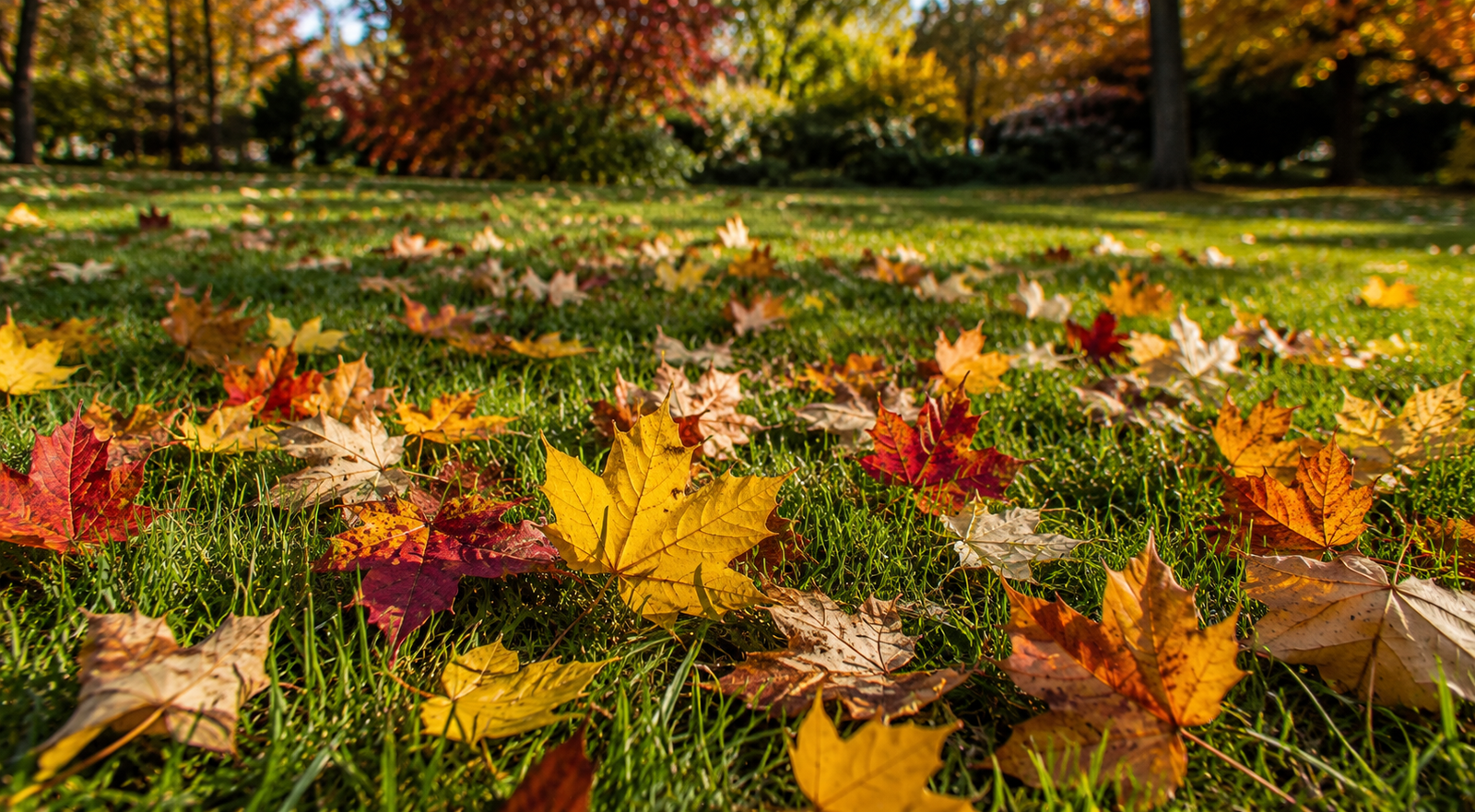
Every October, I watch the same scene play out on my street. My neighbor Gary fires up his leaf blower at 7 a.m. sharp, herding every single maple leaf into the gutter like it personally insulted him. Meanwhile, my lawn sits under a light dusting of leaves, and by spring, mine’s greener than his.
That contrast used to bug people. Now they just ask me what I’m doing differently.
For years I did exactly what Gary does. I treated every fallen leaf like an enemy that needed to be removed on sight. My weekends in October and November revolved entirely around raking, bagging, and hauling leaves to the curb. My back hurt, my Saturdays disappeared, and honestly, my lawn wasn’t any better off for all that effort.
If you’re standing in your yard right now, rake in hand, wondering whether you actually need to clear every leaf before winter, you’re asking the right question. The internet is full of conflicting answers. Some sites tell you leaves will “smother” your grass. Others swear by the “leave it all” method with zero explanation of when that backfires.
I’ve been mowing, raking, mulching, and occasionally ignoring my lawn for over a decade now, and I’ve made basically every mistake possible along the way. So let’s get into what actually happens when you leave leaves on your lawn, when it helps, when it hurts, and how to strike the right balance without spending your entire Saturday raking.
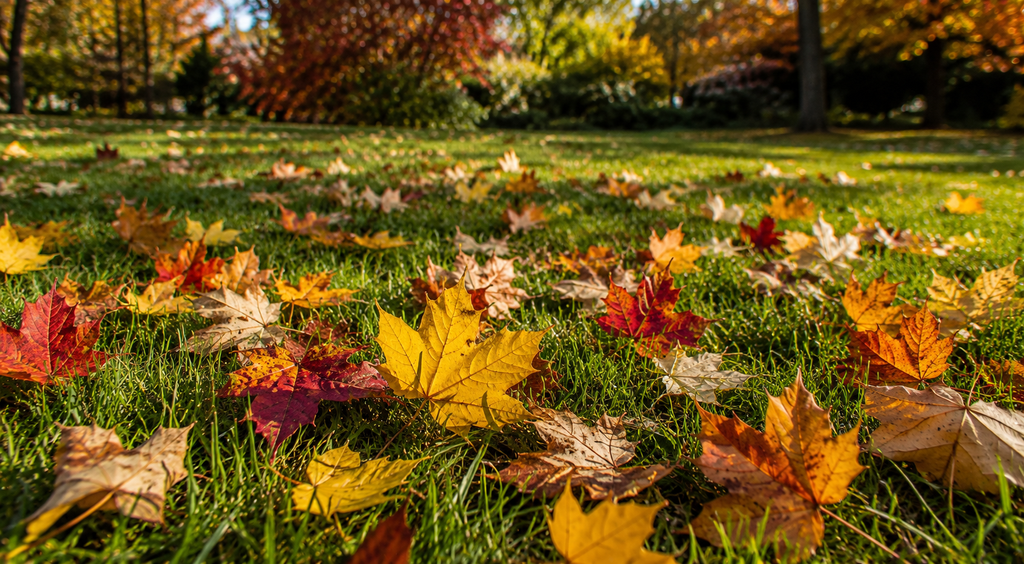
Why Fall Leaves Matter More Than You Think
Leaves aren’t just yard clutter. They’re a resource, whether you treat them that way or not.
A layer of leaves acts like a natural mulch. It breaks down slowly over winter and feeds nitrogen, potassium, and other nutrients back into your soil. Skip the bagged fertilizer next spring? Not entirely, but you’ll need less of it if you handle your leaves right.
Leaves also shelter overwintering pollinators. Native bees, moths, and butterflies use leaf litter as a winter home. Certain species, like luna moths and great spangled fritillary butterflies, lay their eggs in leaf piles specifically because they know that layer will protect the eggs from freezing temperatures. Clear every leaf off your property in November, and you’re clearing out next summer’s butterflies along with them.
There’s a soil biology piece here too that most articles skip over. As leaves decompose, they feed earthworms and the microbial life in your topsoil. More worm activity means better soil aeration, which means better water infiltration come spring rains. I’ve dug into sections of my yard where leaves broke down over winter and found noticeably more worm castings than in areas I kept bare all season. That’s not a coincidence.
There’s also a soil temperature benefit that matters more than people realize. A thin leaf layer acts like an insulating blanket, buffering the top inch or two of soil from sudden hard freezes and thaws. That freeze-thaw cycle is actually what causes a lot of winter root damage in cool-season grasses, especially in regions where temperatures swing above and below freezing repeatedly through November and December.
That said, leaves aren’t automatically good for your grass in every situation. This is where the actual answer gets more complicated than “leave them” or “rake them.”
The Real Answer: It Depends on the Layer Thickness
Here’s my rule of thumb after years of trial and error: a thin, scattered layer of leaves is good for your lawn. A thick, matted blanket is not.
Grass needs sunlight and airflow to keep photosynthesizing, even as it slows down for winter. If leaves pile up more than an inch or two deep and stay wet, they block light, trap moisture against the grass blades, and create the perfect environment for fungal diseases like snow mold. I found this out the hard way one wet November when I let a soggy carpet of oak leaves sit on my back lawn for three weeks. Come spring, I had dead, matted patches that took most of the summer to recover.
So the real question isn’t “leaves or no leaves.” It’s “how much, and what kind.”
The Simple Visibility Test
I use one test to decide whether a section of lawn needs attention: can I still see grass blades poking through?
If you can see about 50% grass through the leaf layer, leave it alone. The leaves will break down on their own, and you’ll get all the soil benefits without smothering anything.
If the leaves have formed a solid mat where you can’t see any grass at all, it’s time to mulch or remove.
This test takes about ten seconds per section of lawn, and it’s saved me hours of unnecessary raking over the years.
I’d also add that not all leaves behave the same way once they hit the ground. Small, thin leaves like birch or honey locust break down fast and rarely cause matting problems even in a decent pile. Big, broad leaves like sycamore, magnolia, or oak tend to overlap and interlock, forming that solid mat much faster. If your yard is mostly oak trees like mine, you’ll want to run the visibility test more often than someone with a yard full of birch trees, because oak leaves go from “fine, scattered layer” to “solid mat” in a shockingly short window, sometimes just a week of steady leaf drop.
Mulching Leaves Instead of Raking Them
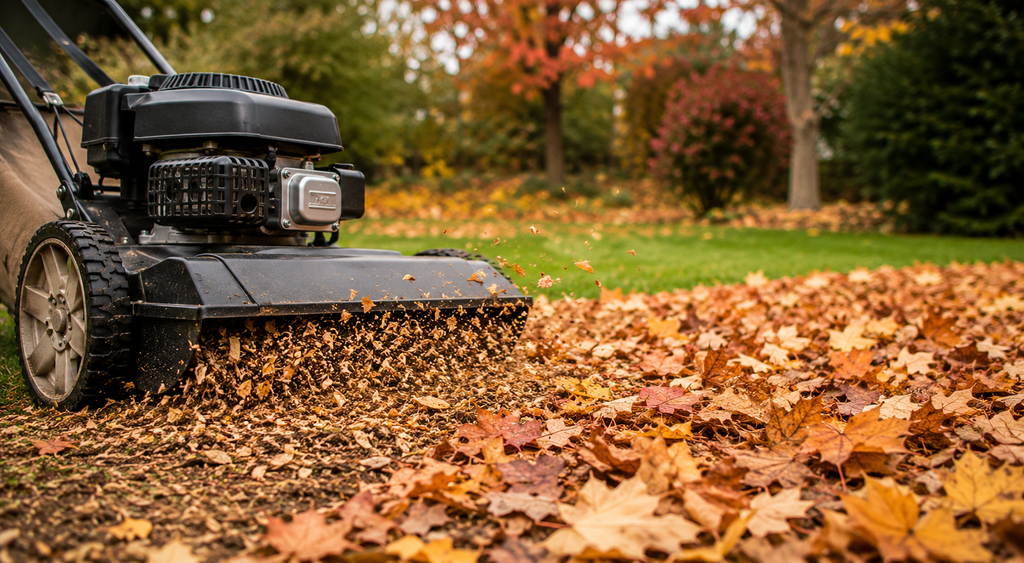
If your leaf layer fails the visibility test, don’t automatically reach for the rake. Mulching is usually the better move, and it’s less physical work in the long run.
- Run your mower over the leaves with the mulching blade attachment (most modern mowers have this built in already). Set the deck height a bit higher than usual so you’re chopping, not scalping.
- Go over the area two or three times if the leaf coverage is heavy. You want the pieces down to dime-size or smaller.
- Leave the shredded bits in place. They’ll settle down into the grass and start decomposing within a few weeks, well before the ground freezes solid in most climates.
- Check back after a week to make sure nothing has clumped together again, especially in shaded areas that stay damp longer.
Mulched leaf bits break down roughly four times faster than whole leaves because you’ve increased the surface area exposed to moisture and soil microbes. That’s the whole trick. Whole leaves take a full season or more to decompose; shredded ones are mostly gone before your lawn even wakes up from dormancy.
I switched to this method about seven years ago after getting tired of bagging leaves every weekend for a month straight, and it cut my fall yard work time by more than half.
One thing I’d tell anyone trying this for the first time: don’t skimp on mower maintenance before leaf season hits. A dull mower blade shreds leaves poorly, tearing them into uneven, stringy pieces instead of clean confetti-sized bits. I sharpen my blade right before the first big leaf drop every year, and the difference in mulch quality is noticeable. Dull blades also put more strain on your mower’s engine when you’re chopping through a thick leaf layer, which isn’t great for the machine’s long-term health either.
Your mowing pattern matters too. I go over heavy leaf areas in a crosshatch pattern, once north to south and once east to west, rather than just doing extra passes in the same direction. That crosshatch approach chops the leaf pieces down more evenly and keeps you from missing strips of thicker leaf coverage along the mower’s edge.
When Raking Still Makes Sense
Mulching isn’t always the right call. There are a few situations where I still grab the rake:
- Newly seeded lawns. If you overseeded in September and the grass hasn’t fully established, a heavy layer of chopped leaves can still smother young seedlings. Rake or blow those areas clear.
- Extremely wet climates. If you live somewhere that gets a lot of fall rain and your leaves never really dry out between mowing sessions, mulching won’t chop them as finely, and you’ll end up with soggy clumps instead of fine mulch.
- Massive leaf drop from big trees. One or two mature oaks can drop more leaf volume than your mower can realistically process in a single pass. In that case, rake off the excess first, then mulch what’s left.
What to Do With Leaves You Do Remove
If you end up raking or bagging a portion of your leaves, don’t just haul them to the curb for pickup unless you have zero other options. I’ve found that curbside leaf collection is a total waste of a free resource, even though it’s the path of least resistance for most homeowners.
Here’s what I do instead:
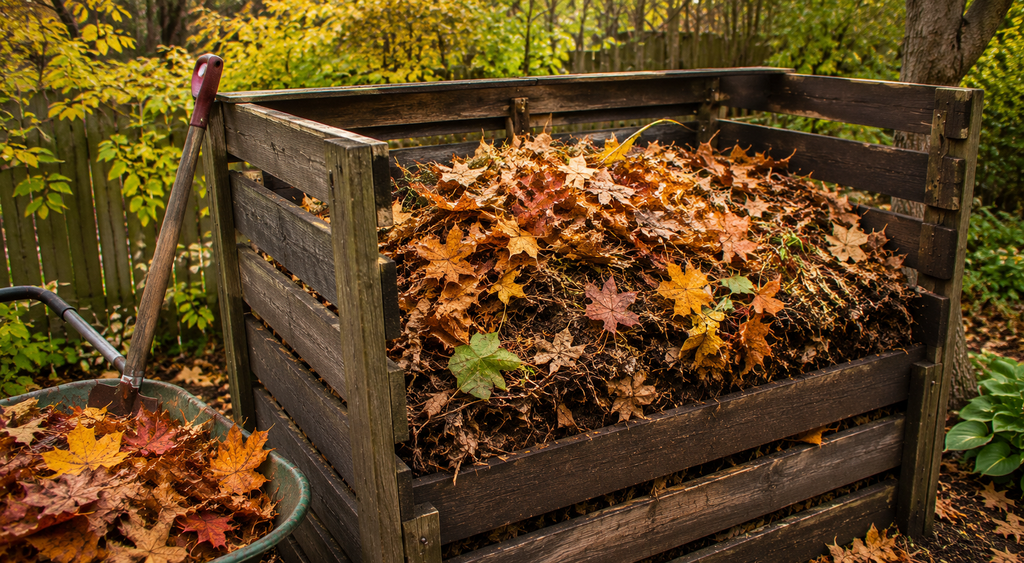
- Compost them. Leaves are “brown material” in compost terms, high in carbon. Mix them with grass clippings or kitchen scraps (your “green material”) at roughly a 3-to-1 ratio of brown to green, and you’ll have usable compost by next summer.
- Use them as garden bed mulch. A three to four inch layer over your perennial beds insulates plant roots through winter and suppresses weeds come spring. This is genuinely one of the best free mulches available, and garden centers charge good money for bagged mulch that does the same job.
- Build a leaf mold pile. If you’ve got the space, pile leaves in a corner of your yard, wet them down, and let them sit for a year or two. What you get is leaf mold, a crumbly, dark soil amendment that improves water retention better than almost anything you can buy in a bag.
- Bonus option: line your vegetable garden pathways. A thick layer of leaves between garden rows suppresses weeds all winter and breaks down into the soil by spring planting time. Cheap, effective, and it keeps your boots out of the mud.
How Much Nitrogen and Nutrients Are We Actually Talking About?
I get asked this a lot, so let’s put some real numbers behind the “leaves are free fertilizer” claim, because I don’t want you to think mulching leaves replaces every bag of fertilizer you’d normally buy.
A season’s worth of mulched leaves from a moderately treed yard typically returns somewhere in the ballpark of half a pound to a pound of nitrogen per thousand square feet over the course of the following year, along with meaningful amounts of potassium and trace minerals like calcium and magnesium. That’s not nothing. Depending on your existing soil quality, it can cover a decent chunk of one fertilizer application, especially the fall feeding that most lawn care schedules recommend anyway.
What it won’t do is replace a full season fertility program if you’ve got poor, compacted, or nutrient-stripped soil to begin with. Think of mulched leaves as a supplement to your existing lawn care routine, not a total replacement for it. I still put down a slow-release fall fertilizer on my lawn every year. The leaves just mean I can use less of it and spend less money doing so.
Real Talk: Where This Approach Falls Apart
I want to be straight with you about the downsides, because plenty of leaf-loving lawn advice online skips this part entirely.
- It doesn’t work great on Bermuda or warm-season grasses. These grass types go fully dormant and brown in fall anyway, so a leaf layer left too long can genuinely slow spring green-up more than it would on cool-season grasses like fescue or Kentucky bluegrass. If you’ve got a warm-season lawn, lean toward removing or mulching more aggressively.
- Mulching mowers struggle with wet leaves. If you wait for a dry rain-free stretch and it doesn’t come, you’re stuck either mulching soggy, clumpy leaves that don’t chop well, or waiting and letting the layer get too thick. There’s no perfect fix here besides checking your forecast and timing mowing sessions around dry days when you can.
- HOA rules sometimes don’t care about your soil science. I’ve talked to readers whose homeowners associations have strict rules about visible leaf litter, regardless of whether it’s “good for the lawn.” If that’s your situation, you may not have the luxury of choosing the ideal method. Check your HOA guidelines before you commit to any leave-it-alone approach.
- This isn’t a one-and-done task. Leaves keep falling for weeks, sometimes over a month depending on your region and tree types. You’ll likely need to mulch or check your lawn multiple times through October and November, not just once. If you’re hoping for a single afternoon fix, this method won’t deliver that.
- Ticks and rodents can use thick leaf litter too. It’s not just butterflies benefiting from leaf piles. If you live in a region with tick concerns, especially near wooded areas, letting leaves sit too long right next to your house foundation isn’t a great idea. Keep leaf piles and mulched zones at least a few feet from your home’s perimeter and any areas where kids or pets play.
Quick Side Note: What About Grass Clippings Mixed In?
A lot of people ask me whether they should be worried about mixing fall grass clippings in with mulched leaves. Short answer: don’t worry about it. Grass clippings add nitrogen to the mix, which actually speeds up decomposition of the carbon-heavy leaves. It’s a natural balance, not a problem to solve.
Timing Your Fall Leaf Strategy
Getting the timing right matters almost as much as the method you choose.
Start checking your lawn weekly once trees begin dropping leaves in earnest, usually mid-to-late September in northern climates and into November further south. Don’t wait for “peak leaf season” to do your first mow-and-mulch pass. Catching leaves early, when they’re a thin scattered layer, means less work each time and no risk of a smothering mat forming while you’re not paying attention.
Keep mulching or checking until your lawn stops actively growing for the season, which you’ll notice when mowing frequency naturally drops off. In most regions, that’s sometime in November, though your exact window depends on your local climate and grass type.
One more thing I’ll mention because nobody else seems to: rake your final leaf pass before the first hard freeze if you can manage it. Leaves trapped under snow and ice all winter create way worse matting and mold problems than leaves that got mulched or cleared before the ground froze solid.
I keep a simple checklist taped inside my garage door every fall, and it’s saved me from forgetting steps more than once:
- Early season (first leaves dropping): Start weekly visibility checks. Sharpen the mower blade if you haven’t already.
- Mid season (peak leaf drop): Mulch every one to two weeks depending on volume. Rake newly seeded areas separately.
- Late season (leaf drop slowing): Do a final thorough mulch or rake pass before the ground freezes.
- Post-freeze: Leave everything alone until spring green-up. Resist the urge to disturb dormant grass.
That fourth step trips people up the most. Once the ground freezes and your grass goes fully dormant, walking on it repeatedly or raking at it does more harm than good. Wait it out.
Parting Wisdom
Your lawn isn’t a museum piece that needs to look perfectly manicured every single week of the year. A few fallen leaves scattered across the grass aren’t a crisis, they’re free fertilizer and a winter home for the pollinators you’ll want back come spring. The real skill isn’t choosing between “rake everything” or “ignore everything.” It’s learning to read your own yard, checking that visibility test, and adjusting based on your grass type, your climate, and how much leaf volume you’re actually dealing with.
I’ve gone from a guy who bagged every single leaf for pickup to someone who barely rakes at all anymore, and my lawn has never looked better going into spring.
So, what’s your current leaf strategy? Are you Team Rake-It-All, Team Leave-It-Be, or somewhere in the middle like me? Drop your approach in the comments below. I’d genuinely like to know what’s working (or not working) in your yard this fall.

About Syprose Kiche
Syprose Kiche is the creator and writer behind My Besuited Home, a practical home and garden website covering DIY projects, gardening, lawn care, landscaping, home improvement, and outdoor living. She focuses on turning everyday homeowner questions into clear, practical guides backed by careful research and useful real-world considerations.