
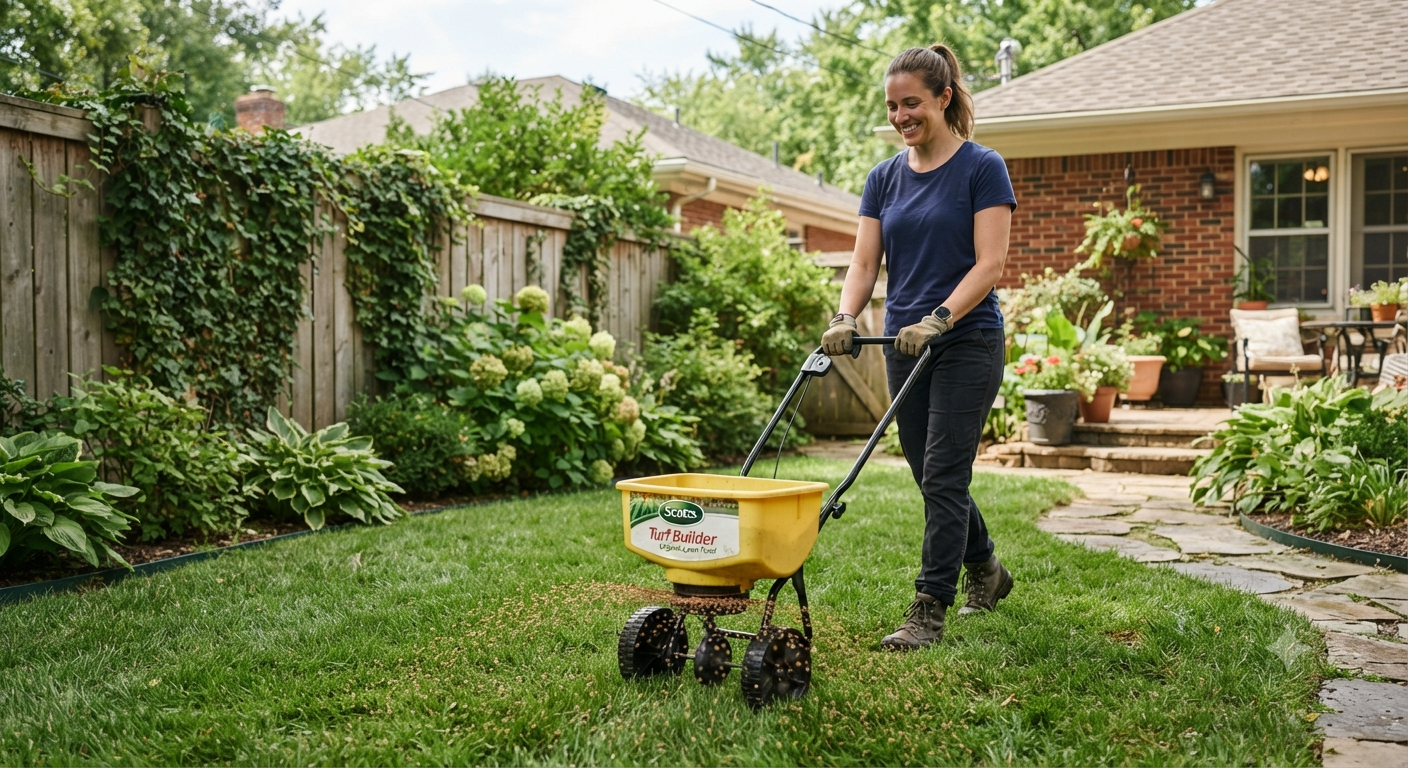
If you’ve got a patch of lawn under a big oak or a cluster of maples, you already know the frustration. You feed it. You water it. You baby it all summer. And by October, it still looks like a bad comb-over — thin, patchy, and embarrassed to be seen from the street.
Here’s the thing nobody tells you at the garden center: most fertilizers are formulated for full-sun grass. Shade grass has a completely different metabolism. It’s not lazy. It’s just working with less light, less airflow, and roots that are competing with tree roots for every scrap of water and nutrients. Dump a bag of standard 20-0-0 synthetic fertilizer on that lawn and you’ll get a quick flush of weak, floppy growth that flops over, gets moldy, and dies back even worse than before.
I’ve spent more falls than I’d like to admit troubleshooting shade lawns for neighbors who swore their grass was cursed. It wasn’t cursed. It was starving for the right kind of food, applied at the right time, in the right form. Fall is the season that makes or breaks a shade lawn, because that’s when shade grasses like fine fescue and rough bluegrass are quietly building root mass for next year. Feed them right now, organically, and you’ll see the payoff in spring.
There’s also a timing problem that trips up almost everyone. Shade lawns green up later in spring and hang onto color longer into fall than sunny lawns, because they’re not stressed by heat and drought the same way. That longer active window is exactly why fall feeding matters so much for shade grass. You’re not just prepping for winter dormancy — you’re feeding a lawn that’s still quietly growing roots while the rest of the yard is winding down.
Below are the seven organic fertilizers I actually trust for heavy shade lawns, plus what to skip, what to expect, and where people usually go wrong.
Why Shade Lawns Need a Different Fall Fertilizer Strategy
Grass growing under a tree canopy photosynthesizes less efficiently than grass in full sun. That means it needs a gentler, slower nutrient release instead of a hot jolt of nitrogen that pushes leaf growth it can’t support.
Organic fertilizers are a natural fit here for three reasons:
- They release nutrients slowly through microbial breakdown, matching the slower metabolic pace of shade grass.
- They build soil structure over time, which matters a lot under trees where soil tends to be compacted and root-bound.
- They’re far more forgiving if you apply a little too much. Synthetic fertilizers can burn shade grass badly because the blades are already thinner and more delicate.
One more thing worth knowing: shade lawns typically need less nitrogen overall than sunny lawns, but they’re often deficient in potassium, which helps grass tolerate stress and disease. That’s why I look for fall shade blends with a bit more potassium relative to nitrogen — something like a 3-1-2 or 4-1-3 ratio, roughly speaking.
1. Milorganite Organic Nitrogen Fertilizer
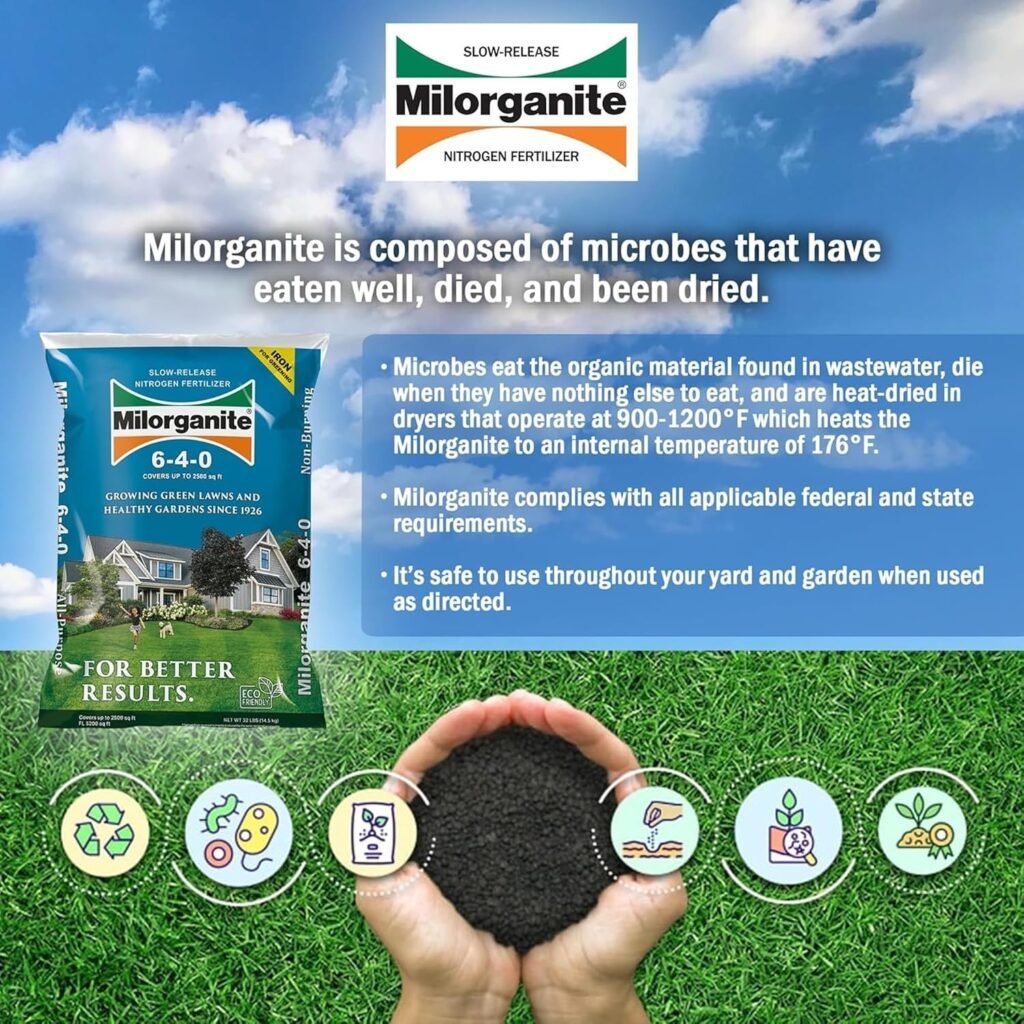
Milorganite is the fertilizer I recommend most often to people dealing with heavy shade, and I’ll be honest, I was skeptical the first time I used it. It’s made from heat-dried microbes that treat municipal wastewater, which sounds strange until you realize it’s been sold since 1926 and turfgrass researchers still rate it highly.
What makes it good for shade is the slow-release nitrogen. It won’t push a burst of growth your grass can’t sustain in low light. Instead, you get gradual greening over several weeks without the mushy, floppy blades you get from fast synthetic feeds.
It also contains iron, which helps deepen the green color without forcing extra leaf growth — exactly what a shade lawn wants going into fall. I apply it in early fall and again about six weeks later for the best root-building results.
The only real downside is the smell right after application. It fades within a day or two, but if you’ve got a barbecue planned, maybe wait until after the party.
I also like Milorganite for shade lawns because it’s essentially non-burning, even if you overlap your spreader passes a little, which happens constantly on odd-shaped shade patches under low branches. You’re not going to scorch anything by being sloppy with your spreader lines the way you might with a synthetic 30-0-3. That forgiveness matters a lot when you’re maneuvering a push spreader around root flare and low-hanging limbs instead of working in a wide-open sunny yard.
Coverage-wise, one 32-pound bag handles about 2,500 square feet, so for most residential shade patches you’re looking at one or two bags per application. It’s sold at nearly every big-box hardware store and garden center, so restocking mid-season is never a hassle.
2. Espoma Organic Fall Winterizer
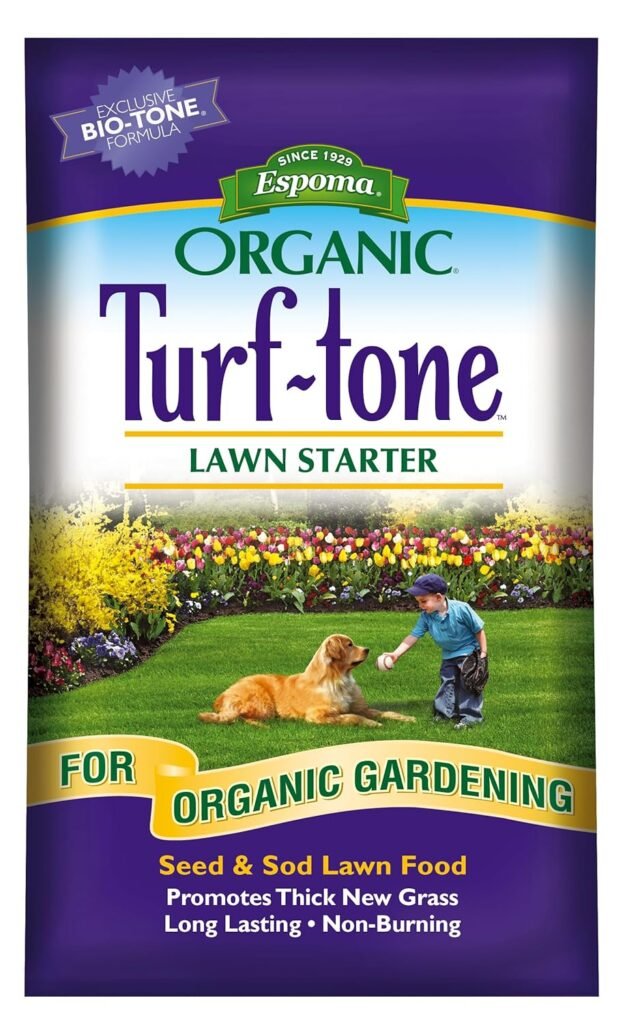
Espoma’s fall-specific blend is built around the idea that fall feeding is about roots, not leaves, and that’s exactly the mindset shade lawns need. It’s got a lower nitrogen number and a higher potassium number than their spring formula, which lines up with what I mentioned earlier about shade grass wanting more potassium.
It’s also loaded with Bio-tone microbes, which help break down thatch and improve soil biology under trees where compaction is often a problem. I’ve used this on lawns with heavy clay soil under mature trees and noticed the soil texture improve noticeably by the following spring.
Application is simple with a standard broadcast spreader, and it’s safe for pets once watered in, which matters if you’ve got a dog that treats the shady side yard as their personal bathroom.
My one gripe is the price per bag compared to bulk options. It’s not the cheapest, but for a smaller shade area, the cost difference is minor.
Espoma also lists this specific blend as safe for organic gardening certification, which won’t matter to most homeowners but tells you something about how clean the ingredient sourcing is. If you’ve got a vegetable garden bordering your shady side yard and you’re worried about runoff affecting edible plants, that’s a real point in its favor.
I’ll add that this is the fertilizer I reach for on lawns that back up to wooded areas, where you’re dealing with acidic soil from decades of leaf litter breaking down. The Bio-tone microbes help buffer that acidity over time better than a straight synthetic feed ever will.
3. Jonathan Green Organic Lawn Food
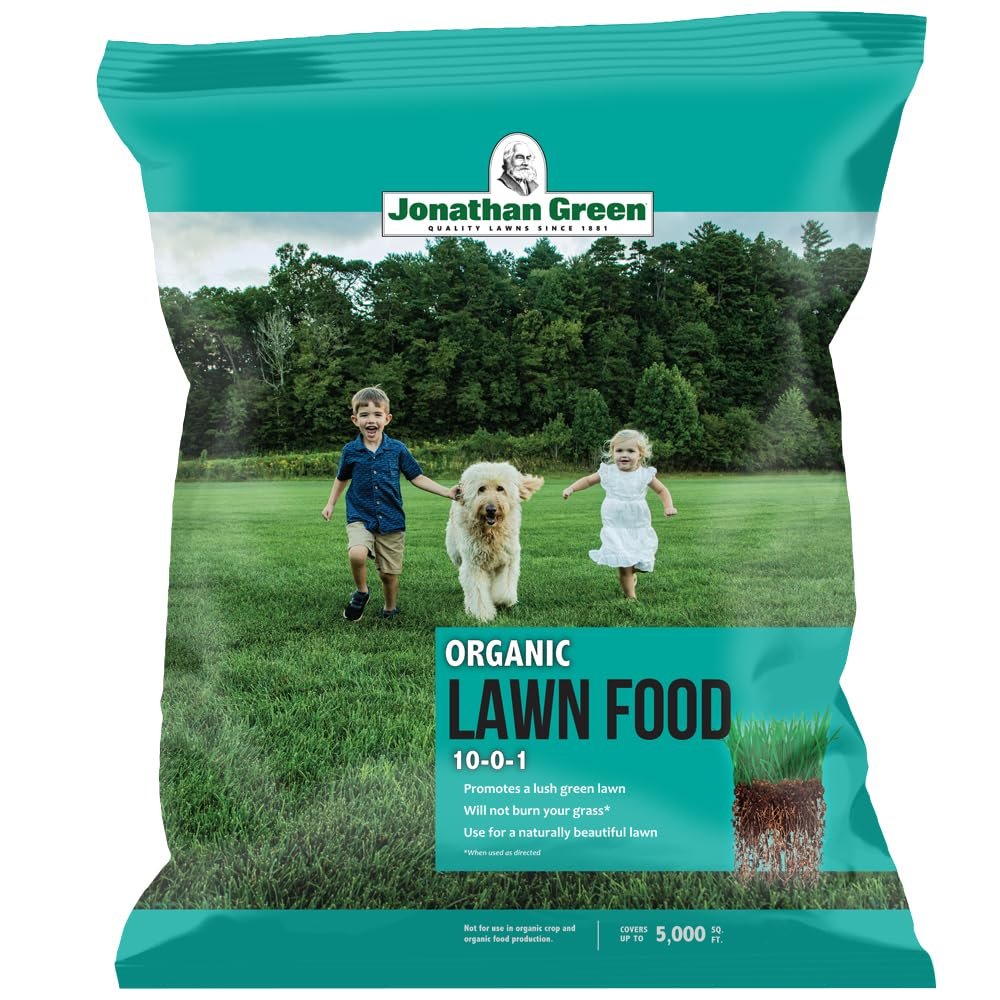
This one surprised me. I expected a generic “organic-ish” product, but Jonathan Green’s formula actually performs well specifically on fescue and bluegrass, the two grass types that dominate shady lawns in most climates.
The nitrogen source is slow-release and plant-based, so there’s no risk of the chemical burn you sometimes get near tree roots where soil moisture is inconsistent. I like that it’s formulated without any weed-and-feed additives, because most weed-and-feed products aren’t meant for shade areas anyway, where crabgrass and other sun-loving weeds rarely thrive.
It also breaks down into organic matter that improves soil over multiple seasons, which is the whole point of feeding organically instead of chasing quick green with synthetics.
If your shade lawn also deals with foot traffic, this is a solid choice, since the improved root system it encourages helps grass bounce back from wear better than a shallow-rooted, synthetically-fed lawn.
I’ve had good results pairing this fertilizer with overseeding, since the granules don’t smother young grass seedlings the way some thicker, wetter organic products can. If you’re planning to overseed thin patches under your trees this fall anyway — and honestly, you probably should be — this is one of the few fertilizers I’d apply in the same season as new seed without much worry.
It’s a little pricier than the mega-brand options, but the bag sizes are generous enough that the cost per application ends up being reasonable for a mid-size shade lawn.
4. Scotts Natural Lawn Food
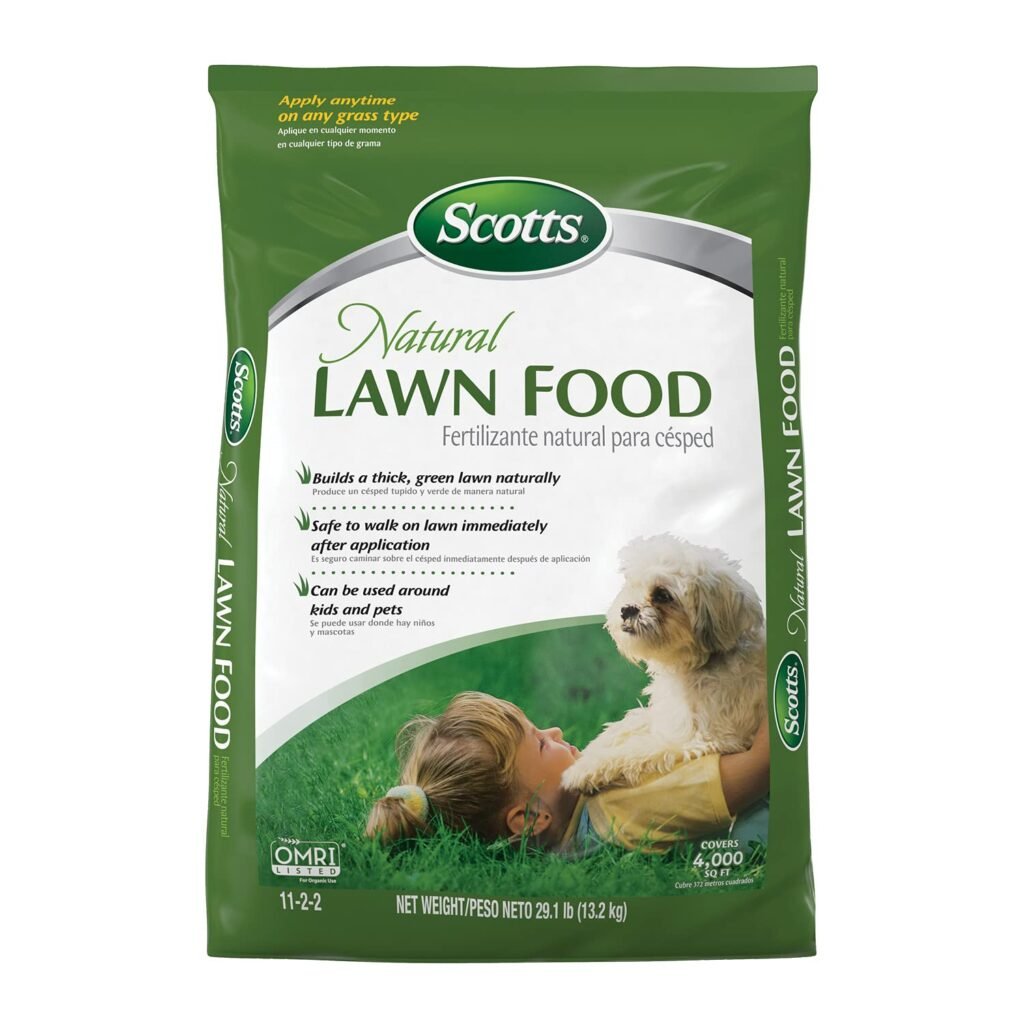
Scotts gets a bad reputation among organic purists because of their synthetic product lines, but their natural lawn food line is a genuinely different formula, made primarily from feather meal. Feather meal is a slow-release nitrogen source that shade grass handles well without the flush-and-crash cycle.
I like this one for beginners specifically because it’s widely available and the spreader settings are printed right on the bag for common spreader brands, so there’s less guesswork than with some boutique organic products.
It won’t build soil biology as aggressively as something like Espoma’s microbe-rich formula, but it’s a dependable, no-drama option if you just want steady, even feeding without babysitting your lawn calendar.
One caution: it’s not labeled for immediate pet safety the same way some other organic brands are, so water it in thoroughly and keep pets off until it’s dry.
The feather meal base means this fertilizer takes a bit longer to show visible results than some of the microbe-heavy competitors, sometimes three to four weeks before you notice a real color change. That’s not a flaw, just a timing quirk worth planning around if you’re feeding in October and hoping to see improvement before the ground freezes.
I’ll also say, of everything on this list, this is the one I’d hand to a first-time homeowner who just wants a straightforward bag with clear instructions and doesn’t want to research microbial soil biology on a Tuesday night. Sometimes simple and dependable wins.
5. Dr. Earth Super Natural Lawn Fertilizer
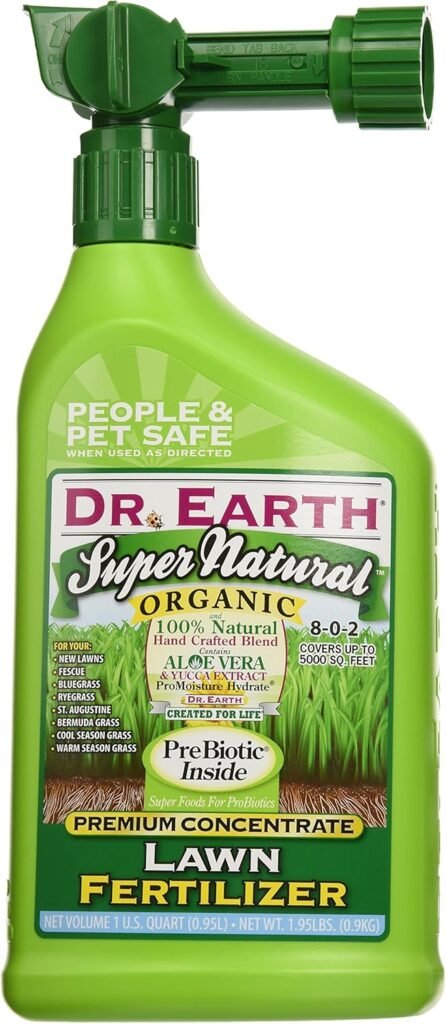
Dr. Earth leans hard into the “probiotic” angle, packing their fertilizer with beneficial soil microbes and mycorrhizae, which are fungi that form partnerships with grass roots and help them absorb water and nutrients more efficiently.
For shade lawns specifically, this matters because root competition with trees is often the real limiting factor, not sunlight alone. Healthier, more efficient roots mean your grass punches above its weight even with less light to work with.
It’s also completely non-GMO and free of animal byproducts, which some people care about for ethical reasons and others care about because it tends to attract fewer digging animals to the yard.
The texture is a bit dusty compared to pelletized competitors, so apply it on a calm day. Wind will carry the fine particles right off your target area and onto your driveway, which is annoying and wasteful.
I noticed the biggest difference from this fertilizer on lawns with really heavy root competition, like grass growing within ten feet of a mature maple trunk. Maples are notorious for aggressive, shallow root systems that outcompete grass for everything. The mycorrhizal boost seems to give the grass roots a fighting chance in that kind of environment, where a plain nitrogen feed just gets grabbed up by the tree before the grass benefits much.
It’s a bit more expensive per bag than the mainstream brands, and I consider that a fair trade given how targeted the benefit is for genuinely difficult, root-choked shade areas.
6. Safer Brand Lawn Restore
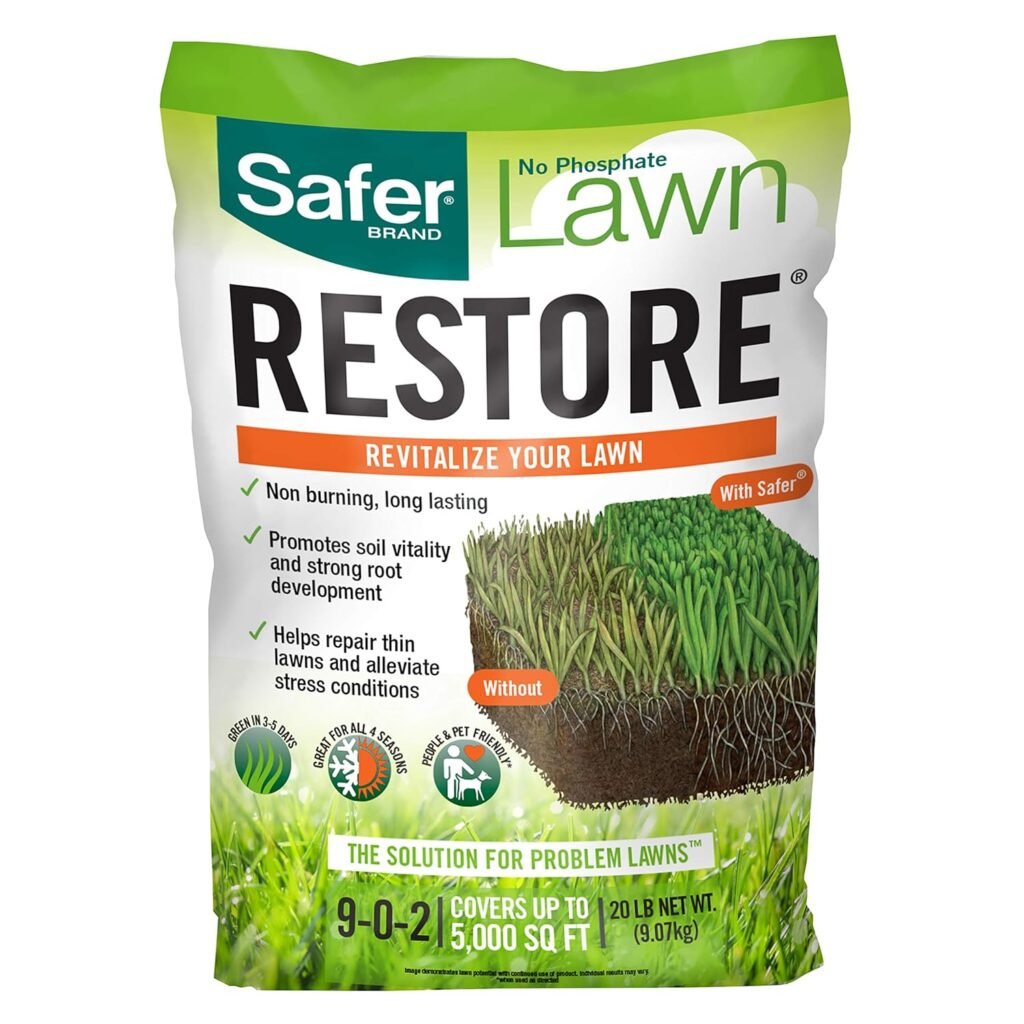
Safer Brand’s formula is built around a slow-release, non-burning nitrogen source combined with humic acid, which improves nutrient uptake and helps grass roots dig deeper into compacted soil.
I’ve found this one especially useful on older lawns that have years of synthetic fertilizer buildup, since humic acid helps “reset” the soil chemistry over time. Shade lawns under mature trees often have this exact history, since homeowners tend to over-fertilize in a panic when the grass looks thin.
It’s a smaller-batch product, so it’s usually pricier per square foot of coverage than the big-box brands, and it can be harder to find locally. I mostly order it online rather than hunting for it at a hardware store.
Still, for stubborn, compacted shade lawns that haven’t responded to other treatments, this is often the one that finally gets things moving.
I used this on a lawn a few streets over that had basically become hard-packed dirt with a thin green fuzz on top, the result of years of a landscaping crew running the same mower path and dumping cheap synthetic fertilizer on it every spring. Two fall applications with the Safer Brand formula, combined with a core aeration, and by the following fall the soil actually held a finger indent again instead of feeling like a sidewalk. That’s the kind of transformation humic acid can pull off when the underlying problem is soil structure rather than nutrition.
Just budget a little extra time to source it, since it’s not always sitting on the shelf at your local hardware store the way the bigger brands are.
7. Down to Earth All Natural Fertilizer Mix (5-4-3)
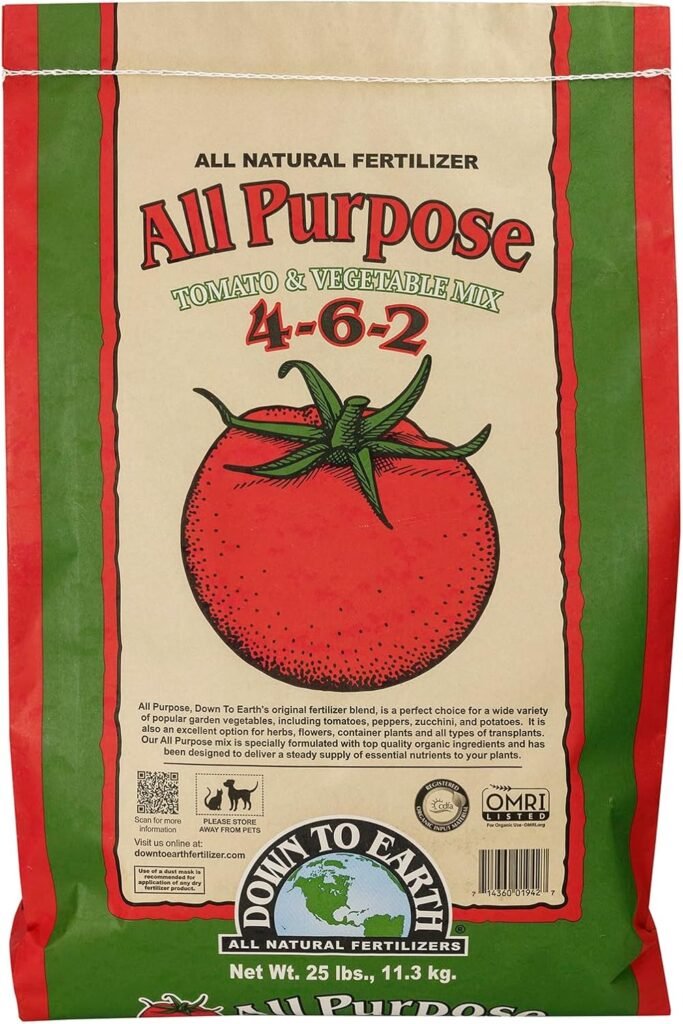
Down to Earth is a bulk, no-frills option that gardeners who also grow vegetables tend to already have on hand, since it’s popular for raised beds too. Its 5-4-3 ratio is close to that balanced-but-potassium-leaning profile I mentioned earlier as ideal for shade grass.
It’s made from a blend of feather meal, bone meal, and kelp meal, giving it a broader micronutrient profile than single-source fertilizers. Kelp meal in particular contains natural growth hormones that can help grass cope with the stress of low light and root competition.
Because it’s sold in bulk paper bags without fancy packaging, it’s one of the more affordable organic options per pound, which matters if you’ve got a large shady lot and don’t want to buy six small bags of a boutique brand.
Quick side note: because it’s not a lawn-specific blend, the granule size can be a little uneven for spreader calibration. Do a test pass on your driveway first to dial in your spreader settings before you commit to the whole yard.
Real Talk: What Actually Goes Wrong With Shade Lawn Fertilizing
Fertilizer alone will not fix a shade lawn if the real problem is something else. I’ve watched people dump bag after bag of expensive organic fertilizer on a lawn that was never going to thrive because of one of these issues:
- Too much shade, period. If your grass gets less than three or four hours of direct or filtered sun, no fertilizer on earth will make it lush. At some point, thinning out a few tree branches or switching to a shade-tolerant ground cover is the honest answer, even if it’s not the one you wanted.
- Fertilizing over compacted soil. Organic fertilizers work through microbial activity, and microbes need oxygen. If your soil is compacted from foot traffic or construction, aerate first. I made this mistake on my own side yard for two seasons before I finally rented an aerator, and the improvement afterward was almost embarrassing given how simple the fix was.
- Applying at the wrong time. Fall feeding for shade grass should happen 6 to 8 weeks before your first hard frost, not right before winter hits. Late applications waste most of the nutrients, since the grass isn’t actively building roots anymore once the ground gets cold.
- Expecting instant results. Organic fertilizers are slow by design. If you’re used to synthetic quick-green products, the pace can feel disappointing at first. Give it a full season before judging whether it’s working.
- Overwatering after application. Heavy shade areas already drain slower and dry out less evenly than sunny lawns. Watering too aggressively after fertilizing can wash nutrients away from the root zone entirely, especially on sloped shade areas.
- Ignoring grass type entirely. Not every grass tolerates shade equally, and no fertilizer can fix that mismatch. If your lawn is mostly Kentucky bluegrass or Bermuda, both of which need full sun to really perform, you’re fighting a losing battle no matter what you feed it. Fine fescue, rough bluegrass, and certain shade-blend tall fescues are the varieties actually built for low-light survival. Overseeding with the right species before or alongside fertilizing makes a bigger difference than switching fertilizer brands ever will.
Final Thoughts on Feeding a Shade Lawn This Fall
If I had to boil this down to one piece of advice, it’s this: stop treating your shade lawn like a smaller version of your sunny lawn. It has different needs, a different growth rhythm, and it deserves a fertilizer chosen with that in mind, not whatever’s on sale at the front of the store.
Pick one of these seven, apply it at the right time, pair it with basic soil care like aeration, and give it a full season before you judge the results. Shade lawns are a slow project, not a weekend fix, but they do respond when you feed them right.
What’s been your experience with fertilizing under trees? Drop a comment below and tell me what’s worked, or hasn’t, in your yard. I read every one and I’m always curious what other shade-lawn survivors have figured out.

About Syprose Kiche
Syprose Kiche is the creator and writer behind My Besuited Home, a practical home and garden website covering DIY projects, gardening, lawn care, landscaping, home improvement, and outdoor living. She focuses on turning everyday homeowner questions into clear, practical guides backed by careful research and useful real-world considerations.