
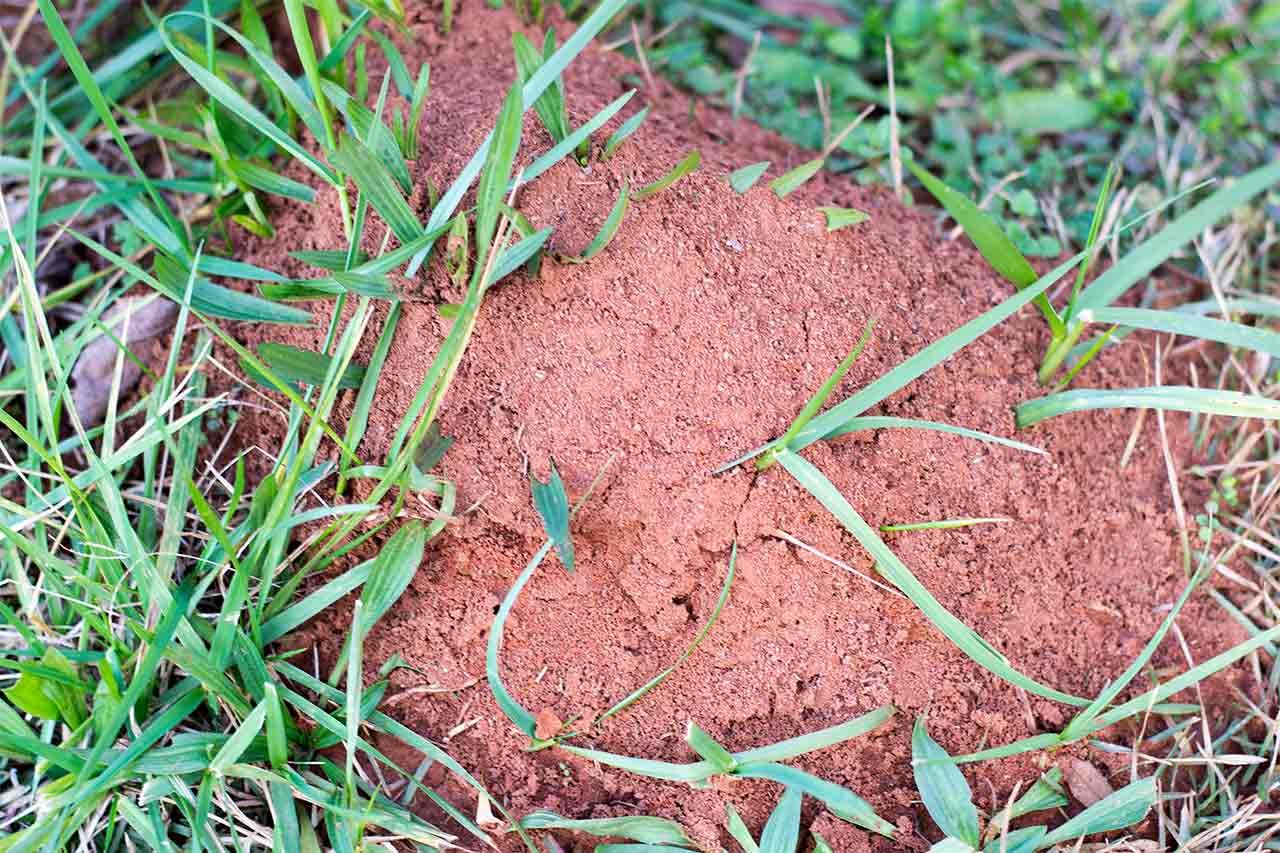
You’re barefoot in the backyard, coffee in hand, enjoying a nice morning. Then it happens. That sharp, burning sting on your ankle, followed by three more before you even know what hit you. You glance down and there it is: a fire ant mound you swear wasn’t there yesterday, sitting right next to the kids’ swing set.
I’ve been gardening for over a decade, and if there’s one pest that makes me want to pave over my entire yard, it’s fire ants. They’re aggressive, they multiply fast, and the second you think you’ve gotten rid of one mound, three more pop up like they’re throwing a housewarming party at your expense.
The good news? You don’t need to reach for the harshest chemical treatment on the shelf. I’ve tested a pile of natural fire ant remedies over the years, some worked shockingly well, some were a total waste of my Saturday afternoon, and I’m going to walk you through the ones that actually earned a permanent spot in my pest control routine.
Why Fire Ant Mounds Keep Coming Back
Before we get into the remedies, you need to understand what you’re up against. A single fire ant colony can house anywhere from 100,000 to 500,000 ants, with multiple queens in some “polygyne” colonies. That’s not a typo. Half a million ants, one mound, and they’re all working together to make your life miserable.
Here’s the part that trips people up: what you see on the surface is just the tip of the iceberg. Fire ant tunnels can extend several feet underground and spread out in every direction. Dump boiling water or poison on the visible mound and you might kill the ants near the surface, but the queen and the deeper chambers often survive just fine.
That’s why so many people think natural remedies “don’t work.” They’re not doing it wrong because the remedy is bad, they’re doing it wrong because they’re only hitting the surface. Every method below works best when you treat it as an assault on the whole colony, not just the pile of dirt you can see.
1. Boiling Water Treatment (The Classic for a Reason)
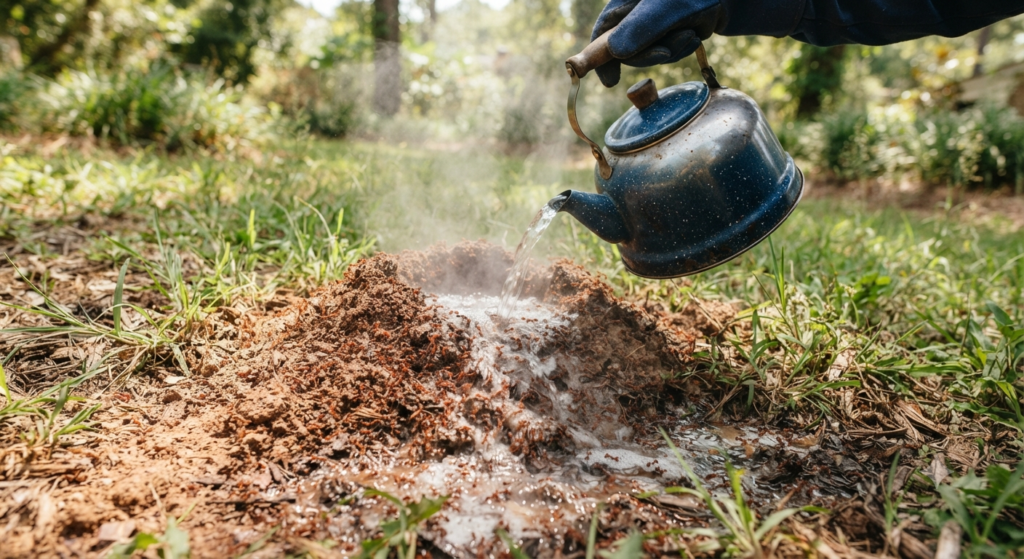
This is the first thing my grandmother ever taught me about fire ants, and it’s still the cheapest, fastest method in this whole list.
How to do it:
- Boil at least 2-3 gallons of water per mound.
- Pour it slowly and directly into the center of the mound early in the morning, before the ants are active and moving away from the heat.
- Avoid splashing it on nearby plants since boiling water will scorch roots and grass just as easily as it kills ants.
- Repeat 2-3 times over the following week if you still see activity.
I’ll be honest, this method has about a 60% success rate on a single try. The reason it fails half the time is people use one pot of water and call it done. You need volume, and you need it hot enough to actually penetrate the tunnels, not just soak the top layer of soil.
One summer I underestimated a mound near my mailbox and used maybe a gallon and a half. Three days later it was back, bigger and angrier than before. Lesson learned: go big or don’t bother.
2. Diatomaceous Earth for Fire Ant Control
If you search “natural fire ant killer” online, diatomaceous earth (DE) comes up constantly, and for good reason. This stuff is made from fossilized algae, and under a microscope it looks like tiny shards of glass. To us, it’s a harmless powder. To an ant’s exoskeleton, it’s basically walking across broken glass barefoot.
How to apply DE to fire ant mounds:
- Buy food-grade diatomaceous earth, not the pool-grade stuff, which is treated differently and can be harmful to breathe.
- Wear a mask and gloves. Even food-grade DE isn’t great to inhale in large amounts.
- Sprinkle a thick layer directly onto the mound and lightly work it into the entry holes with a stick.
- Dust a perimeter ring around the mound too, since foraging ants will track it back into the tunnels.
- Reapply after rain, because DE loses its effectiveness once it gets wet.
DE doesn’t poison ants. It works mechanically by damaging their outer shell, which causes them to dehydrate and die over several days. That means it’s slower than boiling water, but it’s also safer around kids, pets, and vegetable gardens.
My honest take: DE is fantastic as a preventive barrier around patios, garden beds, and play areas, but it’s a mediocre standalone solution for an established, angry mound. I use it in combination with other methods on this list, not by itself.
3. Orange Peel and Citrus Oil Mound Drench
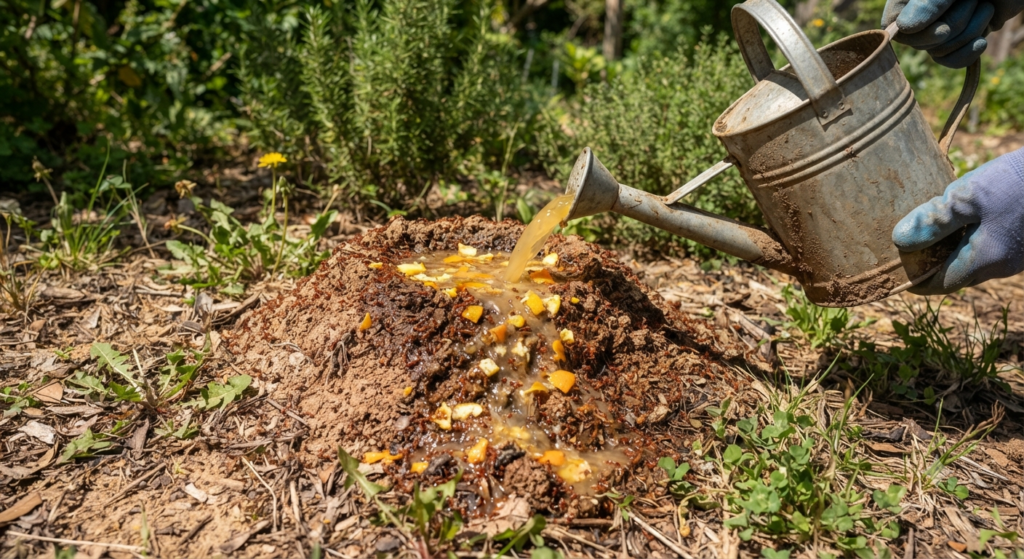
This one surprised me the first time I tried it. Citrus peels contain d-limonene, a natural compound that’s toxic to ants and breaks down the waxy coating on their exoskeletons.
Fire ant citrus treatment steps:
- Blend orange, lemon, or grapefruit peels with hot water to create a slurry, roughly two cups of peels per gallon of water.
- Let it steep for a few hours, or overnight if you have the patience.
- Strain out the solids and pour the liquid directly into the mound.
- For a stronger version, mix in a few drops of pure d-limonene concentrate, sold at garden centers as an organic pesticide additive.
The smell alone is enough to make you feel like you’re doing something wholesome for your yard, orange and hot water smells a lot better than commercial ant killer, that’s for sure.
I’ve found this method works especially well on smaller, newer mounds that haven’t had time to build a deep tunnel network. On a massive, established mound, it knocks back activity but rarely wipes out the colony in one shot. Plan on treating it two or three times over a couple weeks.
4. Molasses and Borax Bait Stations
This is a bait-based approach instead of a mound-drench approach, and it’s one of the more effective ways to actually kill the queen, which is the real key to getting rid of a colony for good.
Why bait works better than drenches for queen elimination:
Worker ants forage for food and carry it back to feed the queen and the rest of the colony. If you can get a slow-acting toxin into that food chain, the whole colony collapses instead of just the surface workers.
DIY molasses borax ant bait recipe:
- Mix 1 cup of molasses, 1/2 cup of sugar, and 2 tablespoons of borax with warm water until fully dissolved.
- Soak cotton balls in the mixture, or pour it into small bottle caps.
- Place the bait stations near the mound, but not directly on top of it (ants avoid disturbed mound soil).
- Check and refresh the bait every 2-3 days for two weeks.
The borax has to be slow-acting enough that the foraging ants carry it back to the colony before it kills them. If you use too much borax, you’ll just kill the workers on contact and the queen never gets a dose, which defeats the entire purpose.
Quick side note: this method takes patience. You won’t see dead ants littering the ground the next morning like you would with boiling water. Give it a full two weeks before deciding whether it worked.
5. Beneficial Nematodes for Long-Term Fire Ant Prevention
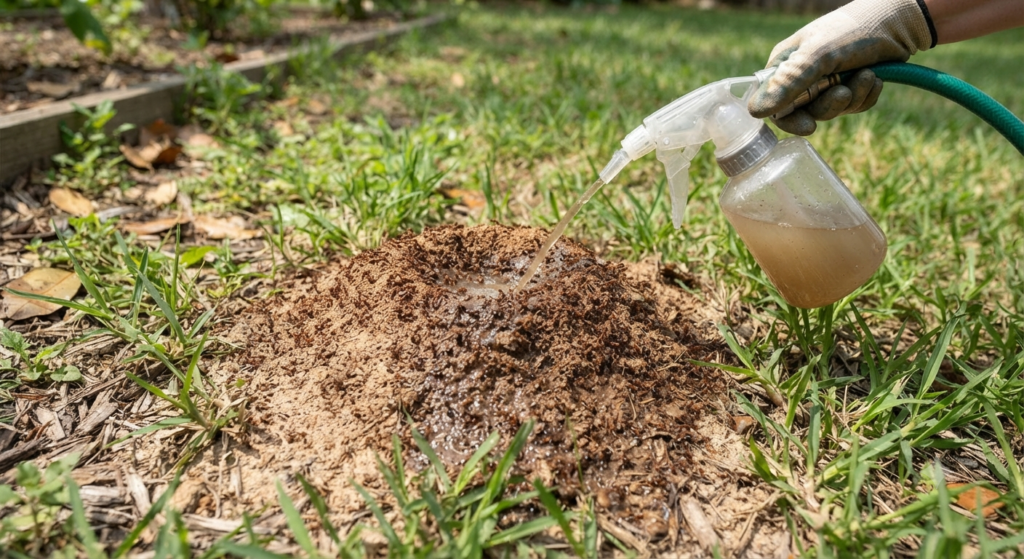
Here’s a method most homeowners have never heard of, and it’s become one of my favorite long-game strategies. Beneficial nematodes are microscopic worms that occur naturally in soil and actively hunt down and kill fire ant larvae and pupae underground.
How to use nematodes against fire ants:
- Buy a nematode species labeled for fire ant control, Steinernema riobrave tends to perform particularly well against fire ants in warm climates.
- Mix them into water according to the package instructions (they’re shipped live, so timing matters).
- Apply to moist soil in the early morning or evening, never in the heat of the day, since UV light kills nematodes quickly.
- Water the area lightly after application to help them migrate into the soil.
Nematodes won’t give you the instant “mound is gone” satisfaction of boiling water. They work over weeks and months, quietly reducing the fire ant population in your soil by attacking new generations before they mature.
I started using nematodes across my whole backyard three years ago as a preventive measure, and I genuinely have fewer new mounds popping up now than I did before. It’s not a quick fix, it’s more like planting a garden instead of buying groceries. The payoff takes longer, but it’s more sustainable.
6. Cornmeal Bait (The Slow-Kill Method)
There’s an old gardener’s myth that cornmeal makes ants explode because they can’t digest it. That part isn’t true, ants can digest cornmeal just fine. But this method still has real value, just not for the reason most people think.
How cornmeal bait actually works:
- Mix cornmeal with a small amount of vegetable oil to make it more appealing and easier for ants to carry.
- Sprinkle it in a ring around the mound, not directly on top.
- Ants carry the cornmeal back to the colony as a food source.
- Because cornmeal expands when it absorbs moisture, it can clog their digestive tract enough to reduce colony health over time, especially when combined with a mild insecticidal additive.
I’ll level with you: on its own, plain cornmeal is one of the weaker options on this list. I include it because it makes a decent carrier for other natural additives, like a few drops of essential oil or a pinch of borax, turning a mediocre home remedy into something with real teeth.
If you’re going the fully natural route with zero additives, treat cornmeal as a bonus tactic to layer on top of the other methods here, not your primary weapon.
7. Essential Oil Mound Treatment (Peppermint, Clove, and Cinnamon)
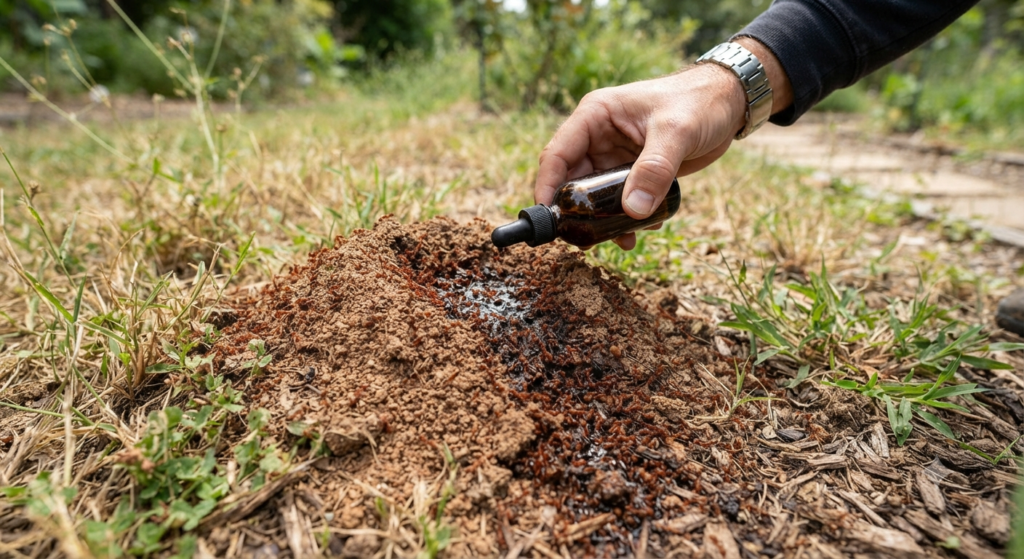
Ants navigate primarily by scent trails, and strong essential oils scramble that system entirely. This is one of the most pleasant-smelling entries on this list, and one I reach for when I’ve got mounds near the porch or patio where I don’t want lingering odors from citrus slurry or borax bait.
Essential oil ant repellent recipe:
- Mix 15-20 drops of peppermint, clove, or cinnamon essential oil with 2 cups of water in a spray bottle.
- Add a teaspoon of dish soap to help the mixture penetrate the ant’s waxy exoskeleton and stick to mound soil.
- Spray generously over and around the mound, focusing on entry and exit holes.
- Reapply every 2-3 days, since the scent fades and ants will eventually re-establish a route.
Clove oil, specifically, contains eugenol, which has documented insecticidal properties beyond just being a scent deterrent. Peppermint tends to work more as a repellent than a killer, pushing ants elsewhere rather than eliminating the colony outright.
My take: essential oils are excellent for keeping ants away from specific zones, like doorways, garden beds, or a kid’s sandbox, but they’re the weakest option here for actually eliminating an established mound. Use them for prevention and spot deterrence, not as your main mound-killer.
Best Time of Day (and Year) to Treat Fire Ant Mounds
Timing matters more than most people realize, and it’s the difference between a treatment that actually works and one that just annoys the ants for an afternoon.
- Time of day: Treat mounds early in the morning, ideally before 9 a.m., or in the early evening once temperatures cool off. Fire ants retreat deeper into the mound during the hottest part of the day, which means your boiling water, citrus drench, or bait won’t reach nearly as many ants. On a scorching July afternoon, you could dump every remedy on this list onto a mound and barely dent the population because the colony simply isn’t home.
- Time of year: Spring and early fall are the sweet spot. Colonies are actively foraging and rebuilding after winter dormancy or summer heat stress, so bait-based methods like the molasses-borax mix and cornmeal work faster since ants are hungrier and more active. Treating in the dead of summer isn’t a lost cause, but you’ll likely need extra rounds to get the same results.
- After rain is prime time. Fire ant mounds often push up fresh after a good rainstorm, since the colony rebuilds tunnels flooded by water. That freshly disturbed mound is actually easier to treat because the ants are concentrated near the surface repairing damage. I’ve had my best luck with boiling water treatments 24 to 48 hours after a rain, when the mound is freshly rebuilt and the soil around it is still soft enough for the water to penetrate deep.
Real Talk: What’s Not Worth Your Time (And What Can Go Wrong)
I want to be straight with you about the downsides, because most articles skip this part entirely.
- Natural remedies are slower, period. If you need a mound gone today because a toddler or a pet keeps wandering near it, boiling water is your fastest bet, and even that isn’t guaranteed on the first try. Everything else on this list works over days or weeks, not minutes.
- Queens can “bud off” and relocate. Fire ant colonies under stress sometimes split, with a queen and a group of workers relocating to start a satellite colony nearby. This means you might kill 90% of a colony and still end up with a brand-new mound six feet away a week later. It’s frustrating, but it’s not a sign your method failed, it’s just how these ants survive.
- DE and boiling water can harm your soil and plants. Diatomaceous earth doesn’t discriminate between ants and beneficial insects like ladybugs or bees if they come into contact with it, so don’t go overboard dusting your entire flower bed. Boiling water sterilizes soil temporarily and will absolutely kill grass and nearby plant roots.
- Borax is toxic to pets in large quantities. If you’ve got dogs or cats that dig, keep bait stations covered or placed somewhere they can’t access. A small amount likely won’t hurt a large dog, but I’d rather not test that theory in my own backyard.
- Some mounds are just too established for DIY methods. If you’ve tried three or four of these remedies over a month and you’re still finding fresh mounds weekly, especially if you’re managing a larger property or an agricultural area, it might be time to call a pest control professional. There’s no shame in that. Fire ants have been outsmarting homeowners since they arrived in the U.S. nearly a century ago.
Combining Methods for Better Results
None of these remedies are silver bullets on their own, and if I’m being honest, that’s probably the single most important thing I can tell you in this whole article.
My actual backyard routine looks like this: I use nematodes twice a year as a baseline preventive layer, molasses-borax bait for any mound I catch early, and boiling water as the emergency response for anything popping up too close to the patio. Diatomaceous earth stays in my shed for creating barriers around garden beds where I don’t want ants tunneling near root systems.
Treating fire ants naturally is less about finding one magic remedy and more about layering a few of these together and being consistent about it. Skip a treatment cycle and they’ll bounce right back.
Parting Wisdom
Fire ants are relentless, but so is a stubborn gardener with a watering can full of citrus slurry and a bag of diatomaceous earth. You’re not going to win this battle in one afternoon, and honestly, anyone who tells you otherwise is trying to sell you something. Pick two or three methods from this list, commit to treating your yard consistently for a few weeks, and you’ll notice a real difference by the end of the season.
What’s your go-to method for dealing with fire ants? Have you tried any of these, or do you have a family remedy passed down that I didn’t cover here? Drop it in the comments below, I’m always looking to add another trick to my arsenal.

About Syprose Kiche
Syprose Kiche is the creator and writer behind My Besuited Home, a practical home and garden website covering DIY projects, gardening, lawn care, landscaping, home improvement, and outdoor living. She focuses on turning everyday homeowner questions into clear, practical guides backed by careful research and useful real-world considerations.