
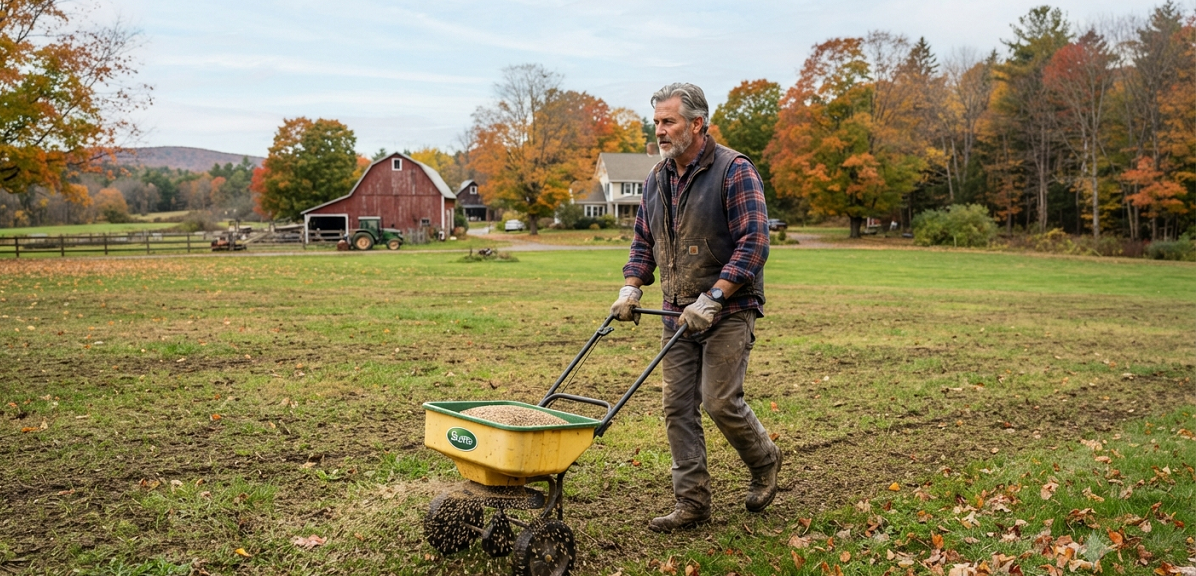
My neighbor Gary used to stand at the property line every August, staring at my grass like it owed him money. His lawn was crunchy, mine was thick and green, and he couldn’t figure out why. The answer wasn’t some secret fertilizer or a fancy sprinkler system. It was one weekend in September, a bag of grass seed, and a little patience.
If your lawn looks like it’s been through a war zone after summer, you’re not alone. Heat, foot traffic, grubs, and drought stress chew up even a well-kept yard by August. The good news is that early fall is basically a reset button for grass, and overseeding is how you press it.
I’ve overseeded probably 40 lawns over the last decade, including my own three times after I moved into a new place with a yard that looked like a dirt parking lot. Here’s everything I do, step by step, plus the mistakes that cost me time and money so you don’t have to repeat them.
Why Early Fall Is the Best Time to Overseed a Lawn
Grass seed germinates based on soil temperature, not the calendar, but early fall usually lines up perfectly for cool-season lawns like Kentucky bluegrass, tall fescue, and perennial ryegrass.
Here’s why this window works so well:
Soil is still warm from summer. Warm soil speeds up germination. Seeds planted in September can sprout in 7 to 14 days instead of the 3 weeks you’d wait in spring.
Air temperatures are dropping. New grass seedlings hate scorching heat. Cooler days mean less stress on those fragile new roots.
Weed competition drops off. Crabgrass and other summer annual weeds are winding down their life cycle in fall. That means fewer weeds racing your new grass for sunlight and water.
You get a full season before winter dormancy. Seed planted in early fall has roughly 6 to 8 weeks to establish before the ground freezes, which is enough time to survive winter and come back strong in spring.
Spring overseeding is possible, but I’ve found it’s a lot riskier. You’re fighting weed pressure, unpredictable rain, and a narrow window before summer heat arrives and cooks your seedlings. Early fall just gives grass a better shot at survival.
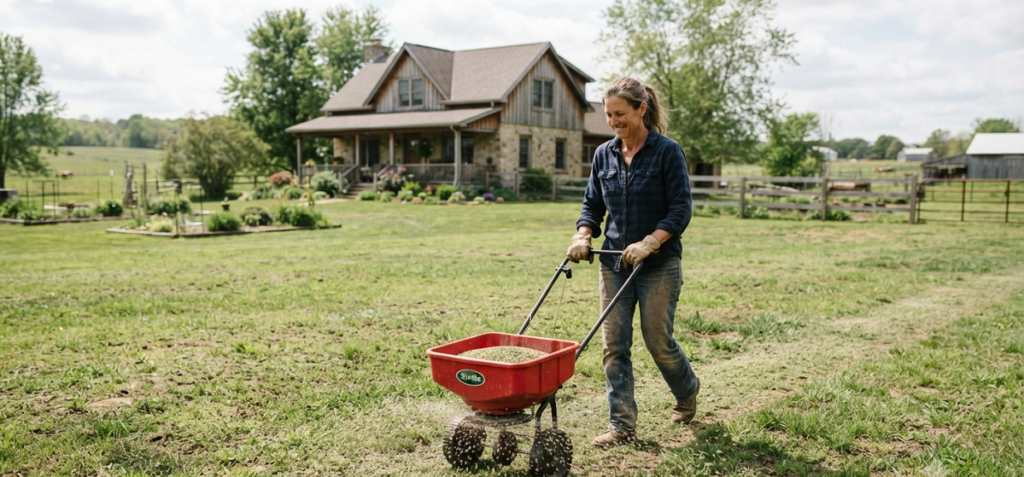
When Exactly Should You Overseed in Fall
“Early fall” isn’t the same everywhere, so don’t just circle a date on the calendar without checking your local conditions.
The rule of thumb I use: overseed when soil temperatures sit between 50 and 65 degrees Fahrenheit, and you have at least 6 weeks before your area’s first hard frost.
For most of the northern and transitional United States, that lands somewhere between late August and early October. Here’s a rough breakdown:
- Northern states (Minnesota, Michigan, New York, Maine): Late August to mid-September
- Mid-Atlantic and transition zone (Virginia, Kentucky, Missouri): Early to late September
- Pacific Northwest: September through early October, since mild falls give you more flexibility
A cheap soil thermometer, the same kind you’d use for candy or meat, works fine for checking soil temp. Stick it two inches down in a shaded part of your lawn for the most accurate reading.
Don’t wait too long. I overseeded a client’s yard in late October one year because she kept postponing, and the seed barely had time to germinate before frost hit. Half of it never came up. Timing really is the difference between a lawn that thrives and one that limps into spring.
Signs Your Lawn Actually Needs Overseeding
Not every rough-looking lawn needs a full overseed. Sometimes the fix is just better mowing habits or a fertilizer schedule that isn’t an afterthought. Before you buy a single bag of seed, walk your yard and look for these signs.
- Thinning grass you can see soil through. If you look straight down and the ground is more visible than the grass blades, that’s thinning turf. It usually comes from mowing too short, heavy foot traffic, or grass that’s simply aged out and lost its vigor.
- Bare or dead patches. Dog spots, grub damage, dead zones from summer drought, or areas that never bounced back from a fungal disease all fall into this category. These spots need targeted seed, not just a light dusting across the whole yard.
- Grass that’s green but looks tired. Sparse, thin-bladed turf that flops over instead of standing up straight is often old seed stock that’s simply run its course. Newer cultivars have better disease resistance and color, so overseeding with an updated blend can upgrade the whole look of your lawn even in areas that aren’t technically bare.
- Moss creeping into shady corners. Moss doesn’t crowd out healthy, dense grass. If it’s spreading, that’s usually a sign your turf has thinned enough to let it move in, on top of whatever drainage or shade issue you’re also dealing with.
If more than half your lawn is bare dirt, you’re probably looking at a full renovation instead of a simple overseed. That’s a different process with different seed rates, more aggressive soil prep, and sometimes tilling. Worth mentioning here, but it’s really a separate project.
How to Overseed a Lawn: Step-by-Step Process
This is the exact process I use on every lawn, whether it’s a quarter acre or a postage-stamp city yard.
Step 1: Mow Your Lawn Short
Cut your grass shorter than usual, down to about 1.5 to 2 inches, a few days before overseeding. This lets sunlight and water reach the soil instead of getting blocked by long blades.
Bag your clippings this time instead of mulching them. You want bare soil contact for the new seed, not a layer of clippings smothering it.
Step 2: Dethatch or Rake Out Debris
Thatch is that spongy brown layer of dead grass and roots sitting between the soil and the living grass. A thin layer is normal, but anything thicker than half an inch blocks seed from reaching soil.
Use a dethatching rake for small yards, or rent a power dethatcher for anything over a quarter acre. Rake up the debris and toss it in your compost pile.
Step 3: Aerate the Soil
This step gets skipped constantly, and it’s the one I push back on the most. Compacted soil is one of the biggest reasons overseeding fails.
Core aeration pulls small plugs of soil out of your lawn, which loosens things up and creates channels for seed, water, and nutrients to reach the roots. Rent a core aerator from a hardware store, or hire it out if your yard is large. I aerate in one direction, then go over it again perpendicular for the areas that get the most foot traffic.
Step 4: Choose the Right Grass Seed
Match your seed to your existing lawn type and your yard’s sun exposure. Mixing seed types without checking compatibility is a classic rookie mistake.
- Full sun areas: Kentucky bluegrass or a bluegrass-ryegrass blend
- Shady spots: Fine fescue or a shade-tolerant tall fescue blend
- High traffic zones: Perennial ryegrass, since it germinates fast and holds up to wear
Buy seed labeled for your specific region if you can. Cheap seed mixes padded with filler grasses or weed seed will cost you more in the long run than paying a few extra dollars for quality seed.
Before you buy, flip the bag over and actually read the label. Check for the germination rate and purity percentage, both required by law to be listed. I aim for germination above 85% and purity above 95%. If a bag doesn’t list these numbers clearly, or the print is so small you need a magnifying glass to find them, put it back on the shelf and grab a different brand. A bag with a lower price tag but a 70% germination rate isn’t actually cheaper once you calculate how much of it will never sprout.
Step 5: Spread the Seed Evenly
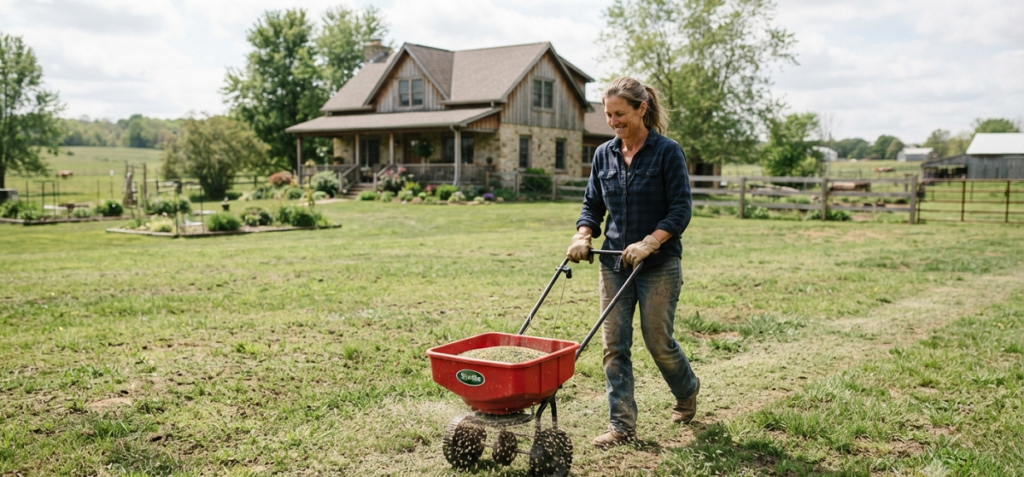
Use a broadcast spreader for large areas or a handheld spreader for small patches and touch-ups. Follow the seeding rate on the bag, which is usually listed in pounds per 1,000 square feet.
Go over the lawn in a crisscross pattern, first north to south, then east to west. This prevents the streaky, uneven coverage you get from spreading in just one direction. I split my total seed in half before I start, so I’ve got enough left for the second pass instead of running out three-quarters of the way through the yard, which I’ve absolutely done before.
As a general guideline for overseeding rates, since they’re lower than a full renovation:
- Kentucky bluegrass: 2 to 3 pounds per 1,000 square feet
- Perennial ryegrass: 4 to 6 pounds per 1,000 square feet
- Tall fescue: 4 to 6 pounds per 1,000 square feet
For heavily bare or damaged patches, go back over those specific spots by hand with extra seed. They need denser coverage than the rest of the lawn, since there’s no existing turf helping fill things in.
Step 6: Add Starter Fertilizer
A starter fertilizer high in phosphorus helps young roots establish. Regular lawn fertilizer with high nitrogen can actually burn new seedlings, so don’t just grab whatever bag is already in your garage.
Apply it right after seeding, following the rate on the package.
Step 7: Topdress With Compost or Peat Moss
A thin layer of compost, about a quarter inch, helps hold moisture around the seed and improves soil contact. This step is optional but it’s made a noticeable difference on every lawn where I’ve used it.
Step 8: Water Consistently
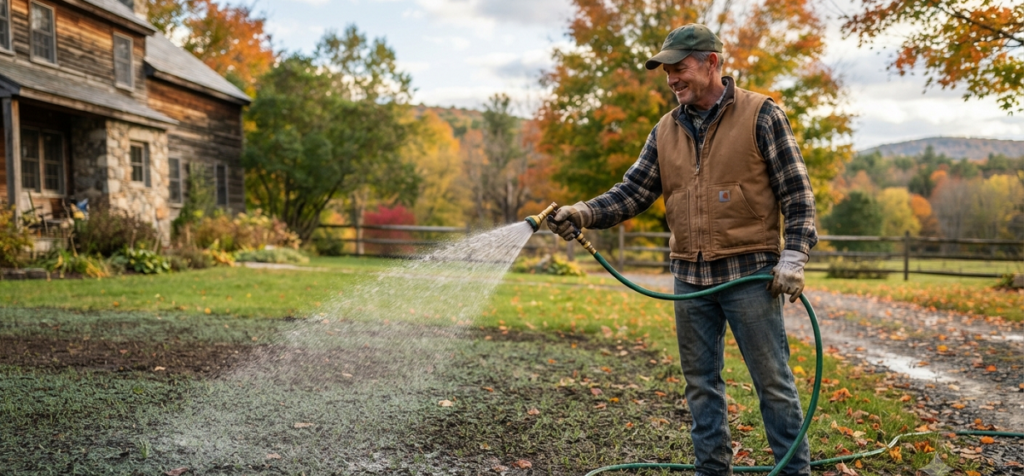
New seed needs consistent moisture, not a single deep soak. Water lightly once or twice a day, just enough to keep the top half inch of soil damp, for the first two weeks.
Once seedlings reach about an inch tall, cut back to watering every other day, and gradually shift toward deeper, less frequent watering as the grass establishes.
Quick side note: If you’re overseeding a large area and can’t water twice a day reliably, look into a cheap battery-powered hose timer. I use one on every job now because missed watering days are the number one reason seed fails to establish.
What Grass Seed Blend Should You Use for Overseeding
People ask me this constantly, so let’s clear it up. There’s no single “best” seed for every yard. It depends on three things: your climate zone, how much sun the area gets, and how much foot traffic it handles.
If you already have a healthy lawn and you’re just filling in thin patches, match the seed to what’s already growing. If you’re overhauling a rough, patchy lawn, a blend of two or three grass types gives you better disease resistance and adaptability than a single-species bag.
I’ll be blunt: those bargain-bin mixed bags with a cartoon lawn on the front are almost always padded with annual ryegrass, which grows fast, looks decent for a season, then dies off and leaves you right back where you started. Spend the extra few dollars on a quality perennial blend.
Caring for New Grass After It Comes Up
Getting seed to germinate is only half the job. What you do in the weeks right after matters just as much.
Keep foot traffic off newly seeded areas as much as you possibly can. That means dogs, kids, lawn chairs, and yes, your own shortcut across the yard to grab the mail. Rope off high-traffic zones with a couple of stakes and some twine if you have to. New seedlings have shallow, fragile roots, and it doesn’t take much to uproot them.
Once the new grass hits about 3 to 3.5 inches tall, it’s ready for its first mow. Cut it down to your normal mowing height in that first pass, but make sure your mower blade is sharp before you start. A dull blade rips young seedlings out of the ground instead of slicing through them cleanly, which can undo weeks of careful watering in about ten minutes.
Hold off on any weed control until the new grass has been mowed two or three times. Most “weed and feed” products contain pre-emergent herbicides that will just as happily stop your new grass seed as they stop crabgrass. I’ve watched someone wipe out an entire overseeding project because they grabbed the wrong bag off the shelf at the hardware store, thinking any lawn product was fair game once seed was down.
Frequently Asked Questions About Fall Overseeding
Can I overseed without aerating first? You can, but you’ll get worse results, especially on compacted or clay-heavy soil. Aeration isn’t strictly mandatory every single year, but skipping it on a lawn that hasn’t been aerated in a while is asking for patchy germination.
How long before overseeded grass looks established? Give it four to six weeks before it starts looking like a real lawn instead of a fuzzy green haze. Full maturity, meaning deep roots and real density, usually doesn’t happen until the following spring.
Do I need to cover the seed with straw? Straw mulch helps retain moisture and can reduce erosion on slopes, but it’s optional on flat, average lawns. If you use it, spread it thin enough that you can still see about half the soil underneath. A thick layer smothers seedlings instead of protecting them.
Can I overseed and fertilize the rest of my lawn at the same time? Stick to starter fertilizer only during the overseeding window. Regular fertilizer, especially anything with weed control mixed in, can interfere with germination or burn tender new seedlings.
Real Talk: What Can Go Wrong With Overseeding
Overseeding sounds simple, and mostly it is, but here’s where I’ve seen it fall apart.
- Skipping soil prep. Tossing seed onto existing grass without dethatching or aerating first is basically throwing money into the wind. Seed needs soil contact to germinate, and thick thatch or compacted dirt blocks that completely.
- Inconsistent watering. This is the biggest one. New grass seed can dry out and die within hours on a hot, windy day. If you can’t commit to watering daily for the first couple weeks, don’t bother overseeding yet.
- Mowing too early. Wait until new grass reaches about 3 inches before the first mow, and even then, only trim off the top third. Cutting too soon shocks the roots before they’ve had a chance to establish.
- Using weed-and-feed products too soon. Pre-emergent herbicides stop seeds from germinating, including the seed you just paid for. Wait at least 8 weeks after overseeding before applying any weed control product, and check the label since some require even longer.
- Overseeding a warm-season lawn in fall. If you’ve got Bermuda, zoysia, or St. Augustine grass, fall overseeding with cool-season seed is a different strategy entirely, usually done for winter color, not permanent thickening. Mixing this up leads to a lawn with two grass types fighting each other in spring.
Honestly, overseeding a severely damaged lawn, more than 50% bare dirt, isn’t always worth the DIY approach. At that point you might get better long-term results from a full renovation with tilling and fresh topsoil rather than just throwing seed on the surface.
Final Thoughts on Fall Overseeding
Overseeding in early fall isn’t complicated, but it does reward people who actually follow through on the boring parts: prepping the soil, picking decent seed, and watering on schedule. Skip any one of those steps and you’ll end up frustrated staring at bare patches in October.
Gary eventually asked me for help with his lawn, and two falls later his yard looks as good as mine. It wasn’t magic. It was just doing the unglamorous stuff at the right time of year.
What’s the biggest lawn headache you’re dealing with right now? Drop a comment below and I’ll help you figure out a plan for it.

About Syprose Kiche
Syprose Kiche is the creator and writer behind My Besuited Home, a practical home and garden website covering DIY projects, gardening, lawn care, landscaping, home improvement, and outdoor living. She focuses on turning everyday homeowner questions into clear, practical guides backed by careful research and useful real-world considerations.