
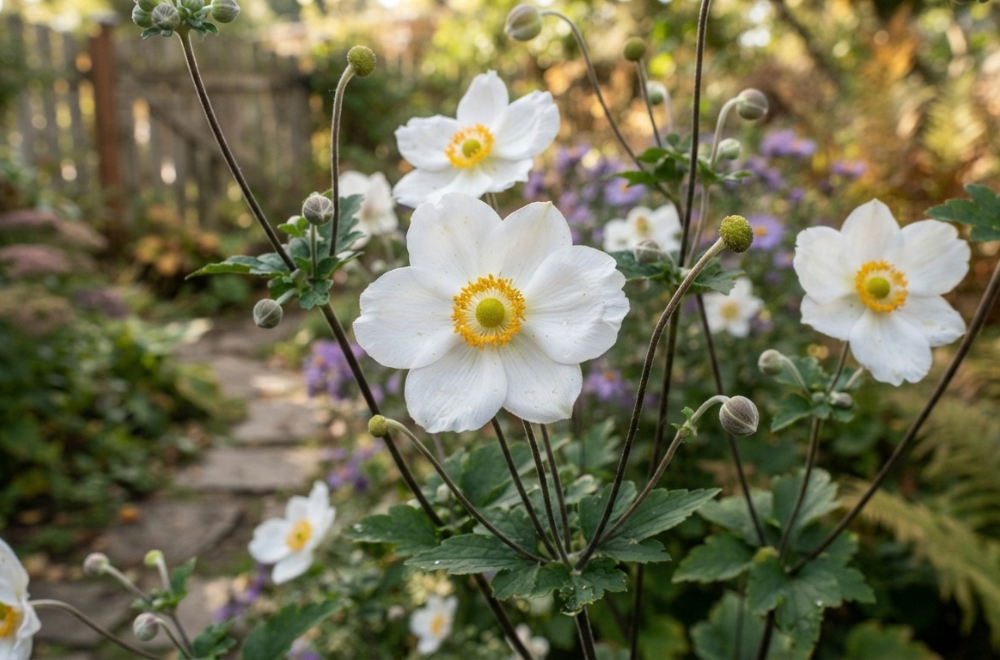
By late September, many gardens have the same gap. The summer perennials finished in August, the annuals are worn out from heat, and the only color left is a few pots of mums bought the weekend before. Those mums look good for three weeks. Then a hard freeze arrives and the bed goes brown all at once.
Fall color that survives frost comes from plants that behave differently from summer ones. Some are triggered by shortening days and don’t open until the nights get long. Others are cool-season plants that stall in July heat and revive when temperatures drop. A few just keep blooming until a hard freeze stops them. The fifteen plants below come from all three groups.
Why Frost Ends Some Flowers and Barely Touches Others
Frost isn’t one event. A light frost (roughly 29°F to 32°F) blackens tender plants such as zinnias, cosmos, dahlias, and impatiens, but hardy plants shrug it off. A hard freeze (28°F or lower) damages open flowers even on tougher plants and ends the season for many annuals. Which of these you’re planning for depends on your region, so look up your average first-frost date through your local extension service before you buy anything.
Early frosts often arrive well before the real end of the season. In many regions a first light frost is followed by weeks of mild weather. A bedsheet or frost cloth thrown over pots and tender plants on the night of a light frost can buy weeks of extra bloom, and it costs nothing.
The other timing issue is when plants flower. Chrysanthemums are short-day plants, meaning bloom is triggered by nights growing longer, not by temperature or by anything you do in late summer. Asters and Japanese anemones follow a similar rhythm. A plant that starts flowering in October is at the mercy of that year’s frost date, while one that starts in July and keeps going has more margin. Later sections separate the “late” bloomers from the “long” bloomers, because they solve different problems.
The 15 Plants at a Glance
| Plant | Light | Typical height | Approx. USDA zones | Main fall bloom |
| Garden mum | Full sun | 1–3 ft | 5–9 (hardy types) | Sept–Oct |
| Aster | Full sun | 1½–6 ft by type | 3–8 | Sept–Oct |
| Sedum (‘Autumn Joy’) | Full sun | 18–24 in | 3–9 | Aug–Oct, color lasts through winter |
| Goldenrod | Full sun | 1–5 ft by species | 3–9 | Aug–Oct |
| Coneflower | Full sun | 2–4 ft | 3–9 | July–Oct (seed heads persist) |
| Black-eyed Susan | Full sun | 2–3 ft | 3–9 | July–Oct |
| Montauk daisy | Full sun | 2–3 ft | 5–9 | Oct–Nov |
| Bluebeard | Full sun | 2–3 ft | 5–9 | Aug–Oct |
| Japanese anemone | Part shade | 2–4 ft | 4–8 | Aug–Oct |
| Toad lily | Shade to part shade | 2–3 ft | 4–9 | Sept–Oct |
| Pansy | Sun to part shade | 6–8 in | Cool-season annual | Fall through spring in mild climates |
| Viola | Sun to part shade | 4–8 in | Cool-season annual | Same as pansy |
| Calendula | Full sun | 12–24 in | Cool-season annual | Fall until a hard freeze |
| Snapdragon | Full sun | 6 in–3 ft | Annual (short-lived perennial in warm zones) | Fall rebloom |
| Ornamental kale | Full sun | 10–18 in | Cool-season annual | Foliage color, fall into winter |
Zones and heights vary by cultivar. Check the plant tag before you buy.
Full-Sun Perennials That Carry a Border Into October
Six or more hours of direct sun is where most late-blooming perennials belong. Several here also resent wet winter soil more than cold, so a raised bed, a slope, or soil loosened with compost helps in heavy clay.
Garden Mums: The Fall Standard, With One Big Catch
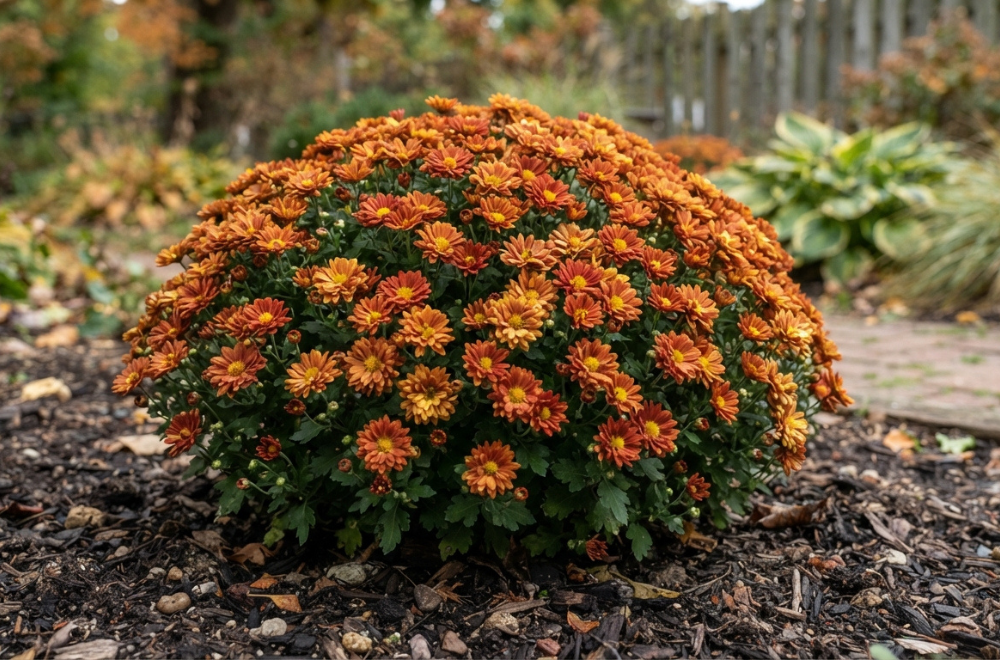
Mums sold in full bloom in September are grown to peak on the day of sale, which is also when they’re least likely to become permanent plants. The root systems are small and packed into the pot, and a plant set out in fall has only a few weeks to establish before the ground freezes.
If you want mums that come back, look for hardy garden mums labeled for your zone (typically 5 to 9, but tags vary) and plant them in spring. Pinching the stems back every few weeks until about mid-July forces branching, so the plant forms a compact mound instead of a few leggy stems. After that, leave it alone and the night length will set the flowering date.
If you’re planting in fall anyway, choose plants that are still mostly in bud and treat them as seasonal color, with a possible return as a bonus. Open blooms handle a light frost. A hard freeze browns them. Winter drainage matters more than cold, since wet soil around the crown is a common reason mums don’t return.
Asters: The Best Late Nectar Source, With a Height Problem
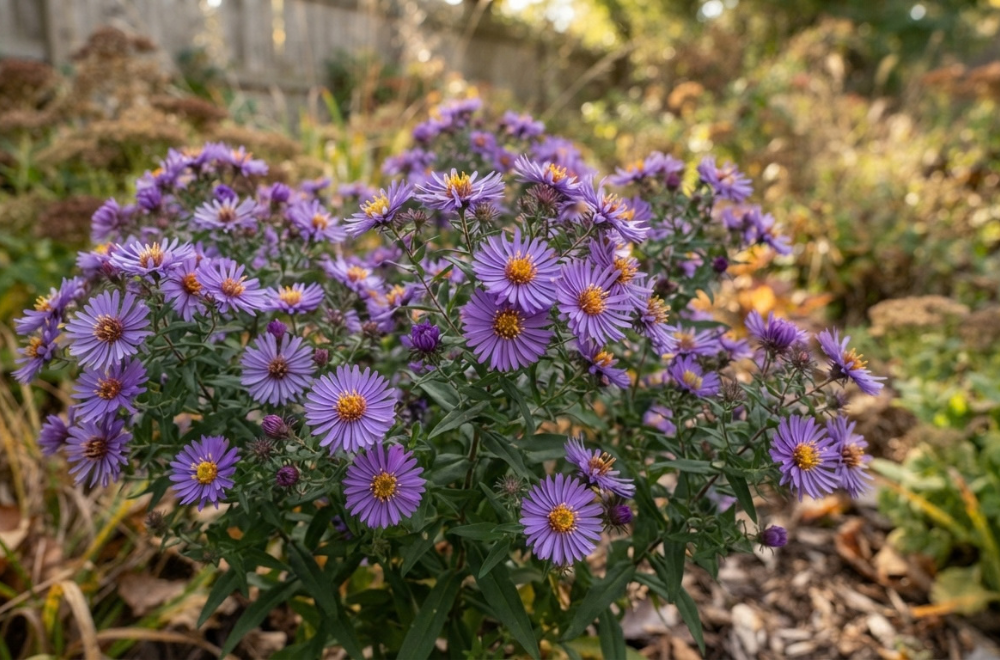
New England aster (Symphyotrichum novae-angliae) is a classic. It produces masses of purple daisies in September and October, and late-season bees and migrating monarchs rely on it. The trouble is height. Plants can reach 4 to 6 feet and flop open after rain.
Cutting stems back by about half in early summer (late May to mid-June in most regions) holds the plant closer to 3 feet and produces more branching. Compact selections like ‘Purple Dome’ stay around 18 to 24 inches. Aromatic aster (S. oblongifolium), including ‘Raydon’s Favorite’, is sturdier, runs 2 to 3 feet, and tolerates dry soil better.
Powdery mildew, a grayish film on the leaves, is common in humid, crowded plantings. It is mostly cosmetic. Space plants for airflow and choose mildew-resistant selections. Note that nurseries may label the same plant “Aster” or “Symphyotrichum,” since the botanical name changed years ago.
Sedum: Color That Keeps Changing
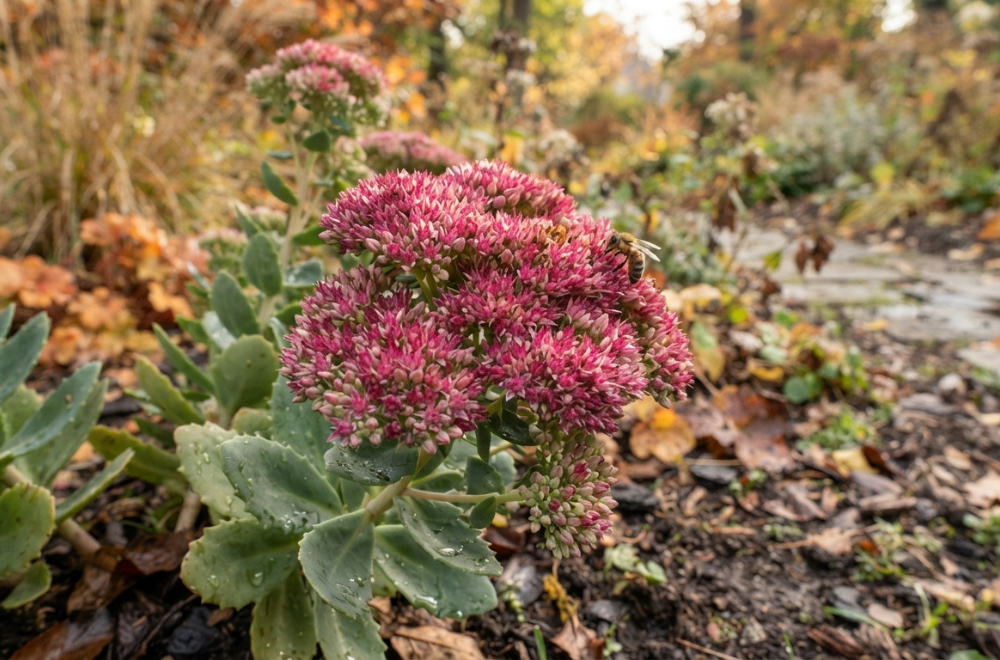
Sedum ‘Autumn Joy’ (now often listed as Hylotelephium ‘Herbstfreude’) opens as pale green heads in late summer, turns pink, then deepens to rust and copper through fall. The dried heads stand through winter, and many gardeners leave them until spring.
The main failure is sprawl. In rich soil or too much shade, sedum grows lush and splits open from the center. Give it lean soil and full sun, and don’t feed it. If plants have flopped in past years, trimming the stems back by a few inches in early summer produces a sturdier, more compact plant. Its succulent leaves store water, so it tolerates drought once established and rarely needs attention.
Goldenrod: Blamed for Someone Else’s Sneezing
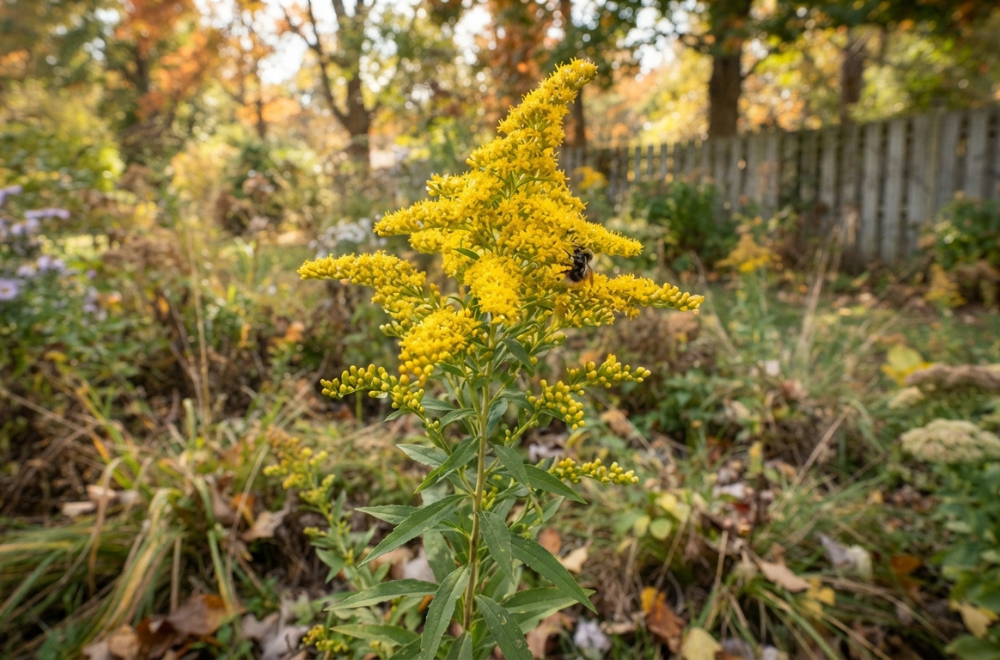
Goldenrod gets blamed for fall hay fever, but ragweed blooms at the same time and is the likelier culprit. Ragweed pollen travels by wind. Goldenrod pollen is heavy and sticky and is carried by insects, so it rarely becomes airborne in significant amounts. People with specific sensitivities may still react, but goldenrod is not the usual cause.
Species matter for garden use. Canada goldenrod (S. canadensis) spreads aggressively by rhizomes and can take over a bed. Better-behaved choices include ‘Fireworks’ (S. rugosa, 3 to 4 feet in a clump) and ‘Golden Fleece’ (S. sphacelata, about 1½ to 2 feet). Goldenrod supports a wide range of native bees and butterflies late in the year, and it pairs well with purple asters.
Coneflower: Past Its Peak, but Not Finished
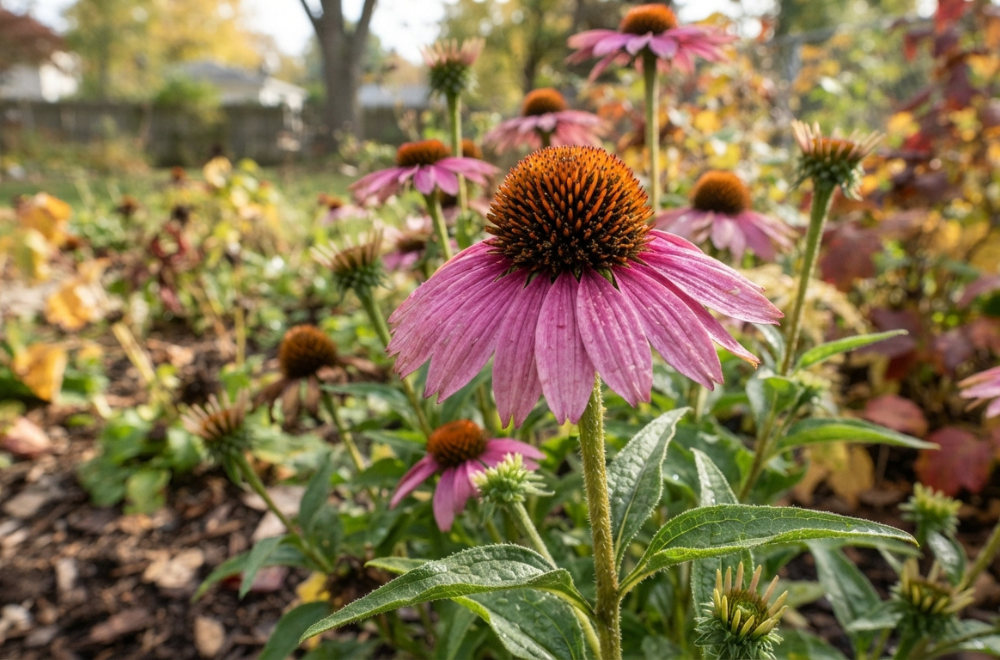
Coneflower (Echinacea purpurea) blooms hardest in July, so it’s worth including here for what it does in fall. Petals fade, but the seed heads persist, and goldfinches feed on them. Deadheading spent flowers in early to mid-summer encourages more blooms, but leaving the later heads standing gives birds food and the plant winter structure.
Purple types are generally longer-lived than the newer orange, red, and double hybrids, which are often shorter-lived. Watch for aster yellows, a disease spread by leafhoppers. Distorted, frilly, or green flowers mean the plant is infected. There’s no cure, so remove and discard it rather than composting.
Black-Eyed Susan: Long Bloom, Low Fuss
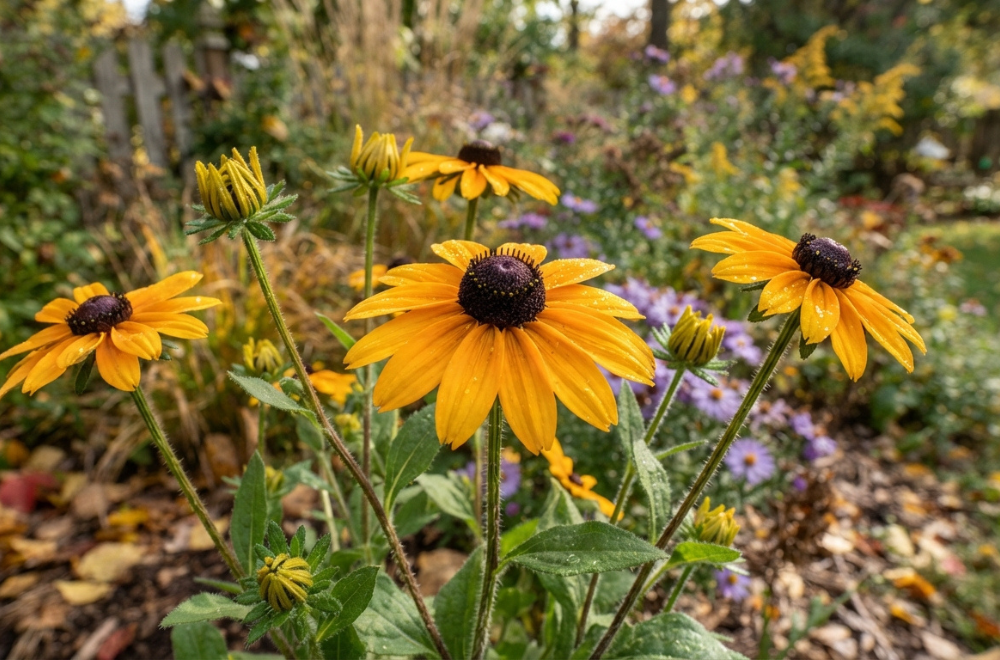
Rudbeckia fulgida ‘Goldsturm’ is one of the more reliable perennials for extending bloom. Flowering runs from July through October, and clumps spread slowly by rhizomes, tolerating clay and drought once established. Divide every few years if the center thins.
Rudbeckia hirta, the annual or short-lived type also sold as black-eyed Susan, self-sows freely. Both types look best next to purple asters and blue-toned plants like bluebeard, where the yellow stands out against cooler colors.
Montauk Daisy: The Last Big Bloom
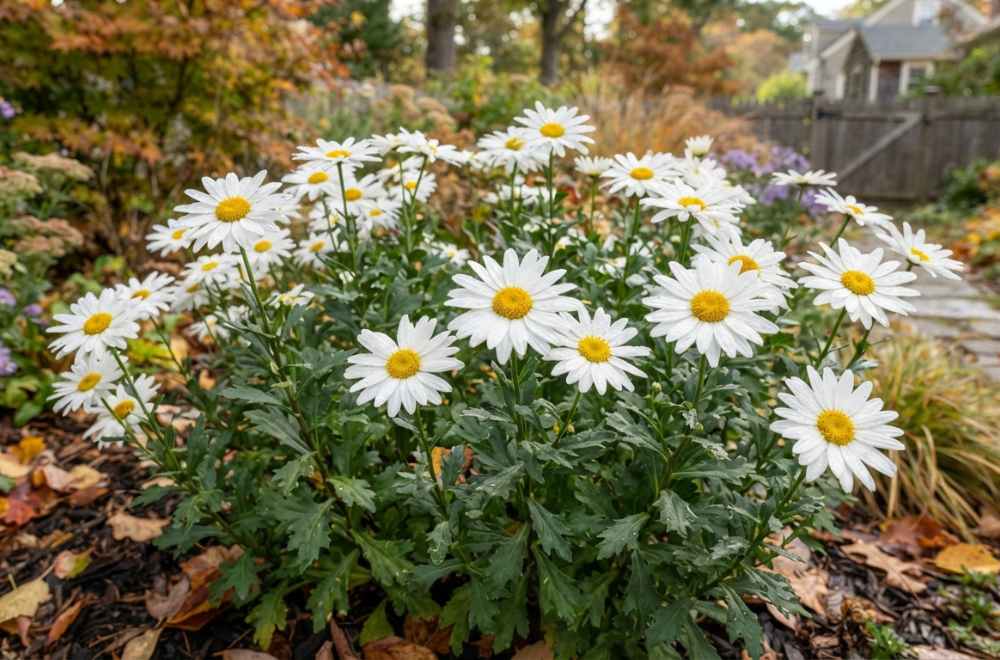
Nipponanthemum nipponicum flowers in October and November, when almost everything else has quit. The white daisies with yellow-green centers are among the last big flowers of the year.
Its main quirk is pruning. The stems become woody and open with age, so cutting them back by about half in early summer (before mid-July) keeps the plant compact. Do not cut it back in fall or early spring. Wait for new growth to appear on the woody base in spring, then trim just above the shoots. It wants full sun, sharp drainage, and gets along well with salt, making it common near the coast. In colder zones, an early hard freeze can catch buds before they open, so it’s a better bet in zones 6 to 9 than at the cold edge of its range.
Bluebeard: Blue Where Fall Usually Has Yellow
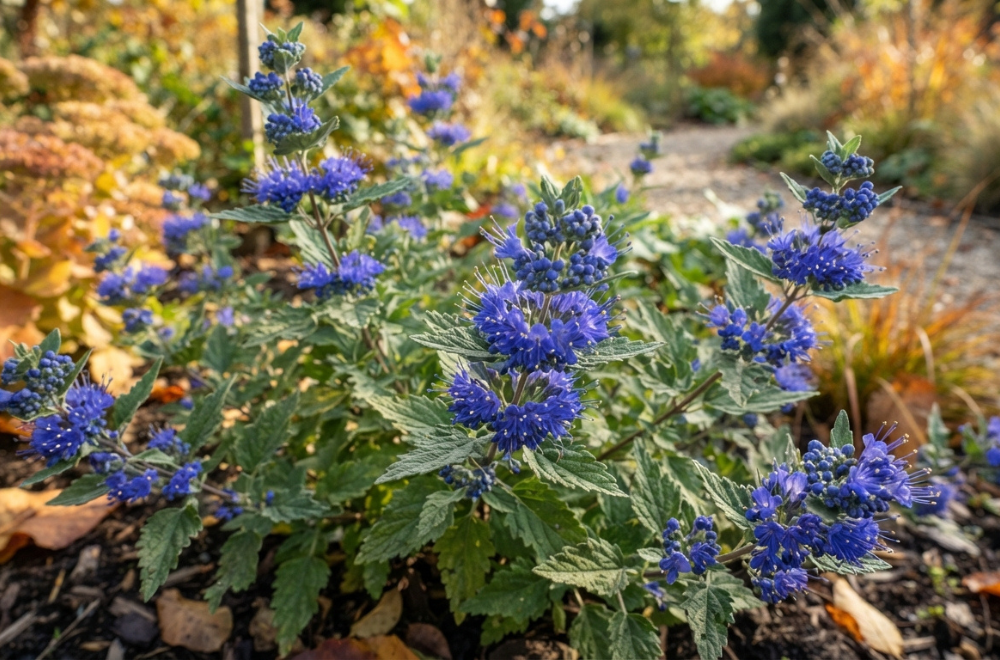
Caryopteris × clandonensis produces clusters of blue flowers from late summer into fall over aromatic gray-green foliage, and bees visit them heavily. It blooms on new growth, so cold winters that kill stems back to the ground don’t cost it flowers. Cut it to 6 to 12 inches in early spring.
Lean, well-drained soil suits it better than rich soil, and it tolerates drought. Blue is scarce in the fall garden, which is where bluebeard earns its place next to golden goldenrod and rusty sedum.
Fall Color in Shade
Shade has fewer options because most late-season flowers depend on sun. Two perennials do this job well, and pansies and violas (covered below) also tolerate part shade.
Japanese Anemone: Tall, Airy, and Slow to Start
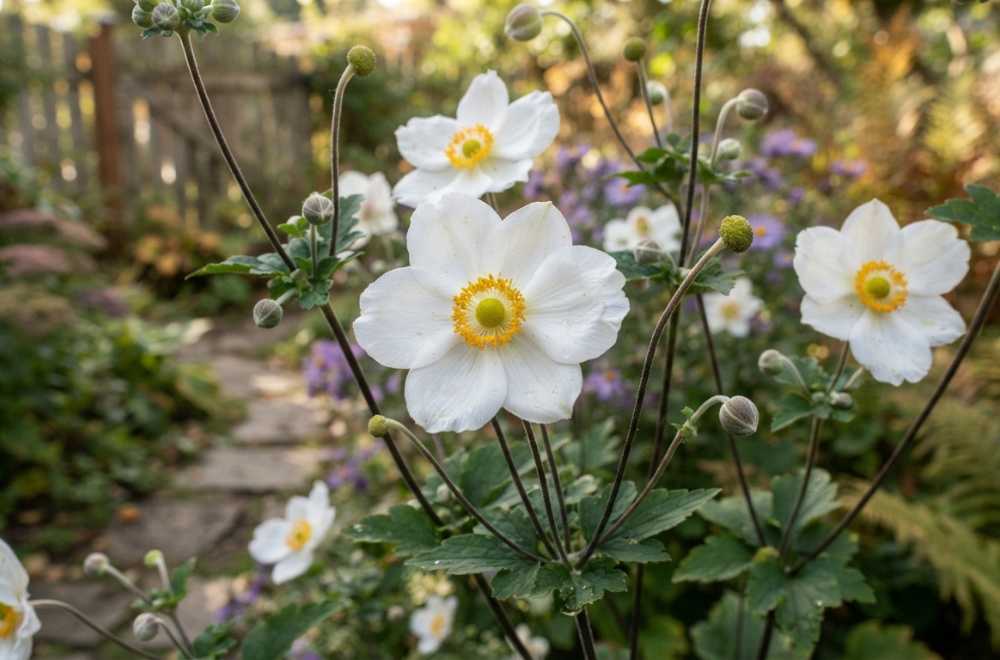
Anemone × hybrida and related types send up branching stems in late summer with white or pink flowers, reaching 2 to 4 feet by fall. ‘Honorine Jobert’ (white) and ‘September Charm’ (pink) are commonly sold. They want part shade, consistent moisture, and soil that drains well in winter. Afternoon sun in hot climates scorches them.
They are slow to establish, sometimes doing little the first season, and dislike being moved once settled. After a few years they spread by underground runners, which is fine in a woodland border and less welcome in a tight bed. Mulching helps in cold zones.
Toad Lily: Orchid-Like Flowers in Deep Shade
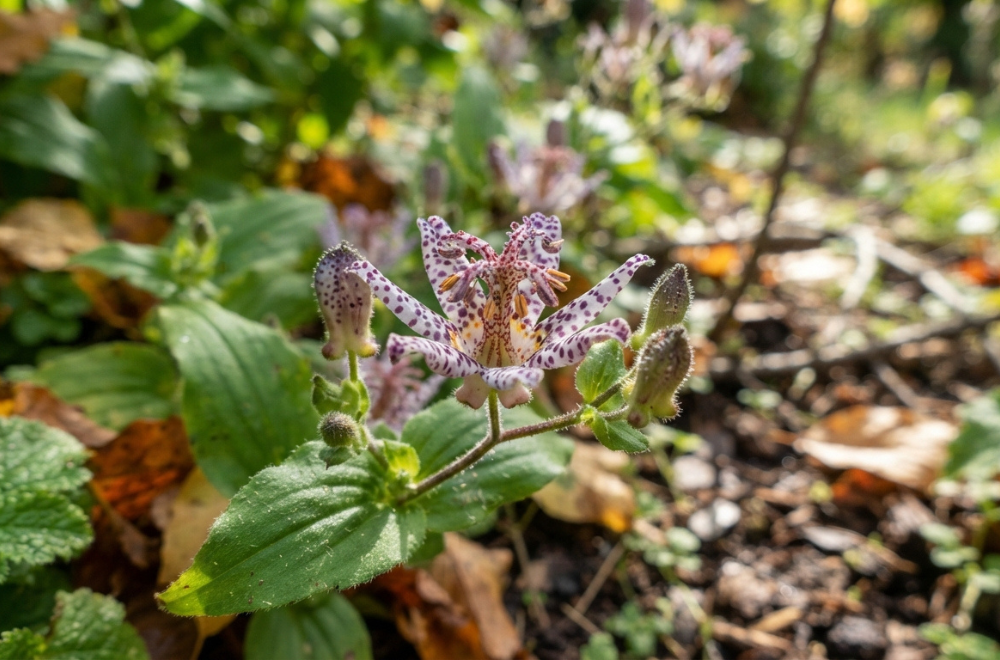
Tricyrtis hirta produces spotted, star-shaped flowers along arching stems in September and October, and bumblebees are attracted to them. Plants grow 2 to 3 feet tall in shade to part shade and need reliable moisture. Dry soil produces crispy leaf edges and fewer blooms.
Hardiness varies by variety, roughly zones 4 to 9. Late-opening buds can be caught by an early frost in colder regions, so a spot sheltered by a wall or larger plants helps. Slugs sometimes chew the foliage, especially in damp beds.
Cool-Season Annuals and Containers: Fast Color That Handles Frost
Annuals in this group grow best when temperatures drop, so they fill fall containers and bare spots quickly. Some container basics affect all five:
- Drainage. Use pots with drainage holes and bagged potting mix, not garden soil, which compacts in containers.
- Size. Pots 12 inches or wider hold moisture longer and buffer against cold better than small ones.
- Watering. Plants use less water as temperatures fall but shouldn’t dry out completely.
- Winter cold. Roots in pots are more exposed than roots in the ground. A commonly cited rule of thumb is that container plants face conditions a zone or two colder, so perennials left in pots may need protection.
Pansies
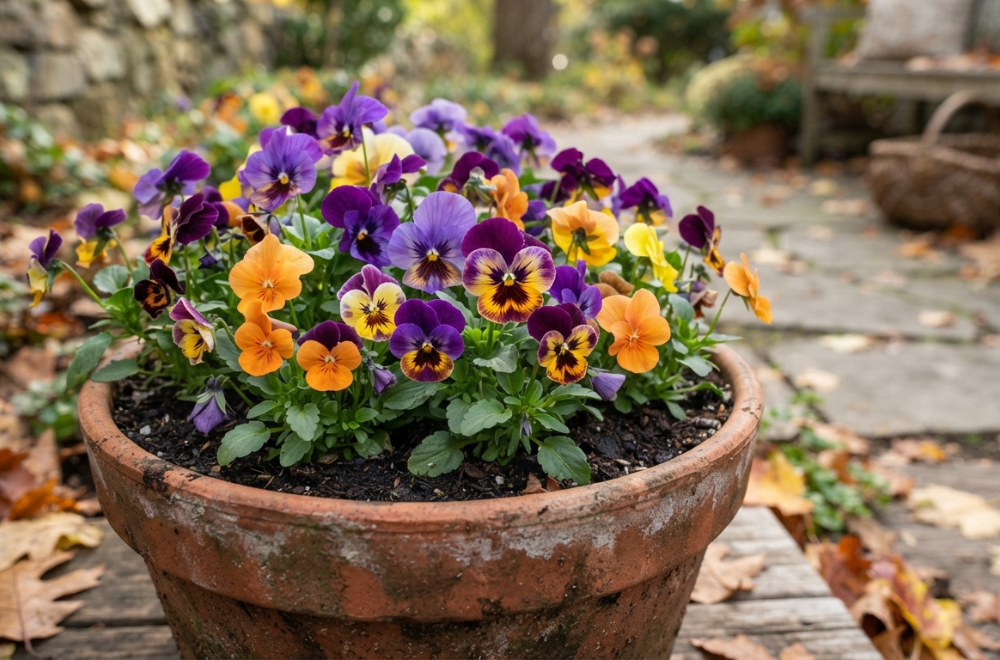
Pansies (Viola × wittrockiana) thrive in cool weather and struggle in heat. In zones 7 and warmer, fall planting often produces flowers through winter. In colder zones, pansies planted in early fall bloom until a hard freeze and sometimes revive in spring. Plant when temperatures have cooled, space them 6 to 8 inches apart, and deadhead regularly, since seed production slows flowering.
Violas
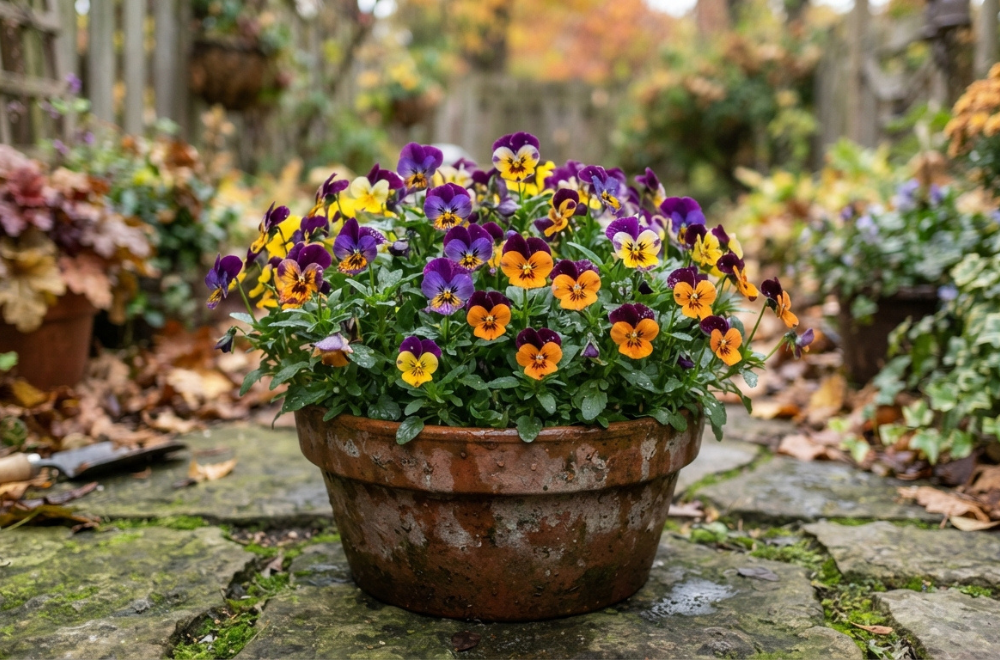
Violas have smaller flowers than pansies but produce far more of them, and they generally hold up a little better in both heat and cold. Some, like Johnny-jump-up (V. tricolor), self-seed and return on their own. Use violas as edging, in window boxes, or mixed with kale in pots.
Calendula
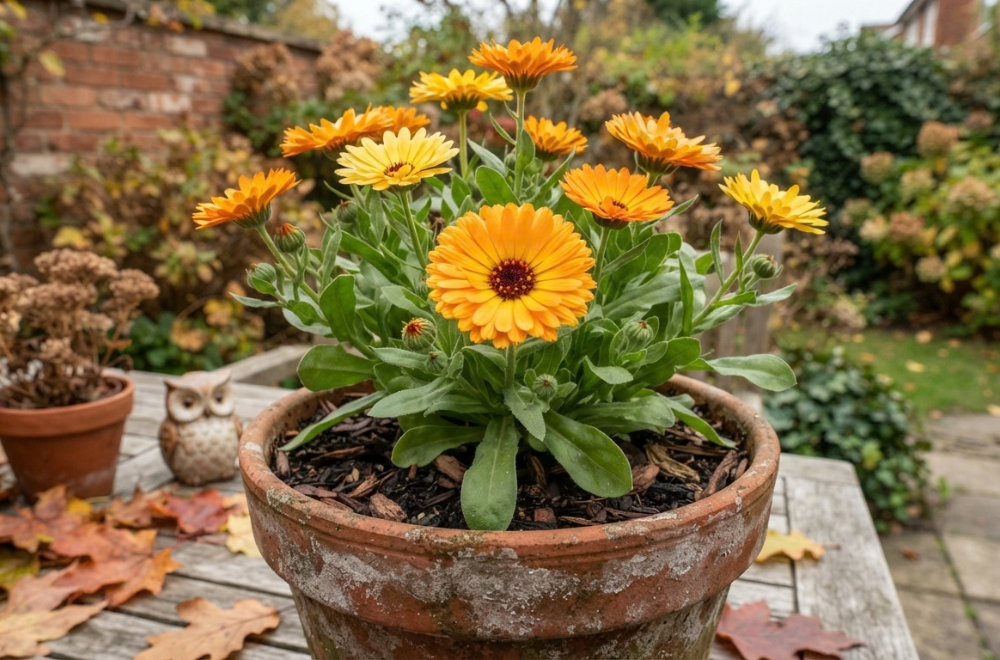
Calendula officinalis is a cool-season annual with orange and yellow flowers that tolerates light frost and often survives moderate cold. A hard freeze ends it. Sow seed in late summer where winters are mild, or buy transplants. Deadheading keeps it blooming. Aphids and powdery mildew show up in humid conditions. The petals are edible, but only eat flowers from plants that haven’t been treated with pesticides not labeled for food crops.
Snapdragons
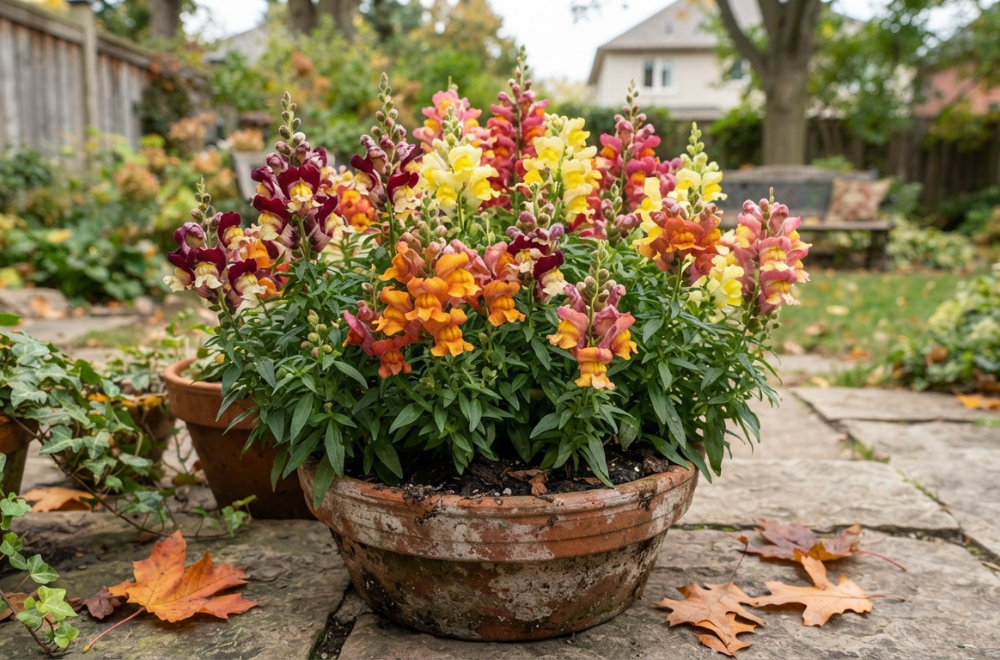
Summer heat stalls snapdragons (Antirrhinum majus), but they often flower again in fall. Cutting heat-stressed plants back to a few inches in late summer and feeding them encourages rebloom. They tolerate light frost. Dwarf types stay at 6 to 8 inches for containers, while taller types like the ‘Rocket’ series reach 3 feet and add vertical interest to a bed. In warm zones they act as short-lived perennials.
Ornamental Kale
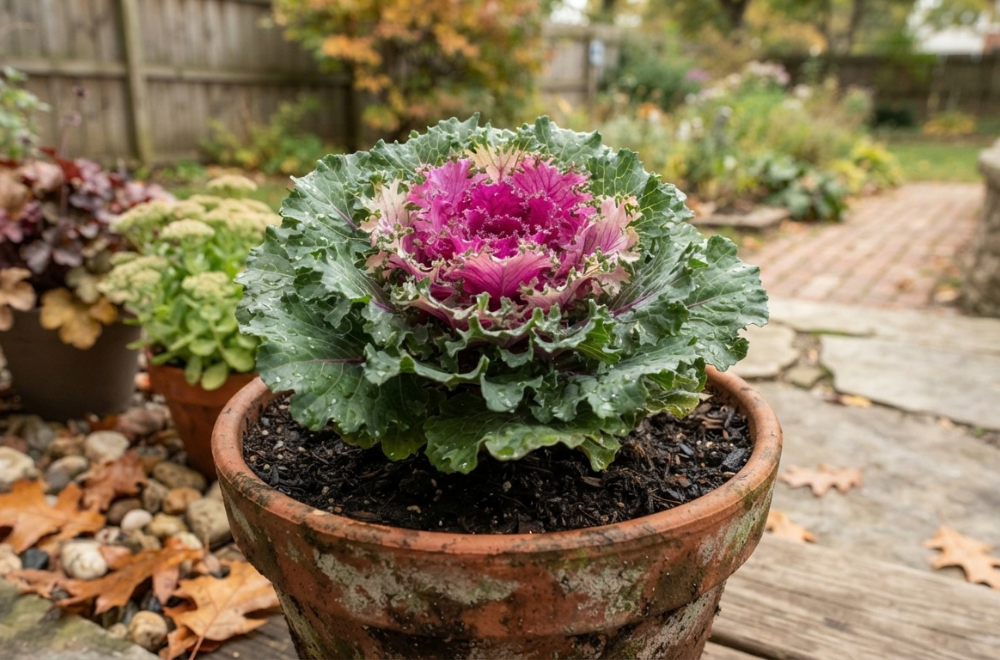
Ornamental kale and cabbage are grown for foliage, not flowers, but they earn a spot for late-season color. The centers turn white, pink, or purple as nights drop below about 50°F, and the plants hold up through hard freezes, often lasting into winter in mild climates. Plant in early fall. If set out too early in heat, they stretch and lose their compact form.
Ornamental types are technically edible, but they are bred for looks and can taste bitter. Skip eating any that were treated with chemicals not meant for food. In pots, a kale centerpiece with violas or pansies around the edge covers the container’s full season.
Picking by Problem
Plants often fit several categories, so use whichever situation matters most.
If You Want the Least Upkeep
Sedum, black-eyed Susan, coneflower, goldenrod, and aromatic aster need little more than sun and decent drainage. Bluebeard needs one spring pruning. The higher-maintenance choices are mums (pinching), pansies (deadheading), Japanese anemone (steady moisture), and toad lily (consistent moisture and slug watch).
If You Want to Feed Pollinators
Late-season nectar matters for migrating monarchs and for queen bumble bees that need to feed up before overwintering. Asters, goldenrod, sedum, and bluebeard are among the strongest. Toad lily draws bumblebees. Skip heavily doubled mums and pansies if pollinators are the goal, since breeding has made many double-flowered forms harder for insects to access.
If Bloom Season Matters Most
“Late blooming” and “long blooming” are different qualities. Late bloomers start in fall and are vulnerable if frost comes early: Montauk daisy, toad lily, aster, and mums. Long bloomers start earlier and keep going: black-eyed Susan, coneflower, bluebeard, and sedum, whose color continues to change. Pairing one of each type gives you insurance, since the long bloomers keep the bed alive if an early freeze cuts the late ones short.
If Your Winters Are Hard
Sedum, goldenrod, coneflower, black-eyed Susan, and asters are hardy into zone 3 or 4. Ornamental kale and violas tolerate much of what a northern fall throws at them. Montauk daisy, bluebeard, and hardy mums are less certain in zones 4 and 5, so plant them in spring, in a sheltered spot, and mulch after the ground freezes.
If the Garden Is Small
Compact choices include ‘Purple Dome’ aster, ‘Golden Fleece’ goldenrod, standard sedum, cushion mums, pansies, and violas. Avoid aggressive Canada goldenrod, tall New England aster without pruning, and Japanese anemone in a very tight bed, where its runners will crowd neighbors. Snapdragons add height in a narrow space without much spread.
Mistakes That Cut Fall Color Short
Planting perennials too late. Perennials need roughly six weeks of root growth before the ground freezes to overwinter reliably. Fall planting is fine, but later plantings need mulch and consistent water.
Feeding with high-nitrogen fertilizer late in the season. It pushes soft growth at the expense of flowers. Perennials generally need little or no feeding in fall. For pansies and other cool-season annuals, a dilute feed every few weeks is a common approach.
Wet feet. Poor winter drainage kills sedum, Montauk daisy, mums, and anemones more often than cold does. Raised beds or grit-amended soil help.
Cutting back too early. Seed heads on coneflower, sedum, and goldenrod feed birds and shelter beneficial insects. Leave them standing until spring, except for foliage showing disease.
Skipping deadheading on annuals. Pansies, calendula, and snapdragons redirect energy to seed if spent blooms stay on the plant. Snipping them keeps the display going.
Questions Gardeners Ask About Fall Flowers
Can I still plant in October? Cool-season annuals like pansies, violas, and kale can go in through the fall in most regions. Perennials can go in too if they get about six weeks before the ground freezes. Later than that, set them in containers or mulch heavily and expect some losses.
Are any of these a problem for pets? Chrysanthemums are listed by the ASPCA as toxic to dogs and cats, and Anemone species can irritate the mouth and stomach if chewed. Check the ASPCA plant database for any plant you plan to put where pets roam.
Should I clean up the bed before winter? Mostly no. Leave stems and seed heads through winter for birds and insects. The exceptions are plants with visible disease, like mildewed asters, and Montauk daisy and bluebeard, which get pruned in spring.
Where to Start
Look up your first-frost date and note which parts of your beds look empty right now. That gap tells you what to plant next. Perennials set in the ground this fall will bloom in fall next year, so a single aster or sedum planted now fixes the problem for the following season. For this year, a few pots of pansies, violas, and kale fill the space while you wait.

About Syprose Kiche
Syprose Kiche is the creator and writer behind My Besuited Home, a practical home and garden website covering DIY projects, gardening, lawn care, landscaping, home improvement, and outdoor living. She focuses on turning everyday homeowner questions into clear, practical guides backed by careful research and useful real-world considerations.