
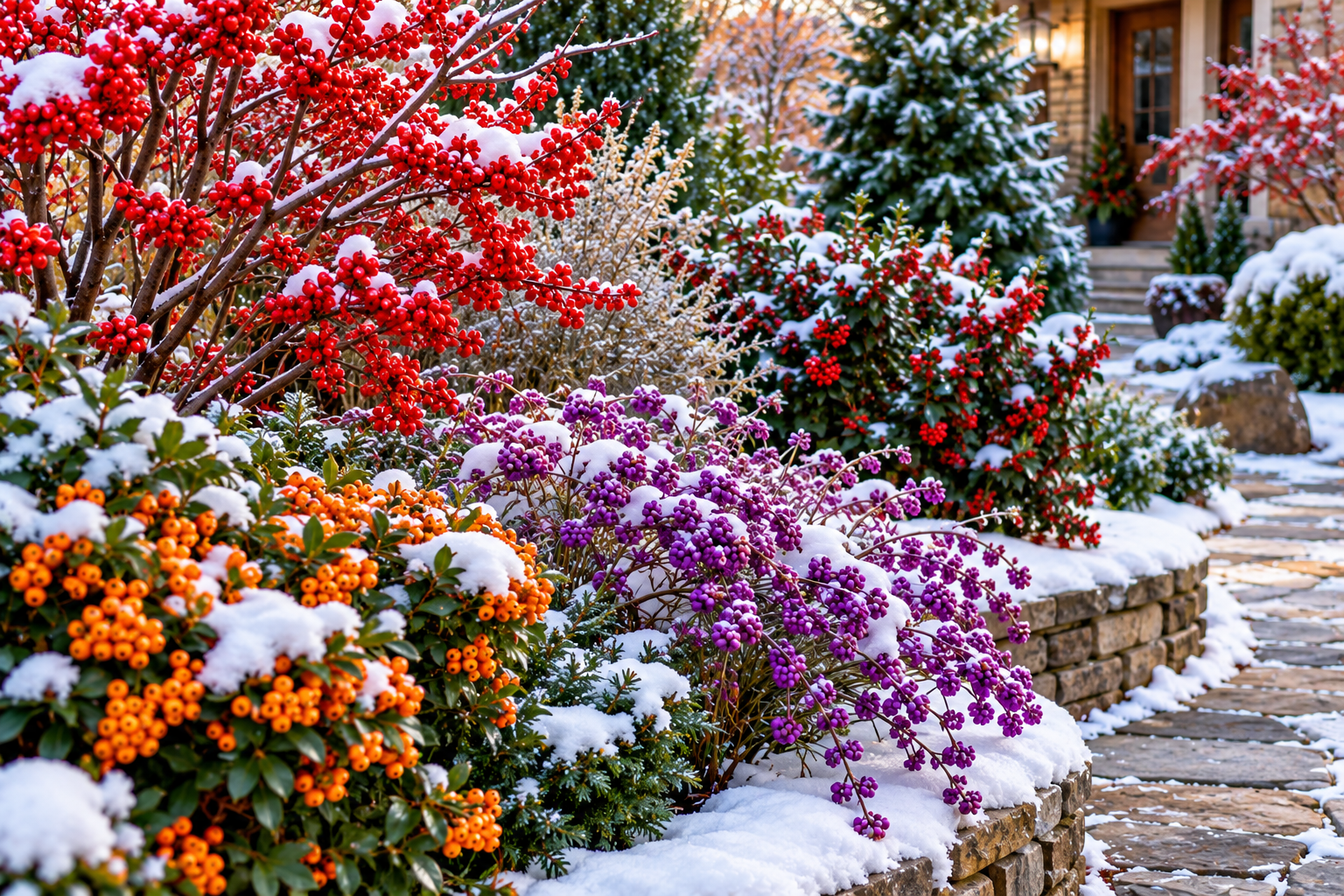
A yard planted mostly for summer has a predictable winter problem. The leaves drop, the perennials get cut back or collapse, and what remains is mulch, a fence, and a few bare sticks. Most people respond by looking away from the garden until April.
The fix is rarely more flowers. A winter garden depends on form, texture, color in unexpected places, and things that move or glow when little else does. A yew hedge dusted with snow looks good because of its shape. A river birch looks good because of its bark. Neither needs a bloom.
The ideas below are ordered roughly by how much work they are to set up and how much they change the look of a yard. Hardiness varies a great deal, so check each plant against your USDA zone (or the equivalent in your country) before buying.
1. Evergreen Shrubs Give the Garden Something to Hold On To
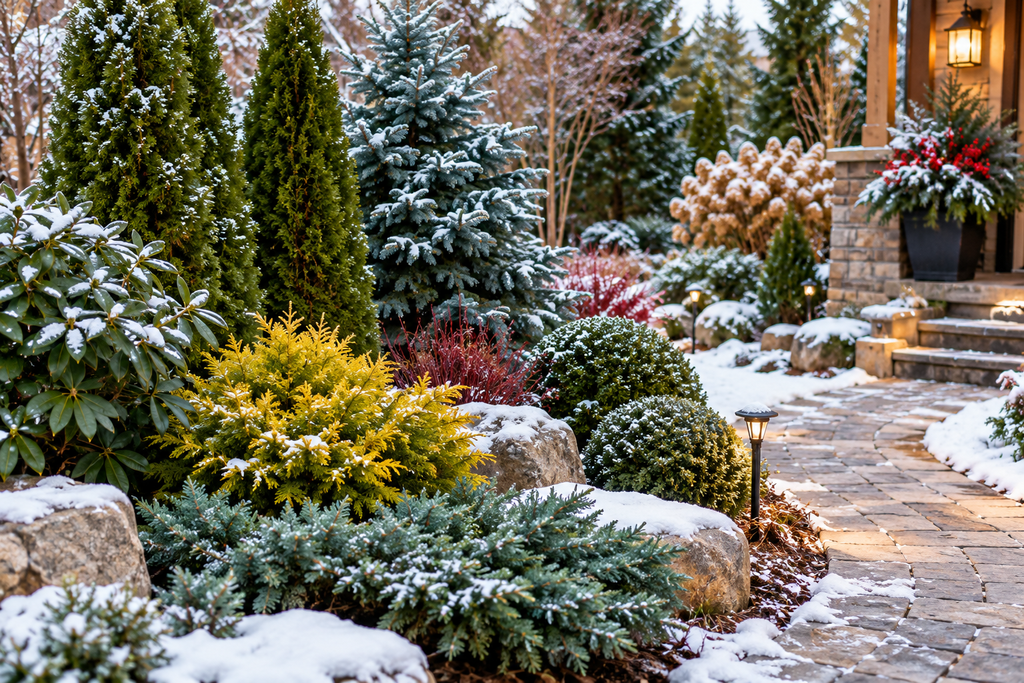
Evergreen shrubs are the base layer. They provide mass and a year-round green backdrop, and they make everything else look better in winter, from a red berry to a bare dogwood stem.
Variety matters as much as quantity. A border of identical boxwoods looks like a hedge. Mixing leaf size and color is what gives the border depth. Broadleaf evergreens such as inkberry holly, mountain laurel, and Japanese holly have glossy foliage that catches low winter light. Conifers like dwarf spruce, juniper, and arborvitae add fine texture and blue, gold, or deep green tones. Some junipers and a few cedars take on a bronze or purplish cast in cold weather, which can be striking against snow.
Two cautions. Broadleaf evergreens like rhododendron and camellia can suffer winter burn when cold, dry wind pulls moisture from the leaves while the roots sit in frozen ground. Plant them out of the prevailing wind, and water thoroughly in late fall before the ground freezes. Also, if deer browse in your area, check local extension guidance first. Deer will eat plants they normally ignore when winter food is short.
2. Ornamental Grasses That Look Better After Frost Than Before
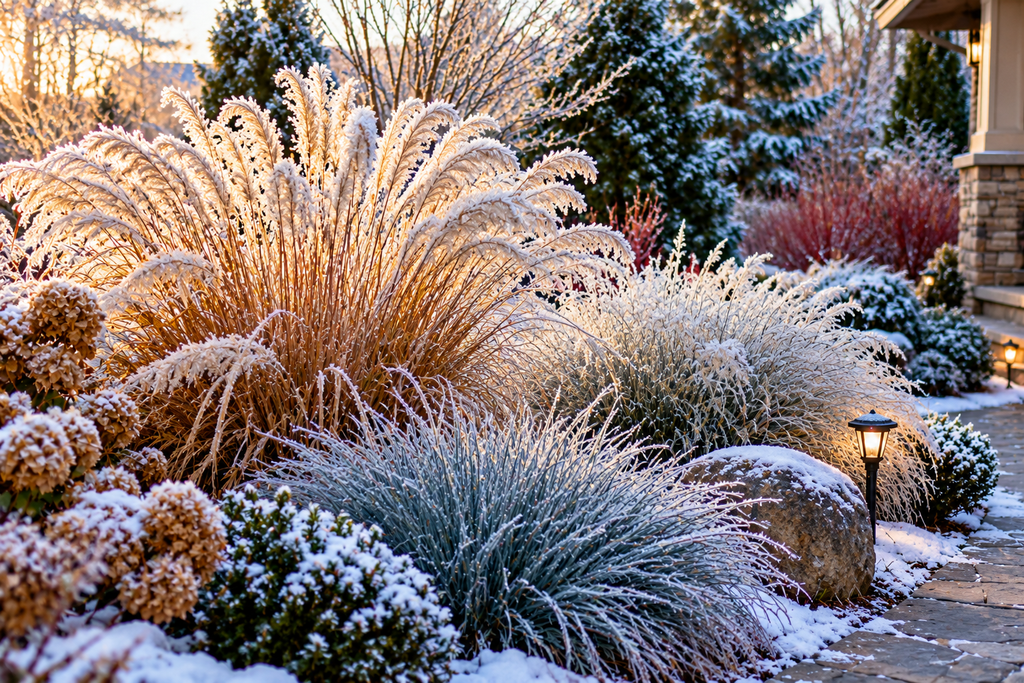
Many grasses peak in winter. As the foliage fades to tan, gold, or copper, the seed plumes catch backlight at low sun angles, and the whole clump sways in wind that would flatten a perennial.
Good upright choices include feather reed grass (Calamagrostis ‘Karl Foerster’), switchgrass (Panicum virgatum), and maiden grass (Miscanthus sinensis). Little bluestem (Schizachyrium scoparium) turns a rusty orange. Some cultivars of miscanthus can spread by seed in certain regions, so check whether a given type is listed as invasive locally.
Heavy, wet snow can flatten tall grasses, and some varieties hold up better than others. Stiffer, more upright types such as ‘Karl Foerster’ tend to cope with snow better than loose, arching ones. In fall, resist the urge to cut everything down. Leave the clumps standing and cut them back in late winter, just before new growth starts, so you still get the winter view and the stems and seed are available to wildlife.
3. Berry-Producing Plants for Red, Orange, and Purple in the Gray Months
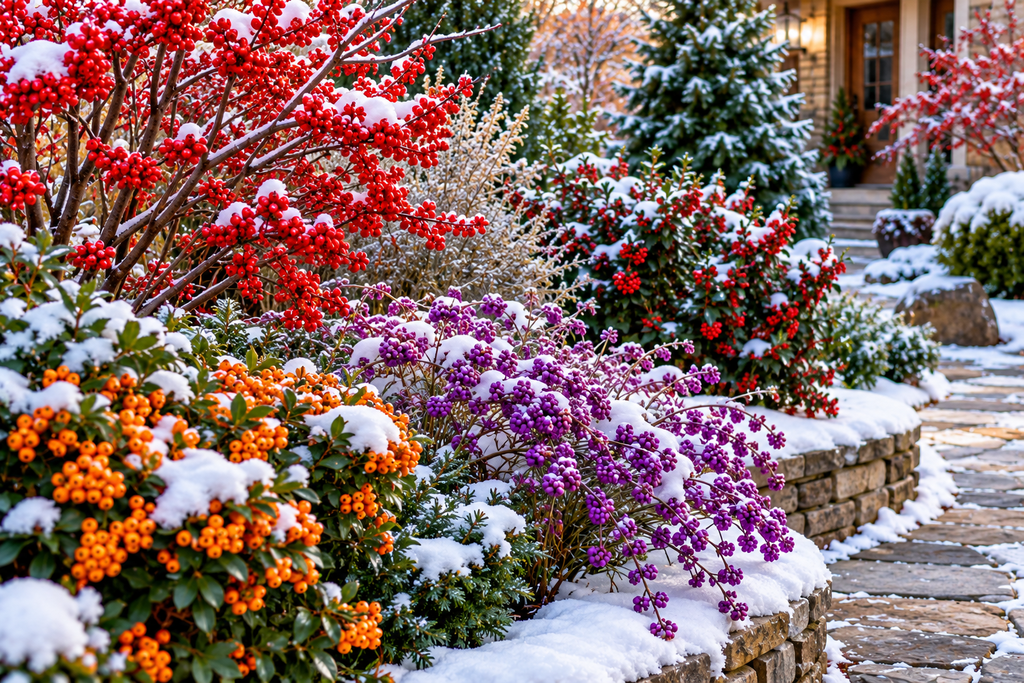
Berries provide the strongest color in an otherwise muted garden, and they feed birds in the months when other food is scarce.
Winterberry (Ilex verticillata) is a deciduous holly that drops its leaves and leaves bright red branches covered in fruit. It’s dioecious, meaning only female plants produce berries, and they need a male pollinator nearby with a matching bloom time. Nursery tags and growers usually list recommended pairings. Skipping this step is the most common reason a winterberry produces nothing.
Other reliable options include chokeberry (Aronia), certain viburnums, small-fruited crabapples such as ‘Donald Wyman’, and rose hips from species and shrub roses (rugosa roses are especially good for this). Firethorn (Pyracantha) produces a heavy crop of orange or red berries but has serious thorns and is considered invasive in some regions.
Berries on holly, yew, and many other ornamental shrubs are toxic to people and pets if eaten in quantity. Yew is the most dangerous: nearly all parts of the plant are poisonous. If small children or grazing animals use the yard, consider placement carefully.
4. Plants With Bark Worth Looking At
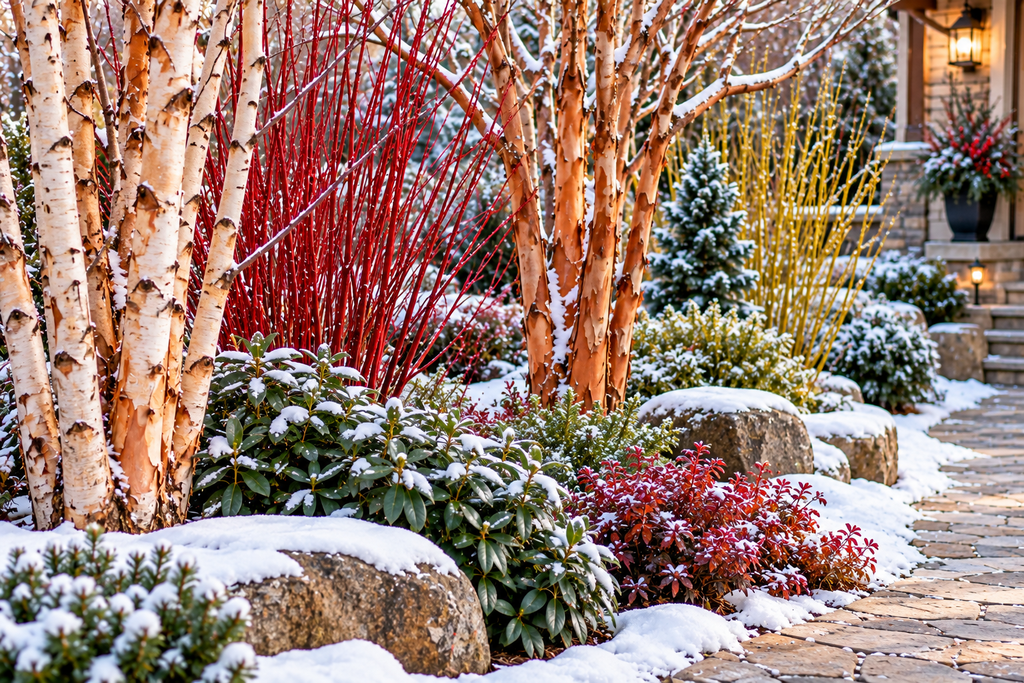
When there are no leaves, bark is on full display. A few trees are worth planting mainly for it.
River birch (Betula nigra) has peeling, papery bark in cream, salmon, and brown. Paperbark maple (Acer griseum) has cinnamon-colored bark that curls away in thin sheets. Lacebark pine (Pinus bungeana) develops a patchwork of gray, green, and cream as it ages. Crape myrtle, where hardy, has smooth, mottled trunks, and coral bark maple has bright coral-red young stems in winter.
Some of these are slow-growing, and the best bark often shows up only as the tree matures, so this is a long-term investment. Place them where you can see them from a window or a path, and use a dark background such as an evergreen hedge or a fence to make the color stand out. Light bark on a pale wall disappears.
5. Decorative Branches for Color and Structure
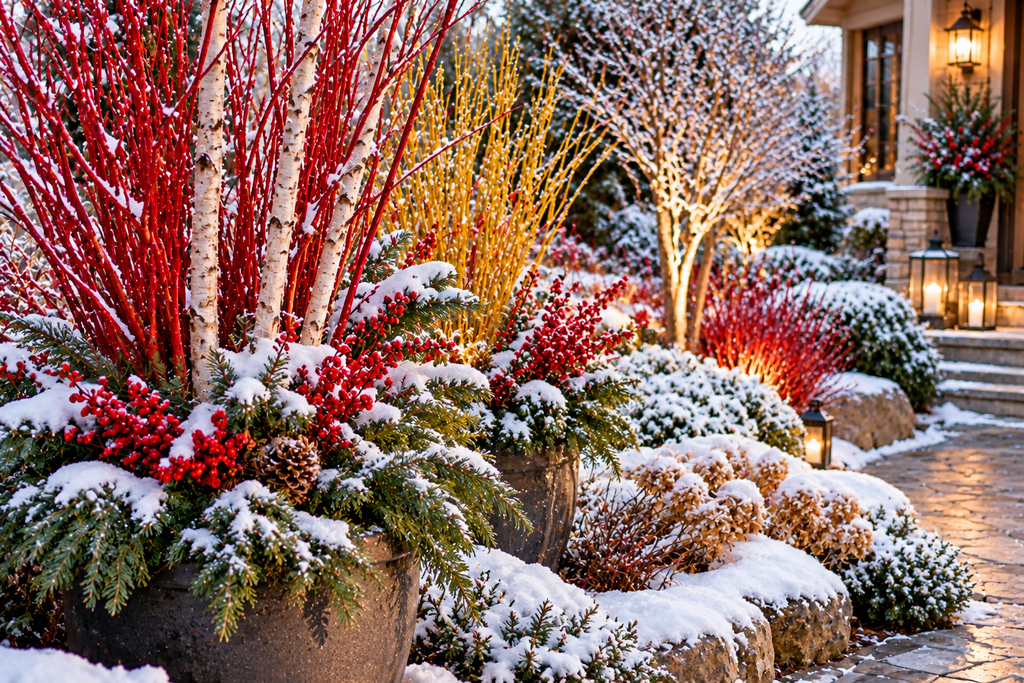
This is a cheaper, faster route to winter color. Some shrubs are grown mainly for the color or shape of their stems.
Red-twig and yellow-twig dogwoods (Cornus sericea, C. alba, C. sanguinea) have bright stems that glow against snow. The brightest color is on young growth, so these shrubs benefit from regular renewal pruning in late winter or early spring. A common approach is to remove roughly a third of the oldest stems each year, or to cut the whole shrub down to a few inches every few years. Skipping this means the stems age, turn dull, and lose their color.
Contorted hazel (Corylus avellana ‘Contorta’) has twisted, corkscrew branches that look sculptural without any leaves, and certain willows have orange or yellow-orange winter stems. These also work as cut material for indoor arrangements, which makes pruning more rewarding.
6. Winter Containers That Survive Freezing
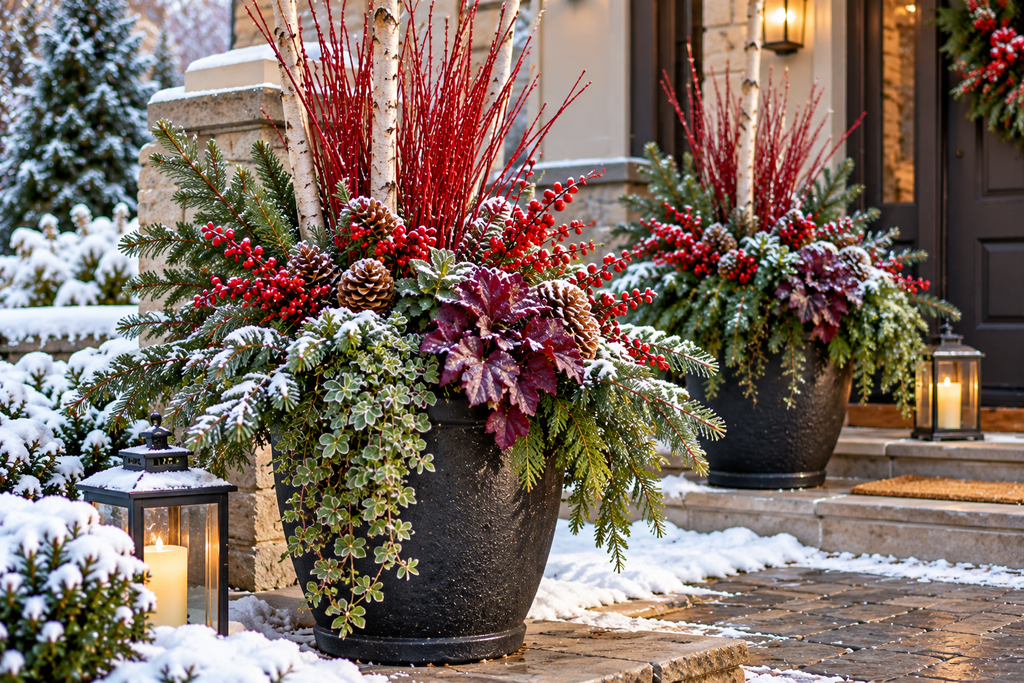
Containers let you put color and structure exactly where you walk. The trouble is that plants in pots are more exposed to cold than plants in the ground, because the roots are surrounded by air instead of insulating soil. A commonly cited rule of thumb is that container plants are hardy to roughly one to two zones colder than their in-ground rating, so a plant rated to zone 5 may need zone 7 conditions in a pot.
Reliable choices include dwarf conifers, boxwood, ivy, heuchera, evergreen sedges (Carex), and winter-hardy pansies and violas in milder climates. Add cut evergreen branches, dogwood stems, or pinecones for height and color.
Drainage matters more than anything. Water that collects and freezes will crack a pot and rot roots. Choose frost-resistant containers (many glazed ceramics and terracotta are not), raise pots on feet so water can drain, and move the most delicate ones against a wall or into an unheated garage if the forecast is severe.
7. Evergreen Topiary and Clipped Forms
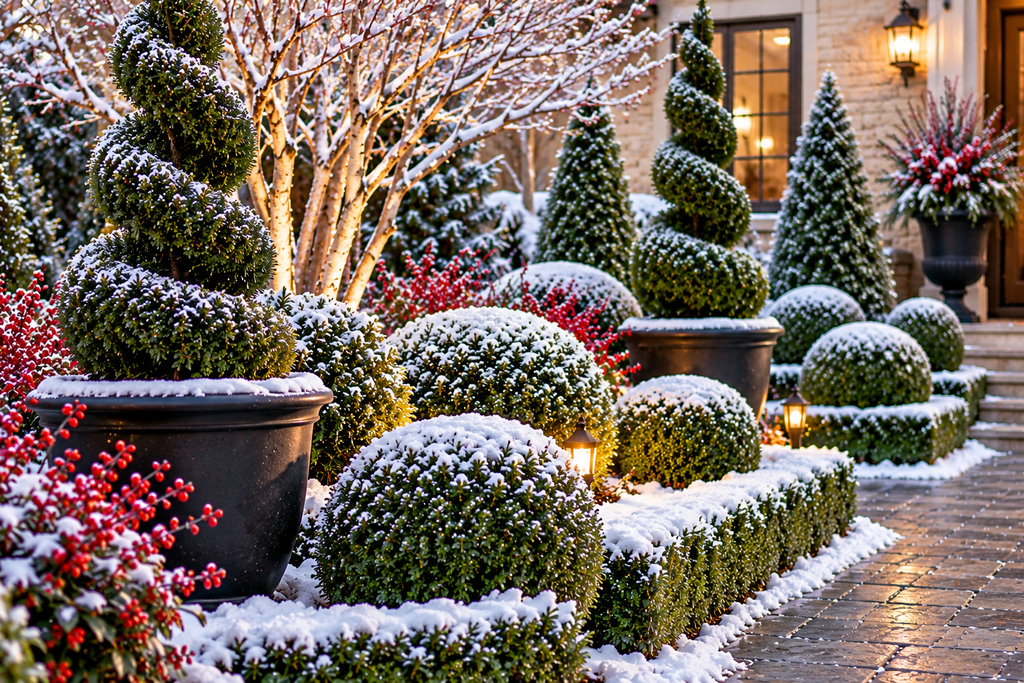
Clipped evergreens bring order to a garden that otherwise looks loose in winter. Spheres, cones, cubes, and low hedges stay sharp when everything else is bare, and snow settling on them makes the shapes even more visible.
Boxwood, yew, and Japanese holly all take shaping well. Keep forms simple, since elaborate shapes need more maintenance. Boxwood has two problems to know about: box blight, a fungal disease, and box tree moth, which is a serious pest in parts of Europe and has been spreading in parts of North America. If either is active where you live, consider alternatives such as inkberry holly or Japanese holly.
Heavy snow and ice can split or deform upright forms. Brushing off snow gently with a broom (upward strokes) helps, as does tying tall, narrow shapes loosely with soft twine. Don’t strike frozen branches, because they’re brittle.
8. Bird-Friendly Plants That Bring Movement to the Garden
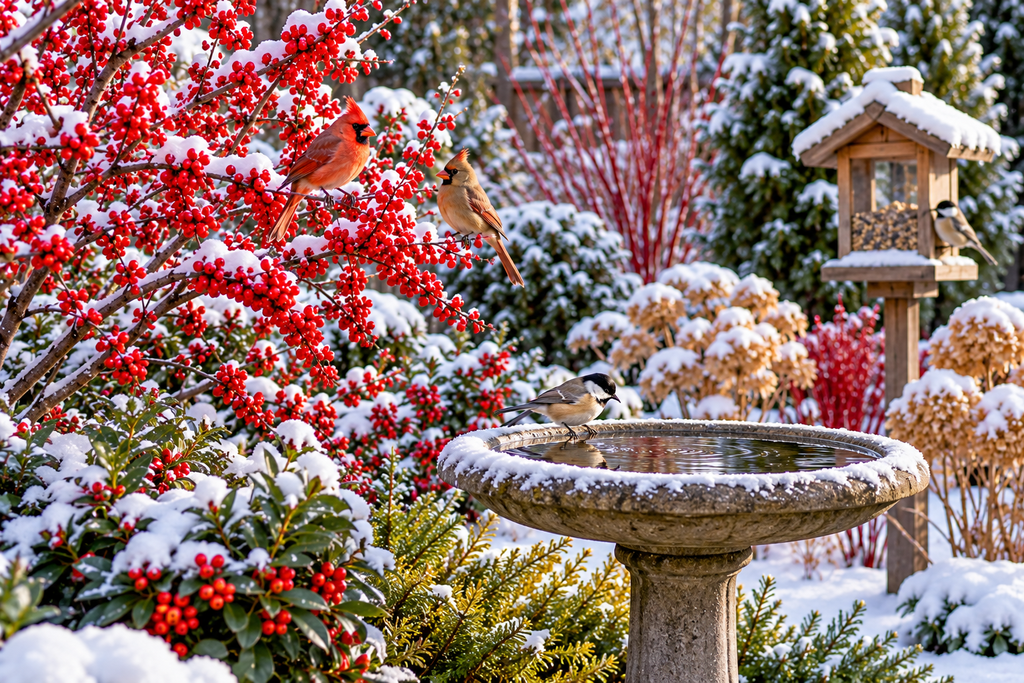
A quiet winter garden gets livelier once birds start to visit. The most useful plantings offer food, shelter, and water.
Berries cover food, and many of the plants above do double duty here. Seed heads on coneflower, rudbeckia, and ornamental grasses provide more. Dense evergreens, particularly conifers and holly, give shelter from wind and cover from predators. Leaving a brush pile in an out-of-the-way corner gives small birds a refuge too.
Water is scarce in freezing weather. A birdbath with a heater designed for the purpose keeps water liquid, and it’s much more useful than additional feeders. Never add antifreeze or other chemicals to bird water. Feeders and baths should be cleaned regularly with a diluted bleach solution or according to guidance from a wildlife agency, since dirty feeders can spread disease.
9. Garden Paths You Can Actually Use in Winter
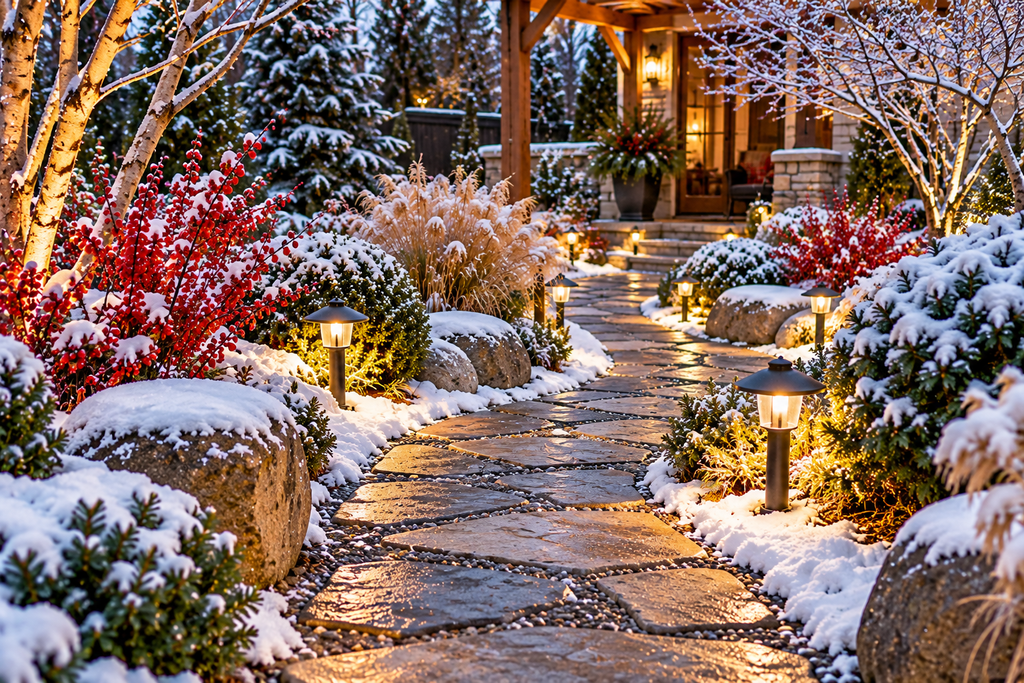
A path does two jobs in winter: it gets you across the garden safely, and it draws your eye through it. Both matter more when the planting is bare.
Gravel, crushed stone, and pavers all work, but they behave differently. Gravel is easy to walk on and doesn’t get slick, though it can be hard to shovel. Pavers are easier to clear but can become icy, particularly in shade. Wood chip or bark mulch paths soften and slip when wet and frozen, so they’re best for secondary routes.
Width matters: roughly three feet is comfortable for one person to walk without brushing against plants, and wider if you want to carry things or walk two abreast. Curves look good, but a path to the compost bin or shed should be direct if you’ll use it in bad weather.
Be careful with de-icing salt near plantings. Rock salt can damage plant roots and leaf tissue, and it can degrade concrete. Sand, or a product labeled safe for plants, is a better choice near beds. Mark the edges with stakes if you get heavy snow, so you know where the path is.
10. Stone Features That Hold Their Shape All Year
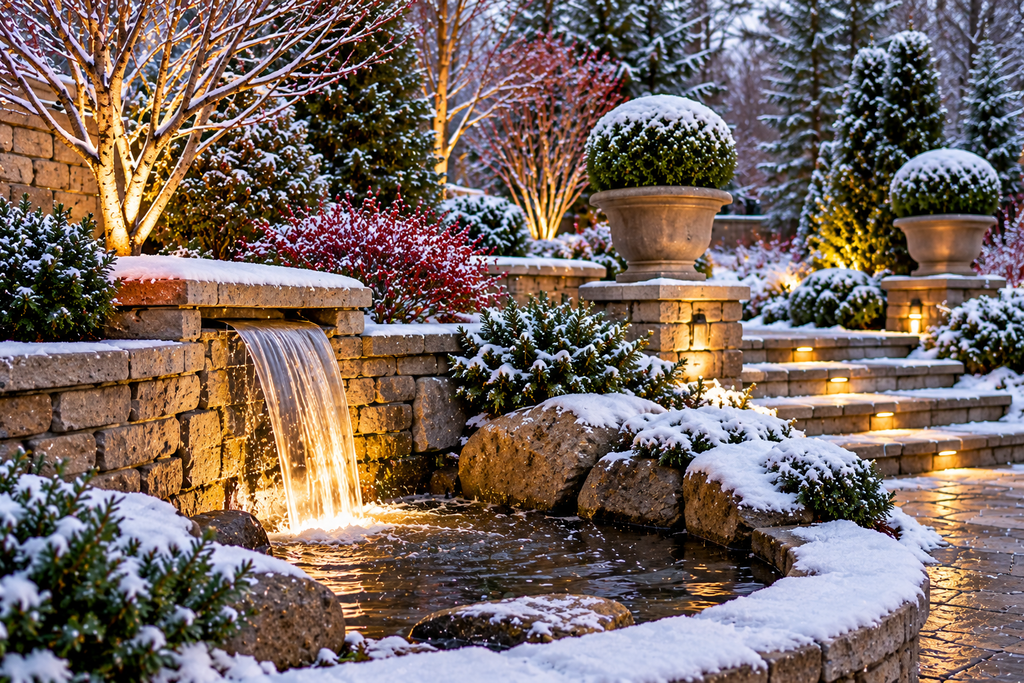
Stone doesn’t change with the seasons, which makes it a good anchor when the planting is dormant. Boulders, dry-stacked walls, stone steps, cairns, and gravel beds all add texture and give the eye something solid.
A single large boulder, partly buried, usually looks more natural than a pile of small stones. Bury about a third of it, and set it at the angle it would have settled in naturally. Dry-stacked walls need a compacted gravel base and a slight backward lean for stability, and they’re worth getting professional help with if they’re more than about knee height, because failure can be dangerous.
Frost heave is the main limitation. Freezing and thawing soil moves stone, so features need a well-drained, compacted base below the frost line where practical. Mossy or lichen-covered stone looks especially good in winter, and moss tends to look greener in damp, cool conditions.
11. Winter Lighting That Turns the Garden Into an Evening View
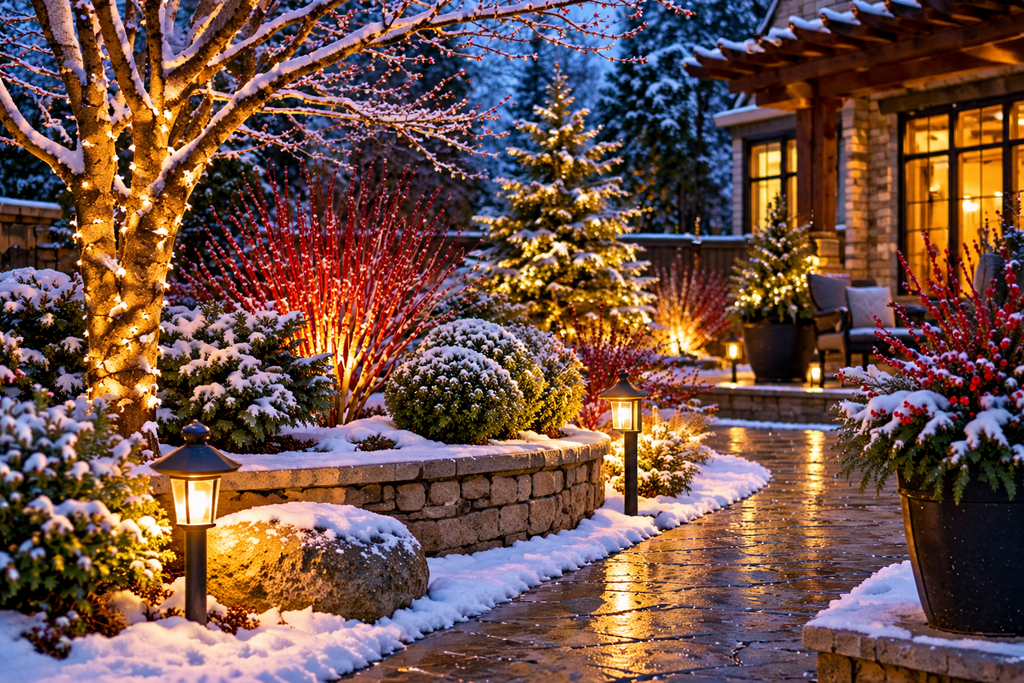
Winter nights come early, and most people see their garden in the dark. Well-placed lighting makes it a destination. It also improves safety on paths and steps.
Subtle usually works better than bright. Uplighting a tree with interesting bark, a spotlight on a sculptural shrub, or low path lights are often more effective than string lights everywhere. Warm white light tends to look more natural against snow and evergreens than cool white.
Solar lights often underperform in winter, because shorter days and low sun reduce charging. Low-voltage LED systems are more reliable. For anything plugged into mains power, use outdoor-rated fittings and cables, a GFCI-protected outlet, and have wiring installed by a qualified electrician where required. If you wrap lights around trees, loosen them every year so they don’t constrict growing branches.
12. Raised Beds That Stay Productive and Look Tidy
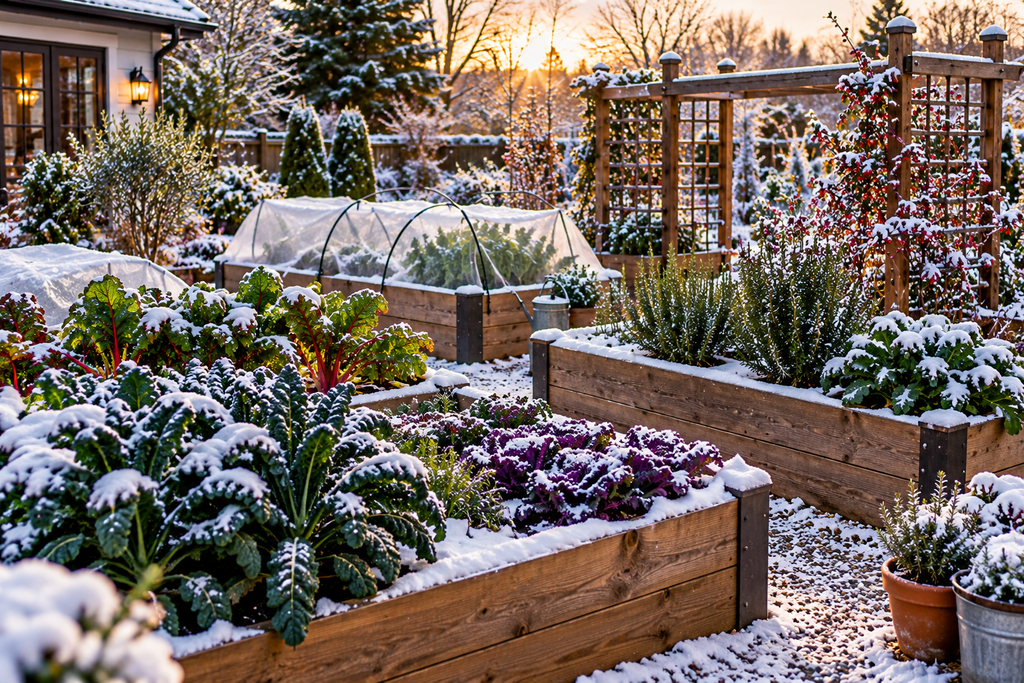
Raised beds give a winter garden clean lines and a defined shape. Even empty, they act as a kind of frame, and a bed with well-built edges looks intentional rather than abandoned.
They can also keep working. Cold-hardy crops such as kale, spinach, leeks, and garlic planted in fall can stay in the bed through winter in many climates, and covering with row cover or a low hoop of clear plastic or fabric extends the harvest. A layer of mulch over bare soil protects it from erosion and compaction from winter rain and snow.
Which crops work depends heavily on your zone and how severe your winters are. In very cold climates, a bed may simply rest, and the useful job is mulching and keeping the structure in good repair. Add evergreen herbs such as thyme or rosemary (where hardy) along the edges for color.
13. Seed Heads Worth Leaving Standing
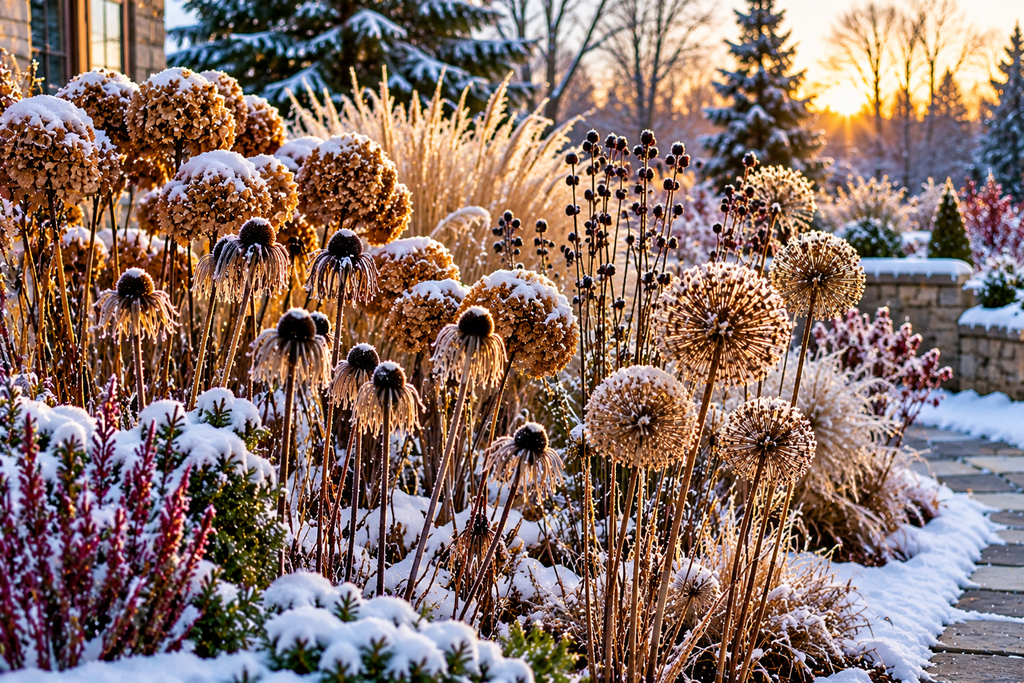
Cutting everything down in fall tidies the garden but removes much of its winter interest. Seed heads and dried stalks have a structure that frost and snow accentuate.
Good candidates include coneflower (Echinacea), black-eyed Susan (Rudbeckia), sedum (Hylotelephium), allium, and panicle hydrangea, whose papery blooms fade to tan and pink. Teasel and globe thistle have spiky, architectural forms. These also feed seed-eating birds and shelter overwintering insects, including some beneficial ones.
The trade-off is that some plants collapse into slimy mush after a wet autumn, and some self-seed more than you’d like. Hostas and daylilies, for example, usually look better cut back. Be selective: leave the sturdy, structural ones and clear the rest. Cut standing stems back in late winter, before new growth emerges.
14. Architectural Plants With Bold Shapes
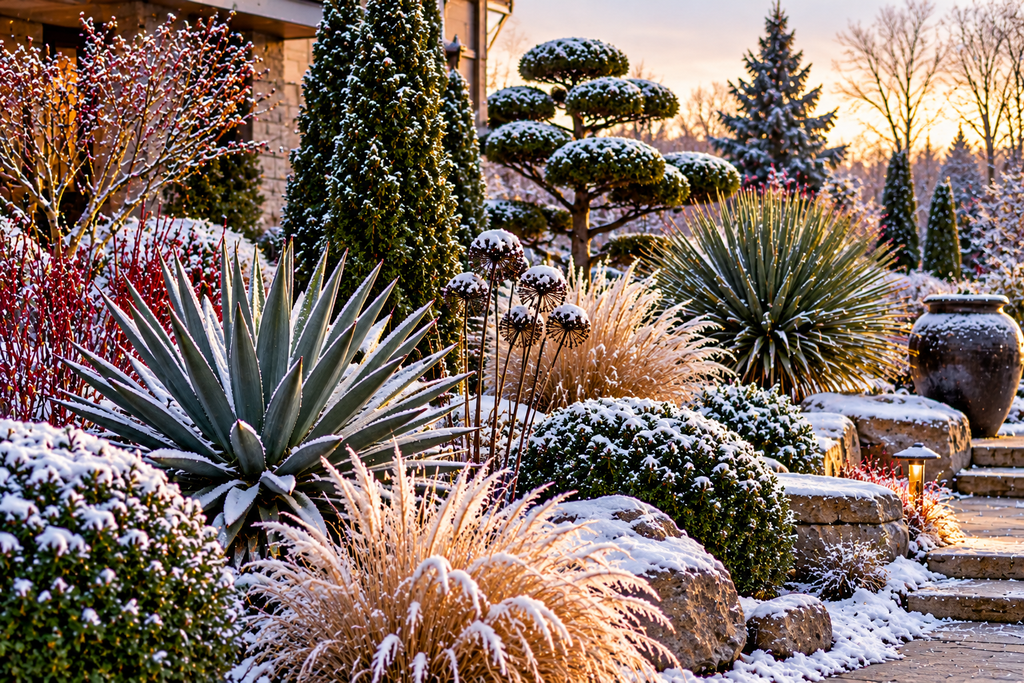
Plants with strong, distinct forms act like sculpture when everything around them is quiet. They work best as single accents.
Yucca (Yucca filamentosa, hardy to zone 4 or 5 depending on source) has stiff, sword-like leaves that stay evergreen. Mahonia has bold, spiny leaves, and Fatsia japonica (hardy only in milder zones) has large, glossy, hand-shaped foliage. Euphorbia species such as E. characias have blue-green, upright stems. Hellebores with leathery evergreen leaves also qualify.
Because these plants draw the eye, give them space and a plain background. Putting several in one spot dilutes the effect. Check hardiness carefully, since many dramatic-looking plants, such as phormium and agave, are borderline or tender in cold climates and may need winter protection or growing in pots that can be moved indoors.
15. Plants That Actually Bloom in Winter
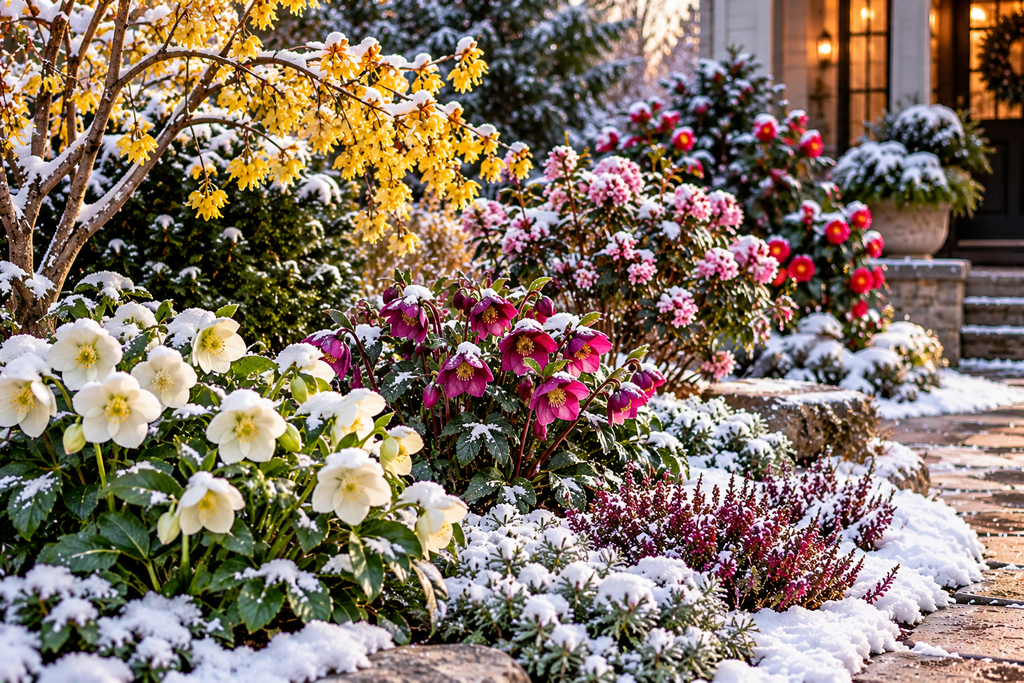
A garden can have real flowers in winter, and they stand out because nothing else is competing. Timing depends on climate, but some options bloom in the coldest months.
Witch hazel (Hamamelis) produces spidery yellow, orange, or red flowers on bare branches, often in mid to late winter. Hellebores (Helleborus) bloom from winter into early spring, and their nodding flowers are long-lasting. Winter jasmine (Jasminum nudiflorum) has yellow flowers on arching green stems. Snowdrops and winter aconite push through leaf litter, sometimes through snow, and naturalize in drifts under deciduous trees.
In colder zones, bloom may be delayed until late winter or early spring, and a hard freeze can damage open flowers. The plants are generally tough, but plan for a few weeks of variation. Planting near a path or window means you can enjoy them without walking far in the cold.
16. Fragrant Shrubs Near the Door
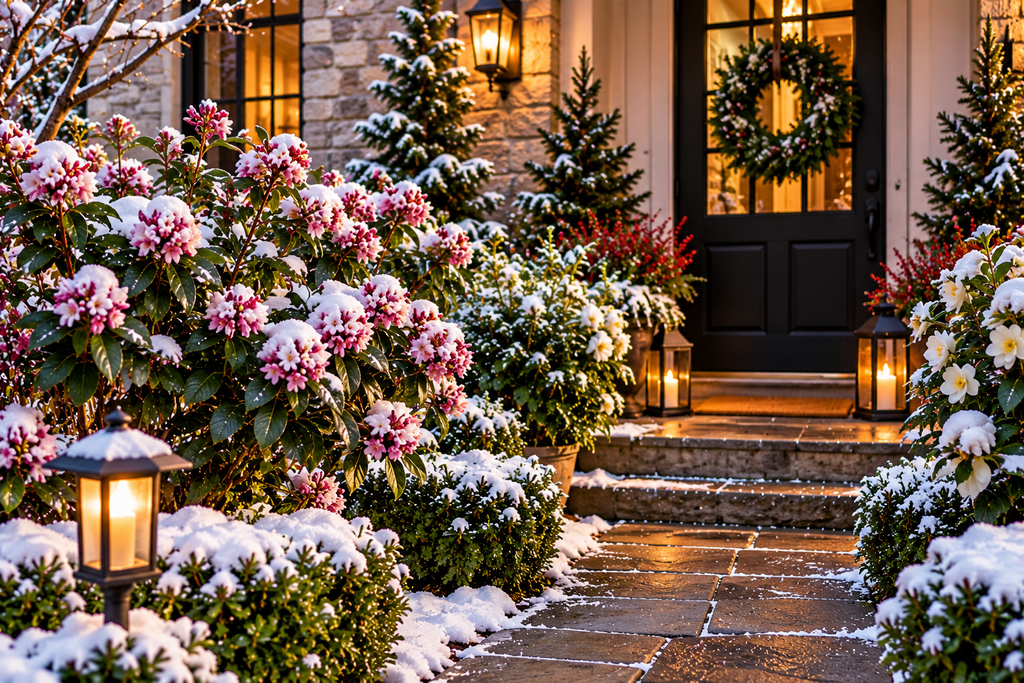
Cold air carries scent poorly, so winter fragrance works best in sheltered spots where you’ll pass often. A shrub next to a door or beside a sunny wall gives you something to notice every time you go in or out.
Sweet box (Sarcococca) is a compact evergreen with small, intensely fragrant flowers in winter, and it tolerates shade. Wintersweet (Chimonanthus praecox), winter daphne (Daphne odora, which can be fussy and short-lived), and Viburnum × bodnantense are also known for scented winter bloom. Witch hazel varieties vary in fragrance.
Choose by hardiness. Several of the most fragrant ones prefer milder climates, and daphne in particular dislikes disturbance and poor drainage. Put them where wind can’t strip the scent away.
17. A Sheltered Spot to Sit Outside
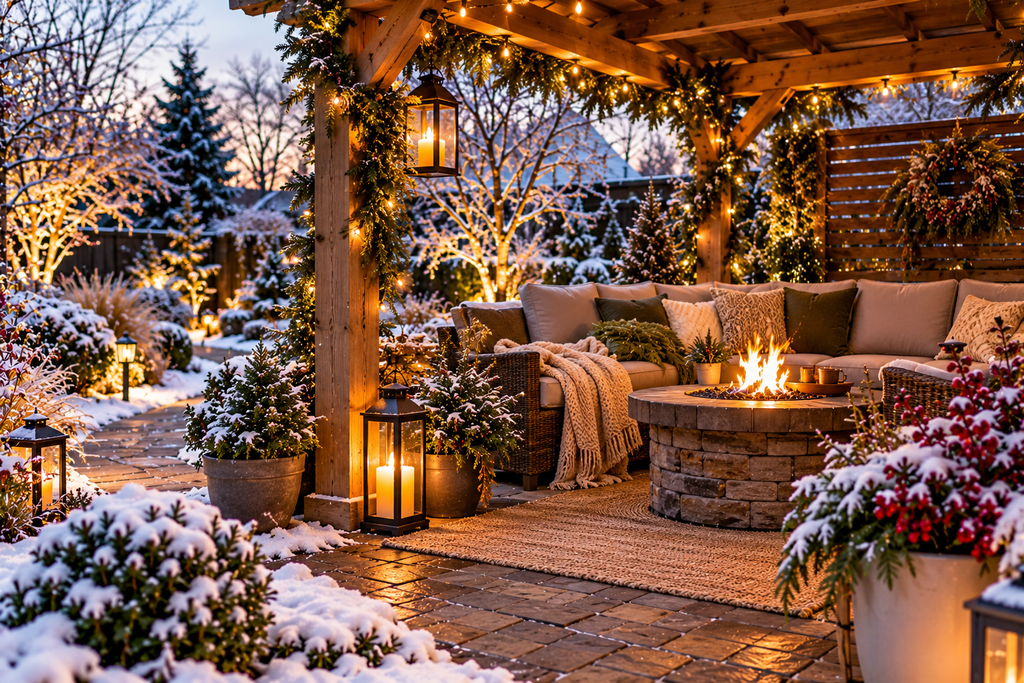
A garden is easier to appreciate if you can stay in it. A bench against a south-facing wall, a small seating nook screened from wind by evergreens, or a fire feature gives you a reason to go outside.
Sun and wind protection make more difference than the furniture. A south-facing spot can be noticeably warmer than the rest of the yard on a clear day, and evergreen screening cuts wind chill. Choose weatherproof materials, and put cushions away when not in use.
If you add a fire pit, treat it seriously. Keep it well away from the house, overhanging branches, dry evergreens, and fences; follow the manufacturer’s clearance guidance and local rules, which can restrict open burning. Never leave a fire unattended, and keep a water source nearby. Gas-fueled units should be used outdoors only, because of carbon monoxide risk.
Questions Readers Often Ask
Should I cut back grasses and perennials in fall or leave them?
Leave the structural ones standing, such as grasses, coneflower, and sedum, and cut them back in late winter before new growth starts. Cut back anything that turns slimy or looks diseased, since leaving it can harbor problems.
Can I leave terracotta pots outside all winter?
Often not. Terracotta absorbs water, and freezing can crack it. Glazed or frost-resistant containers do better, but even those can fail if water collects inside. Pots with good drainage, raised on feet, have the best chance.
Will winter berries last all season?
Not always. Birds eat them, and some berries are eaten sooner than others. Crabapple and holly fruit may be stripped in late winter, while others persist longer. Choose a mix so there’s something left at different times.
When is the best time to plant things for winter interest?
Evergreens, shrubs, and trees are generally best planted in early fall or spring, when soil temperature and moisture help roots establish. Planting in late fall, just before the ground freezes, increases the risk of poor establishment.
Key Takeaways
A winter garden needs layers more than quantity. Start with evergreen structure, add one or two features with strong seasonal interest, such as bark, colored stems, or berries, and decide what to leave standing instead of cutting down. Lighting and a comfortable place to sit make the space worth using.
For the next step, walk around your yard in midwinter and note which view you see most often, from the kitchen window or the front door, for example. Put your first additions there, and choose plants that are reliably hardy in your zone.

About Syprose Kiche
Syprose Kiche is the creator and writer behind My Besuited Home, a practical home and garden website covering DIY projects, gardening, lawn care, landscaping, home improvement, and outdoor living. She focuses on turning everyday homeowner questions into clear, practical guides backed by careful research and useful real-world considerations.