
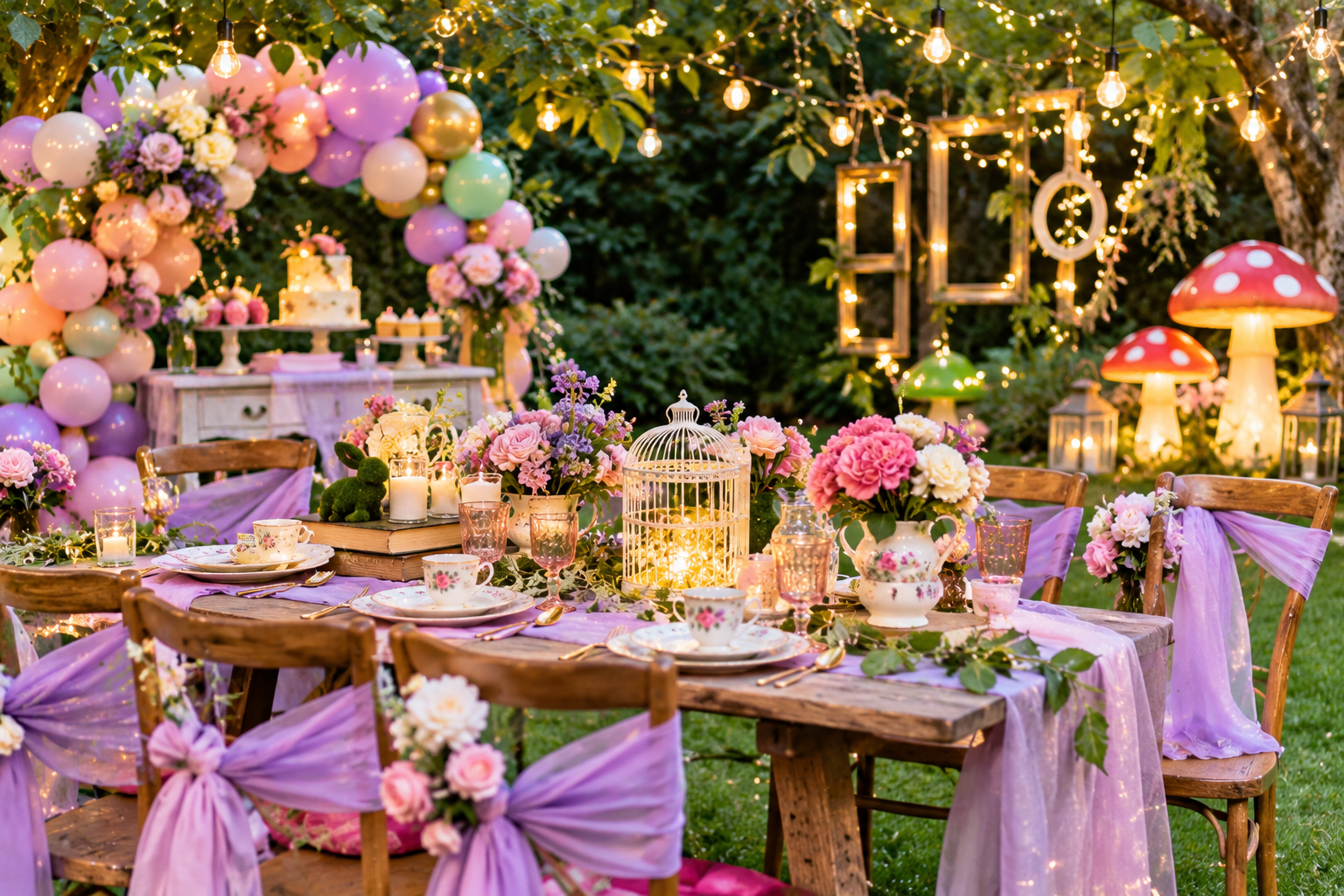
Most whimsy parties go wrong in the same quiet way. Someone buys a cart full of pastel balloons, paper butterflies, and fairy lights, hangs everything at once, and ends up with a space that looks like a party store aisle. The decorations are cute. The party feels flat, and guests drift toward the food and stay there.
Whimsy is not a quantity of cute things. It is the feeling that a space follows its own gentle, slightly impossible logic: teacups hang from a branch, a path of paper mushrooms leads to the dessert table, the invitation arrives as a tiny scroll. Creating that feeling takes fewer purchases than most people expect and more decisions, made in the right order. This guide walks through those decisions, from choosing a story to handling wind, heat, and food safety, so the party you picture is the one that actually happens.
What Makes a Party Feel Whimsical Instead of Just Decorated
Whimsy sits somewhere between playful and a little strange. Picture an illustrated children’s book, where ordinary objects such as a teapot, a tree, or a staircase do slightly unexpected jobs. A whimsy party borrows that quality. It works for a child’s birthday, a bridal shower, a garden gathering, or an adult dinner with a dress code and a good playlist.
Parties that pull it off tend to share three traits:
- One governing idea. Everything, from the invitation to the napkins, belongs to the same small world. A party with a fairy corner, a unicorn cake, and a pirate photo booth is a collection of themes, not a story.
- Surprise at small scale. A tiny door at the base of a tree, a drink labeled “drink me,” or a teacup swinging from a branch rewards guests who look closely. Whimsy depends on details people discover, not details that shout.
- Room to play. Guests need something to do with their hands and a reason to wander. A beautiful setup that nobody is invited to touch reads as a display.
It also helps to know what whimsy is not. It is not automatically pastel, not automatically for children, and not a license to cover every surface in glitter. A midnight-blue room with brass stars and mismatched candlesticks is every bit as whimsical as a pink garden, and often easier to make look grown-up.
Pick One Story Before You Buy Anything
The most useful hour in the whole planning process happens before any shopping. Choose a single story for the party, then test every idea against it.
Some starting points, and the situations where each fits best:
- Enchanted garden. Flowers, moss, lanterns, hidden fairy doors. Best outdoors in spring or early fall, and the easiest to build from plants and materials you already have.
- Mad tea party. Mismatched teacups, clocks, playing-card details, a long table with too many chairs. It suits afternoons, indoor or outdoor, and groups of eight to fourteen. The original Alice stories are in the public domain, so you can draw on the imagery freely, though branded movie merchandise will pull the party toward a costume event.
- Woodland storybook. Branches, paper mushrooms, acorn caps, animal figures, warm earthy colors. Good for children’s birthdays and for cool-weather gatherings.
- Moon and stars. Deep blues, dozens of small lights, paper stars hung at different heights. This one only works after dark, so it needs an evening start time.
- Secret library. Stacked books as risers, candlelight (the LED kind, see below), handwritten tags, one corner for reading aloud. A strong option for winter, indoors, and for adults.
- Cloud nine. White, cream, and soft gray, with paper or cotton clouds overhead and a few unexpected pops of color. Works in small spaces because the effect is mostly overhead.
A practical decision rule: let the season, the time of day, and the space choose the story, not the Pinterest board. An evening party in a sunlit-until-9 p.m. summer yard will waste a moon-and-stars concept. A tiny apartment will struggle with a woodland concept that wants branches and moss everywhere, but handles a cloud or library concept easily.
Once you have a story, write it as a one-sentence blurb: “Guests walk through a garden gate and find a tea party that has been going on since noon.” Then, before buying anything, ask whether the item fits that sentence. If it does not, leave it on the shelf.
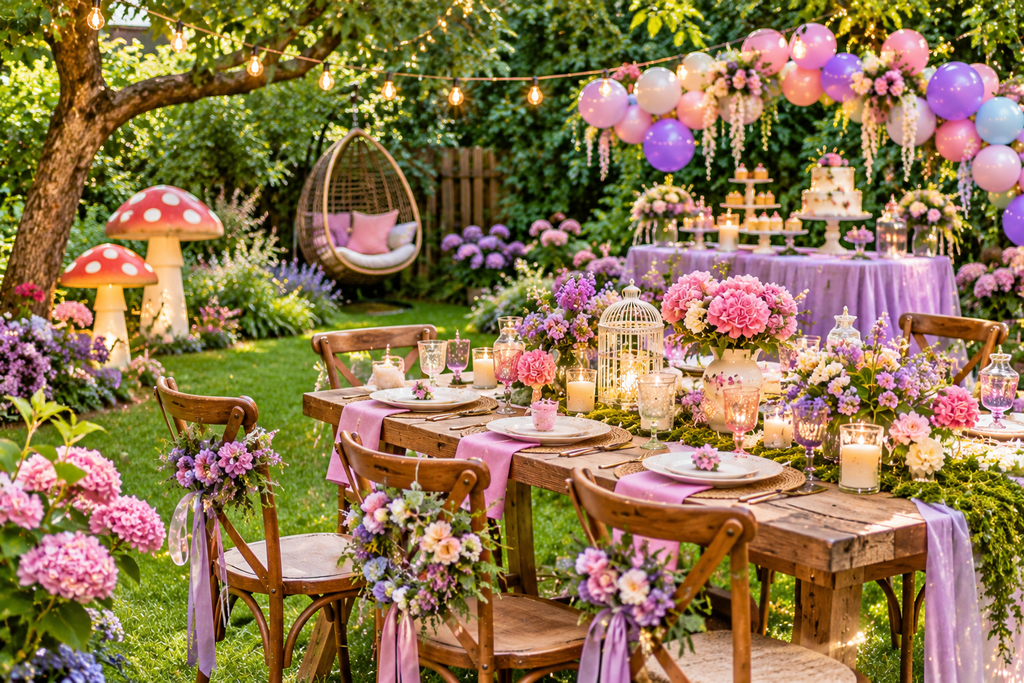
Settle the Guest List, Date, and Budget as One Decision
These three variables push against each other, so deciding them separately causes trouble.
Guest count changes the whole feel. Eight to twelve guests can share one long table, which is the most storybook arrangement there is. Around thirty or more usually means stations, standing food, and several seating clusters, which is a different party with different costs. Counting heads before choosing a venue or menu avoids rebuilding the plan later.
Date and time matter more for whimsy than for most parties, because light is a major part of the effect.
- For an outdoor evening party, look up the sunset time for your date. String lights and lanterns barely register in daylight, so a 5 p.m. start in midsummer gives you hours of unlit decor.
- For a daytime garden party, choose the shadiest part of the yard at the hour the party will actually run, not at noon on a day you happen to scout it.
- Spring and early fall usually offer the most comfortable temperatures in much of the U.S. Summer parties need shade, extra drinks, and a plan for melting food. Dusk is peak time for mosquitoes in many regions, so an evening party near standing water or dense shrubs deserves extra thought.
- Choose a backup date or a backup space at the same moment you choose the date.
Budget is easier to manage once you know where money tends to go. For most home parties, food and drink are the largest expense, and rentals of tables or chairs come second if you need them. Decor is the cheapest place to economize, because whimsy responds well to branches, jars, fabric remnants, thrifted teacups, and paper. As a loose starting point, not a rule, many hosts put roughly half the budget toward food and drink, a quarter toward decor, and keep the rest for invitations, activities, and a cushion for surprises. Adjust it to your situation.
Choosing and Preparing the Space
Backyards and gardens
Visit the space at the time of day the party will happen, and look at four things: where the sun lands, where the wind comes from, what the ground is like, and how guests will move through it.
Soft lawn creates a surprising problem. Thin chair legs and table legs sink into damp turf, and tables tilt. Choose chairs with wider feet, place thin boards under legs, or move the dining area onto a patio, deck, or firmer ground. Mow two or three days ahead so cut grass has time to settle, rather than the morning of the party.
If you have applied fertilizer, weed killer, or pesticide to the lawn or garden beds recently, read the product label for the waiting period before people, children, and pets can use the area, and schedule accordingly. Do not rely on guesswork here, because label instructions vary by product.
For mosquitoes, empty anything holding standing water, such as saucers, buckets, and birdbaths that are not refreshed, a few days before the party. A fan placed to blow across the seating area helps because mosquitoes are weak fliers, though it will not solve a heavy infestation. For guests who want protection, supply a repellent registered with the EPA and let people apply it themselves.
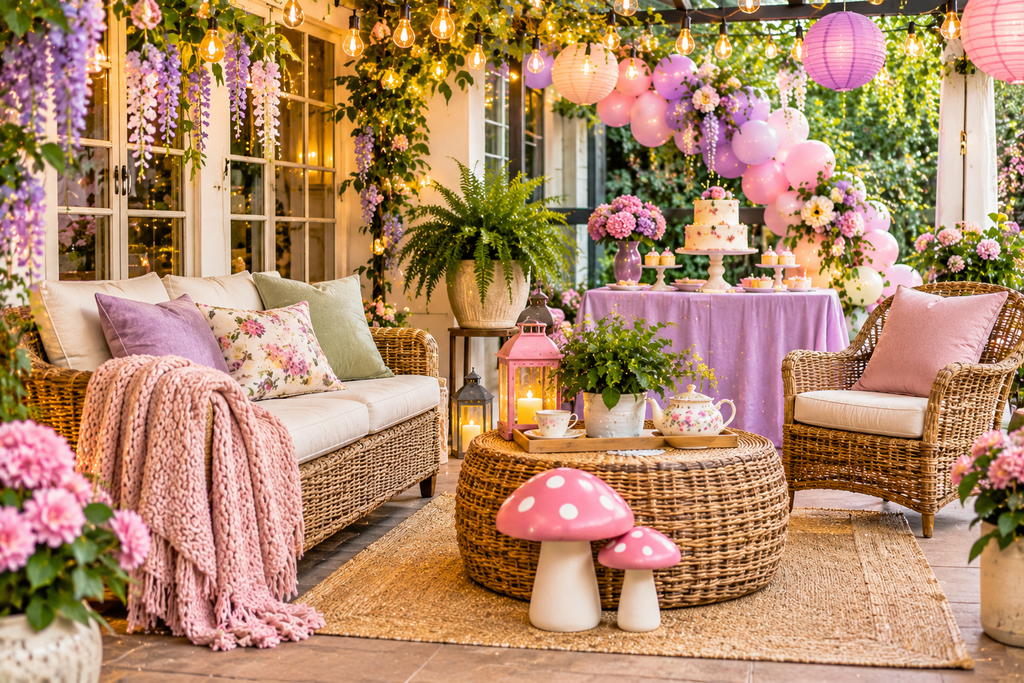
Patios, porches, and living rooms
Covered porches and pergolas are ideal because they give you something to hang decor from. Indoors, look for sturdy anchor points: curtain rods, ceiling hooks already in place, bookshelves, and door frames. Adhesive hooks have weight limits printed on the packaging, so check them, and avoid hanging anything heavy where it can fall on guests.
Rented halls and shared venues
Ask about rules before you plan the decor. Many venues restrict open flames, tape on walls, nails, confetti, glitter, and fog or bubble machines. Finding out after you have built the design costs money and time.
Weather plans that actually work
A pop-up canopy protects against sun and light rain, but it can lift off in wind. Weight every leg heavily, following the manufacturer’s guidance, and take it down if gusts pick up. Paper decor and cardboard props do not survive soaking rain, so group them under cover or have a quick way to move them indoors. Decide in advance, ideally the evening before, what weather triggers the move indoors, so the decision is made by a rule and not under stress at noon.
Moving around the space
Make sure there is a flat, step-free route from parking or the gate to the food and seating, wide enough for a wheelchair or stroller. Uneven stepping stones and mulch paths feel enchanting but are hard on some guests, and they are a hazard in the dark. Plan for at least some seating for guests who cannot stand for long, and tell people where the restroom is.
Build a Palette That Doesn’t Look Like a Candy Aisle
Unrestrained color is the fastest route to chaos. A workable structure:
- Two soft base colors, such as sage and cream.
- One deeper anchor color, such as plum, navy, or terracotta.
- One small accent, such as gold, coral, or butter yellow.
Repeat each color in at least three places and at different heights: overhead, on the table, and near the ground. Repetition is what makes a palette look planned, even when the objects are mismatched.
Natural materials calm bright colors down. Wood, linen, moss, glass, branches, and unbleached paper act as neutrals, so a purple that might look loud in plastic looks soft when it appears on a linen napkin next to a wooden board.
Whimsy also does not require pastels. Jewel tones, moody greens, and deep blues all work and tend to read as more grown-up. Look at paper, fabric, and ribbon samples under the kind of light you will have at the party. Warm string light turns blues grayer and pinks warmer, which surprises people who chose colors under cool white store lighting.
Invitations That Start the Story
The invitation is the first moment of the party, and it sets expectations about tone and dress. It also has to do the boring job of conveying logistics.
Include everything guests need so they do not have to ask:
- Date, start time, and end time
- Address, parking notes, and entry instructions if the gate is hidden
- Whether children are invited
- What to wear, if anything
- RSVP deadline and how to respond
- A question about food allergies and dietary needs
- The weather plan (for example, “Rain date is the following Saturday” or “We’ll move inside if it rains”)
For timing, two to three weeks ahead is common for a casual or children’s party, and three to four weeks gives guests more room for larger or adult gatherings. Those are conventions, not rules, so adjust for holidays and busy seasons.
Format is where the story begins. Ideas that feel whimsical without costing much:
- A rolled paper scroll tied with twine, handed out or mailed in a tube
- A card with a hand-drawn map of the garden
- An invitation written as a short note from a character, such as the keeper of the tea party
- A packet of flower seeds tied to a card, which doubles as a small favor
A short example of wording: “The kettle has been on since noon. You are invited to a garden tea party on Saturday, May 16, from 2 to 5 p.m. Please wear something with a flower, a feather, or a hat. Tell us about allergies when you RSVP by May 2.” It tells guests the tone, the time, the dress expectation, and the deadline in four sentences.
A dress suggestion works best when it is a small ask. “Add one whimsical thing” is easy to meet. A full costume requirement makes some guests anxious and others stay home.
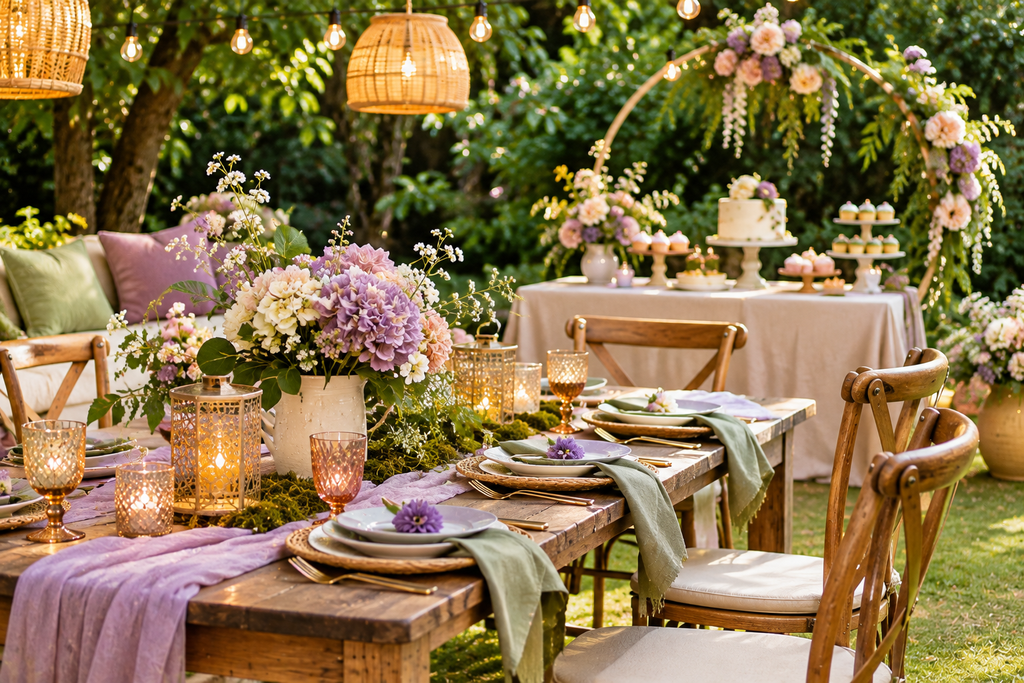
Decorating in Layers: Overhead, Entrance, and Ground
A room feels designed when decor exists at several heights. Most home parties have plenty at table level and nothing above or below, which is exactly where whimsy can do the most work.
Overhead is where the magic happens
Overhead decor gives a space a ceiling, even outdoors. Options that work well:
- A cluster of paper lanterns in three or four sizes, hung at staggered heights
- Swags of tulle or lightweight fabric draped across a pergola or between trees
- Open umbrellas hung upside down and filled with paper flowers, a classic whimsical move
- A garland of dried or paper leaves strung between two posts
- Paper clouds or stars on fishing line
One safety rule is worth following: anything heavier than a few ounces should not hang directly above seats unless the anchor point is clearly sturdy and rated for the load. Hanging real teacups looks lovely, but ceramic falling from a branch onto a guest is a real injury risk, so place those at the edge of the space, above a dessert table you can keep clear, or use lightweight stand-ins such as paper or plastic cups for the overhead ones.
The entrance sets the rules of the world
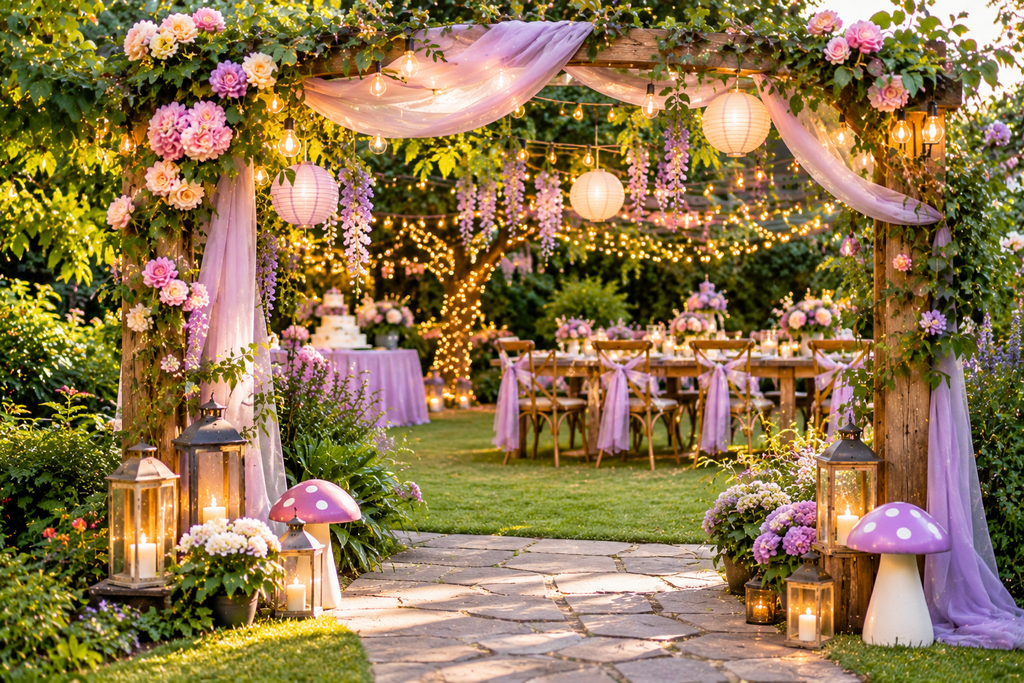
Guests decide quickly whether a party is special. Mark the transition from ordinary to whimsical with something they have to pass through: a garden arch with greenery, a doorway curtain of ribbons or paper strips, a hand-painted sign, or a gate with a small chalkboard. Keep the entrance uncluttered enough that people can see where to go next.
Ground-level surprises
Line a path with lanterns, jars holding LED tea lights, or painted stones. Hide small figures, miniature doors, or paper mushrooms at the base of trees and shrubs, which rewards kids and adults who notice. An upside-down terra cotta pot topped with a painted wooden bead or a saucer works as an easy mushroom, and cardboard cutouts painted with weatherproof paint survive a dry afternoon (but not rain).
Moss, flowers, and paper blooms
Sheet moss from a craft store covers pots, risers, and table edges quickly. Avoid pulling moss from woods, because it grows slowly and harvesting it damages habitat. Paper and crepe flowers make a good budget layer, since they cost little, hold up in dry weather, and do not wilt in heat. Mix them with a few real stems, kept in water until the last minute.
Skipping the pieces that cause trouble
Glitter and confetti look festive for an hour and linger for months. Standard glitter is plastic, and it spreads across lawns, patios, and into drains. Dried petals, torn paper, or small leaves are easier to sweep or compost. Products sold as biodegradable glitter vary in how they break down, and some need industrial composting conditions, so treat those claims with caution and check the packaging.
Helium balloons need attention, too. Do not release them, because balloon debris can harm wildlife. If you want a floating effect, use paper lanterns, fabric pennants, or bubbles instead.
Lighting That Does Half the Work
Light does more for atmosphere than any prop. A few principles make a major difference.
Choose warm light. Look for bulbs labeled around 2700K, which gives a candlelike glow. Cool white strings make a garden look like a parking lot.
Hang light in swags, not straight lines. Dips and curves look softer and use up slack. For walkways, keep strings above head height for tall guests, commonly around seven feet or higher.
Use outdoor-rated equipment. Outdoor string lights are labeled for outdoor or wet-location use on the packaging. Plug them into a GFCI-protected outlet, use outdoor-rated extension cords sized for the load, and keep plugs and connections off wet grass and out of standing water. Route cords along edges and cover those crossing walkways so no one trips.
Pick LED candles near anything flammable. Tulle, paper lanterns, dried grass, and evergreen boughs ignite easily. LED candles give the same look without risk, and they are far safer around children. If you do use real candles, choose enclosed glass holders, set them on stable surfaces away from fabric and paper, and never leave them unattended.
Do a dusk test run. About a week before, turn everything on at the time of day the party will run. That is when you will find the dead bulb, the extension cord that does not reach, or the dark corner near the steps.
Setting a Table That Looks Collected, Not Bought
A mismatched table is one of the signatures of this style, and it is also one of the cheapest to build. Thrift stores, estate sales, and relatives’ cabinets supply teacups, saucers, small plates, and cake stands.
Two rules keep mismatched from turning messy. First, unify one element: all-white plates with varied teacups, or all-different plates with identical napkins in the anchor color. Second, keep the colors from your palette present on the table.
One caution before using old china for eating and drinking: some vintage and antique ceramics, especially pieces with decorative paint on the surface or gold or colored rims, can contain lead that leaches into food and drinks, especially acidic or hot ones. The FDA has guidance on this, and lead testing kits exist but are not definitive. If you cannot verify a piece, use it for display or for dry items, and serve hot tea, coffee, or lemonade in modern food-safe cups.
About homemade tiered stands made by gluing plates together: they look charming, but craft glue is generally not made for food contact. Place parchment, doilies, or food-safe liners on top, and put cookies or sandwiches there, never directly on the glued joints.
Centerpieces that don’t block conversation
A common guideline is to keep centerpieces either below about twelve inches or above about twenty-four, so that guests can see each other across the table. Low arrangements of small jars and bud vases work well, and tall arrangements on stems or hanging overhead work too.
When using fresh flowers, remember that some are poisonous if eaten and some are hazardous to pets. Lilies are dangerous to cats, and plants such as foxglove, lily of the valley, oleander, and delphinium are toxic to people and animals. Keep non-edible blooms in vases away from the food, and do not use them as garnish. If pets or toddlers will be at the party, choose pet-safe flowers or keep arrangements out of reach, and check the ASPCA’s plant list if you are unsure.
Place cards and the small touches
Name cards can be written on leaves with a paint pen, tied to teacups, or tucked into seed packets. Mixing seating (not couples together, not families together) works well for a table meant to start conversation. A handwritten menu card in a small frame turns even simple food into part of the story.
Food and Drinks That Fit the Story
Whimsical food is small, pretty, easy to eat with one hand, and clearly labeled. Names do much of the work: “enchanted forest cheese board” or “jam tarts for the Queen” cost nothing and make the table feel authored.
Savory ideas
- Finger sandwiches (cucumber and cream cheese, egg salad, ham and mustard) cut into flowers or hearts with cookie cutters
- Mini quiches or savory tartlets
- Caprese skewers on small sticks
- A cheese and fruit board arranged like a garden, with grapes, figs, berries, crackers, and herbs
- Vegetable cups with hummus “soil” dip and crumbled pretzel or crackers on top
Sweet ideas
- Scones with jam and whipped cream
- Meringue mushrooms, which are baked, piped, and glued together with melted chocolate, then dusted with cocoa “soil” (egg-based, so follow safe handling and baking guidance)
- Cupcakes or a single cake with fresh fruit and piped flowers
- Shortbread, jam thumbprints, or fruit tarts
Choose one statement dessert and keep the rest simple. A tiered cake of stacked cakes and a dozen elaborate desserts compete with each other.
Drinks worth labeling
- Iced herbal teas and fruit-infused lemonades in glass dispensers
- Butterfly pea flower tea, which is naturally blue and turns purple when lemon juice or another acid is added, a safe and genuinely surprising trick for kids and adults
- Sparkling water with mint, lavender, or berries
- For adult parties, a sparkling wine with elderflower or a pitcher cocktail, always alongside equally appealing non-alcoholic options, with alcohol kept away from children and served in line with local laws
Label drinks with storybook names, such as “drink me” or “potion no. 9,” but also list what is actually in them.
How much food to plan for
Planning guides vary, so treat these as rough starting points. For an afternoon tea-style party that falls between meals, many hosts plan on about eight to ten small bites per guest across savory and sweet, and more if it runs through a mealtime. For drinks, about one per guest per hour is common, with more in warm weather. Having a bit left over is better than running out.
Food safety in warm weather
The USDA advises not leaving perishable food out for more than two hours, and no more than one hour when the temperature is above 90°F. Cold foods such as egg salad, cut fruit, dairy, and anything with mayonnaise should stay at 40°F or below, so set them on trays over ice and refill in small batches from the fridge. Hot foods should stay at 140°F or above. A simple approach is to keep most food in the kitchen and replenish the table throughout the party.
Cover foods with mesh domes to keep out flies and bees, which are a common problem at outdoor tables.
Allergies and edible flowers
Label major allergens, such as nuts, dairy, eggs, wheat, and shellfish, and keep nut-containing dishes physically separate. The invitation question about allergies matters here, so use the answers when you plan.
Edible flowers are lovely garnishes but easy to get wrong. Only use varieties known to be edible, such as pansies, violas, nasturtiums, calendula petals, borage, and chive blossoms, and only if they have been grown without pesticides. Flowers from florists and many garden centers are often treated with chemicals not meant for eating, so buy ones sold specifically as edible, or grow your own with a plan for how you treated them. If you are unsure about a variety, verify it with a reliable source such as a university extension service before using it. Some guests may also be sensitive to pollen, so use flowers as a garnish, not a main ingredient.
Activities That Give Guests Something to Do With Their Hands
An atmosphere gets people through the door, but activities keep them there. Aim for two or three low-pressure stations that guests can approach whenever they like, rather than a rigid schedule.
- Flower crown or boutonniere bar. Provide floral wire or paper-wrapped wire, floral tape, scissors, and a mix of greenery and sturdy blooms prepped ahead (thorns removed, stems cut). Show one finished example. Choose flowers that are safe on skin and hair, especially with children.
- Fairy house or gnome home building. Offer sticks, bark, pinecones, acorn caps, moss, and craft glue. Low-temperature glue guns are faster, but they still burn skin, so use them only with adult supervision for young kids.
- A wish tree. A bare branch in a heavy pot with tags and pens lets guests write wishes or advice. It works indoors or out, and the tags make a keepsake afterward.
- Lawn games. Croquet, ring toss, or giant bubbles suit the style. Bubble solution can leave surfaces slippery, so keep it away from patios and steps.
- A scavenger hunt. Hide small figures, tiny doors, or numbered paper mushrooms around the garden, and give guests a simple card to check off. It suits mixed-age groups well.
- A photo corner. A frame hung from a tree, a flowering arch, or a draped-fabric backdrop with the best light facing it. Keep props few, as a pile of props tends to look cluttered.
For adult parties, swap crafts for a tea or cocktail tasting, a reading of short poems or stories, a drawing game passed around the table, or a toast at dusk when the lights come on.
Pacing the afternoon
Most whimsy parties are strongest at two to three hours, and shorter, around ninety minutes to two hours, for young children. A simple flow works: guests arrive and get a drink, there is time to mingle at the entrance and decor, food goes out about forty-five minutes in, activities run through the middle, and the cake or main dessert closes the party. A defined end time on the invitation helps guests and hosts.
A Working Timeline
- Four to six weeks out: Choose the story, the guest list, the date, and the venue. Choose a rain plan. Book any rentals.
- Three weeks out: Send invitations. Order non-perishable decor and craft supplies. Try one or two DIY items to confirm they work.
- Two weeks out: Track RSVPs. Finalize the menu. Collect thrifted tableware. Do a dusk lighting test.
- One week out: Confirm final headcount, shop for non-perishables, and make freezer-friendly items, such as scones or cookies. Check the forecast and tell guests about any changes.
- Two to three days out: Mow and tidy the yard, and shop for perishables.
- The day before: Set up structures and furniture, set the table, hang lights, and chill drinks.
- The day of: Arrange fresh flowers last, test the lights, and put out food in stages. Ask a friend to help with greeting and refills so you can enjoy the party.
What Tends to Go Wrong, and How to Fix It
Wind. Paper lanterns tumble, tablecloths fly, and napkins vanish. Clip or weight tablecloths, secure lanterns on fixed lines rather than loose stands, and use heavier objects as centerpieces.
Heat. Buttercream softens in warm weather, chocolate melts, and cut flowers wilt fast. Keep cakes and cold foods inside until serving, keep flowers in water until the last moment, and offer a water station in the shade.
Rain. If the forecast is uncertain, decide early. A canopy covers the table, and soaked paper decor can be replaced with fabric or glass.
Bugs. Use food covers and eliminate standing water. Put a fan near seating if you can.
Over-styling. Step back at the end and look for the spot where your eye does not know where to land. Remove about a third of the items in that area. Whimsy needs breathing room.
Noise and neighbors. Check local noise rules for amusement and alcohol, tell neighbors in advance if the party will run late, and keep music at conversation level.
Hosts who do everything. The party that wears out its host is the party that feels least relaxed for everyone. Hand off at least one job, such as drinks or greeting, to a friend.
Making Whimsy Work on a Small Budget or in a Small Space
Whimsy tolerates thrift. Branches from the yard, jars saved from the kitchen, fabric remnants, secondhand teacups, coffee filters dyed and shaped into flowers, and old book pages folded into garlands all deliver the effect. Borrowing from friends is an easy way to fill a table without buying anything.
In a small space, concentrate on one strong feature instead of many weak ones. A large overhead cluster of lanterns or a single dramatic archway at the entrance has more impact than a dozen small items. Go vertical: hang things from curtain rods, use shelves, and keep floors clear for guests to move.
Reuse and recycle what you can. Compost leaves, petals, and cut greenery, return rented items on time, keep paper decor for another year, and donate unopened food to neighbors or a local food program where permitted.
Common Questions
Can a whimsy party work for adults? Yes, with less cute and more atmosphere. Choose deeper colors, real glassware, softer lighting, richer food, and an evening schedule. Aim for details that reward attention, such as handwritten labels, unusual drink pairings, and thoughtful lighting, rather than childlike characters.
Can I host one indoors in winter? Yes. Bring the garden inside with branches in tall vases, potted ferns, evergreen boughs, moss, and warm lights. Keep real candles away from dry evergreens and paper, which ignite easily, and use LED candles near greenery.
How many guests are too many? There is no fixed number, but a single shared table works best at around twelve or fewer. Beyond that, plan multiple seating clusters, more stations, and more food per hour, since a crowd cannot all reach one table.
Final Thoughts
A whimsy party succeeds when the pieces agree with each other. Choose one story, build the decor in layers from overhead down to the ground, let lighting and a few surprises do the heavy lifting, and give guests something to do. Handle the unglamorous parts, such as food temperatures, cords, candles, and weather plans, before the day arrives, and you will be free to enjoy the party you built.
A practical next step: write your one-sentence story today, check the sunset time for your date, and do the dusk lighting test a week out. Those three steps prevent most of the problems described above.

About Syprose Kiche
Syprose Kiche is the creator and writer behind My Besuited Home, a practical home and garden website covering DIY projects, gardening, lawn care, landscaping, home improvement, and outdoor living. She focuses on turning everyday homeowner questions into clear, practical guides backed by careful research and useful real-world considerations.