
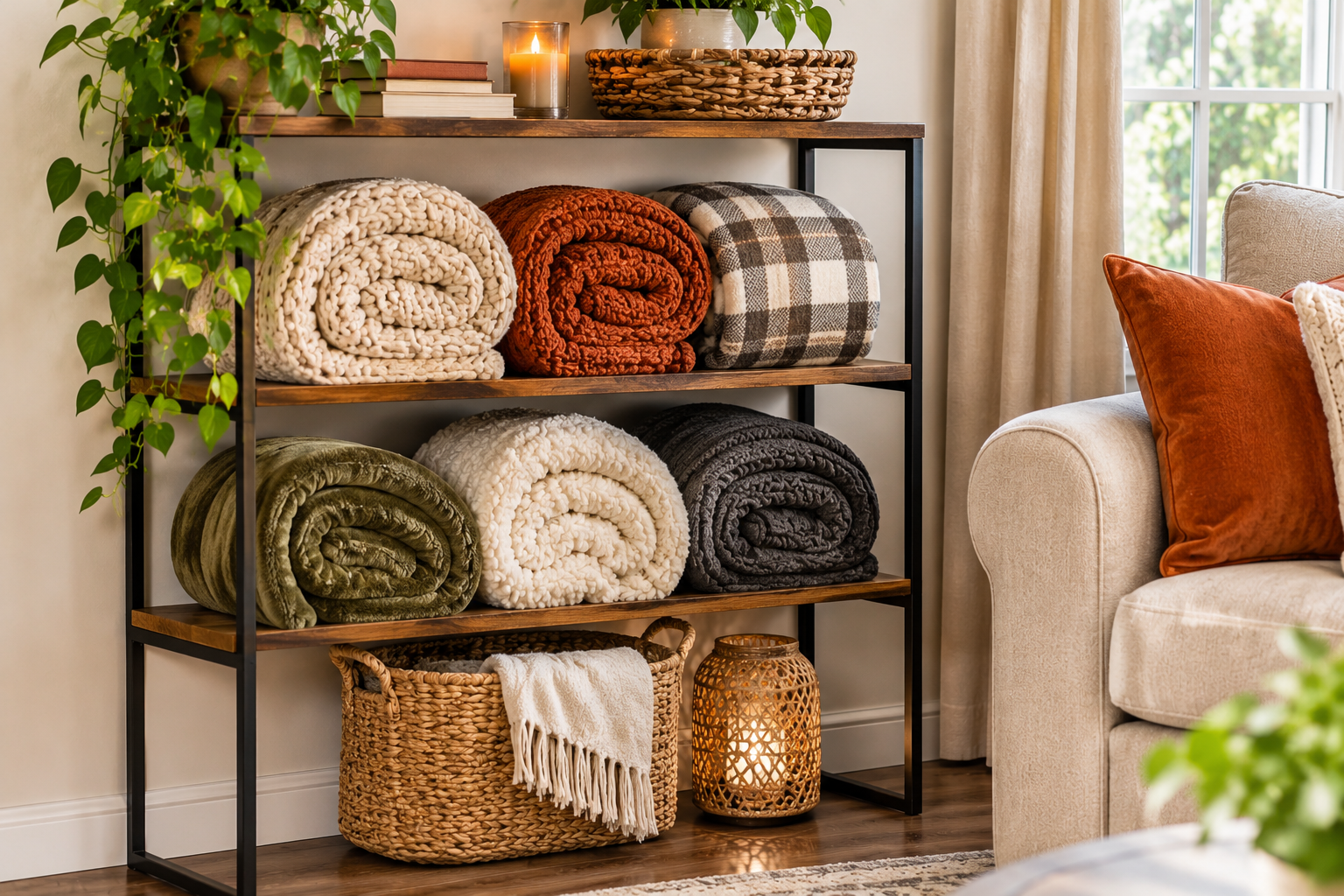
Blankets are one of the few household items that get bigger the moment you try to put them away. A chunky knit throw that looks modest draped over a sofa turns into an armful of fabric that will not fold flat, will not stay on a shelf, and will not fit in the basket you bought for it. So it ends up over the arm of a chair, on the floor by the bed, or crammed into the closet where it collapses onto everything below it.
The fix is rarely a bigger closet. It is matching the storage to the kind of blanket, the room, and how often the blanket gets used. A throw you grab every evening needs to sit within arm’s reach. A heavy winter quilt used three months a year can live somewhere out of the way, if it is stored properly. The 15 ideas below are grouped by that logic, with notes on what each one holds, where it falls short, and which can be built or assembled in an afternoon.
Work Out What You Are Actually Storing First
Most storage disappointments come from buying before counting. Spend five minutes gathering every blanket in the house into one pile and sorting it into three groups.
Daily throws. The ones that live in the living room or on the bed and get used constantly. These need open or quick-access storage, because anything with a lid, a latch, or a step to climb will quietly stop being used.
Seasonal blankets. Heavy wool, quilts, down-filled comforters, and thick fleece. These are used for a few months and then spend the rest of the year taking up space. They need protected, dry, out-of-the-way storage.
Guest and occasional blankets. Used a handful of times a year. They can sit lower in the priority order, but they should still be clean and dry before storage.
Then apply a few quick rules of thumb:
- A standard throw is often around 50 by 60 inches, but thickness matters more than dimensions. Bulky chenille and chunky knits can take up several times the room of a flat cotton throw once folded.
- Rolled blankets generally take less room than folded ones and are easier to pull out one at a time, because each one is visible from the end.
- If a container holds more than about five or six throws, the bottom ones get forgotten. Aim for a container that holds what you use plus a little extra, not a stockpile.
Here is a quick way to match the problem to the solution before reading the full list.
| Situation | Solutions that tend to fit |
| Living room throws that get used nightly | Basket, ladder, ottoman, open shelf |
| Small apartment with no spare floor space | Wall pegs, under-bed bins, ottoman, cube bins |
| Bedroom with a bed that has no storage | Bench at the foot of the bed, trunk, under-bed containers, dresser drawer |
| Seasonal quilts and heavy blankets | Trunk, lidded under-bed container, closet shelf with breathable covers |
| Pets or young children in the house | Lidded options, closed cabinets, wall-mounted pegs placed high |
| Tight budget | Crates, rope basket, peg rail, repurposed suitcases or tubs |
Throw Blanket Storage Ideas for the Living Room
Living room storage has one job: make it easy to grab a blanket and easy to put it back. If putting it back takes more than about three seconds, it will not happen.
1. A Leaning Blanket Ladder
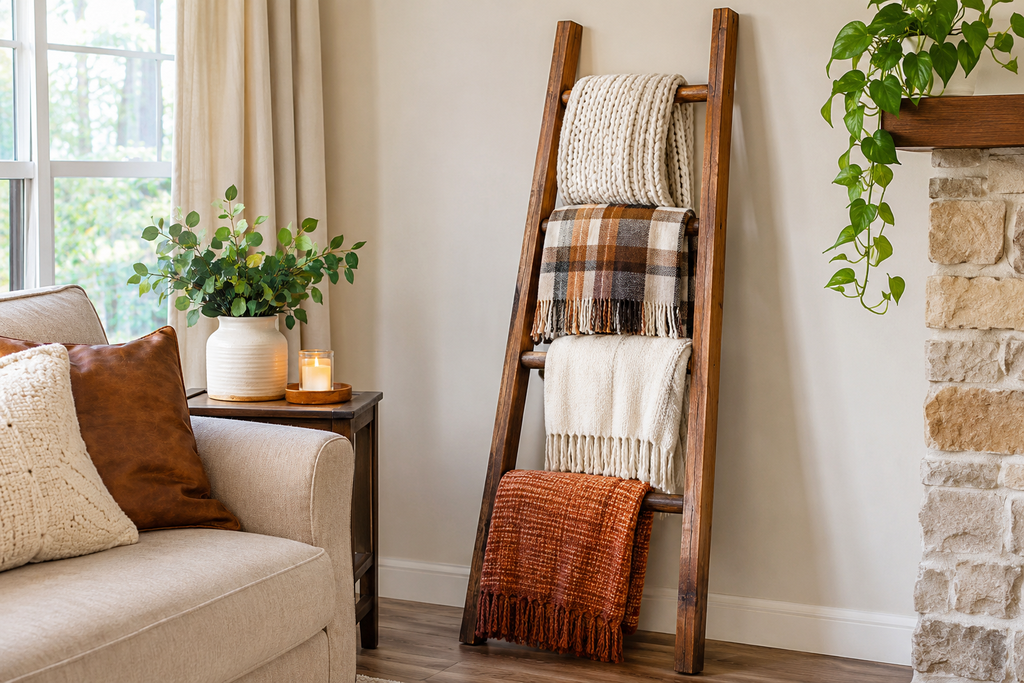
A blanket ladder is a decorative ladder, usually wood or metal, that leans against a wall. Blankets are draped over the rungs, which keeps them visible, aired out, and within reach. It is one of the most common solutions, and for good reason: it uses vertical space, takes up a small footprint, and doubles as decor.
It works best for a small collection of attractive throws, roughly three to five depending on thickness. Beyond that the rungs sag and the whole thing looks messy.
The downsides are specific and worth knowing. Ladders that lean at a steep angle can tip if a child pulls on them or climbs them, so look for one with non-slip feet and, if there are small kids around, secure the top to the wall with a small anchor strap. Blankets left out on a ladder collect dust and pet hair, and in a room with strong direct sunlight, the side facing the window can fade over time. A ladder is a good home for throws you use weekly. It is a poor home for a good wool blanket you want to keep pristine for years.
Placement matters too. Keep it away from fireplaces, wood stoves, and space heaters. Synthetic fleece and similar fabrics can melt or ignite near a heat source, and a ladder leaning right beside a fireplace is easy to overlook as a risk.
2. An Oversized Woven Basket
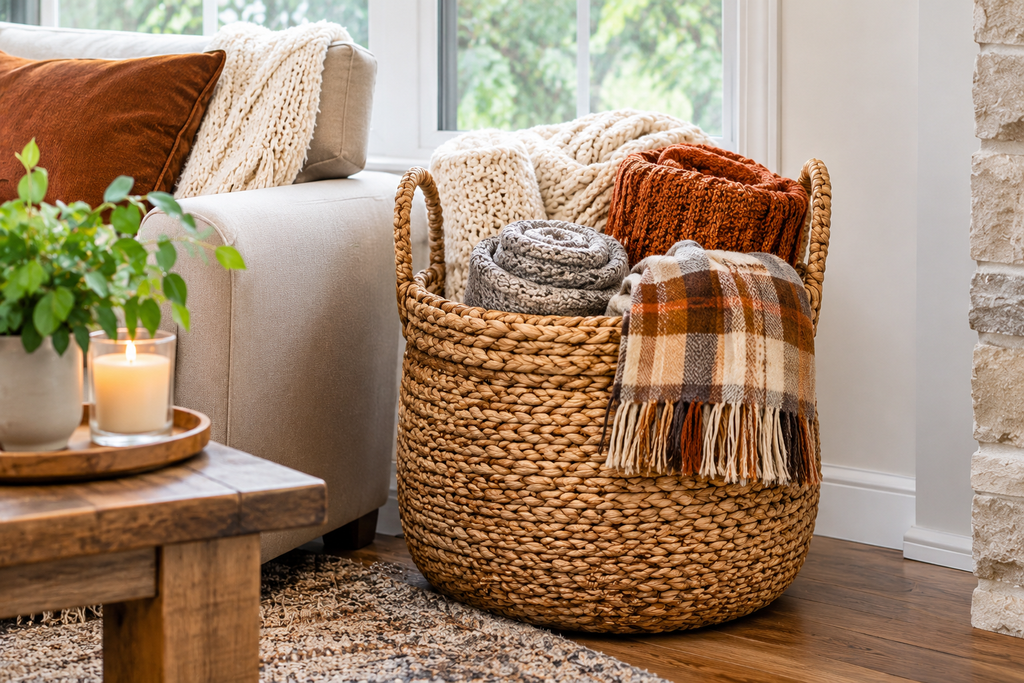
The floor basket is the classic answer, and its popularity is deserved. A wide basket, ideally at least 18 inches across, lets you drop blankets in without folding. Rolled throws stand upright and look deliberate. Loosely tossed ones look relaxed rather than sloppy because the basket hides the edges.
Material changes how it behaves. Seagrass, rattan, and wicker look warm and natural but can snag loosely knit blankets, so check the inside for rough ends before committing. Cotton rope and fabric-lined baskets are gentler on knits. Felt and canvas baskets are soft but can slump when they are not full.
A basket’s weakness is that it is open. In a home with a dog or cat, the top blanket becomes a bed within a week, and the whole basket picks up hair. If that sounds familiar, choose a model with a lid, or rotate which blankets sit on top so one does not take all the wear.
3. A Storage Ottoman
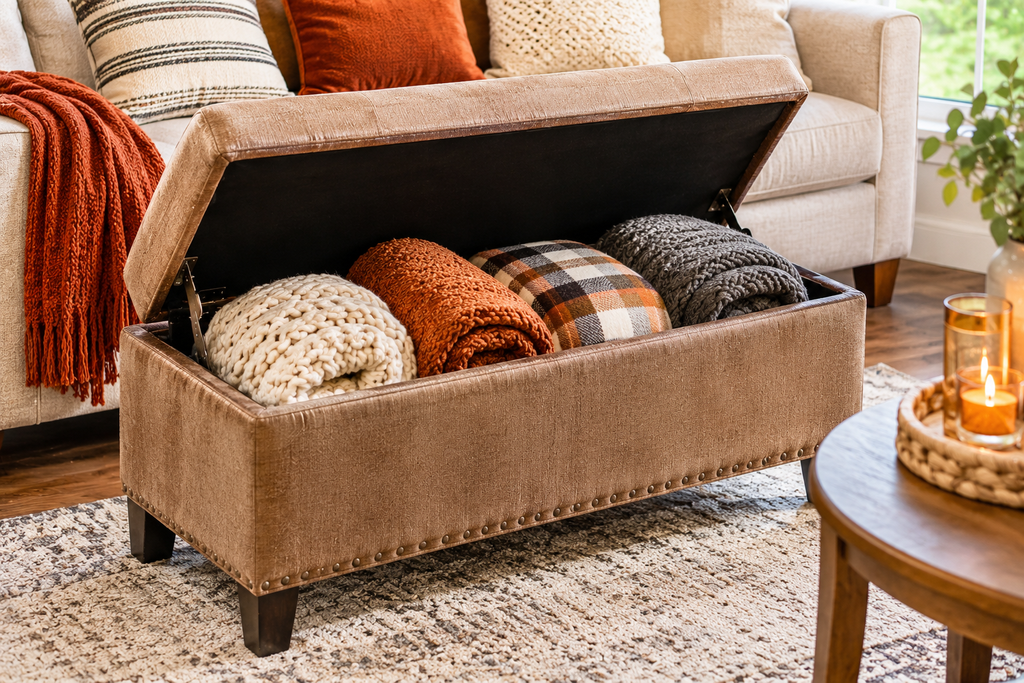
An ottoman with a hinged or lift-off top turns a footrest into hidden storage. It suits people who want a clean living room, since nothing is visible, and it adds seating or a place to set a tray.
The trade-off is access. Lifting a lid, moving a tray off the top, and digging for the right blanket is more effort than grabbing one from a basket. Use ottomans for the second layer of blankets, the guest throws and the winter extras, and keep the everyday one somewhere more visible.
If children use the room, look for slow-close hinges or lid supports. A heavy lid dropping on fingers is a real hazard, and cheap hinges are the usual culprit. Check the interior too. Rough particleboard edges or exposed staples can snag fabric, and a quick lining of fabric or thin felt fixes it.
4. Open Shelves With Rolled Blankets
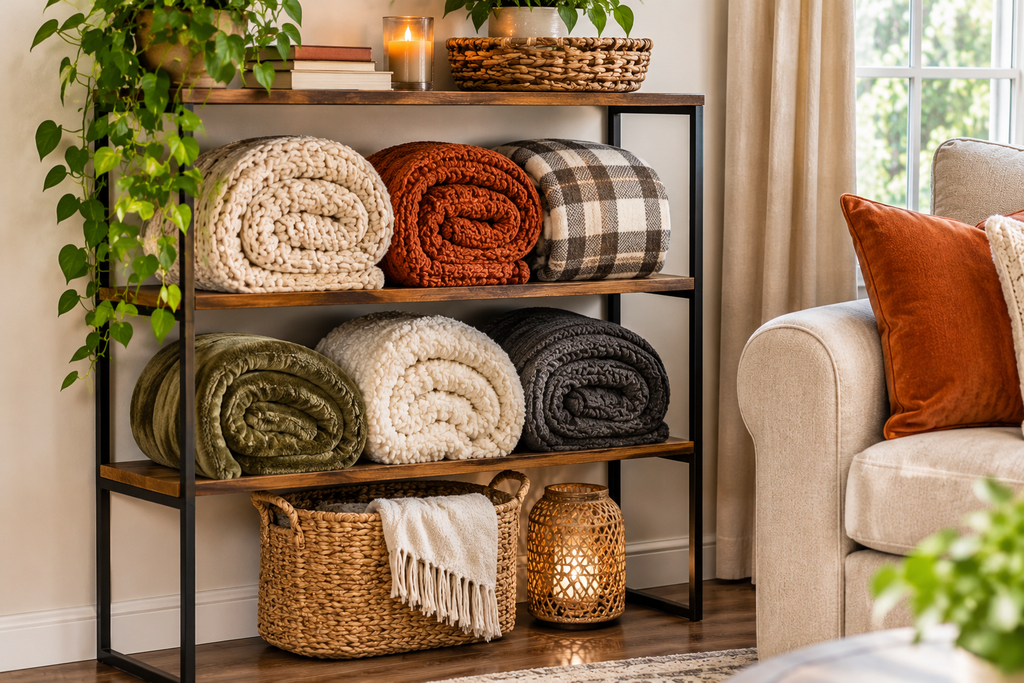
A bookcase or a run of floating shelves turns blankets into a display. Rolled in neat cylinders and stacked pyramid-style, or lined up like books, they add color and texture to a room and are easy to see at a glance. This works especially well in a living room that already has shelving, because blankets break up a wall of books and objects.
Two practical notes. First, shelf depth. A rolled blanket needs about 12 inches of depth, so shallow decorative shelves will not hold much. Second, if you are mounting floating shelves, remember that fabric is heavier than it looks. Several wool blankets can weigh a good number of pounds, so mount shelves into wall studs or use anchors rated for the load, and follow the shelf manufacturer’s weight limit. Studs in most US homes are spaced 16 inches apart on center, which makes it easy to find a mounting spot with a stud finder.
Farmhouse-Inspired Blanket Storage Ideas
Farmhouse style leans on materials that look like they have a past: aged wood, galvanized metal, woven baskets, linen, and muted colors. The best farmhouse storage looks like a piece of furniture or a working object rather than a product made to hold blankets. Several of the options already covered fit, such as a wicker basket or a wooden ladder. These four lean into the look more deliberately.
5. A Wooden Trunk or Chest
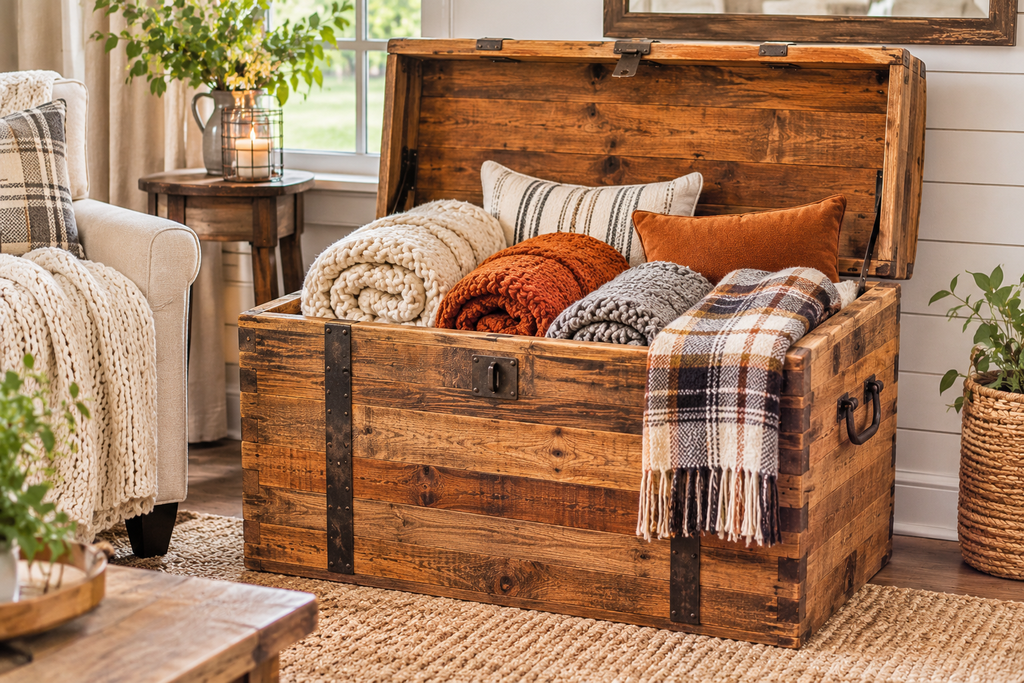
A wooden chest at the foot of a bed or against a living room wall is storage and furniture at once. Solid wood chests hold a lot, often several bulky blankets, and the lid provides a surface for a lamp, a stack of books, or a folded throw on top.
Trunks also happen to be good for long-term storage of seasonal blankets because the wood is a physical barrier against dust and pets. Two cautions apply. A closed trunk can trap moisture and odor if blankets go in even slightly damp, so make sure everything is completely dry first. And old trunks with self-locking latches are a genuine safety risk for children. If you buy a vintage one, remove or disable the latch so a child who climbs inside cannot be trapped.
For a farmhouse look, choose a trunk with visible grain, metal corner caps, or leather straps. A freshly painted white one can look farmhouse too, but a worn finish tends to suit the style better.
6. Stacked Wooden Crates
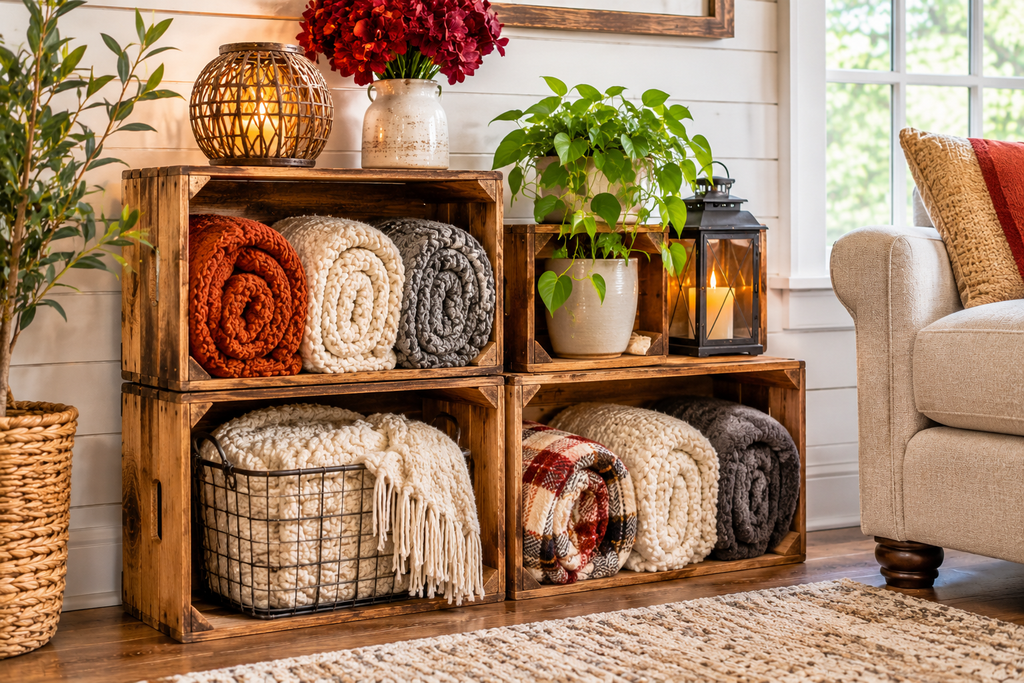
Wooden crates are the budget version of rustic storage and are easy to modify. Stacked two or three high and turned on their sides, they become open cubbies. Stained or whitewashed, they take on a barn-like look. Screwed together and mounted on a wall, they become a shelving unit.
Sand any crate before using it near fabric. Splinters and rough edges catch on knits and can pull threads. A coat of clear water-based sealant, allowed to cure fully before blankets go in, cuts down on any lingering odor. Secure stacked crates together with screws or brackets, and if the stack is tall, anchor it to the wall. Loose stacked crates can topple.
7. A Galvanized Tub or Metal Bucket
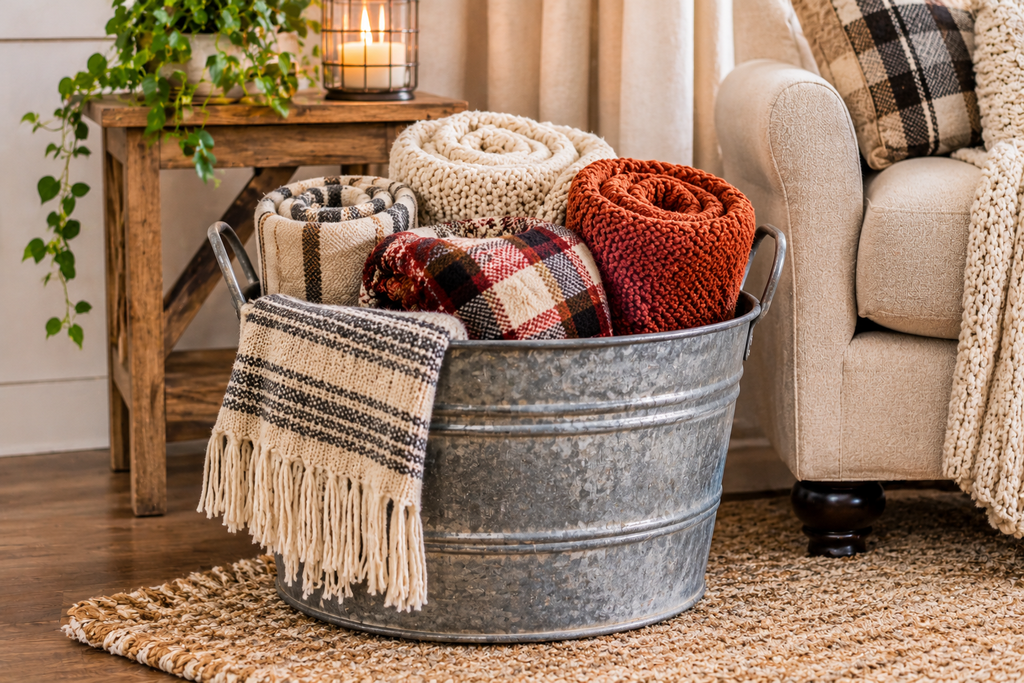
Large galvanized tubs, the kind sold as laundry tubs or beverage tubs, give a farmhouse room a hard-edged contrast to soft fabric. Dropped by a sofa with a few rolled throws inside, they look intentional. They are also easy to clean and will not harbor pet hair the way woven baskets can.
Check the rim before using one. Some galvanized tubs have sharp or rolled edges, and a snagged blanket is a quick way to ruin a favorite. If the rim is rough, wrap it with a strip of cotton fabric or leather, or look for one with a smooth rolled lip. Metal also shows moisture, so avoid leaving it on a damp floor where condensation could wick into blankets resting on the bottom.
8. Stacked Vintage Suitcases
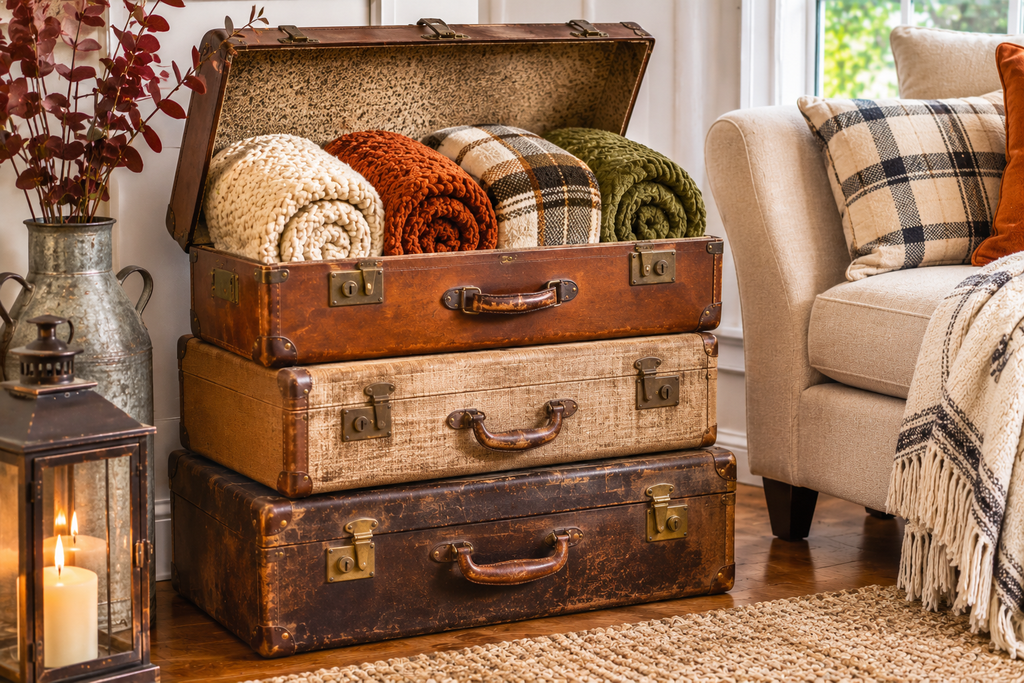
A stack of two or three old suitcases, topped with a lamp or a plant, works as a side table and storage at the same time. Hard-sided cases from antique shops, flea markets, or thrift stores often have usable interiors big enough for a couple of throws or a folded quilt.
Musty smell is the concern. Old suitcases often carry decades of odor, and blankets will absorb it. Open the case in a ventilated space for several days, wipe the interior with a mild cleaning solution suitable for the surface, and let it dry thoroughly. Placing an unscented sachet or a cotton liner inside helps, and you should test by sniffing before putting any blanket inside. If an odor lingers, use the suitcase for decor and store blankets elsewhere.
Functional Blanket Storage Solutions for Bedrooms
Bedroom storage has a different priority list from the living room. The blankets are heavier, they are used seasonally, and the room is usually short on surfaces. Good bedroom storage keeps blankets close to the bed without cluttering the walkway around it.
9. A Storage Bench at the Foot of the Bed
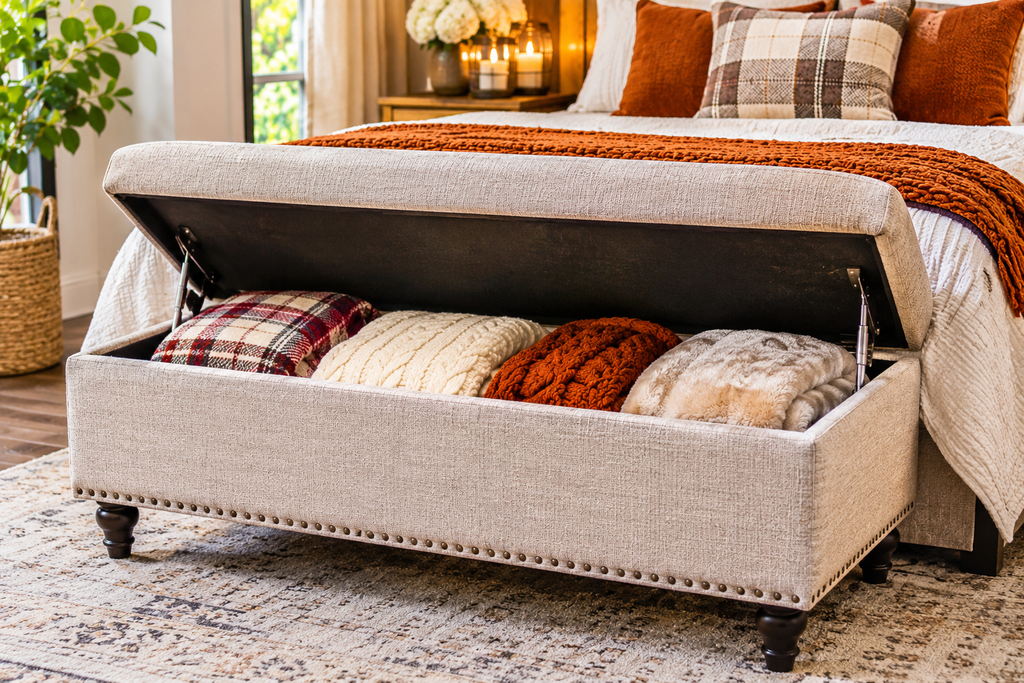
A bench at the foot of the bed is the bedroom equivalent of a living room ottoman, and it earns its spot for one reason: it sits exactly where the extra blanket is needed. Lift-top and cubby styles both exist. Lift-top benches hide everything and suit people who want a tidy look. Open-cubby benches, often with baskets in the cubbies, make daily access faster.
Measure before buying. The bench should be slightly narrower than the bed, or the same width, and still leave enough space to walk past it, typically at least two feet. A bench that is too long also blocks nightstand access. Check that the lid opens fully without hitting the footboard, a detail that is easy to miss.
10. Lidded Containers Under the Bed
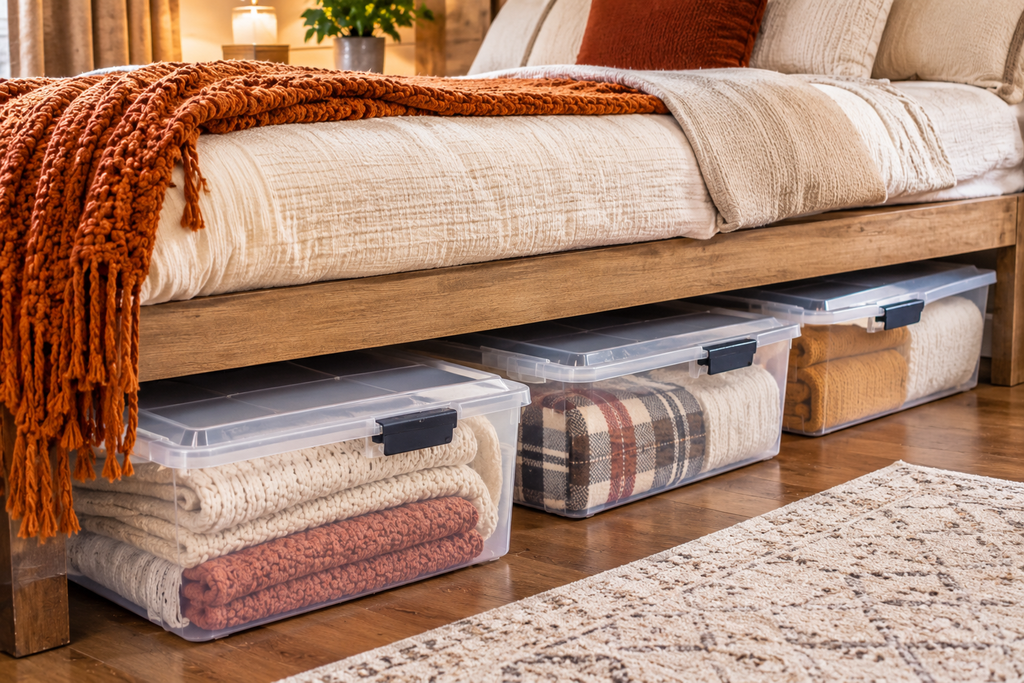
The space under a bed is the biggest unused storage area in most bedrooms, and shallow, wide containers fit it well. Hard-sided plastic bins with wheels are easy to slide out. Fabric containers with zippers are softer on blankets and allow more airflow.
Before buying, measure the clearance with a tape measure. Under-bed height varies widely depending on the frame, and many platform beds sit lower than a standard frame. Bed risers can add several inches of space if needed, and they are inexpensive.
For storing blankets for months at a time, what the container is made of matters. Sealed plastic bins keep out dust and pests but can trap moisture if the blanket was not completely dry, which encourages mildew. Fabric containers breathe but let in more dust. For wool and other natural fibers, a breathable cover usually serves better over a long season than an airtight one. For synthetic blankets that are clean and dry, a sealed bin is fine.
11. A Dedicated Dresser Drawer or Bedside Cabinet
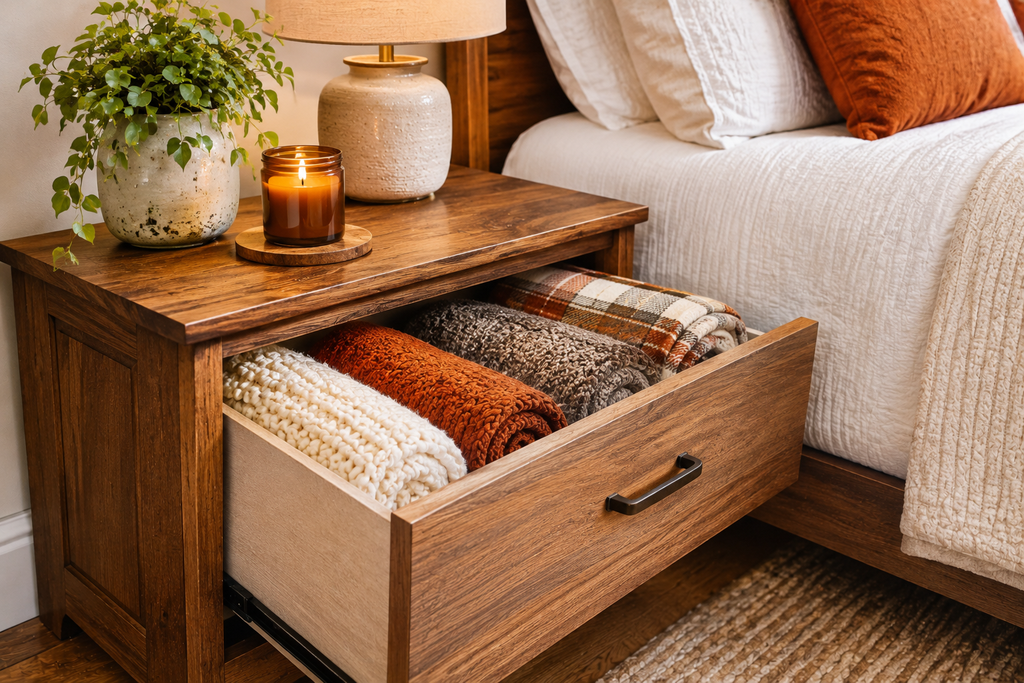
One dresser drawer, emptied and designated for blankets, is often the simplest bedroom solution and costs nothing. A drawer holds folded blankets flat and clean, protects them from sunlight and dust, and means the blanket is at hand every time you open the dresser. A nightstand with a door or a lower shelf does the same job nearer the bed.
The limit is capacity. A standard dresser drawer holds a few throws at most, and bulky quilts will not fit. Use it for the daily sleeping blanket and one backup, and keep heavier items in a trunk or container.
Easy DIY Blanket Storage Solutions
Homemade storage can be cheaper than store-bought and tailored to the exact space. The rule for DIY is simple: choose projects that match your tools and skill level, because a wobbly or splintery piece is worse than none at all. These options are on the beginner end.
12. A Wall-Mounted Peg Rail
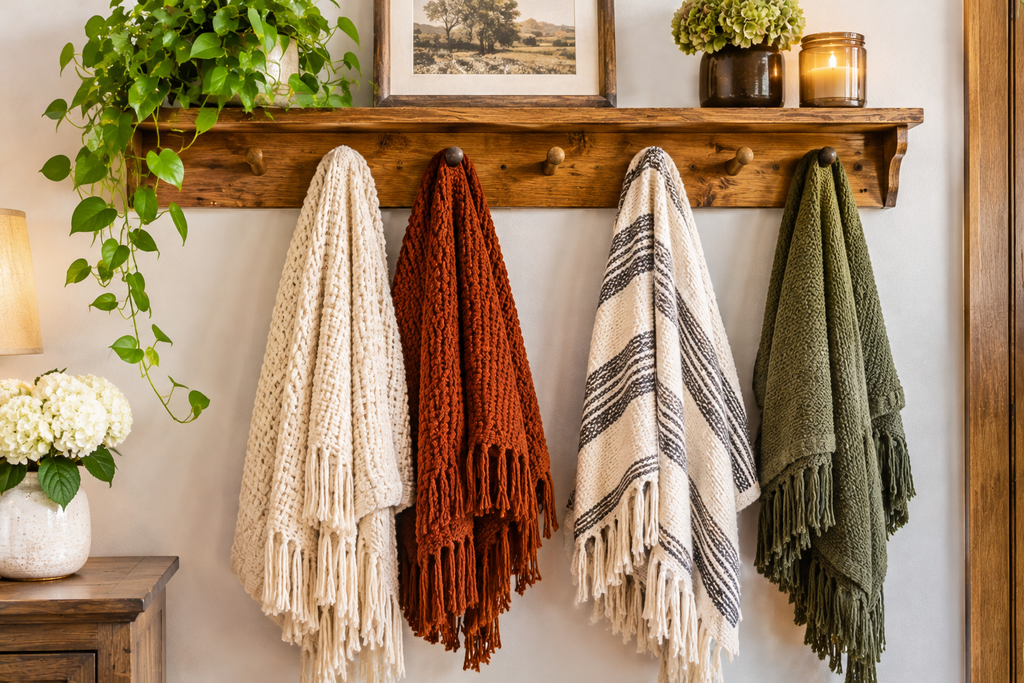
A peg rail is a length of wood, typically a 1×4 or 1×6 board, with wooden pegs or hooks spaced evenly along it. Blankets are folded over the pegs or looped through them. It takes up almost no floor space, which makes it suited to entryways, bedrooms, and small apartments.
To build one, cut the board to length, sand it, and finish it with stain or paint. Pre-made Shaker-style pegs are sold at most hardware stores, along with the right size drill bit for the holes. Drill the peg holes at a slight upward angle so blankets do not slide off, and glue the pegs in. Mount the rail into wall studs, since the pegs will carry real weight, and place it high enough that a child or pet cannot easily pull a blanket down if that is a concern.
Pegs hold a draped or folded blanket well, but they are not great for bulky quilts, which sag. Use the peg rail for throws and keep heavier items elsewhere.
13. A Rope Basket
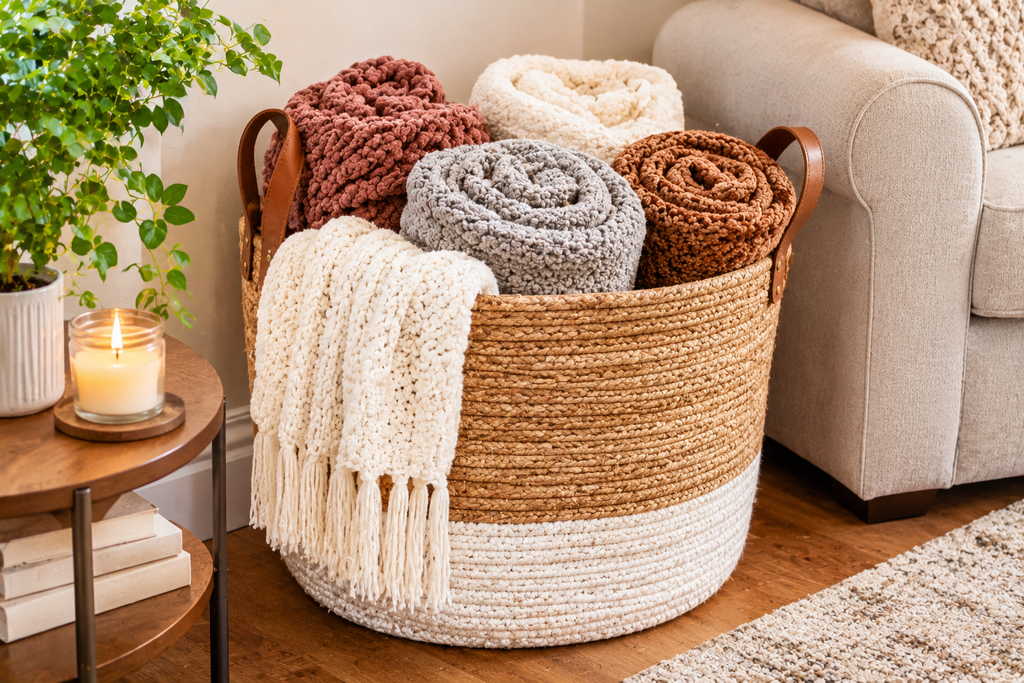
A basket made of coiled cotton rope looks like something from a boutique and can be made with a few supplies: cotton rope (roughly a quarter to half an inch thick), a sewing machine with a zigzag stitch or a needle and strong thread, and a lot of patience. The base is a flat spiral that is stitched as it grows. Once it reaches the desired diameter, the sides are built by stacking each new coil on top of the previous one and stitching them together.
Sewing creates a more durable basket than gluing. Hot glue alone tends to come apart under repeated weight and heat, and a basket that falls apart when loaded with blankets is no help. If you do not sew, a simpler version uses a plain fabric-lined bucket or a cloth-covered laundry basket with a tie-on liner. A finished rope basket usually holds several throws and softens a room.
14. A Rolling Cart Repurposed for Blankets
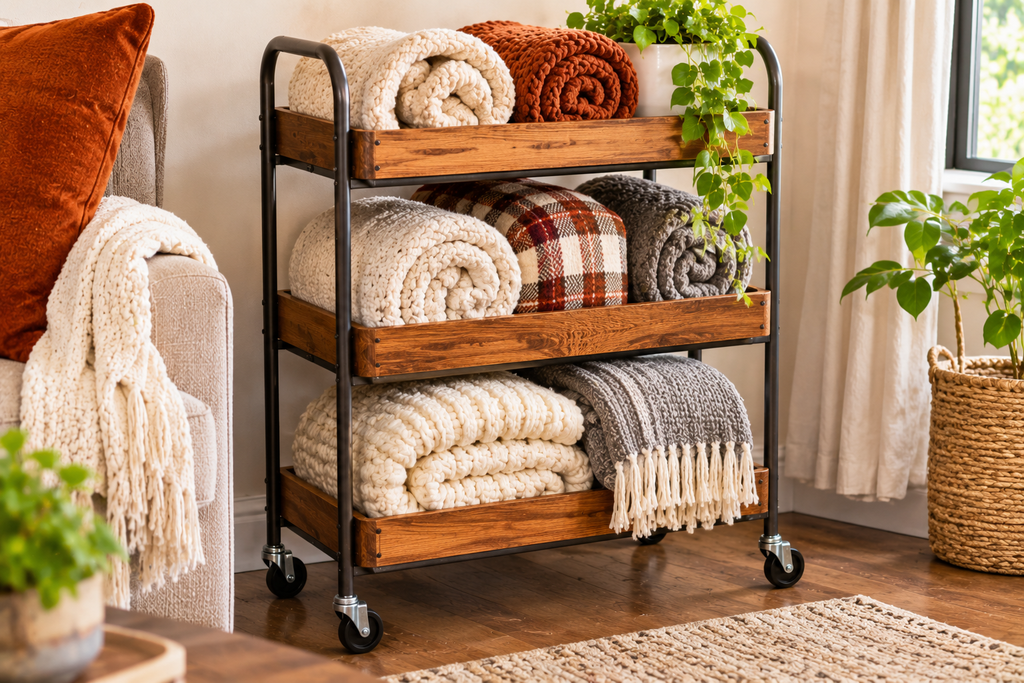
A three-tier utility cart, the kind sold for kitchens and craft rooms, becomes a mobile blanket station with almost no work. Roll folded blankets or place them in fabric bins on each tier, and wheel the cart to wherever it is needed: the living room in winter, the guest room when visitors arrive. It slots into narrow gaps next to a sofa or a dresser.
The cart works best in a casual space, not a formal one, and the exposed tiers mean that dust and pet hair settle on the blankets. Fabric bins on each shelf solve that and give it a more finished appearance. Choose a cart with locking casters if the floor is sloped or if there are young children who might push it around.
15. Cube Organizer With Fabric Bins
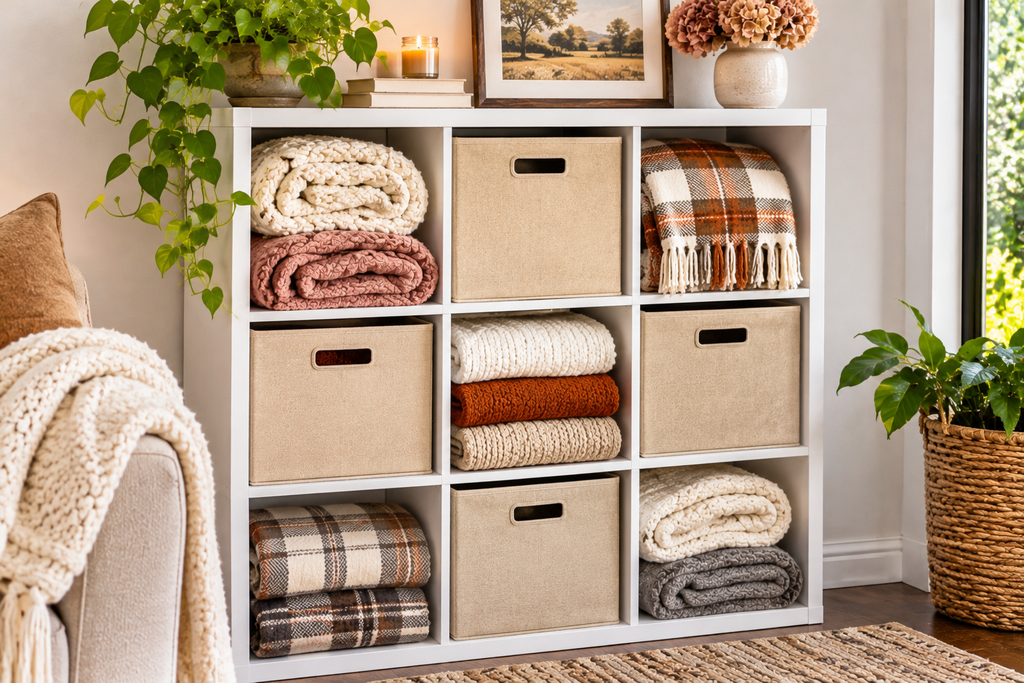
A cube organizer is a grid of square compartments, and the fabric bins that slot into them hold folded blankets neatly. The two-by-two and two-by-four sizes are available at most home stores, and they can be painted or lightly modified to match a room. A cube unit works in a bedroom, a playroom, or a closet, and the bins can be labeled so family members put blankets back in the right place.
Cube units are lightweight, so anchor tall ones to the wall. Choose bins with handles, since a loaded fabric bin is awkward to pull out otherwise. This is also the most flexible option on the list, because cubes can be added, rearranged, or repurposed later if storage needs change.
Storing Blankets So They Come Out in Good Shape
Good storage is about more than where blankets sit. How they are prepared matters just as much, especially for anything stored for months.
Wash or dry-clean first. Clothes moths and carpet beetles are drawn to fabric that has body oils, food residue, or sweat, and wool and other animal fibers are particular targets because moth larvae feed on the keratin in them. A blanket that is clean before storage is far less appealing to pests.
Make sure it is fully dry. Damp fabric in an enclosed space is how mildew starts. After washing, give blankets extra drying time, and let them air out for a few hours before they go into a trunk or bin.
Skip long-term compression for delicate fills. Vacuum storage bags save space, and they are fine for many synthetic blankets. For down, feather, and some wool items, long-term compression can flatten the fill and reduce loft. Manufacturers of down products generally advise against storing them tightly compressed, so check the care label and treat vacuum bags as a short-term or synthetic-only option.
Use breathable covers for natural fibers. A cotton pillowcase, a muslin bag, or a clean cotton sheet wrapped around a blanket protects it from dust while allowing air movement. Avoid putting wool in sealed plastic for long periods.
Be careful with moth deterrents. Cedar blocks and cedar-lined chests can help repel some moths, but the scent fades over time and cedar does not kill eggs or larvae that are already present, so it is a supplement to cleanliness, not a substitute. Lightly sanding cedar can refresh the aroma. Mothballs are a different matter. They are pesticides, and the product label directs that they be used only in sealed containers where fumes cannot reach people or pets. Do not scatter them loose around blankets in a trunk or closet, and keep them away from children and animals.
Check stored blankets once or twice a year. Open the container, look for small holes, webbing, or a musty smell, and refold along different lines so creases do not set permanently. If you find signs of moths, wash or dry-clean the affected items and clean the storage area thoroughly before returning anything.
Mistakes That Make Blanket Storage Fail
A few patterns account for most of the frustration.
Buying storage for the blankets you wish you had. If a basket can hold ten throws, you will likely end up with ten throws. Be honest about what you use and donate what you do not.
Putting the daily blanket in the hardest place to reach. A lidded chest in the corner is wonderful for guest blankets, but the nightly throw needs a spot where returning it takes one motion.
Ignoring the weight of wall-mounted storage. Wool and thick cotton are heavier than they appear. Pegs and shelves that are not anchored into studs or with properly rated anchors can pull out of drywall over time.
Skipping the safety check in a home with kids. Heavy lids, tippy ladders, and self-latching trunks all deserve a second look. Choosing slower-closing lids and anchoring tall pieces costs little.
Storing in a damp space. Basements, garages, and uninsulated attics can swing in humidity and temperature. If those are your only options, use sealed containers for synthetic blankets and avoid long-term storage of natural fibers there when possible.
Questions Readers Often Ask
How many throw blankets are too many?
There is no fixed number, but a practical test is whether every blanket gets used at least once a season. If some have not been touched in a year, they are probably candidates to donate. Many people find that three to five throws in a living room is plenty, with a few more stored elsewhere for guests.
What is the best way to store blankets in a small apartment?
Think vertical and hidden. A peg rail uses wall space, a lift-top ottoman doubles as seating, and under-bed containers use space that is otherwise empty. Combining one visible option for daily throws with one hidden option for seasonal blankets covers most needs without crowding the floor.
Why do blankets smell musty after storage, and how do I prevent it?
Musty odor usually means trapped moisture or a storage container with its own smell, such as an old trunk or suitcase. Make sure blankets are completely dry before they go in, use breathable covers for natural fibers, and leave the container slightly open or air it out periodically. If the container itself smells, air it out and clean it before use, or choose another one.
Is a vacuum storage bag safe for all blankets?
Not for all. Many synthetic blankets tolerate it, but down, feather, and some wool items can lose loft when kept compressed for long periods. Check the care label, and when in doubt, use a breathable cover and a larger container instead.
Final Thoughts
Start by sorting blankets into daily, seasonal, and occasional piles, then give each group a home that matches how it is used. Daily throws belong in a basket, on a ladder, or on pegs within reach. Seasonal and guest blankets belong in a trunk, bench, ottoman, or lidded container, stored clean and dry. If you want to try one quick project first, a peg rail or a stack of sanded crates takes an afternoon and costs little. Before buying anything, measure the space, check the weight of what will go in it, and confirm that lids, ladders, and shelves are safe for the kids and pets in your home.

About Syprose Kiche
Syprose Kiche is the creator and writer behind My Besuited Home, a practical home and garden website covering DIY projects, gardening, lawn care, landscaping, home improvement, and outdoor living. She focuses on turning everyday homeowner questions into clear, practical guides backed by careful research and useful real-world considerations.