
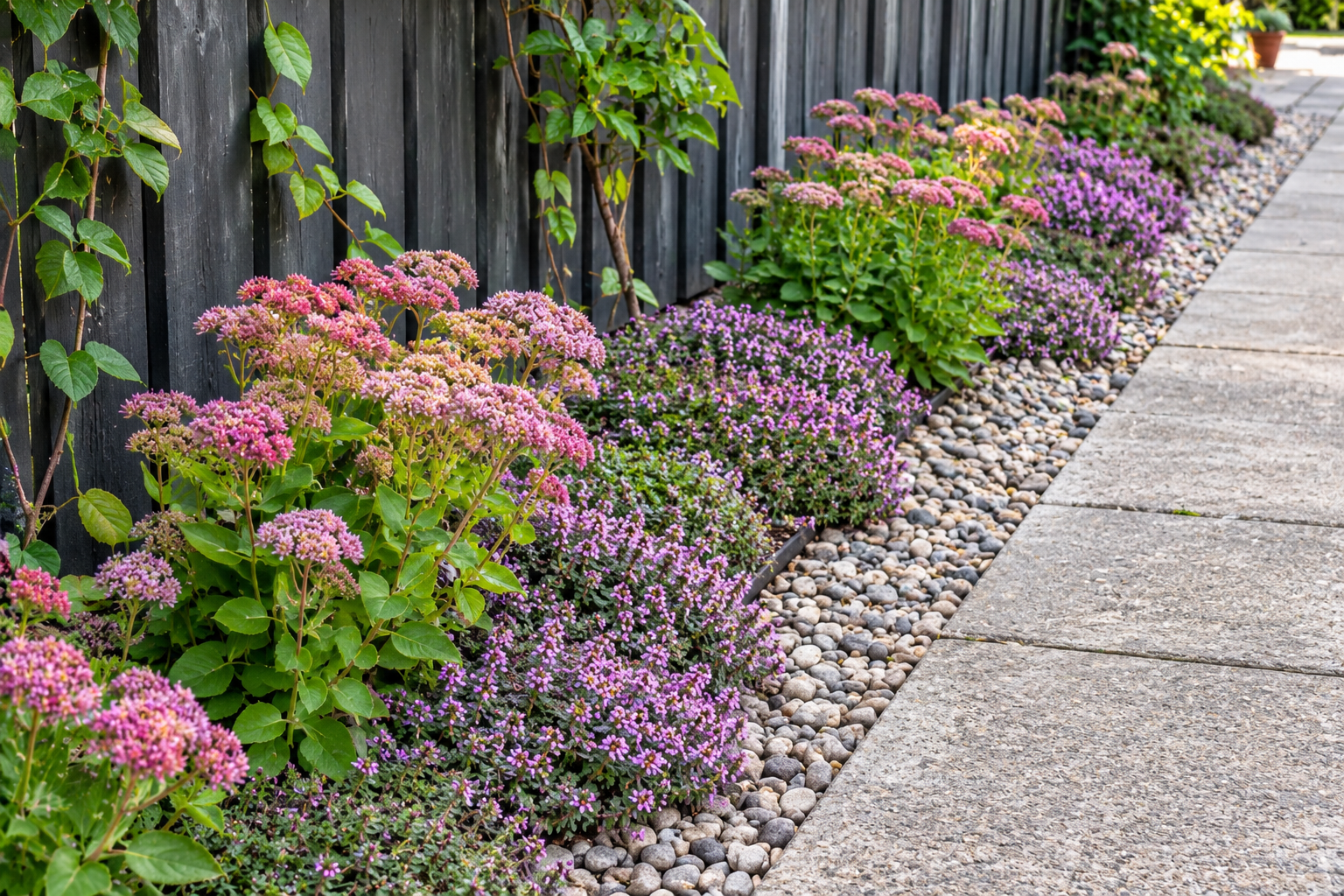
Most narrow borders go wrong in their second season, and the cause is usually the same: the plants were chosen for their flowers instead of their mature width. A catmint that looks neat in a one-gallon pot can spread to three feet across. In a 20-inch strip, that means stems flopping onto the walkway, a fence buried in foliage, and no way to reach the boards when they need staining.
A strip between a fence and a path is also a demanding site. It may be baked by sun or shaded all day, the soil can be full of construction rubble and post concrete, and every plant sits within arm’s reach of people walking by. The ideas below are sorted by those conditions first and by style second, because a plant that thrives against a hot south-facing fence will struggle on the shaded side of the same fence, no matter how good it looks in a photo.
Measure the Strip and Match Plants to Its Depth
Start with a tape measure. The usable width of the bed, not the width you wish it had, decides what will work:
- 10 to 14 inches: groundcovers, low perennials, bulbs, and compact herbs. Anything that matures wider than about a foot will lean onto the path.
- 15 to 24 inches: clumping perennials and grasses that mature at roughly 12 to 18 inches wide, narrow columnar evergreens, and vines trained up the fence.
- 24 to 36 inches: small shrubs up to about 2 to 3 feet wide, with perennials layered in front.
On a plant tag, mature spread matters more than height. Leave a few inches of clearance on each side: in an 18-inch strip, plants that mature at 12 inches wide stay clear of both the fence and the path.
Then watch the strip for a full day. Roughly six or more hours of direct sun counts as full sun, three to six hours as part shade, and under three as shade. Sun angle changes with the season, so a strip that is bright in early spring can turn shady once nearby trees leaf out.
Soil deserves a look too. Dig a test hole about 8 to 10 inches deep before buying anything. Fence lines often hold compacted subsoil, leftover building debris, and concrete from post footings, which can sit close to the surface. Fresh concrete can raise soil pH locally, so a soil test through your state’s cooperative extension office is worth the small fee. Ground beneath roof eaves may also stay dry most of the year because the roof blocks rain.
What the Fence Needs From the Border
A fence is a structure that has to be maintained, and the planting should allow for that.
Leave a gap. Keep plants roughly 6 to 12 inches off the boards unless they are trained climbers. The gap lets air dry the wood after rain and leaves room to stain, seal, or repair panels. Wood fences typically need fresh stain or sealer every few years, depending on the product and exposure, so build in access you will actually use.
Keep mulch off the wood. Mulch piled against boards holds moisture against them, which is where rot starts. Stop a couple of inches short.
Expect reflected heat. A south- or west-facing fence, especially a light-colored one, can make the adjacent soil noticeably hotter and drier than the rest of the yard. That is a reason to lean toward drought-tolerant plants.
Check the lumber before planting edibles. Older pressure-treated wood may contain CCA, an arsenic-based preservative that was phased out of most residential uses in the U.S. at the end of 2003. If the fence is old and you plan to grow food beside it, confirm current guidance with your extension office first.
Ask before attaching anything. If the fence belongs to a neighbor or falls under an HOA, get permission before screwing trellises or wires into it.
What the Walkway Needs From the Border
The path side of the bed takes a different kind of abuse.
Rock salt splashes and runs off onto the nearest soil, and plants at the path edge absorb the worst of it. Using salt sparingly, or switching to sand for traction, protects the border more than any plant choice does.
Shoveled snow ends up on the bed. Perennials that die back to the ground handle that burial better than brittle evergreens, which can snap or splay under a heavy load.
Keep thorny and sharp-leaved plants out of reach of the path. Roses, barberry, and spiky yuccas look fine until someone carries groceries past them.
Path width matters too. A common accessibility benchmark is a clear walking width of about 36 inches, so if the path is already narrow, plants that flop into it will make it narrower still. Finally, if the border meets a lawn, a flat strip of brick or pavers set flush with the soil lets a mower wheel ride along it, and nobody has to trim the edge by hand.
Ideas for Sunny Strips Along Hot Fences and Open Walkways
1. A Lavender Ribbon Along the Path
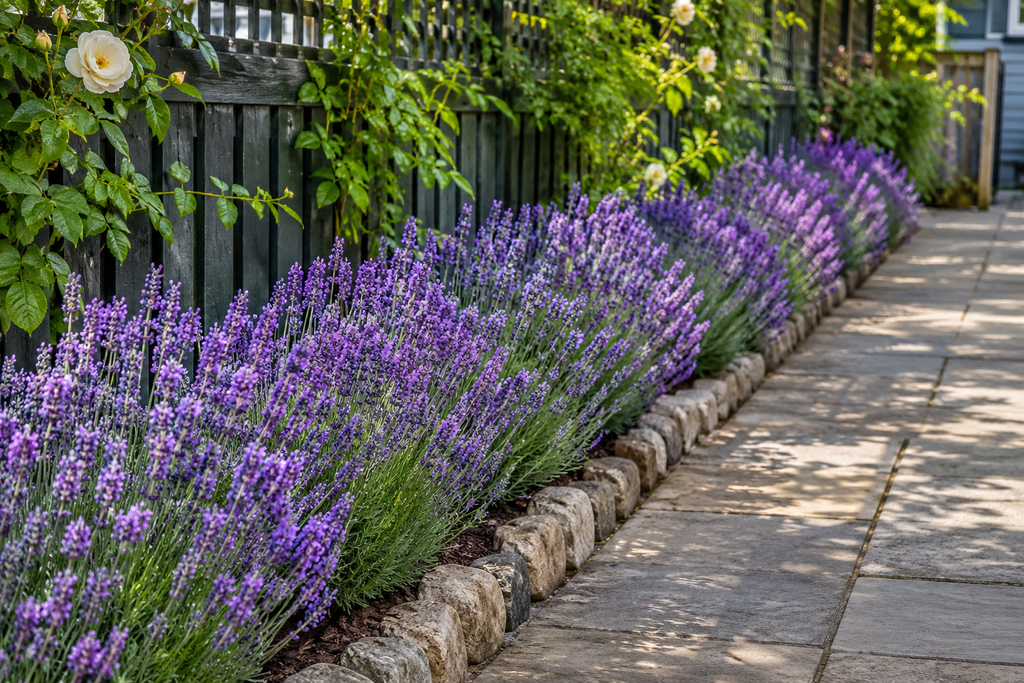
English lavender (Lavandula angustifolia) suits a narrow strip because compact cultivars such as ‘Munstead’ stay around 18 inches tall and can be spaced about 18 inches apart. The fragrance reaches people walking past, which is the point of putting it at the path edge.
The catch is drainage. Lavender generally rots in wet clay and in humid, rainy summers. If your soil is heavy, build the planting area up a few inches with gritty, fast-draining soil, mulch with gravel instead of bark, or choose a different idea from this list. English lavender is typically listed as hardy in roughly zones 5 through 9, but check the tag for the cultivar you buy.
Trim lightly after flowering and stay within the green growth. Lavender rarely resprouts from bare woody stems, so a hard cut can kill a plant that took years to fill in.
2. Catmint and Salvia in Repeating Pairs
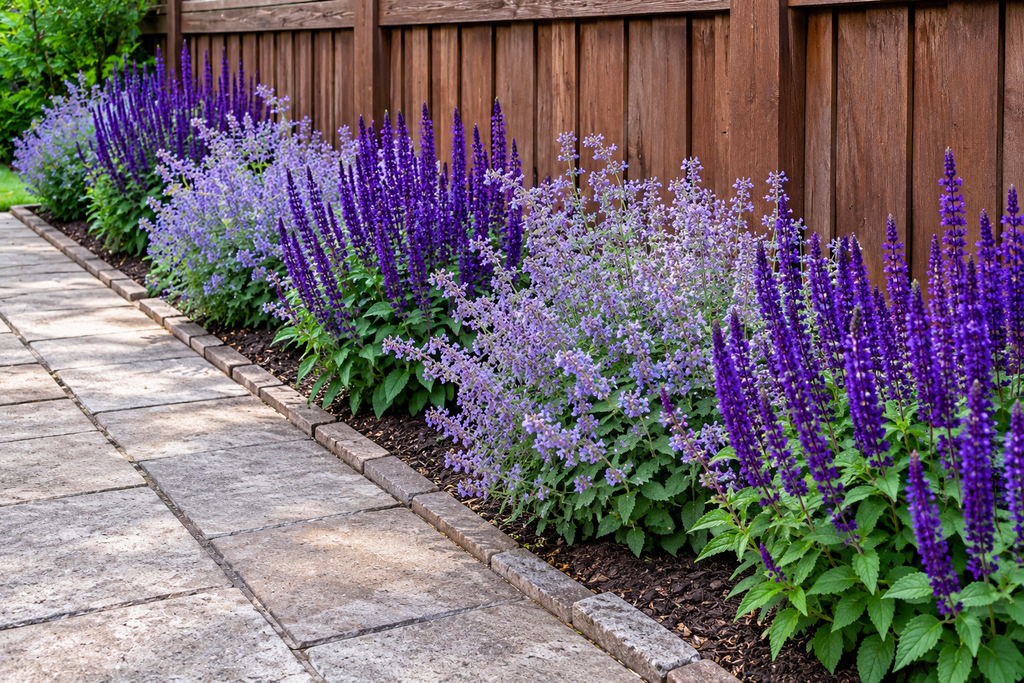
Catmint and perennial salvia bloom at overlapping times, handle heat and dry spells once established, and share a blue-purple palette that looks deliberate in a long, thin bed. The size of the catmint is what trips people up. Popular selections like ‘Walker’s Low’ can reach 2 to 3 feet or more across, while compact types such as ‘Little Trudy’ stay much smaller. Read the mature spread before you buy.
Upright salvias like ‘Caradonna’ run roughly 18 to 24 inches tall and hold their shape without staking. Alternating one salvia with two or three catmint plants creates rhythm along the fence without crowding the path. Shear both back by about half once the first flush of flowers fades, and they will usually send up a second round. Deer tend to leave both alone because of the aromatic foliage, though a hungry herd may not.
3. A Gravel Border With Sedum and Creeping Thyme
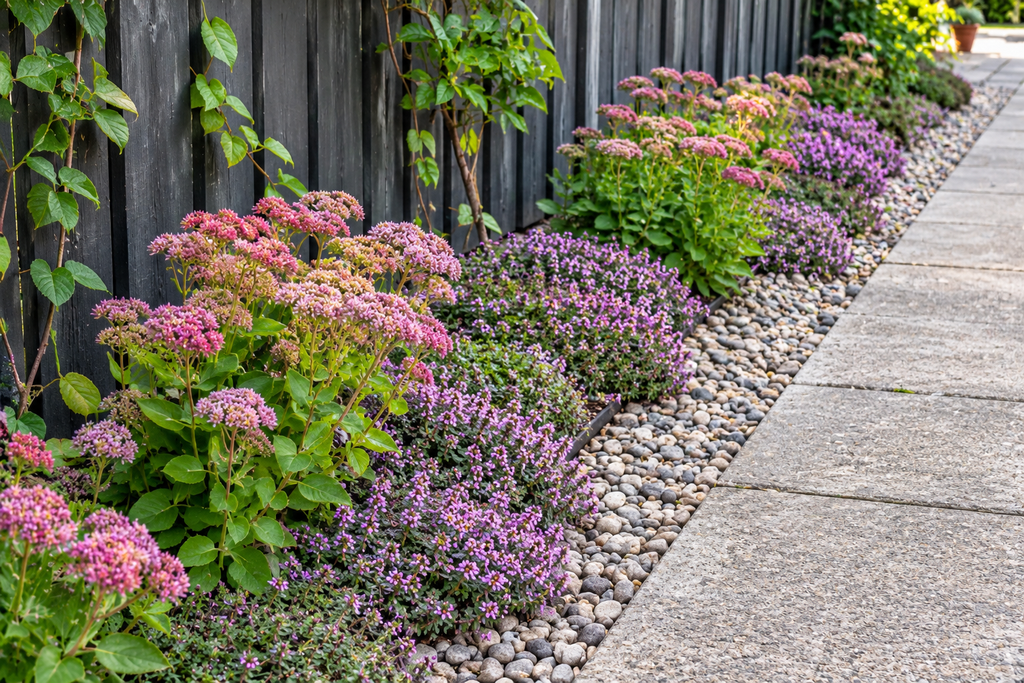
This is the answer to the strip that bakes next to a south-facing fence. A 2-inch layer of crushed stone or pea gravel over well-drained soil keeps roots cooler and discourages weed seeds from sprouting. Low sedums such as the Sedum spurium types grow 4 to 6 inches tall and spread into mats, and creeping thyme tolerates occasional footsteps if it spills onto the path edge. Upright sedums add late-summer height at the fence side.
Light-colored stone reflects heat while dark stone absorbs it, so choose a pale gravel if the fence already throws heat. This border fails in constantly damp soil. Thyme and sedum both rot where water sits through winter, so skip this idea if the strip collects runoff.
4. Upright Grasses as a Slim Screen
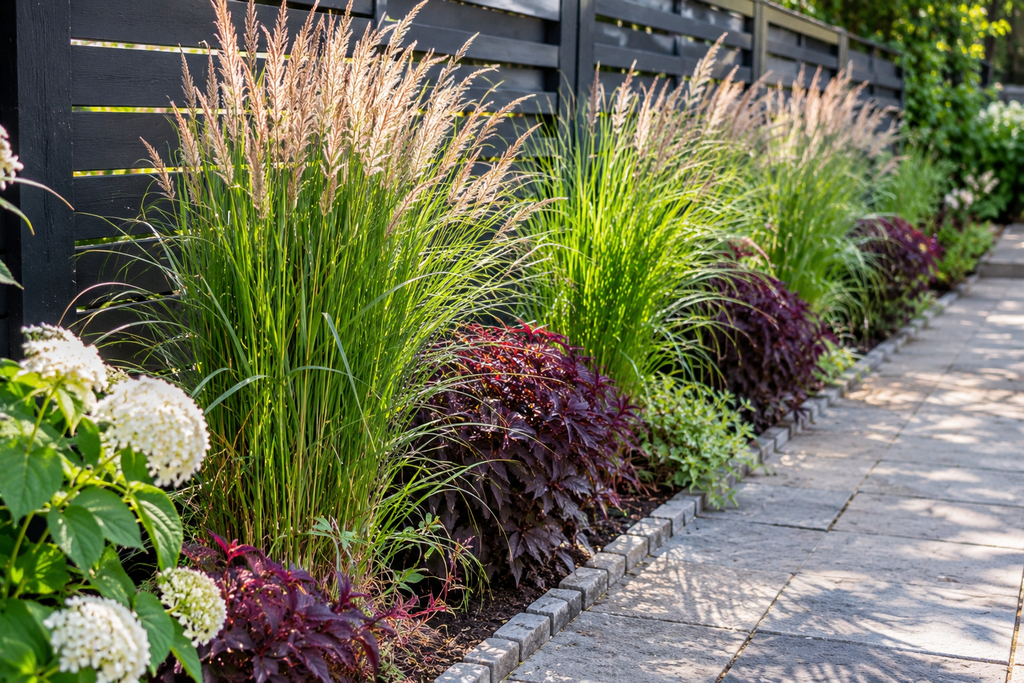
Some grasses grow tall without growing wide. Feather reed grass ‘Karl Foerster’ reaches about 4 to 5 feet and stays around 2 feet wide, forming a vertical line that softens a plain fence. It is generally considered sterile, so it will not seed itself into the lawn. Upright little bluestem selections such as ‘Standing Ovation’ offer a similar shape with coppery fall color and handle poorer, drier soil.
Both need about 24 inches of bed depth to look natural. Put them near the fence and keep shorter plants toward the path. Cut the stems to a few inches above the ground in late winter, before new growth starts, so the clumps stay tidy.
5. A Pollinator Strip With Coneflower, Blazing Star, and Butterfly Weed
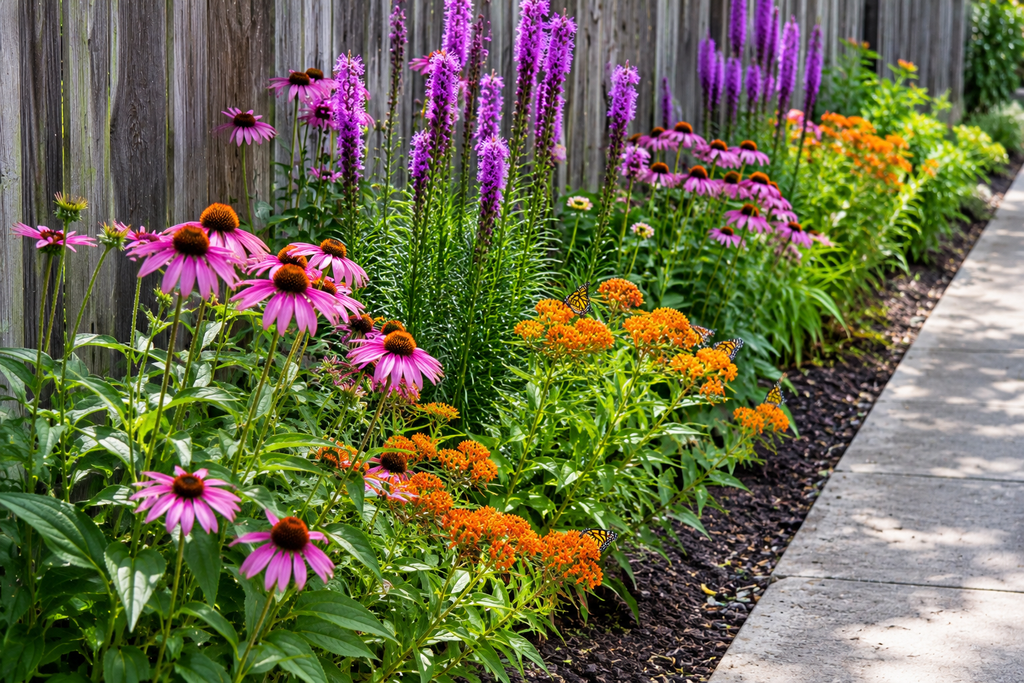
Compact purple coneflowers stay roughly 18 to 24 inches tall, and blazing star (Liatris spicata) sends up spikes only about a foot wide at the base, which suits tight spaces. Butterfly weed (Asclepias tuberosa) adds orange flowers that monarch caterpillars feed on. It grows from a deep taproot and resents being moved, so put it in its permanent spot from the start, and mark the location because it emerges late in spring.
These plants peak in mid to late summer. Layer in early bulbs (see idea 16) so the strip does not look empty in May. Leaving some seed heads standing through winter feeds finches, but cut them back if you prefer a neat look beside the path. Skip insecticide sprays here, since the whole point is attracting insects.
Ideas for Shaded Strips Along North-Facing Fences and Under Trees
6. Hosta and Japanese Forest Grass in Layers
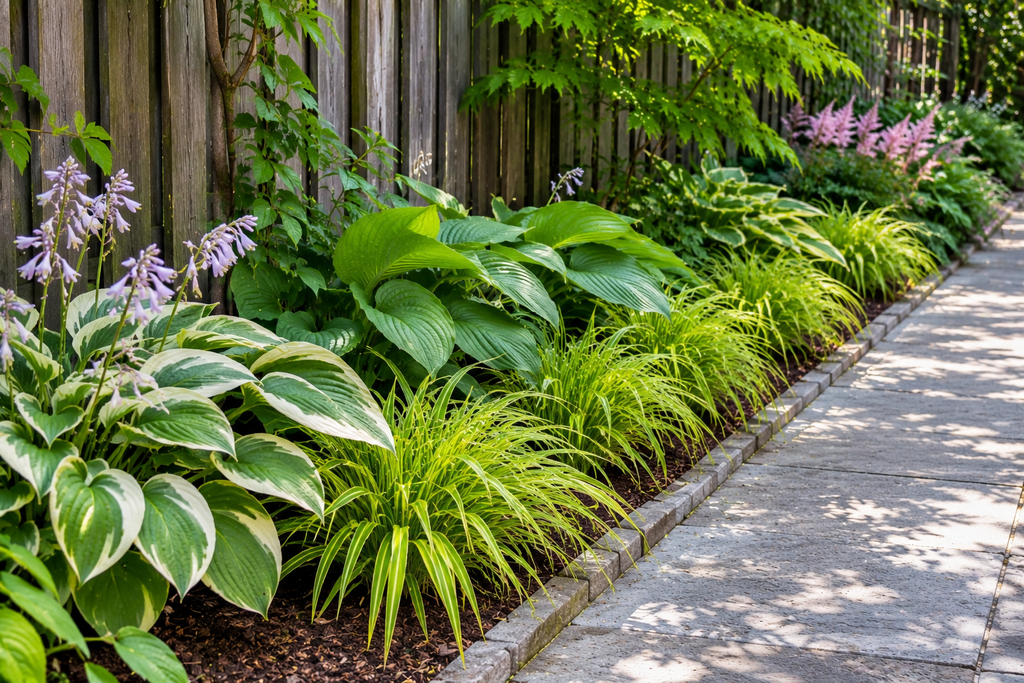
Small and medium hostas such as ‘Blue Mouse Ears’, which stays under about a foot tall and wide, fit a 15- to 18-inch strip. Pair them with Japanese forest grass (Hakonechloa macra), whose arching gold or variegated blades brighten dark corners and look like a slow cascade beside the path. It is slower to fill in than most perennials, so buy larger divisions if you want a finished look sooner.
Slugs and deer both enjoy hosta. If either is a problem in your area, plan on protection or substitute plants from idea 7 or idea 8. Hostas are usually hardy in zones 3 through 9 and forest grass in roughly zones 5 through 9, but confirm for the cultivar you choose.
7. Coral Bells and Foamflower for Color Without Relying on Blooms
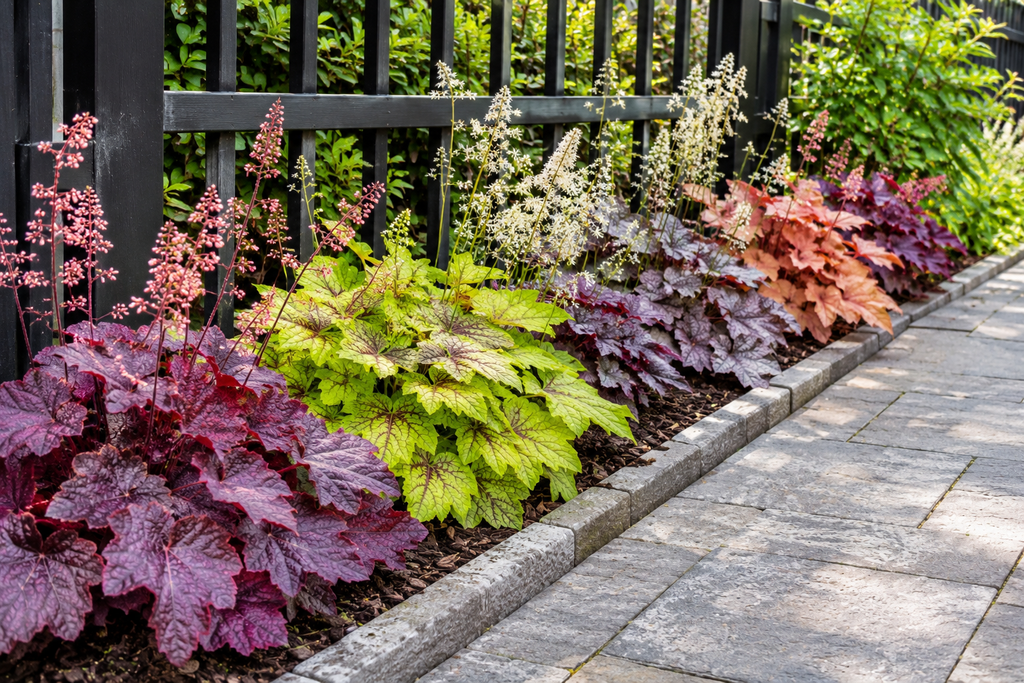
Coral bells (Heuchera) come in amber, burgundy, lime, and near-black foliage, and the leaves provide color for months. Colors are usually best in part shade; deep shade can dull them, and strong afternoon sun may scorch the darker types. In regions with freeze and thaw cycles, check the plants in early spring, because the crowns can heave out of the soil. Press them back in and water.
Foamflower (Tiarella) fills the space between with soft spring flower spikes and patterned leaves. Choose clumping selections for a narrow bed, since some types spread by runners and creep toward the path.
8. Ferns and Hellebores for a Strip That Looks Good in Winter
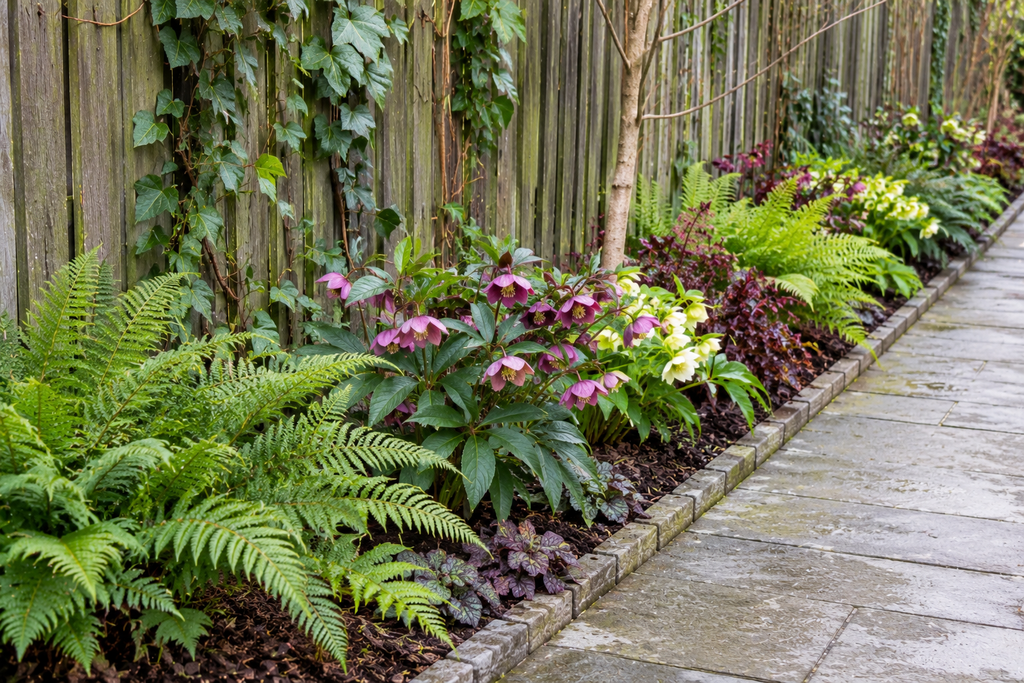
Japanese painted fern (Athyrium niponicum var. pictum) has silvery fronds with a purple tint and generally tolerates cold down to around zone 3. Hellebores bloom in late winter to early spring, when almost nothing else does, and their evergreen foliage anchors the bed the rest of the year. Cutting back the old hellebore leaves in late winter shows off the new flowers.
Hellebores are toxic if eaten, and the sap can irritate skin, so wear gloves when trimming and think twice if small children or chewing pets use the path.
9. Clumping Liriope or Mondo Grass as an Evergreen Edge
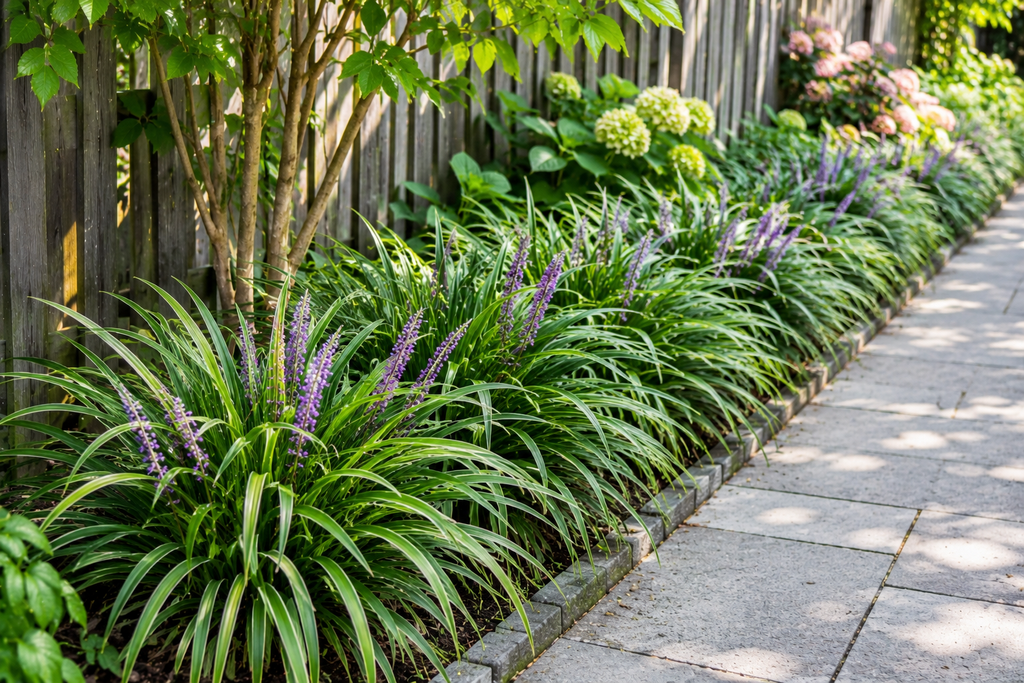
A continuous line of grassy foliage along the path edge makes the whole border look finished. Clumping lilyturf (Liriope muscari) grows 12 to 18 inches tall and tolerates shade, partial sun, and dry spells once established. Mondo grass (Ophiopogon japonicus) is smaller and darker. Both are generally listed as hardy from about zone 6 or 7 southward, with liriope reaching somewhat farther north, so check your zone first.
Stay with Liriope muscari. Creeping lilyturf (Liriope spicata) runs by underground stems and will invade the rest of the bed. In colder areas the leaves can brown over winter. Shear them close to the ground in late winter before new growth begins.
Structural Ideas That Look Tidy All Year
10. A Clipped Low Hedge of Boxwood or Holly
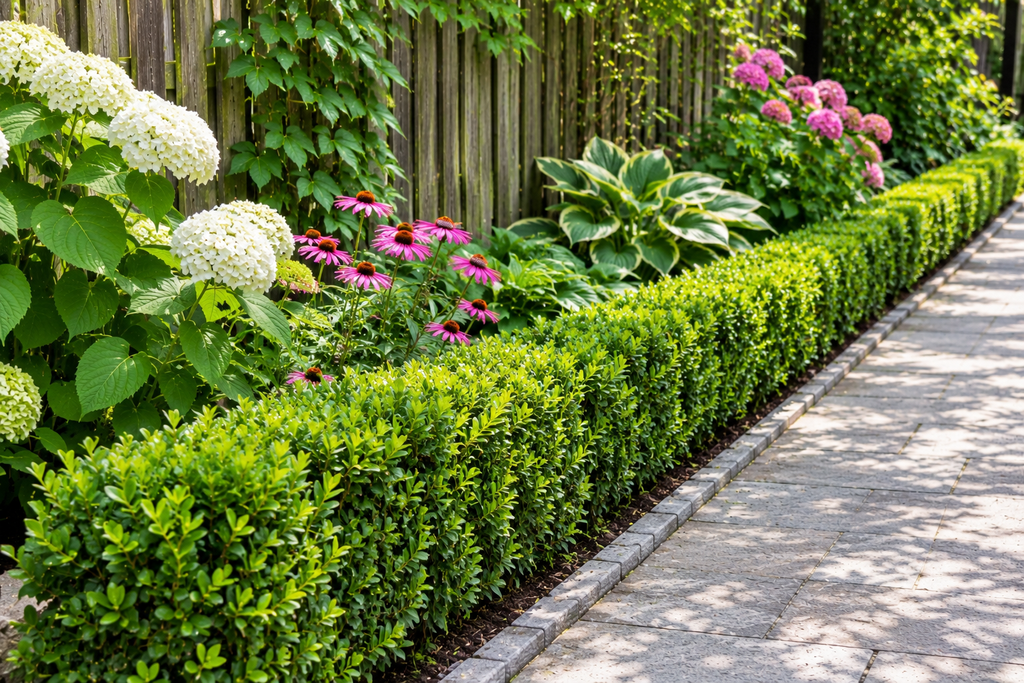
A 18- to 24-inch hedge gives the strip a clean edge in winter, when perennial borders go bare. Compact boxwoods are the traditional choice, but boxwood blight, boxwood leafminer, and box tree moth cause serious damage in parts of the U.S. Ask your extension office what is circulating locally before you buy. Boxwood is also toxic to dogs and cats if eaten.
Compact inkberry holly (such as ‘Gem Box’) and Japanese holly (such as ‘Soft Touch’) offer similar looks with different pest profiles. For a continuous hedge, space plants slightly closer than their mature width so they knit together sooner, and prune so the base stays slightly wider than the top, which lets light reach the lower branches.
11. Columnar Evergreens Repeated at Fence Posts
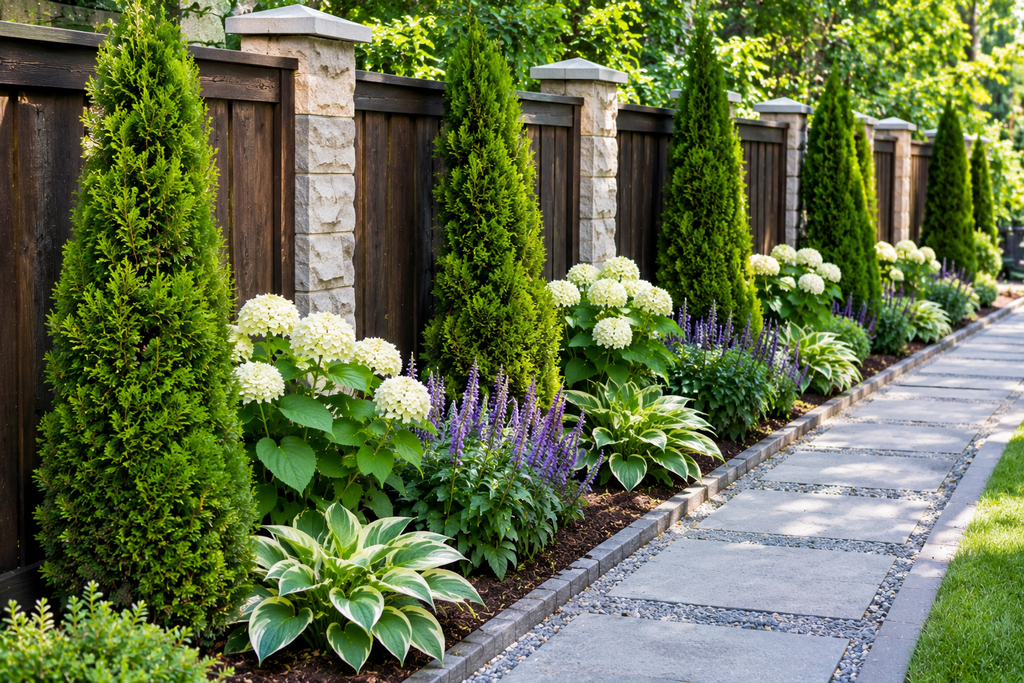
A row of narrow evergreens spaced to match the fence posts gives the border a built-in rhythm. ‘Sky Pencil’ Japanese holly typically reaches 6 to 10 feet tall while staying only about 1 to 2 feet wide, so it fits a strip as shallow as 18 inches. Its growth is slow, which means less pruning. Heavy snow can splay the stems, so in snowy regions loosely tie them with soft fabric strips before winter.
Holly berries can upset stomachs if eaten, so consider this if children play nearby. Columnar yews and junipers fill the same role in colder zones, but verify their mature width, because some are much wider than their name suggests.
12. Espaliered Fruit Trees Trained Flat Against a Sunny Fence
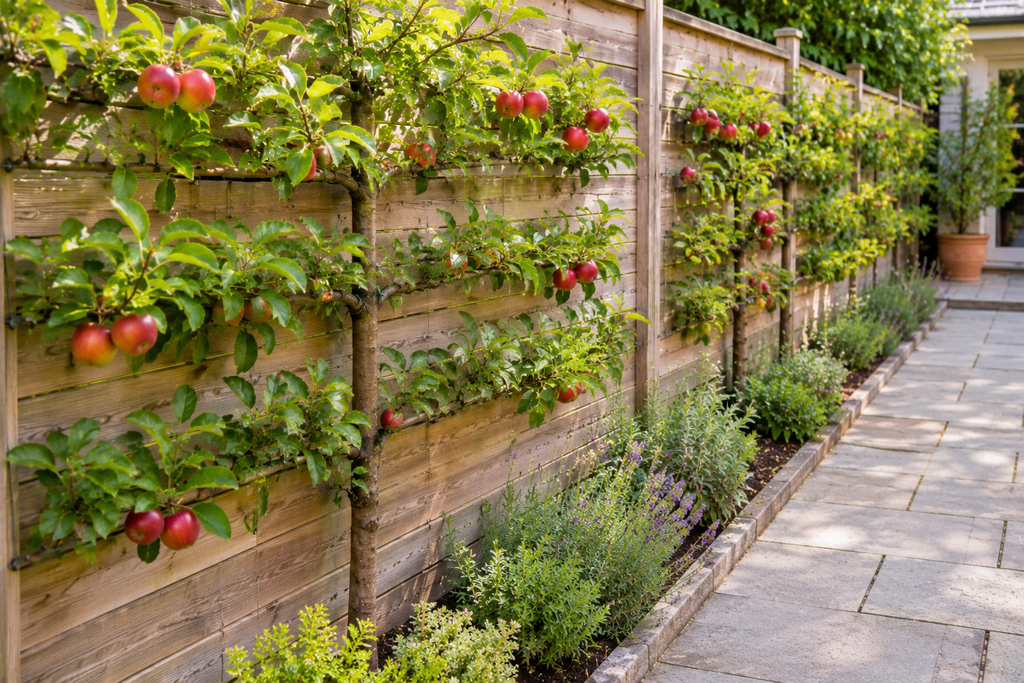
Apples and pears on dwarfing rootstocks can be trained along horizontal wires so they occupy only about 12 to 18 inches of depth. Plant them roughly a foot from the fence and run wires about 12 to 18 inches apart. The tree needs at least six hours of direct sun.
The tradeoffs are real. Training takes several years before the shape is established, and fruiting varieties may need a second variety nearby for pollination. The fence also has to be strong enough to bear the weight of wires, trees, and wind, so a freestanding wire frame can be a better choice for a lightweight fence. Fruit that drops onto the walkway becomes slippery and attracts wasps, so harvest promptly.
13. Clematis on a Spaced Trellis With a Low Underplanting
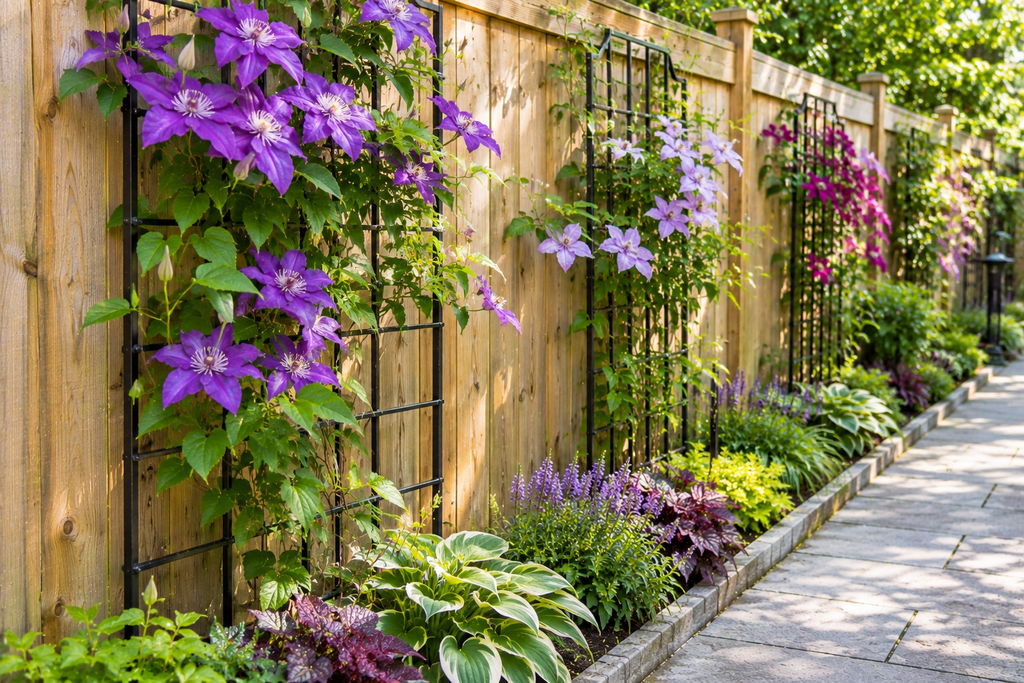
A vine gives a narrow bed height without using up depth. Mount the trellis on spacer blocks so it stands an inch or two off the fence, which allows airflow and leaves room to remove it for staining. Choose a clematis that flowers on new growth (pruning group 3, such as ‘Jackmanii’-type clematis), since these are cut to about a foot above the ground in late winter, which is the simplest routine to follow.
A familiar saying about clematis is that they like their heads in the sun and their feet in the shade. Low perennials or a layer of mulch around the base keeps the roots cooler. Avoid self-clinging vines such as English ivy and Boston ivy on a wooden fence, because their holdfasts work into joints and trap moisture, and English ivy is invasive in many regions.
14. Dwarf Flowering Shrubs in a Short, Wider Run
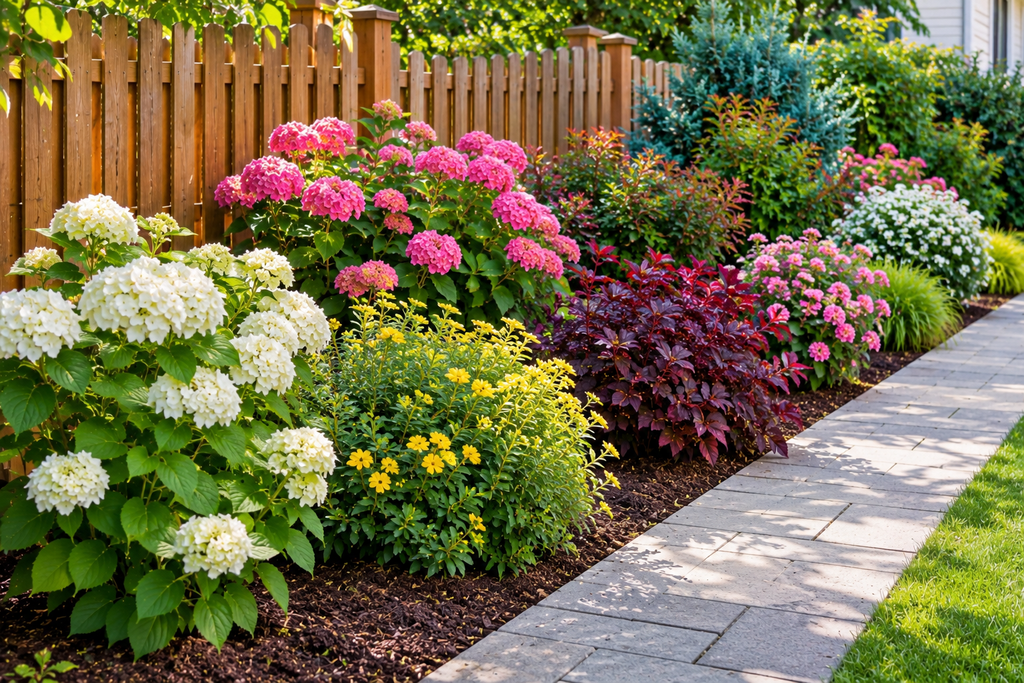
On a stretch where the bed is 30 inches or deeper, such as near a corner or a gate, a few small shrubs give the border substance. Japanese spirea cultivars such as ‘Little Princess’ and ‘Magic Carpet’ typically stay around 2 to 3 feet tall and wide, bloom on new wood in summer, and are hardy in roughly zones 3 through 8. Cut them back by about a third in late winter to keep the shape compact.
Use two or three shrubs as anchors with perennials between them rather than filling the whole strip. Shrubs placed continuously along a narrow bed usually outgrow it.
Edible, Seasonal, and Problem-Solving Borders
15. A Kitchen Herb Strip Beside the Back-Door Path
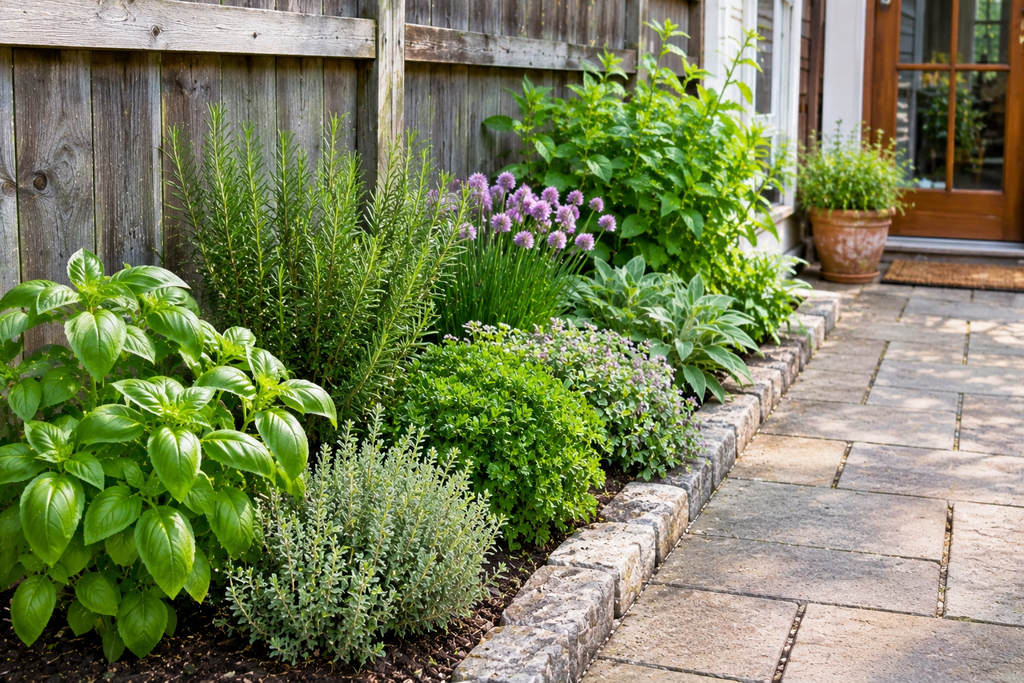
Herbs earn their space when they sit where you walk. Chives, thyme, sage, and compact oregano all want sun and well-drained soil, which many fence strips provide. Oregano spreads, so give it a defined corner or consider keeping it in a pot sunk into the soil. Rosemary is reliably hardy only in milder winters (roughly zone 7 and warmer for most varieties), so grow it in a pot in colder areas and move it indoors.
Wash anything you harvest, especially if dogs use the path, and avoid herbicides or sprays near the bed. If the fence is older pressure-treated lumber, revisit the CCA note in the fence section before planting herbs directly against it.
16. Layered Spring Bulbs Under Perennials
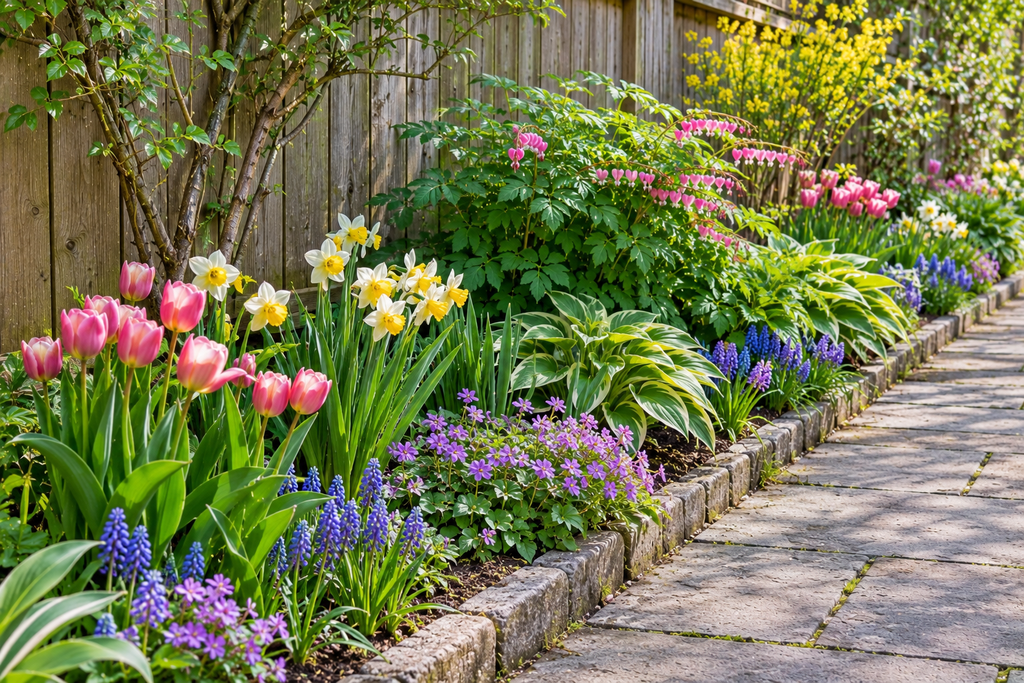
Bulbs use space that is otherwise empty in early spring, and later perennials cover the fading foliage. Daffodils, alliums, and early tulips all work. The usual guideline is to plant a bulb at a depth of about two to three times its height. Planting different bulbs at different depths in the same spot gives a longer display.
The foliage needs to remain until it turns yellow, roughly six weeks after bloom, because the leaves are refilling the bulb for next year. Plant hosta, daylily, or catmint in front to hide it. Squirrels and deer prefer tulips, while daffodils are usually left alone, partly because they are toxic if eaten. Handle them with care around pets and children.
17. A Narrow Rain Garden for Strips That Collect Runoff
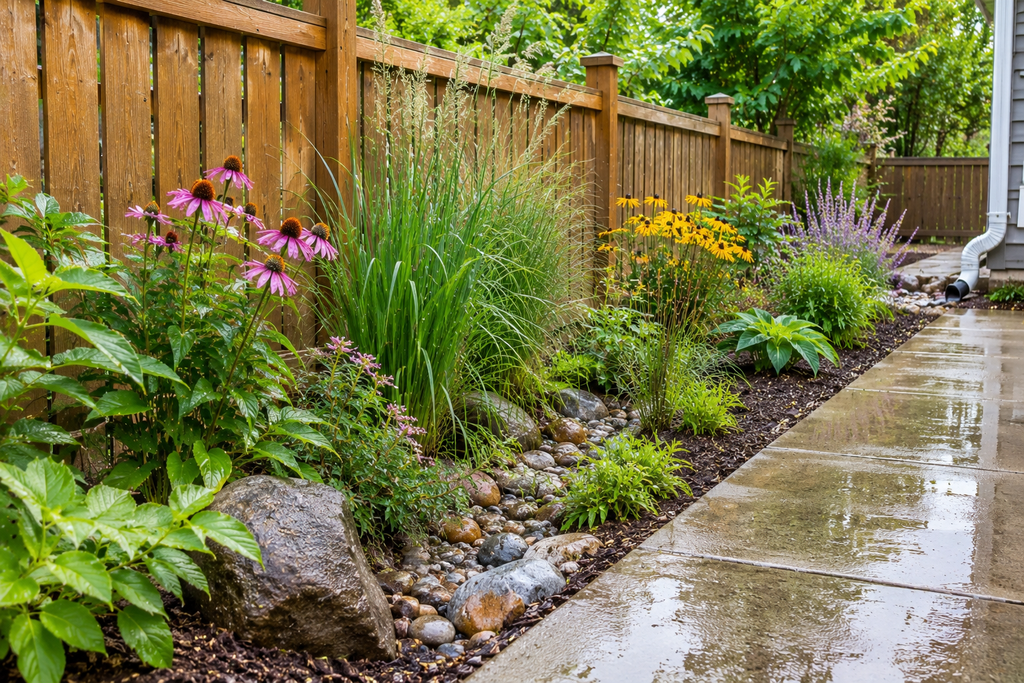
If a downspout or slope sends water into the strip, plants that cope with both soggy and dry spells will outperform the usual border mix. Siberian iris, native sedges (Carex species), and blue flag iris all handle periodic wet soil and have narrow, upright foliage that suits a thin bed.
Some cautions matter more than the plants. Do not direct water toward fence posts or a house foundation, and check local rules and neighbors’ interests before regrading. Many rain garden guides aim for water to drain within about 24 to 48 hours. If water stands longer than that, the problem is drainage and not plant choice, and a landscape professional or your local extension office can advise.
Planting a Narrow Border Without Making It Harder to Maintain
Use fewer plants, repeated. A strip with three to five kinds of plants, repeated along its length, reads as designed. A strip with one of everything looks cluttered and is harder to weed because you cannot easily tell what belongs.
Set tall plants at the fence side. Mid-height plants go in the middle and the lowest at the path edge. In an 18-inch strip, that usually means a single staggered row.
Time the planting. Spring and early fall are the easiest seasons. A commonly cited guideline is to plant perennials and shrubs about six weeks before the ground freezes so roots can establish.
Water at the roots. A soaker hose or drip line along the strip keeps water off the fence and out of the walkway. Sprinklers aimed at the lawn tend to soak boards and leave the bed dry.
Mulch lightly. Two to three inches of shredded bark or compost works for most beds, kept a couple of inches off both the fence and plant stems. Gravel suits the dry border in idea 3.
Call before you dig deep. Planting holes are shallow, but trenching for edging or setting posts can reach buried lines. In the U.S., 811 connects you with the free utility locating service.
Questions Readers Ask Before Planting
Do I need landscape fabric under the mulch?
In most narrow borders, no. Weeds root in the mulch that collects on top of the fabric, and pulling them tears the fabric. It also blocks perennials from spreading naturally and keeps you from improving the soil later. For a new bed, overlapping cardboard (tape and labels removed) under 2 to 3 inches of mulch suppresses weeds while the plants fill in, and the cardboard breaks down.
Which plants should I avoid in a strip this small?
Aggressive spreaders are the main problem: running mint, ribbon grass, goutweed, creeping lilyturf, English ivy, and running bamboo can outcompete everything else and creep into the lawn. Lemon balm and some other herbs self-seed freely. Invasive status varies by region, so check your state’s invasive plant list before choosing anything unfamiliar.
What if tree roots run through the strip?
Dig individual holes by hand and avoid cutting large roots, since damaging major roots can harm the tree. Choose smaller plants that tolerate dry shade, such as hellebores or liriope, and use mulch rather than piling soil over the roots. If the roots are dense, a container planting set on top of the soil may work better.
Key Takeaways
A narrow border succeeds when the plants match the strip’s sun, soil, and width, so measure and observe before buying. Leave breathing room at the fence, protect the path edge from salt and snow, choose plants whose mature spread fits the bed, and repeat a few of them instead of collecting many.
A practical next step is to measure the strip, note how many hours of sun it gets, and pick one idea from the matching section above. Plant a short test stretch of about six to ten feet, and see how it handles a full season before extending it along the whole fence.

About Syprose Kiche
Syprose Kiche is the creator and writer behind My Besuited Home, a practical home and garden website covering DIY projects, gardening, lawn care, landscaping, home improvement, and outdoor living. She focuses on turning everyday homeowner questions into clear, practical guides backed by careful research and useful real-world considerations.