
A gardener’s fall is split in two. Half the yard is winding down: tomato vines collapsing, perennials going brown, leaves piling up. The other half is quietly getting started, because fall is when garlic goes in, spring bulbs get buried, and some seeds do their best work after a cold winter. A gift basket that ignores this tends to land awkwardly. A basket of summer-flavored novelties shows up just as the recipient is putting the garden to bed, while a basket of plants shows up when they have no bed left to put them in.
The baskets below are built around what a gardener is actually doing between September and December: planting, harvesting what’s left, preserving it, cleaning up, protecting tools and plants, and planning the next year. Some are meant to be used within days. Others are meant to sit by a chair through a long winter.
Start With the Gardener, Not the Basket
The most useful thing you can learn before buying anything is what the person really grows and where. Someone with a few containers on a balcony has no use for a bag of fifty tulip bulbs. A person with a quarter-acre vegetable plot probably has strong opinions about their trowel and won’t thank you for a new one.
A few decision rules save a lot of wasted money:
- Consumables beat durable goods when you’re unsure. Seeds, bulbs, salves, tea, suet and twine can’t be the wrong brand of tool or the wrong size. Gardeners often own tools they’ve used for years and like, so replacing them is a gamble.
- Match the planting window to their climate. “Fall” means different things in Minnesota and in Georgia. In colder areas the window for planting bulbs and garlic may close by late October or November, while in mild regions it can run well into winter. If you don’t know their USDA hardiness zone, ask a mutual friend or check the zone for their zip code before buying anything that has to go in the ground.
- Choose a theme the basket can hold. One clear idea (a tea-making set, a bulb-planting set) looks intentional. Ten unrelated small items look like a clearance aisle.
- Add a short handwritten note with planting depth, timing or storage instructions. It costs nothing and is often what separates a gift from a pile of supplies.
Building a Basket That Survives the Trip
Baskets that look good in a photo can fail in a car. Put the heaviest items (jars, tools, bags of bulbs) at the bottom and the fragile or light things on top. Pack shredded paper or a folded dish towel around anything glass. If the basket contains a live plant, make sure the pot has drainage and sits in a saucer or waterproof liner, because a plant sitting in a closed wicker basket with no way for water to escape is a quick route to root rot.
Perishables change the timing. Fresh plants, baked goods and preserves should be handed over within a day or two when possible. Everything else, like seeds, bulbs, tools and candles, can be assembled a week ahead.
Baskets for Things That Go in the Ground This Fall
1. A Spring Bulb Sampler
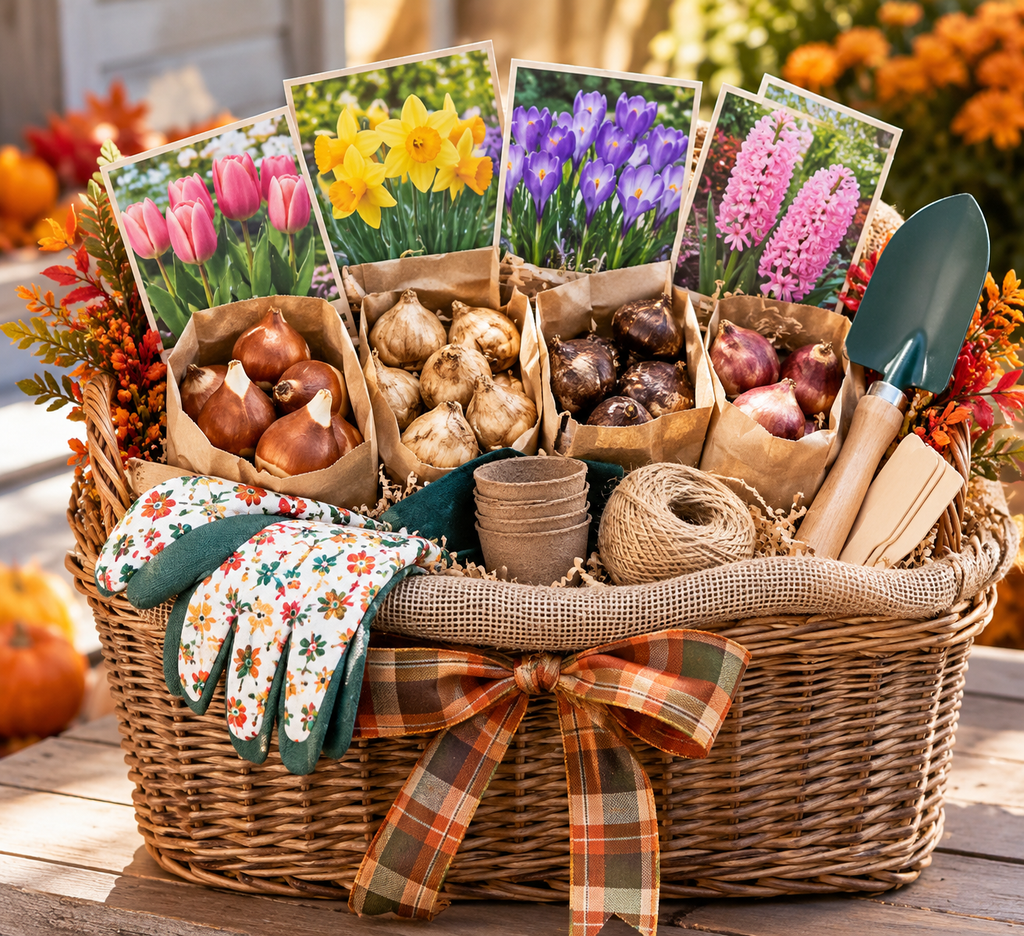
This is the classic, and it works because planting bulbs in fall is an act of faith that pays off months later. Choose three or four kinds with different bloom times so the show stretches out: early crocus or snowdrops, mid-season daffodils, late tulips or alliums. Add a bulb planter or a long-handled auger bit if the recipient has many to plant, plus a pair of sturdy gloves.
Two details are worth knowing. Squirrels and deer love tulips but tend to leave daffodils and alliums alone, so if the recipient has trouble with wildlife, lean toward the latter. And a common planting rule is to set bulbs at roughly two to three times their own height. Write that on the note.
One warning: tulip, daffodil and crocus bulbs are toxic to dogs and cats if eaten. If the recipient has a digging dog, mention it or choose a different basket.
2. A Garlic-Planting Basket
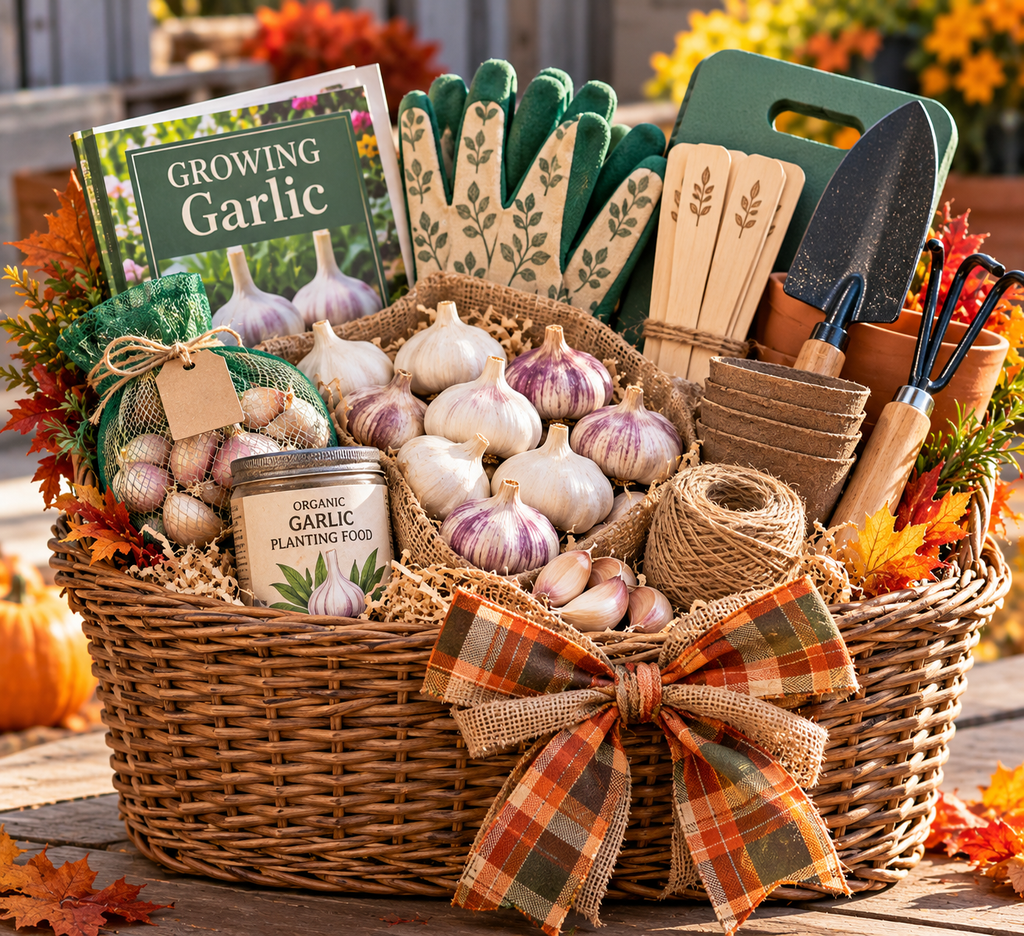
Garlic is one of the few crops that really is planted in fall, usually a few weeks before the ground freezes, and harvested the following summer. A basket might include two or three varieties of seed garlic, a bag of straw or shredded leaves for mulch, a dibber or a simple wooden marker, and a small notebook.
Buy seed garlic from a garden supplier rather than the supermarket. Grocery-store bulbs are often not suited to the recipient’s climate and may have been treated to discourage sprouting, which is why they can perform poorly. Hardneck types are generally the better choice for cold winters, while softneck types do better in milder regions. Check what the supplier recommends for the recipient’s area, and note that popular varieties sell out early in fall.
3. A Native Wildflower Sowing Kit
Many native wildflowers and prairie plants need a spell of cold, damp weather before their seeds will germinate. Scattering them in late fall, after the soil has cooled, mimics what would happen naturally. A kit could include a regional seed mix, a small rake, a bag of sand for mixing with fine seed so it spreads evenly, and a card explaining where to sow.
The important part is the word regional. A generic wildflower can on a store shelf may contain species that are not native, or even invasive, in the recipient’s area. Look for a mix that lists its species and is labeled for the state or ecoregion. Sowing too early is the common mistake: if the weather is still warm, seeds can sprout and then be killed by the first hard freeze.
4. A Cold-Weather Greens Kit
Spinach, kale, mâche, arugula and a few other leafy crops tolerate cool weather well and can keep producing into late fall or even winter in many climates. For a vegetable gardener who thinks the season is over, a kit of seed packets plus a length of lightweight row cover and some hoops or clips is a pleasant surprise.
Be honest about the limits. Fall sowing works best when the seeds have enough time to reach a decent size before the days get very short, and in northern areas that window may already have passed by the time you’re giving the gift. Pair the kit with a note saying “try this where the tomatoes were,” and consider asking when their first frost typically arrives.
5. An Indoor Bulb-Forcing Kit
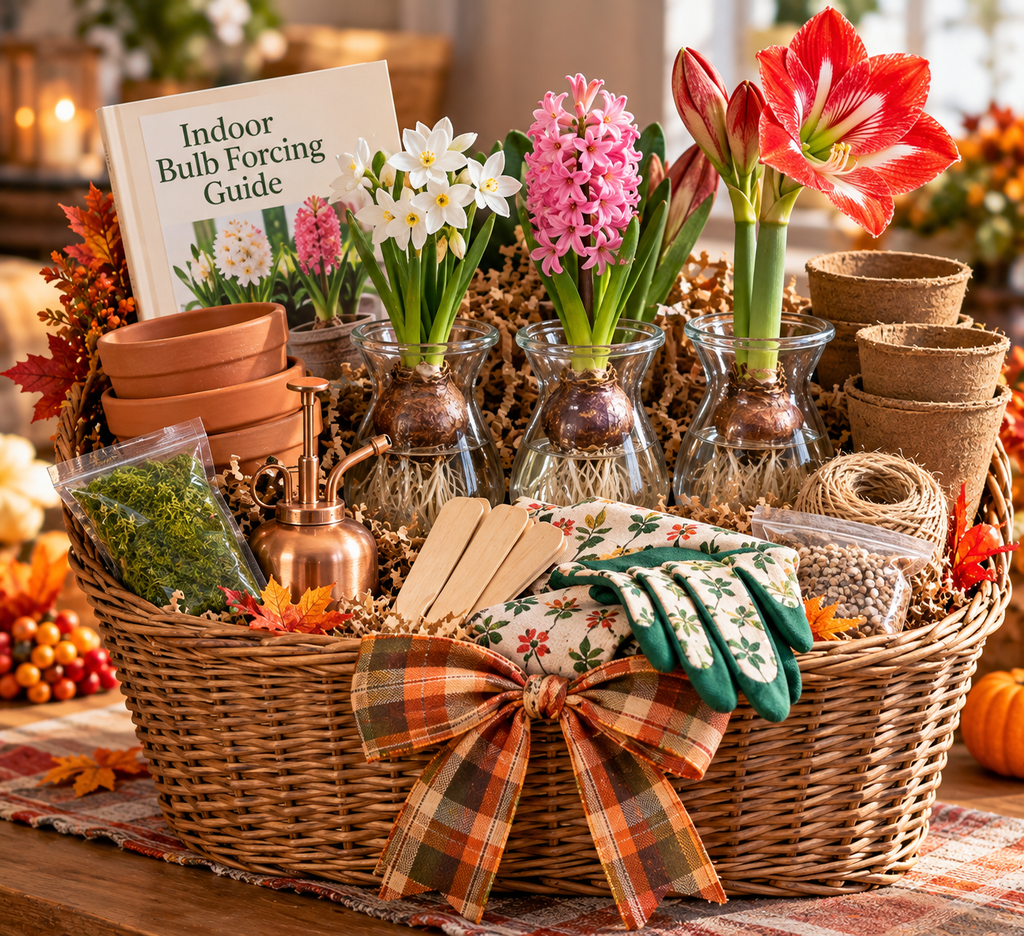
For the gardener whose beds are already frozen or covered, forcing bulbs indoors offers something to do. Paperwhite narcissus are the easiest, since they need no chilling period and can bloom in a few weeks when set in a shallow dish of pebbles and water. Amaryllis bulbs take longer but produce large blooms. A basket might include bulbs, a wide shallow container, decorative stones or pebbles, and a small bag of potting mix.
As with outdoor bulbs, paperwhites and amaryllis are toxic to pets, and some people find the scent of paperwhites overpowering. Neither is a reason to skip the idea, but both are worth a line on the gift card.
Baskets for the Harvest and the Kitchen
6. An Herb-Drying Basket
Before the first hard frost, many herbs can be cut and dried to last through winter. A basket could hold cotton twine, a small wooden or metal drying rack, a few paper bags for catching stray leaves, a couple of glass jars with tight lids, and a pair of sharp snips. Add a few packets of dried herbs from a specialty shop as a model of what to aim for.
The usual method is simple: bundle small bunches, hang them upside down in a warm, dim, well-ventilated place, and store the leaves whole in airtight jars once they crumble easily. The key warning is moisture. Herbs that go into a jar even slightly damp can mold, so it’s better to dry them a day or two longer than seems necessary.
7. A Garden Tea Blend Set
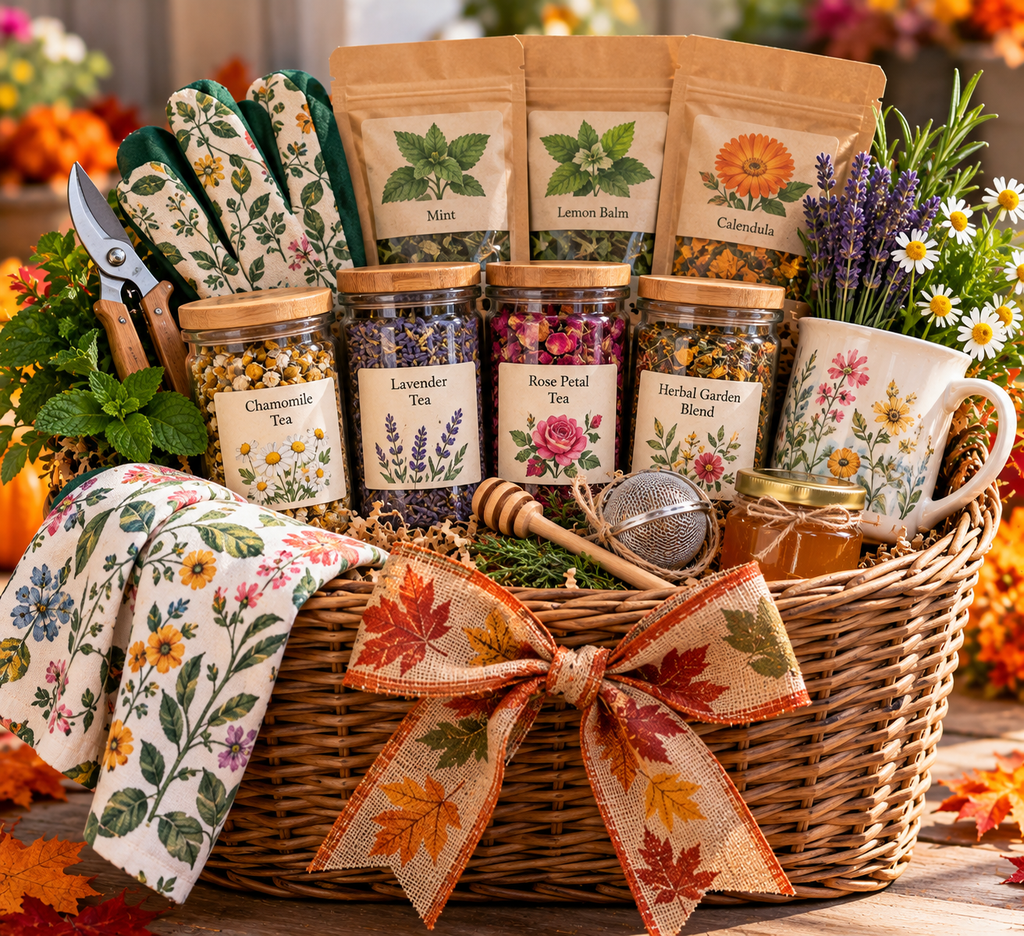
Mint, lemon balm, chamomile, lemon verbena and calendula petals are common garden herbs used for tea. A basket might include a few dried herbs (homegrown or from a reputable supplier), a muslin tea bag set or a small infuser, a mug, and a jar of honey.
Stick to culinary herbs that are clearly identified. Gifts that lean on “medicinal” claims are a different matter, and anyone who is pregnant, nursing, or taking medication may want to check with a doctor before drinking herbal blends regularly. If you include honey, remember that it should not be given to children under one year old.
8. A Seed-Saving Kit
Fall is when many gardeners collect seed from their beans, peas, tomatoes, lettuce, flowers and peppers. A basket of small paper envelopes, labels, a fine mesh strainer, a pencil, a notebook for recording variety and year, and a few silica gel packets or an airtight tin gives them everything they need.
What the kit can’t supply is the right plants. Seeds saved from hybrid varieties, often labeled F1, usually won’t grow true to the parent plant, and squash and other crops that cross-pollinate easily may produce surprises. Open-pollinated or heirloom varieties are the safer bet for beginners. The most important habit is also the most boring: label everything with the name and year, because unlabeled envelopes become mysteries by spring.
9. A Pantry Basket of Preserves
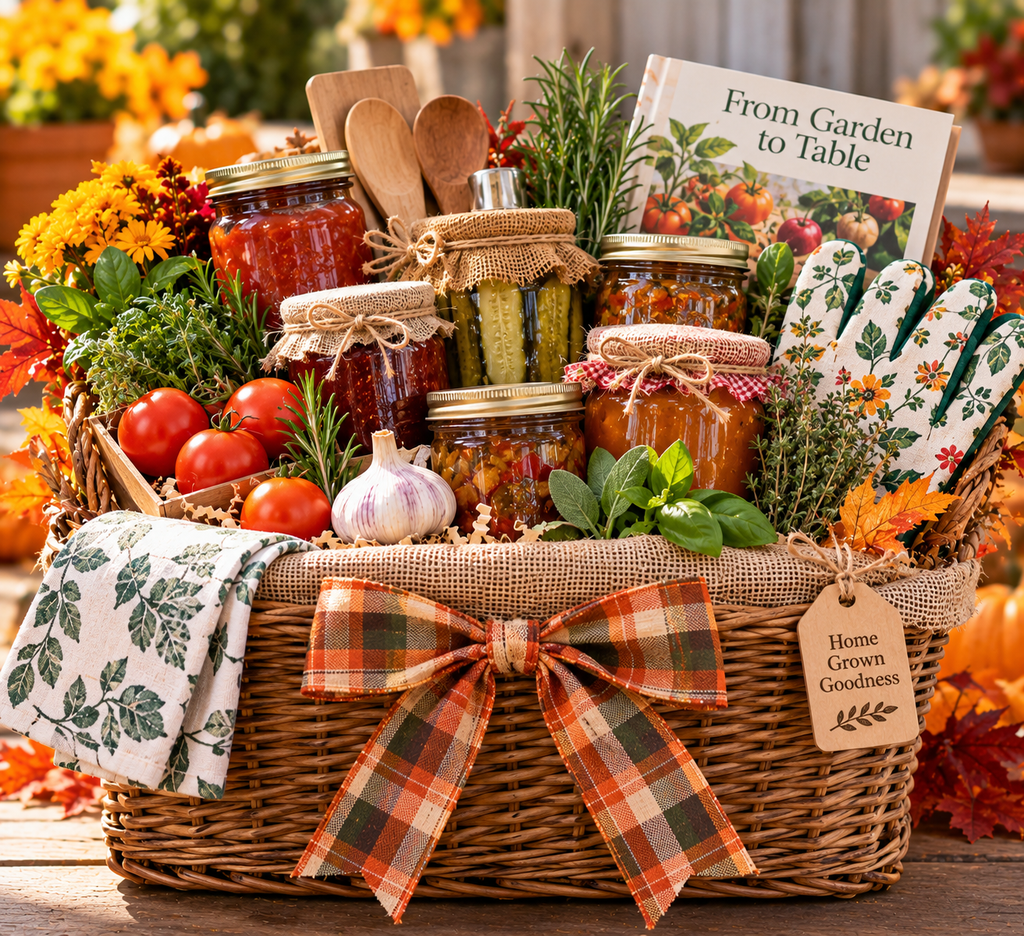
Jams, chutneys, pickles and relishes made from garden produce are a traditional fall gift. If you are making them yourself, follow tested recipes from a reliable source such as the USDA or your local extension service rather than improvising. Low-acid foods, in particular, can be unsafe if they are not processed properly, and a pretty jar is not worth a food-safety problem. Label each jar with the contents, date and any common allergens.
If you’d rather buy than make, a local farm stand or small producer often has seasonal products. Pair them with crackers, a wooden spreader and a small cutting board for a basket the recipient can use right away.
Baskets for Comfort After a Long Day Outside
10. A Hand-Care Basket
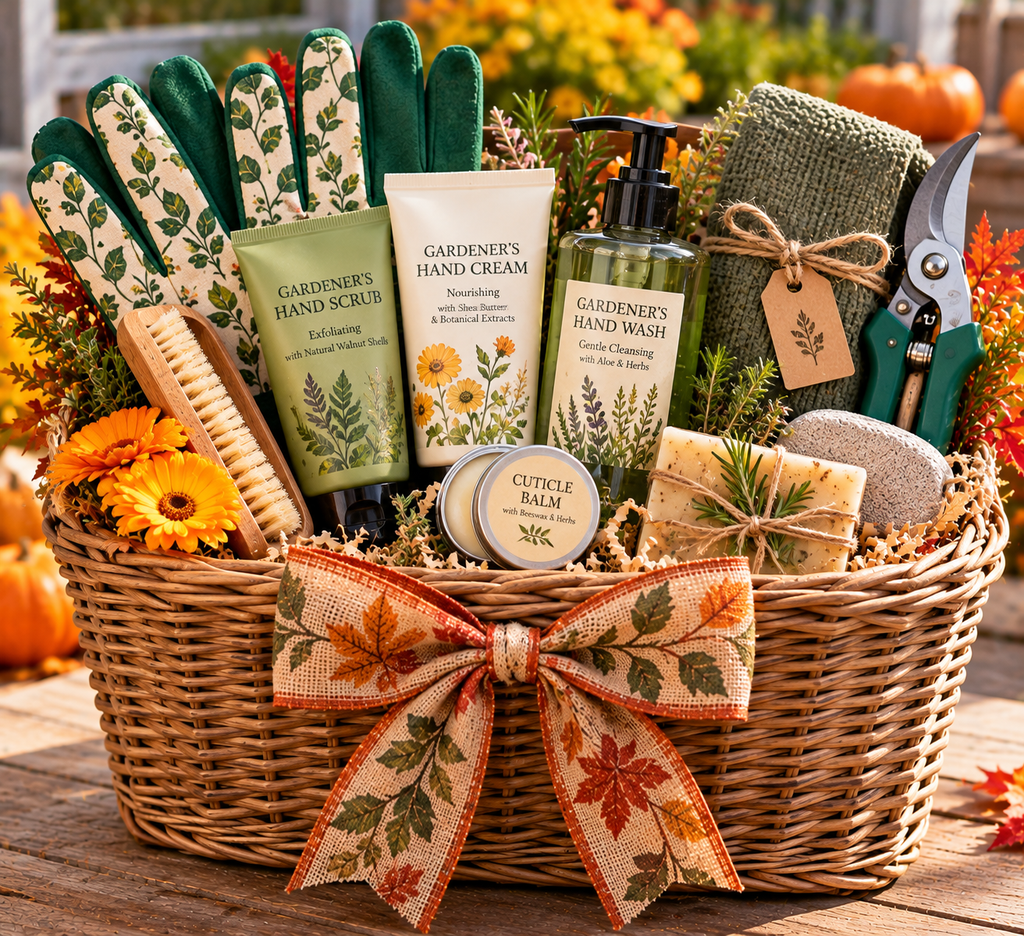
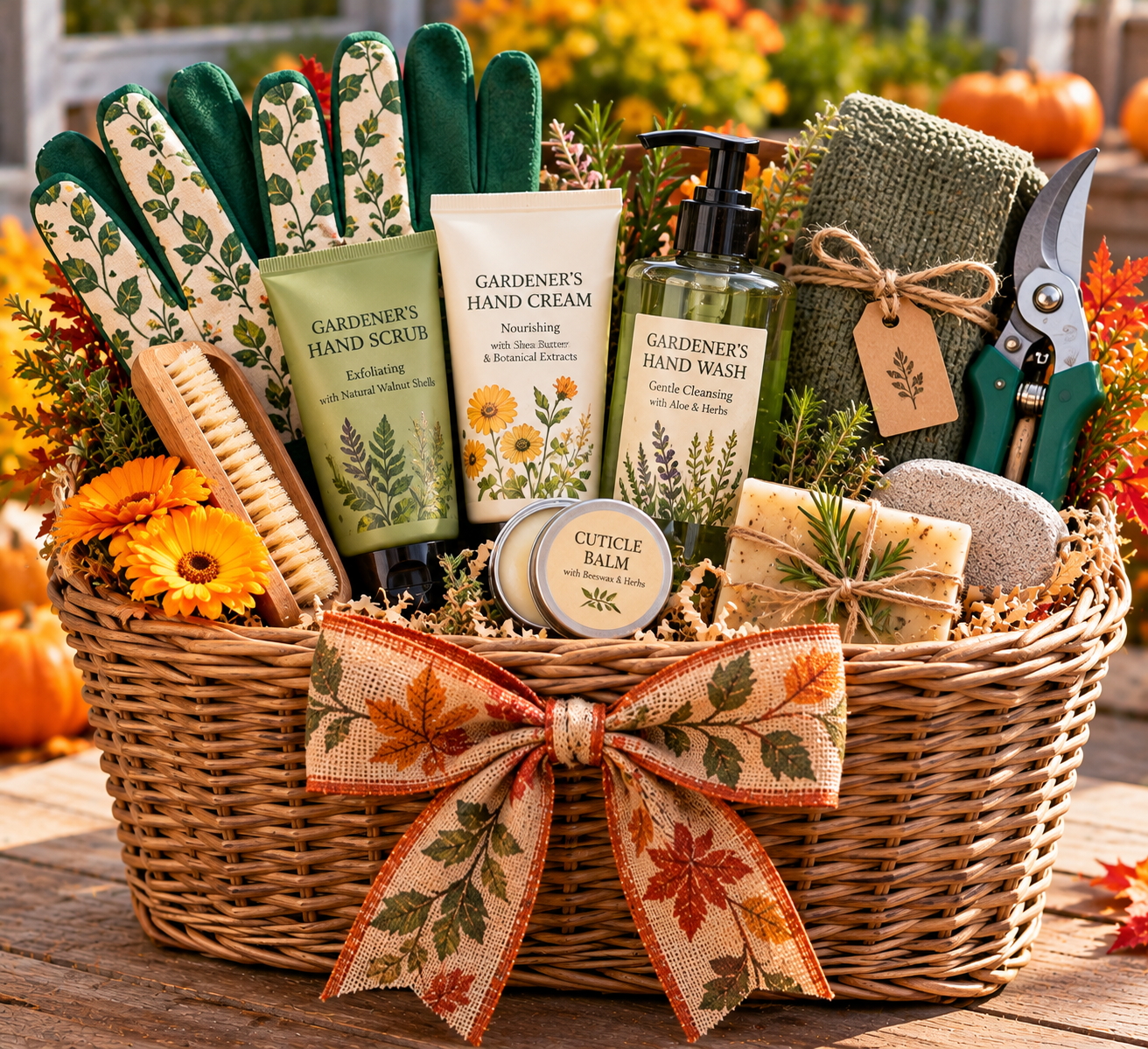
Gardening is rough on hands, and cold air and repeated washing make it worse. A good basket combines a rich salve or balm, a nail brush, cuticle oil, a pair of cotton glove liners for overnight moisturizing, and a bar of strong soap that can cut through soil.
If you’re buying products with fragrance, beeswax or botanical extracts, think about the recipient’s sensitivities. Fragrance-free is a safer choice for someone you don’t know well, and many people with sensitive skin appreciate it.
11. A Warm-Up Basket for Cold Jobs
Raking leaves, cutting back perennials and mulching beds are chilly tasks. An insulated flask, fingerless gloves, thick wool socks, a knitted hat and a few air-activated hand warmers can turn an unpleasant afternoon into a manageable one. Include a packet of hot cocoa or loose-leaf tea so the flask has something to hold.
Avoid cheap acrylic socks. Wool or wool-blend socks tend to keep feet warmer when they get a little damp, which is a daily reality in November.
12. A Waterproof Gloves and Kneeler Set
A foam kneeler or kneeling pad, plus a pair of waterproof or nitrile-coated gloves, solves a very specific fall problem: wet ground. Both items are easy to underestimate until a person is kneeling in cold mud.
Sizing is the trap. Gloves that are too big make fine work like planting bulbs clumsy, and gloves that are too small split at the seams. If you don’t know the size, include a gift receipt or choose adjustable designs. Pair the set with a small bag of garden twine or a folding garden seat for a more complete basket.
13. A Winter Planning Basket
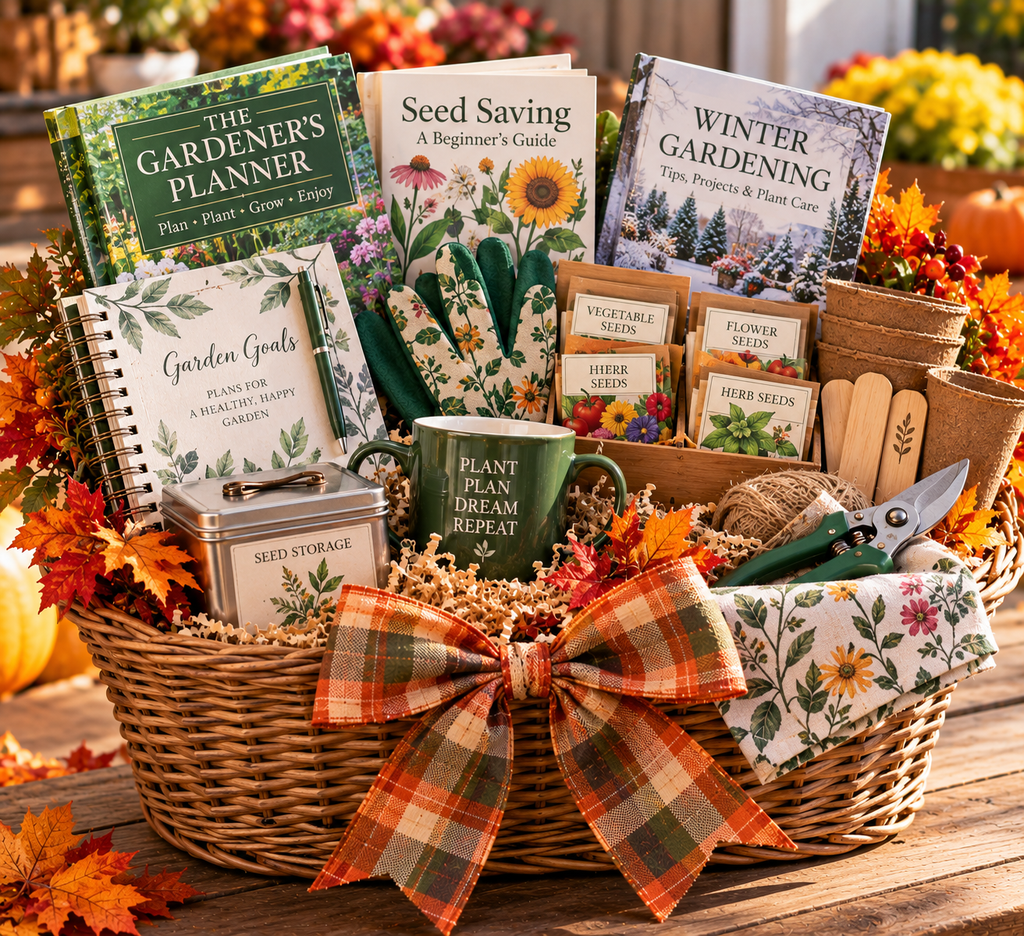
When the garden goes quiet, many gardeners start thinking about next year. A basket with two or three garden-focused books, a blank journal or planner, a pencil case, sticky tabs, and a stack of seed catalogs (or a gift card for a seed company) gives them something to do during dark evenings. Add a warm throw blanket and a candle for a cozy version.
Choose books that match their garden rather than gardening in general. A book on small-space container growing is useless to someone with two acres, and a guide on regional native plants is far more helpful than a glossy coffee-table volume about English gardens.
Baskets for Tools, Compost and Wildlife
14. A Tool-Care Basket
Tools that go into the shed dirty come out rusty and dull. A basket built around maintenance is practical and rarely duplicated: a diamond file or sharpening stone, a wire brush, a rag or two, a small bottle of light machine oil, mineral oil for wooden handles, and a bottle of isopropyl rubbing alcohol for wiping pruner blades between cuts on diseased plants.
There is one safety point worth putting on the gift card. Rags soaked in some oils, especially boiled linseed oil, can heat up and ignite spontaneously if they are left in a pile. They should be laid flat outdoors to dry or stored in a sealed metal container filled with water. Mineral oil does not carry the same risk, which is why it’s the safer default for wooden handles. Because sharpening tools involves very sharp edges, a pair of cut-resistant gloves is a thoughtful addition.
15. A Leaf-and-Compost Basket
Fall provides a free supply of compost material, and dry leaves are one of the easiest “brown” ingredients to balance out kitchen scraps. A basket could include a countertop compost pail with a charcoal filter, compostable liners (check that the recipient’s local program accepts them), a compost thermometer, a leaf scoop or pair of hand-held leaf grabbers, and a simple guide to what can and can’t go in the pile.
A note: leaves break down faster when shredded, so a mower or a small electric shredder is a larger gift but one that dramatically cuts how long the pile takes to turn into usable material. If you don’t want to buy one, a gift card toward a rental or a promise to help is nearly as good. Meat, dairy and oily foods should stay out of a home compost heap, and the note should say so.
16. A Bird-Feeding Basket
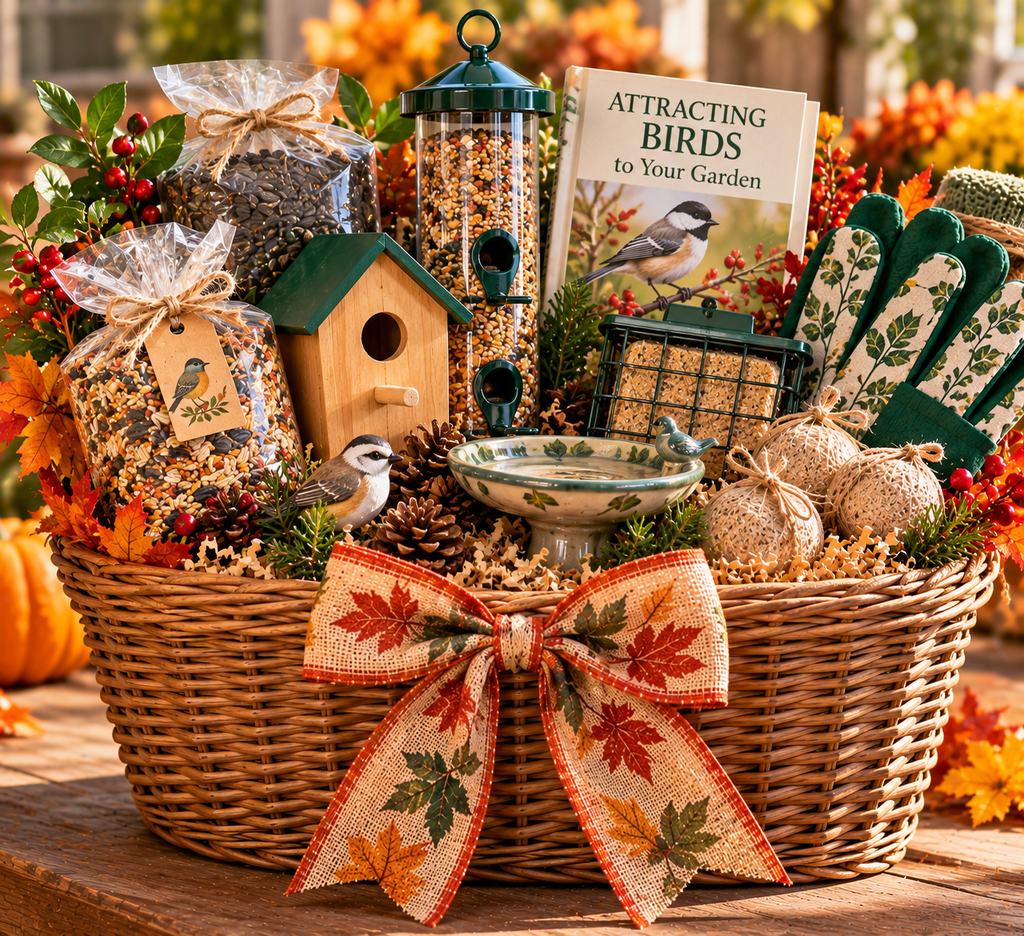
Birds are on the move in fall, and feeders become busy. A starter basket might include a sturdy feeder, a bag of black oil sunflower seed (which a wide range of birds eat), a suet cake and cage, a field guide or a bird identification app subscription, and a small notebook for logging sightings.
Feeders do need upkeep. Dirty feeders can spread disease among birds, so they should be cleaned regularly, often with a diluted bleach solution as recommended by bird conservation organizations. Check current guidance for the exact ratio, and rinse thoroughly. Also check local rules, because in areas with bears, wildlife agencies sometimes advise taking feeders down at certain times of year.
Baskets for Porches, Mantels and Windowsills
17. A Fall Porch Container Basket
In this one, the basket itself is the container. Line it with plastic or use a pot that fits inside, then plant it with a mum, ornamental kale, a few violas and a trailing plant. Tuck in a couple of mini pumpkins or gourds for color.
Tell the recipient what they’re getting. Many mums sold in fall are florist types bred for a single season of bloom, and they often don’t survive a hard winter. Hardy garden mums are a different animal and need time to establish roots before the ground freezes. Either way, make sure water can drain and that the plant isn’t sitting in a puddle.
18. A Dried Flower Kit
Strawflowers, statice, globe amaranth, celosia, yarrow, hydrangea heads and lavender all dry well. A basket might hold a few bunches of dried stems, a pair of floral snips, twine, kraft paper for wrapping, a ceramic jar or vase, and a small how-to card.
The usual method is to harvest on a dry day, strip most of the leaves, and hang the stems upside down in a dark, airy place for a couple of weeks. Dried arrangements are flammable, so the note should include a reminder to keep them away from candles and heaters.
19. A Wreath-Making Basket
A grapevine wreath base, floral wire, a handful of dried stems, small pine cones and a spool of ribbon are enough to make a seasonal wreath. Add a wire cutter and a hot glue gun if you want to be generous.
If the recipient wants to forage extra greenery, mention that cutting from public land or someone else’s property without permission can be illegal, and that some native plants are protected. Garden prunings, such as boxwood, pine and holly, are usually a safer source. Holly berries are toxic if eaten, which matters in homes with small children or pets.
20. A Bring-the-Plants-Inside Basket
Tender plants such as tropical houseplants, citrus and begonias usually need to come indoors before nighttime temperatures drop much below about 50°F (10°C). A basket for this purpose contains saucers, a bag of fresh potting mix, a bottle of insecticidal soap, a moisture meter, and perhaps a small grow light.
The soap is the most important item. Plants that have spent the summer outside often carry insects and eggs, and bringing them into a warm house can turn a minor problem into a major one. Before moving anything inside, it helps to rinse the foliage, check the undersides of leaves, and keep the plant apart from other houseplants for a week or two. Watering also needs to be reduced as light levels fall, so a moisture meter takes out some of the guesswork.
Questions Gift-Givers Often Ask
When is it too late to give a basket that includes bulbs or garlic?
The cutoff depends on the recipient’s climate. As a rough guide, bulbs and garlic can be planted from the time soil temperatures cool in autumn until shortly before the ground freezes solid. In cold regions, that can mean the window closes in late October or November. In mild regions, planting can continue into winter. When in doubt, ask someone who knows the recipient’s area, or check the local extension office’s planting calendar.
Can I ship a basket with plants, bulbs or seeds?
Sometimes, but rules vary. Some states and countries restrict the movement of live plants, bulbs and soil to prevent the spread of pests, and seeds can face their own limits across borders. Check the destination’s agricultural regulations before sending anything biological, and use a retailer that ships plants regularly if possible. Non-plant baskets, like tool care or hand care, are much simpler.
What if I don’t know what the gardener already owns?
Choose consumables and refills rather than tools. Seeds, bulbs, twine, soaps, salves, tea and suet won’t clash with anything they already own. If you do buy a tool, include a gift receipt.
How far ahead can I assemble a basket?
Dry goods can be put together a week or more in advance. Anything with live plants, fresh herbs or baked goods should be assembled as close to the hand-off as possible.
Final Thoughts
The baskets that people remember are the ones that fit the moment the gardener is in. In fall, that usually means something to plant, something to eat, something to keep hands and feet warm, or something that protects the work already done. Pick the idea that matches their garden, check the timing for their climate, and add a note with the one or two details they’d need to get started.

About Syprose Kiche
Syprose Kiche is the creator and writer behind My Besuited Home, a practical home and garden website covering DIY projects, gardening, lawn care, landscaping, home improvement, and outdoor living. She focuses on turning everyday homeowner questions into clear, practical guides backed by careful research and useful real-world considerations.