
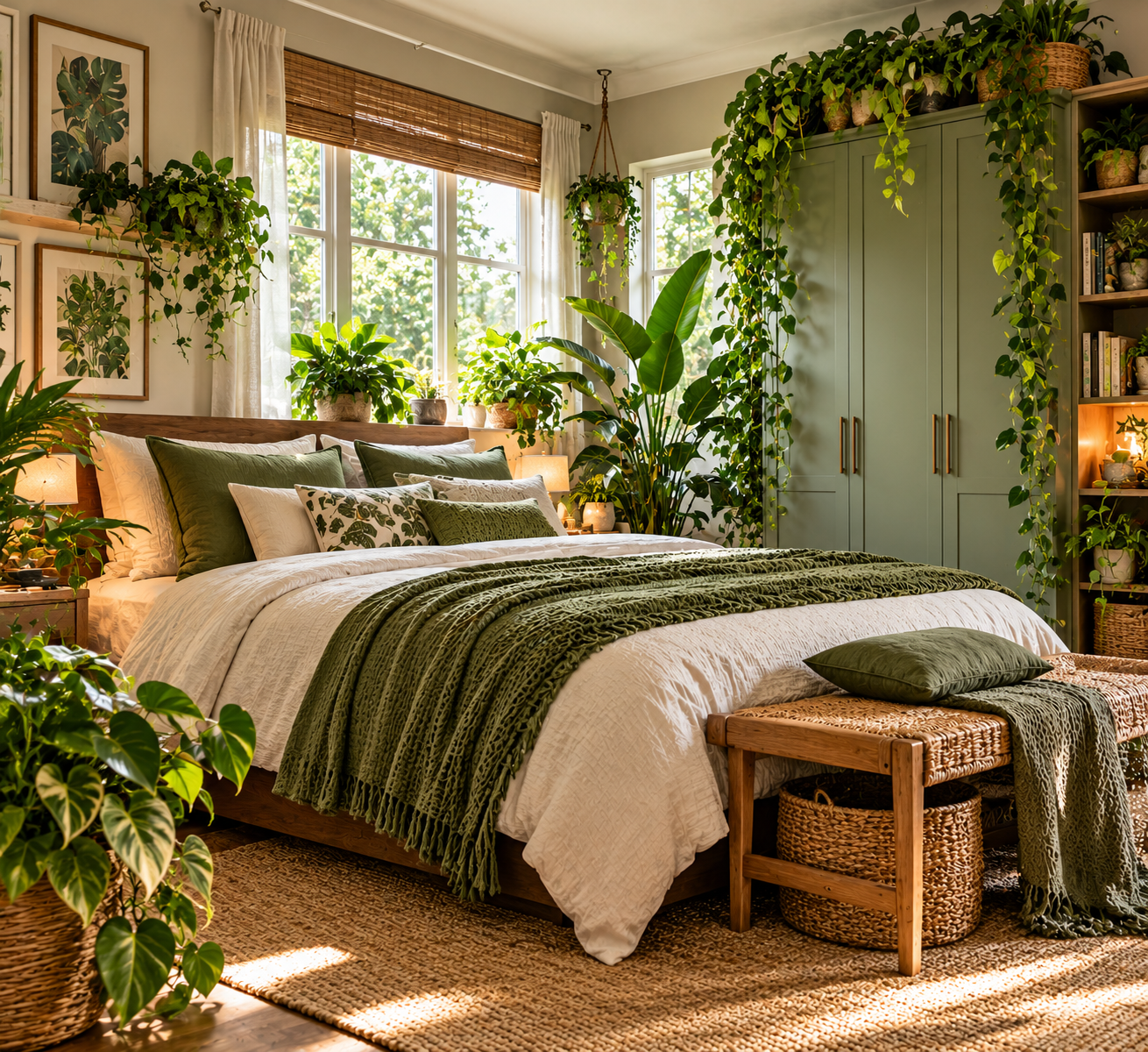
Most bedrooms are a poor environment for plants. The curtains stay closed in the morning, the room is dimmer than the living room, and nobody walks in at noon to check whether the soil is dry. Yet bedrooms are also where people most want the calm that greenery seems to promise, so they buy a few plants, set them wherever there is floor space, and watch half of them sulk within a month.
A bedroom that feels like a quiet indoor garden is mostly a matter of matching plants to the light the room actually has, putting them at the right heights, and letting wood, fabric, and colour do some of the work that living plants cannot. The ideas below are arranged roughly in that order: plants first, then the structures that hold them, then the textiles and finishes that make the whole room read as green.
A note on method: this article draws on general horticultural knowledge and published plant-safety lists rather than personal trials. Where a claim is uncertain or worth checking against your own conditions, it is flagged.
First, Work Out How Much Light the Room Really Gets
Before choosing any of the ideas below, spend a day noticing the light. Plant tags use vague phrases like “bright indirect light,” and the bedroom version of that phrase is often wrong.
A rough field test: hold your hand about 30 cm (12 inches) above the spot where a plant would sit, in the middle of the day, and look at the shadow it casts. A sharp, dark-edged shadow means bright light. A soft, blurry shadow means medium light. A faint shadow you can barely make out means low light, and only a short list of plants will tolerate it for long.
Window direction matters too, though it flips depending on hemisphere. In the Northern Hemisphere, south-facing windows are the brightest and north-facing the dimmest. In the Southern Hemisphere, including Kenya’s neighbours below the equator, that reverses. Close to the equator, as in Nairobi, the sun’s path swings north for part of the year and south for the rest, so a window’s quality can change with the season. Observing is more reliable than assuming.
Light falls off quickly with distance from a window. A plant two metres back from a bright window may receive a fraction of what the same plant gets on the sill. That one fact explains most dying bedroom plants, and it shapes every idea that follows.
Plant-Filled Bedroom Ideas: Building the Green Base
1. Put One Large Floor Plant in the Corner Nearest the Window
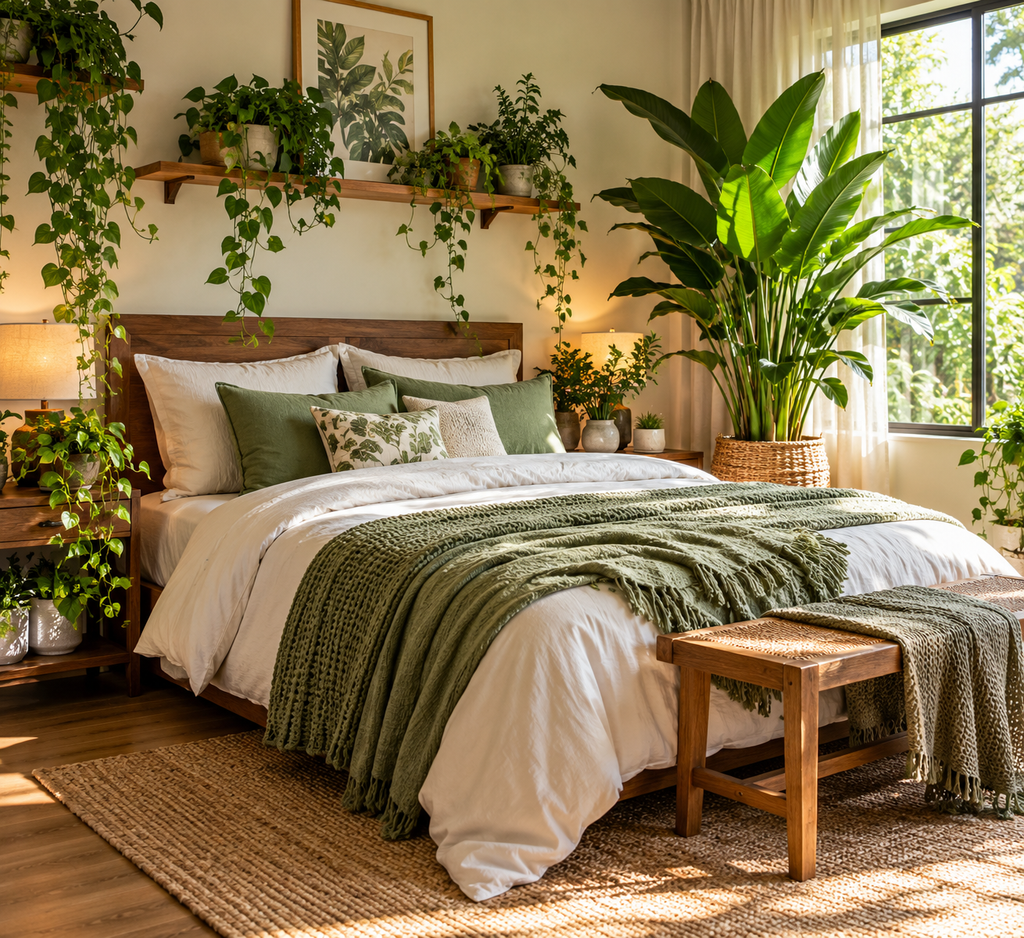
A single big plant does more for a room’s atmosphere than six small ones scattered about. It gives the eye a focal point, softens the hard corner where two walls meet, and fills vertical space that is otherwise empty.
Good candidates for a bedroom corner with medium to bright light include rubber plants (Ficus elastica), dracaenas, parlor palms, and bird of paradise if the light is strong. Rubber plants and dracaenas are widely sold as forgiving, but both dislike being moved around repeatedly, and rubber plants will drop leaves if they go from bright light to a dim corner too suddenly.
Size the pot to the room. A 30–35 cm (12–14 inch) pot holding a 1.2-metre plant looks proportionate in most bedrooms. Larger than that and the plant starts competing with the bed for visual weight. Put the pot on a low plant stand or a flat caster base if you ever intend to turn it toward the light, since a full pot of damp potting mix is heavy.
2. Let Trailing Plants Spill From the Top of a Wardrobe or Bookcase
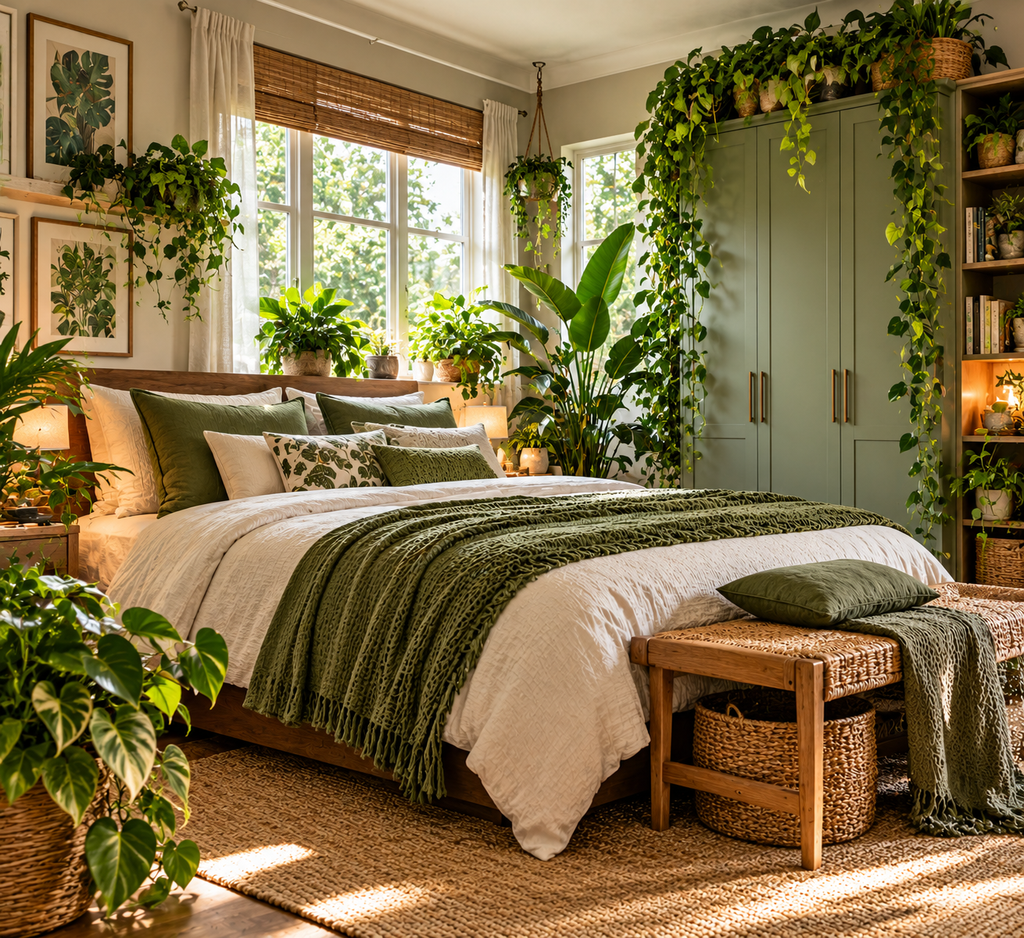
The top of a tall piece of furniture is wasted space in most bedrooms, and it suits trailing plants well. Vines cascade down the front, which makes a room feel lush without taking any floor area.
The catch is light. Wardrobe tops are usually far from windows and often shaded by the ceiling line, so this works best when the furniture sits against the same wall as a window or opposite a large one. Pothos, heartleaf philodendron, and string of hearts handle moderate light. If the spot is dim, pothos is the likeliest survivor, though its variegation tends to fade and growth becomes leggy.
Two practical points. Plants up high are easy to forget, so water them when you take them down to check, rather than guessing. And use a pot with a saucer or a waterproof liner, because water dripping onto wardrobe veneer or an old bookcase will warp it.
3. Hang Planters From the Ceiling Near the Window, Not Over the Bed
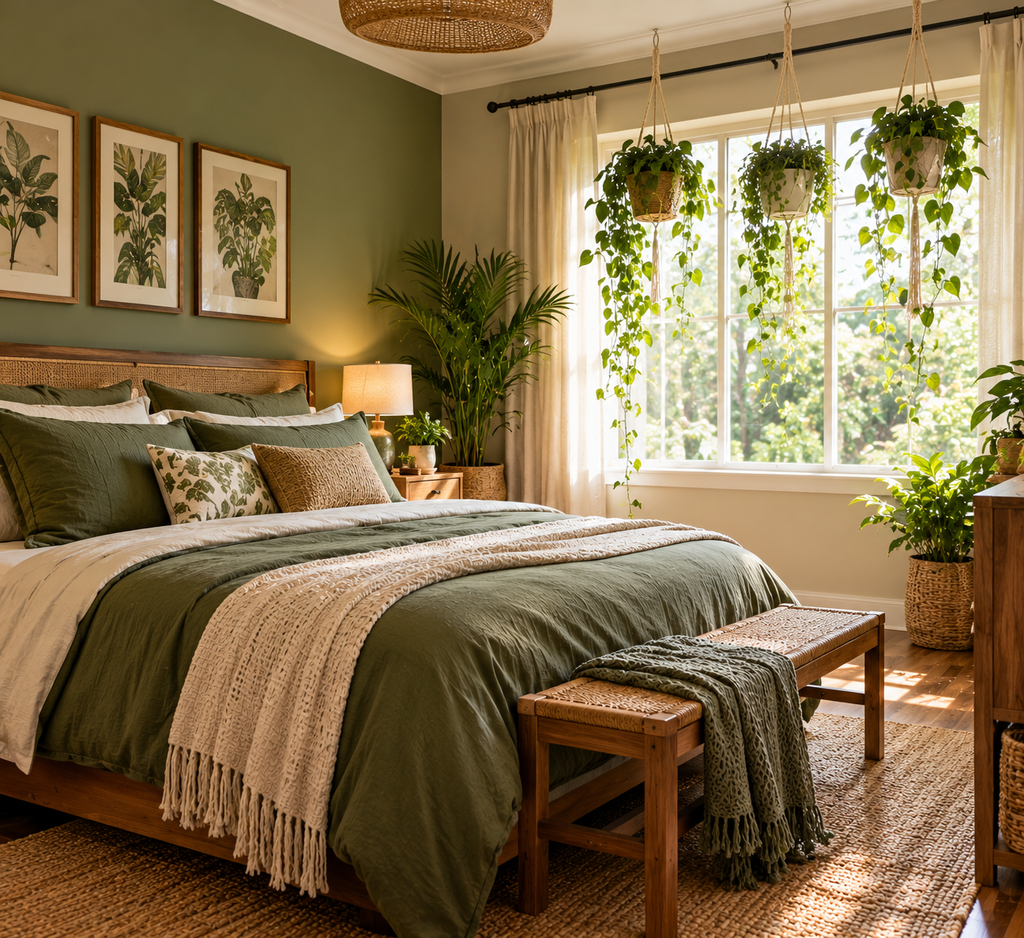
Hanging planters are the signature look of a greenery-heavy bedroom, and they work because they use air space. Hung at different heights near a window, they create a layered, canopy-like effect.
The most overlooked issue is weight. A 20 cm (8 inch) pot of wet soil with a plant can easily weigh several kilograms, and a larger one more. Screw hooks into plaster alone will not hold it reliably. Anchor into a ceiling joist, or use a toggle or anchor rated for the load with a safety margin. If you cannot confirm what is behind the ceiling surface, use a lightweight pot and a smaller plant, or choose a different idea from this list.
Avoid hanging heavy planters directly above the bed or where someone sits up in the morning. Even a well-installed hook is a risk you can sidestep by hanging pots over a window corner, a reading chair, or a dresser instead.
For a hanging plant, choose one that tolerates occasional neglect, because watering requires taking the pot down. Spider plants, pothos, and string of pearls (which needs bright light and very little water) are common choices. If drips bother you, use a pot with a built-in saucer or put a small tray beneath it.
4. Fit a Floating Shelf Across a Window Wall
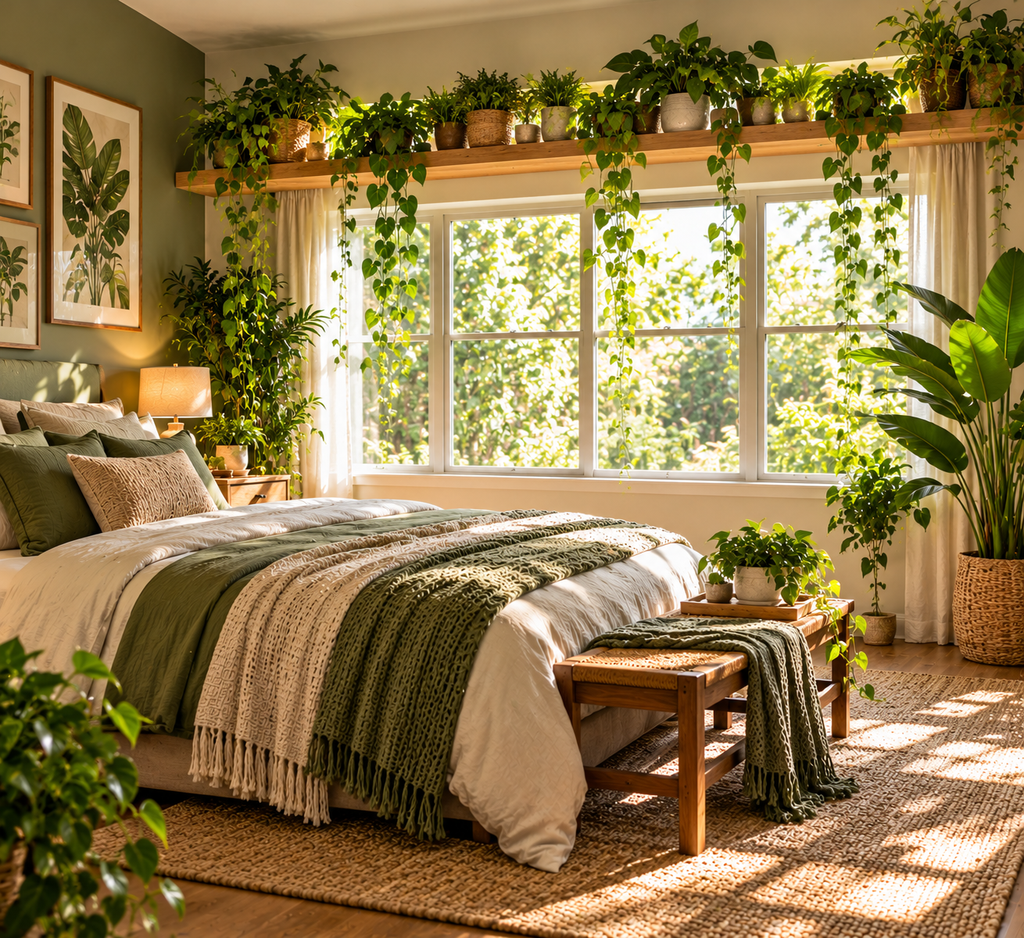
A shelf spanning a window, or beside it, puts plants exactly where light is strongest while keeping the sill clear for opening and closing the window. Solid wood shelves, 20–25 cm (8–10 inches) deep, take small pots comfortably and look intentional rather than improvised.
Vary the plants’ heights and shapes. A trailing pothos on the end, a low snake plant in the middle, and a tall, upright dracaena at the other end gives the shelf a skyline. Repeating the same pot colour or material across all of them keeps it calm instead of cluttered. Terracotta, matte white ceramic, and sage glaze all work well against wood.
Check the shelf’s load rating and fixings. Ten small pots of damp soil add up. Shelf brackets screwed into studs hold far more than a plugged-in floating shelf on drywall anchors.
5. Use a Ladder Shelf or Plant Stand Where the Wall Cannot Take Fixings
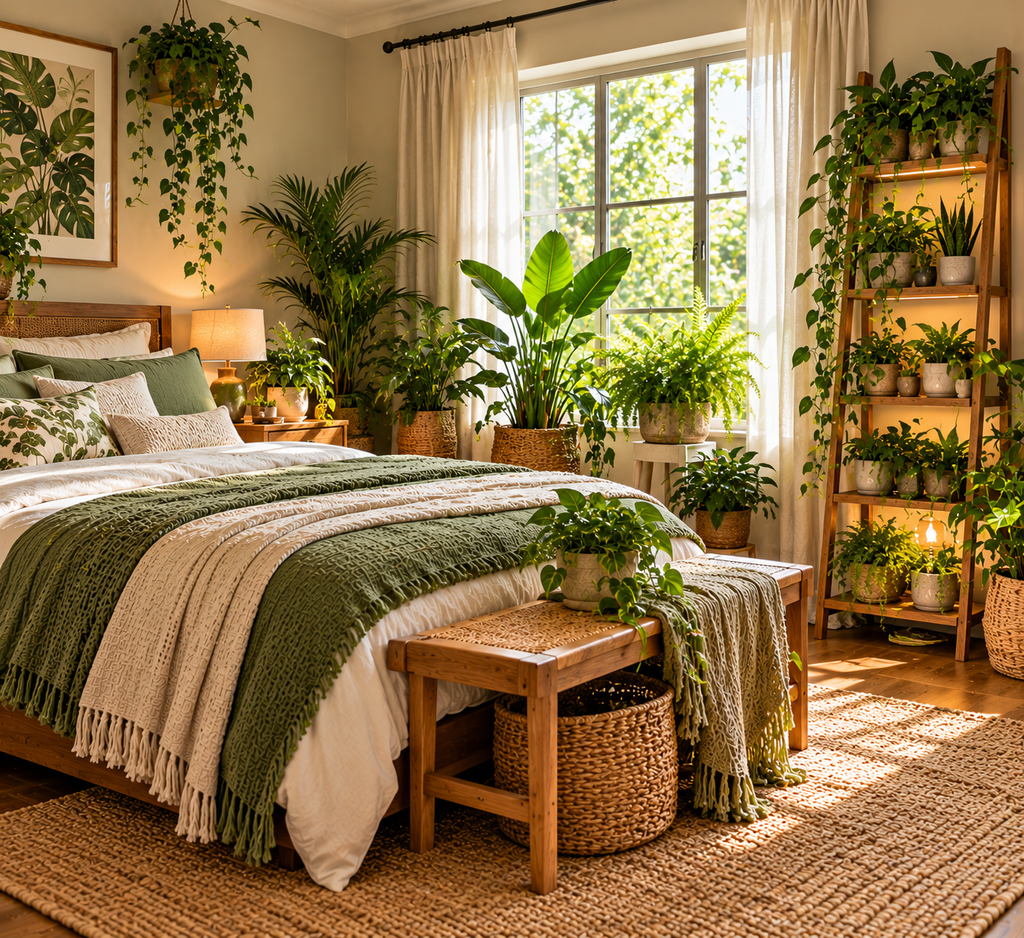
Renters and people with brittle plaster walls often cannot drill. A freestanding ladder-style shelf leans against the wall and holds plants at stepped heights, giving a vertical garden effect without drilling.
Place it in the brightest available spot and rotate the plants every couple of weeks, because the plants nearest the window will otherwise lean toward it while the ones farther away stretch. Keep lighter, drought-tolerant plants on the highest tiers where watering is awkward, and thirstier plants lower down.
One caution: a tall ladder shelf loaded with pots can tip if bumped. Secure it to the wall with a small anti-tip strap if there are children or large pets in the house.
6. Choose Low-Light Plants for the Bedside Table
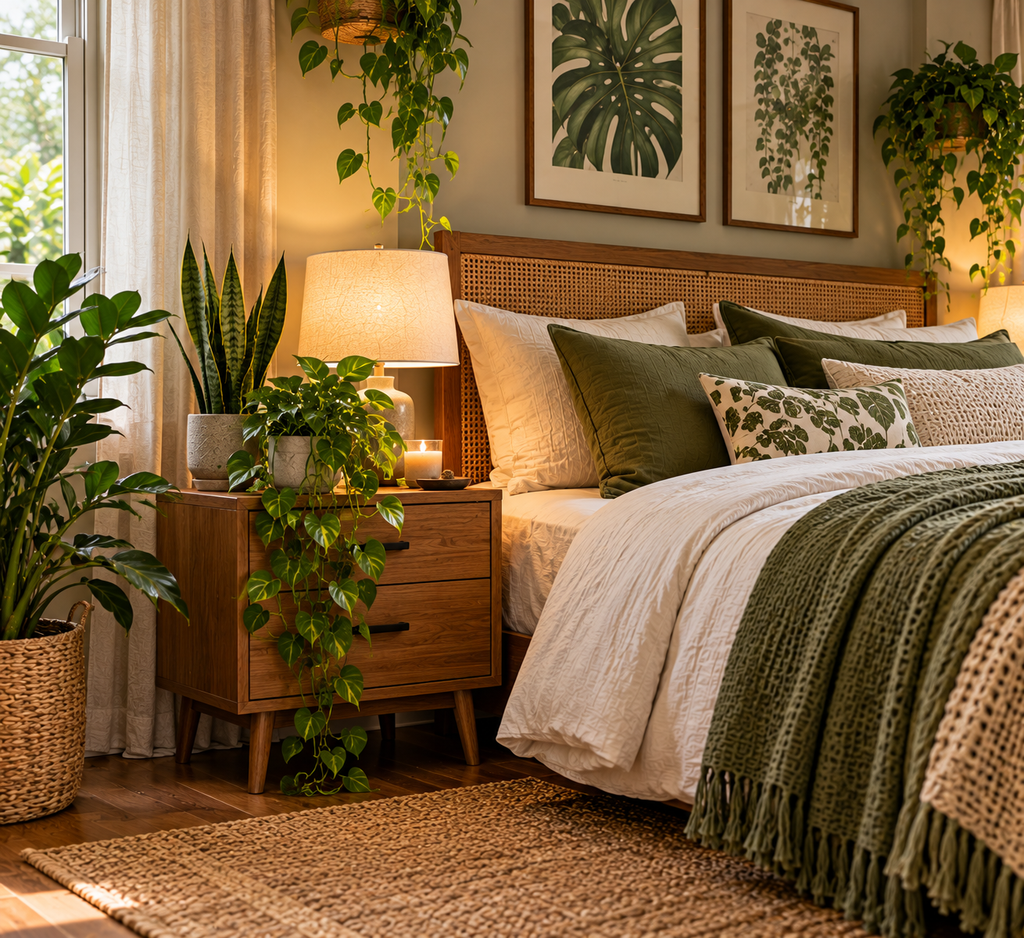
The bedside table is often the darkest surface in the room, so it needs plants that tolerate that. Snake plants (Dracaena trifasciata) and ZZ plants (Zamioculcas zamiifolia) are the classic answers. Both store water in their rhizomes or leaves and tolerate infrequent watering, which also makes them forgiving of a busy schedule.
Be realistic about “low light.” These plants tolerate dim conditions, but they do not thrive in them, and growth will be slow. Moving them to a brighter place for a week every month or two is a simple way to keep them in better shape.
Keep the pot modest, since a bedside table is no place for a heavy ceramic planter that could be knocked over onto a phone or glass of water. And keep an eye on pets: both of these plants are listed as toxic to cats and dogs by the ASPCA, so they are better placed out of reach or replaced with a pet-safe alternative if animals can get to the table.
7. Build a Small Propagation Corner on the Windowsill
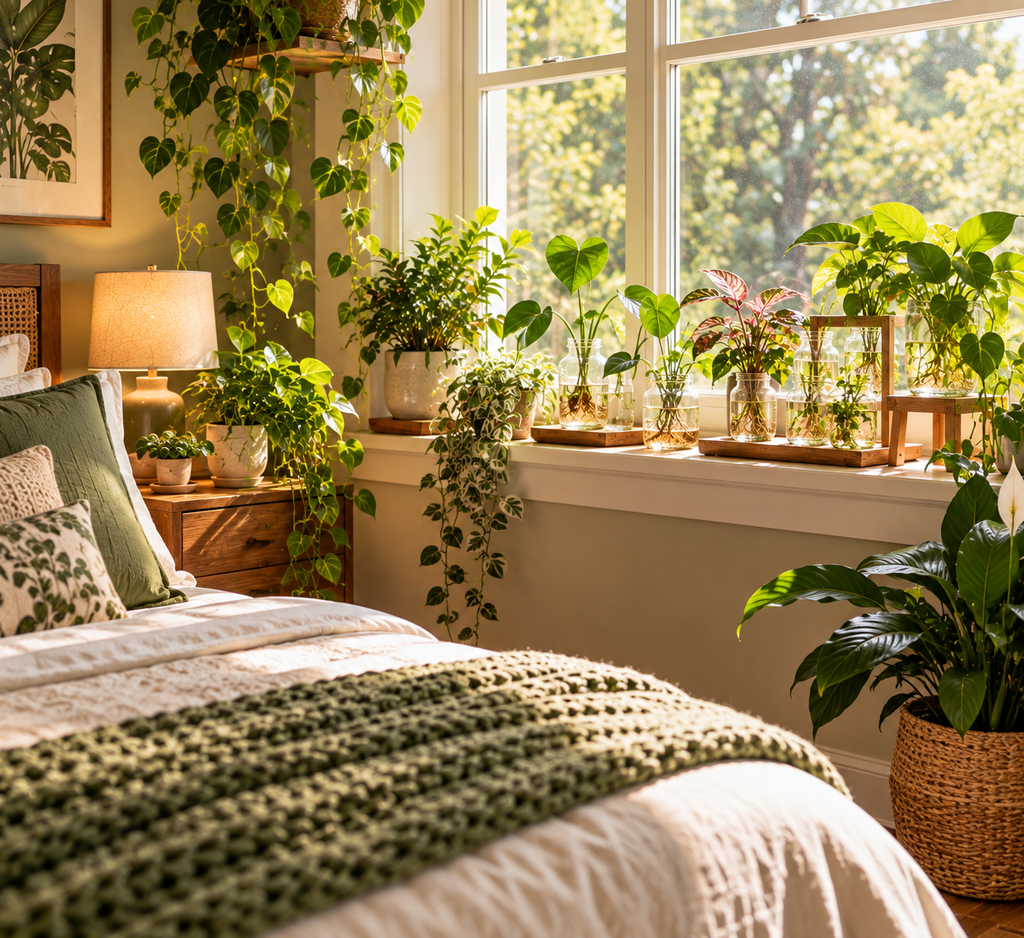
A few jars of cuttings on the sill add greenery that costs almost nothing and changes visibly week to week. Pothos, philodendron, tradescantia, and coleus all root readily in water.
Use clear glass so the roots become part of the look. Change the water every week or so to keep it from turning stagnant, and move rooted cuttings into potting mix once roots are a few centimetres long, since plants kept in water indefinitely tend to be weaker than those in soil. Glass jars on a sunny sill can also heat up in strong sun, so avoid placing them where the afternoon sun hits directly through glass in a hot climate.
Botanical Bedding, Walls, and Colour
Living plants can only do so much in a dim room. Textiles and surfaces fill the gap, and they are where a bedroom starts to read as a garden even on days when no plant is looking its best.
8. Use Botanical Bedding as the Main Pattern in the Room
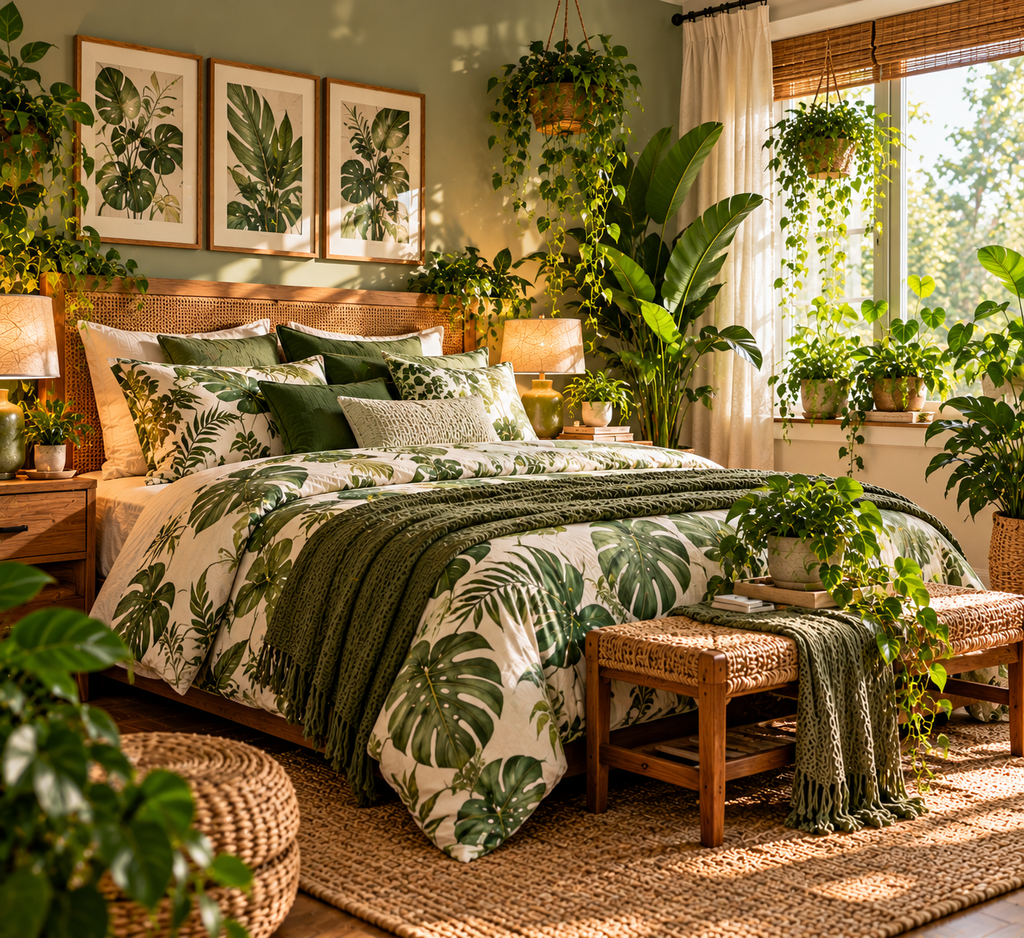
A duvet cover or quilt printed with leaves, ferns, or botanical illustration immediately sets a theme, and it is the largest single surface in the room.
The common mistake is pairing a busy botanical print with several other patterns. Choose one dominant botanical piece, then support it with plain linens in two colours picked from the print, such as sage and warm cream. If the pillowcases and fitted sheet are solid, the pattern can be bold without overwhelming the room.
Fabric matters for comfort. Cotton percale feels crisp and cool, which suits warm climates. Linen is breathable and softens with washing but wrinkles easily. Brushed cotton or flannel suits cooler months. Check care labels before buying, because heavily printed fabrics can fade if washed hot.
9. Paint the Walls a Muted Green Instead of a Bright One
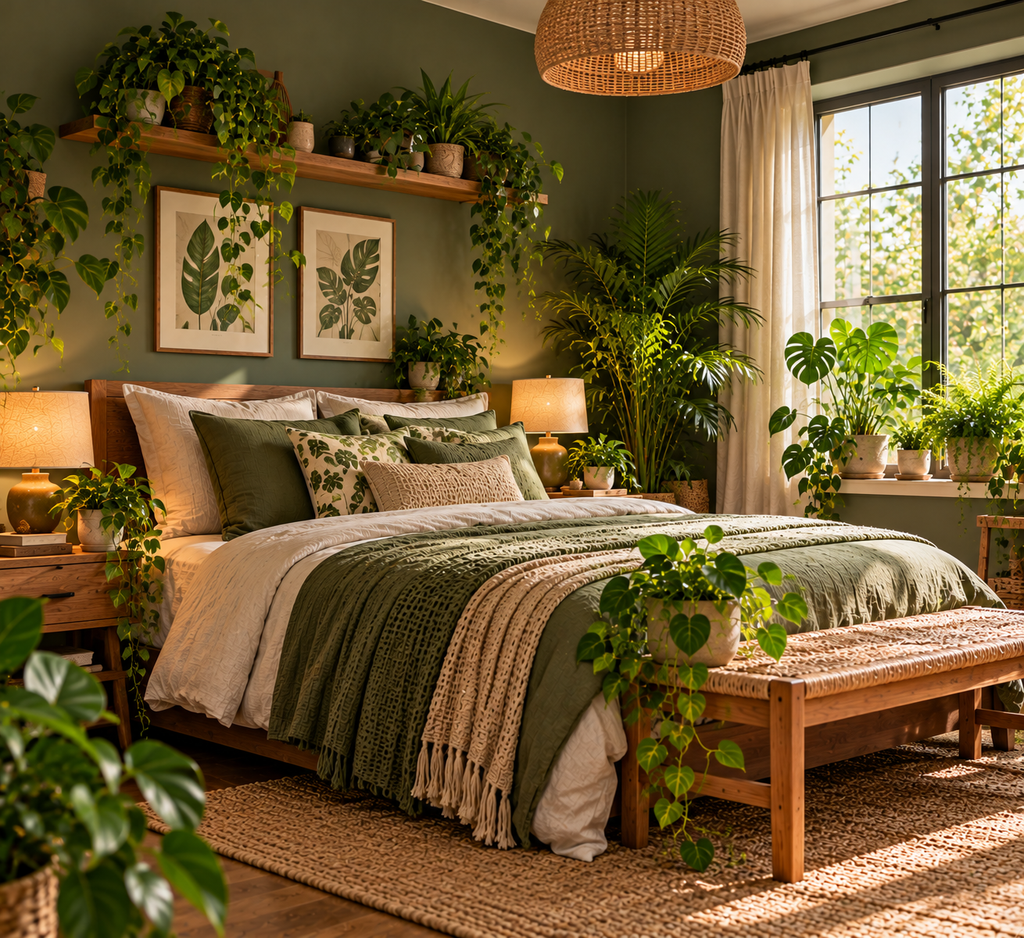
Sage, olive, eucalyptus, and dusty fern shades read as natural because they carry grey or brown undertones, as leaves do. Saturated emerald or lime greens can feel loud in a room meant for sleeping.
Before committing, paint a large test swatch, around A3 size, and look at it in the morning, at midday, and in the evening. Green is a colour whose appearance shifts noticeably with light. A shade that looks grey-sage in a bright room may turn murky in a north-facing one.
If painting is not possible, a sage headboard or a green accent chair achieves some of the same effect without touching the walls.
10. Add Botanical Wall Art or Removable Wallpaper Behind the Bed
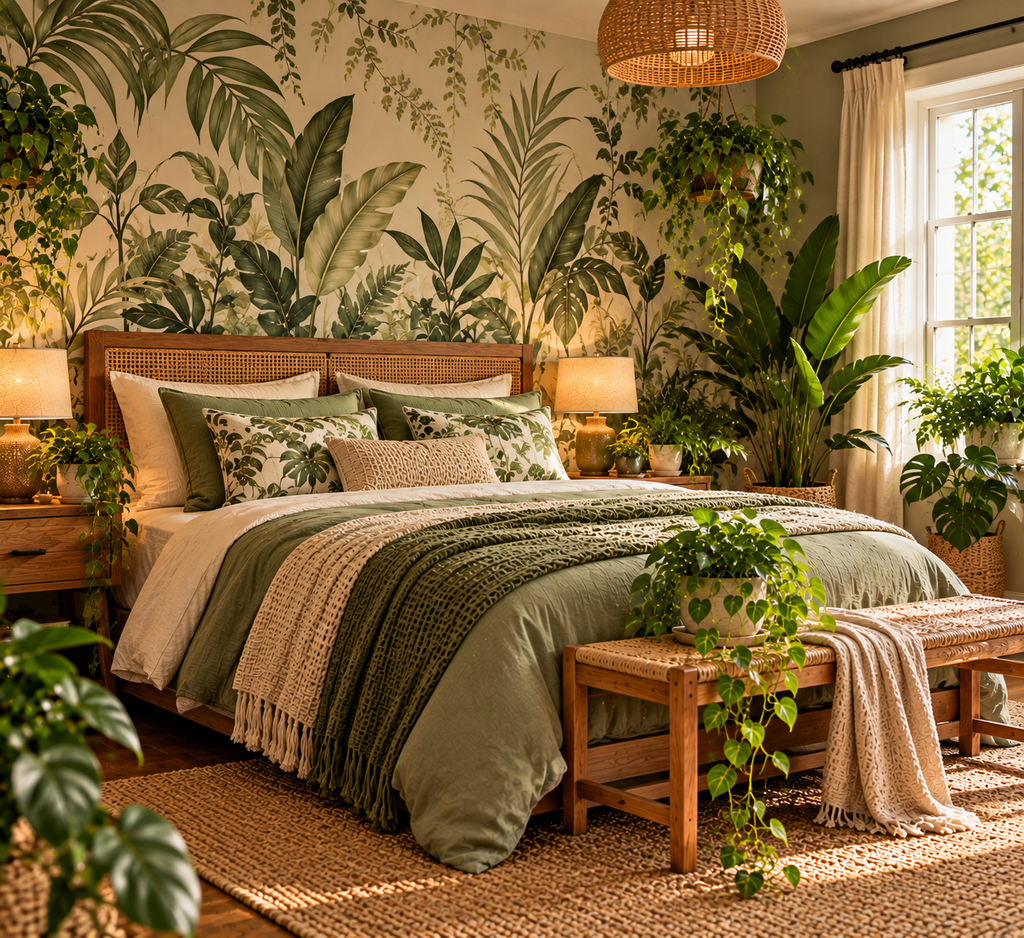
Peel-and-stick botanical wallpaper on the wall behind the bed gives the room a sense of foliage without a single extra pot. It suits renters, and it removes more easily than traditional paper, though how cleanly it comes off depends on the wall paint and the product, so test a small hidden patch first.
Framed botanical prints, such as pressed-leaf illustrations or fern studies, are a lower-commitment alternative. Hanging three or five frames in a loose cluster usually looks better than a perfectly symmetrical row. Try laying the arrangement out on the floor first and tracing it onto paper before making holes.
11. Train a Climbing Plant Up a Trellis or Cord Behind the Headboard
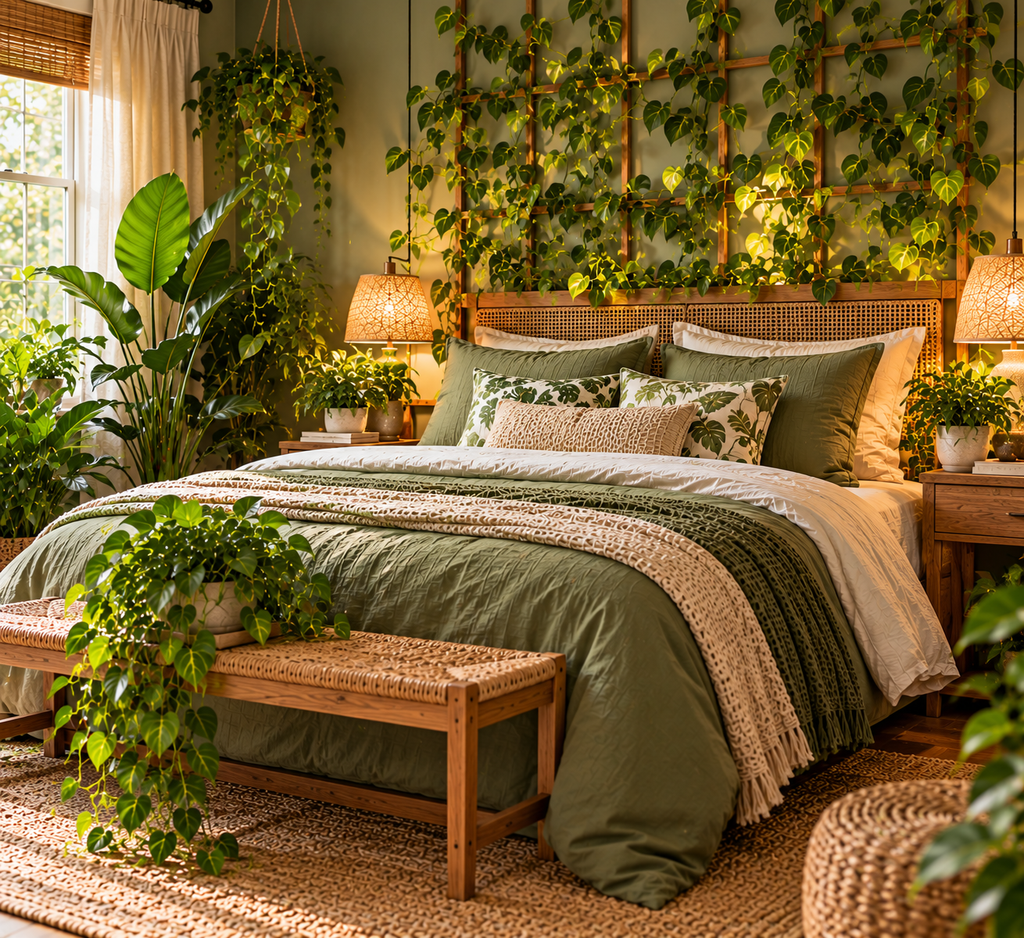
A vine growing up the wall behind a bed is a strong visual, and it is achievable indoors with pothos, heartleaf philodendron, or a hoya. Use a small trellis, a moss pole, or a line of adhesive hooks guiding the stems upward.
Plants climbing a wall need enough light to keep growing. If the wall is far from a window, the vine will become sparse and stretch. A better layout is to put the plant on a nearby shelf or stand and run the vine up, so it sits in better light than the wall itself would provide.
Some adhesive hooks leave marks on paint or struggle with the weight of a growing, water-heavy vine. Use light-weight cord or twine and check the hooks’ rating.
Natural Wood and Material Accents
12. Pair Plants With Raw Wood, Rattan, and Linen
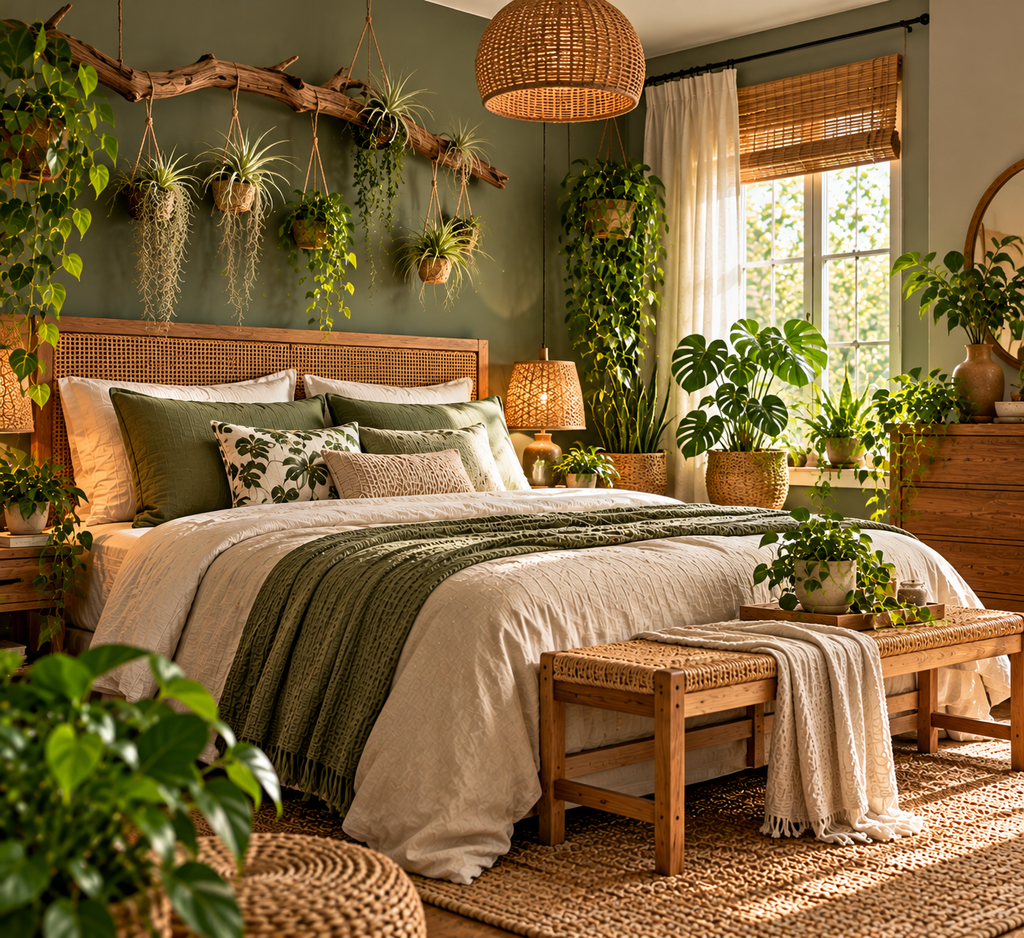
Greenery looks best against natural textures. A timber bedside table, rattan pendant light, linen curtains, or a woven basket for blankets all echo the organic quality of the plants and keep the room from feeling like a plant shop plonked into a standard bedroom.
Solid wood in light oak, ash, or pine suits airy, bright rooms. Darker walnut or teak suits moodier, deeper green schemes. The point is not to match everything but to avoid synthetic gloss finishes, which compete with the matte look of leaves.
One practical caution: wood and watering do not mix. Place every pot on a saucer, tray, or cork mat, and wipe up spills quickly, because standing moisture marks wood and can encourage mould on the surface beneath a pot.
13. Choose a Wooden Headboard or Bed Frame as the Room’s Anchor
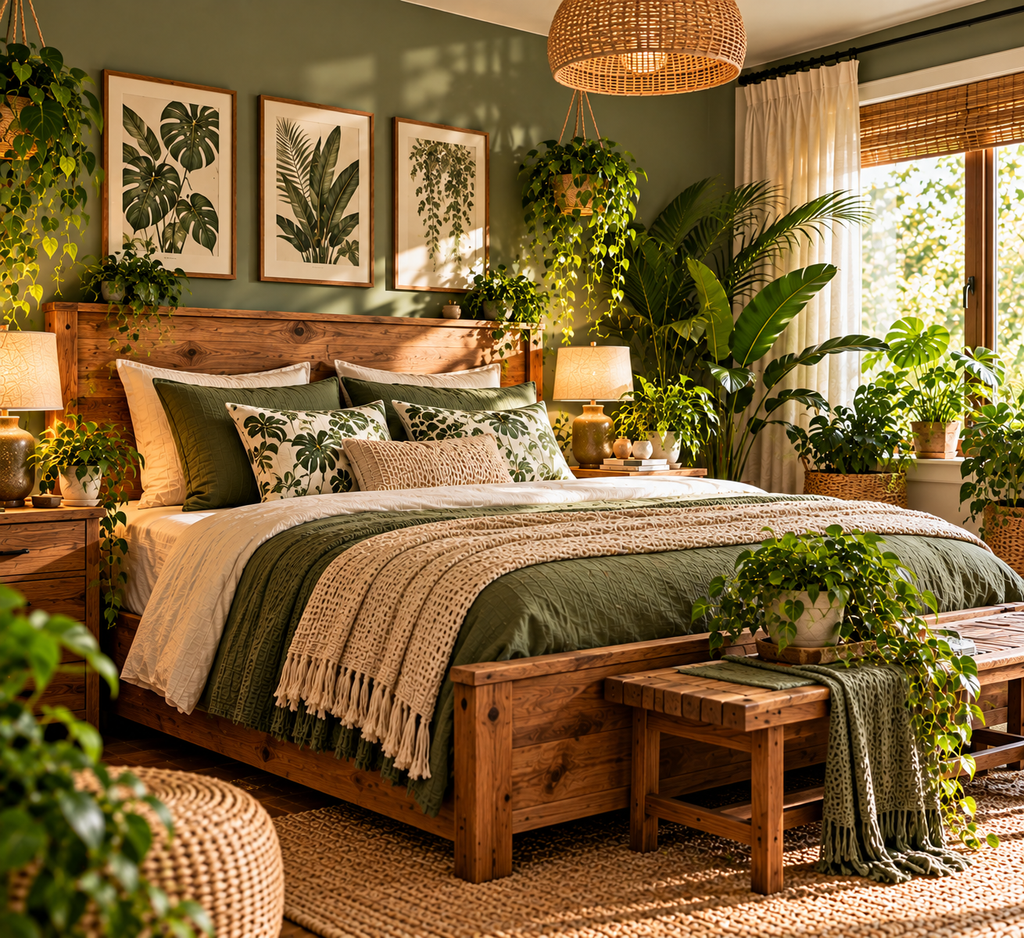
A solid wood headboard, even a plain one, anchors the green palette. Reclaimed wood, slatted designs, and woven cane panels all add warmth and texture.
If buying a new frame is not realistic, a wall-mounted wooden headboard panel is a lighter way to get the same effect, and wood panels are easy to find in standard sizes. Pair it with sage or olive bedding and one or two trailing plants on the nearest shelf.
If you buy new wood furniture, check for sustainable certification, such as FSC labelling, if that matters to you, and ask about finishes and sealants. New furniture can release volatile organic compounds, so airing a room for several days before sleeping in it is sensible.
Smaller Touches That Make the Room Feel Like a Garden
14. Keep a Vase of Cut Stems or Branches Instead of More Pots
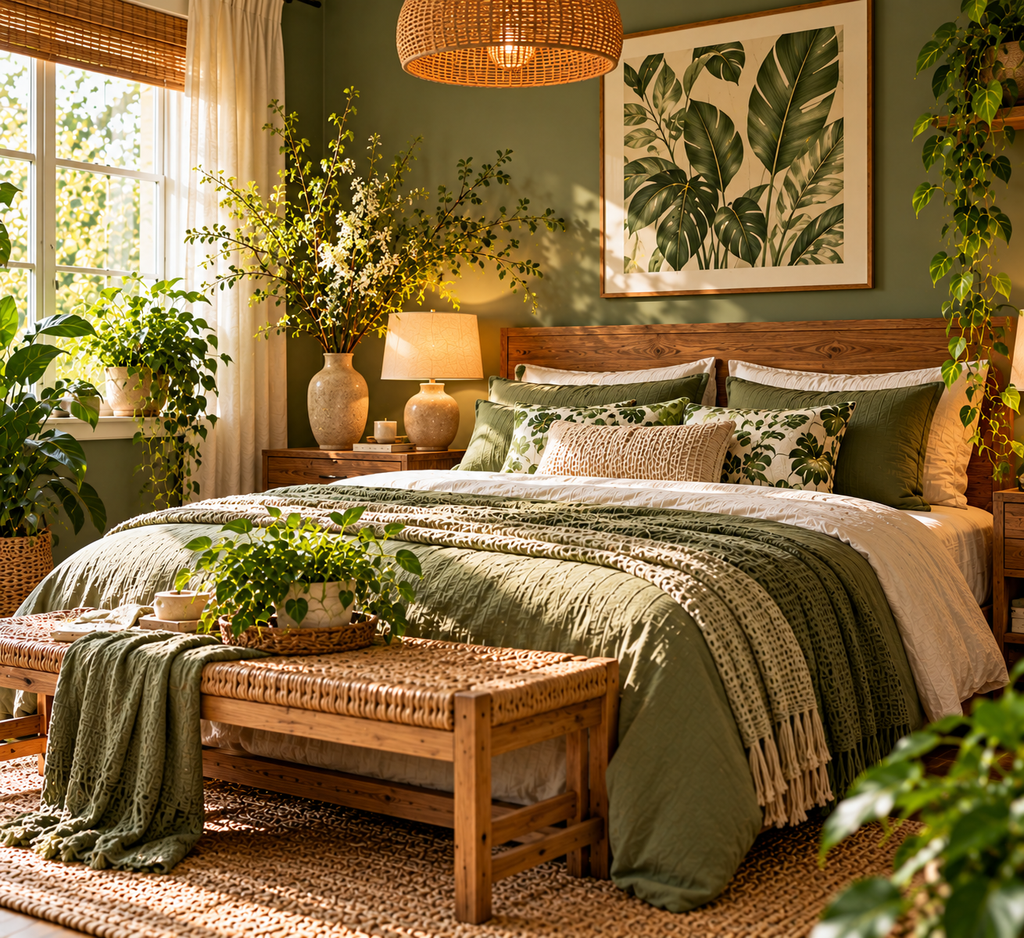
When the room cannot support more plants, cut stems fill the gap. Leafy branches in a tall vase, eucalyptus stems, or foliage clipped from a garden last for days to weeks and bring in something different from potted plants.
Change the water every few days to slow bacterial growth, and trim the stem bases at an angle. Eucalyptus and some other ornamental foliage can be toxic to pets if chewed, so keep cut stems out of reach if animals are in the house.
15. Add a Terrarium or Bottle Garden on a Dresser
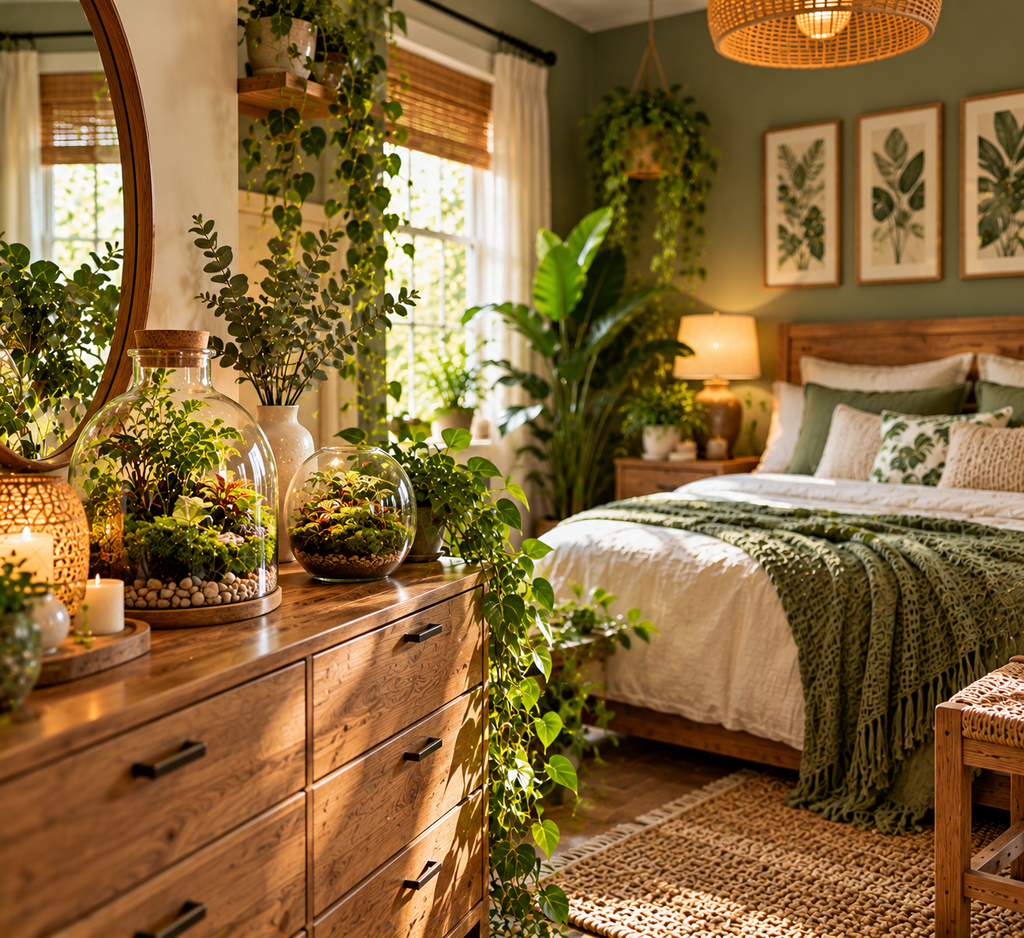
A closed or open glass terrarium makes a self-contained miniature landscape. Small ferns, fittonia, and moss tolerate the humid, medium-light conditions inside glass better than a typical dry bedroom.
Use a layer of drainage material and a suitable mix, and keep terrariums out of direct sun, which can overheat the glass and scorch the plants. Closed terrariums need little watering, but if condensation is heavy and persistent, open the lid for a day to let it clear and discourage mould.
16. Use Faux or Preserved Greenery Where Real Plants Cannot Survive
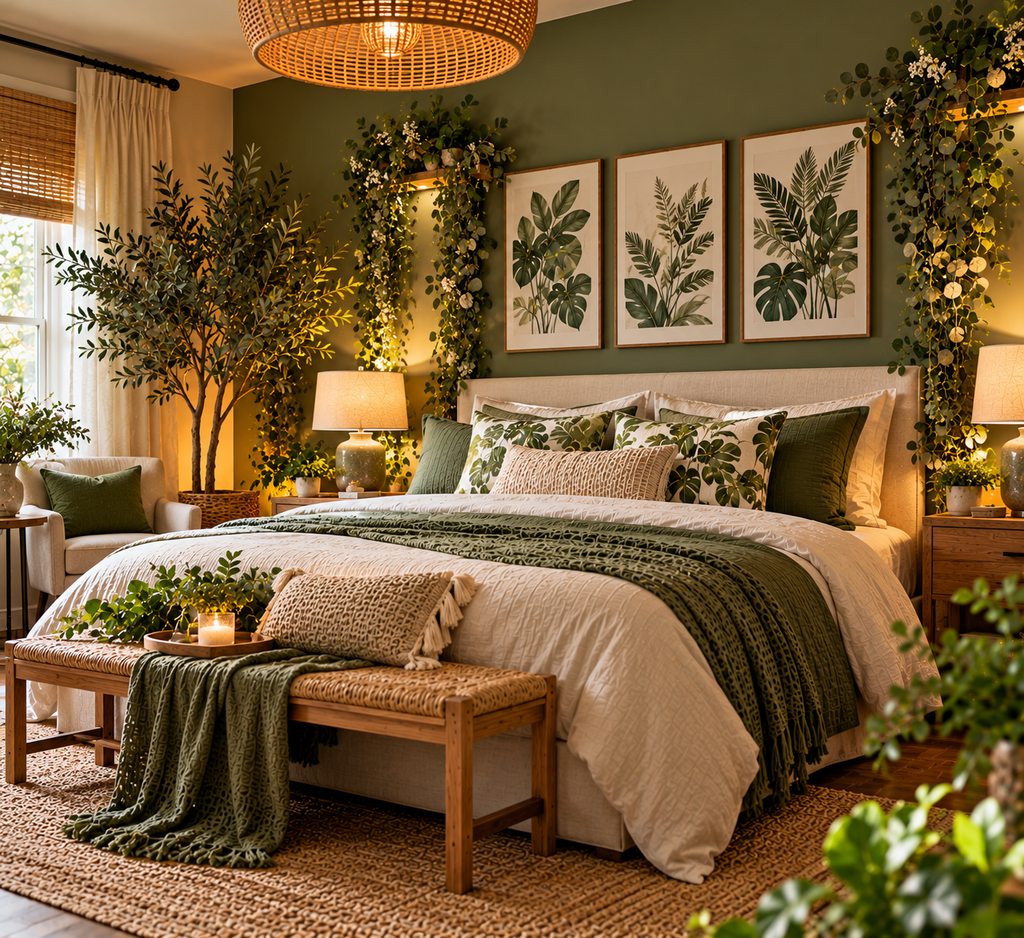
Some spots are truly too dark: an interior wall, a corner behind a door, the area above a windowless closet. Real plants will decline there however carefully they are watered. Good-quality artificial or preserved greenery can fill such spots without constant replacement.
Separate the two types. Artificial plants are plastic or fabric, and do not require care beyond dusting. Preserved plants, such as moss or eucalyptus treated with glycerine, look more natural but fade in sunlight and can be damaged by humidity. Neither provides any of the living benefits of real plants, so use them to supplement, not replace, living greenery.
A mix of real and faux works well when the faux pieces are placed where light is lowest and the real plants are placed where they can live. Avoid placing artificial greenery next to real plants of the same species, where the difference becomes obvious.
17. Add a Grow Light Where the Room Is Too Dim for Your Favourite Plants
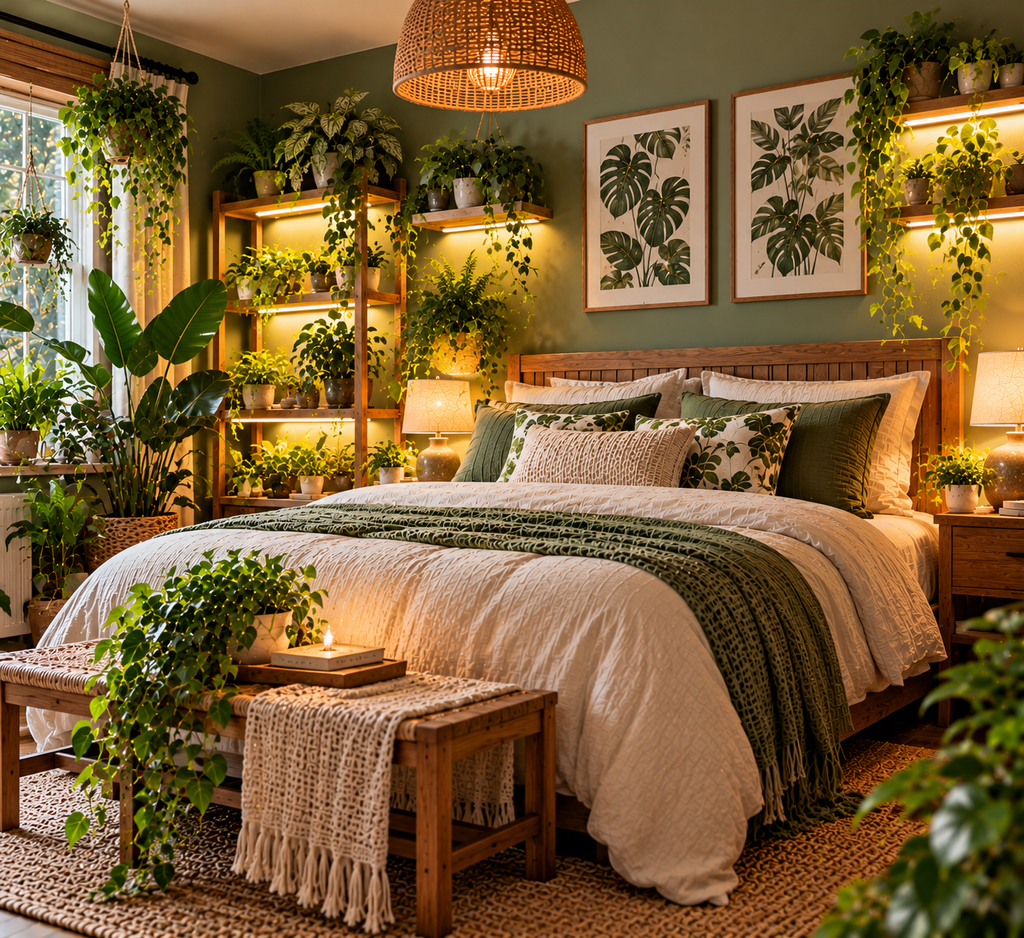
If a bedroom is generously green but dim, a small full-spectrum LED grow light can make the difference between plants that survive and plants that thrive. Clip-on or bar lights designed for shelves are inexpensive and unobtrusive, and warm-white versions look better in a bedroom than the harsh pink-purple ones.
Place the light according to the manufacturer’s instructions, and use a timer set for roughly 10–14 hours a day for most foliage plants (check the product guidance for your specific plants). Switching the light off at bedtime also protects sleep, since bright light in a bedroom at night is counterproductive.
Treat grow lights as any mains-powered device: buy a product with proper safety certification, keep cables away from water, and never cover a light or leave it where it could contact damp fabric. If you are unsure about wiring, use a plug-in model rather than a hardwired one.
Do Plants Actually Improve Bedroom Air?
A frequent claim is that bedroom plants purify the air and help you sleep. The truth is more modest. A well-known 1989 NASA study found that certain plants removed some airborne chemicals in sealed test chambers, and that finding has been repeated widely since. Later reviews, however, have concluded that in real, ventilated homes the effect is small, and that it would take a very large number of plants per square metre to match even ordinary ventilation. Treat this as something to verify against current research before repeating it in your own content.
The night-time carbon dioxide worry is similarly overstated. Plants release small amounts of CO2 in the dark, but the quantity from a handful of houseplants is negligible compared with what a sleeping person breathes out.
What plants can offer is a more attractive, calmer-feeling room, and for many people that is reason enough. Opening a window for ventilation will do more for air quality than any plant collection.
Problems Bedroom Plants Cause, and How to Avoid Them
Fungus gnats are the most common nuisance. These small flies breed in constantly damp potting mix. Letting the top few centimetres of soil dry between waterings is the simplest preventive step, and a layer of sand or fine grit on the surface can discourage egg-laying.
Mould on soil surfaces usually means the mix is staying wet and air is not circulating. Reduce watering, move the plant to a brighter spot, and scrape off the top layer if needed. People with mould allergies or asthma should be cautious about keeping many plants in a bedroom, and may want to ask a doctor before filling the room with soil and humidity.
Pet safety deserves a proper check. The ASPCA maintains a searchable list of plants toxic and non-toxic to cats, dogs, and horses. Common bedroom plants such as pothos, philodendron, peace lily, snake plant, and ZZ plant appear as toxic, while spider plants, parlor palms, and Boston ferns are listed as non-toxic. Check the list for each plant you buy, and place any toxic ones where animals and young children cannot reach them.
Finally, water damage. Always use saucers or waterproof trays, and lift pots rather than watering in place on wood. A slow leak under a bedside plant is easy to miss until a floor or table has been marked.
Common Questions
Which plants are best for a bedroom with very little natural light? Snake plants and ZZ plants cope best with dim conditions, with pothos not far behind. None of them grow vigorously in true low light, so a small grow light or periodic moves to a brighter spot will help.
How many plants are too many for a bedroom? There is no fixed number. The practical limit is how many you can water, rotate, and inspect without it becoming a chore, and how much humidity and soil moisture your room can handle without mould. Starting with three to five and adding gradually shows what the room can support.
Can I use hanging planters if I rent? Often yes, but check your lease first, because drilling into ceilings is sometimes prohibited. Tension rods across a window, freestanding plant stands, and shelves that rest on furniture are lower-impact alternatives.
Key Takeaways
Start with the light, because it decides which plants can live where. Use one or two bigger plants for structure, then add trailing and hanging plants near the windows where they will grow. Let bedding, wall colour, and wood do the rest of the work in the darker parts of the room, and bring in faux greenery or a grow light only where living plants cannot manage on their own.
Before buying anything, check the weight of what you plan to hang, the pet toxicity of each plant, and where the water will go when it drains. Those three checks prevent most of the problems that make people give up on plants in bedrooms.

About Syprose Kiche
Syprose Kiche is the creator and writer behind My Besuited Home, a practical home and garden website covering DIY projects, gardening, lawn care, landscaping, home improvement, and outdoor living. She focuses on turning everyday homeowner questions into clear, practical guides backed by careful research and useful real-world considerations.