
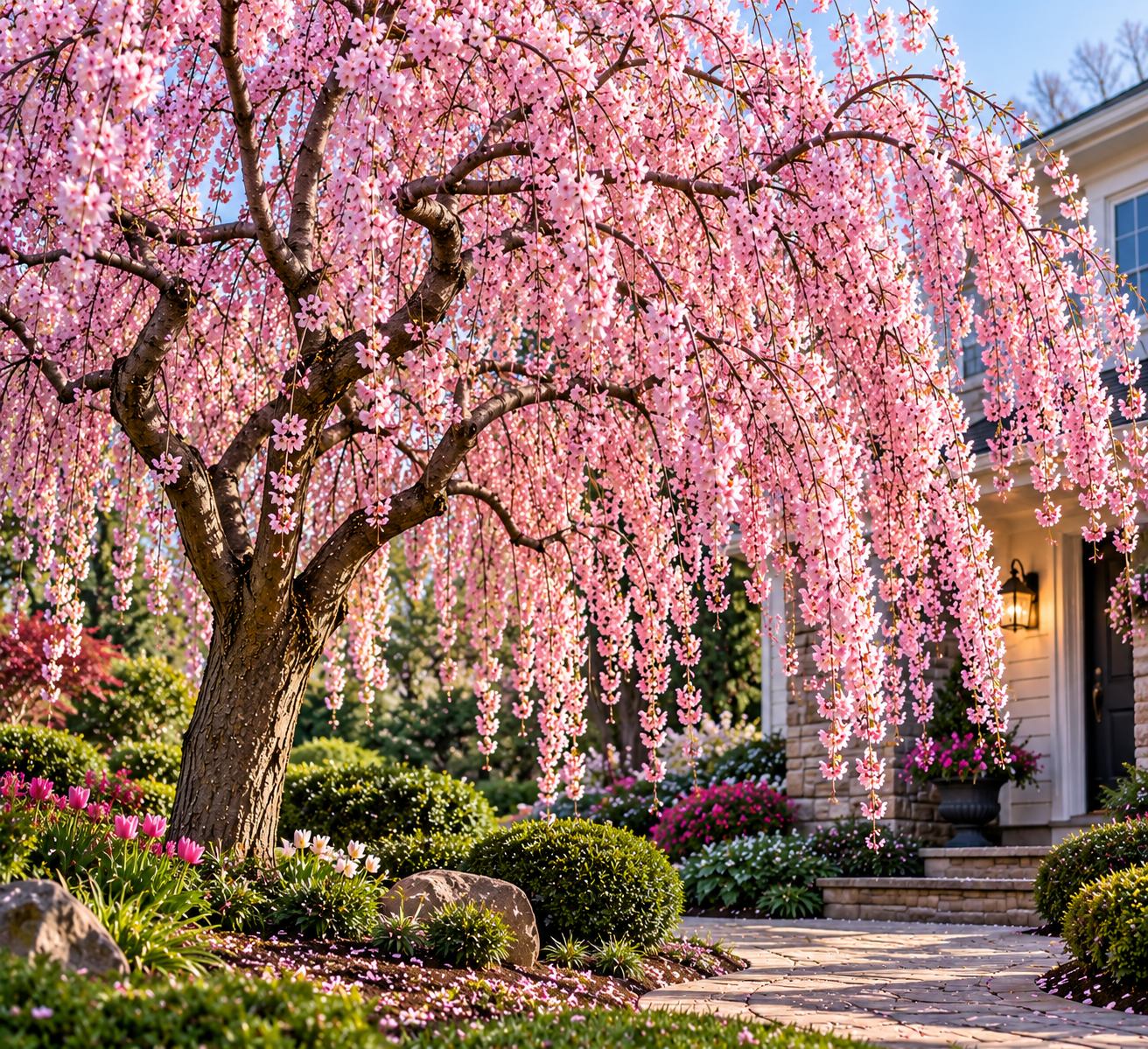
A pink tree in full bloom usually lasts about one to two weeks. A hard freeze or a few days of heavy rain can cut that to a few days, and a nursery photo never shows that. People buy a tree for the picture and then find that it flowers in a frost pocket, grows too large for the spot, or looks plain for the other fifty weeks of the year.
This list is built around those problems. Each tree below has its size, bloom window, light needs and hardiness zone, along with the weakness that tends to cause trouble. Sizes and zones are typical ranges, and they shift by cultivar and by source. Check the plant tag, and your local extension service if you’re unsure, before you buy.
How to Narrow 13 Trees Down to One or Two
Three questions eliminate most of the list quickly.
How cold does your winter get? Your USDA hardiness zone decides what survives. Crape myrtles struggle where winter lows regularly fall below about 0°F, while many crabapples and redbuds handle zone 4 cold without trouble.
How early does spring warm up, and how often does it freeze after that? Early bloomers, such as saucer magnolias and some cherries, open when a late frost is still possible. In areas with erratic springs, the tree that blooms two or three weeks later (a ‘Jane’ magnolia or a Kousa dogwood) will flower more reliably.
How much room is there, counting overhead and underground? A 30-foot tree planted 8 feet from a house will become a pruning problem. Mature width matters as much as height, and roots from large trees can lift nearby paving over time.
Bloom timing also helps you plan sequences. Planting an early cherry, a mid-spring crabapple and a summer-blooming crape myrtle on one property can give you color from March through September.
The Cherries: Pink in Three Different Moods
“Pink cherry” covers very different trees. The three below differ in size, shape and shade of pink.
1. Yoshino Cherry (Prunus × yedoensis)
- Size: 30–40 ft tall, often as wide
- Bloom: Early to mid spring, before the leaves (roughly March to April depending on region)
- Sun: Full sun
- Zones: About 5–8
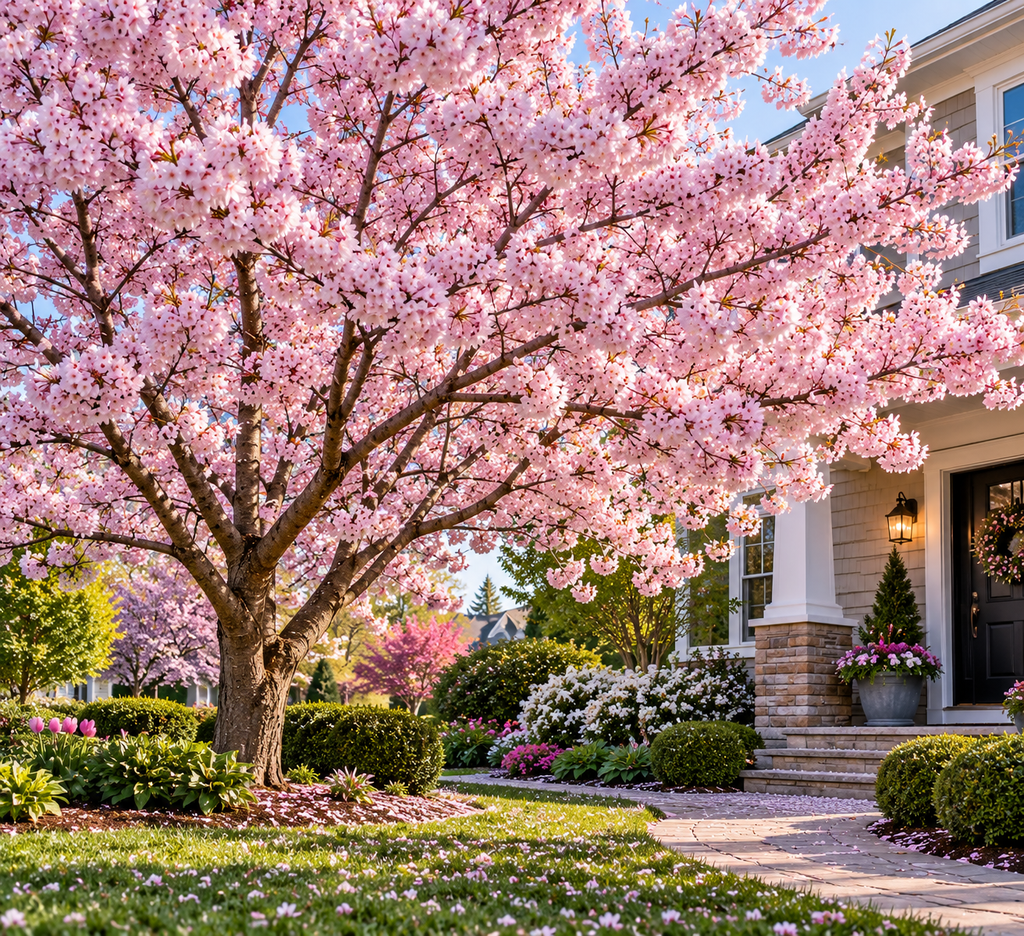
This is the tree behind most famous cherry blossom displays. The flowers open pale pink and fade toward white, so the overall effect is a soft blush, not a saturated pink. If you want a strong pink, look at the Kwanzan below.
The spreading crown needs room. Yoshinos also tend to be short-lived compared with oaks or maples, often a few decades, and they’re susceptible to borers and canker, especially when stressed by compacted soil or poor drainage. Plant it where it has space and drains well, and don’t expect a century of life.
2. Kwanzan Cherry (Prunus serrulata ‘Kwanzan’)
- Size: 25–30 ft tall, with a vase-shaped, upright habit
- Bloom: Mid to late spring, usually a bit later than Yoshino
- Sun: Full sun
- Zones: About 5–9
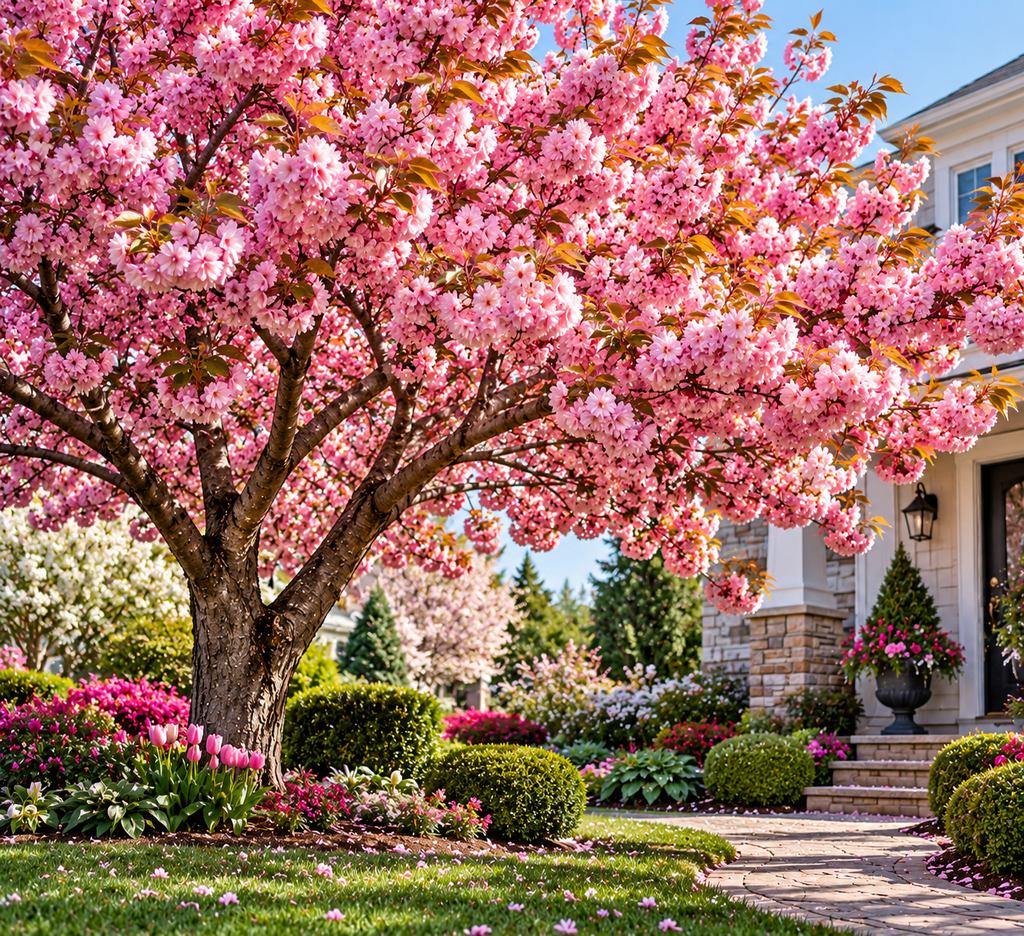
Kwanzan has double flowers in a deeper pink, held in heavy clusters. It’s among the most photographed pink trees in suburban streets because the color is unmistakable from a distance. The flowers don’t produce fruit, so there’s no cherry mess.
The upright form is useful where a tree needs to stay narrower than a Yoshino. It’s also grafted in many cases, so sprouts from below the graft union should be removed because they won’t match the tree above. Like other ornamental cherries, it needs good drainage. Wet feet are a common reason these trees decline.
3. Weeping Higan Cherry (Prunus subhirtella ‘Pendula’)
- Size: 15–25 ft tall, with a spreading canopy of arching branches
- Bloom: Early spring
- Sun: Full sun to light shade
- Zones: About 5–8 (some sources say 4, so verify for your cultivar)
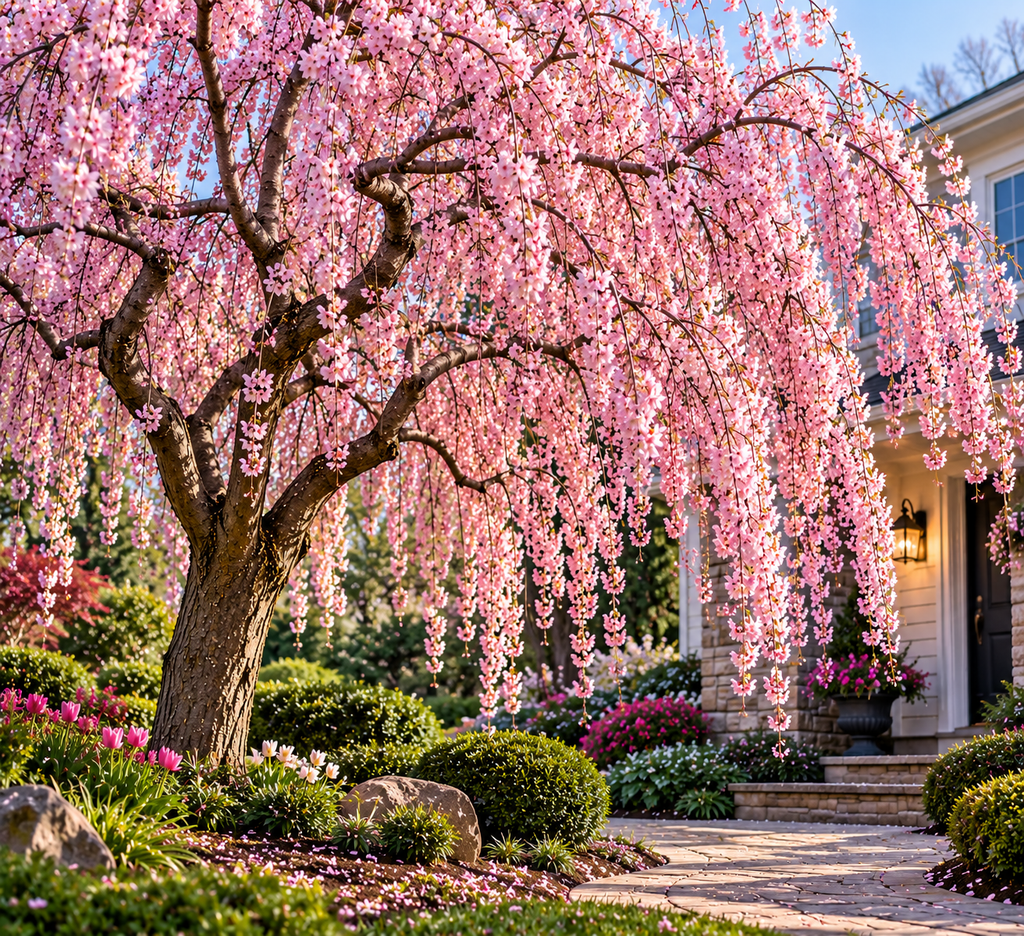
The branches fall like a curtain, and in bloom the tree looks like a pink fountain. This form works as a lawn specimen or beside a pond, anywhere the shape can stand alone.
Weeping trees look best when given space. Planted in a tight bed, the drooping branches get tangled in nearby plants and make mowing and walking around the base awkward. Some named weeping forms are grafted at a set height, which determines how high the “fountain” starts. Check this before you buy if you want clearance underneath.
The Crabapples: Pink Flowers, Then a Second Season
Crabapples are some of the toughest flowering trees for cold climates, and they have an advantage that cherries don’t: fruit. Persistent small fruits can feed birds into winter. The trade-off is disease, and choosing a resistant cultivar matters more here than with almost any other tree on this list.
4. ‘Prairifire’ Crabapple (Malus ‘Prairifire’)
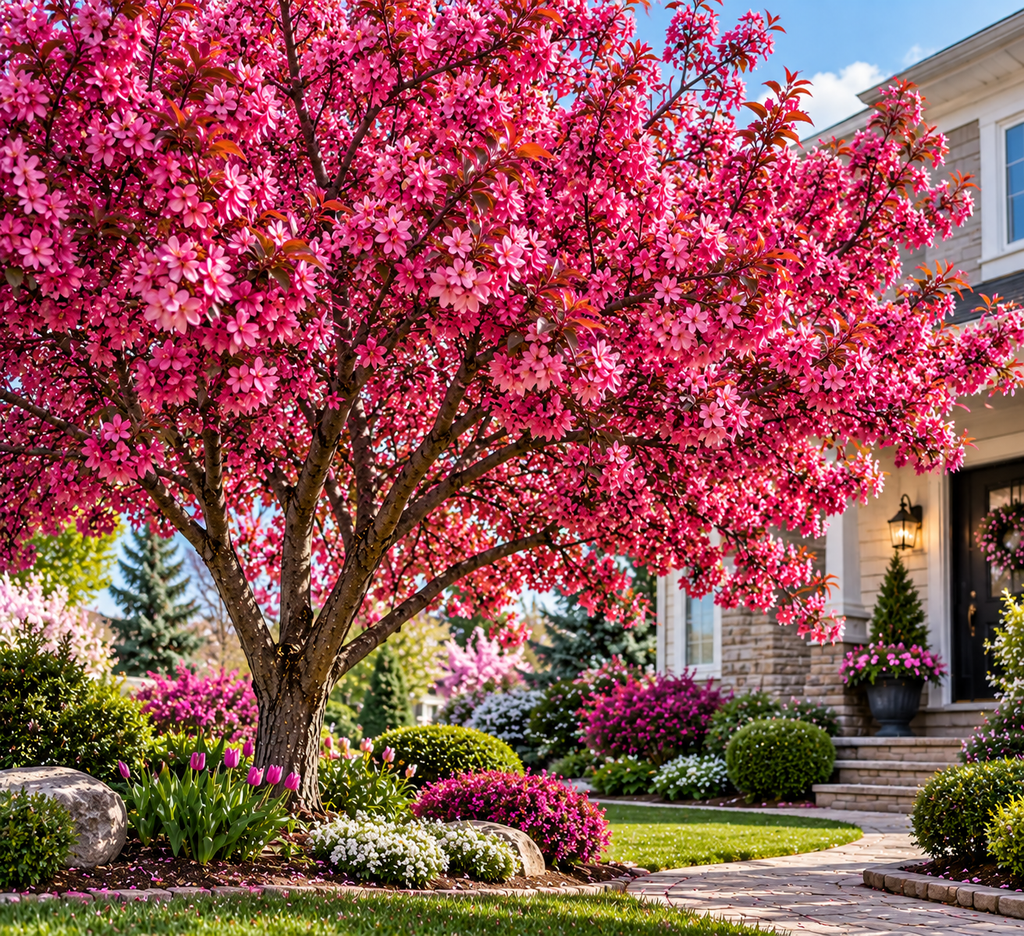
- Size: 15–20 ft tall, with a rounded form of similar width
- Bloom: Mid spring
- Sun: Full sun
- Zones: About 4–8
The buds open a deep pink-red and fade to a softer pink as the flowers mature, which gives the tree a layered look in bloom. New leaves have a reddish-purple tint. The small fruits are dark red and persistent.
‘Prairifire’ is commonly recommended because of its disease resistance, but “resistant” is not “immune.” Apple scab, fire blight, cedar-apple rust and powdery mildew all affect crabapples, and their severity depends on weather and region. Rust is more of a problem if there are eastern red cedars nearby. Full sun and good air circulation reduce disease pressure more than any spray.
5. ‘Louisa’ Weeping Crabapple (Malus ‘Louisa’)
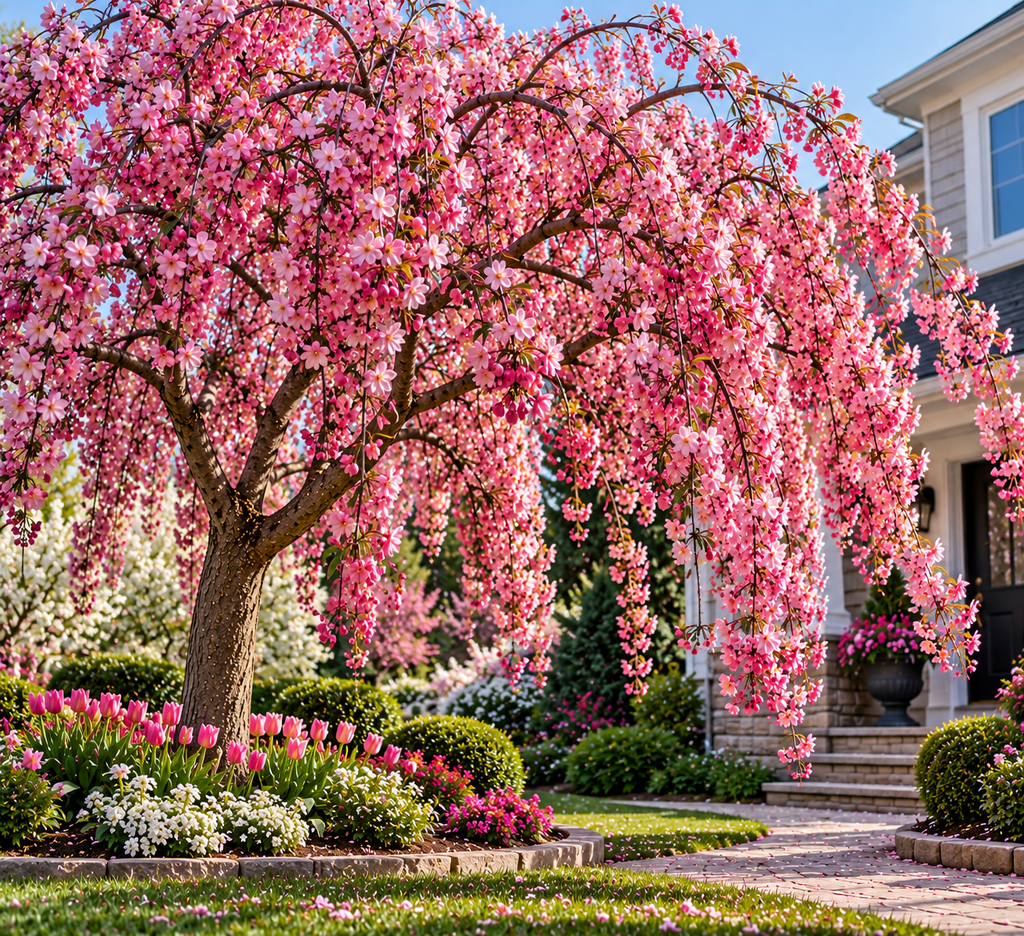
- Size: 12–15 ft tall, with a spread of 10–15 ft
- Bloom: Mid spring
- Sun: Full sun
- Zones: About 4–8
Louisa is a smaller option for yards where a cherry would be too large. The branches arch down, the flowers are pink, and the small fruits are yellow. It’s the kind of tree that suits a front yard or a patio corner.
It’s often described as more disease-tolerant than older weeping crabapples, but as with all crabapples, ask about local performance. A cultivar that does well in the Midwest isn’t automatically a good choice for the Southeast.
The Magnolias: Big Flowers, Real Frost Risk
6. Saucer Magnolia (Magnolia × soulangeana)
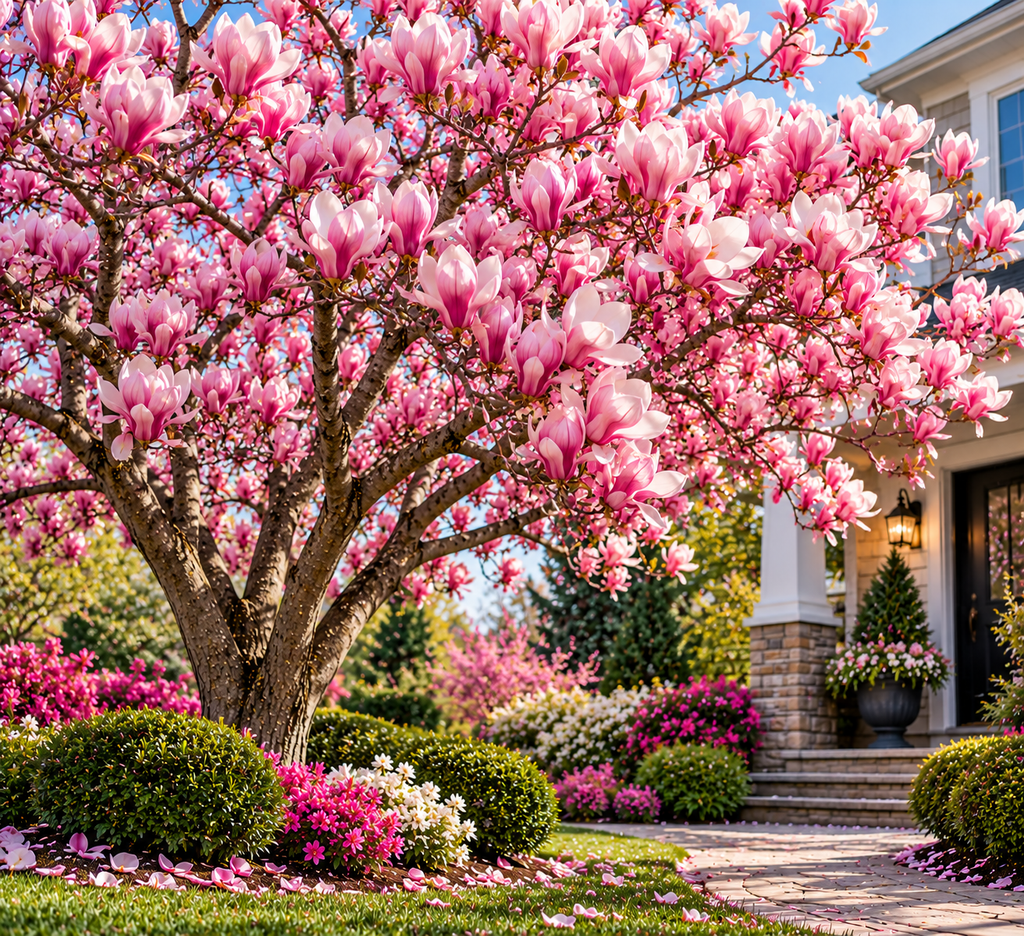
- Size: 20–25 ft tall, often equally wide, and sometimes multi-stemmed
- Bloom: Late winter to early spring, before the leaves
- Sun: Full sun to partial shade
- Zones: About 4–9 (more reliable in 5–9)
The flowers are large, cup-shaped and pink to purplish-pink on the outside, with a paler or whiter interior. A mature saucer magnolia in bloom is hard to ignore.
The weakness is timing. Saucer magnolias open early, and a frost after the buds swell can turn the petals brown overnight. In regions where late freezes are common, a given year may deliver only a partial show. That doesn’t harm the tree, but it does mean the display can be inconsistent.
Plant it where it has width to spread. The root system is shallow and doesn’t like being disturbed, so avoid digging or heavy cultivation beneath the canopy.
7. ‘Jane’ Magnolia (Magnolia ‘Jane’)
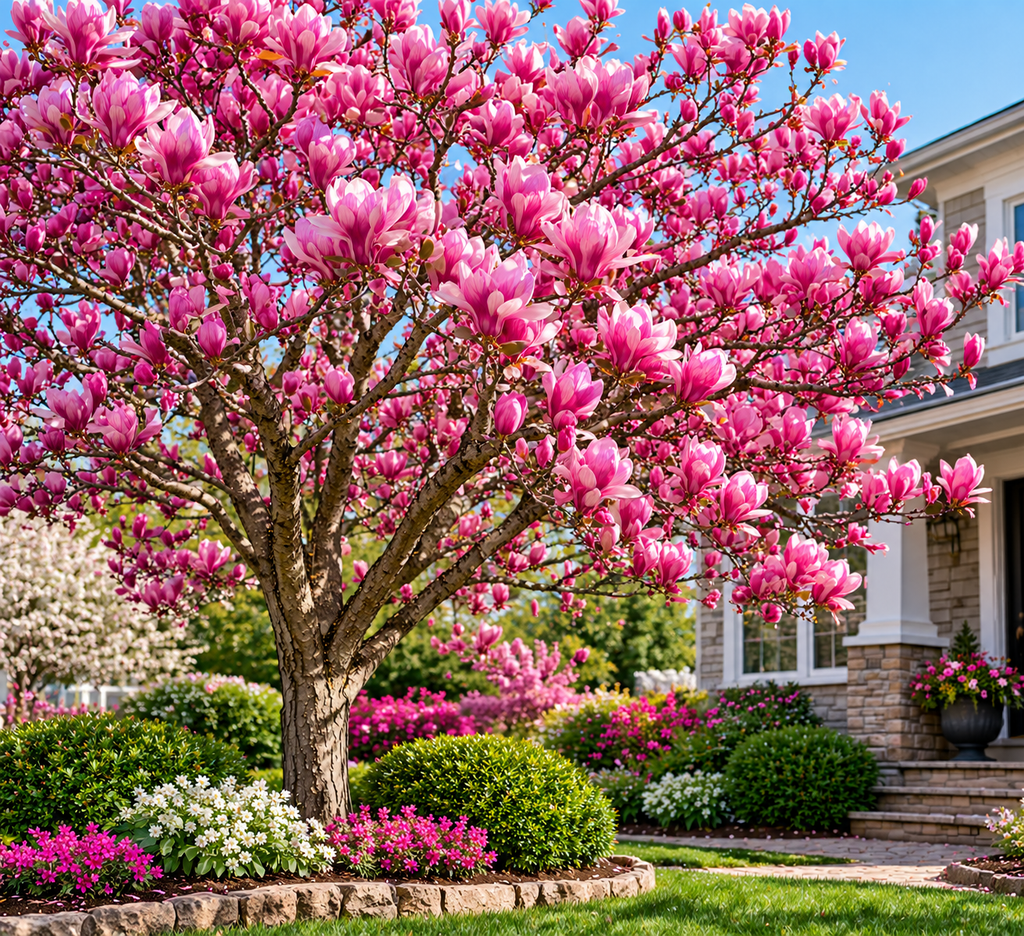
- Size: 10–15 ft tall, 8–12 ft wide, and often a large shrub form
- Bloom: Mid to late spring, later than saucer magnolia
- Sun: Full sun to partial shade
- Zones: About 4–8
‘Jane’ is one of the “Little Girl” hybrids, bred at the U.S. National Arboretum to bloom later and reduce frost damage. The flowers are reddish-purple outside and lighter inside, so the color reads as a rich pink-purple more than a soft pink.
If you like magnolias but your springs are unpredictable, this is a safer choice than the saucer type. It’s also small enough for a typical suburban lot. Look for a tag that confirms the cultivar, because plants sold only as “magnolia” can be something quite different.
Redbud: The Tree That Blooms Directly on the Wood
8. Eastern Redbud (Cercis canadensis)
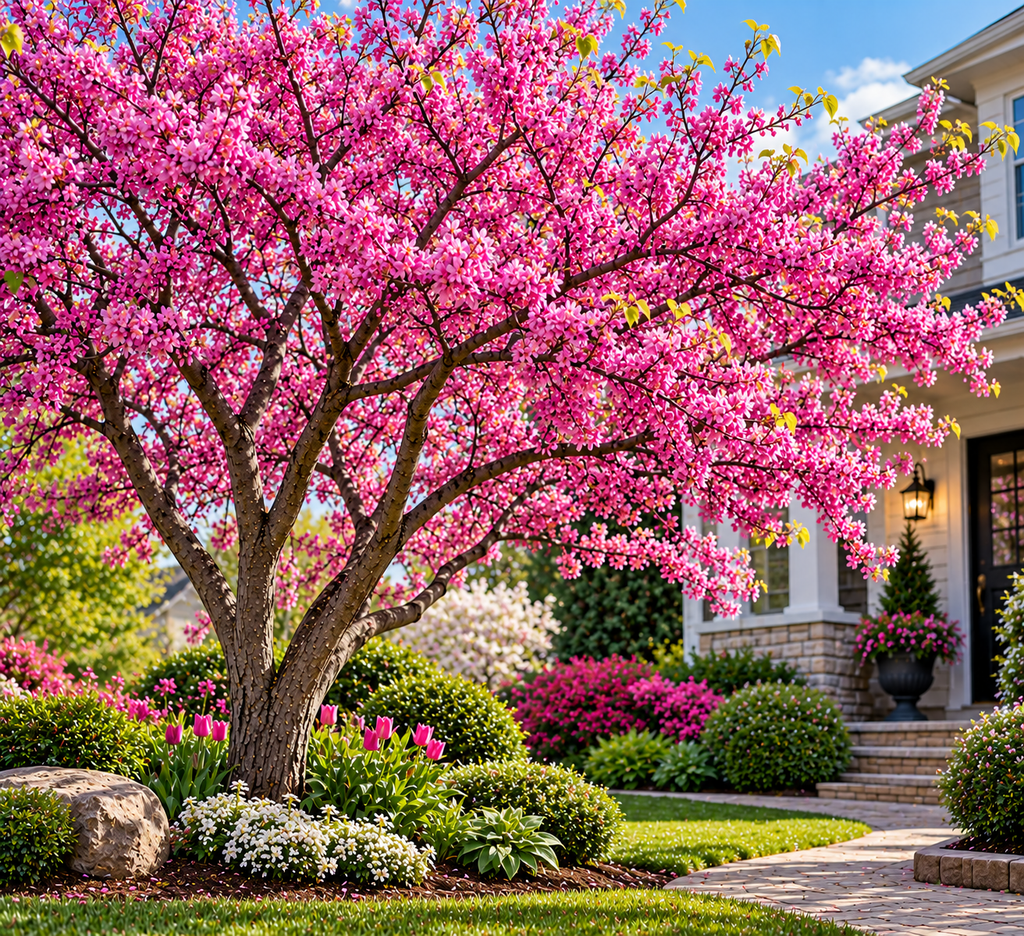
- Size: 20–30 ft tall, with a spread of 25–35 ft
- Bloom: Early to mid spring, before the leaves
- Sun: Full sun to partial shade
- Zones: About 4–9
Redbud flowers are small, magenta-pink and borne in clusters directly on branches, twigs and sometimes the trunk. The tree looks like it’s wrapped in pink in bloom. Then it produces heart-shaped leaves and flat seed pods.
Redbud tolerates partial shade better than most trees here, which helps in yards where a cherry wouldn’t flower well. Its main limitation is lifespan. Redbuds are often short-lived, commonly cited at 20 years or so, and they are prone to canker and other problems, particularly in stressed trees. Provide well-drained soil and avoid wounding the trunk with mowers and string trimmers.
If you want pink and not purplish-magenta, seek out pink-flowered selections such as ‘Pinkbud’ and test before committing. Standard redbud color is closer to magenta in many conditions.
The Dogwoods: Pink Bracts, Not Petals
The “flowers” on a dogwood are bracts, modified leaves surrounding a small cluster of true flowers in the center. This is why dogwood color lasts longer than many true blossoms, often two weeks or more.
9. Pink Flowering Dogwood (Cornus florida ‘Rubra’ and pink cultivars)
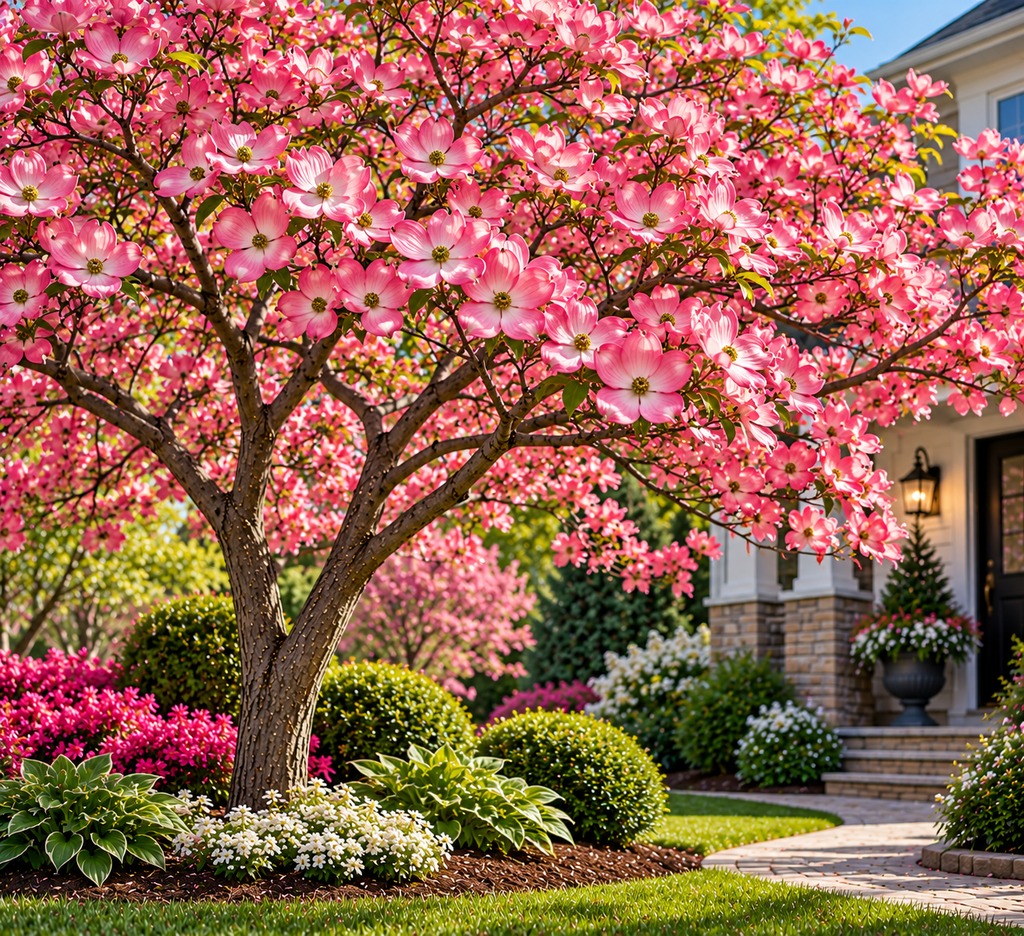
- Size: 15–25 ft tall, with a similar spread
- Bloom: Mid spring
- Sun: Partial shade (tolerates more sun in cooler regions)
- Zones: About 5–9
Flowering dogwood is an understory tree, which makes it useful for the edge of woodland or a spot with morning sun and afternoon shade. Pink forms are lovely in bloom and add red fall foliage.
It’s also one of the more disease-prone trees here. Dogwood anthracnose has seriously affected Cornus florida in parts of the eastern United States, and stress from drought, hot afternoon sun and soil compaction increases the risk. Planting it in full afternoon sun on dry soil is a common mistake. Mulch the root zone (keeping mulch away from the trunk), water in dry spells, and give it air circulation.
10. Kousa Dogwood ‘Satomi’ (Cornus kousa ‘Satomi’)
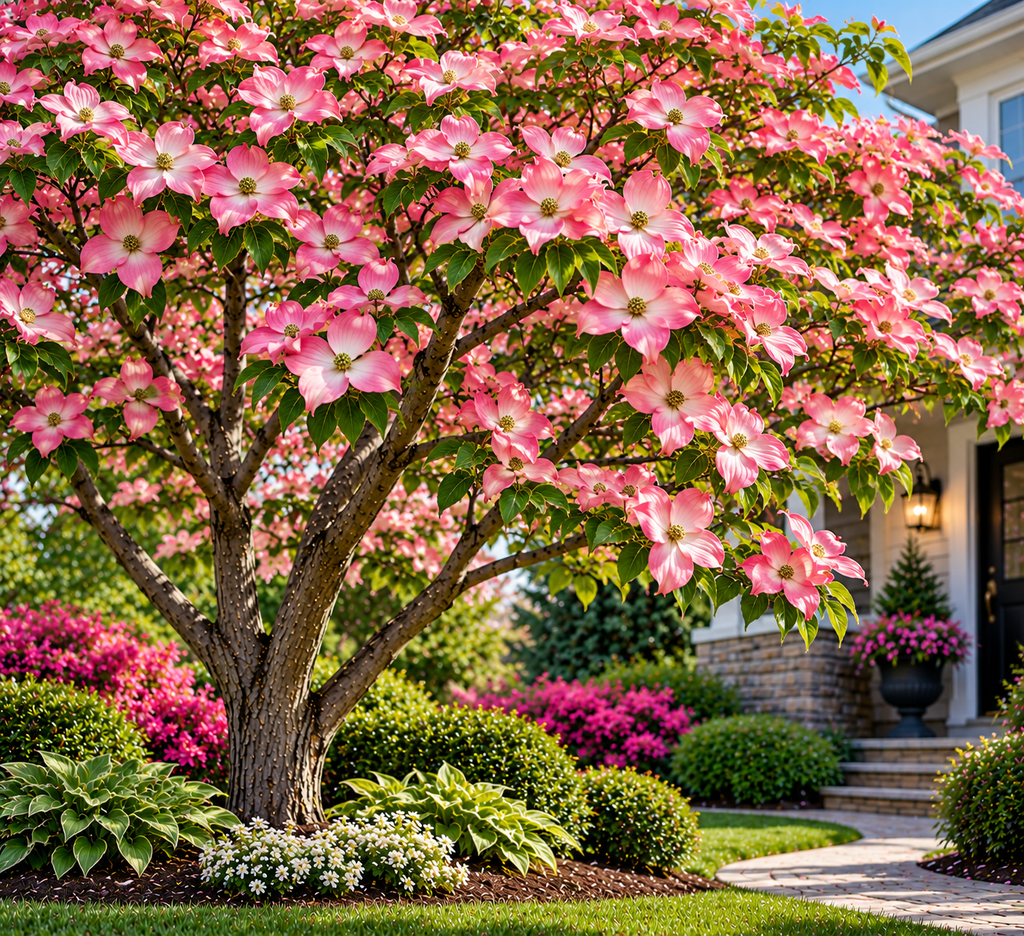
- Size: 15–20 ft tall, with a similar spread
- Bloom: Late spring to early summer (usually weeks after flowering dogwood)
- Sun: Full sun to partial shade
- Zones: About 5–8
Kousa dogwoods are Asian relatives of the native flowering dogwood and are generally considered more resistant to anthracnose. ‘Satomi’ has pink bracts that point upward, and the tree produces strawberry-like fruit later in summer, plus peeling bark and reddish fall color.
Because it blooms later, it’s less exposed to frost, and it extends the pink season past the cherries and crabapples. The fruit drops and can be messy on a patio or pavement. Put it where that isn’t a problem.
Crape Myrtle: Pink for Summer, Not Spring
11. Crape Myrtle (Lagerstroemia spp. and hybrids)
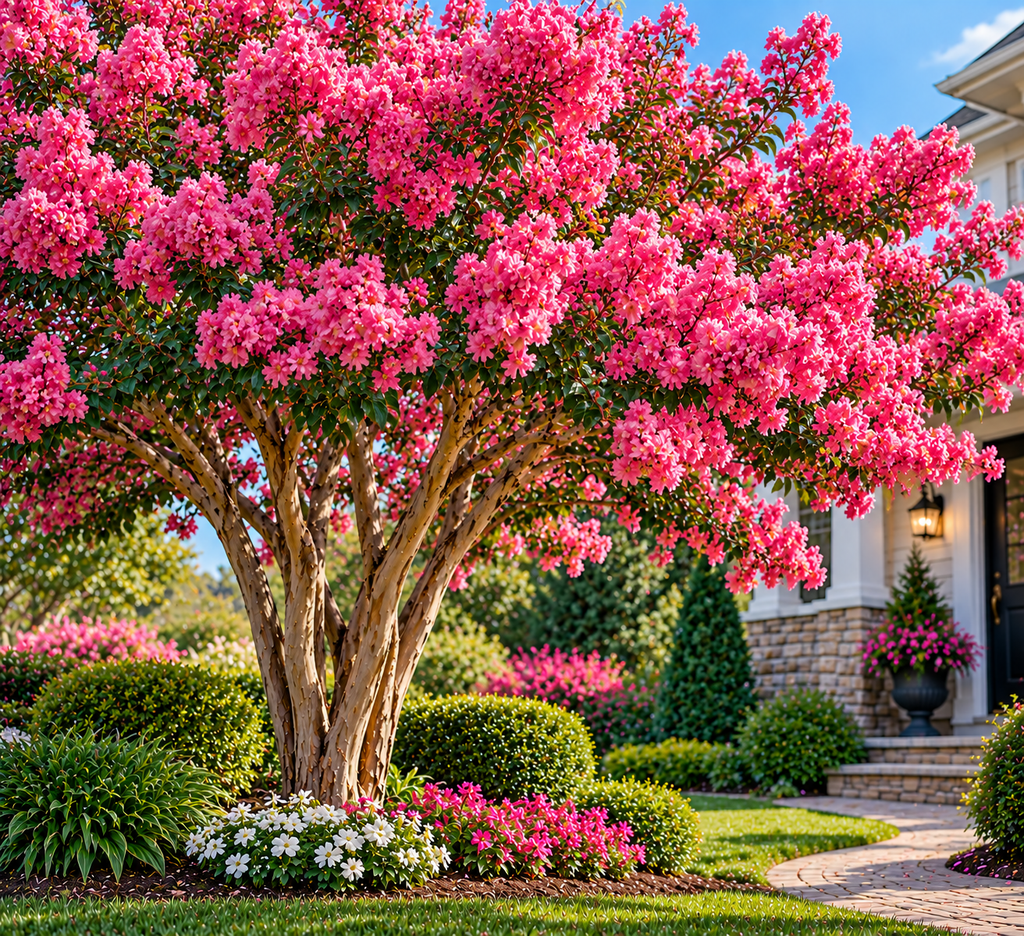
- Size: Highly variable, from 3 ft dwarf forms to 30 ft or more
- Bloom: Early summer through early fall
- Sun: Full sun (at least six hours)
- Zones: Commonly 7–9, with some cultivars hardy to zone 6 or lower with winter protection
Crape myrtle doesn’t bloom in spring, but it’s a good pink tree for the long stretch of summer after spring flowers fade. Pink cultivars range from pale to hot pink. Many have attractive peeling bark, and some offer good fall color.
Variety selection matters more here than anywhere else on the list. The most common mistake is buying a large cultivar and then shearing it to keep it small, which leads to the stub-pruning often called “crape murder.” If you have limited space, choose a cultivar labeled as dwarf or semi-dwarf at the outset. Check the mature size listed for the specific cultivar.
Powdery mildew can be an issue in humid, shady conditions, and many newer cultivars are bred for resistance. In colder zones, plants may die back to the ground in a hard winter and regrow in spring, which can delay bloom.
The Stone-Fruit Relatives: Peach and Almond
12. Flowering Peach (Prunus persica ornamental forms)
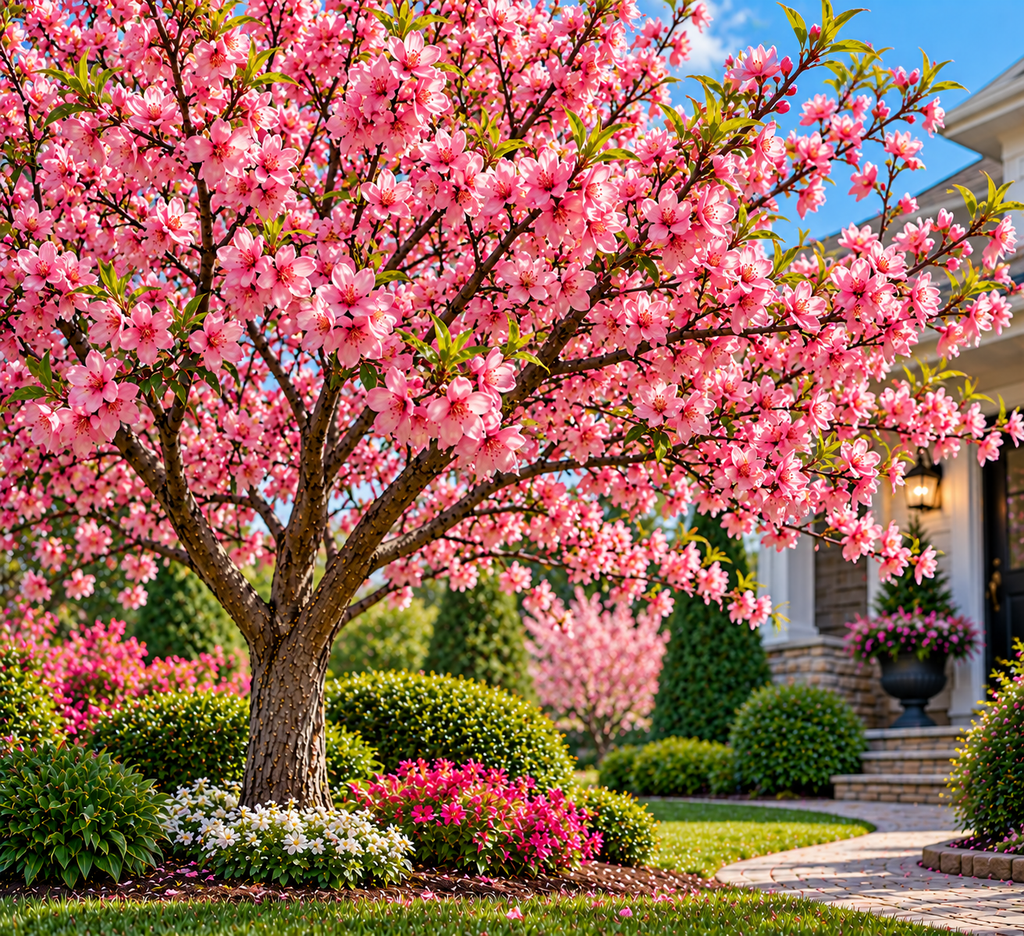
- Size: 15–25 ft tall, depending on cultivar
- Bloom: Early spring, before the leaves
- Sun: Full sun
- Zones: About 5–9
Ornamental peaches are bred for flowers, not fruit. They offer double or semi-double pink blooms, often with showy, ruffled petals. Some have a weeping or compact habit.
The biggest practical problem is peach leaf curl, a fungal disease that causes distorted, reddish leaves in spring. It infects emerging buds, so the standard approach is a dormant-season fungicide application in late fall or late winter before bud swell. Product choice and timing depend on your region, so check your local extension service and follow the label. Like other early bloomers, peaches are vulnerable to late frost, and they’re also short-lived, often 10 to 20 years.
13. Flowering Almond (Prunus triloba and relatives)
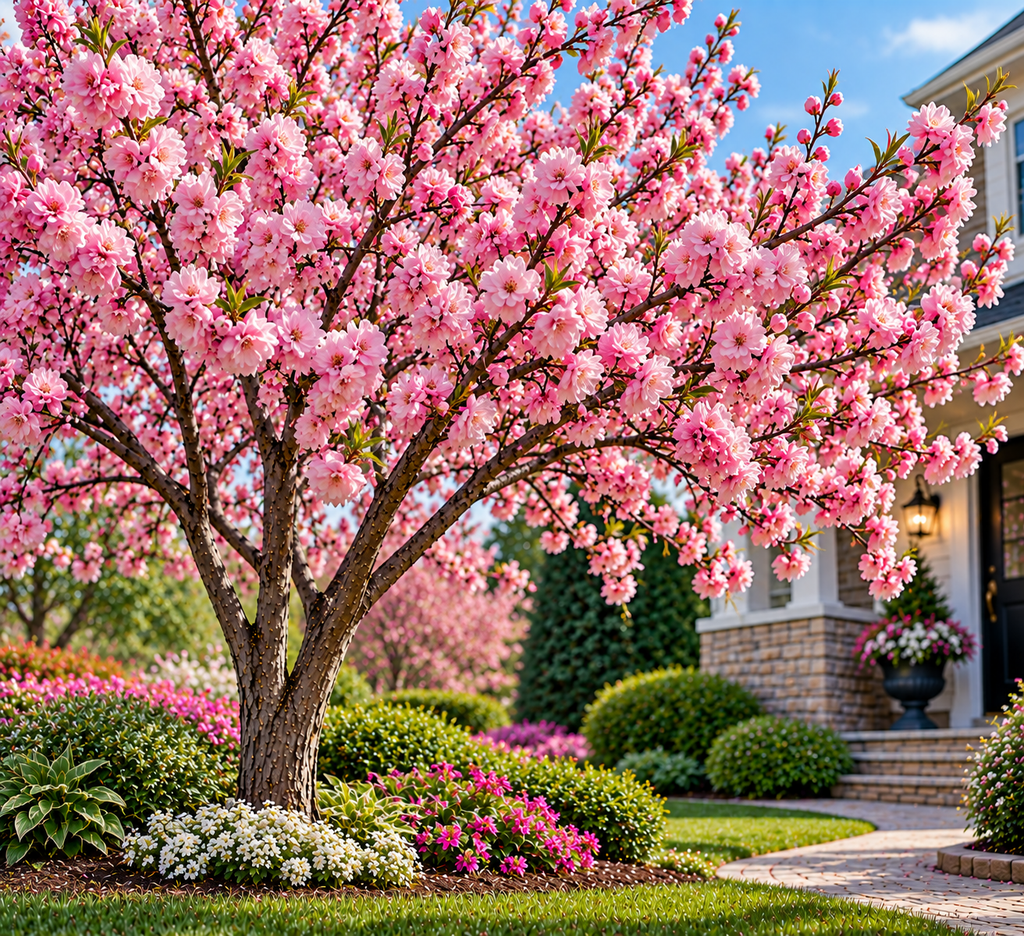
- Size: 10–15 ft tall, with a similar spread (often grown as a large shrub or small tree)
- Bloom: Early to mid spring, before the leaves
- Sun: Full sun
- Zones: About 4–8
Flowering almond produces dense, pale to medium pink double flowers along bare stems. It’s a compact way to add pink where a larger tree won’t fit, and it’s one of the earlier bloomers.
It’s often sold both as a multi-stem shrub and as a grafted standard (a “tree form” on a single trunk). The standard form looks neat but needs attention to suckers from the rootstock. It has a reputation for being short-lived and susceptible to disease and borers. The honest assessment: it gives a great few weeks of color, and then it’s an unremarkable shrub. Pruning right after flowering keeps it tidy, since cutting later removes next year’s buds.
Quick Comparison Table
| Tree | Mature height | Bloom window | Light | Zones (typical) |
| Yoshino cherry | 30–40 ft | Early–mid spring | Full sun | 5–8 |
| Kwanzan cherry | 25–30 ft | Mid–late spring | Full sun | 5–9 |
| Weeping higan cherry | 15–25 ft | Early spring | Sun to light shade | 5–8 |
| ‘Prairifire’ crabapple | 15–20 ft | Mid spring | Full sun | 4–8 |
| ‘Louisa’ crabapple | 12–15 ft | Mid spring | Full sun | 4–8 |
| Saucer magnolia | 20–25 ft | Late winter–early spring | Sun to part shade | 4–9 |
| ‘Jane’ magnolia | 10–15 ft | Mid–late spring | Sun to part shade | 4–8 |
| Eastern redbud | 20–30 ft | Early–mid spring | Sun to part shade | 4–9 |
| Pink flowering dogwood | 15–25 ft | Mid spring | Part shade | 5–9 |
| Kousa dogwood ‘Satomi’ | 15–20 ft | Late spring–early summer | Sun to part shade | 5–8 |
| Crape myrtle | 3–30 ft by cultivar | Summer–early fall | Full sun | 7–9 (some 6) |
| Flowering peach | 15–25 ft | Early spring | Full sun | 5–9 |
| Flowering almond | 10–15 ft | Early–mid spring | Full sun | 4–8 |
Matching a Tree to the Problem You Actually Have
Small yard or close to the house: ‘Louisa’ crabapple, ‘Jane’ magnolia, flowering almond, or a dwarf crape myrtle (in zones where it’s hardy). All stay under about 15 ft with reasonable care.
Cold winters (zones 4–5): Crabapples, redbud, ‘Jane’ magnolia and flowering almond are the safest options on this list.
Partial shade: Redbud and dogwood do better than cherries or peaches, which flower poorly with limited sun.
Late frosts are common: Choose later bloomers like ‘Jane’ magnolia or Kousa dogwood, and think twice about saucer magnolia and flowering peach.
You want long-lasting color: Dogwood bracts tend to hold longer than petals, and crape myrtle gives you months of bloom.
You want low maintenance: There isn’t a truly maintenance-free flowering tree, but a disease-resistant crabapple in full sun is among the easier ones.
Planting Mistakes That Undo a Good Choice
Most failures with flowering trees come from the planting hole, not the tree.
Planting too deep. The point where the trunk widens into the roots (the root flare) should be at or slightly above the soil line. Burying it invites rot and, over time, girdling roots. Pull back any soil or mulch piled against the trunk when you buy a tree and find the flare before digging.
Digging a hole that’s too narrow. A planting hole is usually recommended to be about two to three times as wide as the root ball but no deeper. Wide loosened soil helps roots spread. Deep holes with loose soil can settle and leave the tree sitting too low.
Fertilizing at planting. Many sources advise against heavy fertilization right at planting, because new roots can be damaged. Check your soil with a test before adding anything.
Mulch volcanoes. Spread 2 to 3 inches of mulch in a wide ring, but keep it a few inches away from the trunk. Mulch against bark holds moisture and encourages decay and pests.
Watering lightly and often. Newly planted trees generally benefit from deep, less frequent watering that encourages roots to go down. How often depends on soil and weather, so check by feeling the soil a few inches below the surface.
Pruning at the wrong time. Spring-blooming trees set flower buds the previous year in many cases, so heavy pruning in winter removes flowers. Prune right after bloom for most, and remove dead, damaged or crossing branches whenever you spot them. Stone-fruit trees (cherry, peach, almond) are often pruned in summer in many regions to reduce the risk of certain diseases, though recommendations vary, so check locally.
Genuine Questions People Ask
Do pink flowering trees need a second tree to bloom?
No. Ornamental cherries, crabapples, magnolias, redbuds and dogwoods will flower on their own. A second tree matters only for fruit production on certain fruit trees and for crabapple fruit set in some cases, and it’s irrelevant to flowering.
Why did my tree bloom beautifully once and then barely flower?
Common causes include a late frost damaging buds, too little sun, heavy pruning at the wrong time, and excess nitrogen that encourages leaves over flowers. Young trees may also take several years to bloom well.
Can I plant a pink flowering tree in a container?
Dwarf and small types like flowering almond, ‘Jane’ magnolia and some crape myrtles can live in large containers for a while. Roots are more exposed to cold in a pot, so hardiness drops by a zone or two in many cases. Long-term, in-ground planting is easier.
When is the best time to plant?
Fall and early spring are commonly recommended, when the weather is cool and roots can establish before summer heat. In mild-winter regions, fall planting often gets a head start. Check local timing.
Key Takeaways
Pick the tree for your frost dates and available space first, and the shade of pink second. A well-sited ‘Jane’ magnolia or crabapple will out-perform a showier cherry planted somewhere it doesn’t suit. Before buying, confirm the cultivar name, mature size and hardiness zone on the tag, and plant at the right depth with mulch kept off the trunk. If you want bloom to extend beyond a single fortnight, combine an early bloomer, a mid-spring bloomer and a late-spring or summer one.

About Syprose Kiche
Syprose Kiche is the creator and writer behind My Besuited Home, a practical home and garden website covering DIY projects, gardening, lawn care, landscaping, home improvement, and outdoor living. She focuses on turning everyday homeowner questions into clear, practical guides backed by careful research and useful real-world considerations.