
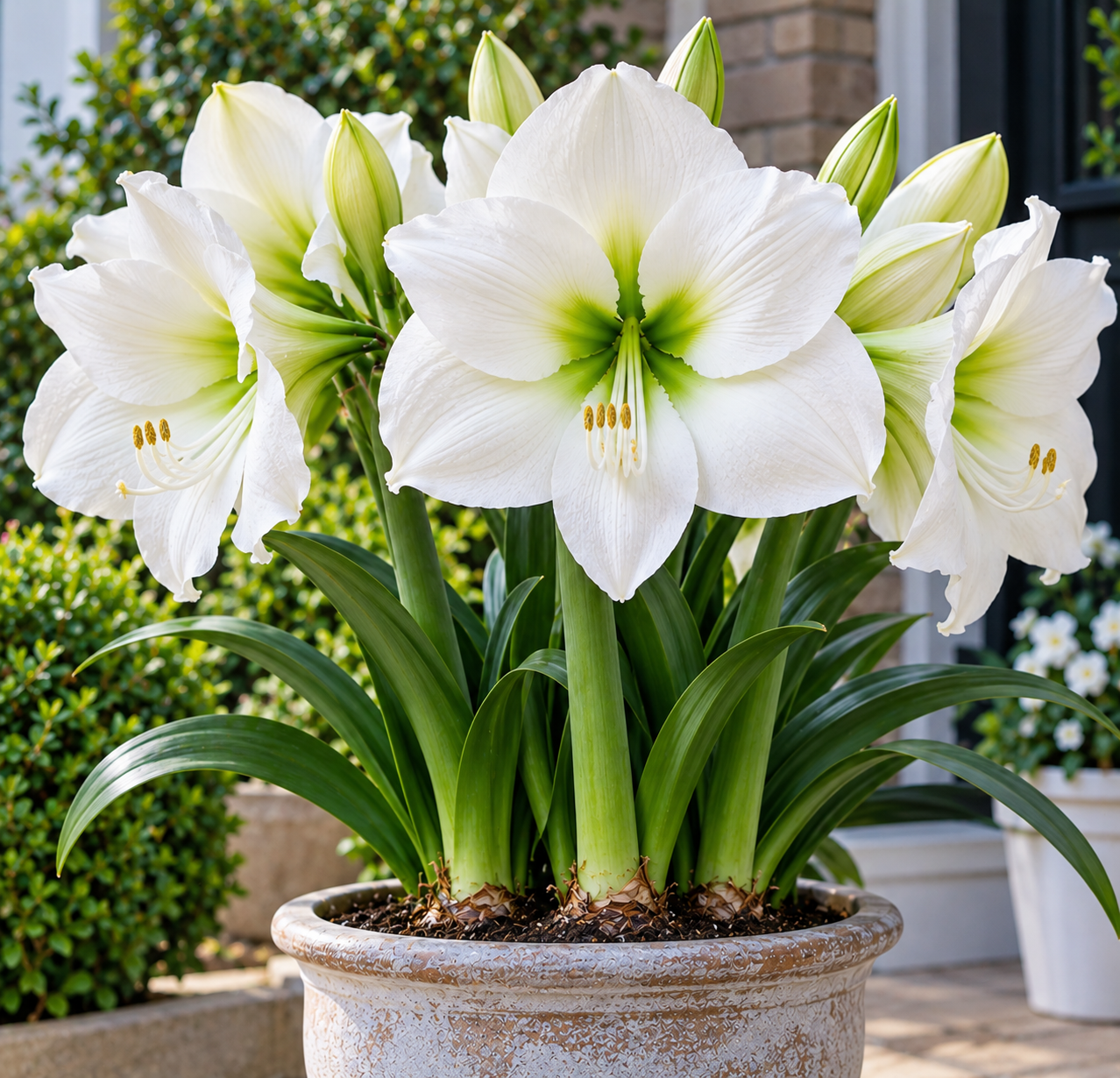
The picture on an amaryllis box and the flower that opens six weeks later don’t always match. Most kits are sold by color alone, such as “red” or “white” or “pink”. Within each color there is a wide spread in petal shape, bloom size, stalk height and whether the flower is single or double. Some of those differences matter in a pot. A tall double with four heavy blooms tips over in a lightweight container. A small-flowered type looks lost in a large one.
The 15 varieties below are grouped by color and flower form so you can choose on purpose. Names, colors and sizes vary somewhat between growers, so confirm details on the bulb tag or supplier listing before you buy.
What You’re Actually Buying: Amaryllis vs. Hippeastrum
The plants sold as amaryllis in autumn are almost all Hippeastrum, a South American genus. True Amaryllis is a different plant. The only species is Amaryllis belladonna, called naked lady or belladonna lily, which comes from South Africa. It blooms in late summer on bare stalks and has no relation to the potted holiday bulbs.
The common name for Hippeastrum is firmly “amaryllis”, and every nursery and seed catalog uses it. When you search for a variety by name, though, adding “Hippeastrum” sometimes turns up better bulb sources and more reliable photos.
Choosing a Bulb That Will Actually Flower
Bulb size is the most dependable predictor of performance. Large bulbs, roughly 34 cm in circumference and up, usually send up two stalks and often more. Small bulbs may manage one. A bulb should feel heavy and firm, like an onion that hasn’t been stored too long. Soft spots, mold, or a hollow feel mean the bulb is declining.
A few other points are worth knowing before you shop:
- Waxed bulbs are sold ready to bloom with no pot, soil or watering. They flower by drawing on the bulb’s stored energy, and the wax holds some moisture. They are decorative, but the bulb is often depleted afterward and doesn’t always recover well. Waxed bulbs are covered again in the rebloom section.
- Bare bulbs and kits cost less and give you far more control. A kit often includes a small pot and a soil disc, but the pot is usually too light for a tall plant.
- Pre-sprouted bulbs may already show a green tip. That is fine, but they have less time before they start growing, so pot them right away.
Planting Amaryllis in Pots
Pot size and weight
An amaryllis blooms best when its roots are slightly crowded. Choose a pot only 1–2 inches wider than the bulb, measured across the bulb at its widest point. A larger pot holds too much damp soil around the roots and increases the chance of rot.
Depth matters more than people expect. The pot needs drainage holes and should be deep enough for the long, fleshy roots, which commonly run several inches down. Weight matters too. A top-heavy stalk with several large blooms will tip a thin plastic pot. Heavy ceramic, terracotta or a plastic nursery pot dropped inside a decorative one all resist toppling.
Soil, depth and first watering
Use a well-drained potting mix. A standard indoor potting mix with extra perlite or coarse sand works. Heavy garden soil stays wet too long.
Plant the bulb so that roughly the top third to half stands above the soil line, with the neck and shoulders exposed. Burying it entirely invites rot at the neck. Firm the soil around the base without pressing on the bulb.
Water once after planting, using lukewarm water, and then hold back. Until the bulb shows green growth, the roots have little ability to take up much water. Many growers water sparingly at first, enough to keep the soil barely moist, and increase watering once the stalk is a few inches tall. Overwatering in these first weeks is probably the most common reason a planted bulb never starts.
Warmth and light
Bulbs root and sprout fastest in a warm room, around 70–75°F, and a spot near but not on top of a heat source helps. A bright windowsill suits the growing stalk. Turn the pot a quarter turn every few days, since the stalk leans strongly toward light.
Expect blooms about 6–8 weeks after potting for most varieties. Some are faster and some slower, so the box date is only a rough guide.
Red Amaryllis Flowers
Red is the classic holiday color, and the range inside it is larger than you might think.
1. Red Lion
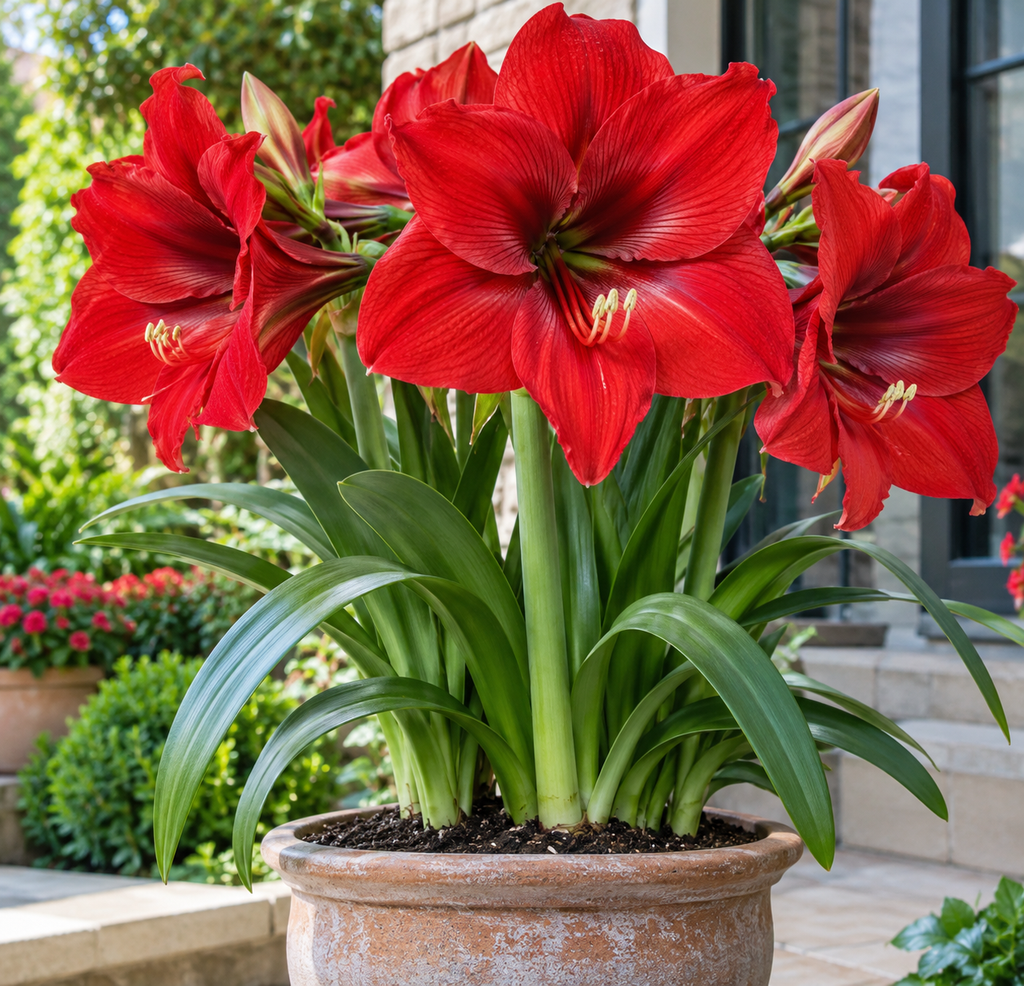
Red Lion is the standard that other reds get compared to: a bright, clear red with large, open, trumpet-shaped blooms, often four to a stalk. It is a dependable, widely available choice for beginners. The blooms are big enough to look good from across a room, and the red doesn’t lean orange or pink.
2. Royal Velvet
Royal Velvet is a deeper, darker red, sometimes described as almost burgundy, with a velvety look to the petals. It suits rooms with dark wood or muted walls, where a brighter red might look harsh. Dark flowers can disappear against a dark background, so position it in front of something lighter.
3. Minerva
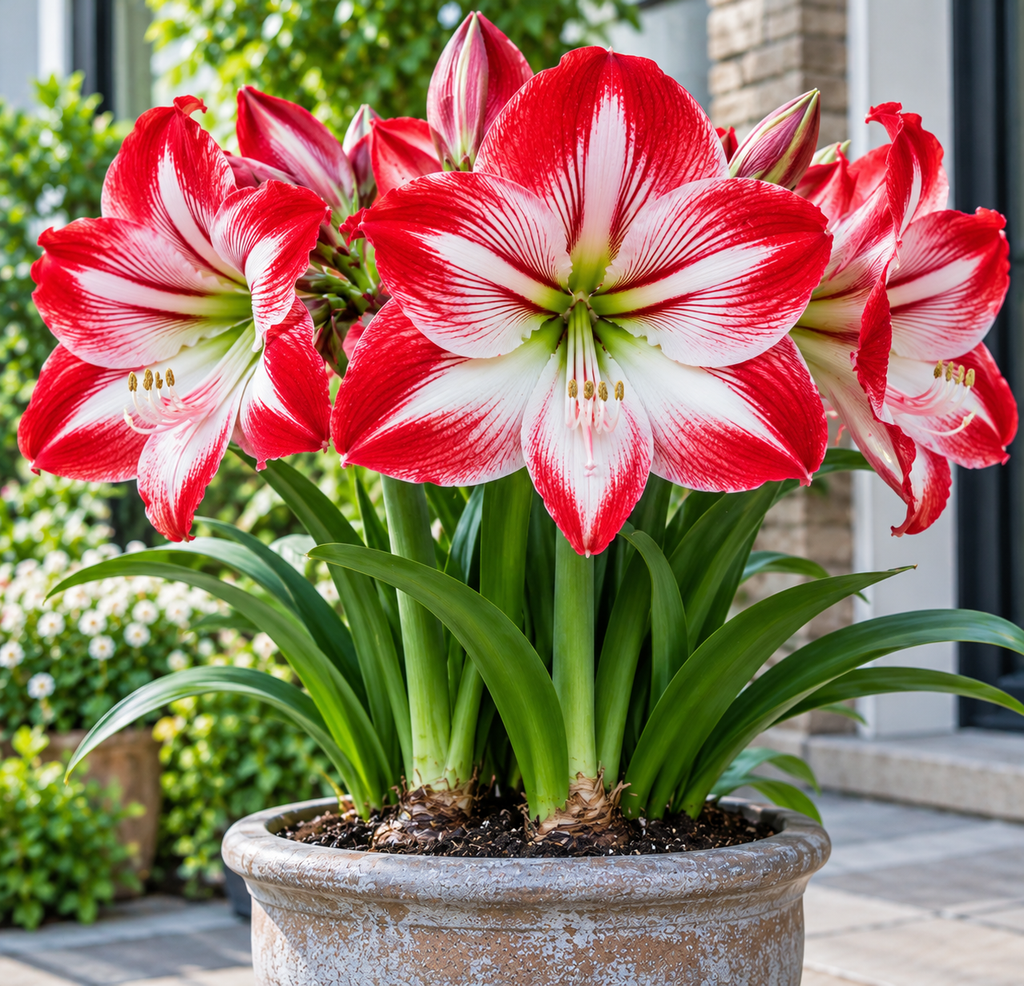
Minerva has red petals with a white star at the center of each bloom, which gives it a bicolor look from a distance and makes the flower look more detailed up close. Photos of this variety are common, and if you want a red with a bit more interest than a solid color, it is a good pick.
White Amaryllis Flowers
White blooms are easy to place with almost any decor. They also show every mark. Bruised or aging petals look worse on white than on a dark red.
4. Christmas Gift
Christmas Gift is a large white with very little other color, and it is the choice if you want a simple white. The petals are broad and the stalk is generally sturdy. In low light, white flowers read as pale gray, so a bright spot gives better results.
5. Matterhorn
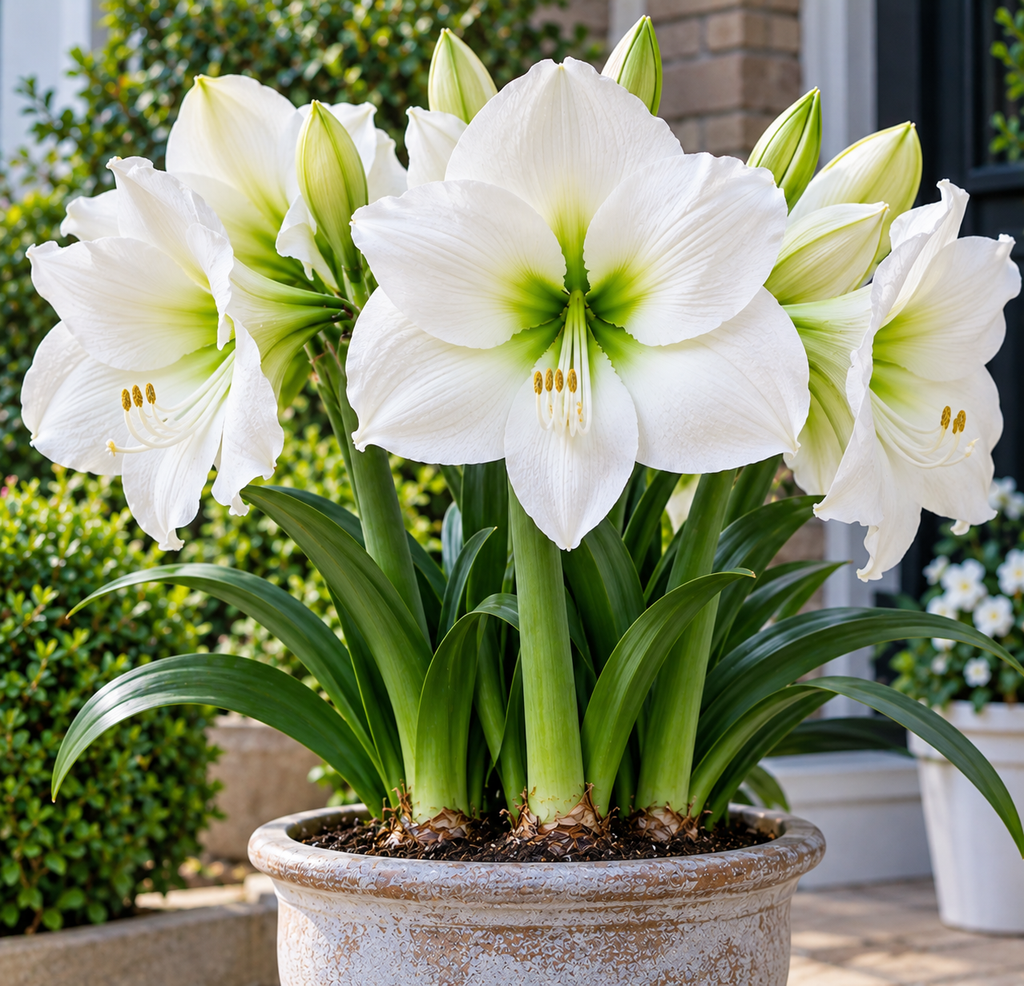
Matterhorn is white with a pale green throat, which gives a cool, fresh look. The green is subtle but makes the flower look less flat. Of the three whites here, it is the one that looks best next to greenery or a silver-toned container.
6. Alfresco
Alfresco is a white with a faint greenish-yellow cast near the center. Descriptions vary between suppliers, so compare photos before ordering if the exact shade matters to you. It is a softer, slightly more natural-looking white than a pure bright one.
Pink Amaryllis Flowers
Pink covers everything from nearly white to deep magenta. Descriptions are the least reliable here, because pink photographs inconsistently.
7. Apple Blossom
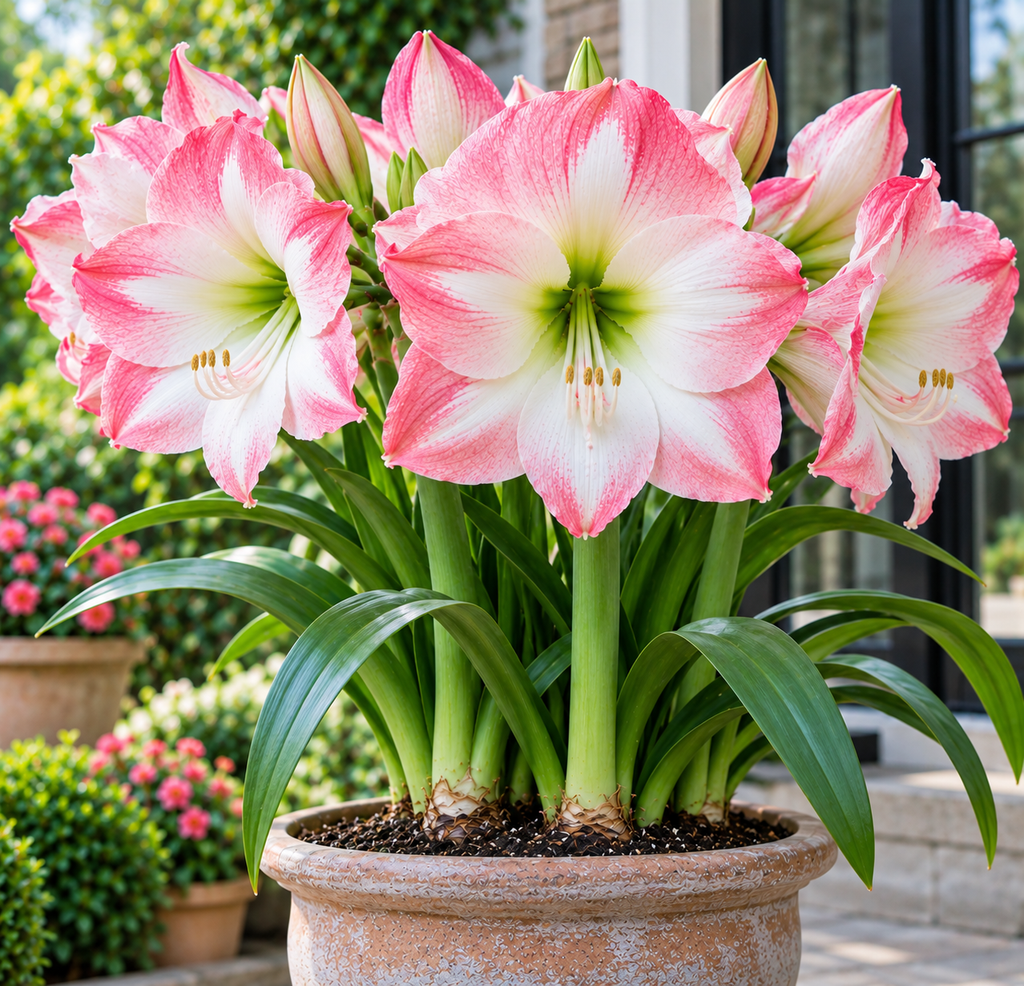
Apple Blossom is a pale pink and white blend, with deeper pink veining on the petals. The effect is delicate rather than bold. It is a good option if you want color without a strong statement, though the paler petals mark easily if they brush a wall or curtain.
8. Pink Floyd
Pink Floyd is a vivid, saturated pink with wide petals. It is a bold choice and tends to stand out against white walls and windowsills. Because the color is so strong, pair it with a plain container. A patterned pot competes with the flower.
9. Rilona
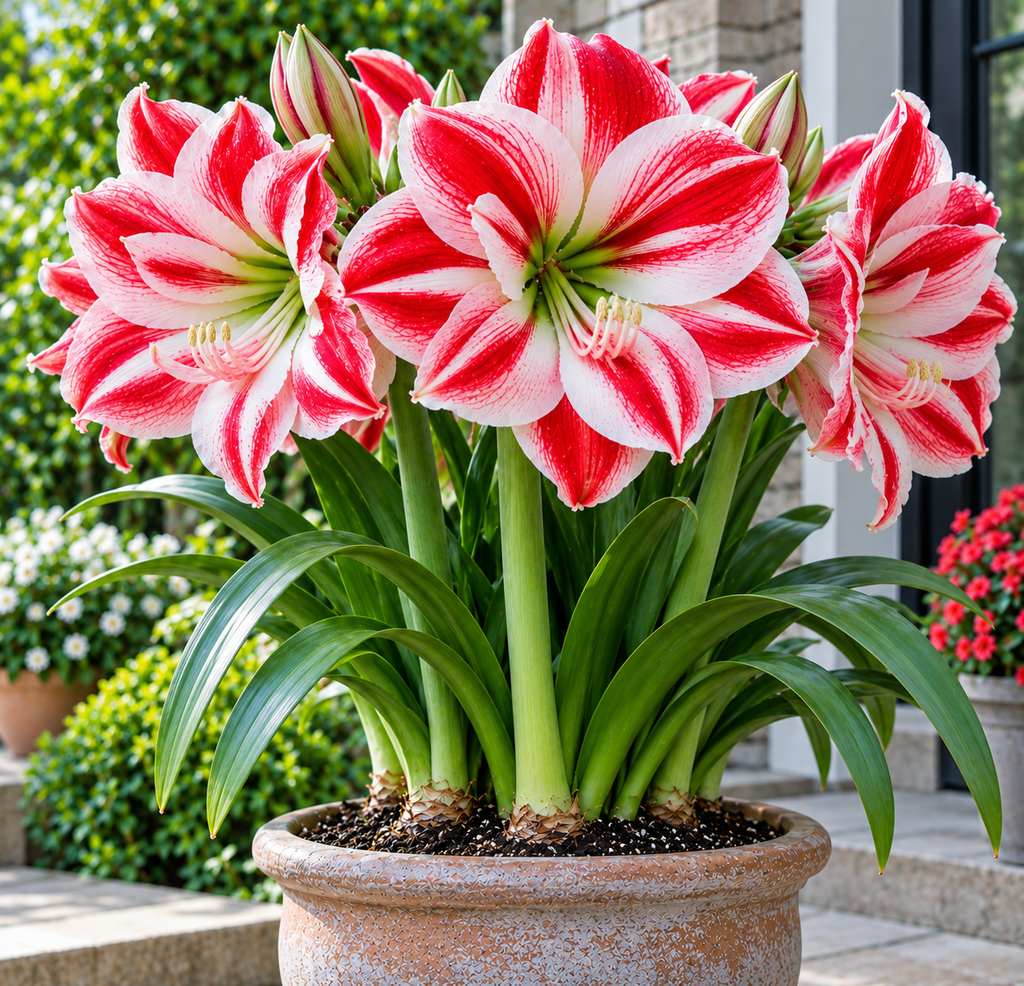
Rilona leans toward salmon or apricot-pink rather than a cool pink, and some growers list it with orange tones. If you pair flowers with warm-toned furnishings, it is a natural fit. It is also the variety most likely to look different from one photo to the next, so check images from more than one supplier.
Striped and Bicolor Amaryllis Flowers
Stripes and markings make a single bloom more interesting, which is useful when a plant is the only flowering thing in the room.
10. Splash
Splash has white petals marked with red stripes or splashes. The pattern varies from bulb to bulb, so no two blooms look quite the same. It looks festive without needing decorations. Because the markings are irregular, the plant looks best viewed up close.
11. Papilio (Butterfly Amaryllis)
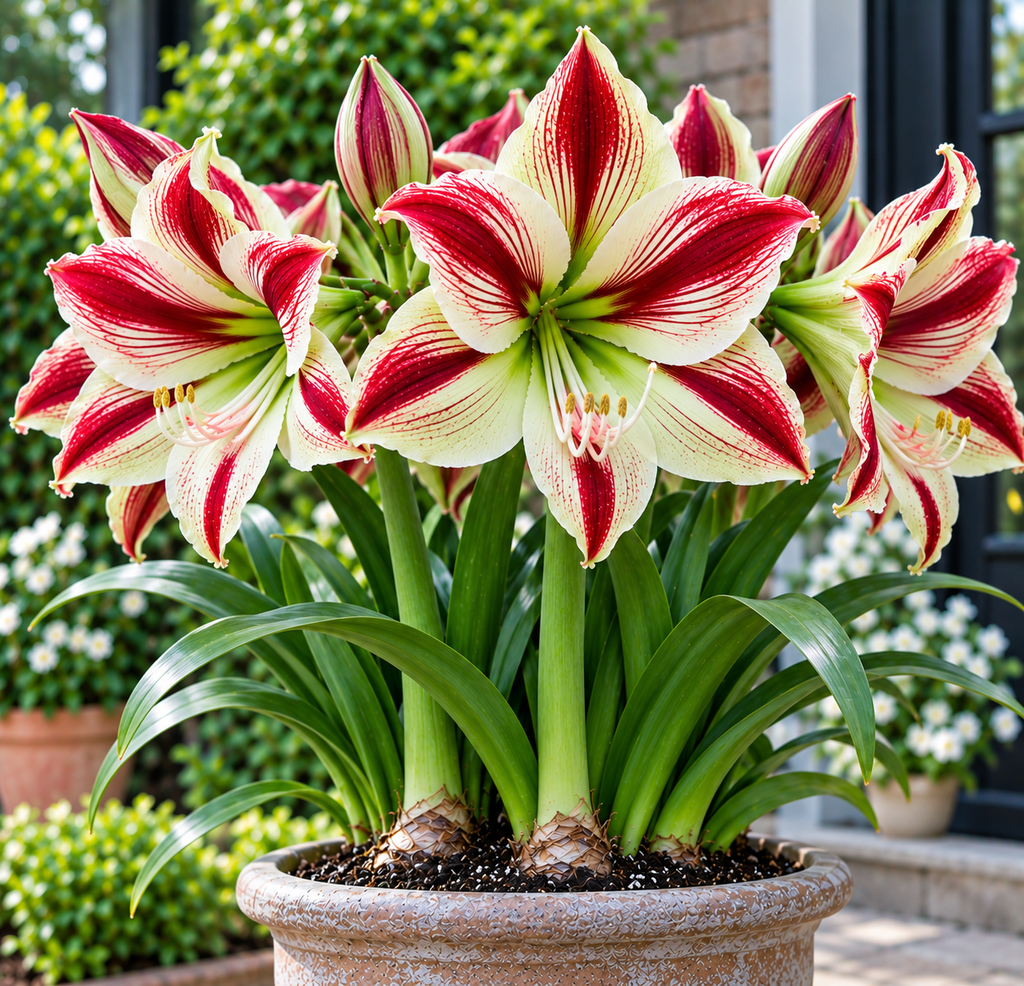
Papilio, often called the butterfly amaryllis, is a different kind of plant. The flowers are pale green-white with burgundy-maroon stripes and a more irregular, almost orchid-like shape than the large Dutch hybrids. The blooms are smaller than those of the standard types and the plant tends to be less showy at a distance. Growers often mention that it opens later in the season. It is a good choice for someone who finds the usual big trumpets too heavy-looking. Bulbs can be harder to find and often cost more, which may explain why it is less common.
Double-Flowered Amaryllis
Doubles have extra rows of petals, so each bloom looks fuller, closer to a peony or a camellia than a lily. The trade-off is weight. A stalk carrying several full blooms is top-heavy, so staking and a heavy pot are more important here than with singles.
12. Aphrodite
Aphrodite is a double with white petals streaked and edged in pink. The effect is soft and ruffled. Doubles like this tend to last a little longer in bloom than singles, though I’d treat that as a general tendency rather than a guarantee.
13. Red Peacock
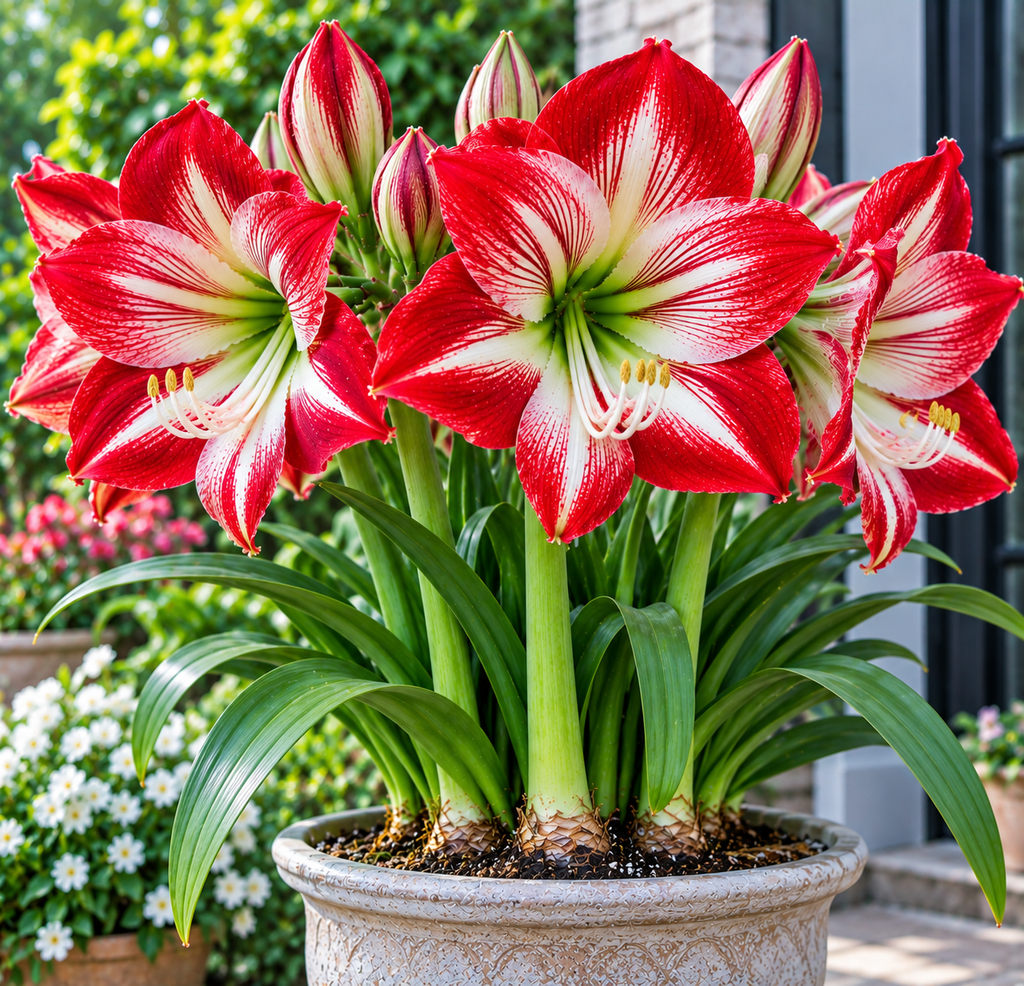
Red Peacock is a double in deep red with white feathering. It looks rich and heavy, and it is a strong pick if you want a red that looks different from the usual single trumpet. Because of the weight of the blooms, give it a sturdy stake from the beginning rather than waiting until it leans.
Miniature Amaryllis Varieties
Mini amaryllis have smaller bulbs and smaller flowers, often 3–4 inches across, and typically send up more stalks per bulb. They suit small windowsills and shelves, and a stalk is less likely to topple. They are also easier to fit into a mixed display.
14. Scarlet Baby
Scarlet Baby has small red flowers in a standard amaryllis shape, scaled down. Several stalks may appear from one bulb, which makes the display look fuller than the bulb’s size suggests. It is a good fit for a narrow sill where a full-size amaryllis would be awkward.
15. Evergreen
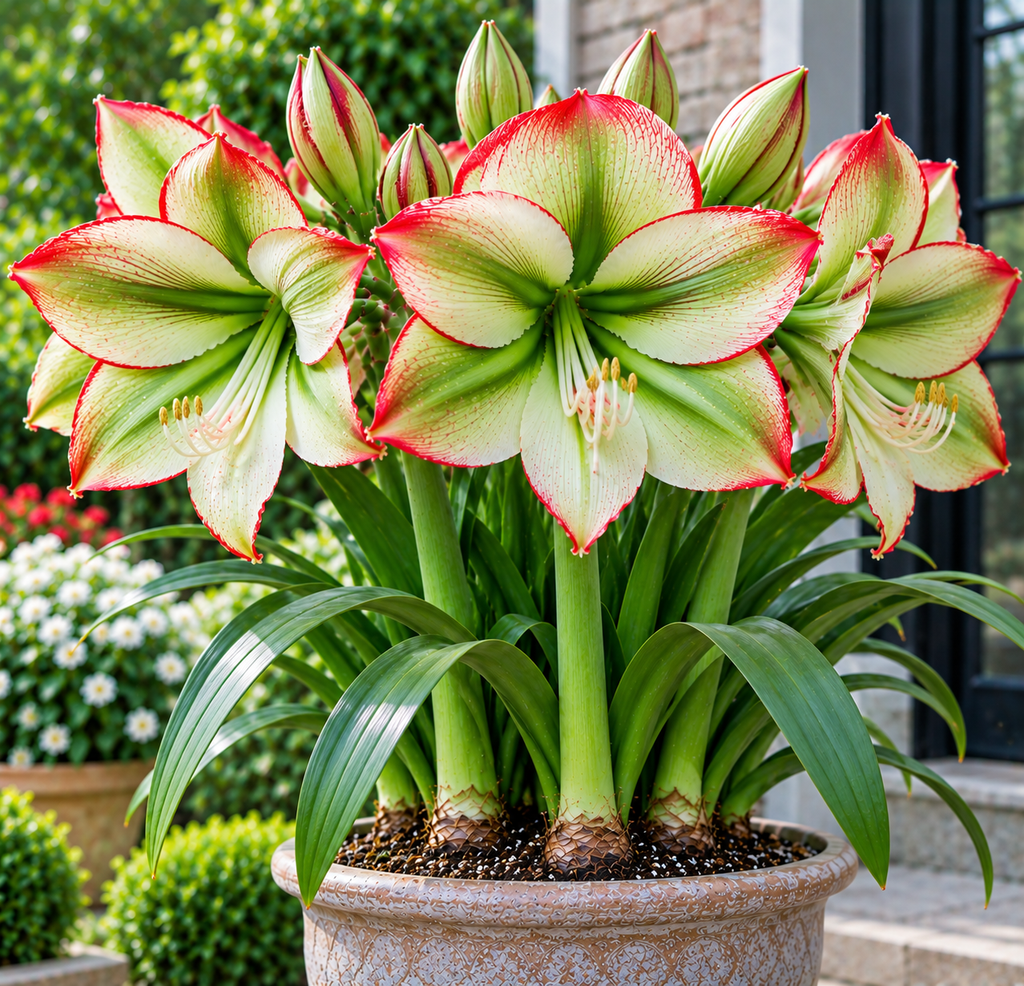
Evergreen is a miniature with green flowers and a slightly spidery shape. It is subtle and unusual, and it works well in arrangements that already include foliage. The color is more muted than other varieties, so it doesn’t deliver the holiday-red effect.
Staking and Supporting Tall Stalks
A stalk can reach two feet or more, and a few larger types go taller. The weight of three or four open blooms sits high above the pot, so a stalk that looks sturdy while growing can start to lean as the flowers open.
Insert a bamboo or metal stake into the pot early, before the stalk is tall, so you don’t spear the bulb or roots. Loop soft ties loosely around the stalk and stake. The stalk should be supported, not squeezed.
Slow, even growth also produces a sturdier stalk. A plant kept in a dim, very warm room tends to stretch and flop. A brighter, slightly cooler room tends to give a shorter, stronger stalk. Turning the pot regularly helps keep it straight.
Keeping Blooms Looking Good Longer
Once the flowers open, temperature has a large effect on how long they last. Moving the pot out of direct sun and into a cooler room, ideally not above the mid-60s°F, can extend bloom time. A warm room speeds everything up and shortens it.
Remove individual flowers as they fade, since that keeps the plant looking tidy. When all the flowers are finished, cut the stalk off about an inch above the bulb, but leave the leaves. They are what builds the next year’s bloom.
A Safety Note for Pets and Children
Amaryllis bulbs contain lycorine and related compounds. The ASPCA lists amaryllis as toxic to cats and dogs, with the bulb being the most concentrated part. Vomiting and drooling are typical signs, and larger amounts can cause worse symptoms. Place pots out of reach of pets, and consider whether a plant is a good idea in a home with a cat that chews on plants. If a pet has eaten any part of the plant, contact a veterinarian or a pet poison hotline promptly. Keep bulbs and plants away from small children too, and wash your hands after handling bulbs, since some people find the sap irritating.
How to Get Amaryllis to Rebloom
An amaryllis bulb is not a one-time flower. With the right care it can bloom again each year, sometimes for many years. Most failures at this stage come from skipping a step in the cycle, usually the rest period.
After the flowers fade
Cut the flower stalk down to about an inch above the bulb once it has finished. Keep the leaves, which are what restore the bulb’s energy after flowering. They may look floppy and untidy by late winter, but they are doing the work.
Feeding the bulb through spring and summer
Put the pot in the brightest place you have, ideally a sunny window, and keep watering so the soil doesn’t dry out completely. Feed regularly while the leaves are growing, using a balanced houseplant fertilizer diluted to label strength. Some growers prefer a fertilizer higher in potassium to support flowering, and either approach is common. Follow the product label rather than guessing amounts.
When nights are reliably warm and frost is past, you can move the pot outdoors to a spot with morning sun and afternoon shade. Gradually introduce it to brighter light over a week or so, since sudden strong sun can scorch the leaves. In warm climates, bulbs are sometimes planted in the ground, which works in mild zones. The exact hardiness range depends on the variety, and extension services typically put it in the milder zones, so check local advice before leaving a bulb outdoors in winter.
The rest period
By late summer, roughly August to September for flowers wanted around December, begin to stop watering and feeding. The leaves will yellow and wither. This is normal.
Once the leaves have died back, or before the first frost if the plant is outdoors, bring the pot into a cool, dark, dry place. A garage, basement or closet that stays around 50–55°F is a commonly recommended range. Leave the bulb for about 8–10 weeks. The bulb is dormant and needs no water during this time.
Cut off any dead foliage once it has dried out.
Waking the bulb up
After the rest, check the bulb. If it is firm and healthy, remove the top inch or two of old soil and replace it with fresh mix, or repot into fresh soil if the roots have filled the pot. Water lightly once, put it in a warm, bright place, and begin the cycle again. A flower stalk usually appears within a few weeks to two months, though timing varies.
If the bulb was rested a little earlier or later than the previous year, the bloom time shifts with it. Growers who want flowers by a certain date count back about 8–10 weeks of rest plus 6–8 weeks of growth.
When a bulb produces leaves but no flowers
Leaves without flowers is a common complaint, and a few causes show up repeatedly:
- No rest period. A bulb that stays green and watered all year may keep making leaves and skip flowering.
- Not enough light. Weak light means the leaves can’t store enough energy.
- Too little feeding. A bulb that was never fertilized has fewer reserves.
- Bulb too small or too young. A bulb that has lost mass after a previous bloom may need a full year of good growing before it flowers again.
- Pot too large. Excess room can favor leaf and root growth over flowers.
Fixing the cause usually means a full cycle of improved care and not expecting a change in the same season.
What happens with waxed bulbs
Waxed bulbs often don’t recover as well, because the bulb has been bloomed with its roots cut off. Peeling away the wax carefully and planting the bulb in soil gives it a chance, but results vary and some bulbs never rebloom. If your goal is a bulb you can keep for years, buy a bare bulb instead.
Two Questions Readers Often Ask
Can amaryllis grow in water instead of soil?
Yes, it can be forced in a vase of water with a few pebbles, with the base of the bulb just above the water line and only the roots touching it. If the bulb itself sits in water, it can rot. Water-grown bulbs generally bloom, but the plant often has less stored energy afterward, so rebloom is less reliable than with a soil-grown bulb.
Is it too late to plant a bulb after Christmas?
No. Bulbs planted in January or February will usually bloom later in winter or early spring, and they can still be kept and reblooming afterward. A late-planted bulb simply shifts the whole cycle later in the year. A bulb that has sat in storage for a long time might have lost vigor, so inspect it first.
Key Takeaways
Choose varieties by form as well as color. Singles and minis are forgiving in small pots. Doubles and tall types need a heavy container and an early stake. Plant with the top third to half of the bulb above the soil, water lightly until growth starts, and use a pot only slightly wider than the bulb.
If you want flowers again next year, keep the leaves after blooming, feed through spring and summer, and give the bulb a dry, cool rest of 8–10 weeks. Skipping the rest is the most common reason a bulb fails to flower a second time. Keep pots away from cats, dogs and children.

About Syprose Kiche
Syprose Kiche is the creator and writer behind My Besuited Home, a practical home and garden website covering DIY projects, gardening, lawn care, landscaping, home improvement, and outdoor living. She focuses on turning everyday homeowner questions into clear, practical guides backed by careful research and useful real-world considerations.