
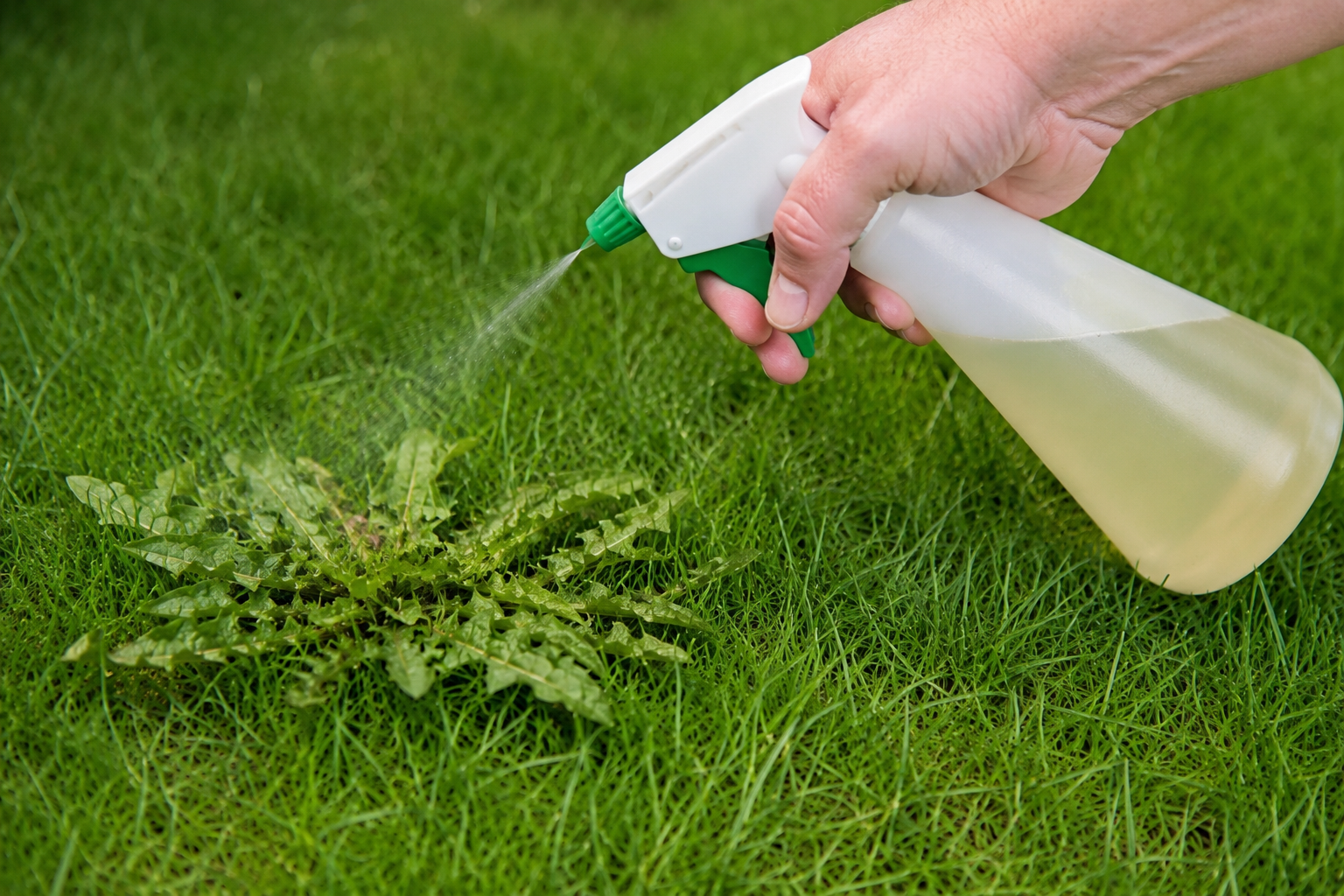
Somewhere between the vinegar bottle in the pantry and the herbicide aisle at the garden center, most homeowners hit the same wall: the internet insists vinegar is a miracle weed killer, yet the dandelions in the front lawn keep coming back within two weeks. Meanwhile, the commercial spray promises to kill “everything, roots and all,” but the label is covered in warnings that make it feel like overkill for a few weeds along the driveway. Neither claim is entirely honest, and the confusion usually comes down to one detail nobody explains clearly: vinegar and commercial herbicides don’t fail or succeed for the same reasons, because they don’t actually do the same job.
What Vinegar Actually Does to a Weed
Household vinegar is roughly 5% acetic acid. That’s the active ingredient, and it works by drawing moisture out of plant cells on contact, essentially burning the leaf tissue it touches. Within a few hours on a sunny day, treated leaves start to look scorched, brown, and wilted.
That’s the whole mechanism. Acetic acid doesn’t move through the plant’s vascular system, and it doesn’t travel down into the roots. It stops at whatever tissue it lands on. This is why vinegar is classified as a contact herbicide rather than a systemic one, and it’s the single most important fact for understanding everything else about how it performs.
How Commercial Herbicides Work Differently
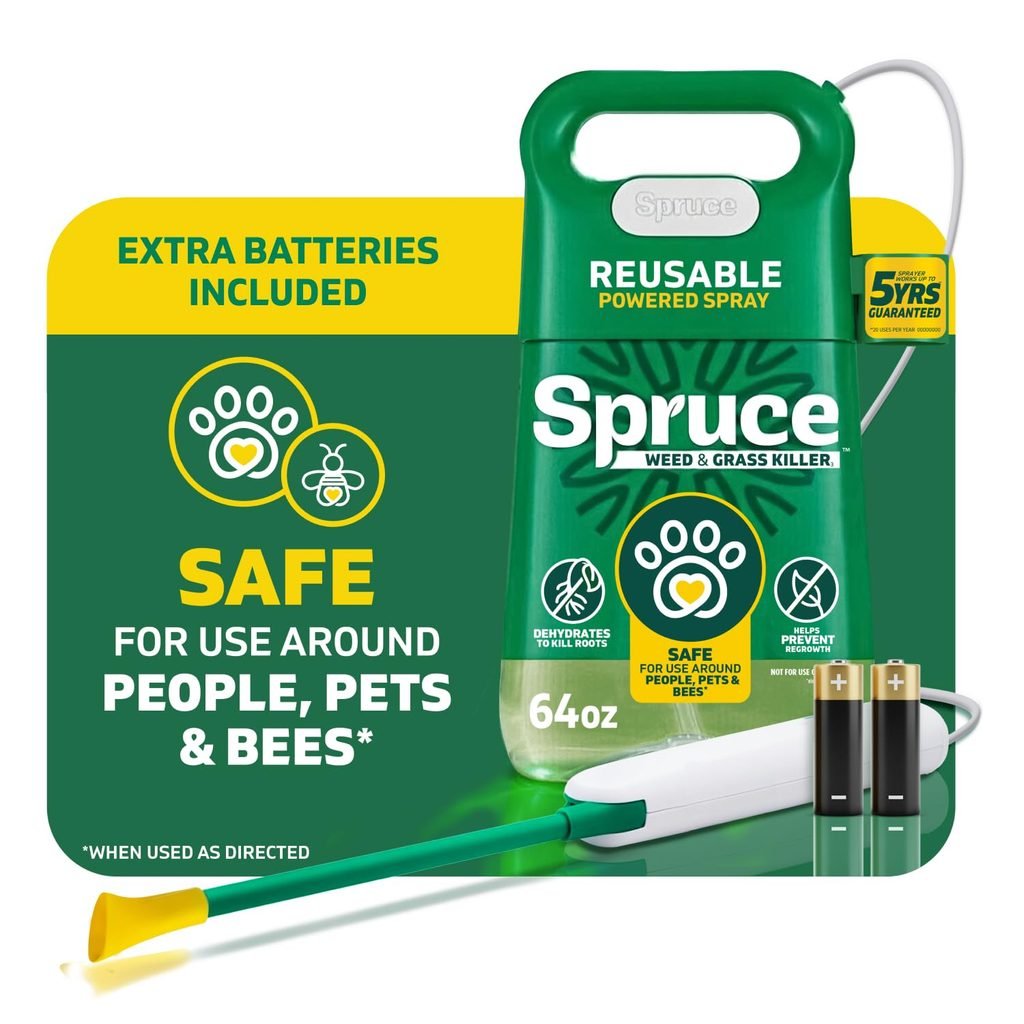
Most commercial weed killers sold for lawns and gardens fall into one of two categories: contact herbicides, which work similarly to vinegar by damaging the tissue they touch, and systemic herbicides, which are absorbed by the leaf and transported through the plant’s internal circulation down into the root system.
Glyphosate-based products (sold under names like Roundup) are the most common systemic option available to home gardeners. Because the herbicide travels internally, it can shut down a plant’s ability to photosynthesize at the cellular level, eventually killing the roots along with the visible growth. This is the mechanism that lets a systemic herbicide finish off a dandelion’s taproot or bindweed’s underground runners, tasks a contact-only product simply isn’t built to do.
Selective broadleaf herbicides, often sold as lawn weed-and-feed products, work on a related principle but target specific plant hormone pathways found in broadleaf weeds like clover and dandelions while leaving grass largely unaffected. That selectivity is something no vinegar formulation can replicate, since acetic acid damages whatever green tissue it contacts, turf included.
Why Vinegar Works Well on Some Weeds and Poorly on Others
The distinction between annual and perennial weeds explains most of the disappointment people report with vinegar.
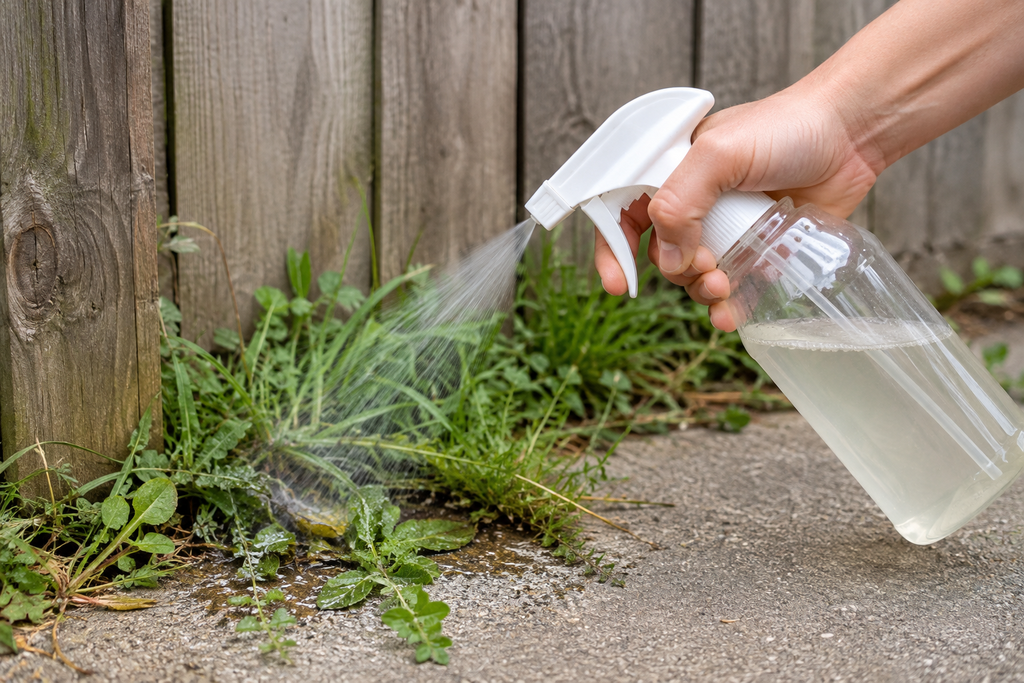
Annual weeds — crabgrass, chickweed, annual bluegrass, many broadleaf seedlings — germinate, grow, seed, and die within a single season. They have shallow, unremarkable root systems because they were never built to survive winter dormancy. When vinegar burns off the top growth of a young annual weed before it has developed much of a root reserve, there’s often nothing left capable of regrowing. In that scenario, vinegar can look every bit as effective as a commercial product, sometimes within a single afternoon.
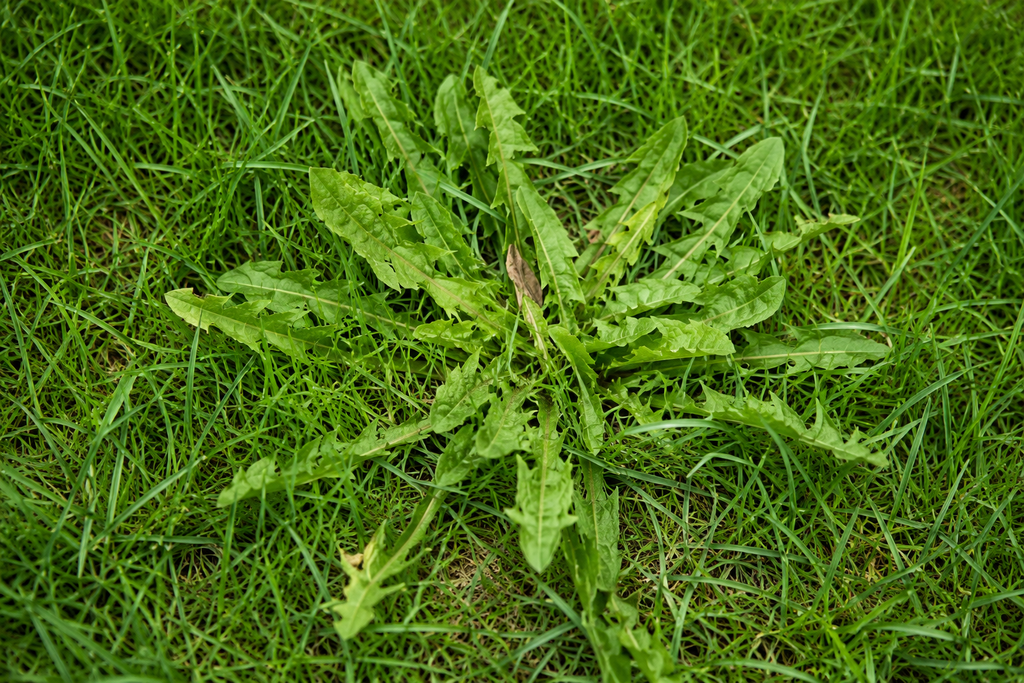
Perennial weeds tell a different story. Dandelions store energy in a long taproot that can extend eight to ten inches or more into the soil. Bindweed and Canada thistle spread through underground rhizomes that can run several feet horizontally, well beyond where any spray would land. Burn off the leaves of one of these plants with vinegar, and the root system below simply pushes up new growth within a week or two, often looking a little sunburned but otherwise undeterred. This is the exact complaint behind most “vinegar didn’t work” reviews online — the vinegar did exactly what contact herbicides do. The plant just wasn’t the kind of weed a contact herbicide can eliminate.
The Concentration Problem Nobody Mentions on Pinterest
A lot of the vinegar advice circulating online treats “vinegar” as a single, interchangeable product, but concentration changes the outcome substantially.
Standard white household vinegar sits at around 5% acetic acid. Horticultural vinegar, sold specifically for weed control, typically ranges from 20% to 30% acetic acid — four to six times stronger. That difference matters. Household-strength vinegar tends to scorch leaf surfaces without doing enough cellular damage to prevent regrowth on anything beyond very young seedlings. Horticultural-strength vinegar causes a much more thorough burn and is closer to what people picture when they imagine vinegar “killing” a weed.
The tradeoff is that horticultural vinegar is also considerably more hazardous to handle. At 20–30% concentration, acetic acid can cause chemical burns to skin and eyes on contact, and the fumes are far more irritating than a kitchen bottle. Gloves, eye protection, and good ventilation aren’t optional at that strength, and it should be kept well away from children and pets during application. Some state and local regulations also treat higher-concentration acetic acid products differently from household vinegar for sale and use, so checking local rules before buying a concentrated product is worth the five minutes it takes.
Weather Conditions Change the Outcome More Than the Product Does
Acetic acid needs direct sun and warmth to work well. It degrades plant cell membranes faster in temperatures above roughly 75°F (24°C), and full sun accelerates the wilting and browning process within hours. Spray the same weed on an overcast, 55-degree day and the leaf damage will be slower and less complete, regardless of concentration.
Rain is the other major variable. Vinegar needs to stay on the leaf surface long enough to do its damage — generally a few hours of dry weather after application. Rain within that window washes it off before it has finished working, and the treatment essentially has to be redone.
Commercial systemic herbicides are somewhat less weather-dependent because they’re absorbed into the plant rather than simply sitting on the surface, though most labels still recommend avoiding application before rain and skipping cold, wet, or overly windy days. Wind is a shared concern for both vinegar and commercial sprays, since drift can damage nearby plants that were never the target.
Where Vinegar Genuinely Outperforms Expectations
There’s a category of weed control where vinegar isn’t a compromise choice — it’s arguably the more sensible one.
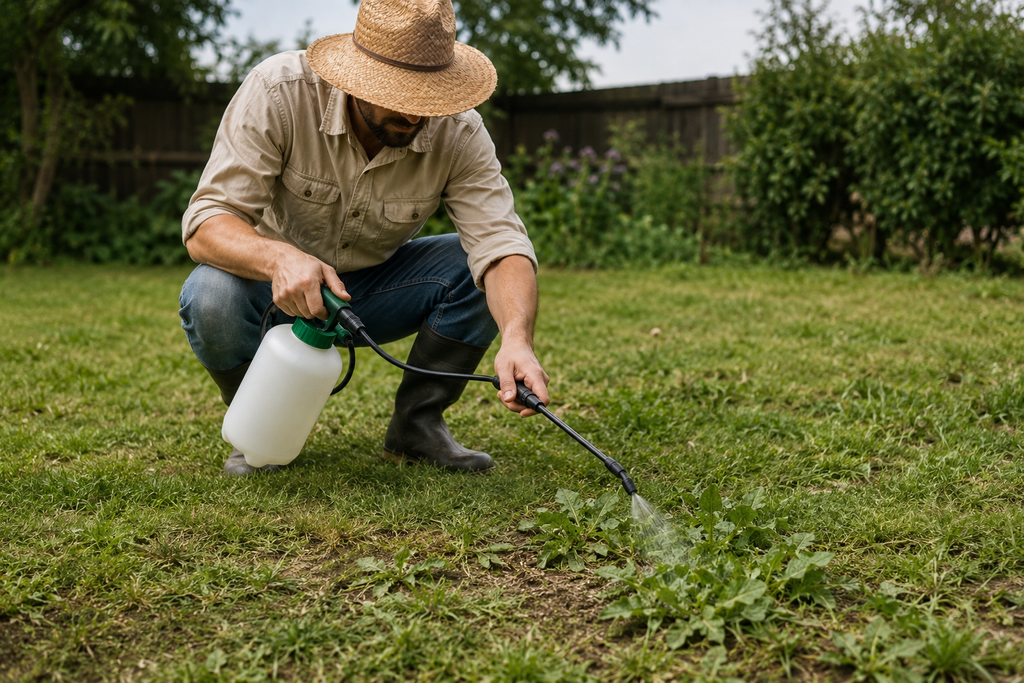
- Cracks in driveways, sidewalks, and patios. Weeds growing in pavement joints are almost always annuals with minimal root systems, since there’s rarely enough soil depth for a taproot to establish. A vinegar spray applied directly, ideally horticultural strength, on a hot, sunny day will typically finish these off within a day or two, and there’s no soil biology to worry about disrupting in a crack of pavement.
- Areas where any herbicide residue is a concern. Around vegetable garden borders, near wellheads, or in spaces where children and pets play immediately after treatment, vinegar’s shorter environmental persistence and lack of systemic movement make it a lower-risk option, provided the concentration used is handled and applied according to safety guidance.
- Spot treatment of young weed seedlings across a lawn or bed. Caught early, before a perennial weed has built up root reserves, a vinegar treatment can prevent it from ever becoming an established problem, avoiding the need for a stronger product later.
Where Vinegar Falls Short, Even When Used Correctly
- Established perennial lawn weeds. Dandelions, plantain, and clover with mature root systems will very likely return after a vinegar treatment. This isn’t a sign of doing it wrong — it’s the expected outcome of using a contact-only herbicide on a plant with underground energy reserves.
- Woody or vining perennials. Poison ivy, Japanese knotweed, brambles, and similar plants have extensive root or rhizome systems that a surface burn does nothing to address. These typically require a systemic herbicide, repeated cutting and treatment over a season or more, or professional removal, particularly for poison ivy, where even dead plant material can cause a skin reaction.
- Large areas of turfgrass weeds. Because vinegar damages any green tissue it touches, using it across a lawn interspersed with grass will damage the grass along with the weeds. Selective broadleaf herbicides exist specifically to avoid this problem, something no vinegar-based approach can do.
- Weeds growing through mulch or landscape fabric. Vinegar treats what’s above ground. If the underlying issue is a landscape fabric that’s degraded or mulch that’s too thin to block light, new weeds will keep emerging regardless of what kills the current batch.
The Vinegar-Dish-Soap-Salt Recipe, and Why It’s Not as Simple as It Sounds
A popular homemade mixture calls for combining vinegar with a small amount of dish soap and sometimes table salt, and it does produce a more dramatic result than vinegar alone. The dish soap acts as a surfactant, breaking the surface tension on a waxy leaf so the acetic acid spreads across it and clings instead of beading up and running off — this alone noticeably improves how well plain vinegar performs, since a lot of vinegar’s inconsistent results trace back to poor leaf contact rather than the acid failing to work.
Salt is where the recipe gets more complicated. Sodium chloride does kill plant tissue and can persist in soil for a long time, since unlike acetic acid it doesn’t break down quickly. Repeated use of a salt-vinegar mixture on the same patch of ground can leave soil too saline to support plant growth for a season or more afterward, including whatever the homeowner intended to plant there next. For a gravel driveway or a crack between patio stones where nothing is meant to grow anyway, that’s a non-issue. For a garden bed, a lawn edge, or anywhere soil health matters going forward, it’s a real risk that a lot of the recipes circulating online don’t mention. Dish soap alone, without the salt, gets most of the benefit with far less long-term downside.
How Much to Apply and What Coverage Actually Looks Like
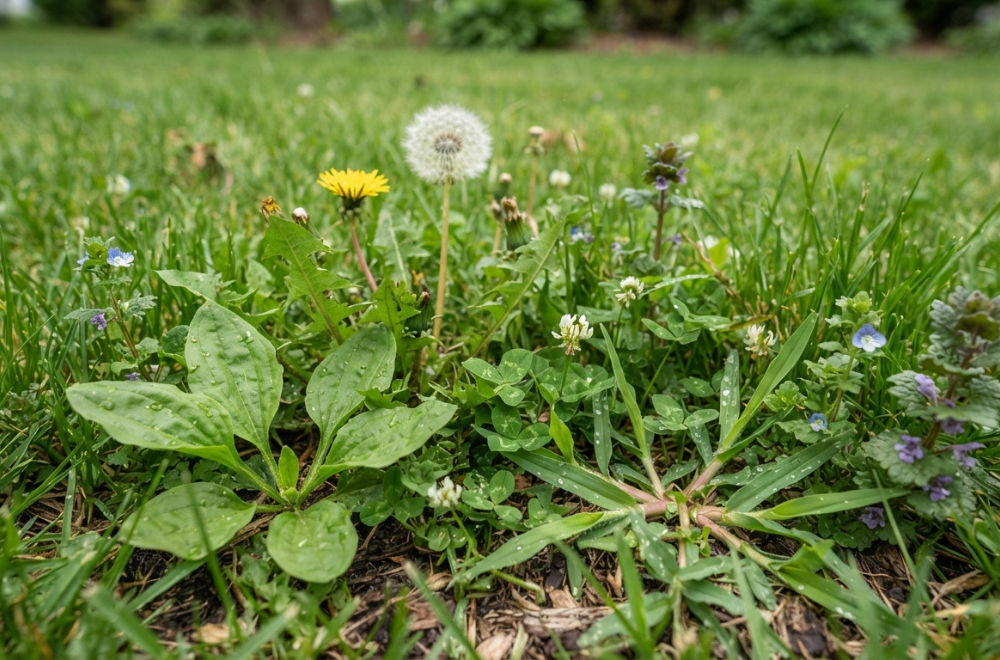
A common mistake with vinegar treatments is under-spraying, using a light mist that dampens the leaf surface without truly saturating it. Acetic acid needs enough contact time and volume to break down the leaf’s cell walls, and a quick spritz often just isn’t enough to do that, especially on a plant with any wax coating on its leaves, like many broadleaf weeds have.
Effective application generally means fully wetting the leaves until they’re visibly dripping, targeting the plant in the early morning after dew has dried but before the heat of the day sets in, since this gives the acid time to work during the hottest, sunniest part of the afternoon. A pump garden sprayer designed for herbicides gives more control than a spray bottle for anything beyond a handful of weeds, and using a dedicated sprayer that has never held a different chemical avoids any risk of unintended residue mixing with a future application.
Commercial herbicide labels specify exact dilution ratios and application rates for a reason — using more than the labeled amount doesn’t kill weeds faster or more thoroughly, and can increase the risk of runoff, harm to non-target plants, or a longer-than-necessary wait before an area is safe for pets and children. Following the label rate is not a conservative suggestion; for most products it’s also a legal requirement tied to the product’s registration.
Seasonal Timing Changes What Either Product Can Accomplish
Early spring, when weed seedlings are just emerging and perennial weeds are drawing energy up from the roots to fuel new growth, tends to be an effective window for both approaches. Contact herbicides like vinegar catch annuals before they’ve built up any reserves, and systemic herbicides applied to actively growing perennial foliage get pulled downward into the roots along with the plant’s own nutrients, since the plant is in an uptake phase rather than a storage phase.
Late summer and early fall bring a second useful window for perennial weeds specifically. As days shorten, many perennials shift into storing energy in their roots to survive winter, and a systemic herbicide applied during this period gets carried down into that same storage tissue especially efficiently. This is one reason fall is often recommended as prime time for treating dandelions and similar lawn weeds with a systemic product, even though it feels counterintuitive to spray weeds as the growing season winds down.
Vinegar loses effectiveness once temperatures drop consistently below the mid-60s Fahrenheit, since the plant’s own metabolic processes slow down along with the weather, and there’s simply less biological reaction happening in the leaf tissue regardless of how much acid lands on it. A vinegar treatment attempted in late fall or on a cool, overcast day is likely to underperform compared to the same treatment done in July.
A Quick Reference for Common Weeds
- Crabgrass and other annual grasses — Vinegar can work well if caught before seed drop; a pre-emergent herbicide applied in early spring is often more effective for preventing the problem in the first place, since it stops germination rather than treating an already-visible plant.
- Dandelions — Vinegar burns the leaves but rarely kills the taproot; a systemic broadleaf herbicide or careful hand-digging that removes the crown is more reliable for full removal.
- Clover — Often tolerated by choice in some lawns, but where it’s unwanted, a selective broadleaf herbicide avoids damaging surrounding grass in a way vinegar cannot.
- Chickweed — A shallow-rooted annual that responds well to vinegar, particularly when young.
- Bindweed — A persistent perennial with extensive underground rhizomes; vinegar has essentially no lasting effect, and even systemic herbicides often require repeated applications over more than one season.
- Poison ivy — Best handled with a systemic herbicide labeled for woody or vining plants, or professional removal; vinegar won’t kill the root system, and disturbing the plant without protection risks skin contact with urushiol, the oil responsible for the allergic reaction.
- Moss (technically not a weed, but a frequent lawn frustration) — Neither vinegar nor typical herbicides address moss well on their own, since moss thrives in conditions — shade, compaction, poor drainage — that herbicide doesn’t change; the more effective fix usually involves improving those underlying conditions.
A Practical Way to Decide Between Them
Rather than treating this as a permanent choice between two camps, it helps to run through a short set of questions before spraying anything:
Is the weed an annual or a perennial with a taproot or rhizome system? Annual and pavement-crack weeds are usually fine with vinegar. Perennial lawn and garden weeds usually need something systemic.
Is the target growing among desirable plants or turf you want to keep? If so, either a very targeted spot application or a selective herbicide designed not to harm grass is the more sensible route, since neither plain vinegar nor a non-selective commercial product distinguishes between wanted and unwanted plants.
Is there a time constraint? Vinegar shows visible results within hours to a day, which is useful for a quick cosmetic fix before guests arrive. It’s not the same as the weed being permanently gone — a systemic product usually needs one to two weeks to show its full effect below ground but is more likely to prevent regrowth.
Are there children, pets, edible plants, or water sources nearby? Both categories carry precautions, but vinegar’s lack of soil residue and shorter persistence tend to make it the lower-risk option for sensitive areas, provided it’s used at a safe concentration and kept away from anyone during application and drying.
Cost, in Practical Terms
Household vinegar is inexpensive and already sitting in most kitchens, making it effectively free for casual, small-scale use. Horticultural-strength vinegar products cost more per bottle than household vinegar but are still generally comparable to or cheaper than name-brand commercial herbicides on a per-application basis for small areas.
Commercial herbicide concentrates, especially glyphosate products bought as concentrate and diluted at home, tend to cost less per square foot of coverage for larger areas like a whole lawn or an overgrown garden bed, since a single bottle of concentrate can treat far more ground than an equivalent volume of vinegar. For a few weeds in a walkway, the cost difference barely registers. For an acre of neglected yard, it adds up.
Environmental and Safety Considerations for Each
Acetic acid breaks down relatively quickly in soil and doesn’t persist or accumulate the way some systemic herbicides can, which is one reason it’s often marketed as the “natural” or “eco-friendly” option. That said, “natural” doesn’t mean harmless. Concentrated acetic acid is corrosive, can injure soil organisms and earthworms in the immediate treatment area with repeated heavy use, and will damage any plant, not just weeds, that it contacts. Repeated heavy application to the same soil over time can also temporarily lower soil pH, which is worth considering near beds where acid-sensitive plants are growing.
Glyphosate and other systemic herbicides have been the subject of extensive scientific review and ongoing public debate regarding long-term health and environmental effects; regulatory agencies in different countries have reached different conclusions on cancer risk classification, and this remains a genuinely contested area rather than a settled one. What’s well established is that any commercial herbicide should be used strictly according to label instructions, which include guidance on application rates, protective equipment, keeping children and pets off treated areas until dry, and avoiding application near open water or storm drains, since runoff can affect aquatic environments. Selective broadleaf herbicides carry their own set of precautions, including restrictions near certain trees and shrubs sensitive to the active ingredients.
For anyone gardening organically or maintaining an official organic certification, it’s worth noting that horticultural vinegar is generally accepted for organic use, while synthetic herbicides like glyphosate typically are not — a distinction that matters more to some households than others.
What “Natural” Actually Means Here, and Where the Marketing Oversimplifies
Vinegar’s reputation as the safe, natural alternative isn’t wrong, exactly, but it flattens a more complicated picture. Acetic acid is a naturally occurring compound, and it does break down in soil faster than most synthetic herbicide active ingredients. That’s a genuine environmental advantage in situations involving repeated, small-scale use.
But “occurs in nature” and “safe in any concentration” are different claims. At horticultural strength, acetic acid is corrosive enough to cause real skin and eye injury, and the EPA classifies concentrated acetic acid products with the same kind of hazard labeling used for other corrosive substances — a detail that undercuts the idea that reaching for vinegar is automatically the gentler choice. It’s gentler in some specific ways: less persistence in soil, no systemic movement into groundwater, generally lower toxicity to wildlife that might wander through a treated area later. It’s not gentler in the sense of being harmless to handle or incapable of causing injury.
The more accurate framing is that vinegar and commercial herbicides carry different kinds of risk rather than different amounts of risk. Vinegar’s hazard is concentrated in the moment of application — corrosive to skin and eyes on contact — and largely resolved once it’s dried and settled into the soil. A systemic commercial herbicide’s hazard profile is more spread out over time and includes questions about longer-term environmental persistence and, in the case of glyphosate specifically, an active and unresolved public health debate. Neither profile is simply “worse.” They’re just different tradeoffs, and which one a household is more comfortable with is a reasonable thing to weigh rather than a question with one correct answer.
Other Non-Chemical Options Worth Knowing About
Vinegar isn’t the only non-synthetic method available, and it’s worth knowing where it fits relative to the alternatives, since a reader trying to avoid commercial herbicides entirely has more than one tool available.
- Boiling water, poured directly onto a weed’s crown, works through heat rather than acidity, scalding plant cells on contact. It’s effective on the same category of shallow-rooted annuals and pavement weeds that vinegar handles well, and it has the advantage of leaving no chemical residue at all. The tradeoff is precision and safety around carrying boiling water outdoors, plus the same root-survival limitation vinegar has on perennials.
- Flame weeding, using a propane torch designed for the purpose, works similarly to vinegar and boiling water in that it damages surface tissue without reaching the roots. It’s most useful on hardscaping and gravel paths, and carries an obvious fire-safety consideration that makes it unsuitable in dry conditions or near mulch, dry grass, or wooden structures.
- Manual removal, particularly with a tool that can reach beneath the crown, remains one of the few non-chemical methods capable of removing a perennial weed’s root system in a single pass, provided enough of the taproot comes out. Soil moisture matters a great deal here — a taproot in loose, damp soil after rain comes out far more completely than the same root in dry, compacted ground.
- Corn gluten meal, applied as a pre-emergent in early spring, prevents weed seeds from developing roots after germination. It doesn’t affect already-established weeds and works on a completely different principle than vinegar, herbicide, or the physical methods above, making it a reasonable addition to a lawn care routine rather than a stand-alone solution.
None of these replace a systemic herbicide’s ability to kill an established perennial’s root system, but they round out the toolkit for gardeners trying to minimize synthetic chemical use across a property.
Mistakes That Undercut Either Method
- Spraying vinegar and expecting root death. This is the single most common source of disappointment, and it comes from a misunderstanding of what a contact herbicide can do rather than a flaw in the product itself.
- Using household-strength vinegar and expecting horticultural-strength results. The gap in acetic acid concentration between a 5% kitchen bottle and a 20–30% horticultural product is large enough that outcomes genuinely differ, not just in degree but sometimes in whether the plant dies back at all versus just wilting temporarily.
- Applying either product right before rain. Both vinegar and many commercial herbicides need a dry window after application to work properly. Checking the forecast first saves a wasted treatment.
- Spraying on a windy day. Drift from either vinegar or commercial herbicide can damage nearby desirable plants, and with concentrated vinegar in particular, drift onto skin or into eyes is a real hazard.
- Treating a large weed instead of catching it young. Both methods generally perform better on younger growth. A mature, deep-rooted dandelion is a harder target for anything short of repeated systemic treatment or manual digging out the crown and taproot together.
- Ignoring the underlying cause. Weeds tend to colonize bare soil, compacted ground, thin turf, or degraded mulch. Killing the current crop without addressing why the space was hospitable to weeds in the first place usually means a new batch within a season.
When It Makes Sense to Combine Approaches
For a lot of home landscapes, the realistic answer isn’t “vinegar or commercial herbicide” but “vinegar for some situations, a targeted commercial product for others.” A reasonable working approach: use vinegar for pavement cracks, gravel paths, and quick spot treatment of young annual weeds, and reserve a selective or systemic commercial product for established perennial weeds in the lawn or for larger infestations of aggressive spreaders like bindweed or thistle. Hand-pulling still has a role too, particularly right after rain when soil is loose enough that a dandelion’s taproot can come out largely intact.
When Professional Help Is Worth Considering
A lawn or garden care professional is generally worth calling when a weed problem covers a large area and has been established for more than a season, when the weeds involved are aggressive spreaders like Japanese knotweed (which in some regions has specific disposal regulations due to how easily it regenerates from fragments), when poison ivy or another skin-irritating plant needs removal, or when herbicide application near a well, pond, or other water source requires expertise in avoiding runoff and contamination. Professionals also have access to commercial-grade products and application equipment not sold for home use, which can be the difference between one treatment and several repeated attempts.
Frequently Asked Questions
Does vinegar kill weed roots or just the visible plant? Household and horticultural vinegar both work on contact and don’t move down into the root system. On annual weeds with minimal roots, this can still amount to killing the whole plant. On perennial weeds with taproots or rhizomes, the roots typically survive and send up new growth.
Is horticultural vinegar the same as the vinegar in a kitchen cupboard? No. Kitchen vinegar is about 5% acetic acid, while horticultural vinegar is typically 20–30%. The higher concentration causes more thorough leaf damage but also requires more careful handling, including gloves and eye protection.
How long does it take to see results from vinegar versus a commercial herbicide? Vinegar typically shows visible wilting and browning within hours on a warm, sunny day. Systemic commercial herbicides usually take one to two weeks to show their full effect, since the plant has to absorb and transport the chemical internally before the roots are affected.
Can vinegar be used safely around vegetable gardens? Household-strength vinegar is generally considered lower-risk near edible plants than many synthetic herbicides, and horticultural vinegar is commonly accepted for organic gardening, but direct contact with edible plant leaves should still be avoided, and any product should be kept away from produce that’s close to harvest.
Why did the weeds come back a few weeks after I sprayed vinegar? This is usually a sign the weed was a perennial with an intact root system below the treated area, rather than a failure of the vinegar itself. Regrowth in this situation typically means a systemic herbicide, repeated treatment, or manual root removal is needed.
The Realistic Takeaway
Vinegar and commercial herbicide aren’t competing for the same job, even though they’re marketed as if they are. Vinegar is a fast, low-residue option for young annual weeds and cracks in hardscaping, and it earns its reputation in those situations. It isn’t built to finish off a dandelion’s taproot or a patch of established bindweed, and no amount of reapplication changes that, since the limitation is mechanical, not a matter of trying harder. The more useful question isn’t which product wins overall, but which weed is actually being dealt with — and matching the method to that answer is what determines whether the problem is solved or just temporarily out of sight.

About Syprose Kiche
Syprose Kiche is the creator and writer behind My Besuited Home, a practical home and garden website covering DIY projects, gardening, lawn care, landscaping, home improvement, and outdoor living. She focuses on turning everyday homeowner questions into clear, practical guides backed by careful research and useful real-world considerations.